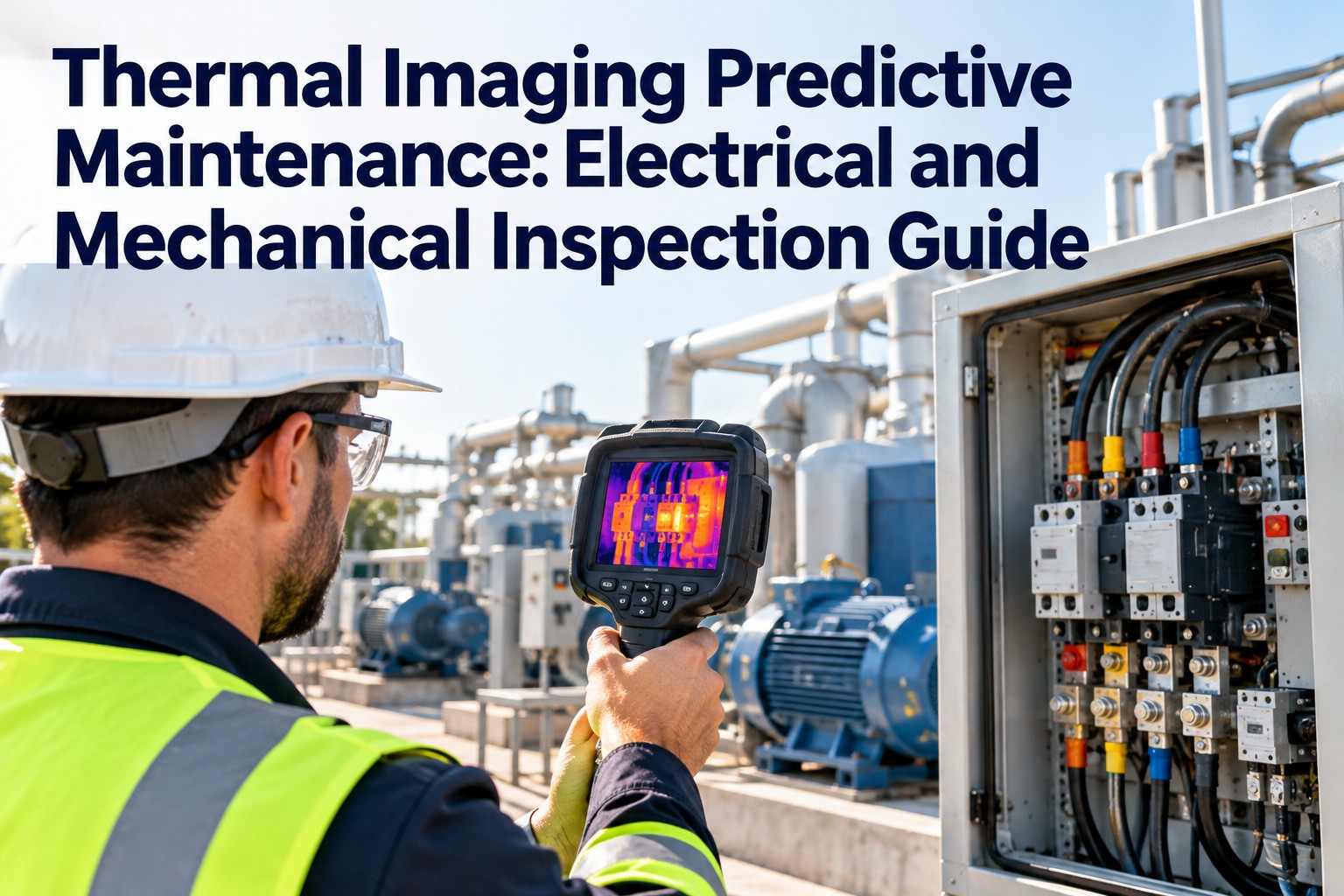
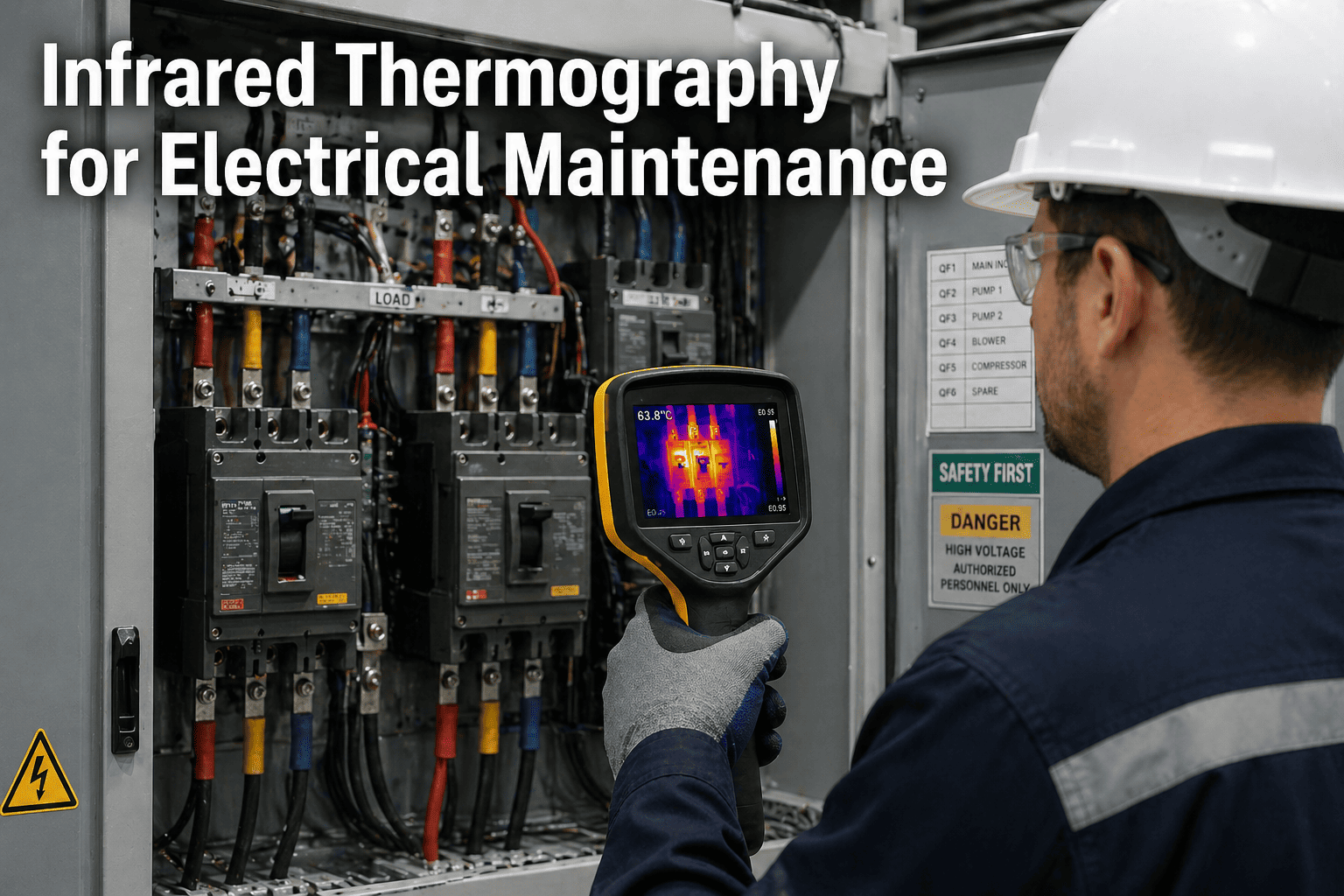
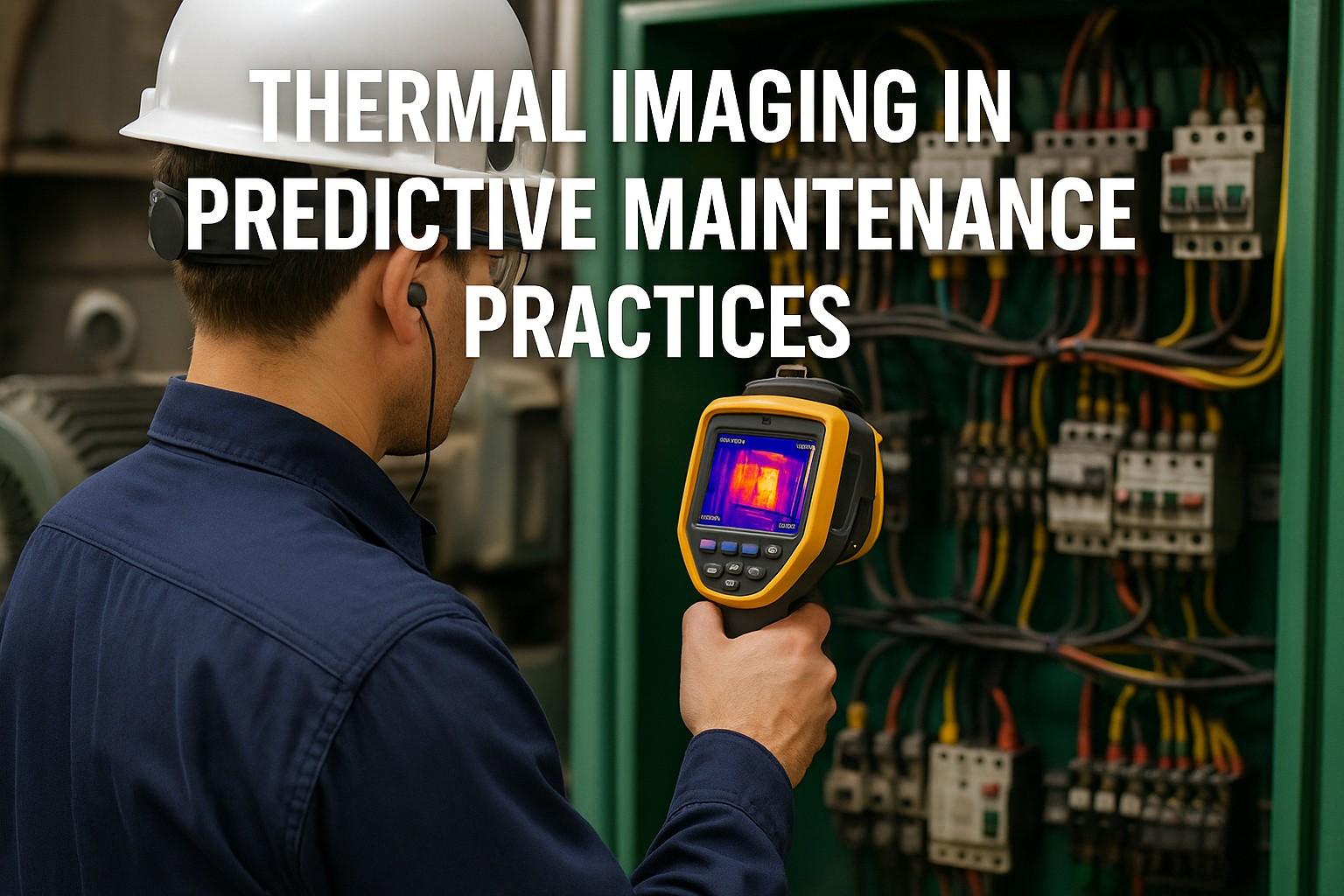
At 3:22 AM on a Tuesday, a circuit breaker panel in a Melbourne food processing facility quietly reached 94°C on a single busbar connection — 37 degrees above its rated operating temperature. There were no alarms. No indicators. No visible signs. Seven hours later, the connection failed catastrophically, triggering an arc flash that destroyed the panel, ignited nearby cable trays, and shut down production for 11 days. Total loss: $2.1 million. The failure had been building for six weeks. A thermal imaging camera would have detected the developing hotspot in a 90-second scan. An AI-powered vision system monitoring that panel continuously would have flagged the anomaly at week two and auto-generated a work order before the temperature reached 60°C. Book a demo to see how Oxmaint AI Vision Camera integrates thermal hotspot detection with automated maintenance workflows. The global thermal imaging market reached $8.61 billion in 2025. AI-driven systems that combine thermal analysis with predictive maintenance platforms are now detecting electrical faults with over 90% accuracy — weeks before failure occurs.
See Electrical Failures Before They Happen
Oxmaint AI Vision Camera detects thermal hotspots in electrical panels, switchgear, and distribution boards — and converts findings into maintenance work orders automatically.
$8.61B
Global thermal imaging market size in 2025, growing to $11.65B by 2030
90%+
Accuracy of AI thermal imaging in identifying electrical faults in industrial environments
30%
Equipment downtime reduction achieved with AI-driven thermal inspection systems
2 mo
Average ROI payback period for AI-driven thermal inspection deployment
WHAT IS THERMAL IMAGING FOR ELECTRICAL MAINTENANCE
Thermal Imaging and AI: Making Invisible Electrical Faults Visible
Thermal imaging uses infrared cameras to detect the heat emitted by electrical components — converting invisible temperature differentials into visual heat maps that reveal developing faults weeks or months before they cause failures. Every electrical fault has a thermal signature. Loose connections generate localised heat at termination points. Overloaded circuits produce elevated temperature across conductors. Deteriorating insulation creates hotspots that escalate toward arc flash conditions. When AI is layered over continuous thermal monitoring, these signatures are detected automatically — eliminating the human inspection cycle that has historically been the difference between finding faults early and finding them after catastrophic failure.
AI Thermal Hotspot Detection — Defined
The continuous monitoring of electrical assets using infrared imaging combined with machine learning algorithms that automatically classify thermal anomalies, rank fault severity, and trigger maintenance workflows — replacing periodic manual thermography with 24/7 automated electrical condition monitoring.
WHAT THERMAL IMAGING DETECTS
Eight Electrical Fault Types Visible Only Through Thermal Analysis
Visual inspection cannot detect any of these fault conditions. Thermal imaging makes all eight visible — often weeks before any measurable electrical performance degradation occurs.
Connections
Loose or Corroded Connections
Increased resistance at connection points generates heat before electrical performance drops. AI flags asymmetric temperature patterns at terminal blocks, bus bars, and cable lugs — the most common arc flash precursor in industrial panels.
Load Balance
Overloaded Circuits
Phase imbalances and overloaded breakers produce elevated conductor temperatures proportional to excess current. Thermal imaging identifies overloaded circuits under actual operating load conditions — something impedance testing at zero load cannot reveal.
Insulation
Insulation Degradation
Ageing or damaged cable insulation develops thermal signatures as dielectric properties deteriorate. Early detection prevents insulation failure from escalating into ground faults, short circuits, and the fire risk that follows conductor-to-conductor contact.
Switching
Failing Circuit Breakers
Worn contacts inside circuit breakers generate heat under load as contact resistance increases. Thermal imaging identifies failing breakers before they fail to interrupt fault current — a critical safety and reliability risk in high-current distribution systems.
Transformers
Transformer Hotspots
Winding hot spots, cooling system failures, and core overheating in distribution transformers produce distinct thermal patterns. AI identifies deviations from baseline temperature profiles that indicate accelerating insulation degradation inside sealed transformer enclosures.
Motors
Motor Winding Faults
Shorted motor windings, rotor eccentricity, and cooling failures produce localised hotspots on motor housings. Thermal signatures on motor surfaces correlate with internal fault development at stages where vibration analysis has not yet produced actionable signals.
Capacitors
Power Factor Capacitor Faults
Failing power factor correction capacitors develop internal heating from dielectric losses before they short-circuit or rupture. Thermal imaging identifies individual failed cells within capacitor banks — preventing explosive failures in power distribution equipment.
Harmonic
Harmonic Overheating
Variable speed drives, UPS systems, and non-linear loads inject harmonics that cause overheating in neutral conductors, transformers, and distribution boards. Thermal imaging identifies harmonic-driven overheating in conductors that are within rated ampacity for fundamental current only.
THE INSPECTION GAP
Why Manual Thermography Misses the Faults That Cause the Most Damage
Problem 01
Quarterly Scans Miss 75% of Fault Development Windows
Electrical faults develop on timelines of days to weeks. A quarterly thermal inspection schedule means a fault that develops on day 2 after inspection goes undetected for up to 89 days — during which it can escalate from a warning-level hotspot to an arc flash condition. Annual inspections make the detection window even more dangerous.
Problem 02
Inspections Under Low Load Miss Load-Dependent Faults
Thermal faults are current-dependent — they only appear at operating load. Many planned inspections occur during periods of reduced production. A loose connection on a 400A circuit at 30% load may show no thermal anomaly. At 95% load during peak production, the same connection runs at 85°C. Periodic scans rarely capture peak-load conditions.
Problem 03
Thermal Reports That Do Not Generate Work Orders
A thermographer completes an inspection, produces a PDF report with 40 thermal images, classifies 6 anomalies as moderate severity, and emails it to the maintenance manager. Two weeks later, the manager is still to create the corrective work orders. Thermal data without automated maintenance workflow integration is a documentation exercise, not a maintenance programme.
Problem 04
No Trend Data Means No Escalation Warning
A single thermal scan produces a snapshot. It cannot tell you whether a 62°C hotspot has been stable for six months or has risen 18°C in three weeks. Without continuous trend data, maintenance teams cannot distinguish stable anomalies from accelerating faults — and prioritisation decisions are made on severity at inspection time, not on rate of deterioration.
HOW OXMAINT SOLVES IT
Oxmaint AI Vision Camera: Continuous Thermal Monitoring with Automated Maintenance Response
Oxmaint closes the gap between thermal detection and maintenance action. AI vision cameras monitor electrical assets continuously — and every hotspot finding feeds directly into the Oxmaint CMMS as a structured, actionable maintenance event.
Continuous 24/7 Thermal Monitoring
Fixed AI vision cameras monitor electrical panels, switchgear, MCC rooms, and distribution boards continuously — not quarterly. Temperature baselines are established per asset per load condition. Deviations trigger automated analysis regardless of time of day, day of week, or staffing level.
AI Anomaly Classification
Machine learning models classify thermal anomalies by fault type, severity, and urgency based on temperature differential, rate of change, and asset criticality. False alerts from emissivity variations, ambient reflections, and environmental factors are filtered automatically — only genuine electrical faults generate maintenance actions.
Automatic Work Order Generation
When an AI-classified hotspot exceeds the configured severity threshold, Oxmaint automatically creates a corrective work order — populated with asset ID, thermal image, temperature differential, fault classification, and recommended urgency window. Zero manual steps from detection to maintenance dispatch.
Temperature Trend Tracking
Oxmaint records thermal readings against every asset record over time — building the trend database that transforms a 62°C hotspot from ambiguous into actionable. Rate-of-rise alerts fire when temperature acceleration exceeds safe tolerances, catching fast-developing faults before they reach critical temperature thresholds.
Compliance Documentation
Every thermal detection event is logged with timestamped thermal images, AI classification data, work order reference, and resolution outcome — building the digital audit trail required for OSHA compliance, insurance risk assessments, building safety regulations, and IEC 60364 electrical inspection requirements.
Portfolio-Wide Electrical Risk View
Aggregate thermal anomaly data across all facilities in a single Oxmaint dashboard. VP-level visibility of electrical fault status, open corrective work orders, and resolution rates across all sites — enabling risk-based prioritisation of electrical maintenance investment across the full property portfolio.
BEFORE VS. AFTER
Manual Thermal Inspections vs. AI-Integrated Continuous Monitoring
Electrical Maintenance Transformation: Periodic Thermography vs. Oxmaint AI Vision
ROI AND RESULTS
What AI Thermal Monitoring Delivers in Real Numbers
30%
Downtime Reduction
AI-driven thermal inspection systems reduce equipment downtime by up to 30% by catching electrical faults during the weeks-long development window — before the failure event that causes production stoppages.
75%
Faster Inspection Coverage
AI thermal systems speed up inspection processes by 75% compared to manual thermography — covering more assets in less time while eliminating human scheduling, access, and judgment variability from the inspection process.
30%
More Defects Detected
AI thermal analysis detects 30% more defects than traditional manual thermography methods — identifying subtle temperature deviations and early-stage faults that human inspectors consistently miss during periodic surveys.
2 mo
ROI Payback Period
Industrial operators deploying AI-driven thermal inspection systems achieve return on investment in as little as two months — driven by the first major electrical failure prevented and the emergency repair costs avoided.
FAQ
Frequently Asked Questions
How does Oxmaint AI Vision Camera connect thermal findings to maintenance work orders?
Oxmaint AI Vision Camera monitors electrical assets continuously and runs machine learning classification on every thermal frame. When an anomaly exceeds a configured severity threshold — defined by temperature differential, asset criticality, and rate of rise — Oxmaint automatically creates a corrective work order in the CMMS. The work order is populated with the thermal image, asset record link, AI fault classification, temperature reading, and recommended urgency window. No human review is required for routine hotspot escalations — technicians receive the work order directly on their mobile device.
Sign up free to configure your first thermal monitoring zone, or
book a demo to see the full detection-to-work-order workflow live.
What electrical assets can Oxmaint AI Vision Camera monitor for thermal hotspots?
Oxmaint AI Vision Camera supports thermal monitoring across the full range of electrical assets found in commercial and industrial facilities — including LV and MV switchgear, distribution boards, MCC rooms, circuit breaker panels, bus bars, transformer terminations, power factor correction banks, variable speed drives, and cable tray sections. The system establishes individual temperature baselines per asset per load condition, enabling accurate anomaly detection across assets with very different normal operating temperatures. Assets are linked directly to the Oxmaint asset registry for full maintenance history integration.
How does the AI system distinguish genuine electrical faults from false thermal alerts?
False positives are the primary challenge in continuous thermal monitoring — ambient temperature changes, solar radiation on enclosures, reflections from metallic surfaces, and load-related temperature variations all create thermal readings that are not faults. Oxmaint AI handles this through multi-factor classification: temperature differential relative to asset baseline under current load conditions, rate of temperature change over time, thermal pattern geometry consistent with known fault signatures, and cross-referencing with historical thermal data for the same asset. The result is a false alarm rate significantly below manual inspection — AI-driven systems filter out environmental and load-related variations that would otherwise generate unnecessary work orders.
Book a demo to review fault classification accuracy, or
start free and deploy your first monitoring zone today.
Does Oxmaint thermal monitoring produce compliance documentation for electrical safety audits?
Yes. Every thermal detection event in Oxmaint is automatically logged with a timestamped thermal image, AI classification result, temperature reading, asset ID, work order reference, and resolution outcome — building a complete digital audit trail that meets requirements for OSHA electrical safety compliance in the USA, Building Safety Act documentation in the UK, IEC 60364 electrical inspection records in Europe, and insurance risk assessment documentation in all supported regions. Reports are available on demand — no pre-audit compilation required. For facilities subject to periodic formal thermographic surveys, Oxmaint stores third-party inspection reports against asset records alongside continuous monitoring data for complete regulatory documentation.
Stop Electrical Failures Before They Start
Oxmaint AI Vision Camera monitors electrical panels, switchgear, and distribution boards 24/7 — detecting thermal hotspots with 90%+ accuracy and converting every finding into an actionable maintenance work order automatically. Deploy in days. No electrician shutdown required for camera installation.