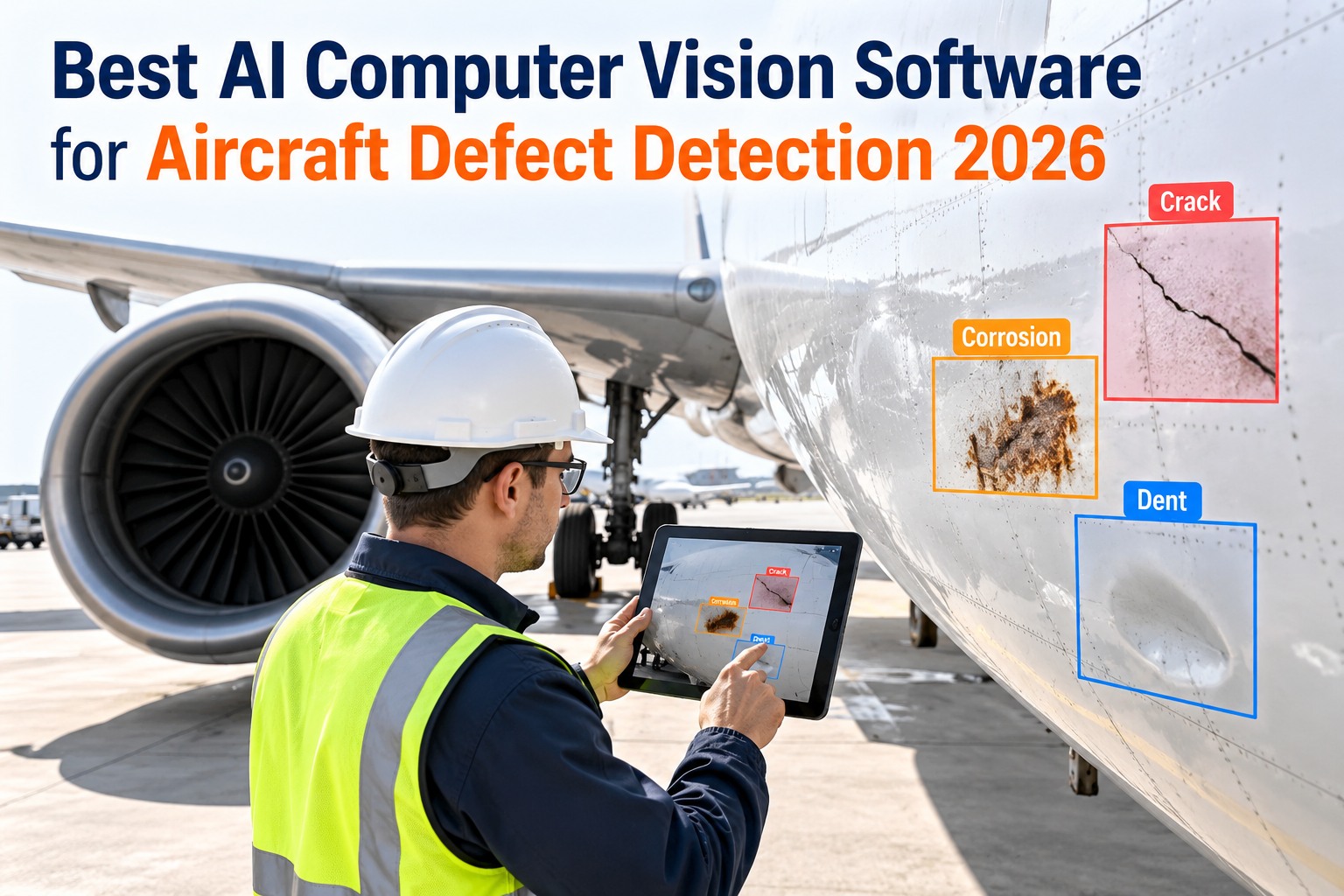
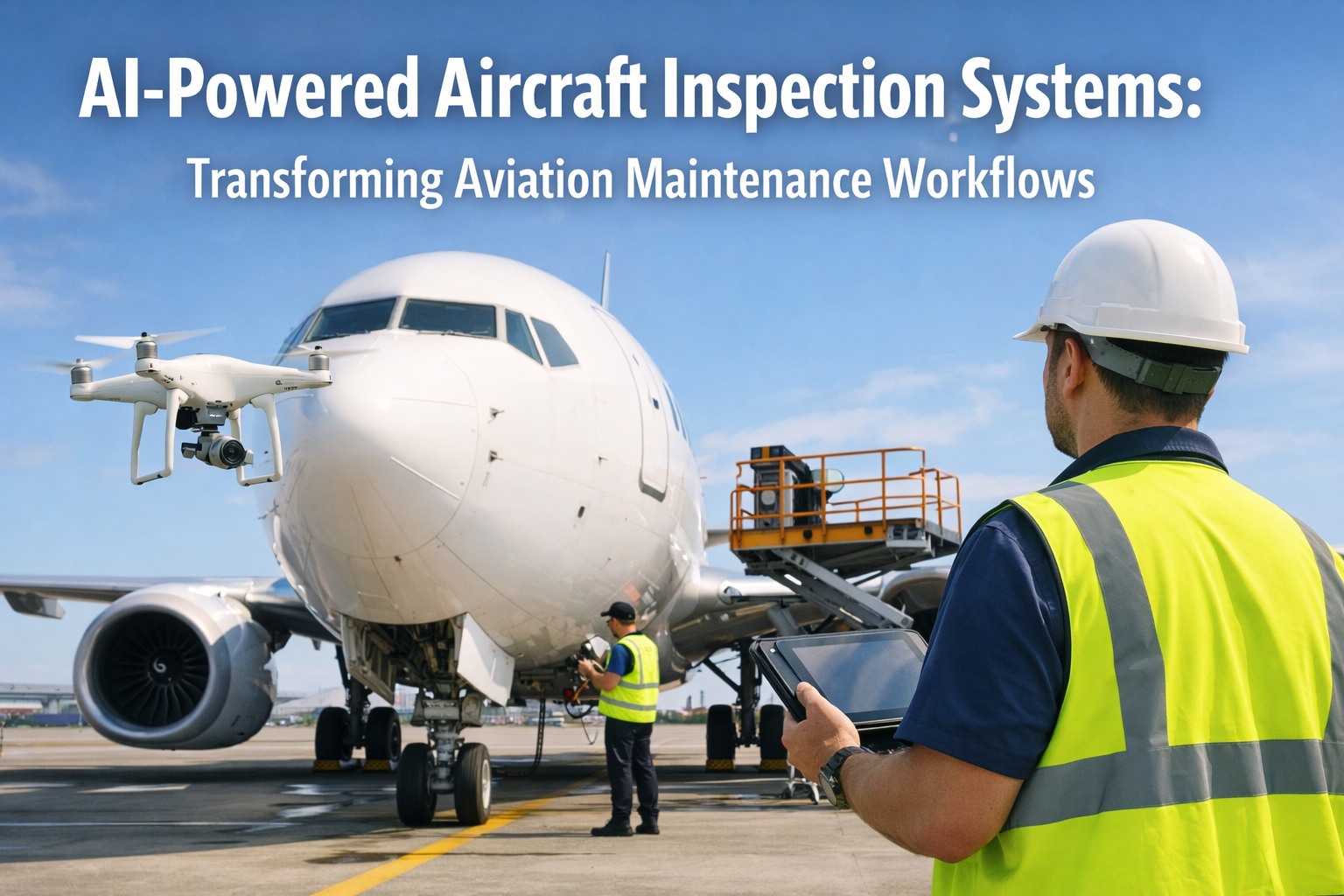
A single missed crack on a turbine blade. A patch of corrosion hidden under a wing panel. A dent so subtle that three veteran inspectors walked right past it. In aviation, the margin between safe and catastrophic is measured in millimeters—and human eyes, no matter how experienced, have limits. The global AI-powered aircraft inspection market is projected to grow from $750 million in 2024 to $2.5 billion by 2034, driven by one undeniable fact: machine vision doesn't get tired, doesn't lose focus at hour six of a fuselage scan, and doesn't miss what it's been trained to find. With AI-driven tools already cutting engine inspection times by up to 90% and detecting 27% more defects than manual methods alone, the question for airlines and MROs in 2026 isn't whether to adopt AI inspections—it's how fast they can integrate them into the maintenance workflows they're already running.
90%
Inspection Time Reduction
AI engine inspection tools vs. manual methods
95%+
Defect Detection Accuracy
Modern AI vision systems with trained models
30%
Fewer Human Errors
MRO facilities using AI-assisted inspections
$2.5B
Projected Market by 2034
AI-powered pre-flight inspection market at 14.3% CAGR
These aren't theoretical benchmarks from research labs. They come from airlines and MRO facilities already running AI inspection programs—facilities that discovered the same thing: the bottleneck in aviation safety isn't willingness to inspect, it's the physical limits of manual inspection at the speed modern operations demand. The organizations connecting AI inspection outputs to their digital maintenance systems are building an operational advantage that compounds with every inspection cycle. Teams ready to connect inspection findings directly to automated work orders can sign up for centralized inspection and maintenance management that turns every finding into action.
How Machine Vision Actually Works on an Aircraft
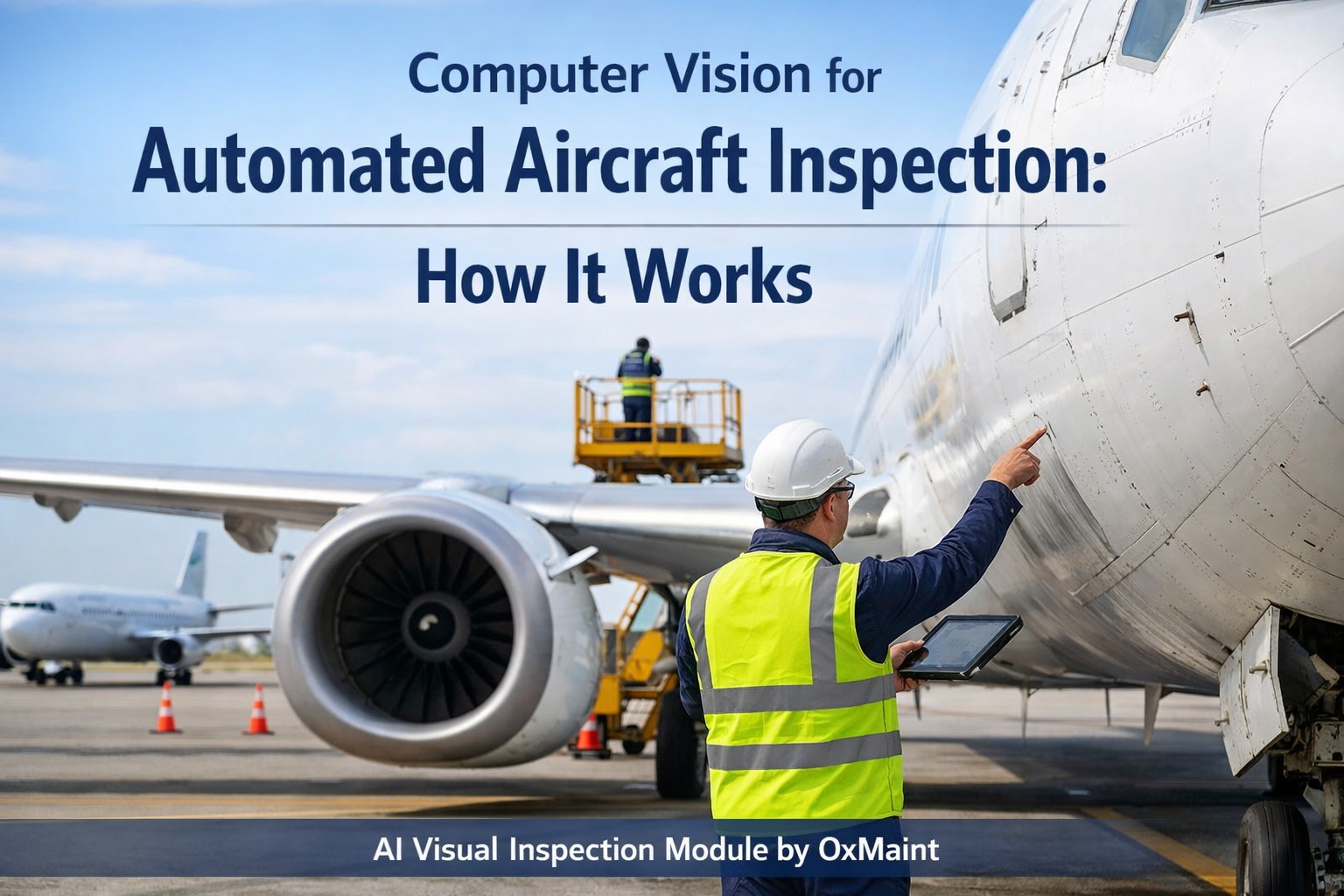
Understanding AI aircraft inspections starts with understanding what machine vision does differently from a trained human eye. It's not about replacing inspectors—it's about giving them a tool that processes visual data at a scale, speed, and consistency that biology can't match. Here's how the technology flows from camera to corrective action in a modern aviation environment.
01
Image Acquisition
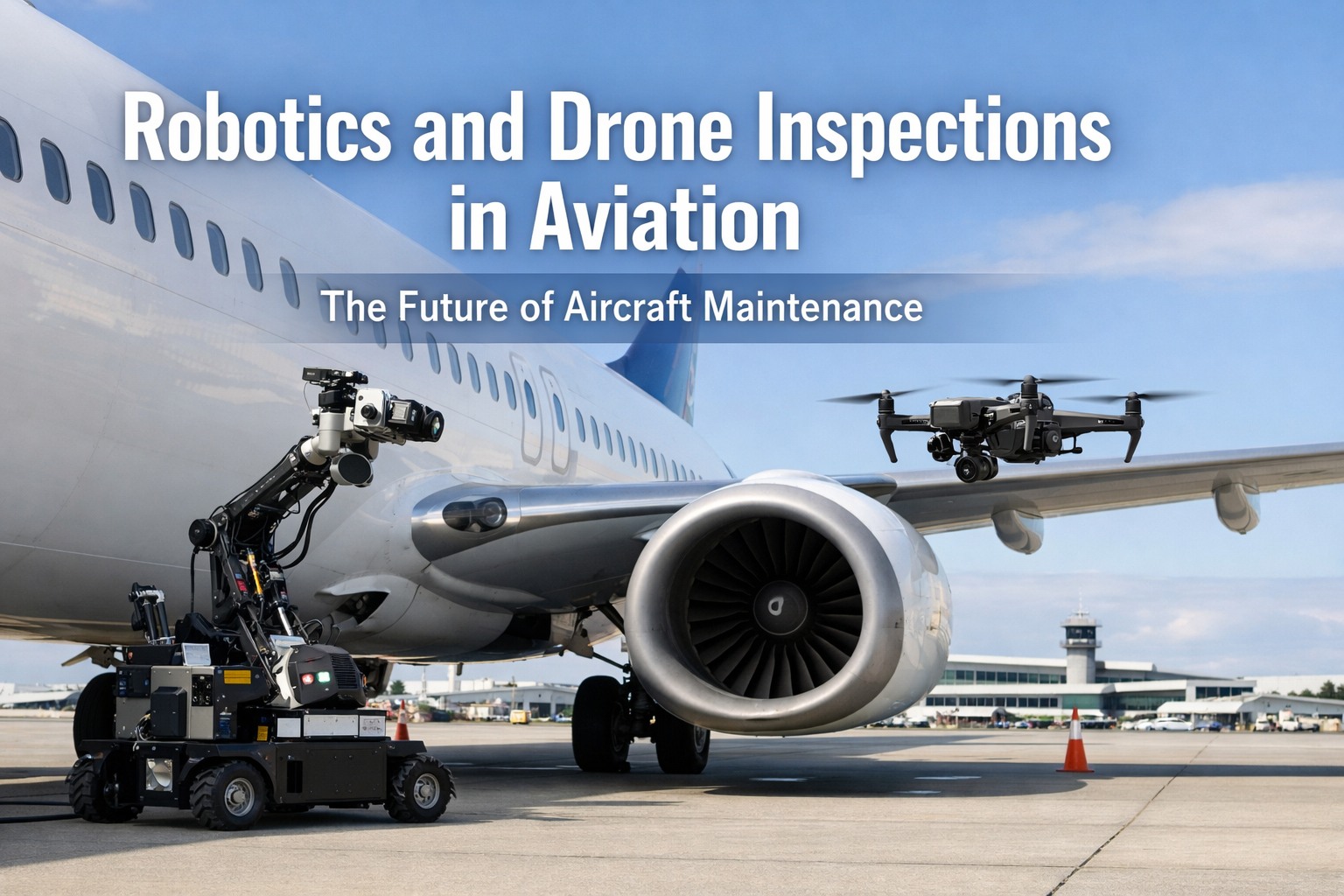
High-resolution cameras mounted on drones, robotic crawlers, or handheld devices capture hundreds to thousands of images across the aircraft surface, engine interiors, landing gear, and structural joints.
Drones, borescopes, fixed cameras, thermal sensors
02
AI Model Analysis
Computer vision models trained on thousands of annotated defect images analyze every pixel—identifying cracks, corrosion, dents, missing rivets, paint deterioration, and deformation patterns invisible to the naked eye.
CNNs, YOLO models, segmentation algorithms
03
Defect Classification
Each detected anomaly is automatically classified by type (crack, corrosion, dent, erosion) and severity level, then mapped to the exact location on the aircraft with GPS and coordinate data.
Severity scoring, geo-tagging, 3D mapping
04
Report & Work Order Generation
Findings automatically generate inspection reports with annotated images, severity assessments, and recommended actions—feeding directly into CMMS work orders for immediate technician assignment.
CMMS integration, automated work orders, audit trails
The critical difference: when this pipeline connects to a digital maintenance system, no finding sits in an email inbox or gets lost in a paper log. Every defect generates a traceable work order. Every work order links to its resolution. Every resolution builds the historical data set that makes the AI model smarter for the next inspection. Aviation teams building this connected pipeline can book a demo to see how inspection findings flow directly into work orders with full traceability from detection to resolution.
Where AI Vision Is Already Transforming Aircraft Inspections
AI-powered inspection isn't a single technology—it's a suite of capabilities being deployed across different inspection types, each solving a specific operational pain point. The smartest aviation organizations are targeting AI adoption where the time savings and accuracy improvements generate the most immediate ROI.
01
Exterior Surface Scanning
Fuselage & Wing Defect Detection
Drones equipped with high-resolution cameras scan the entire aircraft exterior in under 30 minutes—a process that takes hours with scaffolding and manual inspection. AI models detect cracks, dents, corrosion, missing rivets, and paint damage, then map each finding to its precise location on the airframe. Airbus's Hangar of the Future initiative cut data acquisition time from 2 hours to 15 minutes using this approach.
87% faster data capture
Full-coverage scanning
Borescope AI for Turbine Blade Analysis
Machine vision integrated with borescope cameras inspects engine internals—turbine blades, combustion chambers, and compressor stages—detecting micro-cracks, pitting corrosion, and blade tip wear that signal early-stage fatigue. GE Aerospace's AI-enhanced Blade Inspection Tool halves inspection time while improving consistency across technicians.
50% faster engine inspections
Micro-crack detection
Hidden Structural Flaw Detection
Thermal and infrared cameras paired with AI detect subsurface structural issues invisible to RGB cameras—fluid leaks, delamination in composite panels, insulation failures, and heat-stress damage. These systems work in low-light and nighttime conditions, enabling round-the-clock inspection capability without hangar lighting constraints.
Subsurface defect detection
24/7 operation capability
OCR-Based Component Validation
AI-powered optical character recognition (OCR) allows inspectors to photograph part serial numbers instead of typing them manually. Boeing's OCR tool, deployed across 737 production lines, improved inspection throughput by 17+ hours per airplane and eliminated the typo-prone manual entry that previously affected over 70% of serial number inputs.
17+ hours saved per aircraft
Typo elimination
AI-Targeted Inspection Prioritization
Instead of fixed-interval inspections of every component, AI models analyze historical failure data, flight cycles, and environmental exposure to prioritize which areas need inspection most. Technicians focus on high-risk zones first—turning time-based cycles into data-driven decisions. Carriers using predictive approaches report up to 25% fewer unscheduled maintenance events.
25% fewer unscheduled events
Risk-based prioritization
Every one of these applications generates inspection data that needs somewhere to go. When findings from drone scans, borescope analyses, and thermal inspections flow into a centralized CMMS, they create an interconnected safety record that regulators, lessors, and internal quality teams can audit in seconds. Aviation operations teams building this data infrastructure can start a free trial to centralize inspection records and work orders across every asset type.
Manual vs. AI-Assisted: The Performance Gap
The debate between manual and AI-assisted inspections isn't about eliminating human expertise—it's about understanding where each method excels and where combining them creates outcomes neither achieves alone. Here's what the data shows when you put them side by side.
Full Exterior Scan Time
4–6 hours with scaffolding
15–30 minutes with drones
Defect Detection Rate
Varies with experience and fatigue
95%+ accuracy, consistent every scan
Subsurface Detection
Limited to visible surfaces only
Thermal/infrared reveals hidden flaws
Documentation Quality
Handwritten notes, subjective descriptions
Annotated images, GPS-mapped, auto-logged
Coverage Completeness
Access-limited, hard-to-reach areas missed
Full-coverage scanning including confined zones
Night/Low-Light Capability
Requires full hangar lighting
Thermal sensors work in any lighting
Repeatability
Inspector-dependent variability
Identical scan paths, year-over-year comparison
The highest-performing operations use AI to detect and flag, and trained technicians to verify and decide. Neither alone matches the combination.
Turn AI Inspection Findings Into Closed-Loop Maintenance
Every defect detected needs a work order. Every work order needs a resolution. Every resolution needs a verified audit trail. See how OXmaint connects inspection outputs to maintenance action—automatically.
The Data Foundation AI Inspections Depend On
Here's what every AI inspection vendor won't tell you upfront: the most advanced computer vision model in the world is only as useful as the system that catches its output. AI detects the defect. But if that finding lands in an email thread, a shared folder, or a paper form, it dies there—unlinked to a work order, untracked to resolution, invisible to the next audit. The organizations getting real ROI from AI inspections are the ones that built the digital maintenance infrastructure first.
The AI Layer
Computer vision models, drone platforms, borescope integration, thermal imaging, defect classification algorithms
Detects the problem
The CMMS Foundation
Asset registry, work order engine, PM scheduling, compliance tracking, parts management, audit trail system
Turns detection into resolution
Without a CMMS, AI inspection findings become:
Unassigned findings with no owner
Untracked resolutions with no proof
Historical data that never improves the model
Audit gaps that negate the detection value
With a CMMS, AI inspection findings become:
Auto-generated work orders with priority and assignment
Verified resolutions building complete asset histories
Structured data that trains better AI models over time
Instant audit-ready compliance documentation
This is the insight that separates aviation organizations getting value from AI from those buying technology that sits unused: AI inspection is an input to your maintenance system, not a replacement for it. The organizations that invest in digitizing their work orders, asset registries, and compliance documentation today are the ones that will extract the most value from every AI inspection tool they adopt tomorrow. Teams ready to build that foundation can sign up for the digital maintenance platform that catches AI inspection outputs and turns them into action.
Building Your AI Inspection Readiness
Adopting AI-powered inspections isn't a switch you flip—it's a capability you build in stages. The organizations with the smoothest AI adoption stories are the ones that built digital maturity first. Here's the practical path from where most aviation organizations are today to where AI inspection delivers its full potential.
Stage 1: Digitize
Move from paper and spreadsheets to a digital CMMS. Register every asset, digitize work orders, establish PM schedules, and build searchable records. This is where 33% of operators are stuck today.
Outcome: Every asset has a digital identity and every maintenance action is recorded
Stage 2: Standardize
Establish consistent inspection checklists, defect classification taxonomies, and documentation standards across all teams and locations. Standardized data is what makes AI models trainable.
Outcome: Clean, structured data that AI systems can ingest and learn from
Stage 3: Integrate
Connect AI inspection tools (drones, borescopes, thermal cameras) to your CMMS so findings auto-generate work orders. Build the feedback loop where resolution data improves future detection.
Outcome: Closed-loop workflow from AI detection through verified resolution
Stage 4: Predict
With 12–24 months of structured inspection and maintenance data, deploy predictive models that forecast failures, prioritize inspections by risk, and optimize maintenance intervals based on actual asset condition.
Outcome: Maintenance shifts from schedule-based to condition-based, maximizing uptime and minimizing cost
Start at Stage 1. The AI Advantage Follows.
Whether you're replacing spreadsheets or connecting drone inspection outputs to automated work orders, OXmaint gives aviation teams the digital maintenance foundation that every AI inspection capability depends on. Start building the data discipline today that makes AI-powered safety possible tomorrow.
Frequently Asked Questions
What is AI-enhanced aircraft inspection and how does it work?
AI-enhanced aircraft inspection uses computer vision and machine learning to analyze images and sensor data captured from aircraft surfaces, engines, and structural components. High-resolution cameras mounted on drones, robotic platforms, or borescope devices capture visual data, which AI models then analyze to detect defects such as cracks, corrosion, dents, missing rivets, and paint deterioration. The AI classifies each defect by type and severity, maps it to the exact location on the aircraft, and generates inspection reports that can feed directly into maintenance management systems for work order creation and resolution tracking.
How accurate is AI defect detection compared to manual inspection?
Modern AI vision systems achieve detection accuracy exceeding 95% for trained defect categories, and some deployments have identified 27% more defects than manual inspection methods alone. The key advantages are consistency and coverage—AI doesn't experience fatigue-related performance decline during long inspection sessions, and drone-based scanning reaches areas that are difficult or dangerous for human inspectors to access. MRO experts consider 90%+ detection accuracy with under 10% miss rate as the operational benchmark, and leading AI systems already meet this threshold. The best-performing operations combine AI detection with human verification for maximum safety assurance.
What do aviation teams need before implementing AI inspection tools?
The most critical prerequisite is a digital maintenance foundation—a CMMS or maintenance management platform where AI inspection findings can be captured, tracked, and resolved systematically. AI detection tools generate findings; without a system to convert those findings into assigned work orders, track them to verified resolution, and build searchable historical records, the detection value is lost. Organizations should have a digital asset registry, standardized defect classification categories, digital work order workflows, and structured documentation practices before investing in AI inspection hardware. This foundation also provides the historical data that predictive AI models need to deliver accurate forecasts.
How much time and cost can AI inspections save airlines and MROs?
The savings are substantial and well-documented across early adopters. AI-powered engine inspection tools have reduced inspection times by up to 90%. Drone-based exterior scanning cut Airbus's data acquisition time from 2 hours to 15 minutes. Boeing's OCR-based parts verification saved 17+ hours per airplane on serial number validation. Across MRO facilities using AI, unscheduled maintenance events have dropped by 25%, and human error rates during inspections have fallen by 30%. For carriers managing large fleets where each Aircraft-on-Ground event costs $10,000–$150,000 per hour, faster and more accurate inspections translate directly into reduced downtime and significant cost avoidance.
Does AI inspection replace human inspectors in aviation?
No—AI inspection augments human inspectors, it doesn't replace them. Current regulatory frameworks still require certified human inspectors for airworthiness determinations and sign-offs. AI's role is to scan faster, flag more comprehensively, and document more consistently than unaided manual inspection. Human inspectors then verify AI-flagged findings, make engineering judgments about severity and disposition, and authorize corrective actions. This human-AI collaboration model consistently outperforms either approach alone, combining AI's detection consistency with human expertise in context-dependent decision-making. The post-COVID inspector workforce shortage makes this collaboration model even more critical as fewer certified inspectors manage growing fleet sizes.