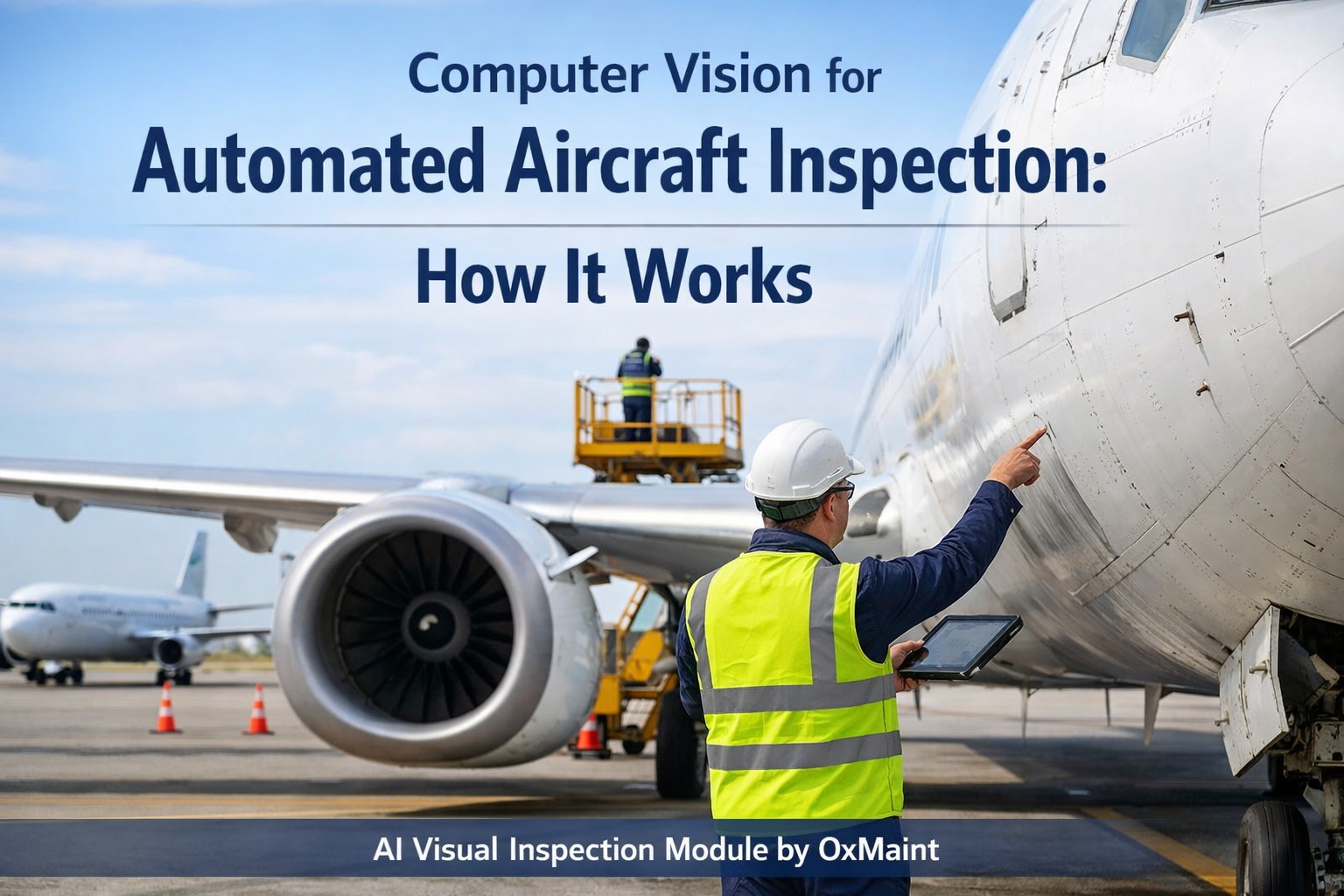
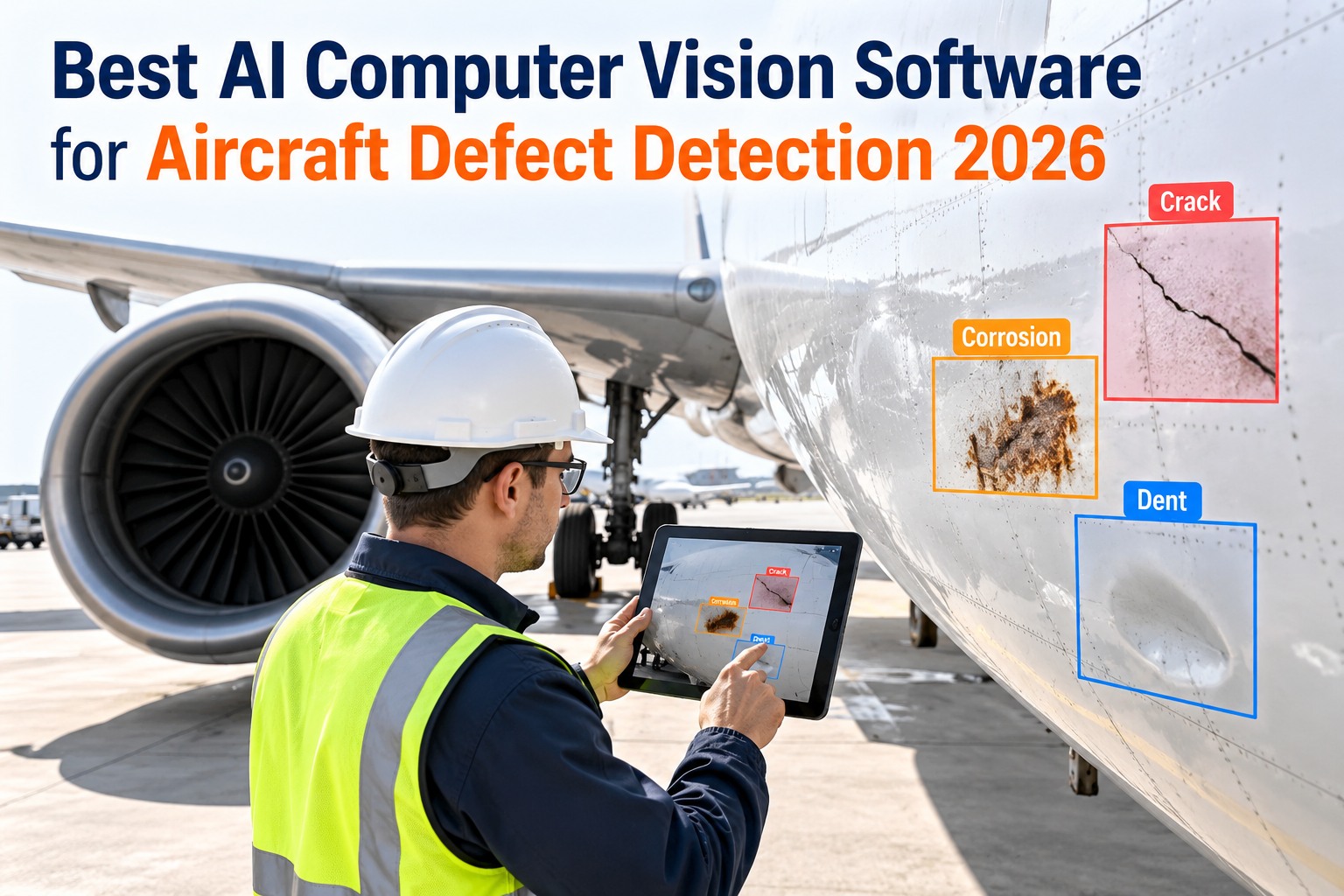
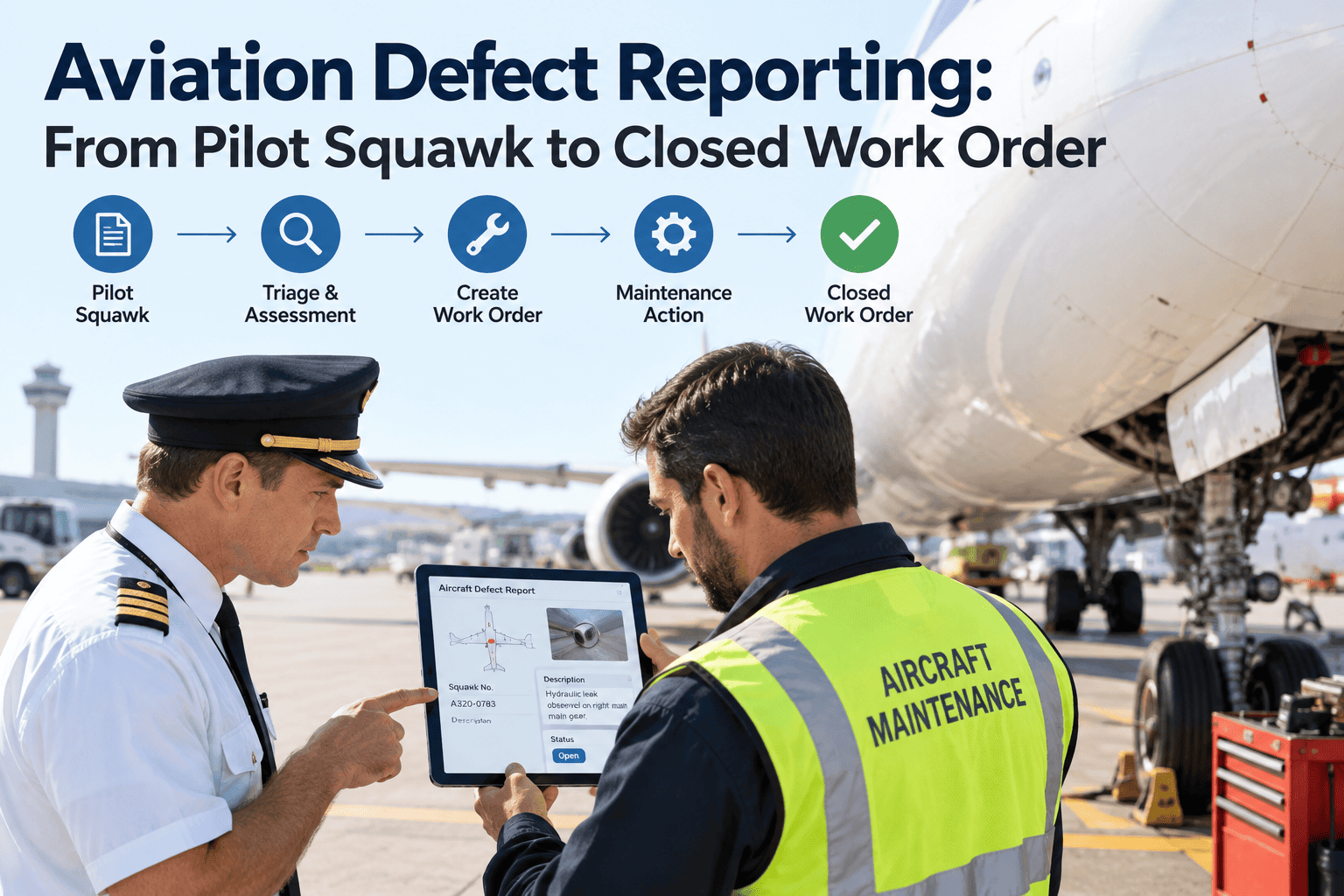
A single hairline crack on a turbine blade. A patch of corrosion hiding beneath a wing panel. A dent so subtle that three veteran inspectors walked right past it. In aviation, the margin between safe and catastrophic is measured in millimeters—and human eyes, no matter how experienced, have limits. Computer vision is changing the equation. Schedule a demo to see how OXmaint connects AI inspection findings directly to actionable work orders.
The Problem with Human-Only Inspection
Aircraft inspection has been a manual craft for decades. Certified technicians walk around fuselages with flashlights, magnifying glasses, and checklists—scanning for cracks, corrosion, dents, missing rivets, and paint deterioration across surfaces that can span thousands of square feet. It is skilled, essential work. But it has inherent constraints that no amount of training can fully overcome.
Full exterior scan
10–12 hours
Defect consistency
Variable by inspector
Fatigue impact
Accuracy drops after hour 4
Documentation
Handwritten notes, photos
Traceability
Paper-based, error-prone
vs
Full exterior scan
Under 1 hour
Defect consistency
Pixel-level repeatability
Fatigue impact
None—24/7 capability
Documentation
Auto-annotated reports
Traceability
Full digital audit trail
How Computer Vision Actually Works on Aircraft
Computer vision for aircraft inspection is not a single technology—it is an integrated pipeline that moves from raw image capture to maintenance action. Understanding each stage reveals why this technology is fundamentally different from simply "taking better photos."
1
Image Capture
High-resolution cameras mounted on drones, robotic crawlers, or handheld borescopes capture hundreds to thousands of images across the aircraft surface, engine interiors, landing gear, and structural joints. Thermal and infrared sensors add a second layer by detecting subsurface anomalies invisible to standard cameras.
Drones
Borescopes
Fixed Cameras
Thermal Sensors
Robotic Crawlers
2
AI Processing & Defect Detection
Deep learning models—trained on thousands of annotated defect images—analyze every pixel to identify cracks, corrosion, dents, missing rivets, paint deterioration, and deformation patterns. Models like YOLOv9 and RT-DETR achieve mAP50 scores of 0.70–0.75 on real-world aircraft defect datasets, with accuracy improving as training data grows.
CNNs
YOLO Models
RT-DETR
Segmentation
3
Classification & Severity Scoring
Detected anomalies are classified by type (crack, corrosion, dent, missing fastener) and scored by severity based on size, depth, location, and proximity to structural load paths. The system differentiates between cosmetic scratches and safety-critical structural defects—something that requires deep contextual understanding of aircraft engineering.
Anomaly Scoring
Defect Mapping
SRM Cross-Reference
4
Report Generation & CMMS Integration
Findings automatically generate inspection reports with annotated images, severity assessments, and recommended actions—feeding directly into CMMS work orders for immediate technician assignment. No finding sits in an email inbox or gets lost in a paper log. Every defect generates a traceable work order linked to its resolution.
Auto Work Orders
Audit Trail
CMMS Sync
What Can Computer Vision Detect?
AI visual inspection systems are trained to identify the most common and most dangerous defect categories that threaten aircraft structural integrity. Here is a breakdown of each defect type, where it typically occurs, and how computer vision identifies it.
Cracks
Fuselage joints, wing roots, engine mounts, landing gear
Edge detection algorithms + segmentation models identify linear discontinuities as small as 0.1mm on high-res images
Corrosion
Wheel wells, belly panels, door surrounds, fuel tank areas
Color variation analysis + texture pattern recognition detect oxidation, pitting, and surface discoloration invisible at walking distance
Dents
Leading edges, fuselage skin, cargo door panels
3D photogrammetry and shadow analysis detect depth deformations, measuring displacement against known surface geometry
Missing Rivets
Skin panels, access doors, fairings, control surfaces
Object detection models trained on rivet patterns flag gaps in expected fastener arrays with sub-pixel accuracy
Delamination
Composite panels, radome, control surfaces, nacelle cowlings
Thermal infrared imaging detects subsurface layer separation by identifying heat dissipation anomalies in composite structures
Paint Deterioration
Upper fuselage, horizontal stabilizer, engine pylons
Surface texture analysis detects peeling, chalking, and UV degradation patterns that signal protective coating failure
The Numbers Behind AI Inspection
Computer vision in aviation is no longer experimental. These metrics come from real-world deployments by major airlines and OEMs, reflecting production-scale results—not lab conditions.
Faster engine inspections with AI borescope analysis
More defects detected vs. manual-only methods
Defect detection accuracy with AI imaging systems
False positive rate in production AI inspection systems
Sources: Boeing, Airbus, Donecle, Ultralytics, Industry Reports 2025
Every AI-detected defect needs an action. OXmaint automatically converts inspection findings into prioritized work orders with full photographic evidence and audit trails.
Start Free
Who Is Already Using It?
The world's largest aviation companies are not running small experiments anymore. Computer vision inspection is deployed at production scale across OEMs, airlines, and MRO providers.
Airbus
Hangar of the Future program integrates drone inspections with AI defect detection, cross-referencing drone-acquired images with digital aircraft models to localize anomalies across the full airframe.
Boeing
Deployed AI-powered OCR across 737 production lines, improving inspection throughput by 17+ hours per airplane. Uses autonomous inspection coupled with automatic damage detection software.
Delta Air Lines
Received regulatory approval for drone-based visual inspections, combining autonomous flight with AI image analysis for exterior aircraft checks.
A*STAR (Singapore)
Developed SAAVIS—a hybrid AI system using overhead cameras and autonomous ground robots that identifies 30+ defect types with minimal training data.
The Market Trajectory
Investment in AI-powered inspection is accelerating. These numbers reflect the speed at which the aviation industry is transitioning from manual to machine-augmented inspection workflows.
AI Aircraft Inspection Market
Flight Digital Inspection Systems
Sources: MarkNTel Advisors, Mordor Intelligence, Industry Analysts 2025–2026
From Detection to Action: The CMMS Connection
Computer vision without a maintenance system is just expensive photography. The real value emerges when every detected defect flows automatically into a digital maintenance workflow—creating a closed loop from detection to resolution to continuous improvement.
AI Detects Defect
Computer vision flags a 2mm crack at fuselage frame station 42, classified as structural, severity score 8.4/10
CMMS Creates Work Order
OXmaint auto-generates a prioritized work order with annotated images, location coordinates, and SRM references
Technician Assigned
Mobile notification pushed to the qualified technician with full defect context accessible on tablet at point of work
Repair Documented
Technician completes repair, captures post-repair photos, signs off digitally—full audit trail locked and exportable
AI Gets Smarter
Resolution data feeds back into the AI model, improving future detection accuracy and severity calibration
Close the Loop Between Detection and Action
OXmaint connects AI inspection findings to work orders, technician assignments, and audit-ready documentation—so no defect ever falls through the cracks.
Frequently Asked Questions
What is computer vision in aircraft inspection?
Computer vision uses AI-powered cameras and deep learning models to automatically detect surface and subsurface defects on aircraft—including cracks, corrosion, dents, missing rivets, and composite delamination. The technology processes high-resolution images from drones, borescopes, and fixed cameras to identify anomalies that may be invisible to the human eye, then generates annotated reports for maintenance action.
How accurate is AI-based defect detection compared to manual inspection?
Production AI inspection systems achieve 95%+ defect detection accuracy with false positive rates below 2%. Studies show AI detects 27% more defects than manual methods alone, particularly excelling at identifying microscopic cracks and early-stage corrosion that human inspectors consistently miss during extended inspection shifts.
Does computer vision replace human inspectors?
No. Computer vision augments human inspectors by handling the repetitive, fatigue-prone scanning work while flagging areas that require expert judgment. Inspectors shift from manual scanning to AI-assisted review and decision-making—focusing their expertise where it matters most. Regulatory frameworks still require human sign-off on airworthiness determinations.
How does OXmaint integrate with AI inspection systems?
OXmaint serves as the digital backbone that turns AI findings into maintenance action. Inspection results feed directly into OXmaint's work order system, generating prioritized tasks with annotated images, severity scores, and SRM references. Technicians receive mobile notifications, complete repairs with digital documentation, and the full cycle is captured in an audit-ready record.
Book a demo to see the integration in action.
What types of cameras and sensors are used?
AI inspection systems use a combination of high-resolution RGB cameras for surface defect detection, thermal and infrared sensors for subsurface anomaly identification, borescope cameras for internal engine inspection, and LiDAR for 3D surface mapping. These sensors are typically mounted on autonomous drones, robotic crawlers, or handheld devices used at the point of inspection.
Ready to Connect AI Inspection to Your Maintenance Workflow?
OXmaint gives MRO teams the digital infrastructure that every AI inspection system depends on—automated work orders, mobile technician workflows, calibration tracking, and regulatory-grade documentation from a single platform.