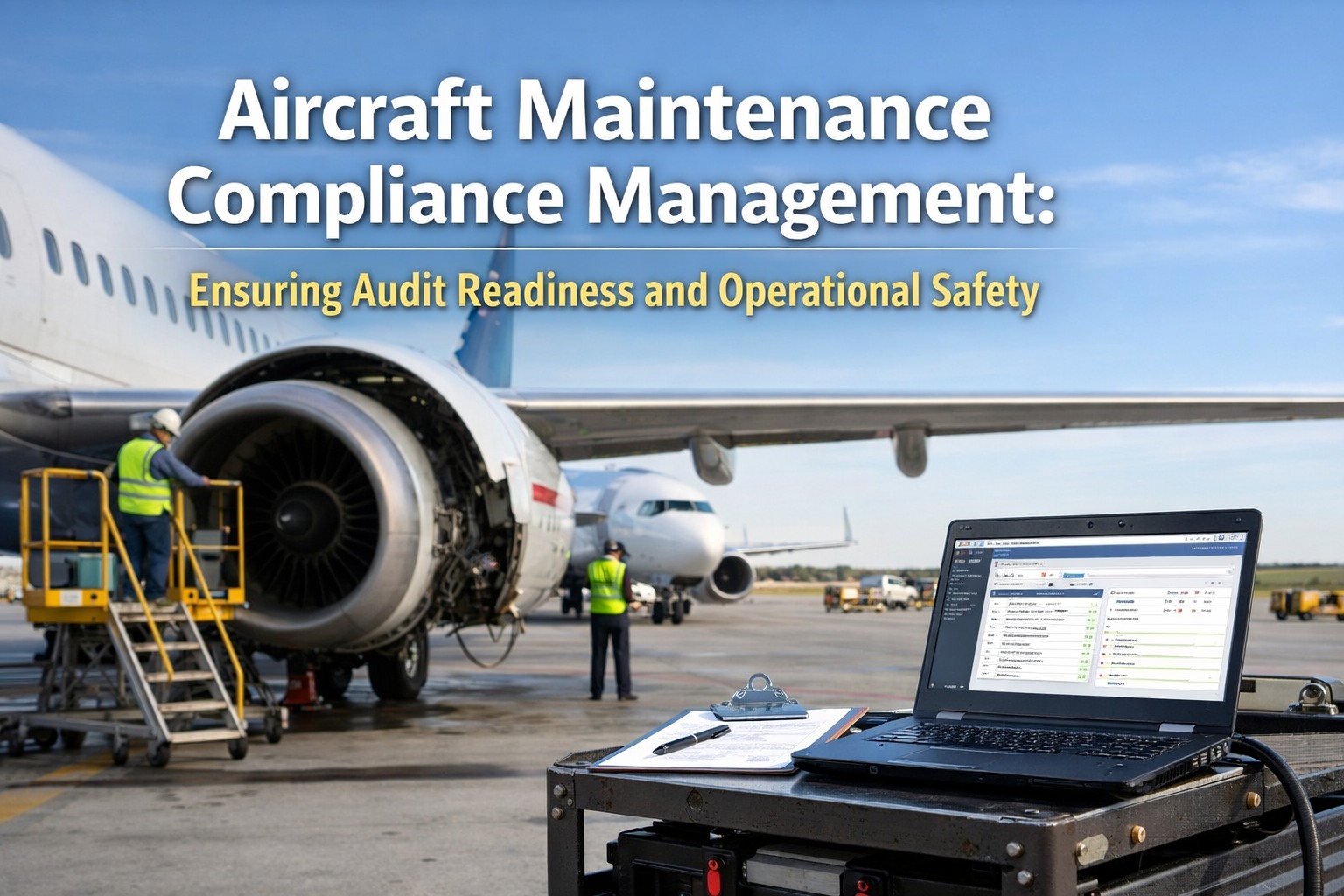
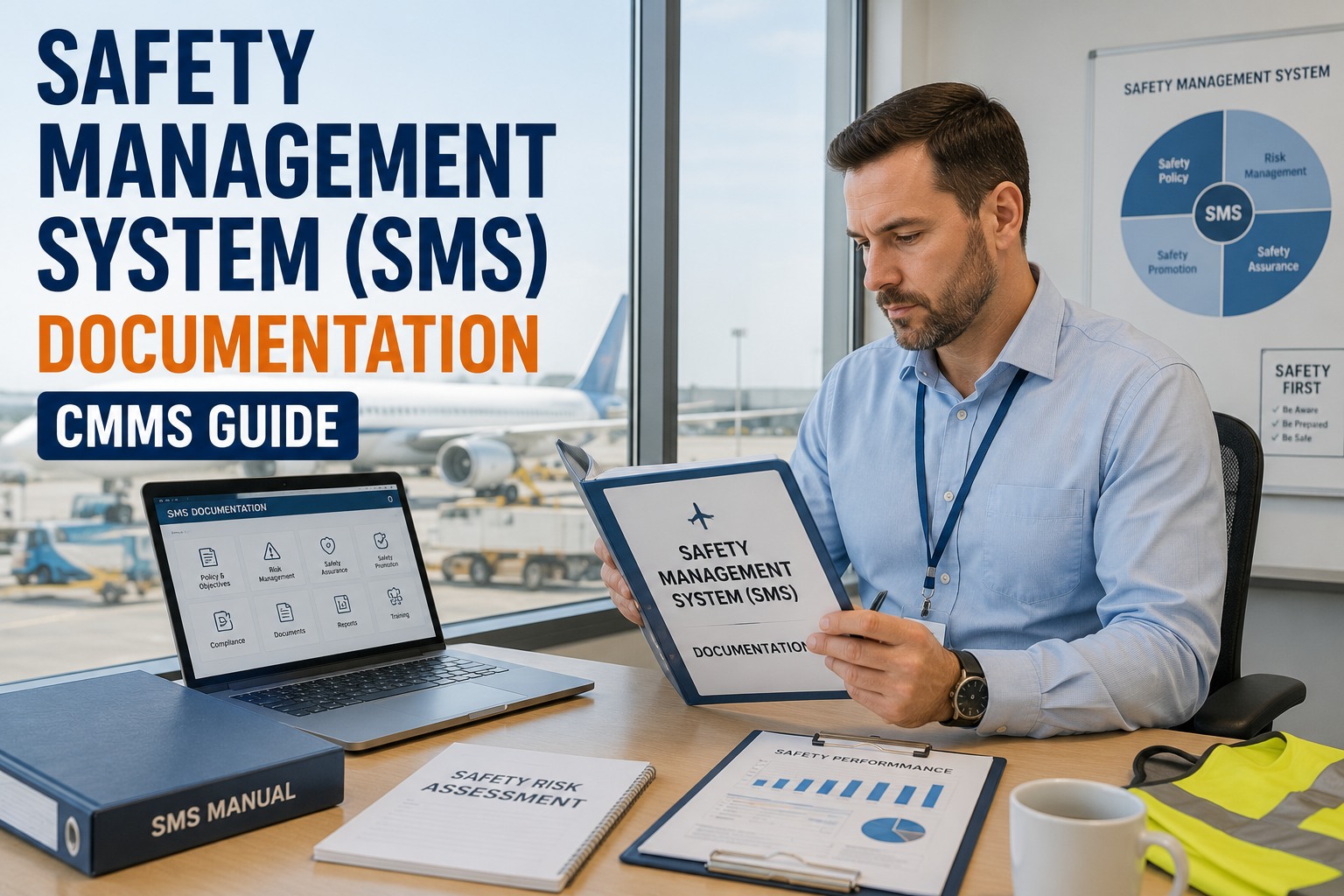
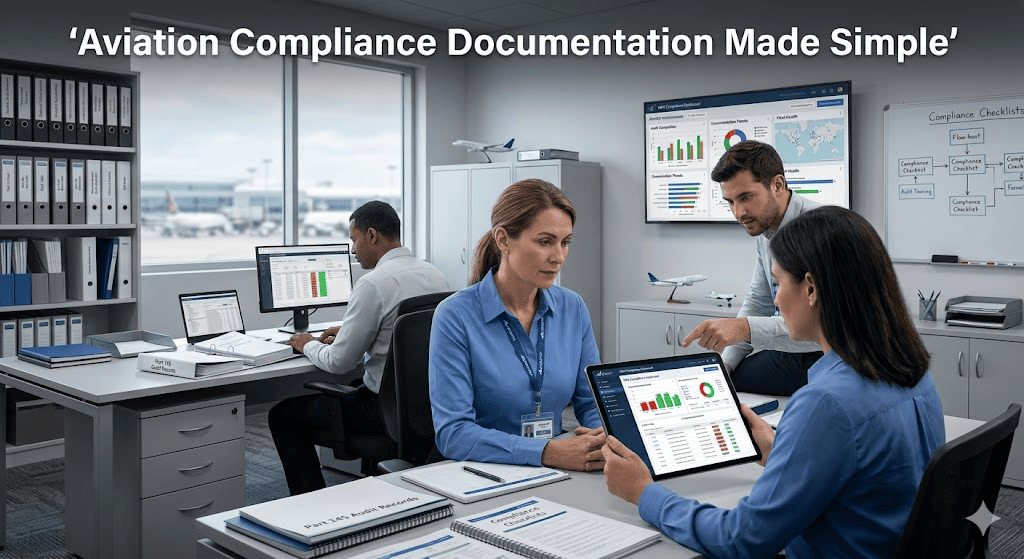
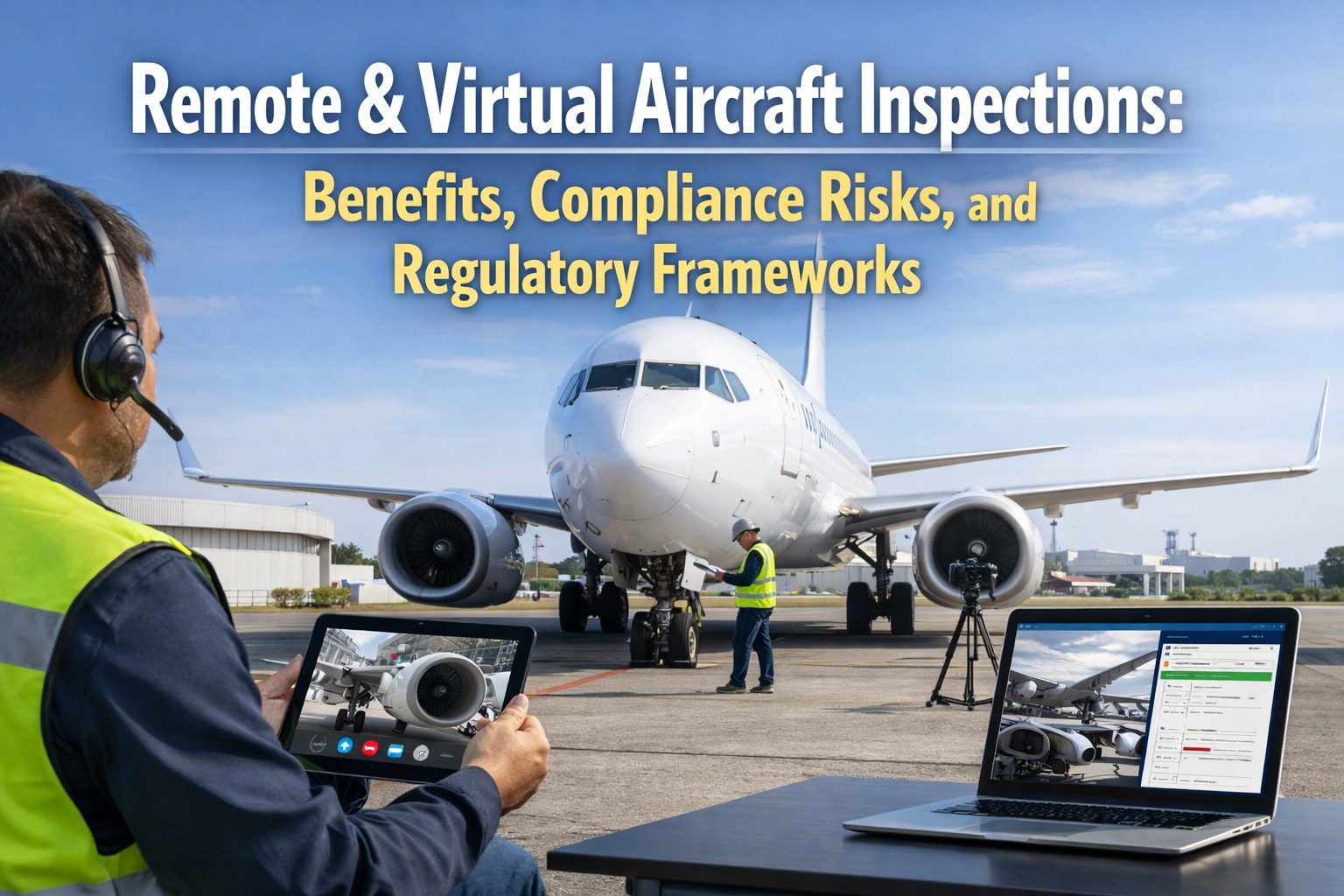
On January 5, 2024, a door plug blew out of an Alaska Airlines 737 MAX 9 mid-flight. The NTSB investigation traced the failure to missing bolts—and the FAA's subsequent audit uncovered 97 instances of noncompliance at Boeing's production facility, leading to a proposed $3.1 million fine. That same year, the FAA increased maximum civil penalties to $75,000 per violation per day for non-individual entities. The message is unmistakable: aviation maintenance compliance isn't a checkbox exercise—it's an active, documented, continuously verified process where a single gap in records can ground aircraft, trigger seven-figure penalties, and permanently damage an organization's relationship with regulators. With the FAA's expanded SMS final rule now covering Part 121, 135, 91.147, and Part 21 operators, EASA mandating SMS for all Part 145 organizations, and ICAO's Annex 19 Amendment 2 becoming applicable November 2026 with broadened safety management standards—the compliance burden has never been heavier. The organizations managing it successfully aren't working harder. They're working in systems that generate compliance documentation as a byproduct of doing the maintenance work itself.
FAA
Expanded SMS Final Rule
SMS required for Part 121, Part 135, Part 91.147, Part 21 operators
EASA Part 145 repair stations in the U.S. must implement SMS by Dec 31, 2025
Civil penalties up to $75,000 per violation per day
Digital compliance reporting and API-based data sharing requirements expanding
EASA
Part 145 SMS Mandate
SMS mandatory for all Part 145 maintenance organizations since March 2025
Documented safety policies, hazard identification, risk management programs
Continuing airworthiness under Part M with comprehensive audit trails
Bilateral agreement with FAA requiring harmonized compliance standards
ICAO
Annex 19 Amendment 2
Adopted June 2025, applicable November 26, 2026
Extended SMS to approved maintenance organizations and certified heliports
Enhanced safety performance management and safety intelligence provisions
New Safety Intelligence Manual (Doc 10159) for data-driven safety decisions
All three frameworks demand the same thing: documented proof that safety risks are identified, maintenance actions are traceable, and compliance is continuous—not assembled before an audit.
These regulations converge on a single operational truth: compliance in 2026 is a continuous state that must be embedded in daily maintenance workflows, not a periodic activity triggered by upcoming audits. Organizations still compiling compliance documentation manually are spending 4–6 weeks before every regulatory review assembling what should already exist as a searchable digital record. Teams ready to make compliance automatic can sign up for continuous compliance tracking that builds audit-ready documentation from daily maintenance operations.
The Anatomy of a Compliance Failure: Where Audit Findings Originate
Compliance failures in aviation maintenance rarely stem from negligence. They stem from gaps—between the inspection and its documentation, between the finding and its corrective action, between the work order and its verified resolution. These gaps exist in the handoffs between people, between systems, and between shifts. Understanding exactly where they form is the first step to eliminating them.
Inspection → Documentation Gap
Inspection completed but findings recorded hours later from memory. Details lost, timestamps inaccurate, photos not attached.
Audit risk: Inspector testimony doesn't match written record. Auditor flags inconsistency.
Finding → Work Order Gap
Discrepancy identified during inspection but work order created in a separate system days later—or not at all. Finding exists without linked corrective action.
Audit risk: Open finding with no evidence of corrective action initiated.
Work Order → Execution Gap
Work order created but not assigned, or assigned but technician status unknown. No visibility into whether work is in progress, waiting for parts, or abandoned.
Audit risk: Work order open for weeks with no activity log. Auditor questions maintenance process control.
Execution → Verification Gap
Repair completed but no supervisor sign-off, no quality check, no confirmation that the resolution actually addressed the original finding.
Audit risk: Work order closed without verified resolution. Auditor cannot confirm airworthiness restored.
Parts Traceability Gap
Component replaced but part serial number, certification status, or source documentation not linked to the work order record.
Audit risk: Installed component cannot be verified as approved. Aircraft airworthiness in question.
AD/SB Tracking Gap
Airworthiness Directive issued but applicability assessment delayed, compliance action not linked to specific tail numbers, or deadline tracking manual.
Audit risk: AD compliance cannot be demonstrated for specific aircraft. Potential grounding.
Cross-System Data Gap
Maintenance records in one system, parts records in another, inspection logs in a third. No single view connecting asset → inspection → finding → work order → parts → resolution.
Audit risk: Auditor asks a cross-referencing question that requires manual assembly from multiple sources. Response takes hours, not seconds.
Every gap in this chain represents a potential audit finding—and every audit finding represents a potential grounding, penalty, or certificate action. The solution isn't more people checking more documents. It's a system where the gap can't form because each step automatically triggers and documents the next. Aviation compliance teams building that system can book a demo to see closed-loop compliance workflows that eliminate gap-based audit failures.
Continuous Compliance vs. Audit Preparation: The Defining Difference
There are two fundamentally different approaches to aviation maintenance compliance. Most organizations still operate in "audit preparation" mode—reactive, stressful, and risk-laden. The organizations with the fewest findings and the strongest regulatory relationships have shifted to "continuous compliance"—where audit readiness is a permanent state, not a temporary condition created before a scheduled review.
Audit Preparation Mode
Compliance evidence is assembled before audits
4–6 weeks of pre-audit document compilation
Staff pulled from maintenance duties to chase records
Gaps discovered during assembly, not during operations
Evidence quality depends on individual record-keeping habits
Cross-referencing findings to resolutions requires manual search
Unannounced audits create organizational panic
Regulator relationship: adversarial, defensive
Audit preparation reduces audit prep time by 65–75% with DMS adoption.
Continuous Compliance Mode
Compliance evidence generates itself from daily operations
Zero pre-audit preparation needed—records are always current
Staff focused entirely on maintenance, not documentation chasing
Gaps prevented by system design, not caught during review
Evidence quality enforced by mandatory fields and digital workflows
Any finding-to-resolution chain searchable in seconds
Unannounced audits are business as usual
Regulator relationship: collaborative, confidence-based
Continuous compliance transforms audits from threats into routine validations.
The shift from audit preparation to continuous compliance isn't a cultural change initiative—it's a tooling change. When every inspection finding auto-generates a linked work order, every work order requires documented resolution with photos and sign-off, and every resolution is instantly searchable by asset, date, technician, or finding type—continuous compliance becomes the default, not the aspiration. Teams making this shift can sign up for the compliance platform that makes audit readiness automatic.
Stop Preparing for Audits. Start Being Ready for Them.
See how aviation teams use OXmaint to build compliance documentation that generates itself—linking every inspection finding to its corrective work order, every work order to its verified resolution, and every resolution to a searchable audit trail.
The Compliance Documentation Chain: What Auditors Actually Verify
Regulatory auditors—whether FAA, EASA, DGCA, or lessor oversight teams—follow a predictable verification pattern. They don't audit randomly. They trace chains: from a directive to its applicability assessment, from an inspection to its findings, from a finding to its corrective action, from a corrective action to its verified resolution. When every link in that chain exists in a single digital system, the audit becomes a demonstration of competence. When links are scattered across systems, the audit becomes an excavation.
01
AD/SB Compliance Chain
Directive issued → Applicability assessed per tail number → Compliance action scheduled → Work order executed → Parts documented → Resolution verified → Status updated fleet-wide
Auditor asks: "Show me AD 2025-12-07 compliance status for all affected aircraft in your fleet."
02
Inspection-to-Resolution Chain
Scheduled inspection → Findings documented → Each finding linked to work order → Technician action logged → Supervisor verification → Resolution photos and sign-off
Auditor asks: "Show me all findings from the last C-check on VT-ABC and their corrective actions."
03
Component Traceability Chain
Part procured → Certification verified → Installed on aircraft → Work order reference → Serial number logged → Removal tracked → Full lifecycle history maintained
Auditor asks: "Provide the complete trace for the No. 2 engine fuel control unit installed on this aircraft."
04
PM Schedule Compliance Chain
Maintenance program defines intervals → CMMS schedules PM tasks → Work orders auto-generated → Completion logged with hours/cycles → Compliance rate calculated automatically
Auditor asks: "What is your PM compliance rate for the past 12 months across all aircraft types?"
05
Personnel Qualification Chain
Technician certified → Training records current → Authorization scope documented → Work order assignments match qualifications → Recertification tracked
Auditor asks: "Confirm that the technician who performed this engine work holds current authorization for this task."
In a continuous compliance system, every one of these questions gets answered in seconds—because the evidence chain was built automatically as the work happened. In a paper-based or fragmented system, each question triggers a multi-hour search across filing cabinets, email archives, and individual memory. Aviation compliance teams that need second-speed audit responses can book a demo to see how compliance chains build themselves from daily maintenance workflows.
Building the Compliance System: What the Platform Must Do
Not every CMMS is a compliance management system. An aviation maintenance compliance platform must go beyond work order tracking to address the specific documentation, traceability, and regulatory mapping requirements that auditors verify. Here's what separates a maintenance tool from a compliance system.
When these eight capabilities work together in one platform, compliance stops being a separate activity that competes with maintenance for staff time. It becomes an automatic output of doing the maintenance work properly. Organizations ready to consolidate these capabilities can start a free trial of the platform built for aviation compliance at operational scale.
The Cost of Non-Compliance: What's Actually at Stake
Aviation compliance failures don't just generate findings on an audit report. They trigger cascading financial, operational, and reputational consequences that compound rapidly. Understanding the full cost structure makes the investment case for digital compliance systems clear.
Tier 1: Direct Financial
$75,000
Maximum FAA civil penalty per violation per day (2025 adjustment)
$10K–$150K/hr
Aircraft-on-Ground cost while compliance issues are resolved
$3.1M
Boeing proposed fine for quality system violations (September 2025)
Tier 2: Operational Impact
Fleet Grounding
Aircraft removed from service until compliance demonstrated—revenue lost per aircraft per day
Certificate Action
Operating certificate suspended or revoked—entire operation halted until restoration
Lease Penalties
Incomplete maintenance records trigger penalty clauses at lease return—millions in additional costs
Tier 3: Strategic Damage
Regulator Trust
Failed audits shift the regulatory relationship from collaborative to adversarial—increased scrutiny for years
Insurance Premiums
Compliance failures increase risk profile—insurers adjust premiums upward or require certifications
Market Access
Non-compliance with EASA or ICAO standards restricts access to international routes and codeshare agreements
Your Compliance Action Plan for 2026
The regulatory convergence happening in 2026—FAA SMS expansion, EASA Part 145 mandates, ICAO Annex 19 Amendment 2 applicability—isn't slowing down. Organizations that build digital compliance infrastructure now will navigate these requirements with confidence. Organizations still operating on paper and spreadsheets will face escalating audit risk, regulatory friction, and operational penalties. The foundational step is the same for every aviation organization: connect your inspections, work orders, findings, resolutions, and compliance documentation in one searchable, audit-ready system. Everything else—SMS implementation, AD tracking, predictive maintenance—builds on that foundation.
Build Compliance That Runs Itself
Join aviation teams using OXmaint to automate compliance documentation, close every work order loop, maintain searchable audit trails, and transform regulatory reviews from stressful preparations into routine validations of operational excellence.
Frequently Asked Questions
What is aircraft maintenance compliance management?
Aircraft maintenance compliance management is the systematic process of ensuring that all maintenance activities—inspections, repairs, parts replacements, and preventive maintenance—are performed according to regulatory requirements (FAA, EASA, ICAO, DGCA) and that every action is fully documented with traceable evidence. It encompasses tracking Airworthiness Directives, managing inspection schedules, maintaining component traceability records, documenting corrective actions with verified resolutions, and producing audit-ready evidence that demonstrates continuous airworthiness. Modern compliance management uses digital platforms (CMMS) that automate these processes so compliance documentation generates itself as a byproduct of performing maintenance work, rather than requiring separate manual documentation efforts.
What are the major aviation compliance requirements in 2026?
Aviation organizations face converging compliance requirements from three major regulatory bodies in 2026. The FAA's expanded SMS final rule requires Safety Management Systems for Part 121, Part 135, Part 91.147, and Part 21 operators, with EASA Part 145 repair stations in the U.S. required to implement SMS by December 31, 2025 under bilateral agreement changes. EASA mandated SMS for all Part 145 maintenance organizations starting March 2025, requiring documented safety policies, hazard identification, and risk management programs. ICAO's Annex 19 Amendment 2, adopted June 2025 and applicable November 26, 2026, extends SMS requirements to approved maintenance organizations and introduces enhanced safety performance management standards. Additionally, FAA civil penalties now reach $75,000 per violation per day for organizations, making the financial consequence of non-compliance significantly higher than in previous years.
How does a CMMS help with aviation audit readiness?
A CMMS transforms aviation audit readiness from a periodic preparation activity into a continuous state by automating the documentation chain that auditors verify. When an inspection finding auto-generates a linked work order, and that work order requires documented execution with photos, parts records, and supervisor sign-off before it can close, the evidence chain auditors need already exists in searchable form at all times. Specific capabilities include automated PM scheduling with compliance rate tracking, inspection-to-work-order linkage that prevents orphaned findings, digital audit trails with timestamps and user identification on every action, component traceability from procurement through installation and removal, and instant record retrieval by asset, date, technician, or finding type. Organizations using integrated CMMS report up to 75% reduction in audit preparation time because the preparation becomes unnecessary—records are always audit-ready.
What happens if an aviation organization fails a compliance audit?
Compliance audit failures trigger cascading consequences across three tiers. Direct financial impacts include civil penalties up to $75,000 per violation per day under current FAA enforcement, plus Aircraft-on-Ground costs of $10,000–$150,000 per hour while issues are resolved. Operational impacts include aircraft grounding until compliance is demonstrated, potential certificate suspension or revocation halting the entire operation, and lease-return penalties when maintenance records are incomplete. Strategic damage includes a shift in regulator relationship from collaborative to adversarial with increased scrutiny for years, higher insurance premiums reflecting elevated risk profiles, and restricted market access when non-compliance with EASA or ICAO standards limits international route authority. The compounding nature of these consequences means that a single compliance gap can escalate from a documentation issue to a multi-million-dollar operational crisis.
What is continuous compliance and how does it differ from audit preparation?
Continuous compliance is an operational state where audit-ready documentation exists at all times as a natural byproduct of daily maintenance operations—eliminating the need for periodic preparation cycles before regulatory reviews. In contrast, audit preparation mode requires 4–6 weeks of dedicated effort before each audit, pulling staff from maintenance duties to compile records from filing cabinets, email archives, and multiple disconnected systems. The key difference is tooling: continuous compliance requires a digital platform where inspections, work orders, findings, resolutions, parts records, and compliance calendars all live in one connected system with mandatory documentation at each workflow stage. When auditors arrive—whether scheduled or unannounced—the evidence they need is already organized, linked, and searchable in seconds. This shift transforms the regulator relationship from adversarial (defending documentation gaps) to collaborative (demonstrating operational excellence).