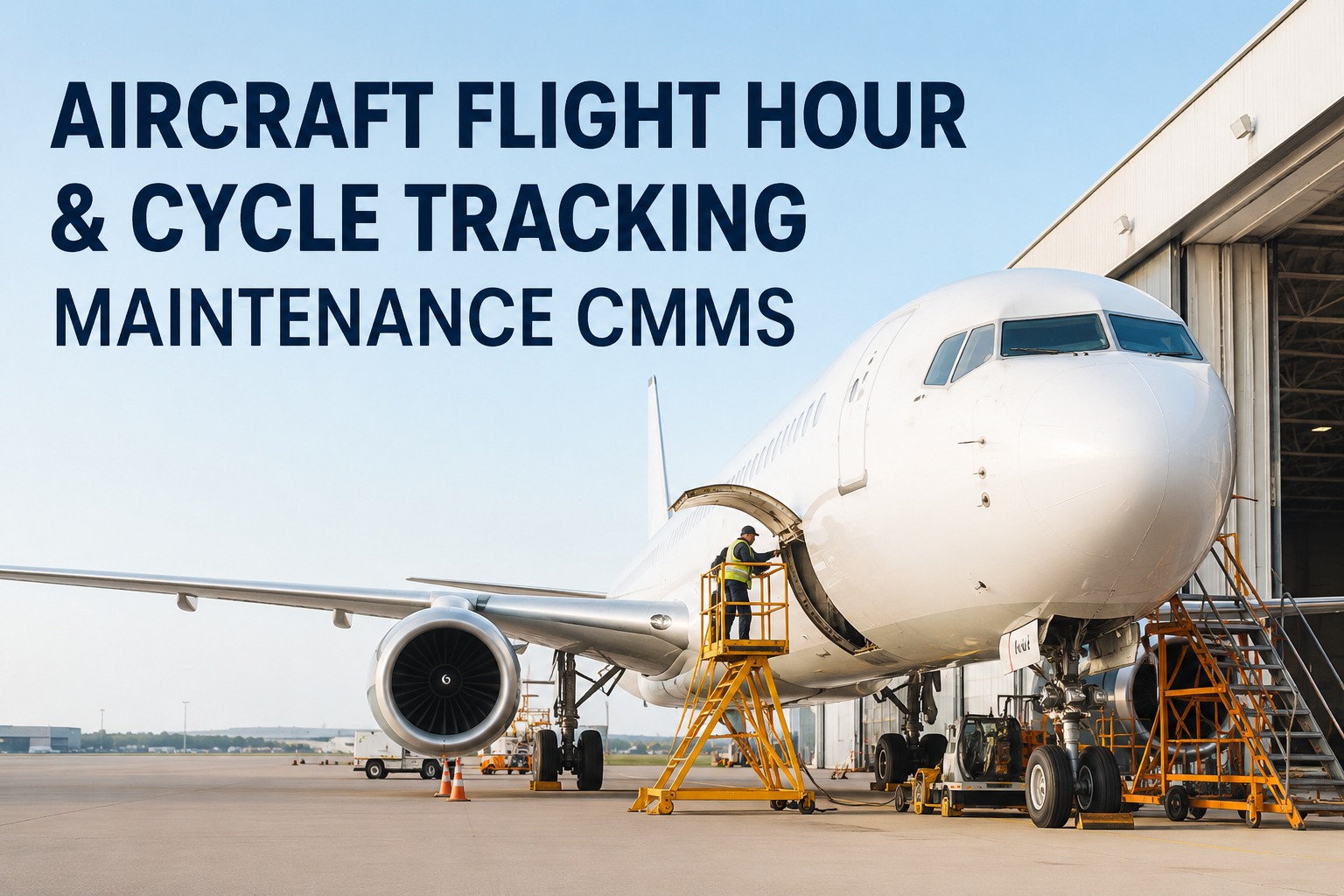
Two aircraft can log the same 500 flight hours and be in completely different states of wear. One flew long-haul: 250 takeoffs and landings. The other flew short regional hops: 1,000 cycles. The engines have the same hours, but the second aircraft's landing gear, pressurization structure, and turbine discs have absorbed four times the fatigue. This is the reason aviation maintenance cannot run on calendar time or hours alone. Every interval is governed by the counter that best predicts wear — flight hours for runtime, cycles for fatigue, calendar for age — and the maintenance system has to track all three and act on whichever comes due first. Get the counter wrong, or let it fall behind the actual flying, and a component overruns its limit before anyone sees it coming. This guide explains how flight-hour and cycle tracking actually works, how each counter is captured, and how a CMMS keeps every usage-based interval current. Start a free Oxmaint trial to track hours, cycles, and calendar per component automatically, or book a demo to see usage-based interval forecasting across a fleet.
Aviation · Usage-Based Maintenance · Interval Tracking
Aircraft Flight Hour & Cycle Tracking
Not just calendar time — flight-hour, cycle, and time-controlled component intervals. How usage-based maintenance works, how each counter is captured from the aircraft, and how a CMMS keeps every interval current against live flight data.
-
3
counters run per component: hours, cycles, and calendar
-
1st
limit reached triggers the action, whichever counter it is
-
10–20%
gap between tach time and clock time on the same flight
-
18,000
cycles a typical main landing gear reaches before overhaul
Two Counters, Two Kinds of Wear
Flight Hours vs Flight Cycles
Hours and cycles measure different damage. Hours capture cumulative runtime — how long systems have been working. Cycles capture fatigue — the stress of each takeoff, pressurization, and landing. Confusing the two is how a component that looks fine on hours quietly runs out of cycles.
-
Flight Hours
Measures: cumulative runtime
- Drives engine and APU TBO
- Governs hour-based inspections
- Best proxy for steady-state wear
- Captured from time-in-service, block, or Hobbs time
-
Flight Cycles
Measures: fatigue from each flight
- Drives landing-gear and disc life
- Governs pressurization-fatigue structure
- One takeoff + landing = one cycle
- Captured from cycle counters or the flight log
The same 500 hours can mean 250 cycles or 1,000 — and the high-cycle aircraft has absorbed far more fatigue on every cycle-limited part. Book a demo to see hours and cycles tracked independently on every component.
Why One Number Is Never Enough
One Flight, Three Counters Move Differently
Every leg advances all three counters — but by different amounts. Watch a single short regional flight land on each counter, and it becomes obvious why tracking only calendar time, or only hours, misses the limit that actually comes due first.
- One Regional Flight A 1.2-hour hop — engine start, one takeoff, one landing, shutdown
- +1.2 Flight Hours Added to engine, APU, and every hour-based interval — a small increment on a long runtime clock +1 Full Cycle A whole cycle against landing gear and pressurization limits — the same as an 8-hour flight would add +1 Calendar Day Elapsed regardless of whether the aircraft flew once or five times today
- The Insight Fly short hops all day and cycles race ahead of hours — the gear reaches its limit while the engine looks barely used
Where the Numbers Come From
How Each Counter Is Captured
A tracking system is only as accurate as the data feeding it. Hours and cycles are read from the aircraft in different ways, and the method matters — a tach reading and a clock reading of the same flight can differ by 10 to 20 percent.
-
Time in Service
The regulatory definition of flight hours — wheels-off to wheels-on. The basis for airframe and maintenance interval accrual.
-
Hobbs / Block Time
Clock time from engine start to shutdown. Runs at a steady rate whenever the engine is on — longer than time-in-service.
-
Tach Time
Engine-RPM-linked time, most accurate at cruise. Typically 10–20% less than clock time — a proxy for engine strain.
-
Cycle Counters
Automated counters logging each takeoff-and-landing per the OEM's definition — the source of truth for cycle-limited parts.
-
ACARS Feed
On modern fleets, hours, cycles, and exceedances stream automatically after every leg — no manual logbook entry, no lag.
-
Pilot Reports
Where ACARS is absent, the pilot log feeds the counters — reliable only if the tracking system ingests it promptly.
Intervals by Unit
What Gets Measured in Hours, What in Cycles
Different components wear on different clocks, so their limits are published in different units — and many carry combined limits where the first to expire wins. These are representative intervals; the OEM program sets the exact figure per type.
| Component | Primary Counter | Typical Interval |
|---|---|---|
| Turbine engine (commercial) | Flight hours | 20,000–30,000 hrs to overhaul |
| Piston engine (GA) | Flight hours | 1,800–2,000 hrs TBO |
| Main landing gear | Flight cycles | ~18,000 cycles / ~10 years |
| Engine life-limited discs | Flight cycles | Fixed cycle limit, zero tolerance |
| Pressurization structure | Flight cycles | Fatigue-life cycle limit |
| Propeller | Flight hours / calendar | 500–2,000 hrs, whichever first |
| Avionics / ELT battery | Calendar | Fixed calendar interval |
The Counter Nobody Updated
A Manual Counter Is Always Behind the Aircraft
When flight hours and cycles are typed in by hand from pilot logs, the tracking system is perpetually a few flights behind reality. An hour-based alert fires late because the counter says the aircraft has flown less than it actually has. A cycle limit is passed because last week's short-hop day was never entered. The fix is not more diligence — it is a counter that updates itself from the aircraft after every leg, so the interval math is always current.
Oxmaint for Usage Tracking
How Oxmaint Tracks Hours and Cycles
-
Per-Component Counters
Hours, Cycles, and Calendar, Independently
Every component carries its own three counters with its own limit on each — time-since-new and time-since-overhaul tracked separately, so remaining life is visible against every parameter at once.
-
First-Limit Routing
Acts on Whichever Comes Due First
For combined-limit parts — 20,000 cycles or 15 years — the system routes by whichever counter reaches its limit first, alerting well before any one of them is breached.
-
ACARS & Log Feed
Counters Update After Every Leg
Flight hours, cycles, and exceedance events stream in from ACARS and flight operations, or from pilot reports — so every interval rolls forward automatically with no manual entry lag.
-
Interval Forecasting
Next-Due Projected at Current Rate
Using the aircraft's utilization trend, Oxmaint forecasts when each hour- and cycle-based interval will fall due — so work is planned into a window, not discovered against a limit.
-
Remaining-Life Alerts
Warnings at 10% and 5% Left
Configurable lead-time alerts fire as a component approaches its limit on any counter — enough runway to plan a removal in a scheduled slot rather than an AOG event.
-
Back-to-Birth Records
Full Accumulation History
Every serialized part carries its complete hours-and-cycles history from new — the traceability a pre-buy, lease-return, or audit demands, with zero counter gaps.
Frequently Asked
Flight Hour & Cycle Tracking Questions
What is the difference between a flight hour and a flight cycle?
A flight hour measures cumulative runtime — how long the aircraft or component has been operating. A flight cycle measures fatigue: one complete takeoff-and-landing (with the pressurization and thermal stress that comes with it) equals one cycle. A short regional flight and a long-haul flight each add one cycle, but very different hours — which is why cycle-limited parts like landing gear and turbine discs are tracked separately from hour-limited ones. Sign up for Oxmaint to track hours and cycles independently per component.
Why can't aircraft maintenance run on calendar time alone?
Because usage, not time, drives most wear. Two aircraft the same age can have wildly different hours and cycles depending on how hard they fly. Calendar intervals cover age-related degradation like battery and seal aging, but engine overhaul, gear life, and disc life are governed by hours or cycles. A sound program tracks all three and acts on whichever limit is reached first.
How are flight hours and cycles captured into the system?
On modern fleets, an ACARS feed streams hours, cycles, and exceedance events automatically after every leg. Where that is not available, the pilot log or a cycle counter feeds the numbers. The capture method matters: tach time can read 10–20% below clock time on the same flight, so the system must use the correct basis for each interval type. Book a demo to see flight data feeding counters with no manual entry.
How does a CMMS handle parts with combined hour, cycle, and calendar limits?
Each component is configured with all three counters, each with its own limit and remaining-life display. The system tracks every parameter independently and routes by whichever reaches its limit first — a landing-gear part limited to 18,000 cycles or 10 years is removed at the earlier of the two, regardless of where the other counters sit. Hours and cycles update from flight data; calendar runs continuously from the installation date. Sign up for Oxmaint to configure multi-counter limits on every part.
Count · Forecast · Remove on Time
The Part Runs Out of Cycles Whether or Not You Counted Them
Wear does not wait for the logbook to be updated. Every uncounted cycle and every hour that lands late in the system is a limit creeping closer unseen. Oxmaint gives aviation teams one platform to track hours, cycles, and calendar per component, feed the counters automatically from flight data, forecast every usage-based interval, and remove each part before — never after — its first limit.