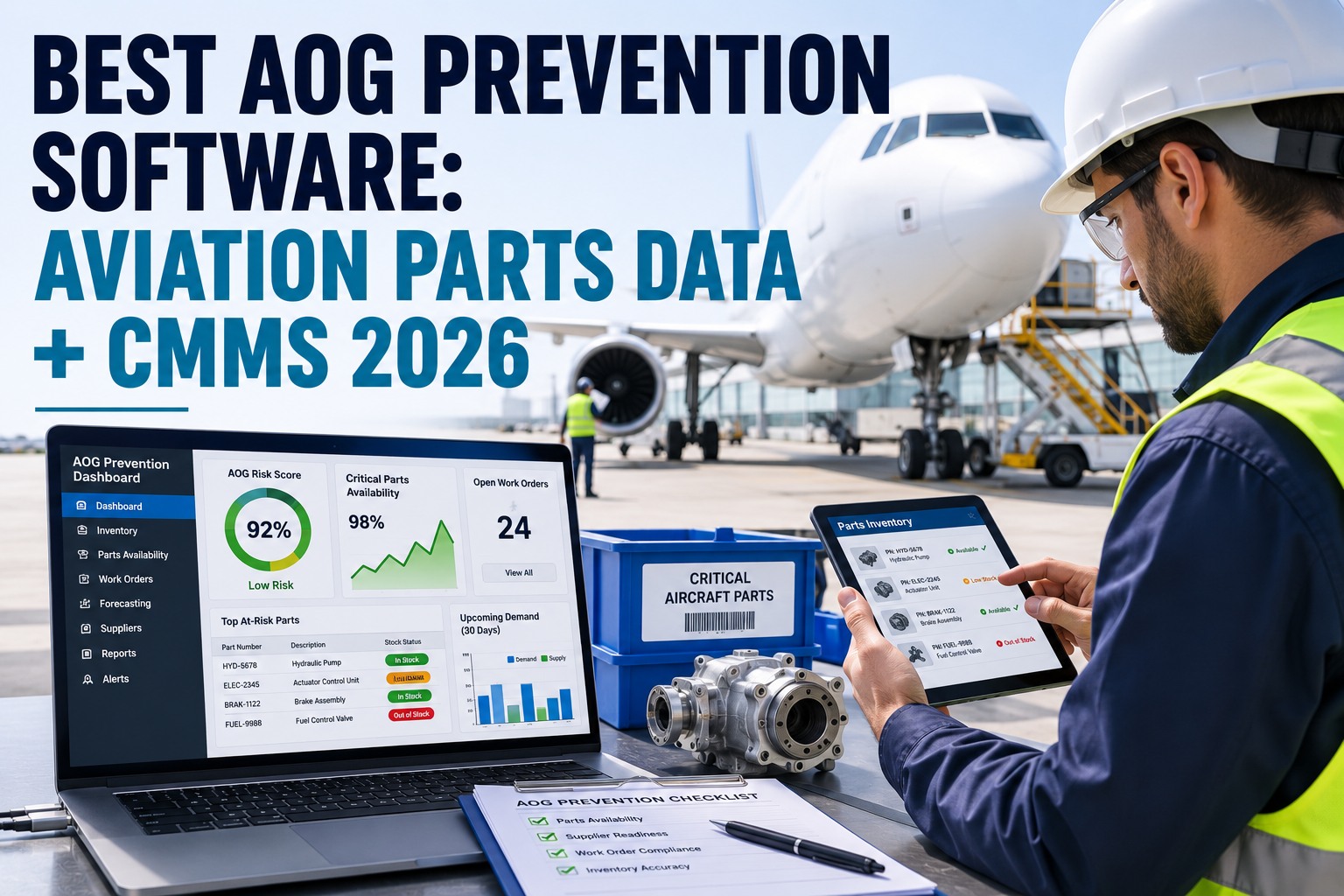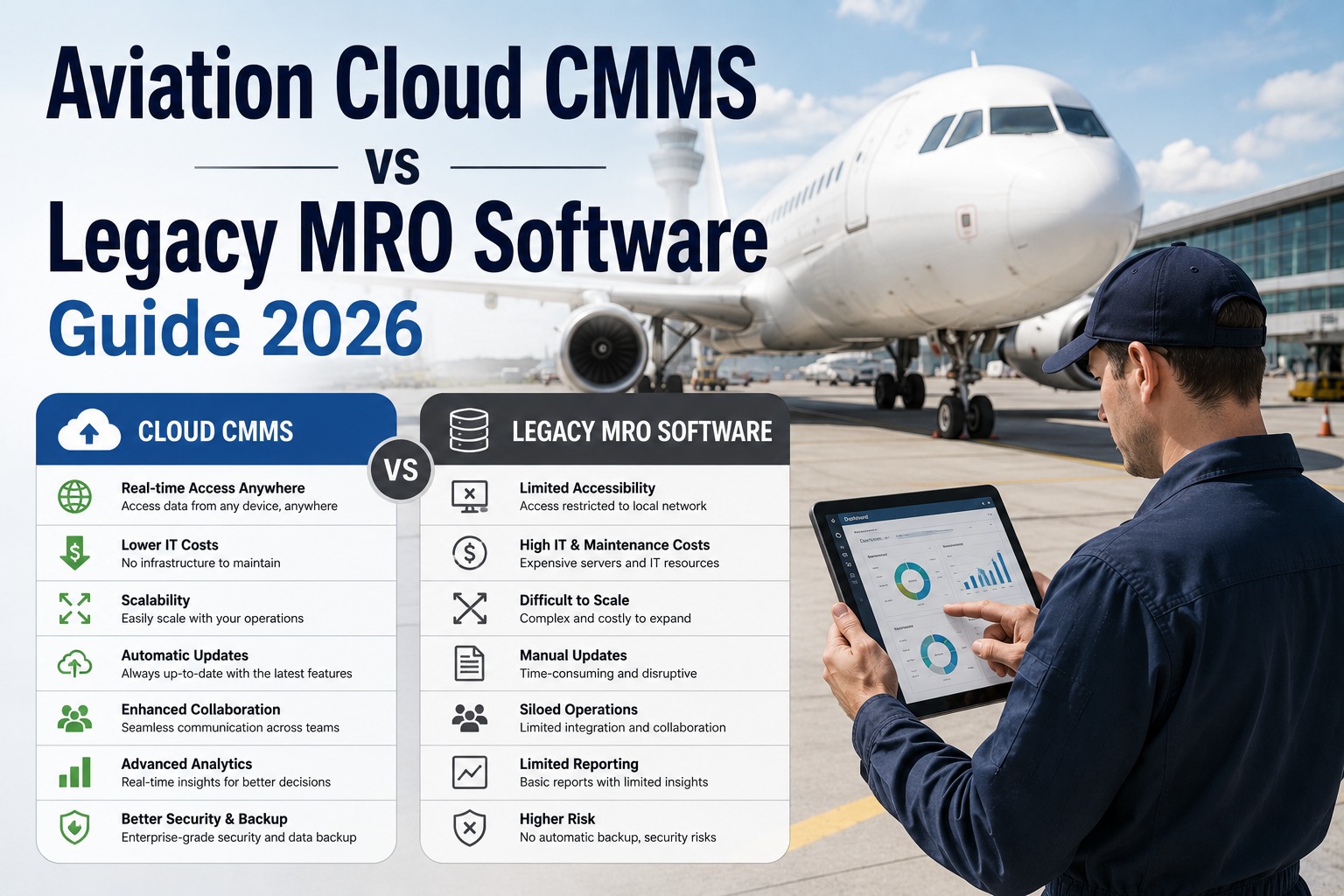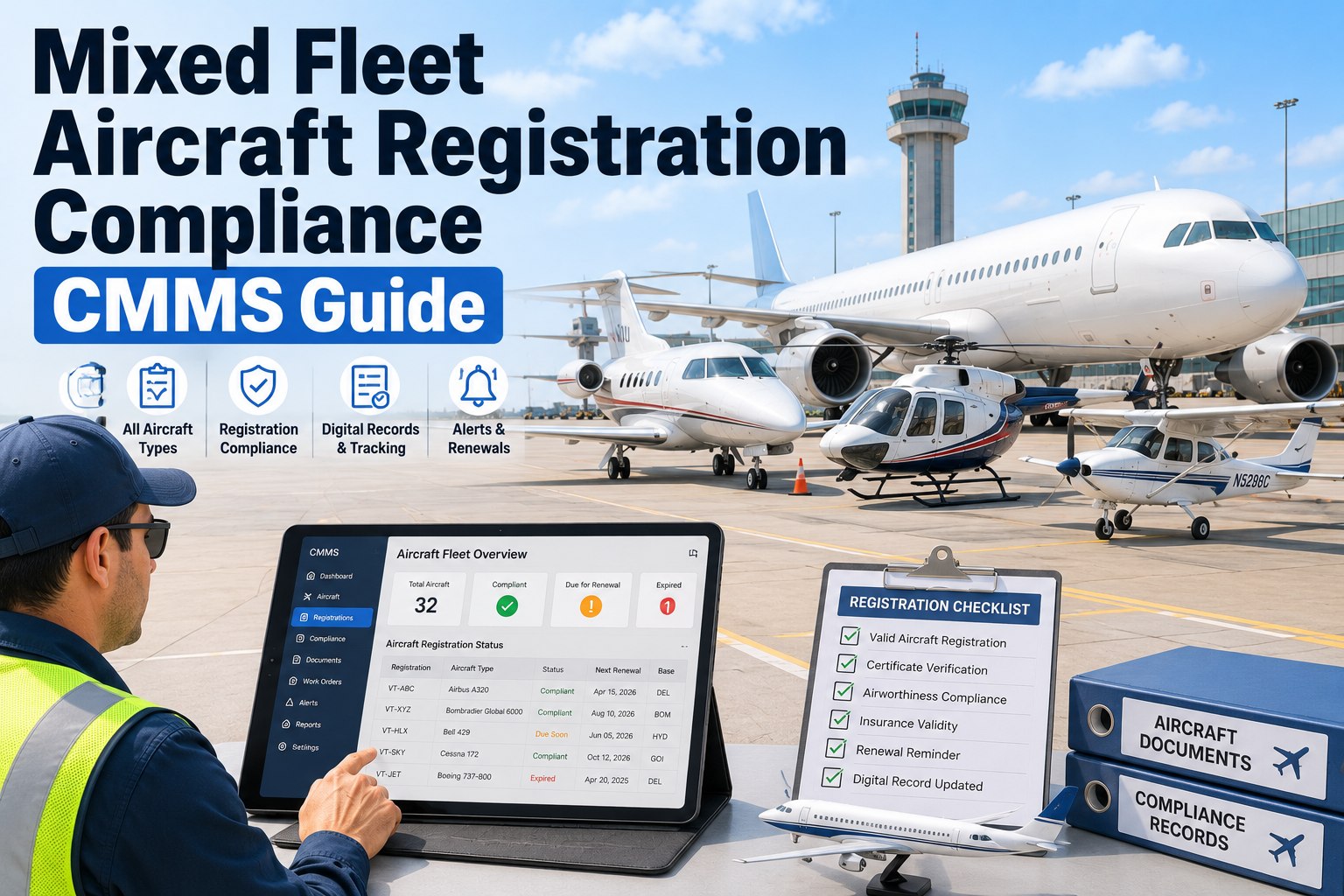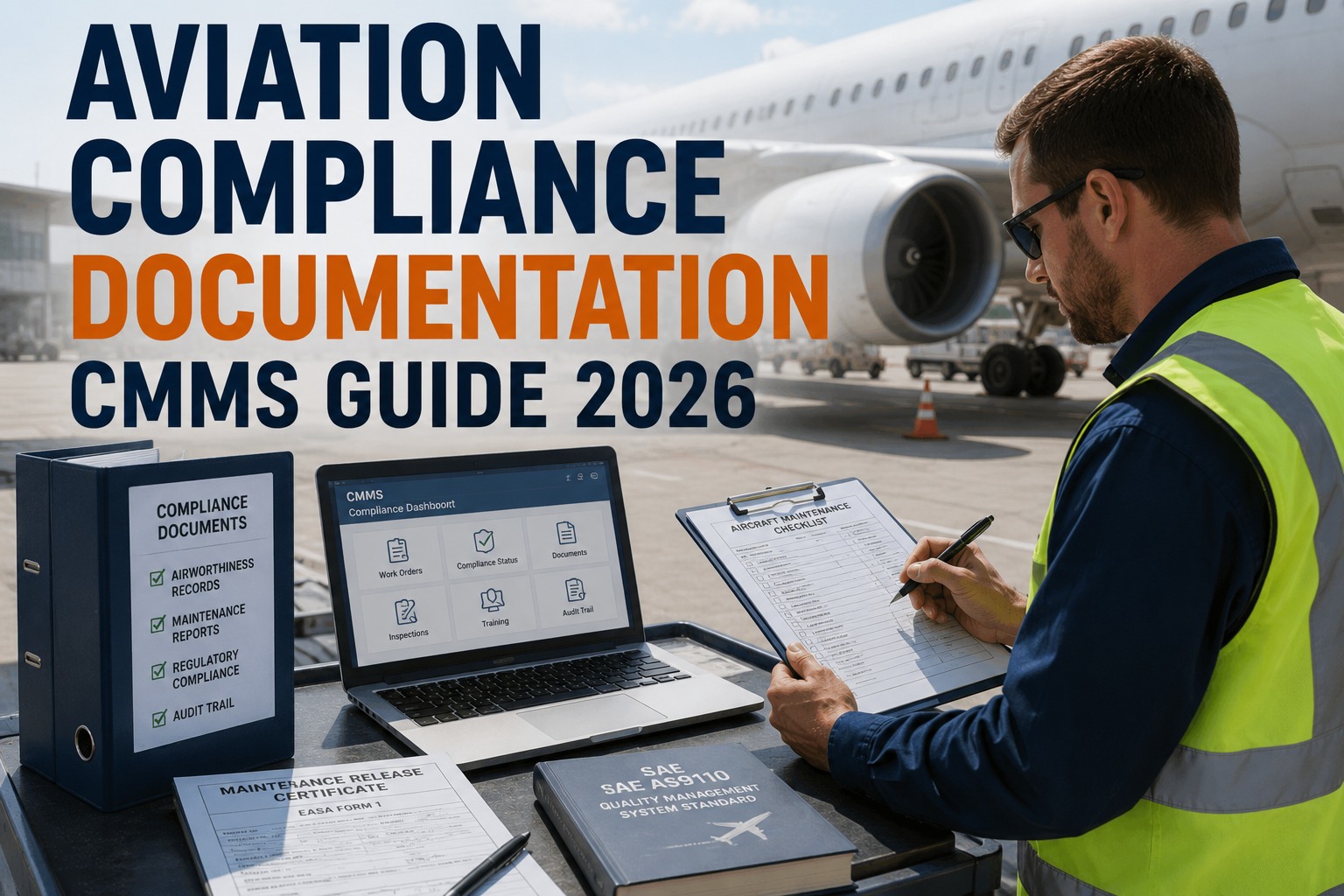
An aircraft can be grounded by a single number. Miss one recurring airworthiness directive by one flight cycle, and the moment that gap is discovered — usually at a ramp check or an FAA Part 121 audit — the tail is grounded on the spot. The math turns brutal fast: US commercial fleets average around 14 AOG events per aircraft per year, and a grounded narrowbody burns $10,000 to $15,000 per flight hour in lost ticket revenue while the paperwork gets sorted. The root cause is almost never the technician. It is the tracking system — paper logbooks, disconnected spreadsheets, and legacy ERPs that cannot apply a new AD to the affected tails automatically. This guide covers how aircraft maintenance tracking software computes every interval against live flight data, keeps each tail airworthy, and produces the compliance package an inspector actually demands. Start a free Oxmaint trial and load a sample tail with your real interval structure in minutes, or book a demo to see AD application across a mixed fleet live.
Aviation · Continuing Airworthiness · Fleet Compliance
Aircraft Maintenance Tracking Software & CMMS Guide
Flight-hour and cycle-based intervals, tail-by-tail compliance status, and real-time fleet visibility — how airlines, MROs, and operators track every airworthiness obligation against live flight data and stay FAA Part 121/135 and EASA Part-M ready.
-
~14
AOG events per aircraft per year across US commercial fleets
-
$10–15K
lost per flight hour when a narrowbody sits grounded
-
1 cycle
a single missed interval is enough to ground the tail
-
Docs
most audit findings cite documentation gaps, not maintenance failures
The Defining Problem
Every Aircraft Runs Three Clocks at Once
This is what makes aviation tracking unlike any other maintenance. Every interval, every life-limited part, every recurring AD is measured against three independent counters simultaneously — and the system must act on whichever one reaches its limit first, regardless of where the other two stand.
-
Flight Hours
Time-in-service accrued in the air. Drives hour-based inspections, TBO on engines and APUs, and hour-limited components — incremented from every flight leg.
-
Flight Cycles
One takeoff-and-landing equals one cycle. Governs landing gear, pressurization-fatigue structure, and disc life — the counter short-haul fleets burn through fastest.
-
Calendar Days
Elapsed time regardless of use. Controls calendar-limited parts, recurring calendar ADs, and checks that fall due whether the aircraft flew or sat — runs continuously.
A landing-gear component limited to 20,000 cycles or 15 years is removed at whichever comes first. Tracking one counter and missing the other is how parts overrun their limit. Sign up for Oxmaint to track LLP life across all three counters and route by the first limit.
The Operational Heart
Tail-by-Tail Compliance, at a Glance
The maintenance-control question is always the same: which tails are airworthy right now, and what is coming due? A live status board answers it per aircraft — no daily compilation call, no manual status whiteboard. Here is what that view looks like across a fleet.
| Tail | Next Check | Due (Hrs/Cyc) | Open ADs | Status |
|---|---|---|---|---|
| N801AV | A-Check | 218 hrs | 0 | Airworthy |
| N802AV | C-Check | 41 hrs | 1 recurring | Due Soon |
| N803AV | A-Check | 1,050 hrs | 0 | Airworthy |
| N804AV | LLP removal | 9 cyc | 2 | Ground Risk |
| N805AV | B-Check | 376 hrs | 0 | Airworthy |
Every counter rolls forward automatically as flight data lands from ACARS or pilot reports — so the board is live, not a snapshot someone updated last week.
The Check Hierarchy
From the A-Check to the Heavy Visit
Scheduled maintenance escalates in scope as intervals lengthen. Each tier is forecast against current utilization so the next visit can be planned into an operational window — not discovered against a deadline.
- A A-Check Frequent light inspection — general checks, fluid levels, and minor tasks. Done on the line, often overnight, on the shortest interval.
- B B-Check A deeper routine inspection, frequently absorbed into escalated A-check packages under modern maintenance programs.
- C C-Check A major base-maintenance visit taking the aircraft out of service for days — extensive structural and systems inspection against the OEM program.
- D D-Check The heaviest visit — near-teardown structural inspection every several years. Weeks in the hangar, assembled from hundreds of task cards.
Alongside these sit operator-imposed reliability tasks and time-controlled overhauls on engines, APUs, propellers, and landing gear — all forecast to the same live utilization. Book a demo to see every check and overhaul auto-forecast at current utilization.
How a Tail Goes Non-Compliant
The Airworthiness Directive Gap
Most non-compliance is not a maintenance error — it is a tracking gap in how a new directive reaches the fleet. This is the chain that flies an aircraft non-compliant, and where an aviation platform breaks it.
- 1 A new AD is issued The FAA, EASA, or TCCA publishes an airworthiness directive with an effective date, a method of compliance, and possibly a recurring interval.
- 2 A legacy tracker waits The spreadsheet or legacy ERP does not apply the AD to affected tails until someone manually cross-references type and serial number — which can take weeks.
- 3 The aircraft flies non-compliant In the gap, the affected tail keeps flying against a directive it has not met — the violation exists whether or not anyone has noticed yet.
- ✓ The engine closes it at step 1 An applicability engine matches the AD to affected tails by type, serial, and configuration the moment it is issued — and generates the compliance work order.
60 Seconds vs Six Hours
The Audit Package Is Won Before the Inspector Arrives
When an FAA or EASA inspector asks for a tail's AD compliance history, life-limited-part traceability, and certification records, the difference is whether you export an indexed dossier in under a minute or compile it from paper over hours. Most compliance findings cite documentation gaps rather than maintenance failures — which means the record is the risk, and the record is exactly what a tracking platform is built to produce.
Oxmaint for Aviation
How Oxmaint Tracks a Fleet
-
Master Record Per Tail
Every Counter, Always Current
Total flight hours, cycles, calendar age, and time-since-new or overhaul for every component — rolled forward automatically as flight data lands from ACARS or pilot reports.
-
AD & SB Engine
Directives Applied Automatically
FAA, EASA, and TCCA ADs matched to affected tails by type and serial the moment they issue, with effective dates, methods of compliance, and recurring intervals tracked to the cycle.
-
Life-Limited Parts
Three Counters, First Limit Wins
Every LLP tracked by serial against hours, cycles, and calendar simultaneously, with removal forecasts and alerts at 10% and 5% remaining — back-to-birth records intact.
-
Check Forecasting
Next Visit at Current Utilization
A, B, C, and D checks plus operator reliability tasks forecast against live utilization — so heavy visits are planned into operational windows, cutting downtime.
-
MEL & Deferrals
Deferred Defects on a Clock
Minimum Equipment List items, CDL entries, and deferred defects tracked with rectification deadlines, escalation rules, and visibility to both dispatch and maintenance control.
-
Audit Packages
A Full Dossier in Under a Minute
One click exports every signature, AD record, and part trace for any tail across any date range — the indexed compliance dossier an FAA Part 121 or EASA Part-M review demands.
Frequently Asked
Aircraft Maintenance Tracking Questions
How is aviation tracking different from a generic CMMS?
A generic CMMS tracks calendar-based tasks. An aviation platform maintains a master record per tail — flight hours, cycles, calendar age, and remaining life for every component — and adds the regulatory layer: it applies new ADs to affected tails automatically, links the method of compliance to a task card, tracks recurring intervals to the cycle, and generates the documentation an FAA or EASA audit demands. Sign up for Oxmaint to load a sample tail with your real interval structure.
How are life-limited parts tracked against multiple limits?
Many LLPs carry combined limits — a landing-gear component might be limited to 20,000 cycles or 15 years, whichever comes first. The system tracks all three counters (hours, cycles, calendar) independently for each part and routes by whichever reaches its limit first, regardless of the others. Hours and cycles update from flight data; calendar runs continuously from the installation date.
Can the system integrate with ACARS and flight operations?
Yes. A modern platform connects to ACARS data feeds, flight data monitoring, and flight operations systems via secure APIs, so flight hours, cycles, and exceedance events update component records automatically after every leg — no manual logbook entry. That is what keeps hour- and cycle-based alerts ahead of actual flight time rather than behind it. Book a demo to see flight data feeding component life counters live.
How long does it take to deploy across a fleet?
A typical deployment runs about 6 to 12 weeks: the first weeks cover data migration, fleet structure setup, and AD/SB library import; the middle weeks cover user training, mobile rollout, and pilot-tail validation; the final weeks cover full fleet cutover and reliability-program activation. You can load a single sample tail and see the interval structure in minutes. Sign up for Oxmaint to start with one tail and scale to the full fleet.
Track · Forecast · Prove
The One Cycle You Did Not Track Is the One That Grounds the Jet
Every uncounted cycle, unapplied directive, and unforecast overhaul is an AOG event and an audit finding waiting to surface. Oxmaint gives airlines, MROs, and operators one platform to maintain a live master record per tail, apply ADs automatically, track life-limited parts across all three counters, forecast every check, and produce an audit-ready compliance package on demand.