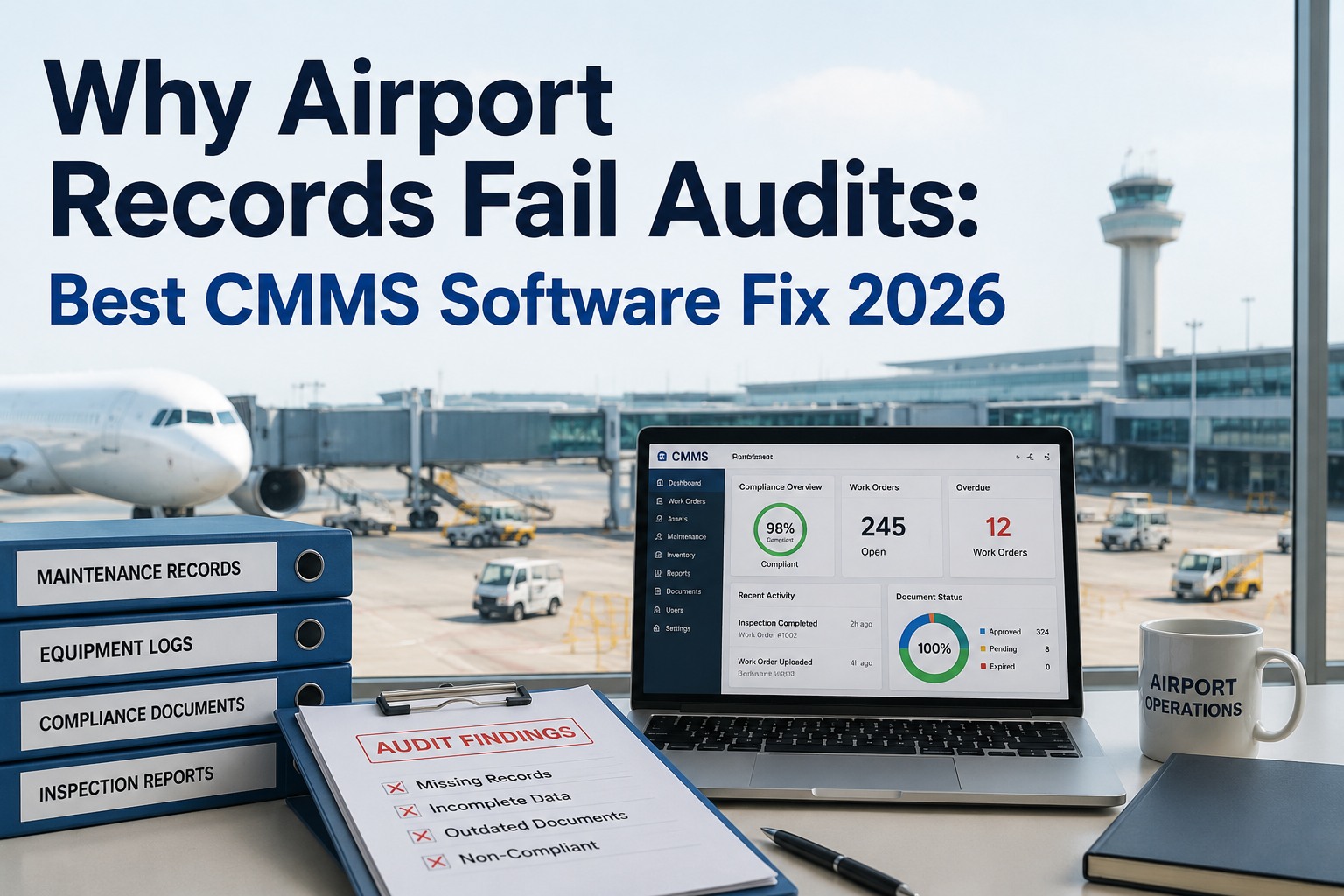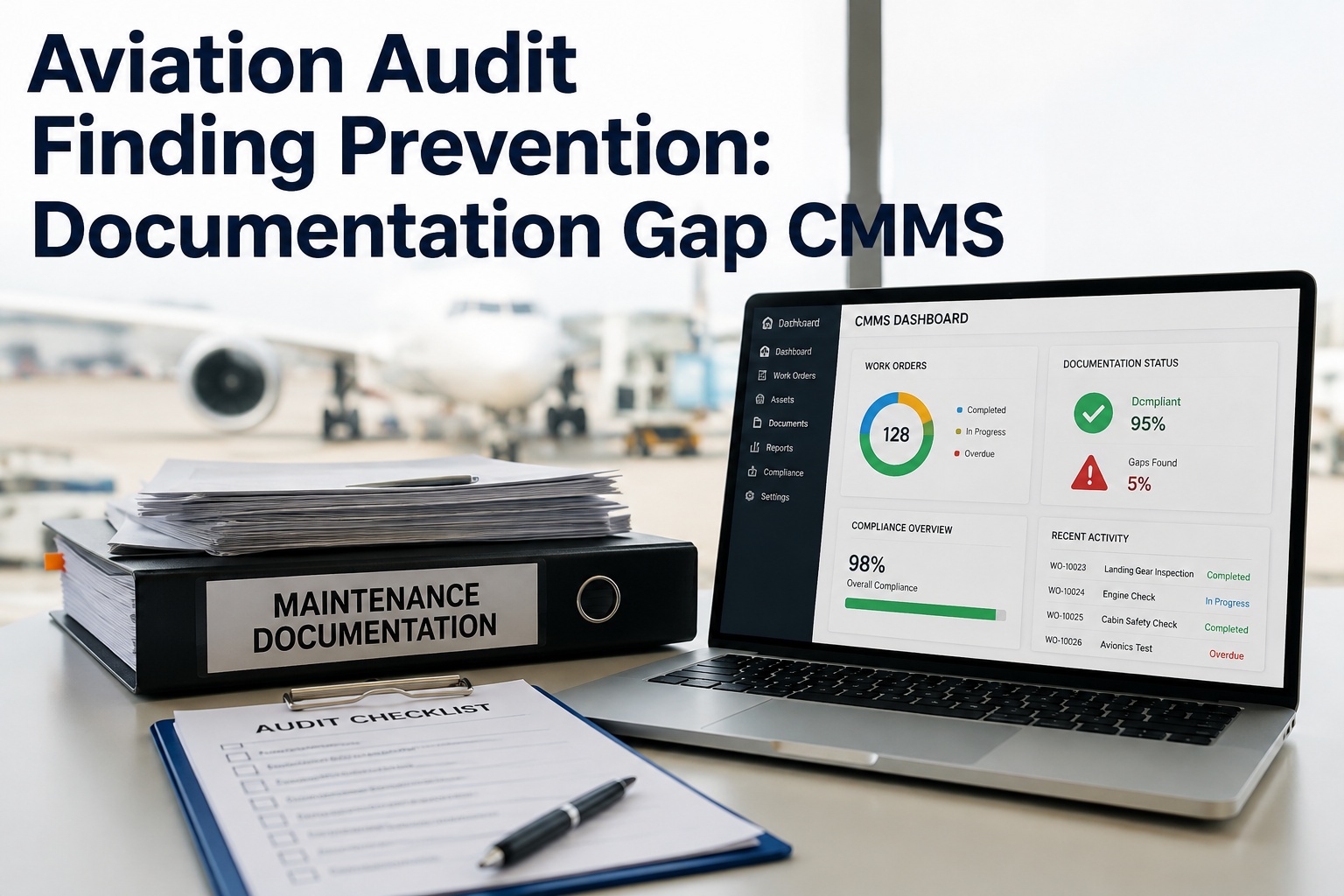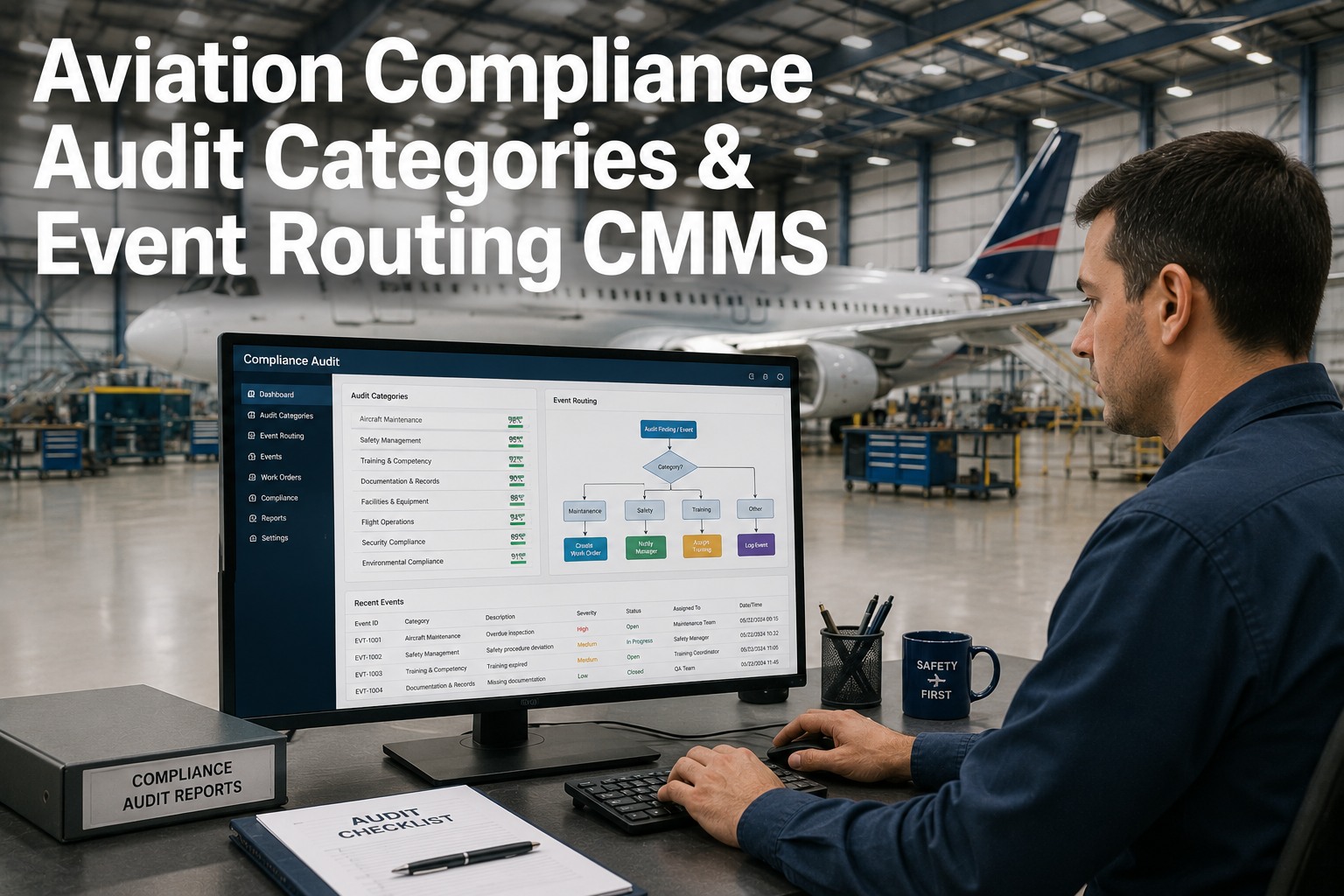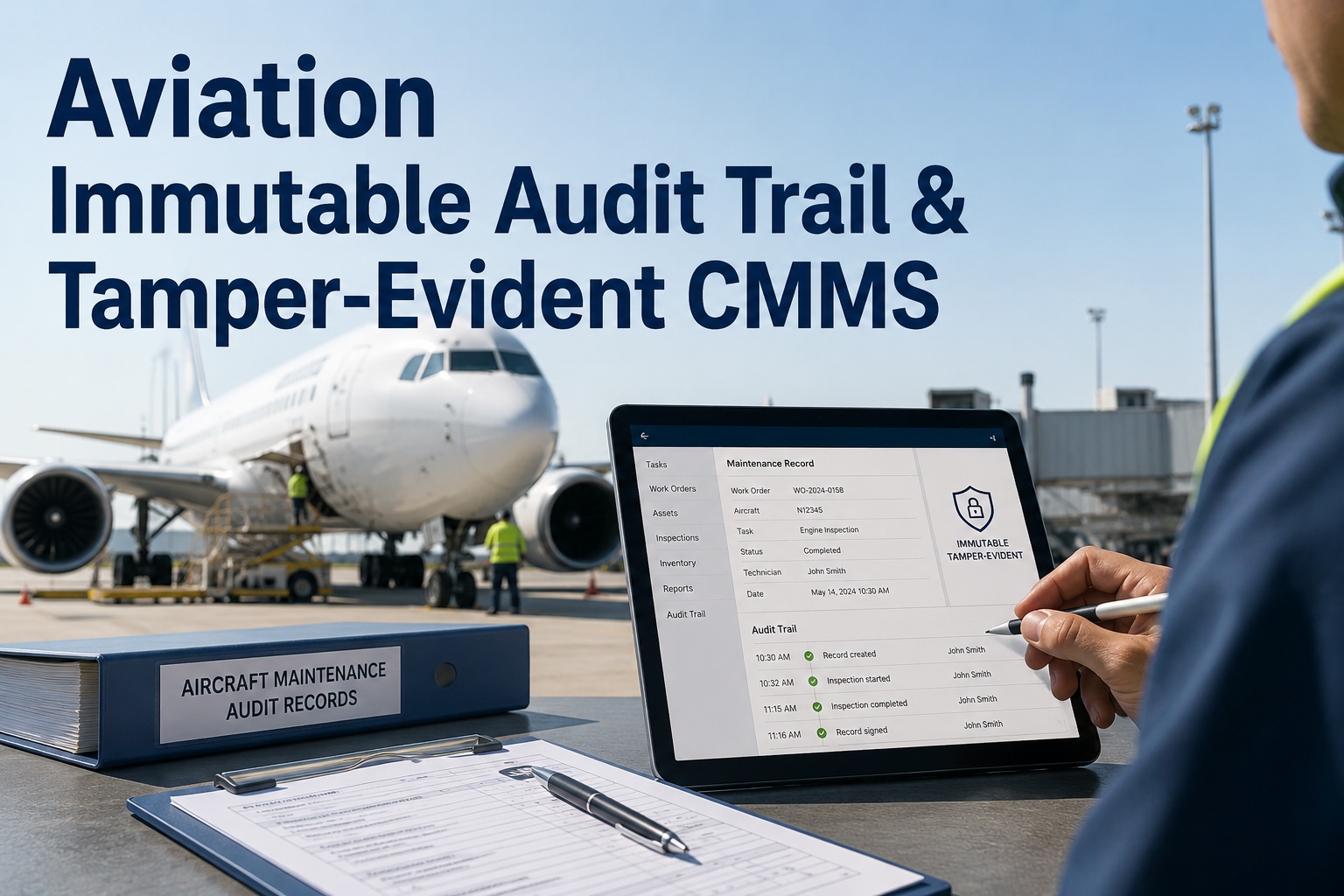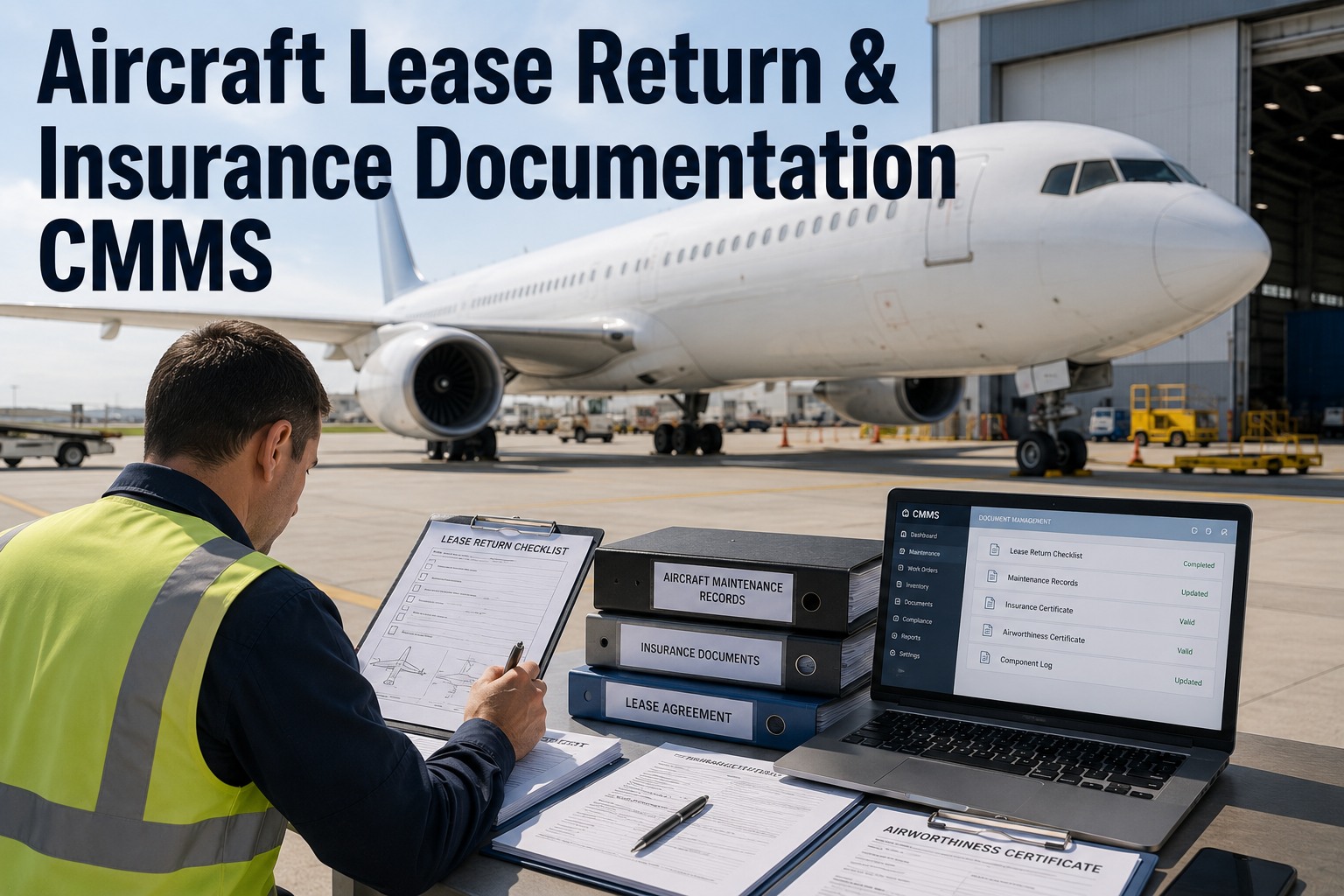
Aircraft lease returns and insurance audits rarely fail on the airframe — they fail on paper. A single missing back-to-birth trace, an unresolved Airworthiness Directive signature, or a 12-hour gap in the hours-and-cycles reconciliation can push redelivery out by three to six weeks and trigger seven-figure reserve penalties. Operators that run a structured Computerized Maintenance Management System (CMMS) close lease returns on schedule roughly 80% faster than those relying on shared drives and spreadsheets. This guide breaks down the five documentation streams that decide every redelivery and insurance claim, and shows how to structure your CMMS so evidence is assembled in hours, not weeks. You can put the framework to work today when you Start Free Trial.
Can your maintenance records survive a redelivery audit without a single gap?
Lessors and insurers expect a complete, traceable evidence package at the moment of redelivery — back-to-birth records, AD/SB compliance, hard-time history and hours-and-cycles reconciliation, all cross-referenced and exportable. One missing signature can stall the handback for weeks.
What a documentation gap actually costs at redelivery
Lease agreements typically allow a 7- to 14-day redelivery window after the return condition notice. Miss it and the meter starts running — daily reserves, parking fees, crew standby, and often a lump-sum penalty tied to the remaining lease term.
A regional operator returning a 2014 A320 to a major lessor discovered a 4-month gap in the landing-gear overheat detection card replacement log. Reconstructing the trail across three MRO vendors took 19 working days, cost $46,000 in extended reserves, and triggered a $28,000 return-condition penalty. The same evidence, assembled inside a structured CMMS with linked work orders and AD/SB traceability, would have exported in under four hours.
Five documentation streams every lease return must close
Lessors and insurers do not accept partial coverage. Each stream below must be complete, cross-referenced, and exportable as a single evidence bundle before the aircraft leaves your custody.
Life-limited parts traceability
Every rotating and life-limited component must carry a documented chain from installation to birth — including removals, repairs, and current cycle counts. A single broken link invalidates the entire trace for the affected assembly.
Hours and cycles reconciliation
Flight hours and cycles recorded in the CMMS must reconcile to the aircraft maintenance log, the technical log, and the lessor's return condition statement — typically to within 0.1 hour and zero cycles.
Airworthiness Directive & Service Bulletin package
Every applicable AD and SB needs a closed compliance record: applicability check, method of compliance, effective date, signatory, and the work order that performed it. Open or conditional items must be flagged for the lessor.
Hard-time replacement history
Components with fixed replacement intervals — hydraulic filters, oxygen generators, tires, brake stacks — must show replacement dates, part numbers, remaining life, and the certified release for each swap.
Insurance claim & audit evidence
Hull, liability, and AOG coverage audits demand incident logs, repair authorizations, adjusted valuations, and downtime proof. A CMMS that ties work orders to claim numbers cuts claim assembly from days to hours.
The 90-day redelivery countdown — and where CMMS evidence fits
Lease return is not a sprint at T-minus-7; it is a 90-day structured countdown. Each milestone below maps directly to a CMMS export that should already exist in draft form long before the return condition notice lands.
Return condition review
Pull the lease's return conditions matrix into the CMMS. Map every required deliverable to a tag, assembly, or component so the gap analysis is queryable, not manual.
Back-to-birth & LLP audit
Run a full life-limited parts trace. Flag any component whose cycle count cannot be reconciled to the maintenance log and begin recovery with the originating MRO immediately.
AD/SB compliance sweep
Cross-check every applicable AD and SB against closed work orders. Open items either get closed now or formally disclosed with a return-condition exception.
Hard-time & inspection close-out
Schedule and complete every hard-time replacement and scheduled inspection that falls due before redelivery. Sign every work order and attach the certified release.
Evidence package assembly
Export the consolidated evidence bundle: back-to-birth, hours and cycles, AD/SB, hard-time, and insurance records. Deliver to the lessor and the insurer in parallel.
Redelivery & handback
Final walk-around, logbook handover, and signed acceptance. With documentation already cleared, the physical handback is a formality — not a negotiation.
Lease return & insurance evidence checklist
Print this, share it with your maintenance controller, and run it against your CMMS before the return condition notice arrives. Every box below should map to a closed, queryable record.
Back-to-Birth Records
- LLP trace sheet for every rotating component
- Removal and installation dates with work order refs
- Repair shop 8130-3 / EASA Form 1 certificates
- Current cycle count reconciled to aircraft log
- Originating manufacturer release on file
Hours & Cycles
- TTSN, TCSN, TSN, CSN per assembly
- Reconciliation to lessor return statement
- ACARS / flight-log cross-check report
- APU hours and cycles documented separately
- Engine hours split: ground vs. flight
AD / SB Compliance
- Applicability matrix signed off
- Method of compliance documented per item
- Closed work order linked to each AD/SB
- Open items disclosed with exception form
- Repetitive AD next-due date recorded
Insurance Evidence
- Incident and damage log for lease term
- Repair authorizations and adjuster sign-offs
- Hull valuation and adjusted value statement
- Claim numbers cross-linked to work orders
- AOG downtime proof and costs
| Evidence stream | Typical volume per aircraft | Manual assembly time | CMMS export time |
|---|---|---|---|
| Back-to-birth / LLP trace | 120–220 documents | 8–14 days | 2–4 hours |
| Hours & cycles reconciliation | Spreadsheet + 6 logbooks | 2–3 days | 30–45 minutes |
| AD / SB compliance package | 60–140 directives | 5–8 days | 1–2 hours |
| Hard-time replacement history | 40–80 work orders | 3–5 days | 1 hour |
| Insurance claim evidence | 0–12 incidents | 2–10 days | 1–3 hours |
What structured documentation delivers — in numbers
Operators that move lease return and insurance documentation into a CMMS-backed workflow see measurable, repeatable gains across cost, speed, and audit confidence.
Our last two A320 redeliveries closed inside the seven-day window because the back-to-birth and AD package was already assembled in the CMMS — we exported it in an afternoon instead of spending three weeks digging through shared drives.
Turn your next lease return into a same-week handback
Spin up a structured CMMS for your fleet and have your first evidence bundle exportable before the return condition notice lands.
Lease return & insurance documentation — answered
What is a back-to-birth record and why does it matter at lease return?
Back-to-birth is the complete documented trace of every life-limited component from its manufacture to its current installed position — including every removal, repair, and cycle count along the way. Lessors will not accept an aircraft where any LLP trace has a gap, because the component's remaining life cannot be verified. A CMMS that links work orders to component serial numbers rebuilds this trace automatically instead of requiring a manual archive dig.
How does a CMMS speed up the AD/SB compliance package?
Instead of cross-referencing spreadsheets against paper logbooks, a CMMS stores each Airworthiness Directive and Service Bulletin with its applicability check, method of compliance, signatory, and linked closed work order. At redelivery you export the full package in one pass; at audit you can prove every directive was addressed on time. You can see the workflow in action when you Book a Demo.
How far ahead should I start preparing documentation for a lease return?
Start at T-minus-90 days. The first 30 days should be return-condition gap analysis and LLP trace verification; the middle 30 cover AD/SB sweep and hard-time replacements; the final 30 are for inspection close-out, evidence assembly, and parallel delivery to the lessor and insurer. Waiting until the return notice arrives is the single most common cause of seven-figure reserve penalties.
What records does an aviation insurance audit typically require?
Insurers want incident and damage logs for the full lease term, repair authorizations and adjuster sign-offs, current hull valuation, AOG downtime proof, and any modified coverage basis. A CMMS that tags work orders with claim numbers lets you assemble a complete claim file in hours rather than days — which matters when payout windows are as short as 72 hours.
Can a CMMS help with aircraft sale documentation, not just leases?
Yes — a sale demands the same evidence bundle as a lease return, plus title and lien clearance support. Buyers' technical teams scrutinize back-to-birth, AD/SB, and hard-time records just as rigorously as lessors. A CMMS that already holds these records in structured form lets you produce a sale-ready dossier in a single export, shaving weeks off the transaction. Spin one up for your fleet when you Start Free Trial.
Your next redelivery should close in days, not weeks
Structured lease return and insurance documentation — built around back-to-birth, hours and cycles, AD/SB, and hard-time records — ready to export the moment the lessor asks.
Free 14-day trial · No credit card