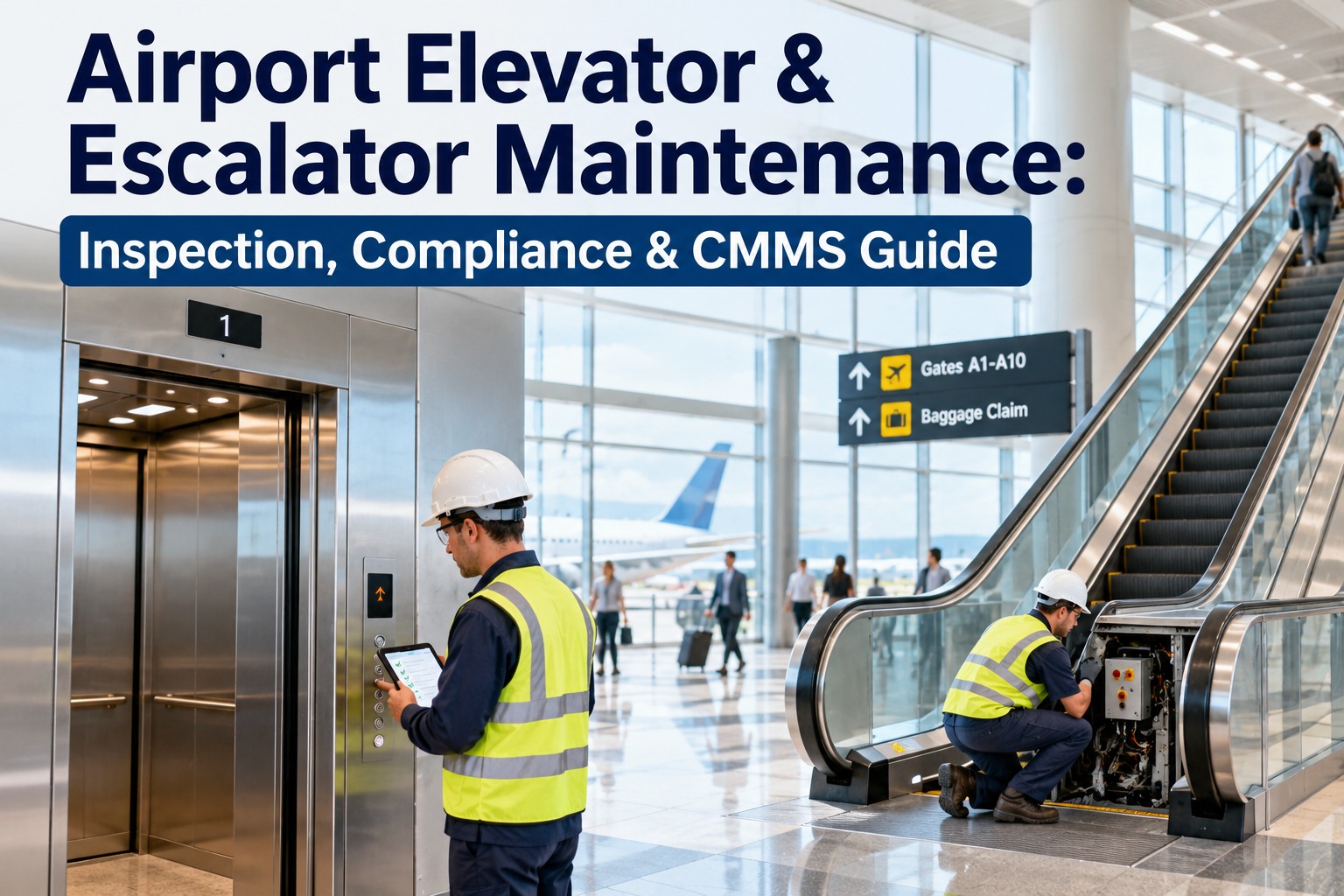
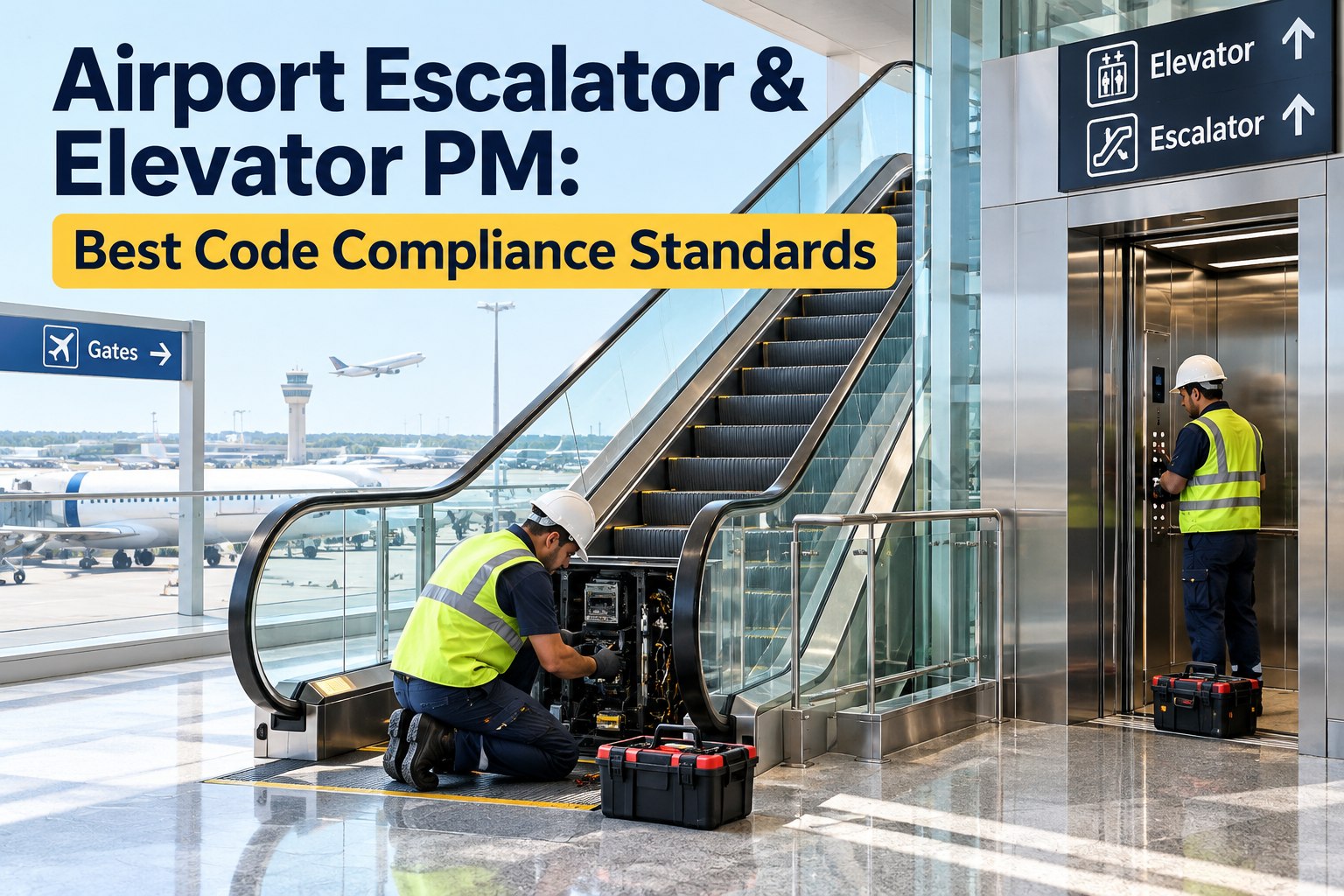
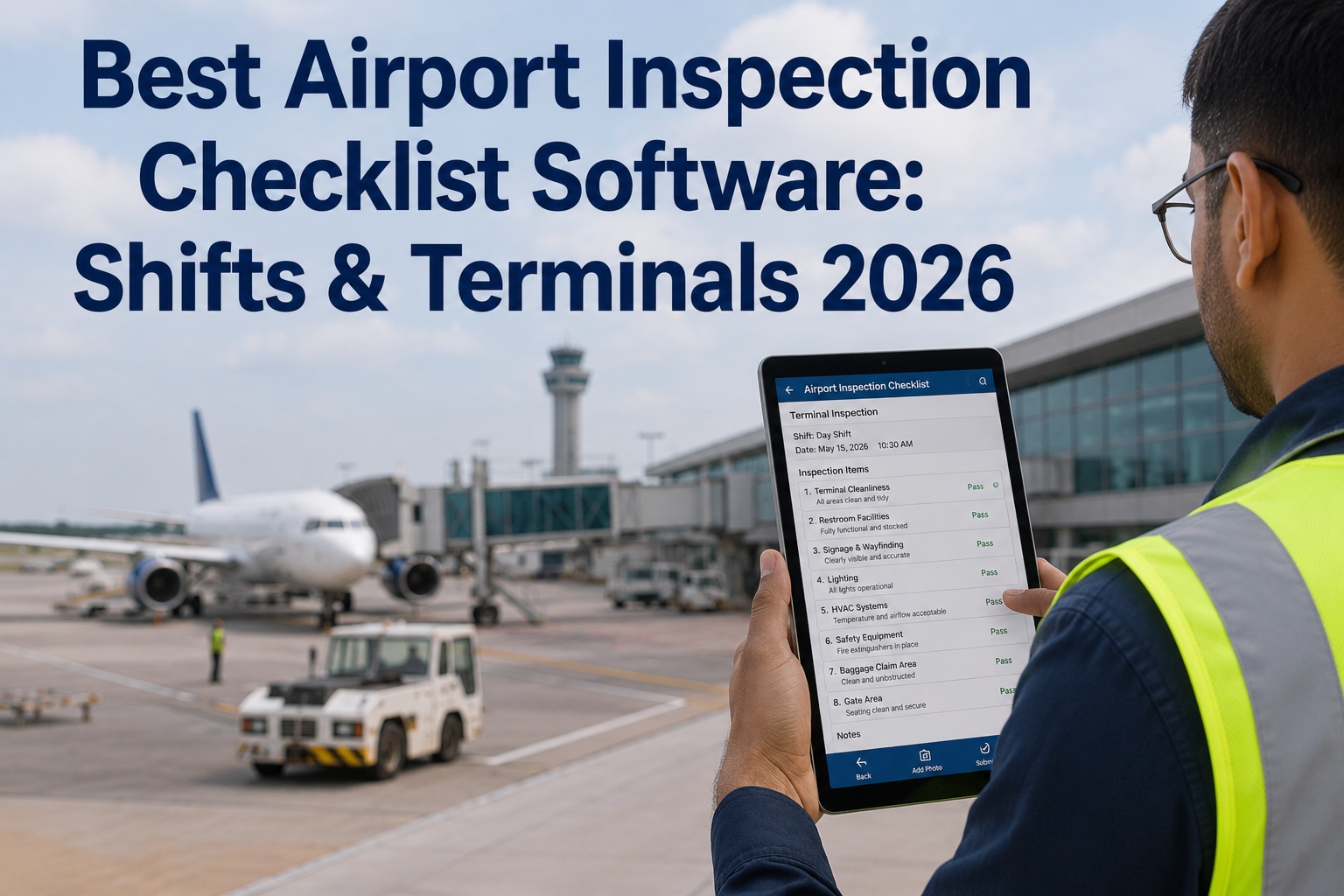
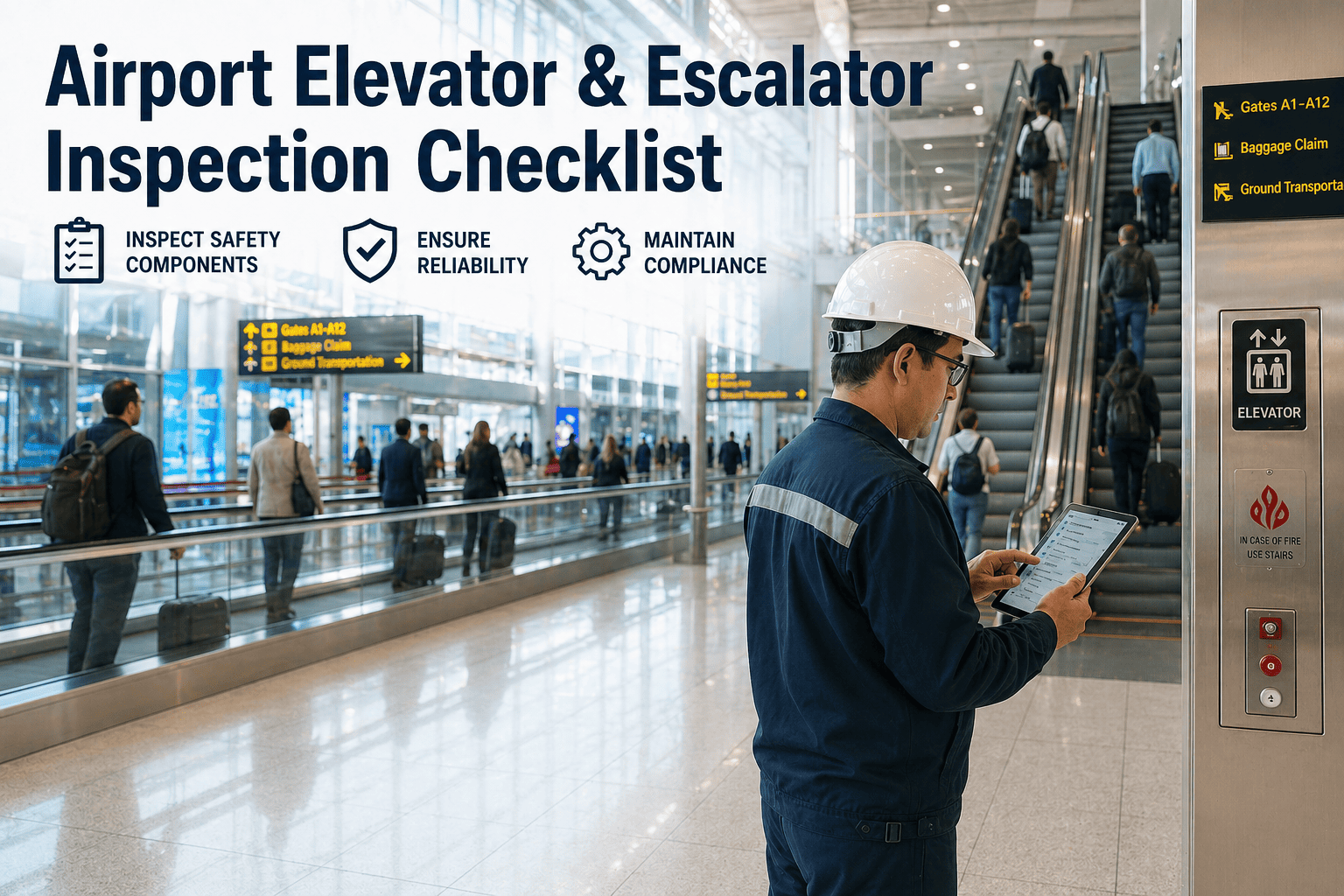
In an airport, a stopped escalator is a queue and a stopped elevator is a barrier. Travelers with luggage, families with strollers and passengers who rely on step-free access depend on vertical transportation working every hour of the day. Yet responsibility is shared: the airport owns the assets, a licensed contractor usually maintains them, and an authority inspects them — with records spread across all three. This guide explains how to run an airport elevator and escalator maintenance program with clear inspection schedules, compliance evidence, contractor SLAs and meaningful KPIs, and how OXMAINT AI, the AI-powered CMMS, keeps everyone working from one record.
AI-Powered CMMS · Airport Facility Maintenance · Elevators & Escalators
Keep Every Lift and Escalator Running, and Every Record Ready.
Outage reports by phone, inspection certificates in a drawer and contractor visit sheets nobody compares — so repeat faults go unnoticed and compliance evidence takes days to assemble. OXMAINT AI links the workflow in one maintenance platform: staff rounds and fault reports raise issues, issues become work orders, contractor PM schedules are tracked, and alerts keep inspections and follow-ups on time.
Fault to Closure
1
Fault reportedStaff, passenger or round finding
2
Work order raisedContractor dispatched, priority set
3
Repair verifiedUnit returned to service and logged
4
Review & preventRepeat faults trigger PM changes
Three Parties, One Record: Who Does What
The most common gap in airport vertical transportation is not equipment; it is hand-offs. Defining roles and keeping one shared history closes it. Book a demo to see a shared record for all three parties.
AIRPORT TEAM
Owner & operator
Daily visual rounds and fault reporting
Priority setting and passenger impact
Contract and SLA oversight
CONTRACTOR
Licensed maintainer
Scheduled PM and callbacks
Repairs, parts and adjustments
Service reports per visit
AUTHORITY
Inspector & jurisdiction
Periodic inspections and tests
Certificates and orders
Follow-up on deficiencies
The Compliance Calendar: What Happens and When
The safety code most often referenced in North America is ASME A17.1/CSA B44, with ASME A17.2 as an inspection guide. Editions, inspection intervals and who may perform the work vary by jurisdiction, so confirm your own requirements. Start free and build your compliance calendar in OXMAINT AI.
Daily
Airport staff
Visual rounds: lighting, doors, handrails, comb plates, obvious damage or noise
Per contract
Contractor
Routine PM visits with checklists, lubrication and adjustments
Periodic
Authority / inspector
Required inspections and tests at intervals set by your jurisdiction
After events
All parties
Post-incident checks, entrapment reviews, repair verification
Only licensed contractors and qualified personnel should carry out inspection and repair work on elevators and escalators.
When the Inspector Arrives, the Answer Should Be One Search Away.
Certificates, service reports, open deficiencies and repair history stored per unit turn an audit from a scramble into a routine. And because every outage is recorded, you can see which unit keeps failing and why.
Not All Units Are Equal: Set Priority by Passenger Impact
PRIORITY 1
No alternative route
Only step-free access, gate-critical or single-path units. Fastest response and highest PM focus.
PRIORITY 2
Peak-flow units
Main terminal connectors and busy banks. Plan work outside peak waves.
PRIORITY 3
Alternatives nearby
Units with easy substitutes. Standard response and routine PM.
Elevator & Escalator Safety Checklists for Airport Staff
Short, repeatable rounds catch visible safety problems early. Loaded as digital inspection checklists, every round is time-stamped against the unit and any failed item can raise a work order on the spot. Start free and load your elevator and escalator checklists in OXMAINT AI.
Elevators
Doors open and close smoothly
Car levels with the floor
Lighting and alarm button working
Call buttons and indicators respond
No unusual noise or vibration
Escalators
Handrails move in sync with steps
Comb plates and skirts undamaged
Step lighting visible
Emergency stop buttons accessible
Signage and floor markings clear
Staff rounds are visual and reporting-focused. Technical checks belong to qualified technicians.
The Contractor SLA Scorecard
Response time
Callout to arrival, by priority
Repair time
Fault to return to service
PM completion
Visits done as scheduled
Repeat faults
Same issue returning on a unit
Availability
Uptime per elevator or escalator
Report quality
Complete, timely service sheets
Availability KPIs: Measure Elevators and Escalators Separately
Availability is the headline number, but it only means something when tracked per unit and per type. Elevators and escalators fail in different ways and affect passengers differently. Book a demo to see availability tracked per unit in OXMAINT AI.
ELEVATOR AVAILABILITY KPI
(Scheduled hours − downtime hours) ÷ scheduled hours
Track by car, so one reliable unit never hides a problem one.
ESCALATOR AVAILABILITY KPI
(Scheduled hours − downtime hours) ÷ scheduled hours
Separate planned stops for PM from unplanned fault downtime.
Reliability Tracking: Find the Units That Keep Failing
1
Log every fault
Unit, symptom, time down, cause and fix recorded on the work order.
2
Spot repeats
Same unit, same fault, again. Flag it for root-cause review.
3
Track MTBF & MTTR
Time between failures and time to repair, per unit and contractor.
4
Adjust the program
Change PM tasks, intervals or contract terms based on the evidence.
Frequently Asked Questions
What does ASME A17 cover for airport elevators and escalators?
ASME A17.1/CSA B44 is the safety code for elevators and escalators, and ASME A17.2 is a guide for inspecting them. Which editions apply, how often inspections happen and who may perform them depend on your jurisdiction, so confirm with your authority and licensed contractor.
How often should airport elevators and escalators be inspected?
There are three layers: daily visual rounds by airport staff, routine maintenance visits set by your contractor agreement, and periodic inspections at intervals required by your jurisdiction. Record all three against each unit so the full schedule is visible in one place.
What should an airport elevator and escalator maintenance checklist include?
For elevators: door operation, floor leveling, car lighting, alarm button and unusual noise. For escalators: handrail and step sync, comb plates and skirts, step lighting and accessible emergency stop buttons. Staff rounds report what they see; qualified technicians perform technical checks.
Start free and load these checklists in OXMAINT AI.
Which KPIs matter most for airport vertical transportation?
Availability per elevator and escalator, response and repair times, PM completion, repeat faults, MTBF and open deficiencies. Review them by unit and by passenger-impact priority.
Move Passengers, Not Paperwork.
Bring faults, contractor visits, inspection records and KPIs for every elevator and escalator into one platform with OXMAINT AI. Try it free, or book a demo and see it on your own terminal units.