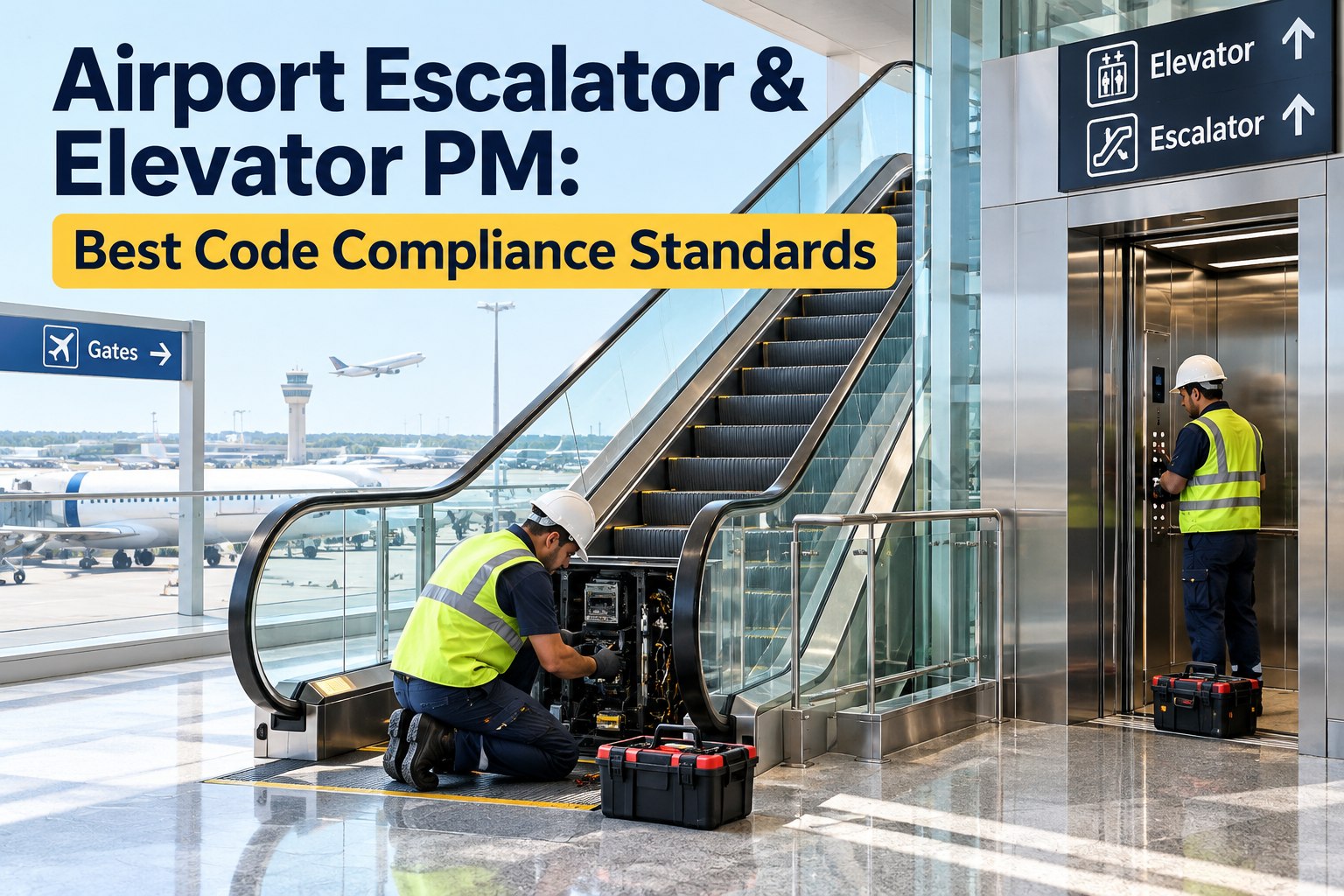
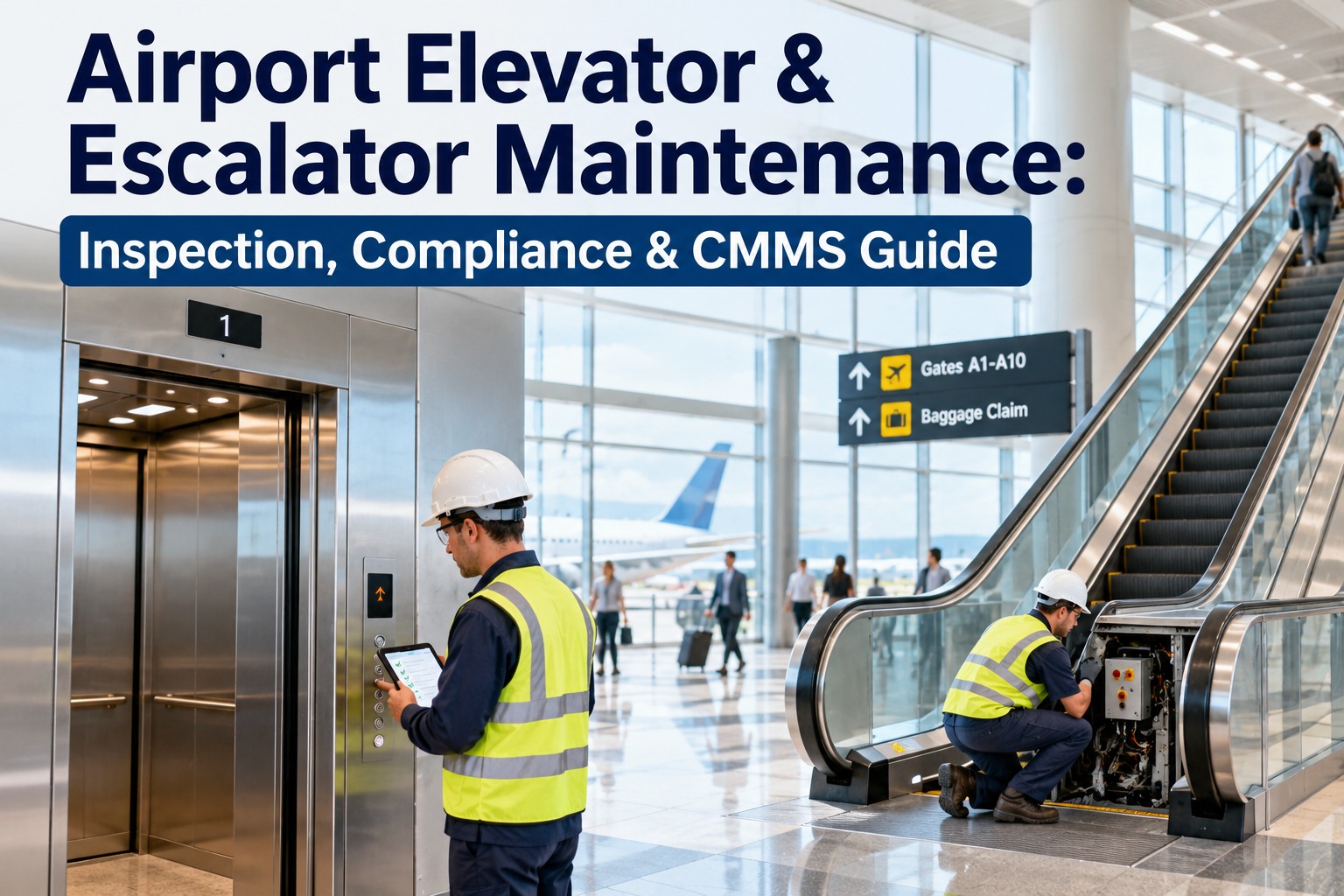
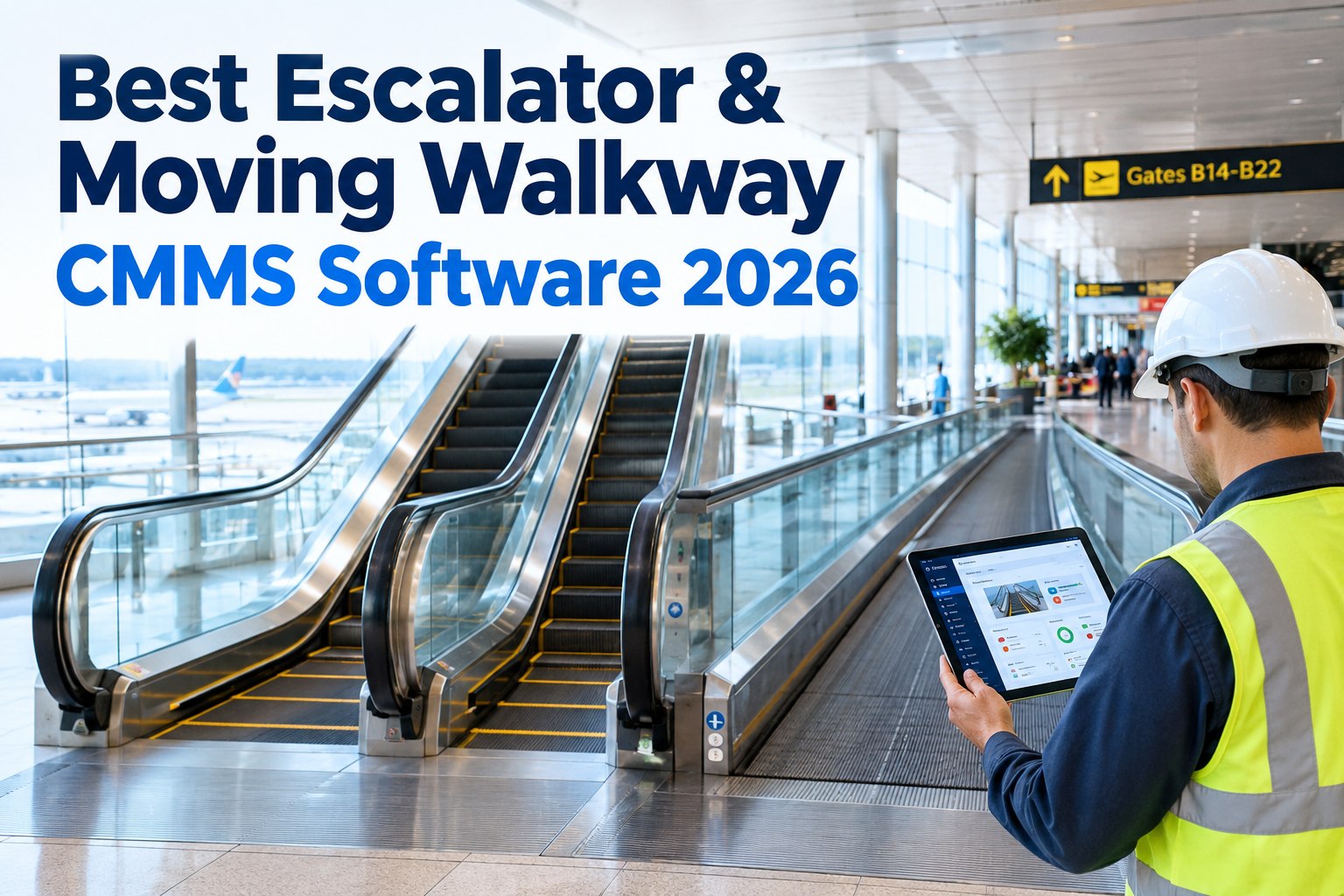
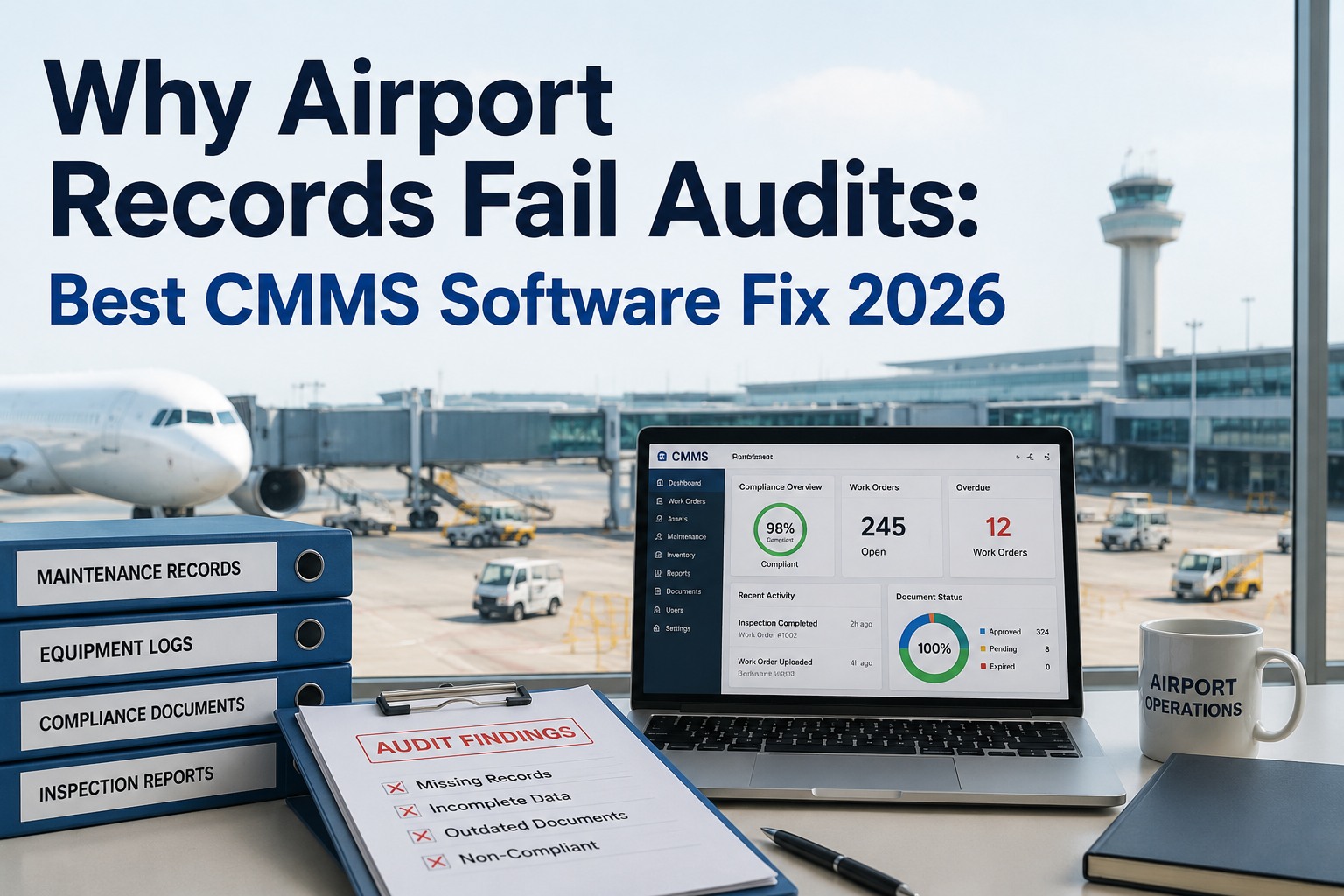
A stopped escalator at a connection gate isn't a maintenance ticket — it's a bottleneck of rolling bags, a missed connection, and a passenger who now has to find the elevator. Airport vertical transport runs on unforgiving codes and even less forgiving passenger expectations, and a paper PM binder can't prove either was met. OXMAINT AI is AI-powered maintenance management software (CMMS) that schedules every code inspection and safety trip test on its own cycle, turns a failed check into a ranked work order, and keeps the availability record your terminal is judged on. Book a demo to see the PM calendar for your units.
Airport Vertical Transport · PM & Code Compliance
Every Escalator, Walk and Lift on a Code Cycle That Never Slips
Escalators, moving walks and elevators carry the terminal — and the code that governs them counts in days and years, not "when we get to it." OXMAINT AI runs each safety trip test, category inspection and PM task on its own schedule, flags what's due, and converts a failed check straight into a ranked work order — so compliance is on a calendar and availability is on the record.
- 1Scheduled PM & test
- 2Safety trip verified
- 3Defect to work order
- 4Availability logged
Terminal availability
The number passengers feel — the share of units running when they reach the landing.
Dailystop-button & visual
Monthlysafety-device tests
AnnualCategory 1 test
5-yearCategory 5 test
The Compliance Clock Runs on Five Cycles at Once
Vertical transport isn't one PM interval — it's five, stacked, each with its own code basis. Miss any layer and you're either unsafe or unable to prove you weren't. Start a free trial to put every cycle on one calendar.
Daily
Start-up & visual
Emergency stop test, handrail and step condition, comb-plate teeth, skirt clearance — the checks before passengers ever step on.
Weekly
Lubrication & machine room
Handrail inlet guards, lubrication points, panel integrity and a speed check in the machine space.
Monthly
Safety-device tests
The trip devices that stop the unit before someone is hurt — tested to force thresholds, both landings.
Quarterly
Wear & drive train
Drive-chain elongation, gear-oil condition, bearing temperature and vibration, step-upthrust device.
Annual / 5-yr
Category tests
Category 1 each year and Category 5 every five — governor, brake stopping distance and rated-load checks that regulators sign off.
Cadence reflects ASME A17.1 practice: Category 1 tests annually and Category 5 tests at intervals not exceeding five years for newer equipment; escalator safety-device and inspection intervals per A17.1 maintenance guidance. Sources: ASME A17.1; TSASK periodic category test bulletin; OxMaint A17.1 escalator checklist. Confirm exact intervals with your AHJ.
The Safety Trips That Have to Actually Trip
A safety device only counts if it fires at the right threshold — and a monthly test is where you find out it doesn't. These are the escalator trips that keep a fall from becoming an entrapment. Book a demo to see trip tests scheduled and logged.
Emergency stop
Stops the unit within ~1.5 s of the button
Daily
Skirt obstruction
Trips on ~85 N lateral force at the skirt
Monthly
Comb-plate impact
Stops on ~135 N up / ~67 N down at the comb
Monthly · both landings
Handrail speed
Stops if handrail deviates >15% from step speed
Monthly
Broken step-chain
Stops within the required distance when actuated
Monthly
Overspeed governor
Actuates above ~20% over rated speed
Annual
Thresholds are typical A17.1-aligned values used for functional testing; your equipment's rating and AHJ govern the exact figures. The point is that each is a scheduled, pass/fail record — not a memory.
Put Every Trip Test on a Schedule You Can Prove
See how OXMAINT AI issues each PM and safety test on time, records the pass or fail, and turns a fail into a work order before the unit goes down.
Availability Is the KPI Passengers Actually Feel
Nobody thanks you for a passed inspection — but everyone notices a dark escalator at a peak bank. These are the numbers that tell you whether the terminal is moving people or making them walk. Start a free trial to track them per unit.
Unit availability
The share of scheduled hours each escalator, walk or lift is actually running — the headline number.
Response time
Fault reported to technician on site — the gap that decides how long passengers detour.
PM compliance
The percentage of code and safety tasks completed on schedule — your audit-ready proof.
Repeat callbacks
Units that fail again soon after a fix — the signal to shift from reactive repair to overhaul.
Unit Down: Repair Now or Take It Out of Service?
A stopped unit forces one decision fast. This is the path that keeps passengers safe without stranding a whole concourse on the elevators. Book a demo to see the out-of-service workflow.
Did a safety device trip, or is the fault a safety-related failure?
Yes
Can it be cleared and re-tested on the spot?
No: lock out, barricade, tag out of service, and raise a priority work order — it does not run until it passes.
Yes: clear, re-run the trip test, and log the pass before returning it to service.
No
Is it a comfort or cosmetic fault only?
Borderline: restrict or slow the unit, schedule a same-day repair, and monitor.
Yes: keep it running, log the defect, and batch it into the next PM window.
How OXMAINT AI Keeps Vertical Transport Compliant
OXMAINT AI is maintenance management software that holds every unit's PM calendar, safety-test record and availability history in one place — so compliance is scheduled, failures become work orders, and the audit trail writes itself. Start a free trial to load your units.
1
Schedule
Every daily, monthly, quarterly and category task auto-issued per unit, on its own code cycle.
2
Test & record
Capture each safety trip as a pass or fail against its threshold — a timestamped compliance record.
3
Act
A failed check becomes a ranked work order, with out-of-service handling for safety faults.
4
Report
Track availability, PM compliance and repeat callbacks per unit for operations and audits.
Frequently Asked Questions
How often must airport escalators and elevators be tested?
Under ASME A17.1 practice, Category 1 tests run annually and Category 5 every five years, layered over daily, monthly and quarterly checks. A CMMS keeps all of them on one calendar.
Start a free trial to schedule them.
What's the difference between a Category 1 and Category 5 test?
Category 1 is the annual functional test of safeties and governors; Category 5 is the deeper five-year test, including full-load and brake checks. Both are scheduled and recorded per unit.
Book a demo to see both tracked.
Which escalator safety devices need monthly testing?
Skirt obstruction, comb-plate impact, handrail-speed and broken step-chain devices are typically tested monthly to their force and speed thresholds, with the emergency stop checked daily.
Start a free trial to log each test.
How does a CMMS improve terminal availability?
Can OXMAINT AI prove compliance in an audit?
Yes — every scheduled test and PM is timestamped with its pass/fail result and the work order that followed, so the compliance history is a record, not a reconstructed binder.
Start a free trial to build the trail.
Keep the Terminal Moving — and the Codes Met
Schedule every PM, verify every safety trip, and track availability for every escalator, walk and lift on one platform.