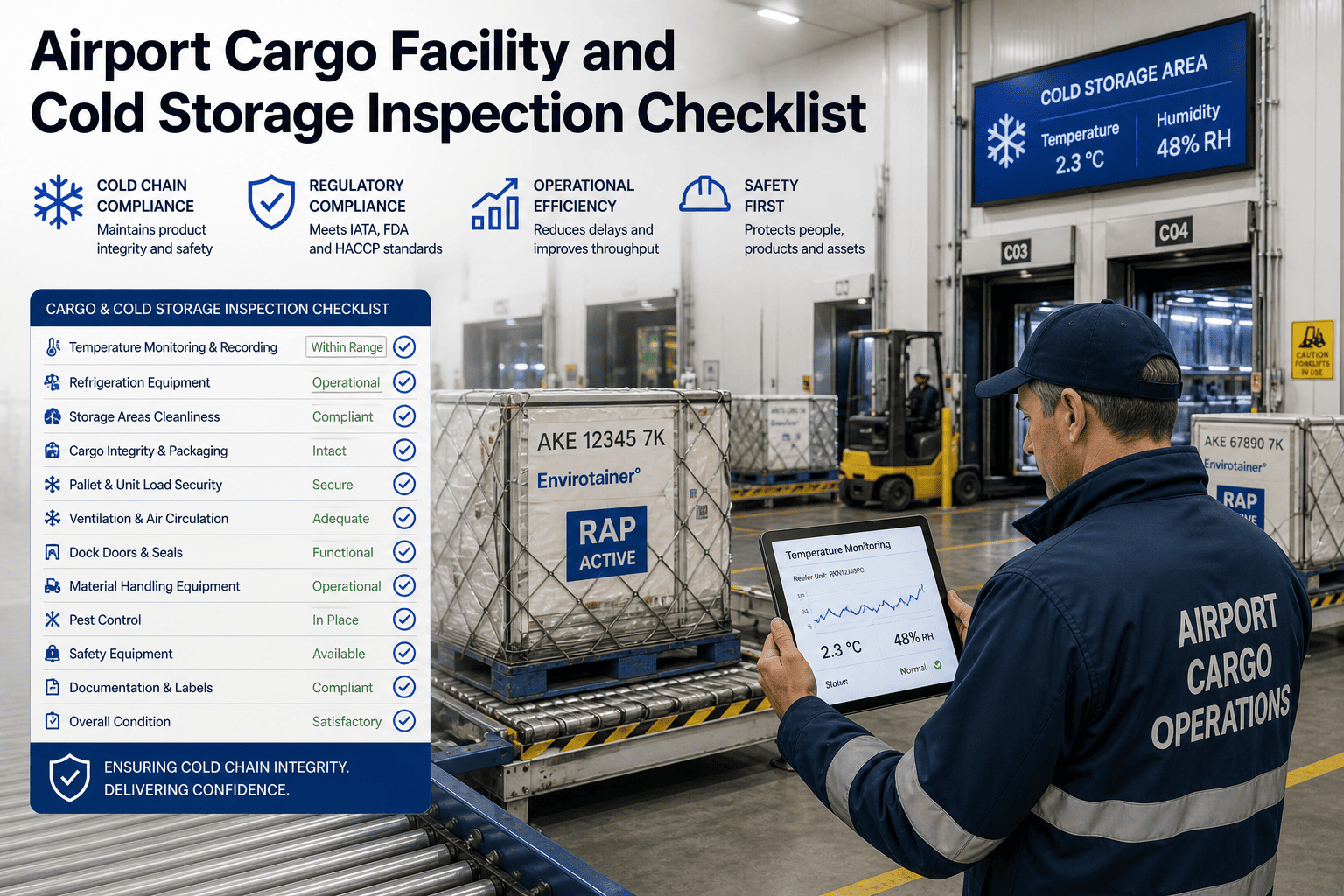
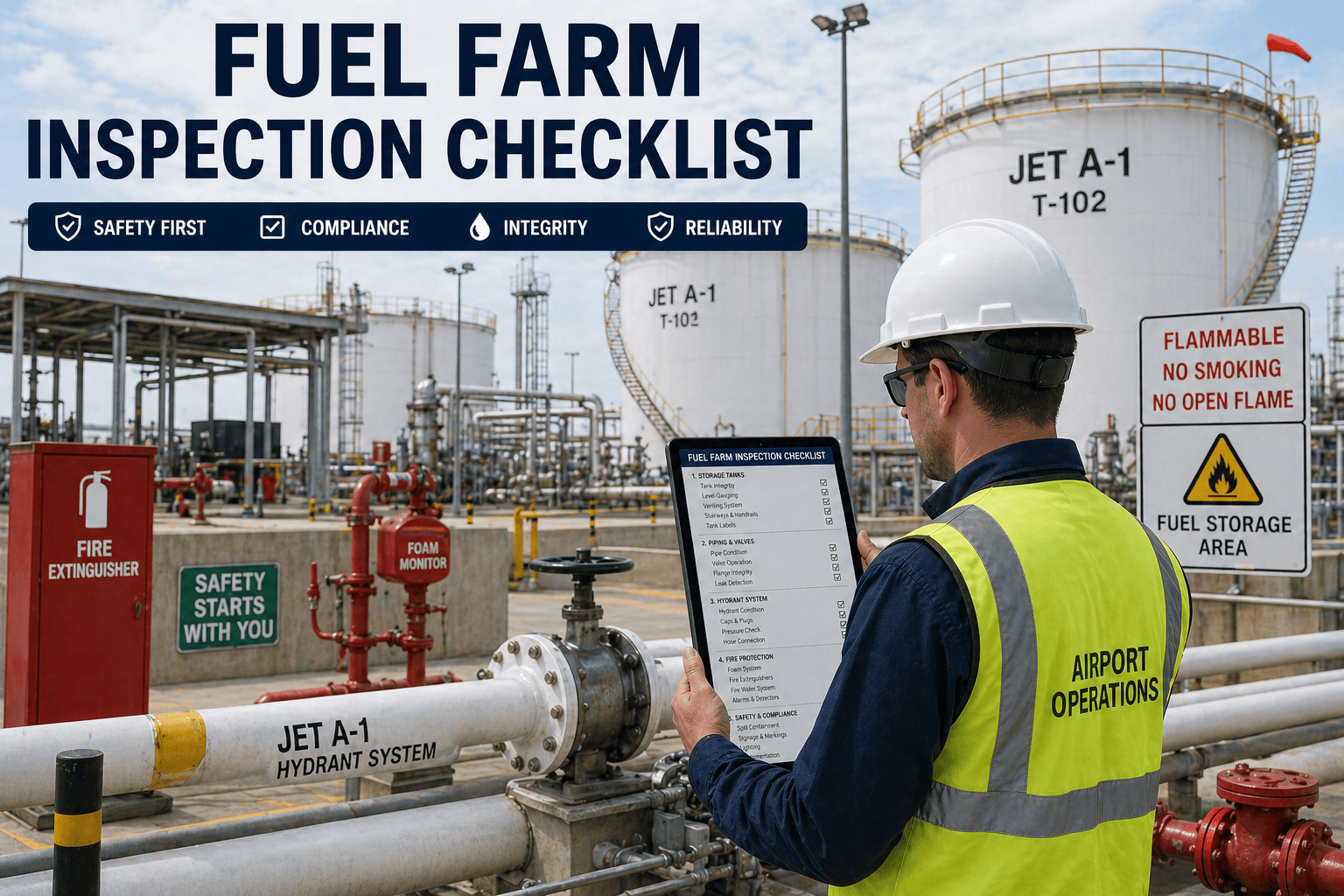
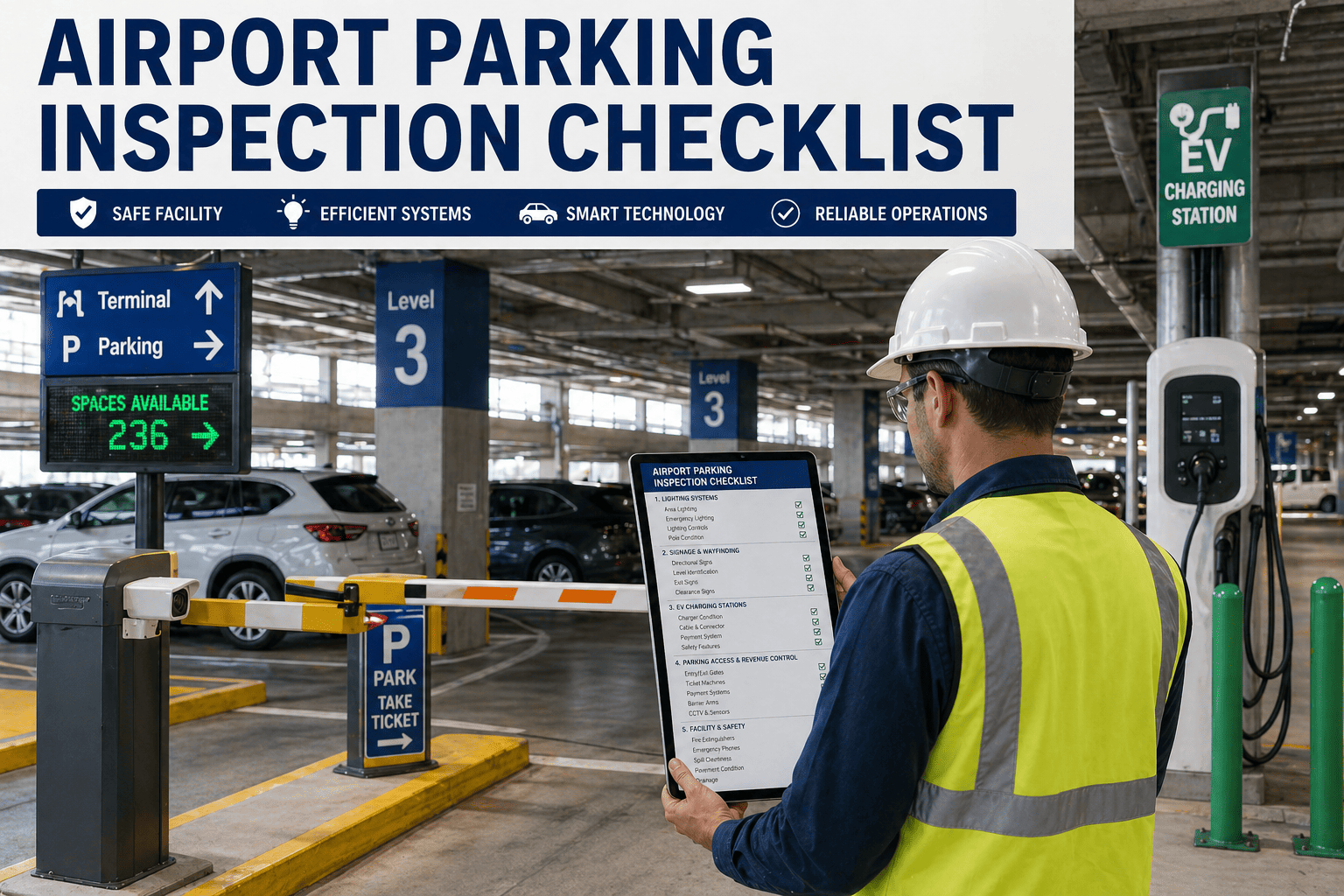
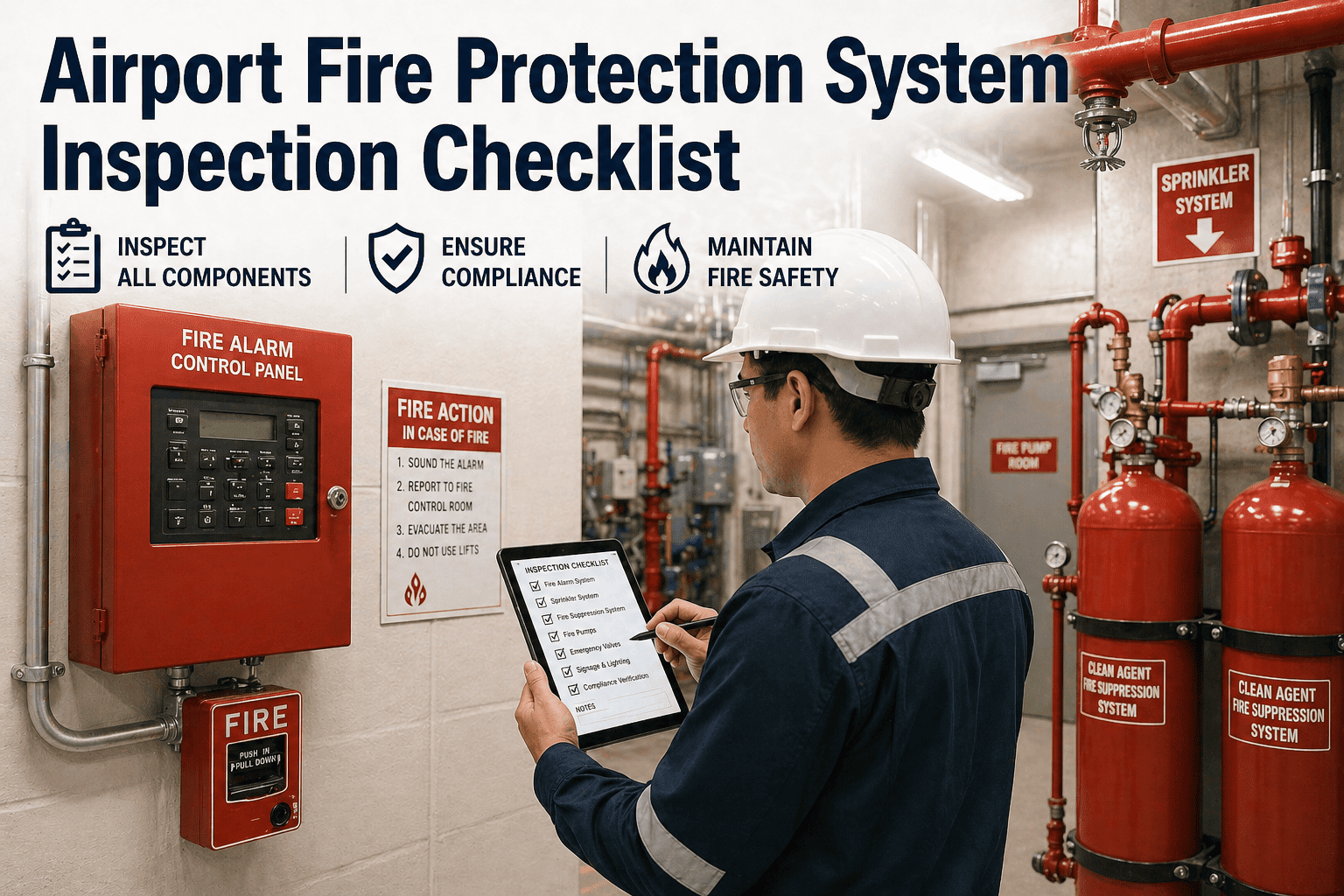
Airport cargo and cold storage facilities operate under a compliance burden that most facility managers underestimate until their first failed audit. A single temperature excursion on a pharmaceutical shipment can void a $200,000 cargo batch and trigger a GDP (Good Distribution Practice) investigation. A failed dock inspection can result in carrier suspension. And a missed conveyor safety check can mean a serious injury event and an OSHA recordable. Industry data shows that 71% of cargo cold chain failures are attributable to process and equipment gaps that a properly maintained inspection checklist would have caught — not to equipment design failures. This guide covers the complete airport cargo facility and cold storage inspection checklist that cargo terminal managers, cold chain compliance officers, and airside logistics supervisors need to maintain temperature integrity, dock safety, and regulatory readiness across every shift. Start a free trial with Oxmaint to deploy digital cargo inspection workflows, or book a demo to see how cargo facilities are reducing compliance failures by over 65%.
A compliance-grade inspection framework for temperature monitoring, dock safety, conveyor systems, HVAC integrity, pharmaceutical storage, and perishable cargo handling — built for airport cargo terminals operating under GDP, IATA CEIV, and TSA requirements.
Of cold chain failures caused by process and equipment gaps — not design failures
$15B+
Annual value of pharmaceutical cargo moving through global airports
2°C–8°C
GDP-mandated temperature range for most pharmaceutical cold chain cargo
65%
Reduction in compliance failures with digital inspection systems
Definition
What Is an Airport Cargo & Cold Storage Inspection?
An airport cargo and cold storage inspection is a documented, recurring assessment of every system that protects cargo integrity — from the temperature envelope of cold rooms and pharmaceutical storage zones to the mechanical condition of dock levelers, conveyor systems, and cargo handling equipment.
Unlike general facility inspections, cargo inspections at certified airports must satisfy multiple simultaneous regulatory frameworks: GDP guidelines for pharmaceutical cargo, IATA Perishable Cargo Regulations (PCR) for temperature-sensitive freight, IATA CEIV Pharma certification requirements, TSA security directives for airside access, and OSHA material handling safety standards for dock and conveyor operations.
Regulatory Frameworks in Scope
EU GDP Guidelines — EudraLex Volume 4, Annex 11 for pharma cold chain
IATA PCR — Perishable Cargo Regulations for temperature-sensitive freight
IATA CEIV Pharma — Certification standard for pharmaceutical handling
TSA Security Directives — Airside cargo area access and chain of custody
OSHA 29 CFR 1910 — Dock, conveyor, and material handling safety requirements
HACCP Principles — For perishable food cargo requiring temperature traceability
Inspection Zones
Six Critical Inspection Zones in Airport Cargo Facilities
Zone 1
Pharmaceutical Cold Rooms
2°C–8°C controlled zones for GDP-compliant pharmaceutical storage. Continuous temperature monitoring, alarm systems, and access control are primary inspection scope.
GDP · CEIV Pharma
Zone 2
Perishable Cold Storage
General perishable cargo rooms operating at 0°C–4°C for fresh produce, seafood, and temperature-sensitive food products. HACCP documentation required.
IATA PCR · HACCP
Zone 3
Cargo Dock Systems
Loading dock levelers, dock seals, vehicle restraints, and dock doors. Mechanical failure at a dock junction can create temperature breaches and safety incidents simultaneously.
OSHA · Safety
Zone 4
Conveyor & Sorting Systems
Belt conveyors, roller systems, sorters, and transfer points. OSHA 1910.217 guarding requirements, belt tension, and emergency stop function are primary inspection items.
OSHA · Mechanical
Zone 5
HVAC & Refrigeration Plant
Refrigeration compressors, condensers, evaporators, and air handling units serving cold storage zones. Equipment failure traceability is critical for GDP deviation reporting.
GDP · Mechanical
Zone 6
Security & Access Control
Airside access points, CCTV coverage, electronic access log integrity, and chain-of-custody documentation for high-value and regulated cargo.
Zone 1 & 2
Cold Room & Temperature Monitoring Checkpoints
Zone 3
Cargo Dock Safety Checkpoints
Zone 4
Conveyor & Sorting System Checkpoints
Zone 5
HVAC & Refrigeration Plant Checkpoints
Pain Points
Where Cargo Facility Inspections Break Down
01
Temperature Deviations Not Caught Until Cargo is Loaded
A cold room temperature excursion discovered at the point of loading — after 4 hours of exposure — means the shipment may be compromised, the airline may reject the cargo, and a GDP deviation report must be filed. A properly scheduled inspection with continuous monitoring alerts would have flagged the excursion within minutes of the set-point breach.
02
Conveyor Guarding Deficiencies Missed on Paper Checks
OSHA inspectors cite conveyor nip point guarding as one of the top-5 violations in cargo handling facilities. Paper inspection forms with yes/no checkboxes do not capture the specific location of a removed guard or a loosened fastener. Without photographic evidence and location tagging, the deficiency is often re-discovered at the next inspection — or during an incident investigation.
03
Calibration Certificates Expire Without Detection
GDP auditors routinely find temperature dataloggers operating on expired calibration certificates — sometimes by 6–18 months. This single finding can invalidate months of temperature records and trigger a full GDP deviation investigation covering every pharmaceutical shipment handled during that period.
04
No Traceability for Multi-Shift Cargo Handling
Cargo terminals operate 24/7 across 3 or more shifts. When a temperature event or equipment failure occurs, determining which shift completed which inspection — and what condition was recorded at handover — is nearly impossible with paper-based systems. Digital inspection records with shift-specific assignments solve this completely.
Oxmaint Solution
How Oxmaint Protects Cargo Compliance and Cold Chain Integrity
01
Continuous Temperature Monitoring Integration
Connect IoT temperature sensors in cold rooms to Oxmaint. Real-time alerts fire when any zone breaches set-point — with automatic work order generation for the on-call technician, time-stamped and documented for GDP deviation reporting.
02
Calibration Certificate Tracking
Every datalogger, thermometer, and measuring device is registered as an asset in Oxmaint with its calibration due date. Automated alerts 30 and 60 days before expiry give your compliance team time to schedule recalibration before the certificate lapses.
03
Photo-Documented Conveyor Safety Checks
Technicians photograph guard positions, belt tracking, and nip points during each inspection. Photos are attached to the work order record — creating an irrefutable visual history that an OSHA inspector or safety auditor can review without re-entering the facility.
04
Shift-Level Inspection Assignment
Assign specific inspection tasks to specific shifts — Night shift owns refrigeration checks, Day shift owns dock and conveyor checks. Every completed inspection carries the submitter's identity and shift timestamp, creating a full traceability record across 24/7 operations.
05
GDP Deviation Documentation Package
When a temperature excursion occurs, Oxmaint generates a ready-to-submit deviation package: the temperature log, the inspection records for the affected period, the corrective work order, and the technician response timeline — everything a GDP audit requires in a single export.
06
IATA CEIV Audit Readiness
CEIV Pharma certification requires documented evidence of consistent process execution. Oxmaint's inspection history, corrective action records, and equipment maintenance logs provide exactly the documentation package CEIV auditors require — reducing audit preparation time from weeks to hours.
Before vs. After
Manual Cargo Inspection vs. Oxmaint Digital System
Compliance Factor
Manual / Paper System
Oxmaint Digital System
Temperature excursion detection
Discovered at loading or next inspection — hours later
Real-time IoT alert within minutes of breach
Calibration certificate tracking
Manual calendar — frequently missed
Automated 30/60-day advance alerts per device
GDP deviation documentation
Manual compilation — 2–5 days to assemble
Automated package export in under 30 minutes
Shift traceability
No way to identify which shift completed which check
Every inspection tied to submitter, shift, and timestamp
Conveyor safety evidence
Checkbox only — no visual confirmation
Photo-documented at point of inspection
CEIV audit preparation time
2–4 weeks assembling paper records
Full record export in hours, not weeks
Operating a cargo terminal where compliance gaps are measured in hundreds of thousands in rejected shipments? Start a free trial and map your first cold storage inspection zone in Oxmaint today, or book a demo to see the full cold chain compliance workflow.
65%
Reduction in compliance failures
Cargo facilities using digital inspection systems vs. paper
30 min
GDP deviation package generation
Vs. 2–5 days of manual record assembly
60 days
Early calibration expiry detection
Automated alerts before certificate lapses
100%
Shift-level traceability
Every inspection tied to submitter, time, and zone
FAQ
Frequently Asked Questions
What temperature monitoring frequency does GDP require for pharmaceutical cold rooms?
EU GDP Guidelines (EudraLex Volume 4) require continuous temperature monitoring in pharmaceutical storage areas — not periodic manual checks. This means a calibrated temperature monitoring system that records data at intervals no greater than the time it would take a temperature excursion to become damaging to the product, typically every 5–15 minutes depending on the thermal mass of the space and the stored product's temperature sensitivity. Manual inspections — even at 1-hour frequency — do not satisfy GDP continuous monitoring requirements on their own. They complement automated monitoring by verifying that the monitoring equipment is functioning correctly, that alarm systems are operational, and that the physical condition of the storage environment (door seals, evaporator function) is maintained. Oxmaint integrates with IoT temperature monitoring systems to capture continuous data while also scheduling the manual verification checks that GDP requires as a separate evidence layer.
How does IATA CEIV Pharma certification affect airport cargo inspection requirements?
IATA CEIV Pharma (Center of Excellence for Independent Validators in Pharmaceutical Logistics) certification is awarded to cargo community members — including airports, ground handlers, and cargo terminals — who can demonstrate documented, consistent compliance with IATA's Temperature Control Regulations (TCR) and IATA's pharmaceutical handling standards. The certification audit evaluates whether processes are not just defined but consistently executed and documented. This means inspection records, corrective action histories, equipment maintenance logs, and staff training records must be available and auditable for the full certification period (typically 2 years). Airports pursuing or maintaining CEIV Pharma certification need a digital system that can produce a complete, date-ranged, facility-specific audit package on demand — exactly what Oxmaint's inspection history and export functions provide.
What OSHA standards apply specifically to airport cargo conveyor systems?
The primary OSHA standard governing conveyor systems in cargo handling is 29 CFR 1910.217 (Mechanical Power Transmission Apparatus), which requires guarding of all points where workers could contact moving parts — nip points, shear points, and wrap points. Additionally, 29 CFR 1910.147 (Control of Hazardous Energy — Lockout/Tagout) applies to any maintenance or inspection activity on conveyor systems where unexpected energization could cause injury. OSHA 29 CFR 1910.178 governs powered industrial trucks (forklifts) that may operate in proximity to conveyor systems. The most common OSHA citations in cargo handling facilities relate to inadequate nip point guarding, missing or bypassed emergency stops, and incomplete LOTO procedures. Oxmaint's conveyor inspection checklist maps directly to these specific requirements, with photo documentation fields for guarding status and emergency stop function — the specific evidence OSHA inspectors request.
Can Oxmaint manage inspection requirements for both cold storage and ambient cargo areas in the same facility?
Yes. Oxmaint's asset hierarchy supports multiple inspection zones within a single facility, each with its own inspection template, frequency, and compliance standard mapping. A cargo terminal can configure pharmaceutical cold rooms on a GDP-aligned template with continuous monitoring integration, perishable storage rooms on a HACCP-aligned template with shift-frequency checks, dock systems on an OSHA safety template with photographic evidence requirements, and ambient warehouse areas on a general facility template — all running simultaneously, all assigned to the appropriate personnel by zone and shift, and all feeding into a single facility-level dashboard. Portfolio-level reporting aggregates readiness data across multiple terminals for cargo directors managing operations across several airport locations.
Cold Chain Compliance — Powered by Oxmaint
One Temperature Excursion Can Void $200,000 in Pharmaceutical Cargo. Your Inspection System Should Be Stronger Than a Clipboard.
Oxmaint gives cargo facility teams digital inspection checklists for every zone, IoT temperature monitoring integration, automated calibration tracking, shift-level traceability, and GDP-ready deviation documentation — all in a platform built for 24/7 cargo operations. Get CEIV audit-ready without weeks of manual record compilation.