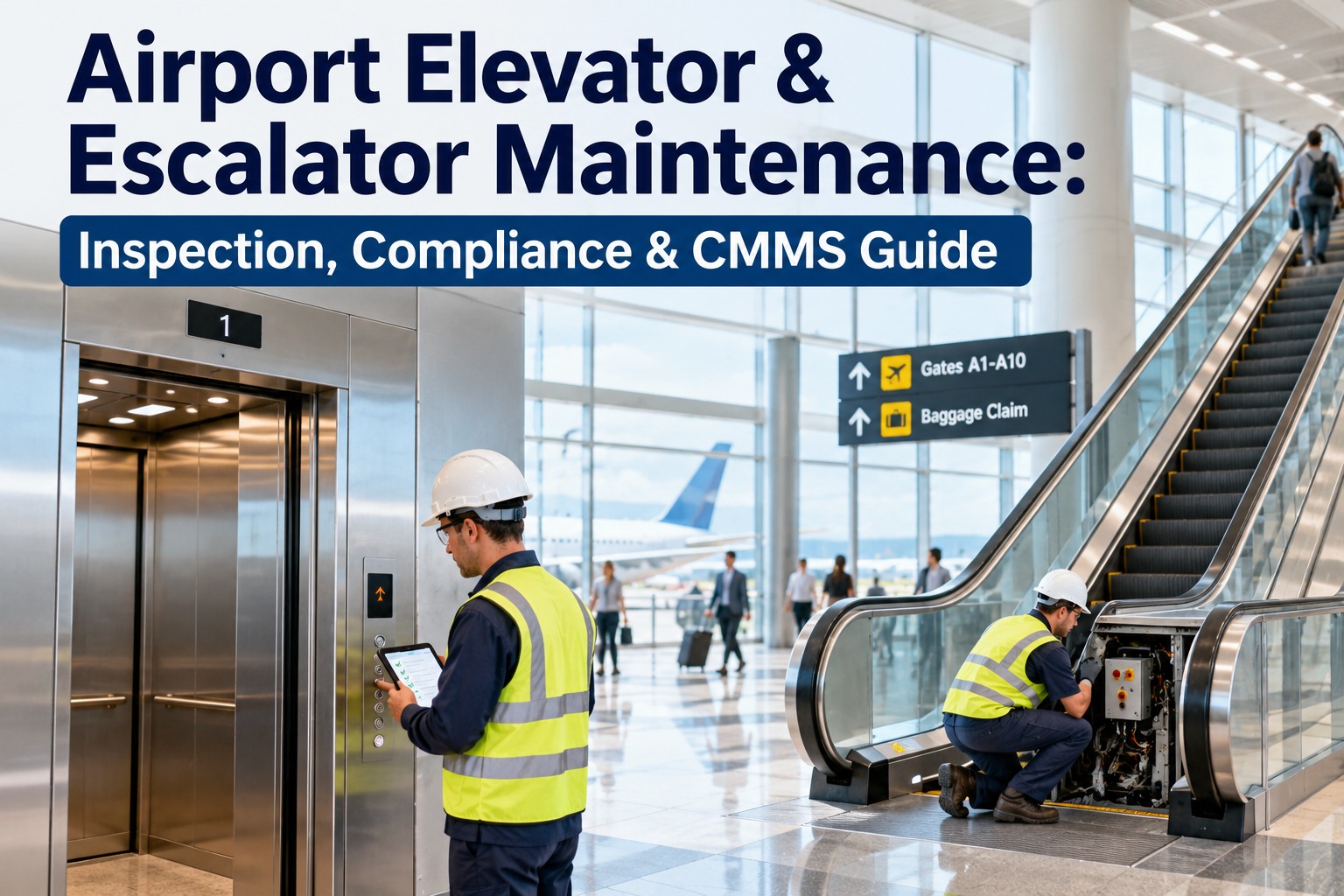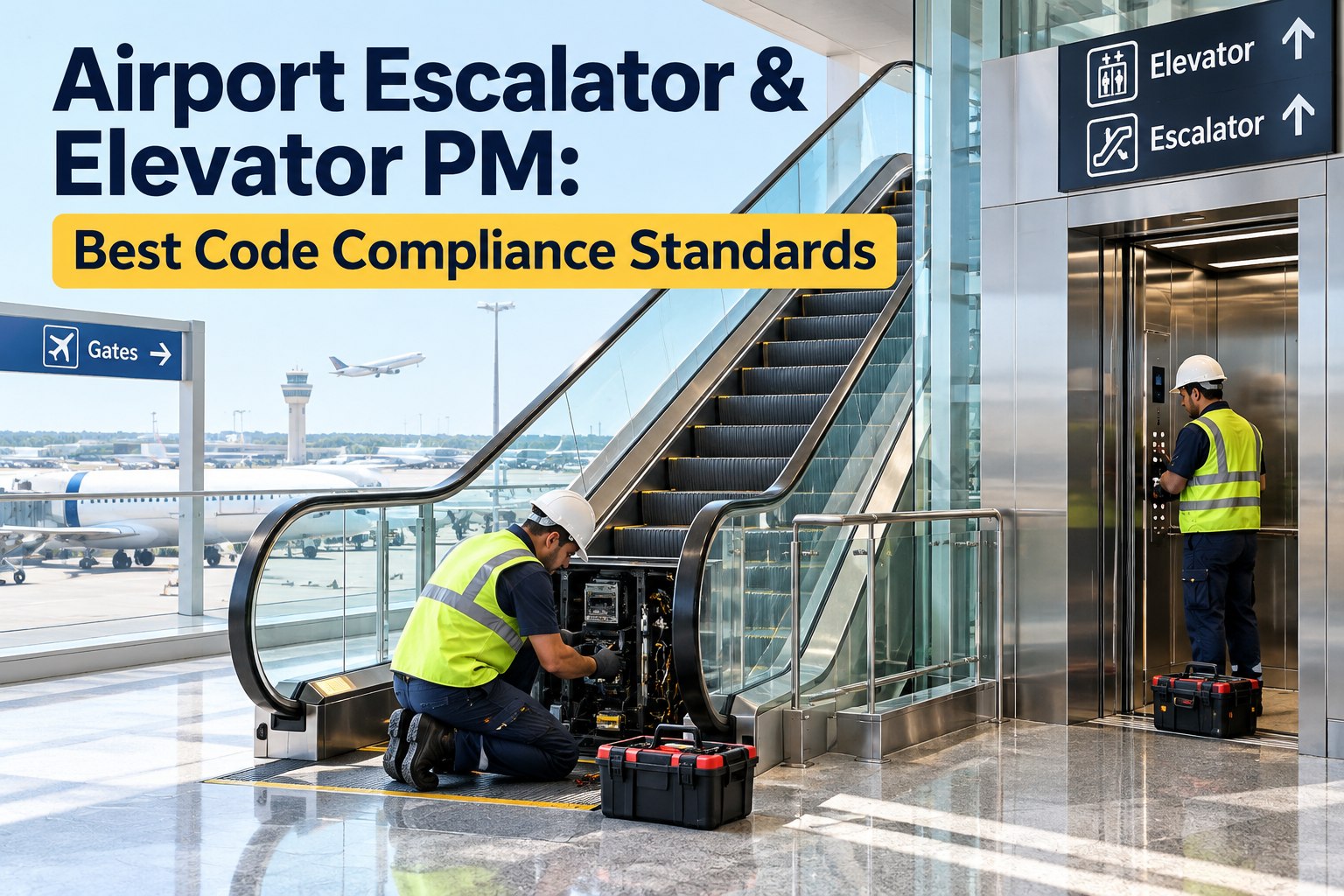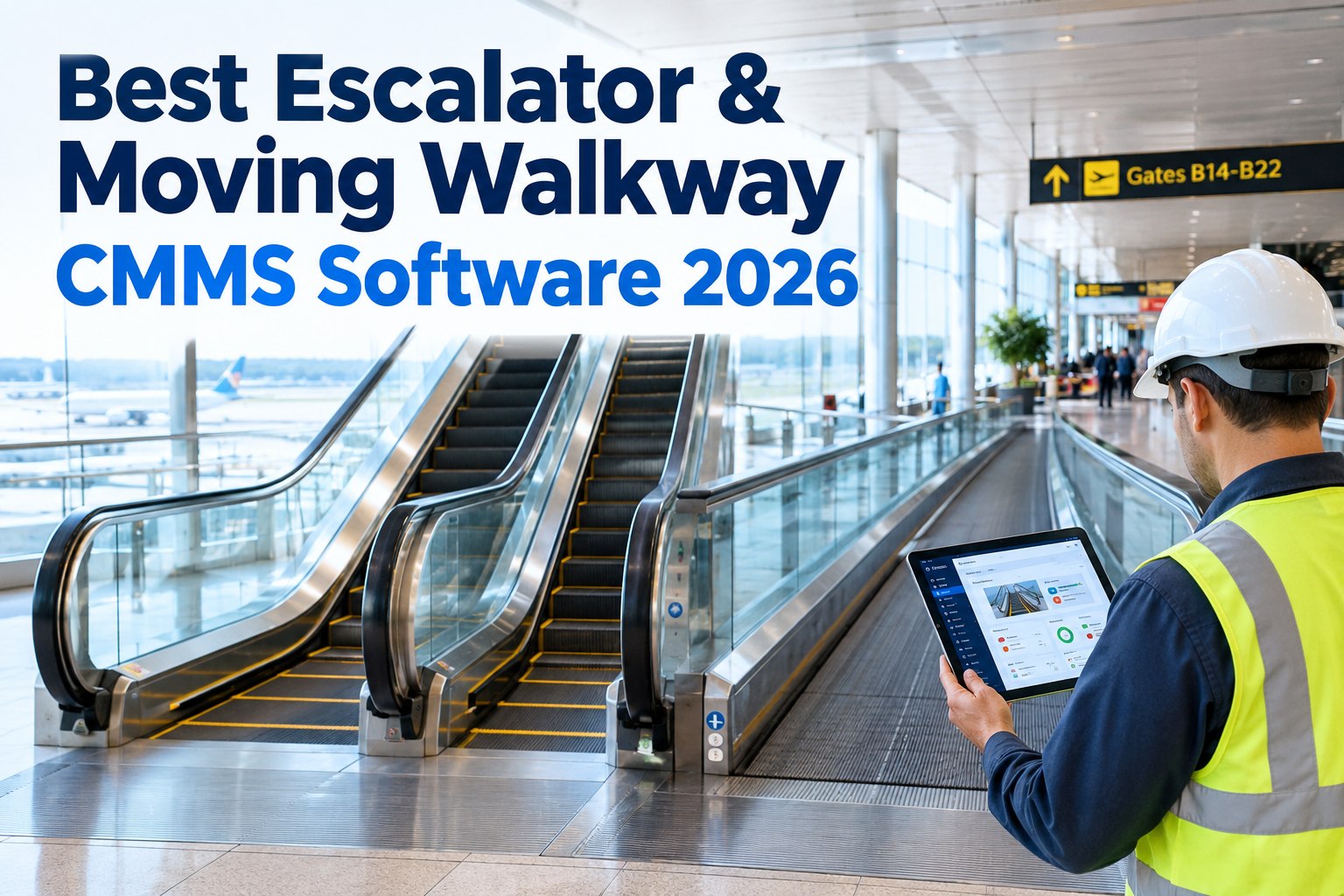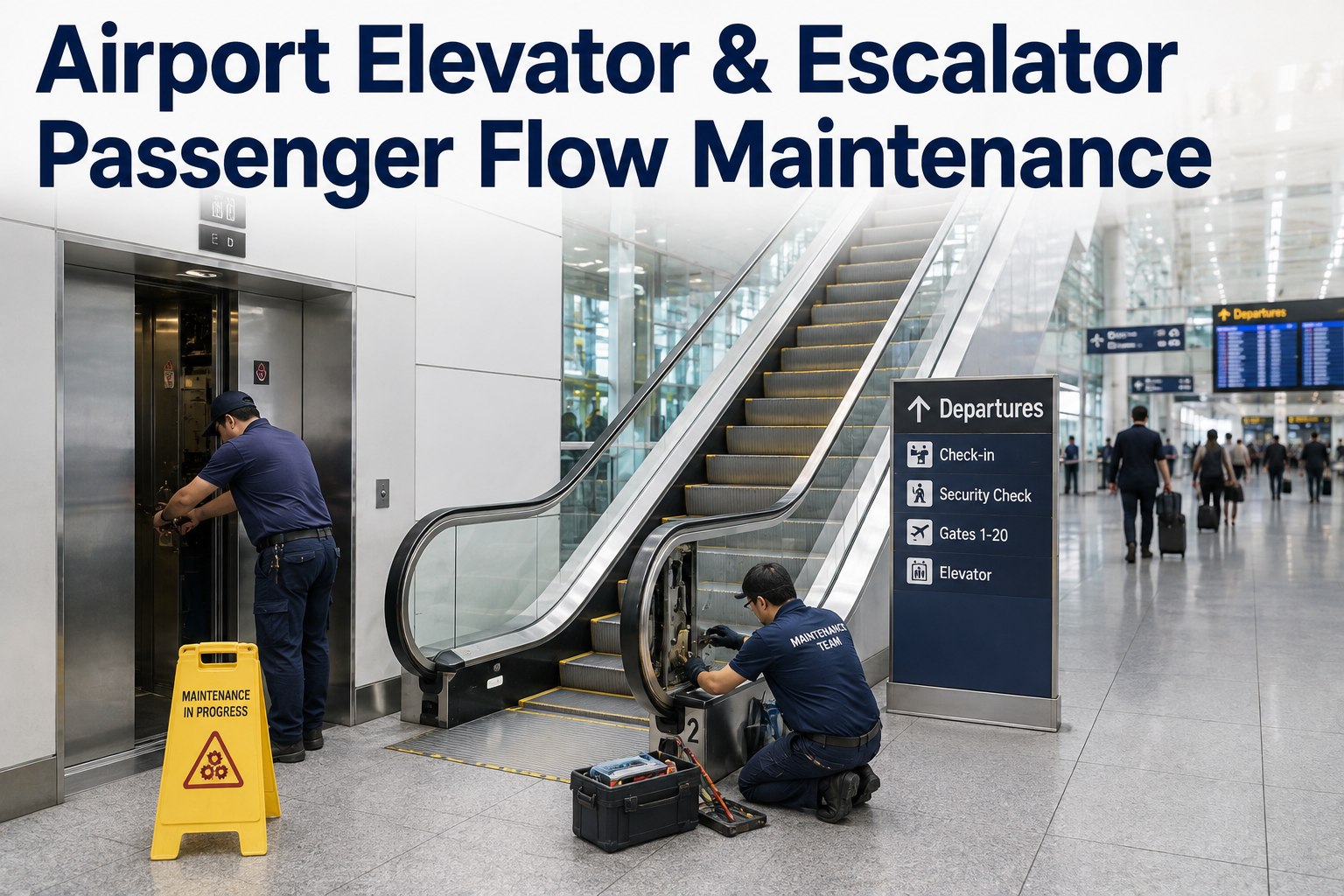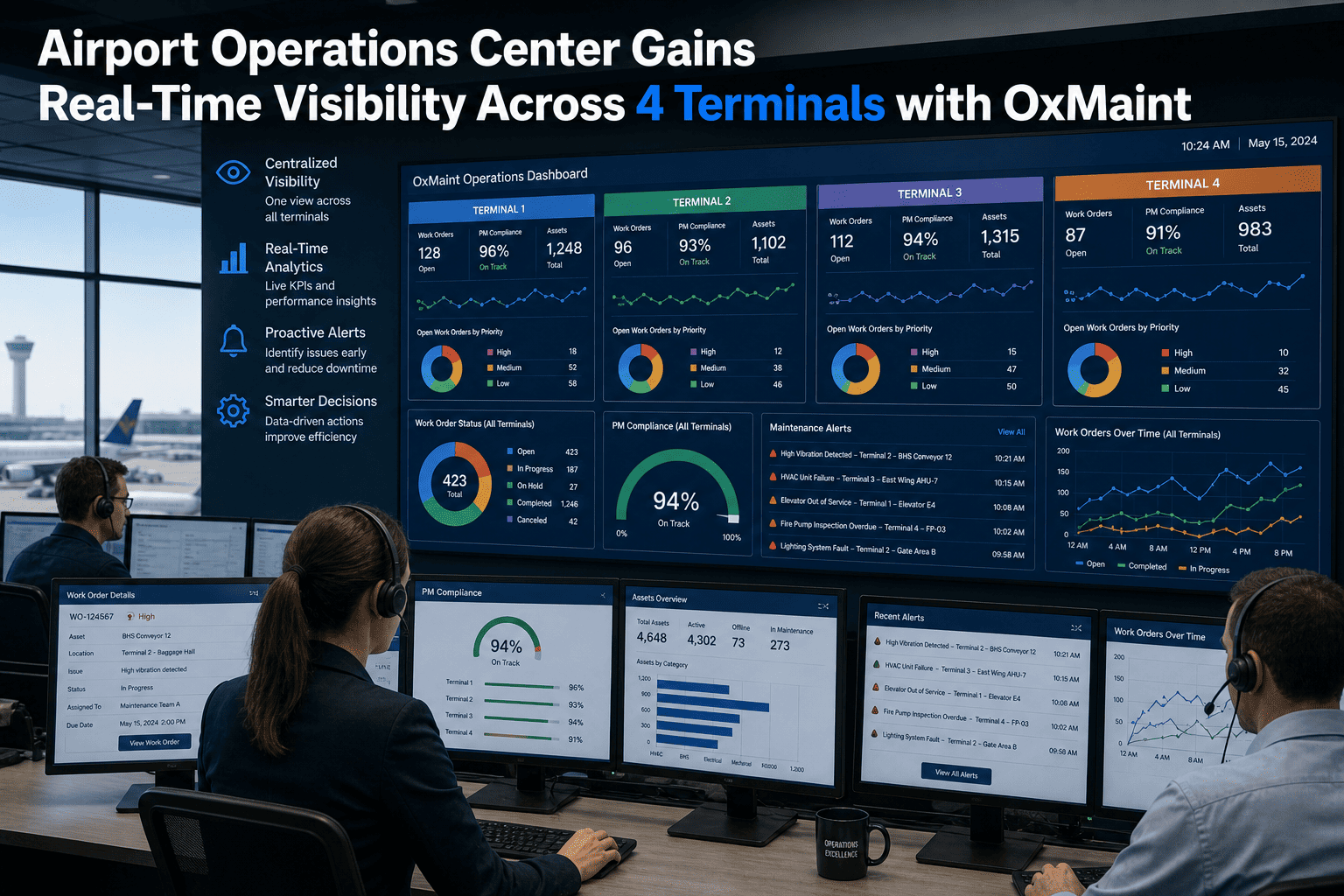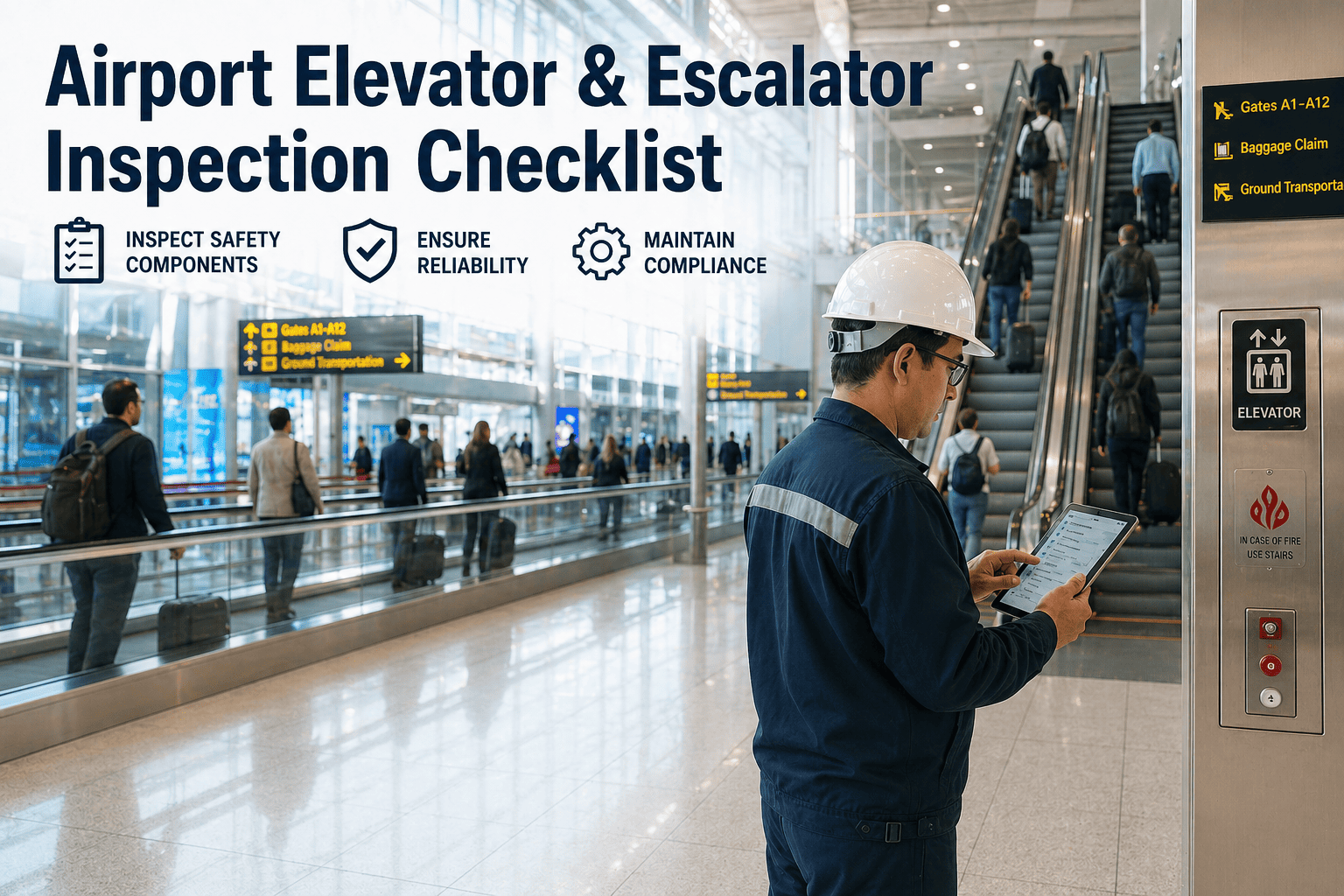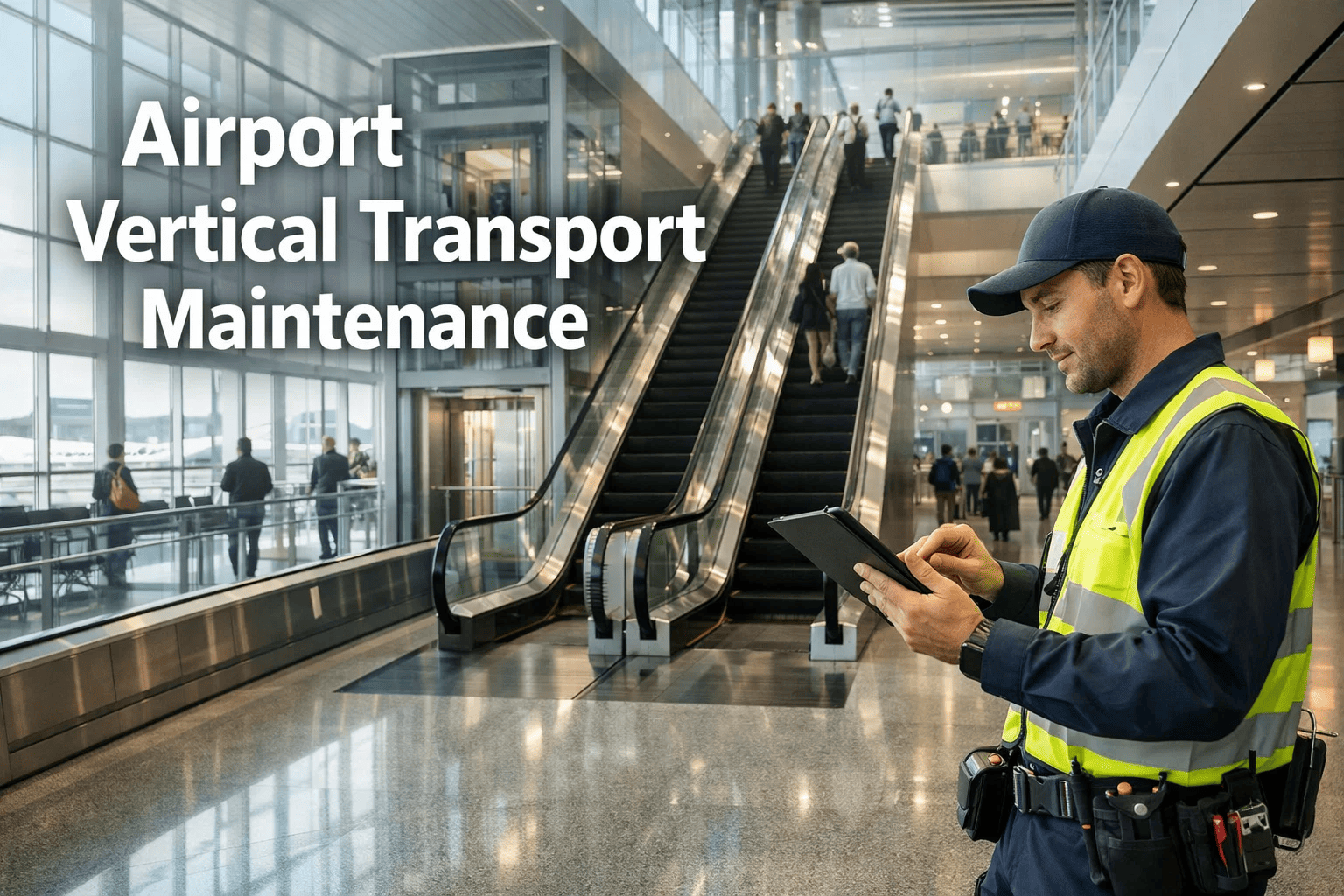
When an escalator stops in the middle of a peak departure wave at a major terminal, the result is not a minor inconvenience — it is an instant bottleneck that cascades through gate areas, security queues, and connecting passenger flows within minutes. Over 2 million passengers move through U.S. airports daily, and every one of them depends on vertical and horizontal transportation systems — elevators, escalators, and moving walkways — to navigate terminals efficiently with luggage, mobility devices, and tight connection windows. A single elevator outage does more than frustrate travelers: it creates an immediate ADA compliance violation, blocks wheelchair-dependent and elderly passengers from accessing gates, and forces operational staff into manual rerouting that consumes resources meant for other priorities. The Uptime Institute has documented that unplanned system downtime in high-traffic facilities costs an average of $260,000 per hour — and in an airport environment where passenger experience directly correlates with concession revenue and airline satisfaction scores, the real cost is often higher. The airports maintaining 99%+ uptime on their people-mover systems are not simply servicing equipment more often — they are using IoT sensor data, predictive maintenance algorithms, and centralized CMMS platforms to detect motor degradation, chain stretch, and controller anomalies weeks before a shutdown occurs. See how OxMaint connects every elevator, escalator, and walkway into a single predictive maintenance dashboard — start a free trial to explore the platform.
Can You Prove Every Elevator in Your Terminal Was Operational Today?
OxMaint gives airport facility teams real-time health scoring, automated PM scheduling, and ADA compliance documentation for every vertical transportation asset — in one platform.
Three Systems, Three Failure Profiles: Understanding the Maintenance Landscape
Airport vertical and horizontal transportation assets share a common function — moving passengers — but their mechanical architectures, failure modes, and maintenance requirements are fundamentally different. A maintenance program that treats all three system types identically will over-service some assets and under-protect others. Understanding the distinct characteristics of each system type is the foundation of an optimized maintenance strategy.
Elevators
Escalators
Moving Walkways
Why Time-Based Maintenance Fails in Airport Environments
Most airport vertical transportation programs still operate on fixed-interval OEM service contracts — monthly visits where a technician inspects components on a checklist regardless of actual equipment condition. This model was adequate when airports had fewer systems and lower passenger volumes. It is fundamentally insufficient for modern terminals where escalators run 20+ hours per day, passenger loads vary dramatically between peak and off-peak periods, and a single equipment stoppage creates immediate cascading operational impact.
The core limitation of time-based maintenance is the gap between scheduled visits. An escalator motor bearing that begins exhibiting elevated vibration on day 3 after a monthly service visit will continue degrading for 27 more days before a technician returns — during which time the bearing may fail catastrophically, triggering an emergency shutdown at the worst possible moment. IoT-enabled predictive maintenance eliminates this blind spot entirely: continuous sensor monitoring detects degradation in real time, alerting maintenance teams within minutes of threshold exceedance rather than waiting for the next calendar visit. Airports implementing smart monitoring report unplanned downtime reductions of up to 80% compared to time-based-only programs. Want to close the gap between service visits? Book a demo to see how OxMaint integrates IoT sensor alerts with automated work order generation for vertical transportation assets.
The ADA Compliance Factor Most Airport Managers Underestimate
ADA Title III explicitly requires that airports maintain accessible features — including elevators — in operable working condition. Unlike many commercial buildings, airport passenger terminals receive no exemption from elevator accessibility requirements. Every elevator outage is a documentable compliance gap. Every escalator failure that forces passengers to use stairs creates a barrier for individuals with mobility limitations. And every moving walkway shutdown extends walking distances beyond what many elderly or disabled passengers can comfortably manage.
The compliance exposure is not theoretical. When an elevator is out of service and no equivalent accessible path exists, the airport is in active ADA violation for every minute of that outage. A CMMS with real-time asset status tracking creates the documented evidence trail that demonstrates two things: first, that the airport maintains a proactive maintenance program designed to maximize elevator uptime; and second, that when outages do occur, response times are measured, documented, and consistently minimized. This documentation is the difference between a defensible compliance posture and a liability exposure that grows with every unrecorded minute of downtime. Protect your ADA compliance record with documented uptime tracking — start a free trial to see how OxMaint logs every status change for every vertical transportation asset.
How OxMaint Manages Airport People-Mover Maintenance
Unified Asset Dashboard
Every elevator, escalator, and walkway mapped by location with real-time health scores, open work order count, PM compliance percentage, and last-inspection timestamp. Terminal-level views give operations directors instant visibility across 50–200+ units.
IoT Sensor Integration
Connect vibration sensors, motor temperature probes, door cycle counters, and speed monitors directly into OxMaint's analytics engine. Sensor alerts auto-generate work orders with pre-populated asset context — no manual ticket creation required. Install on any manufacturer's equipment in 2–4 hours per unit.
Multi-Trigger PM Scheduling
Schedule preventive maintenance by calendar interval, operating hours, door cycles, or condition-based triggers — whichever threshold is reached first. Monthly lubrication, quarterly chain inspections, and annual overhauls auto-generate with complete checklists and parts requirements.
ADA Compliance Documentation
Automatic logging of every elevator status change — operational, out of service, under maintenance, restored — with timestamps that create the audit trail ADA compliance reviews require. Generate uptime reports per unit showing response time from outage detection to service restoration.
Vendor Performance Tracking
OEM service contracts typically lack independent verification. OxMaint captures sensor data and inspection results that validate whether vendor maintenance was performed to specification — giving facility managers data-backed leverage for contract negotiations and service-level enforcement.
Lifecycle Cost Analytics
Track total maintenance spend per unit over time — repair costs, parts consumption, service call frequency, downtime hours — to identify equipment approaching the cost threshold where replacement delivers better ROI than continued repair. Feed lifecycle data into CapEx planning for terminal modernization programs.
Maintenance Frequency Guide: What Best-in-Class Airport Programs Schedule
| Maintenance Activity | Elevators | Escalators | Moving Walkways |
|---|---|---|---|
| Visual inspection and cleaning | Daily | Daily (treads every 2 hrs in high-traffic) | Daily (handrails hourly at peak) |
| Lubrication of mechanical components | Monthly | Monthly (chains, gears, bearings) | Monthly (pallet chains, rollers) |
| Safety device testing | Monthly | Monthly | Monthly |
| Sensor calibration and verification | Monthly | Monthly | Monthly |
| Chain/belt tension and alignment check | N/A | Quarterly | Quarterly |
| Tread and comb plate inspection | N/A | Quarterly | Quarterly (pallet and transition plates) |
| Rope/cable and sheave inspection | Quarterly | N/A | N/A |
| Door operator overhaul | Semi-annually | N/A | N/A |
| Full system overhaul and certification | Annually | Annually | Annually |
| Hydraulic system / machine room inspection | Quarterly | Annually (motor room/truss) | Annually (drive assembly) |
The Business Case: Quantifying the Value of Predictive People-Mover Maintenance
The financial argument for predictive maintenance is strongest in airport environments specifically because the cost of downtime extends beyond repair expenses. Every minute of escalator downtime at a concourse junction reduces foot traffic past retail and food service locations — directly impacting the non-aeronautical revenue that modern airports depend on for financial sustainability. Airports that can demonstrate consistently high people-mover uptime also strengthen their competitive position when negotiating airline gate agreements and passenger experience benchmarks. Build your ROI model with real maintenance cost data — book a demo to see how OxMaint's analytics turn maintenance records into financial planning inputs.
Frequently Asked Questions
What are the most common causes of airport escalator shutdowns?
The most frequent causes are debris ingestion (coins, trash, small objects interfering with sensors or moving parts), step chain stretch triggering safety shutdown mechanisms, handrail misalignment, motor bearing degradation, and electrical control system faults. In airport environments specifically, the combination of continuous operation (16–24 hours daily), high passenger loads with rolling luggage, and exposure to tracked-in moisture and debris creates accelerated wear patterns that require more aggressive maintenance intervals than standard commercial installations.
How does IoT monitoring work on existing elevator and escalator equipment?
IoT sensor packages are retrofit-compatible with equipment from any manufacturer, regardless of age. Typical installations include vibration sensors on motor housings and bearings, temperature probes on drive components, door cycle counters on elevator cars, speed monitoring on escalator and walkway drive systems, and fluid leak detectors in machine rooms and walkway troughs. Installation typically takes 2–4 hours per unit with no extended downtime. Sensor data streams to a centralized platform where anomaly detection algorithms identify degradation patterns and trigger maintenance alerts.
What ADA requirements apply to airport elevator maintenance?
ADA Title III explicitly requires airports to maintain accessible features — including elevators — in operable working condition. Airport passenger terminals do not qualify for the elevator exemption that applies to certain smaller commercial buildings. This means every elevator outage where no equivalent accessible path exists constitutes a documentable ADA compliance gap. A CMMS that logs real-time operational status, outage duration, and response time creates the compliance evidence trail that demonstrates proactive accessibility maintenance.
How quickly can predictive maintenance show ROI for airport vertical transportation?
Airports with six or more elevator and escalator units typically achieve positive ROI within 6–12 months of deploying IoT predictive monitoring. The primary savings drivers are reduced emergency service call frequency (which carry 3–5x cost premiums over planned maintenance), extended component lifespan through condition-based rather than time-based replacement, and avoided ADA penalty exposure from documented proactive maintenance. Secondary benefits include improved vendor contract negotiation leverage through independent performance data and reduced passenger complaint resolution costs.
Keep Every Elevator Running. Every Escalator Moving. Every Walkway Online.
OxMaint connects IoT sensors, automated PM schedules, vendor performance tracking, and ADA compliance documentation into one platform — purpose-built for airports managing complex people-mover portfolios.