Airport terminals witness 2.9 billion passenger journeys annually—each touching security trays carrying 18x more pathogens than restroom surfaces, walking across floors exposed to 24/7 foot traffic, and using restroom facilities that demand continuous sanitation. Cleaning robots equipped with UV-C disinfection, autonomous floor scrubbing, and LIDAR navigation are transforming airport hygiene operations, but these robots require structured maintenance to deliver 99.99% pathogen elimination rates. Book a demo to see how OXmaint CMMS automates robot fleet maintenance scheduling.
Why Airport Cleaning Robots Are Essential in 2026
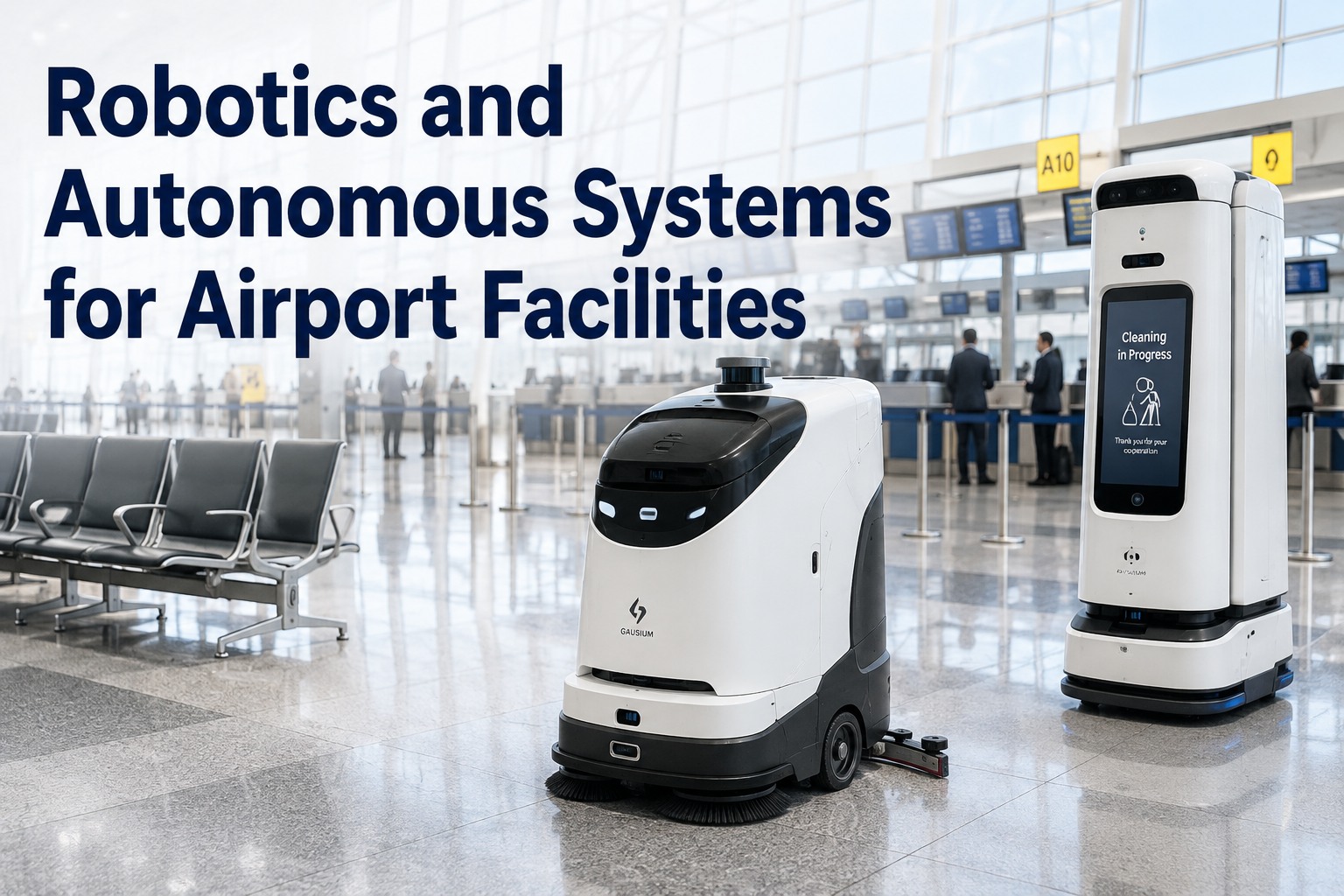
The aviation industry's hygiene demands have evolved dramatically. Passengers now expect visible cleanliness measures, and airports deploy autonomous cleaning robots not just for efficiency—but as confidence-building tools. These robots work continuously through red-eye hours, navigating around luggage carts and passenger flows while delivering consistent sanitization that manual cleaning cannot match.
UV-C Disinfection Robots
Emit 254-nanometer ultraviolet light that destroys virus DNA on contact. Kill 99.99% of bacteria, viruses, and fungi on high-touch surfaces without chemicals. Operate in departure lounges, security checkpoints, and baggage claim areas during low-traffic windows.
Autonomous Floor Scrubbers
Navigate terminal floors using LIDAR sensors and 3D cameras. Scrub surfaces with 88 PSI water pressure, apply chemical disinfectant, and dry floors in a single pass. Cover up to 20,000 square meters per hour across polished stone and carpeted areas.
Restroom Sanitation Robots
Spray EPA-approved disinfectants on toilet surfaces, sinks, and mirrors. Navigate tight restroom layouts using obstacle avoidance sensors. Reduce cleaning staff exposure to hazardous pathogens while maintaining 24/7 restroom availability.
99.99%
Pathogen elimination rate with UV-C robots operating at correct lamp intensity
62%
Reduction in cleaning staff labor hours when floor scrubbing is automated
1.6M
Square meters cleaned at Frankfurt Airport in first 6 months of robot deployment
The Maintenance Challenge Nobody Talks About
Airports invest heavily in cleaning robots but often underestimate the maintenance complexity. A UV-C lamp that dims by 15% delivers insufficient disinfection. A scrub brush worn to 60% effectiveness leaves residue across terminal floors. A LIDAR sensor coated in dust causes navigation errors that send robots into passenger traffic. Without structured maintenance, robot fleets become unreliable assets instead of operational multipliers.
01
UV-C Lamp Degradation
UV-C lamps lose intensity after 8,000-10,000 operating hours. Most airports track calendar time, not actual lamp hours, leading to premature replacement or dangerous under-disinfection. Manual tracking via spreadsheets creates compliance gaps.
02
Scrub Brush Wear Patterns
Floor scrubbers operate 18+ hours daily. Brush bristles wear unevenly based on floor surface type—natural stone wears brushes 40% faster than vinyl. Replacing brushes on a fixed schedule wastes money or leaves floors improperly cleaned.
03
Navigation Sensor Contamination
LIDAR sensors accumulate dust, affecting range accuracy. Obstacle avoidance cameras get smudged with terminal grime. Robots begin missing debris piles, colliding with luggage carts, or repeating cleaning paths inefficiently.
04
Water Tank Bacterial Growth
Floor scrubbers store cleaning solution and recovery water. Without weekly sanitization, tanks harbor biofilm and bacteria. The robot then spreads contamination instead of eliminating it—defeating the entire purpose.
Critical Maintenance Tasks for Airport Cleaning Robots
Each robot type demands specific maintenance protocols. Executing these tasks on schedule—across a multi-robot fleet operating 24/7—requires automated tracking, parts inventory management, and compliance documentation. Manual maintenance logs fail when managing 10+ robots across multiple terminals.
UV-C Disinfection Robots
Maintenance Task
Frequency
Failure Impact
UV-C lamp hour tracking and replacement
Every 8,000-10,000 hours
Insufficient pathogen kill rate
Lamp intensity verification with UV meter
Monthly
Undetected lamp degradation
Safety sensor calibration testing
Weekly
UV exposure to passengers
Wheel and motor inspection
Bi-weekly
Navigation failures
Battery health monitoring
Daily log review
Mid-shift shutdowns
Autonomous Floor Scrubbers
Maintenance Task
Frequency
Failure Impact
Scrub brush replacement based on wear sensors
Every 400-600 hours
Poor cleaning performance
Water tank cleaning and sanitization
Weekly
Bacterial contamination spread
LIDAR sensor lens cleaning
Every 3 days
Navigation errors, collisions
Squeegee blade replacement
Monthly
Water streaks on floors
Filter inspection and replacement
Every 200 hours
Reduced suction power
Managing maintenance across 10+ robots? OXmaint tracks every UV-C lamp hour, scrub brush cycle, and sensor cleaning interval automatically—no spreadsheets, no missed tasks.
Start Free Trial
How CMMS Transforms Robot Fleet Maintenance
Computerized Maintenance Management Systems designed for airport operations solve the tracking nightmare. OXmaint monitors each robot's operational hours, triggers preventive maintenance based on actual usage, and ensures compliance documentation for FAA audits. The difference is eliminating reactive repairs and maintaining peak robot performance across the entire fleet.
Every robot logs operating hours automatically. UV-C lamp timers, scrub brush cycles, and LIDAR runtime feed directly into OXmaint. Preventive maintenance triggers when thresholds hit—not on arbitrary calendar dates.
Parts Inventory Integration
OXmaint knows which UV-C lamps fit Robot-07, how many scrub brushes are in stock, and when to reorder LIDAR lens cleaning kits. Zero time wasted hunting for compatible parts during urgent repairs.
Schedule robot maintenance during 2-6 AM when passenger traffic drops. OXmaint coordinates multi-robot fleets so critical gate areas always have backup cleaning coverage during maintenance windows.
FAA inspectors request UV-C disinfection logs? Export every lamp replacement, intensity test, and safety check with timestamps and technician signatures. Complete audit trail generated automatically.
Fleet Maintenance Workflow in OXmaint
1
Robot Logs Hours
Floor scrubber completes shift, uploads 18.3 operating hours to CMMS
→
2
Threshold Triggered
Total brush hours hit 580—maintenance scheduled automatically
→
3
Parts Checked
System verifies replacement brush in stock, adds to work order
→
4
Tech Notified
Mobile alert sent: "Replace brush on Scrubber-03 during 3 AM window"
→
5
Work Completed
Tech confirms replacement, resets hour counter, robot resumes operations
Real-World Impact: Airport Case Studies
Major airports implementing structured robot maintenance with CMMS report measurable improvements in cleaning consistency, compliance pass rates, and operational cost reduction. These outcomes stem from shifting from reactive repairs to predictive maintenance.
Major International Hub Airport
United States
Managing 15 UV-C robots and 8 floor scrubbers across 3 terminals. Manual tracking caused 6 incidents of expired UV lamps still in operation, risking pathogen survival.
Implemented OXmaint with automated lamp hour tracking, mobile alerts for technicians, and parts inventory integration.
100%
Lamp replacements on schedule
89%
First-time fix rate increase
34%
Reduction in emergency repairs
Regional Airport Authority
Europe
Floor scrubbers covering 500,000+ square meters with inconsistent brush replacement schedules. Cleaning quality complaints increased 18% over 6 months.
Deployed usage-based maintenance triggers. Brushes now replaced based on actual hours and floor surface type instead of calendar schedules.
60%
Drop in cleaning complaints
Fleet Management Best Practices
Operating a multi-robot cleaning fleet efficiently requires specific protocols that extend beyond individual robot maintenance. These practices ensure continuous terminal coverage, optimize charging schedules, and prevent single points of failure.
01
Zone Assignment with Redundancy
Assign primary and backup robots to each terminal zone. When Robot-04 undergoes maintenance, Robot-09 automatically assumes Terminal B coverage. No cleaning gaps during maintenance windows.
02
Staggered Maintenance Schedules
Never service all UV-C robots simultaneously. OXmaint distributes maintenance tasks across the week, ensuring 80% fleet availability at all times. Critical for 24/7 airport operations.
03
Performance Metric Dashboards
Track square meters cleaned per hour, navigation error rates, and cleaning cycle completion percentages. Declining metrics trigger diagnostic checks before complete failures occur.
04
Battery Management Protocols
Lithium-ion batteries degrade if consistently drained below 20%. OXmaint monitors battery health, schedules charging during low-activity periods, and alerts when batteries need replacement.
The Economics of Automated Maintenance
$47,000
Average annual savings from preventing UV lamp over-replacement
73%
Reduction in unplanned robot downtime with predictive maintenance
156
Hours of admin time saved annually per airport facility manager
Frequently Asked Questions
How does OXmaint track robot operating hours automatically?
OXmaint integrates with most commercial cleaning robots via API connections or manual daily log uploads. The system aggregates operational hours, tracks component-specific usage (UV lamp hours separate from motor hours), and triggers maintenance based on actual wear rather than estimates.
Can the system manage robots from different manufacturers?
Yes. Airports typically operate mixed fleets—UVD Robots for disinfection, Tennant for floor scrubbing, etc. OXmaint creates manufacturer-specific maintenance templates and parts catalogs. Each robot type follows its own maintenance protocols within one unified system.
What happens if a robot needs emergency repair during peak hours?
OXmaint's mobile app enables technicians to create emergency work orders instantly, documenting the issue with photos and prioritizing based on terminal zone criticality. The system automatically reassigns cleaning coverage to backup robots and notifies operations managers.
How does the system handle compliance documentation for health inspections?
Every maintenance task generates a timestamped record with technician ID, parts used, and task completion confirmation. Export compliance reports by date range, robot ID, or maintenance type. FAA or health department audits become 10-minute exports instead of week-long documentation hunts.
Stop Losing Track of Robot Maintenance
Airport cleaning robots deliver exceptional hygiene when properly maintained. OXmaint ensures your fleet operates at peak performance—tracking every hour, scheduling every task, and documenting every repair automatically.