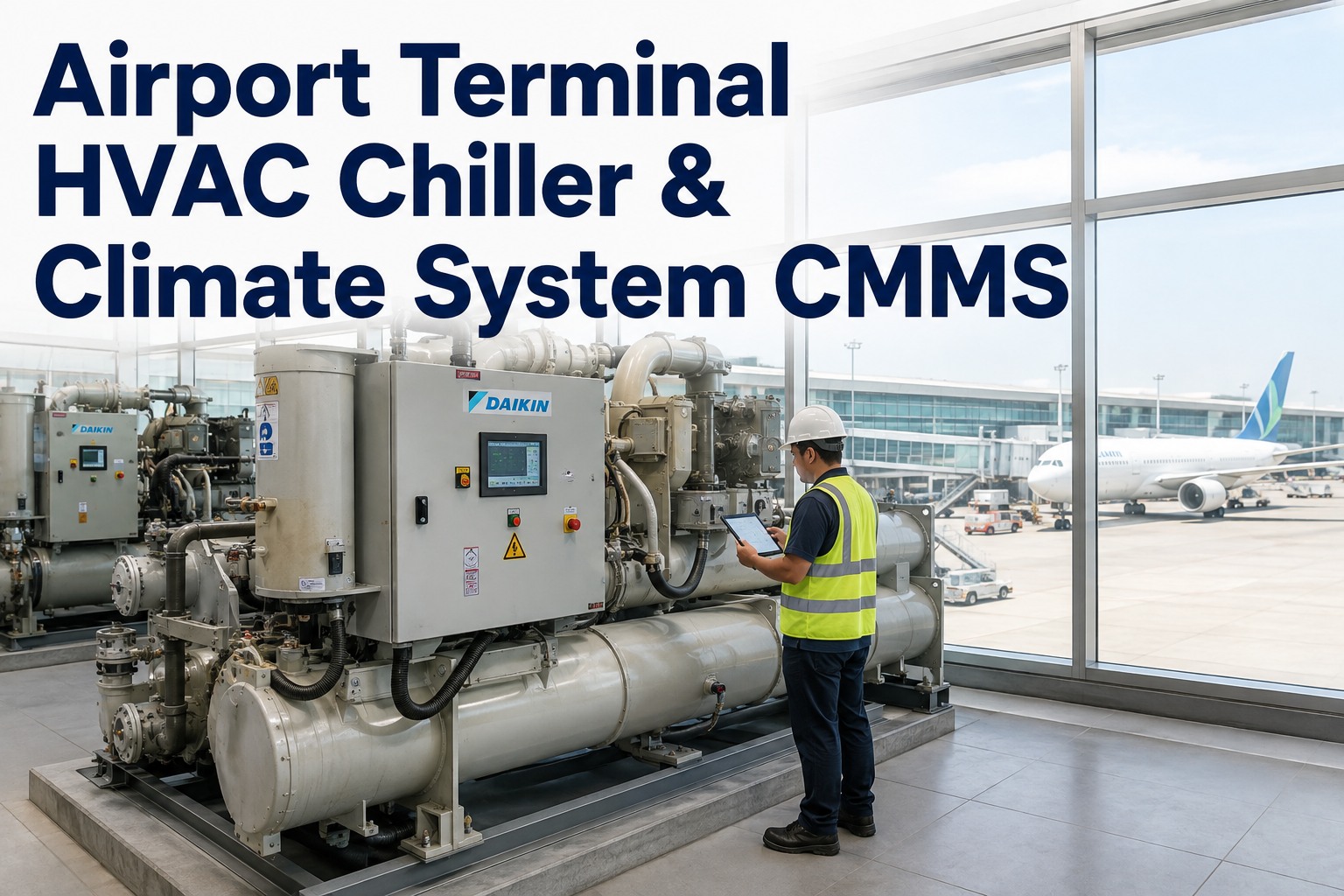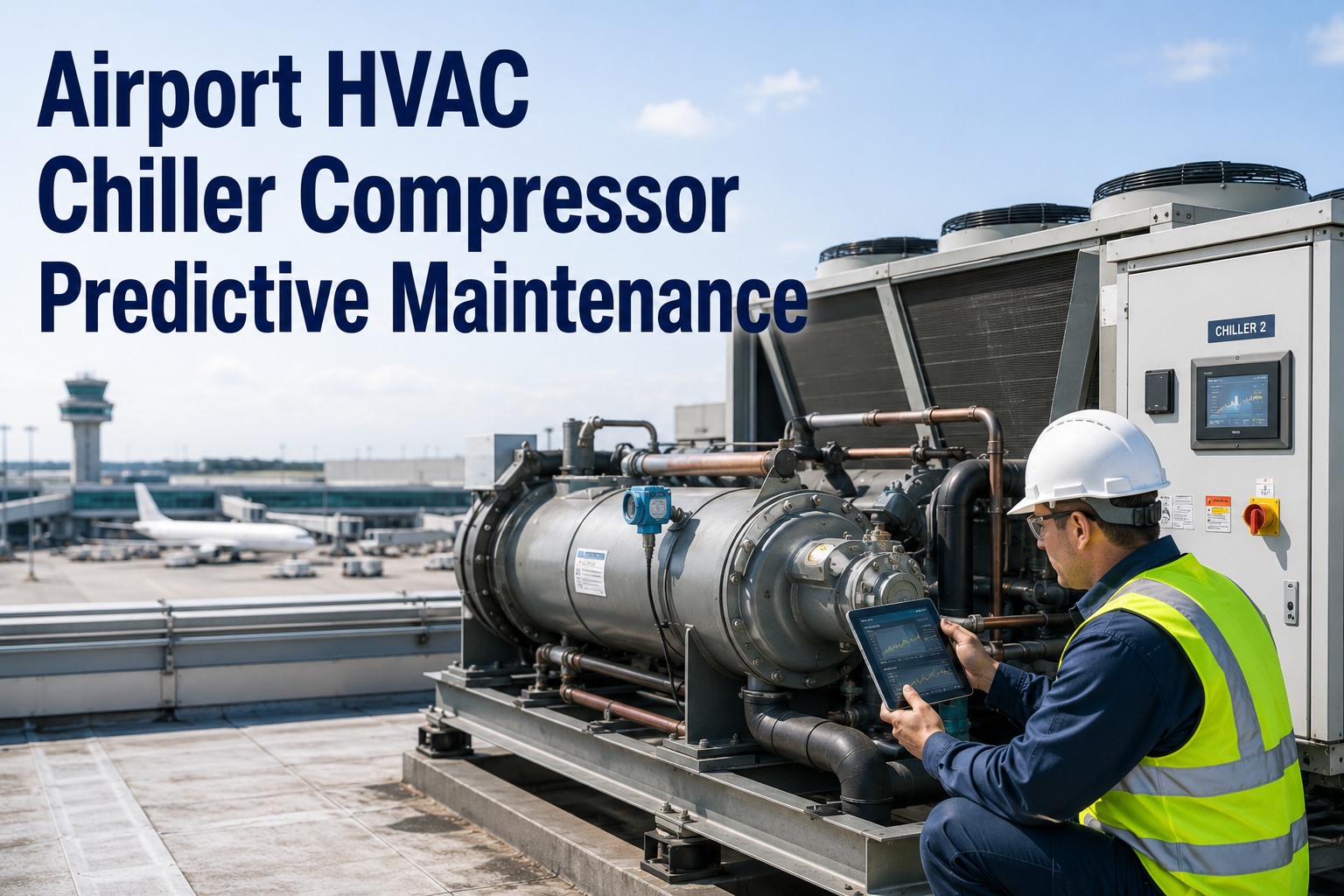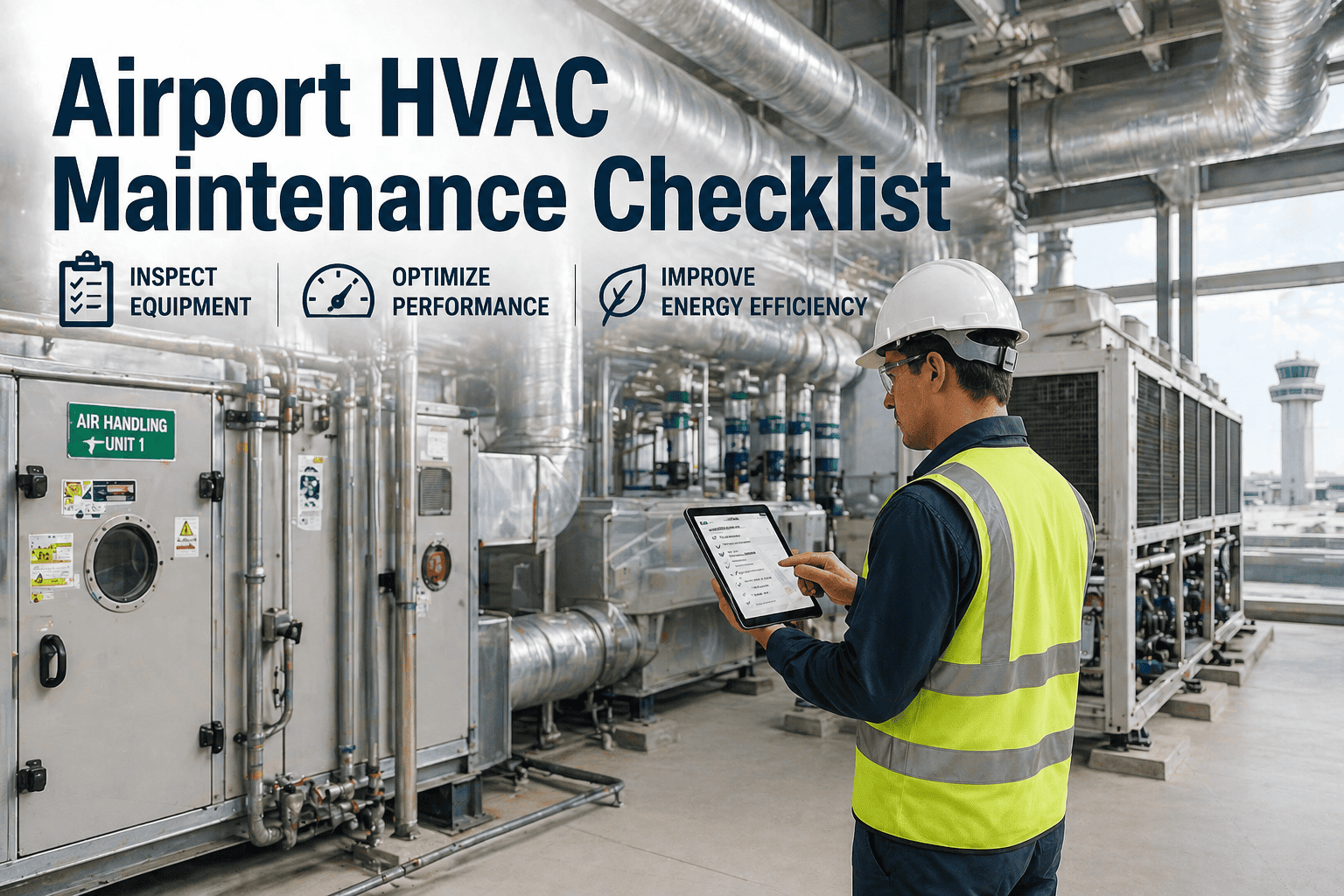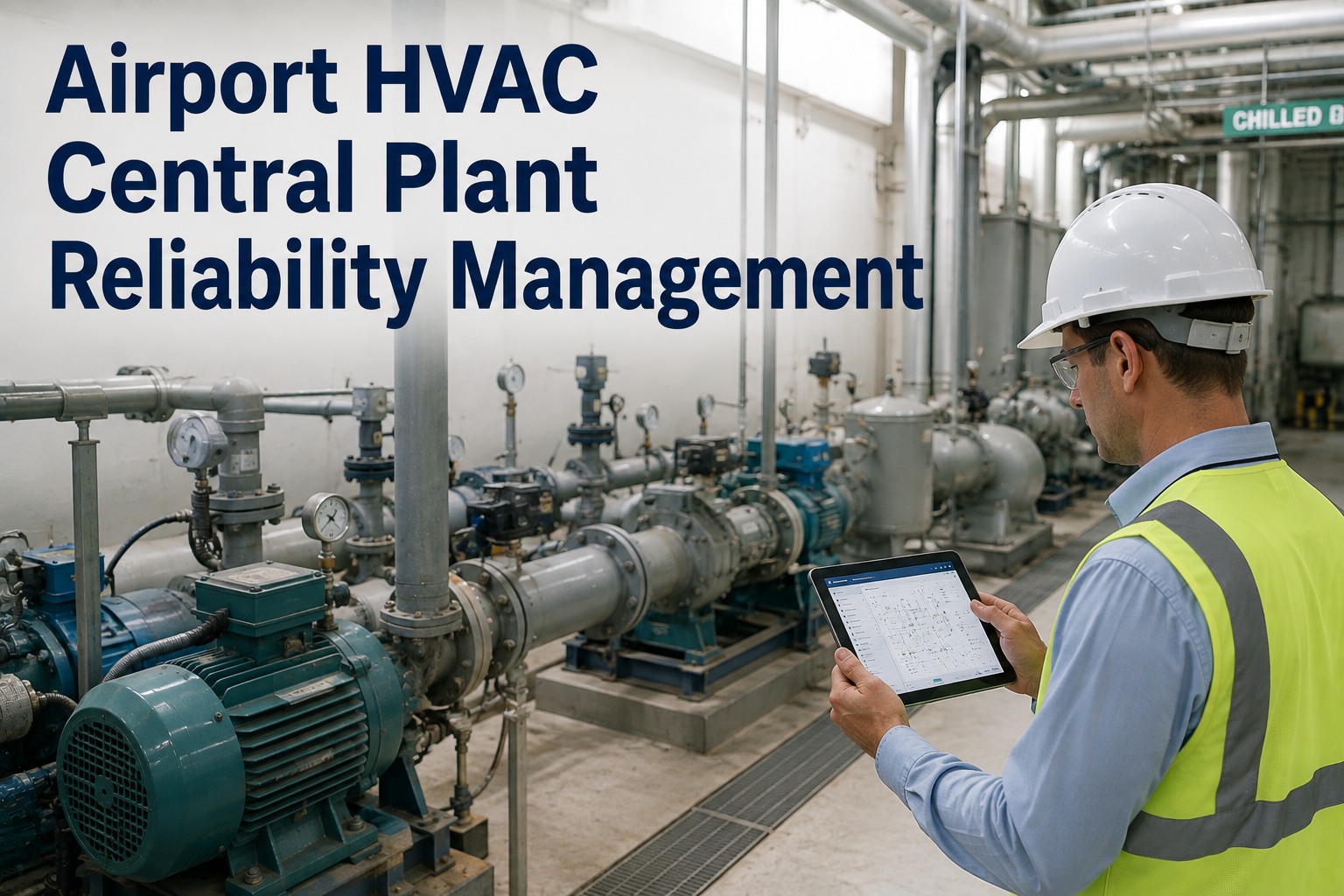
Airport HVAC central plant reliability management is the discipline of keeping chillers, boilers, cooling towers and air-handling systems running continuously so terminals stay comfortable 24/7 — and it matters because the central plant is typically the single largest energy consumer in an airport, often accounting for 40–60% of total terminal electricity use. When a chiller fails on a peak summer day, the consequences are immediate: passenger complaints, airline SLA penalties, emergency callout costs and, in the worst cases, partial terminal closures. This guide walks facilities and reliability managers through chiller redundancy planning, boiler preventive maintenance, cooling tower water treatment, BMS optimization and seasonal load management — the five pillars of terminal HVAC central plant reliability. If you're ready to move from reactive firefighting to a structured program, you can Start Free Trial of OxMaint and digitize your airport central plant maintenance in days, not months.
What does one chiller failure cost your terminal on a 95°F day?
For most mid-size hubs, the answer is $15,000–$50,000 per incident in emergency repairs, airline credits and lost concessions revenue — before you count the reputational damage. A structured airport central plant maintenance program cuts unplanned HVAC downtime by 30–50% and trims plant energy spend 10–20%.
Why Airport HVAC Reliability Is Different From Any Other Building
A commercial office can tolerate a few uncomfortable hours. An airport cannot — terminals operate 24/7/365, hold thousands of passengers in security-controlled zones, and run under airline agreements that penalize comfort failures.
Zero-Downtime Expectation
Terminals never close. ASHRAE comfort standards (55) and IATA level-of-service guidelines expect 68–78°F and 40–60% RH around the clock — including during gate turnarounds that spike cooling load 30%+ in minutes.
Airline SLA Penalties
Many airport-airline use agreements include environmental service levels. Repeated comfort failures trigger credits, audit findings and strained carrier relationships that take years to repair.
Massive Energy Exposure
A 500,000 sq ft terminal can spend $1.5M–$3M annually on central plant energy. A plant running 10% inefficiently due to fouled condensers or poor sequencing quietly burns $150K–$300K a year.
How to Build Chiller Redundancy That Actually Protects the Terminal
Industry best practice for airport chiller plants is N+1 redundancy at minimum — one standby chiller sized to carry peak load if the largest machine trips. Critical hubs increasingly run N+2 because peak-day failure probability climbs with plant age.
Size the Standby for Your Largest Chiller
If your plant has three 1,200-ton chillers, the standby must be 1,200 tons — not a smaller "swing" machine. Undersized redundancy is the most common design flaw found in airport central plant audits.
Rotate Lead/Lag Monthly
Equalize run hours across machines. A chiller that sits idle for 8 months develops seal leaks, oil migration and starter faults — exactly when you need it most. Automate rotation in the BMS and track hours in your CMMS.
Run Quarterly Failover Drills
Simulate a lead-chiller trip each quarter and time the standby's start-to-load. Target: full capacity restored in under 10 minutes. Document every drill as a work order so auditors see a living reliability program.
Trend Vibration, Oil & Approach Temps
Rising condenser approach temperature signals tube fouling months before capacity drops. OxMaint's predictive maintenance pulls BMS trends into asset health scores so you schedule cleaning in shoulder season — not during a July failure.
Boiler PM and Cooling Tower Water Treatment: The Quiet Reliability Killers
Chillers get the attention, but neglected boilers and cooling towers cause more unplanned airport HVAC plant shutdowns than compressor failures. Water chemistry alone accounts for an estimated 30–40% of central plant efficiency losses.
| System | Critical PM Task | Frequency | Failure Cost if Skipped |
|---|---|---|---|
| Boilers | Combustion analysis & burner tuning | Quarterly | 5–10% fuel waste; $20K–$60K/yr |
| Boilers | Refractory & tube inspection | Annually (pre-winter) | Mid-winter shutdown; $30K+ emergency repair |
| Cooling Towers | Water chemistry testing (pH, conductivity, biocide) | Weekly | Scale/corrosion; 15–25% chiller efficiency loss |
| Cooling Towers | Legionella sampling & basin cleaning | Monthly / semi-annual | Public-health incident; regulatory shutdown |
| Pumps & AHUs | Vibration analysis & bearing checks | Monthly | Catastrophic bearing failure; 3–7 day lead time |
Every one of these tasks can be templated as a recurring preventive maintenance work order in OxMaint — auto-assigned, escalated if overdue, and logged with photos and readings for audit-ready compliance.
BMS Optimization and Seasonal Load Swings: Where the Savings Hide
Most airport central plants run 8–15% above optimal energy use simply because BMS sequences were commissioned years ago and never re-tuned for today's flight schedules and occupancy patterns.
Chiller Sequencing
Run machines at their efficiency sweet spot (typically 70–85% load) instead of three chillers at 40%. Proper sequencing saves $80K–$200K annually at a mid-size hub.
Condenser Water Reset
Every 1°F reduction in condenser water temperature cuts chiller energy roughly 1–1.5%. Reset setpoints with wet-bulb conditions, not fixed schedules.
Flight-Schedule Integration
Pre-cool concourses 90 minutes before banked arrivals; set back zones after the last departure. Airports linking BMS to flight data report 10–18% HVAC energy savings.
Shoulder-Season Overhauls
Schedule tube cleaning, refractory work and major overhauls in April–May and September–October windows. OxMaint's maintenance calendar maps PMs to your seasonal load curve automatically.
What a Reliability Program Is Worth: A 4-Chiller Regional Hub
Consider a regional airport with a 4,800-ton central plant (4 × 1,200-ton chillers, 3 boilers, 6 cooling tower cells) spending $2.1M/yr on plant energy and $340K/yr on reactive HVAC maintenance.
How OxMaint Keeps Airport Central Plants Running
OxMaint is an AI-powered CMMS and EAM platform built for exactly this challenge — complex, high-stakes mechanical plants that cannot afford reactive maintenance.
Preventive & Predictive Maintenance
Automate every chiller, boiler and cooling tower PM on calendar, run-hours or condition triggers. AI flags degrading assets from trend data — cutting unplanned downtime 30–50%.
Asset & Equipment Tracking
A complete digital register of your airport mechanical plant — nameplate data, manuals, run hours, failure history and warranty status — searchable in seconds from the plant room floor.
Work Orders & Spare Parts
Mobile work orders with photos and checklists replace paper logs. Linked spare-parts inventory ensures critical items — mechanical seals, actuators, biocide — are in stock before you need them.
Maintenance Analytics
Dashboards track MTBF, PM compliance, cost per asset and energy-linked KPIs — the evidence you need for airport authority boards, airline SLA reviews and ISO 55000-aligned audits.
See OxMaint on Your Central Plant — Book a 30-Minute Demo
We'll map your chillers, boilers and cooling towers into a live reliability workflow and show you the downtime and energy savings other airports are already capturing.
Airport HVAC Central Plant Reliability: Common Questions
What is an airport HVAC central plant?
It's the centralized mechanical facility — chillers, boilers, cooling towers, pumps and distribution piping — that produces all heating and cooling for the terminal. Instead of dozens of rooftop units, one plant serves the entire airport, which makes its reliability mission-critical and its efficiency the airport's biggest energy lever.
How much redundancy does an airport chiller plant need?
N+1 is the accepted minimum: one standby chiller sized to replace the largest operating machine at peak load. Major hubs with aging plants or extreme climates increasingly adopt N+2. Redundancy only works if standby units are rotated monthly and failover-tested quarterly — idle chillers fail when called upon.
How often should cooling tower water treatment be checked?
Chemistry (pH, conductivity, inhibitor and biocide levels) should be tested at least weekly, with Legionella sampling monthly and full basin cleaning semi-annually. Poor water treatment causes scale and corrosion that degrade chiller efficiency 15–25% — and creates serious public-health liability in a facility serving thousands of passengers daily.
Can a CMMS really reduce airport HVAC energy costs?
Yes — indirectly but measurably. A CMMS like OxMaint ensures efficiency-critical PMs (tube cleaning, burner tuning, water treatment, filter changes) actually happen on schedule, which typically recovers 8–12% of plant energy spend. Book a Demo to see how airports track these savings in OxMaint's analytics dashboards.
How do we move from spreadsheets to a central plant maintenance program?
Start by digitizing your asset register and the 20–30 highest-impact recurring PMs, then layer on work orders and parts inventory. Most airport teams go live on OxMaint in 2–4 weeks without consultants — and see PM compliance climb above 95% within the first quarter.
Keep Your Terminal Comfortable Around the Clock
Join maintenance teams using OxMaint to run airport HVAC central plants with 30–50% less unplanned downtime and double-digit energy savings.
Free 14-day trial · No credit card · Live in weeks, not months