Your newest ground crew member just arrived for their first shift at the ramp. They've watched the safety videos and signed the compliance forms. But when an A320 pulls into Gate 12 with a 35-minute turnaround window, do they know the 23-step sequence for safe aircraft positioning? Do they understand the hand signals that prevent a $4 million wing strike? Traditional airport operations training treats these questions as checkbox items. Modern digital training platforms treat them as mission-critical competencies that determine whether your airport operates safely, efficiently and profitably.
68%
Of ground incidents linked to training gaps
$127K
Average cost per ramp safety incident
47 Days
Time to proficiency without structured training
Why Traditional Airport Training Programs Fall Short
Airport operations training has historically followed a simple formula: classroom sessions, printed manuals, shadowing experienced workers. This approach made sense when airport technology changed every decade and workforce turnover was minimal. Today, with automated ground support equipment, real-time coordination systems, and workforce turnover exceeding 30% annually at major hubs, this model creates dangerous knowledge gaps. New hires receive generic safety briefings that don't address role-specific scenarios. Veteran staff miss critical updates on new procedures. Airports ready to modernize their training approach can schedule a consultation to explore digital training platforms designed specifically for aviation operations.
Generic Content
One-size-fits-all training ignores role-specific requirements. Baggage handlers receive the same modules as fueling technicians.
Critical task knowledge gaps
No Update Mechanism
Procedure changes sit in emails while staff continue using outdated methods learned months ago.
Compliance violations, safety incidents
Zero Verification
No competency testing means you can't identify who truly understands critical procedures.
Unqualified staff in critical roles
Invisible Compliance
When auditors ask for training records, you scramble through filing cabinets hoping to find signed PDFs.
Failed audits, regulatory penalties
The Digital Training Transformation: Role-Based Learning That Works
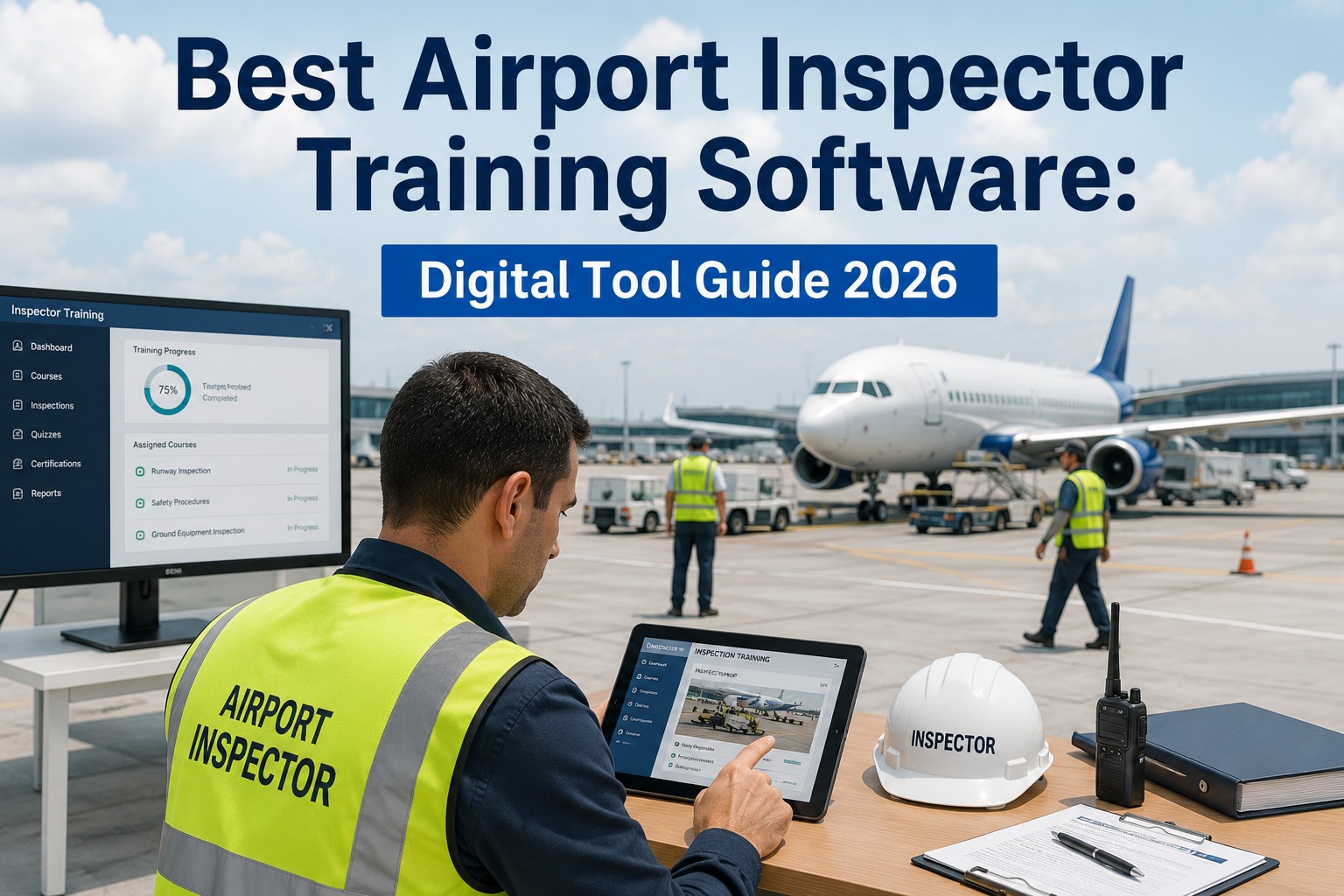
Modern airport operations training platforms solve these problems through role-based learning paths, mobile accessibility, real-time progress tracking, and automated compliance reporting. A ramp supervisor's learning path focuses on crew coordination and safety oversight. A fueling technician's path emphasizes fuel quality testing and emergency procedures. A baggage handler learns load planning and damage prevention specific to different aircraft types. Each role receives targeted content that builds genuine competency. Airports implementing these systems report 40-60% faster time-to-proficiency and 85% reduction in training-related compliance findings during audits.
Ground Support
Aircraft Marshaller
✓ Hand Signal Standards
✓ Aircraft Approach Vectors
✓ Emergency Stop Procedures
✓ Weather Impact Assessment
14 hrs • 8 modules
Fueling Operations
Fuel Technician
✓ Fuel Quality Testing
✓ Contamination Detection
✓ Static Electricity Control
✓ Emergency Shutdown
18 hrs • 11 modules
Baggage Handling
Load Planner
✓ Weight & Balance Calculations
✓ Cargo Compartment Specs
✓ Hazmat Identification
✓ Special Cargo Handling
16 hrs • 9 modules
Operations Management
Ramp Supervisor
✓ Crew Coordination Protocols
✓ Equipment Allocation
✓ Safety Oversight Systems
✓ Incident Investigation
22 hrs • 13 modules
The transformation extends beyond content customization. Digital platforms enable mobile learning—staff complete modules during shift breaks, review procedures on tablets before complex operations, and access just-in-time training when facing unfamiliar scenarios. Progress tracking happens automatically, showing supervisors exactly who has completed which certifications and where knowledge gaps exist. When regulatory requirements change, updates push to relevant roles instantly. Organizations exploring these capabilities can access training management platforms that integrate with existing airport operations systems.
Building Competency Through Assessment and Certification
Reading a procedure manual doesn't create competency. Genuine airport operations training requires verification—assessments that prove staff can apply knowledge in realistic scenarios. What do you do when you notice fuel contamination during a routine check? How do you respond when weather delays create gate congestion? Modern training platforms incorporate scenario-based testing that identifies knowledge gaps before they become operational incidents and provides documentation that satisfies regulatory auditors.
1
Initial Training
Role-specific modules with video and interactive elements
→
2
Knowledge Check
Scenario-based questions testing decision-making
→
3
Practical Demo
Supervised field assessment with evaluation
→
4
Certification
Digital credential with expiration tracking
Transform Your Airport Training Program
See how digital training platforms reduce time-to-proficiency, eliminate compliance gaps, and build measurable competency across your operations team.
Compliance Documentation That Auditors Actually Want
FAA inspections, TSA security audits, OSHA workplace safety reviews—airport operations face constant scrutiny demanding proof of training compliance. Traditional documentation creates audit nightmares: signed sheets scattered across filing cabinets, email confirmations buried in inboxes. When an auditor asks for training records from the past 18 months, can you produce that documentation in 10 minutes? Digital training platforms make compliance automatic. Every completed module, every passed assessment exists in a searchable database with timestamps and version control. When auditors arrive, you generate complete training histories instantly.
Complete Training History
Every module completed, every assessment passed, with timestamps and version tracking
Individual Credentials
Digital certificates showing current certifications, expiration dates, and renewal status
Team Analytics
Department-wide compliance rates, gap identification, and completion trends
Expiration Alerts
Automated notifications before certifications expire, preventing compliance lapses
Expert Perspective: Why Digital Training Is Non-Negotiable
Airport operations training isn't a one-time event—it's a continuous competency management system. The airports succeeding today have moved beyond classroom lectures and paper certifications to platforms that deliver role-specific learning, verify understanding through assessments, and maintain audit-ready documentation automatically. When training becomes this systematic and measurable, you stop reacting to incidents and start preventing them through proactive workforce development.
Reduces Time-to-Proficiency
New hires reach full operational competency 40-60% faster with structured digital training. This means fewer supervision hours and quicker contribution to operations.
Eliminates Compliance Gaps
Automated tracking ensures every team member maintains current certifications. No more expired credentials discovered during audits.
Scales With Growth
Whether onboarding 5 new hires or 50, digital platforms deliver consistent training quality without overwhelming your staff.
Getting Started: Your Path to Digital Training
Transitioning to a digital platform doesn't require shutting down operations or retraining your entire workforce overnight. Successful implementations follow a phased approach: start with one department, validate content and workflows, then expand systematically. The first phase focuses on content migration—converting existing training materials into digital modules and creating assessments. Phase two involves pilot testing with a small group and gathering feedback. Phase three expands to full deployment with ongoing optimization. Airports ready to begin this process can schedule implementation planning sessions to map their specific training requirements to platform capabilities. Organizations exploring integration with existing systems can access comprehensive training management solutions designed for complex airport operations environments.
Stop Training Gaps From Becoming Incidents
Join airports using Oxmaint to deliver role-based training, verify competency, and maintain audit-ready compliance documentation automatically.
Frequently Asked Questions
How does role-based training differ from traditional airport training programs?
Role-based training delivers customized content specific to each position rather than generic safety briefings for everyone. A fuel technician learns contamination detection protocols while a marshaller learns aircraft positioning signals. This targeted approach reduces training time by 40-60% because staff only learn procedures relevant to their actual job responsibilities, and competency develops faster when content directly applies to daily tasks.
Can digital training platforms integrate with our existing workforce management systems?
Modern training platforms are designed for integration with workforce management, maintenance management, and scheduling systems. They pull employee data automatically, sync certification status with scheduling tools, and trigger training when new equipment arrives or procedures change. This eliminates manual data entry and ensures training happens at the right time for both operational needs and regulatory requirements.
How do we maintain training compliance during FAA and TSA audits?
Digital platforms maintain complete audit trails automatically—every completed module, every passed assessment, every renewed certification exists in a searchable database with timestamps and version control. When auditors request training records, you generate comprehensive reports instantly showing who completed which training, when they completed it, and which version of the content they received. Automated expiration tracking prevents compliance lapses before they occur.
What's the typical implementation timeline for airport training platforms?
Most airports complete full implementation in 60-90 days using a phased approach. The first 30 days focus on content migration and system configuration. Days 31-60 involve pilot testing with one department to validate workflows and gather feedback. Days 61-90 expand to full deployment across all roles. This phased approach minimizes disruption while allowing refinement based on actual user experience before organization-wide rollout.
How do we verify that staff actually understand critical procedures rather than just clicking through modules?
Effective platforms use scenario-based assessments that test decision-making under realistic conditions rather than simple multiple-choice recall questions. Staff demonstrate understanding by solving problems they'll actually face: responding to fuel contamination, managing gate conflicts, identifying safety violations. Combined with supervised practical demonstrations and checklist-based field evaluations, this multi-layer verification ensures genuine competency rather than superficial completion.