Airports managing winter operations face a triple compliance challenge: EPA Airport Deicing Effluent Guidelines require collecting 60% of aircraft deicing fluid, NPDES stormwater permits demand continuous monitoring, and glycol-laden runoff can trigger wastewater surcharges exceeding $2.8 million annually at hub airports. One missed drainage inspection or undocumented de-icing fluid collection creates simultaneous exposure across environmental compliance, operational safety, and municipal discharge violations. Start a free trial to digitize your airport environmental compliance or book a demo to see how Oxmaint automates wastewater tracking, drainage inspections, and glycol recovery documentation across your airfield operations.
Automate Airport Environmental Compliance Before Your Next EPA Inspection
Oxmaint digitizes de-icing fluid tracking, drainage system inspections, and NPDES permit documentation — eliminating manual logbooks and producing audit-ready reports in minutes instead of weeks. Get complete visibility into glycol collection rates, stormwater monitoring, and environmental maintenance across your entire airfield operation. Start your free trial now or book a strategic briefing to see how leading airports manage environmental compliance.
What Is Airport Wastewater and De-Icing Fluid Management?
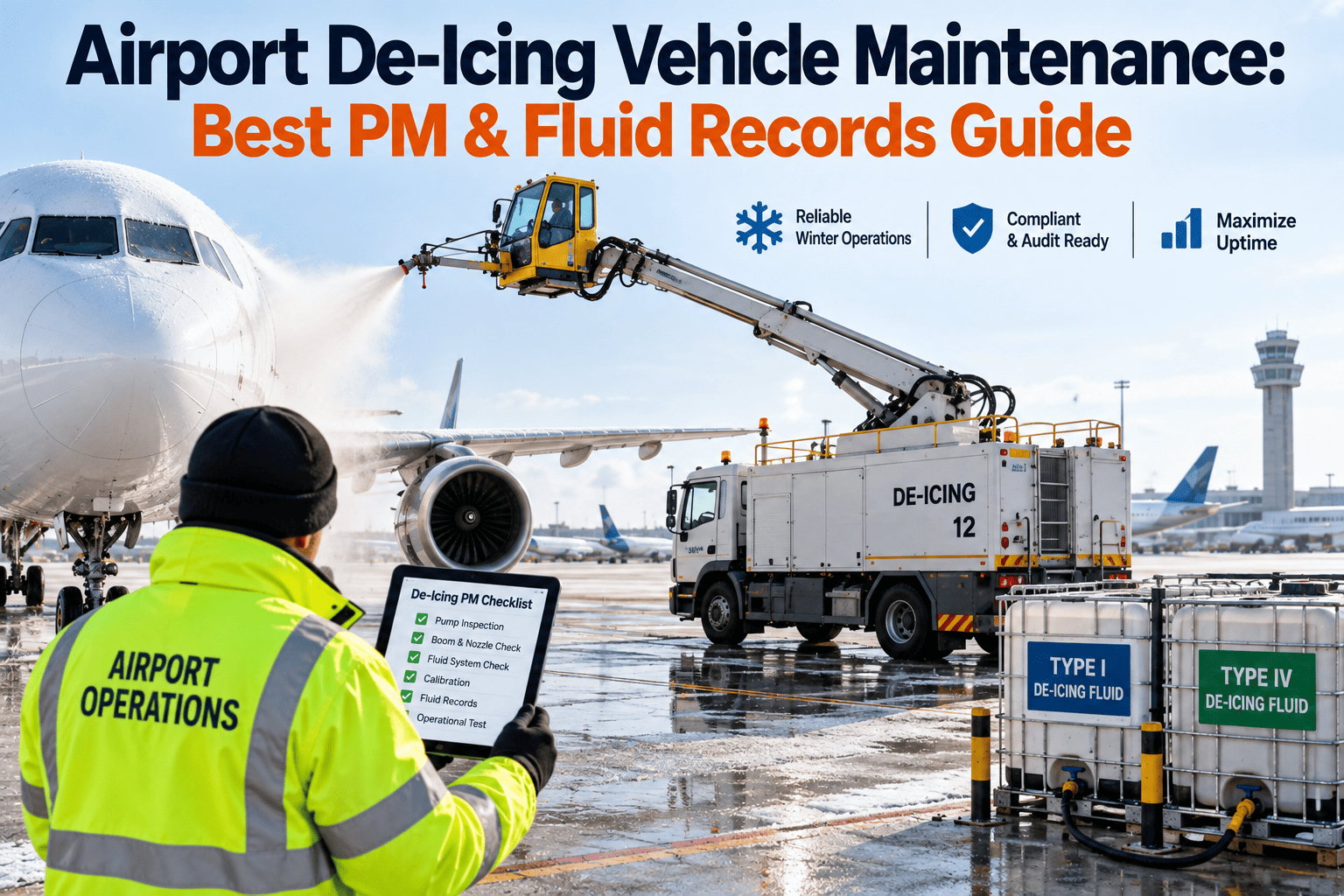
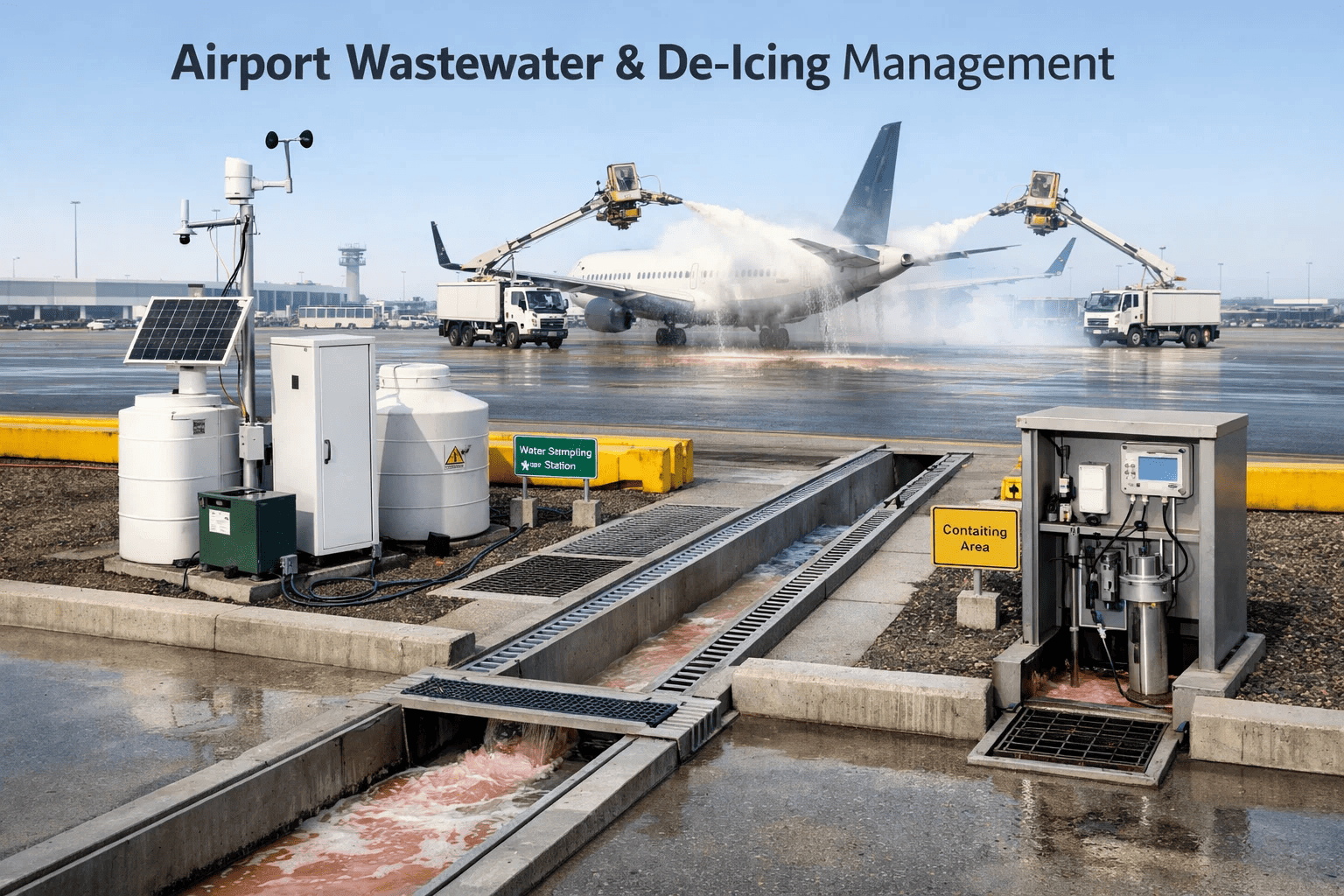
Airport wastewater management encompasses three interconnected systems that protect water quality and maintain regulatory compliance. Aircraft de-icing fluids consist primarily of propylene glycol or ethylene glycol mixed with water, along with additives including surfactants, corrosion inhibitors, and pH modifiers. When aircraft are treated during winter operations, thousands of gallons of these fluids drip onto pavement and enter drainage systems.
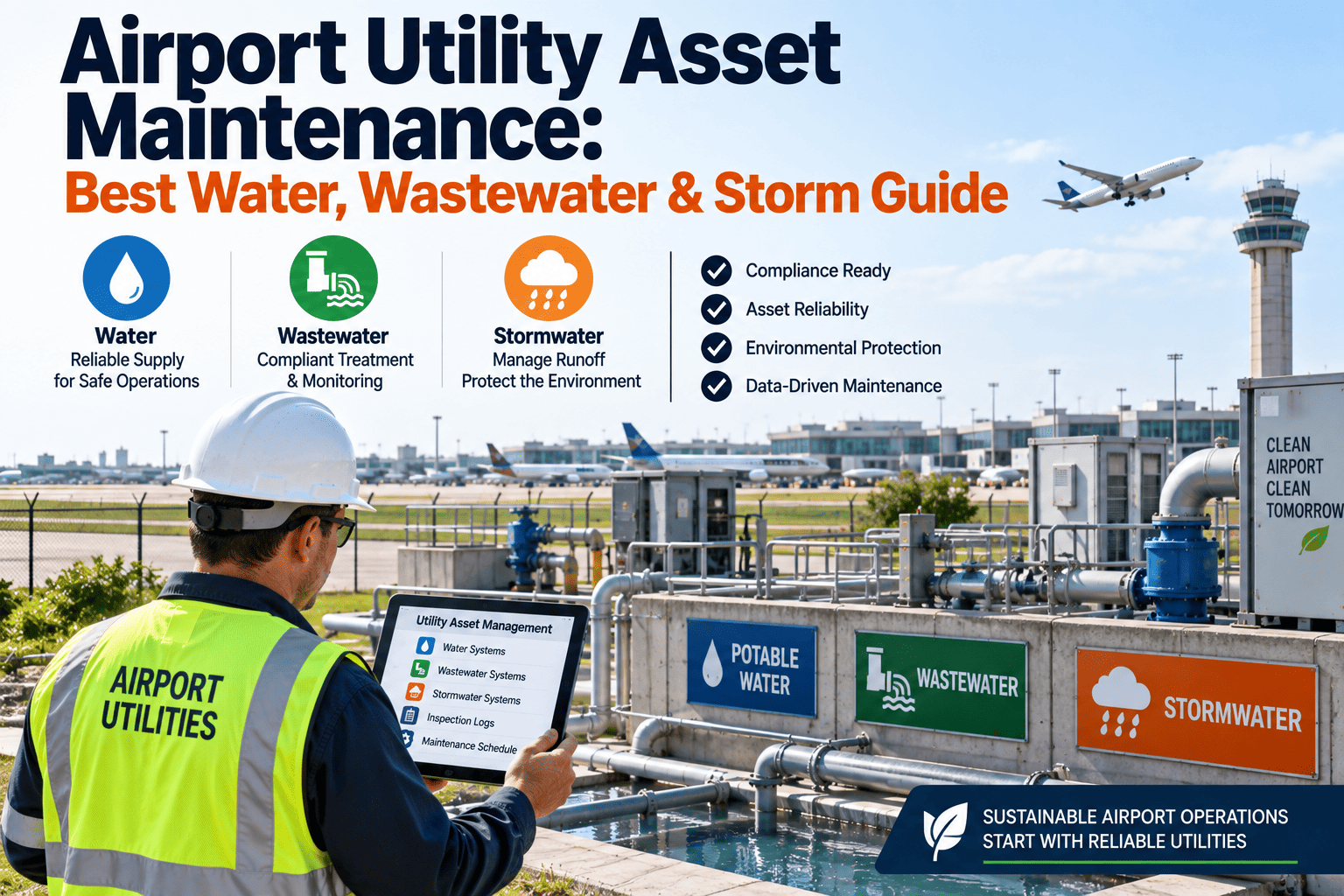
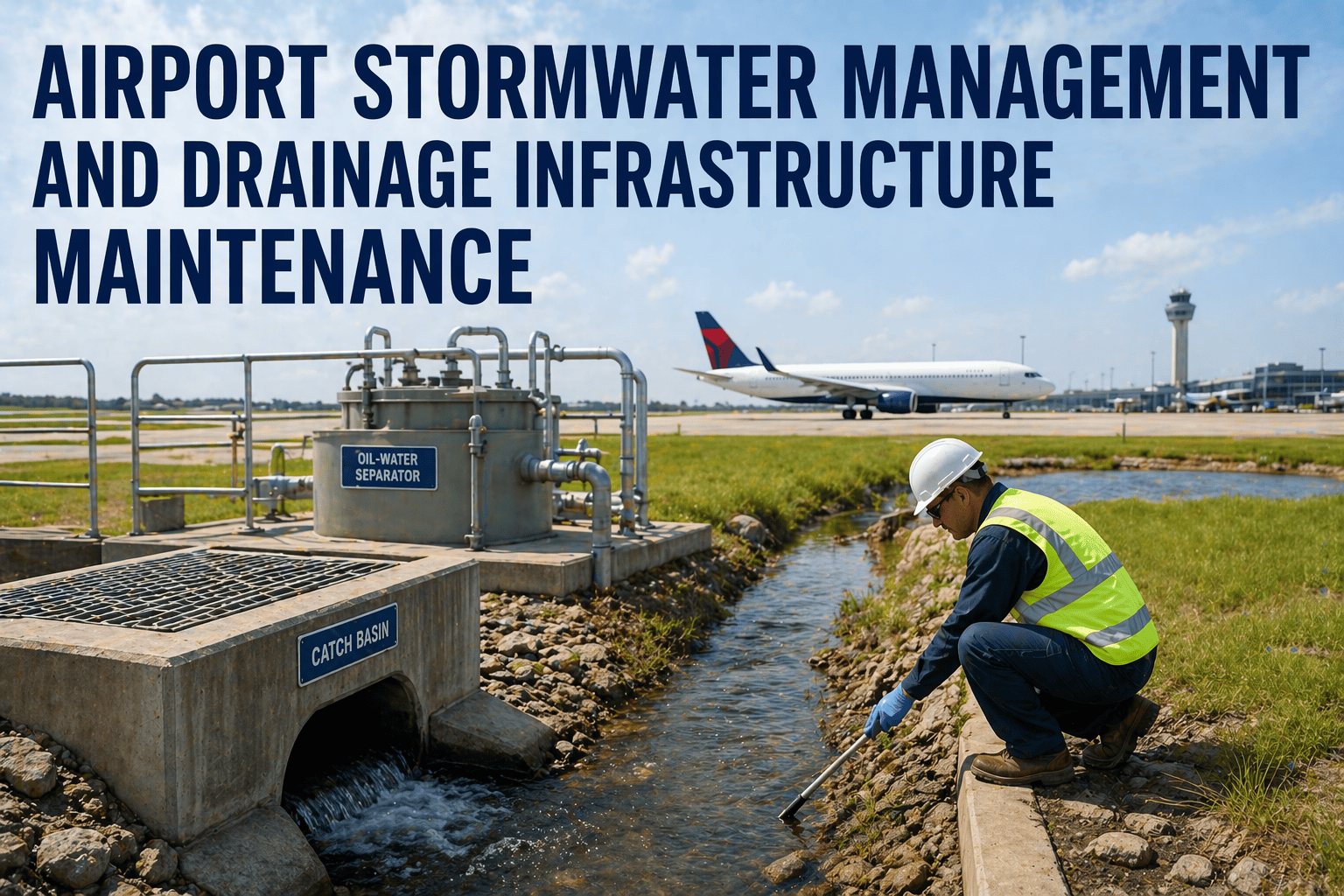
The stormwater drainage network collects runoff from runways, taxiways, and aprons — covering up to 1,600 acres at major airports. This network must prevent standing water that attracts wildlife while capturing contaminated runoff for treatment. Airport stormwater is collected in separate conveyance systems based on contamination level: Industrial Wastewater Systems handle high-BOD runoff from de-icing areas, while Stormwater Drainage Systems manage lower-contamination runoff. Glycol recovery systems then separate reusable fluid from collected wastewater, reducing both environmental impact and operational costs. Start a free trial to digitize your environmental asset management or book a demo to see automated glycol tracking and drainage inspection workflows.
The Four Environmental Systems Airport Operators Must Manage
Dedicated deicing pads with drainage infrastructure capture glycol-laden runoff. Salt Lake City Airport processes 3 million gallons of fluid annually through a 5-mile drainage network leading to a reclamation facility. Collection rates directly impact EPA compliance and wastewater treatment costs.
Pavement de-icers include liquid potassium acetate and formate, plus solid materials like sodium acetate and sodium formate. Runway and taxiway treatments create different contamination profiles than aircraft fluids, requiring separate documentation and monitoring protocols.
Catch basins, underground pipe networks, and detention systems must prevent wildlife-attracting standing water while managing treatment capacity. FAA criteria require zero ponding within Runway Safety Areas, making drainage maintenance critical to both safety and compliance.
Syracuse Airport's new facility uses evaporator technology to treat spent de-icing fluid as low as 0.25% glycol concentration, producing certified reusable fluid. Recovery systems convert environmental liability into cost savings through fluid reuse or resale.
Critical Compliance Failures That Create Board-Level Risk
New airports must collect 60% of aircraft de-icing fluid and meet numeric Chemical Oxygen Demand discharge limits when discharging directly to US waters. Undocumented collection rates or failed COD monitoring creates immediate EPA deficiency findings and potential NPDES permit suspension.
Glycol in wastewater causes significant dissolved oxygen reductions and affects drinking water treatment processes. Airports without recovery systems pay volumetric surcharges for high-BOD discharge, with costs escalating during heavy deicing seasons.
Standing water from inadequate drainage creates hazardous wildlife attractants. Detention ponds and slow-draining systems must be designed to eliminate within 24-48 hours to prevent bird congregation near active runways.
NPDES permits require regular inspection of drainage structures, sediment removal tracking, and stormwater sample analysis with documented results. Paper-based inspection logs create documentation gaps that surface during EPA audits or after environmental incidents.
How Airports Manage These Systems Today vs. With Oxmaint
| Environmental Asset | Manual Process (Current State) | With Oxmaint Platform |
|---|---|---|
| De-icing fluid collection tracking | Spreadsheet estimates of fluid volumes — collection percentage calculated manually at season end | Real-time fluid volume capture per deicing pad with automated EPA compliance percentage calculation |
| Drainage system inspections | Paper inspection forms filed in binders — no centralized tracking or missing inspection alerts | Mobile inspections with photo documentation, GPS location tagging, and overdue task escalation |
| Glycol recovery documentation | Manual logs tracking recovery volumes and purity testing — weeks to compile for audits | Digital recovery tracking with batch-level purity results and instant audit report generation |
| NPDES stormwater sampling | Sample results recorded in separate database — manual correlation to weather events and discharge volumes | Integrated sampling results linked to precipitation data and automated permit limit comparisons |
| Catch basin sediment removal | Maintenance crews track cleanings on handwritten logs — no historical volume or frequency analysis | Per-basin cleaning history with sediment volume capture and predictive maintenance scheduling |
| EPA audit preparation | Environmental staff spends 3-4 weeks assembling records from multiple systems and file cabinets | Complete environmental documentation package exported in under 3 hours with digital signatures |
Glycol Recovery Economics: The Business Case for On-Site Treatment
Montreal Airport's glycol recovery system reduced ethylene glycol costs for airlines by up to 30% while cutting potable water use by 2 million liters annually. The financial model for recovery systems combines avoided wastewater treatment costs, reduced virgin fluid purchases, and potential revenue from recycled glycol sales. Want to model recovery ROI for your airport operations? Book a demo to see how Oxmaint tracks recovery metrics and documents cost savings.
Critical Maintenance Intervals for Airport Environmental Systems
| Maintenance Task | Frequency | Compliance Requirement | Oxmaint Automation |
|---|---|---|---|
| De-icing pad drainage inspection | Pre-season and weekly during operations | Visual inspection of drains, grates, and collection sumps for blockage or damage | QR-tagged inspection checklist with photo capture and GPS verification at each pad location |
| Stormwater sample collection | Monthly or per storm event per NPDES permit | COD, BOD, pH, total suspended solids testing at designated outfall monitoring points | Sample event scheduling with lab result integration and automated permit limit comparison |
| Catch basin sediment removal | Quarterly minimum, increased frequency in high-debris areas | Sediment depth monitoring and removal when 50% full or per local regulations | Per-basin cleaning log with sediment volume capture and predictive scheduling based on accumulation rates |
| Glycol recovery system maintenance | Monthly during season, annual comprehensive service | Membrane cleaning, evaporator descaling, pump seal inspection, control system calibration | System-specific PM checklist with equipment runtime tracking and automatic work order generation |
| Detention pond inspection | Monthly during active periods | Water level monitoring, embankment integrity, vegetation management to prevent wildlife attraction | Mobile inspection workflow with drainage time documentation and wildlife observation logging |
| Underground piping video inspection | Every 3-5 years or after system failures | CCTV inspection documenting structural condition, sediment buildup, and joint integrity | Inspection video file attachment with defect coding and prioritized repair work order generation |
| Environmental documentation audit | Quarterly internal review, annual EPA/state compliance review | Verification that all required monitoring, sampling, and inspection records are complete and accurate | Automated compliance dashboard showing missing documentation with instant audit package export capability |
Real Results: Environmental Compliance Improvements with Digital Systems
Deployment Roadmap: Environmental Management System in 6 Weeks
Register all de-icing pads, drainage infrastructure, collection systems, and monitoring points. Map to EPA effluent guidelines, NPDES permit requirements, and state-specific stormwater regulations. Import existing environmental documentation and establish baseline compliance status.
Configure location-specific inspection forms for de-icing pads, catch basins, detention ponds, and treatment systems. Environmental technicians access checklists via QR-scanned asset tags. Photo documentation, GPS verification, and digital signatures capture field data that populates compliance dashboards automatically.
Real-time dashboard displaying de-icing fluid collection percentages, stormwater sample results versus permit limits, overdue maintenance tasks, and inspection completion rates. Automated escalation when compliance thresholds are approaching. One-click EPA audit package export with complete documentation chain.
Frequently Asked Questions
How does Oxmaint help airports track de-icing fluid collection rates for EPA compliance?
Can the system integrate with existing glycol recovery equipment and stormwater monitoring devices?
What documentation does Oxmaint generate for NPDES permit audits and EPA inspections?
How does digital drainage inspection help prevent wildlife strikes and safety violations?
Your Next EPA Audit Will Request These Environmental Records. Will You Have Them?
Digital de-icing fluid tracking, drainage inspection documentation, glycol recovery logs, and NPDES compliance reports — all operational in Oxmaint within 6 weeks. No complex IT integration. No consultant engagement required. Schedule a 30-minute briefing and we will identify your specific environmental compliance gaps in the first session, or start your free trial to test the platform with your airport environmental data immediately.