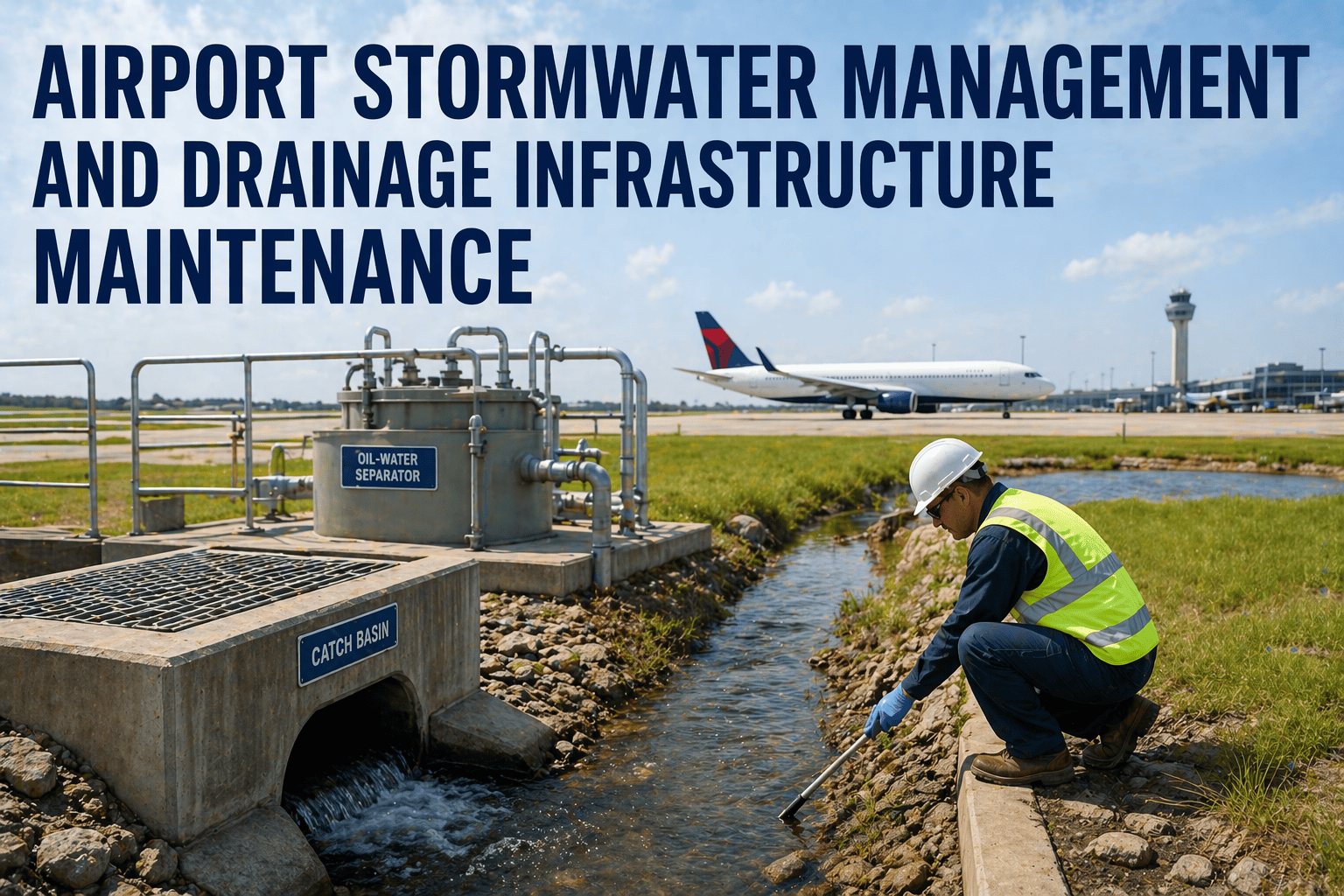
Airport stormwater systems process an average of 2.8 million gallons of contaminated runoff per storm event at major hub airports — runoff loaded with jet fuel residues, glycol-based deicing fluid, heavy metals from brake dust, and rubber particulates from 400+ daily landings. The EPA requires every commercial airport operating under an NPDES permit to document inspection dates, maintenance actions, and discharge quality data with audit-ready traceability — yet 47% of airports still manage catch basin inspections on paper logs that cannot survive a compliance audit. Airports that implement CMMS-driven stormwater maintenance programs reduce NPDES violation risk by 68% and cut emergency drainage repair costs by 40%. Want to see how OxMaint automates drainage inspections and NPDES documentation for airports? Book a demo to walk through stormwater compliance workflows, or start a free trial and register your first drainage asset today.
Airport Stormwater Management: Drainage Maintenance & NPDES Compliance
Track catch basins, oil-water separators, retention ponds, and glycol recovery systems. Automate NPDES inspections and maintain audit-ready environmental compliance documentation.
What Is Airport Stormwater Management?
Airport stormwater management is the systematic process of collecting, treating, and discharging rainfall runoff from airfield pavements, terminal aprons, deicing pads, fueling areas, and vehicle maintenance zones — all of which carry aviation-specific contaminants that standard municipal drainage systems cannot handle. Unlike commercial property stormwater, airport runoff contains propylene and ethylene glycol from deicing operations (up to 50% concentration during winter months), Jet-A fuel residues, hydraulic fluid, cadmium from brake linings, and rubber particulates from tyre wear. Every commercial airport in the USA operates under an individual or general NPDES permit that requires documented inspection schedules, discharge sampling results, and corrective action records — all retrievable within 24 hours of a regulatory request. A CMMS purpose-built for airport stormwater connects inspection scheduling with asset condition tracking, discharge sampling data, and corrective action documentation in a single audit-ready platform. See how OxMaint manages this — start a free trial and book a demo to walk through drainage compliance workflows.
Critical Airport Drainage Infrastructure
Airport drainage systems are far more complex than commercial property stormwater — each asset type requires distinct inspection protocols, maintenance frequencies, and regulatory documentation.
Every Catch Basin, Every OWS, Every Discharge Point — Inspected, Documented, Audit-Ready.
OxMaint automates NPDES inspection scheduling, tracks discharge sampling results, and generates compliance reports instantly — so your environmental team spends time maintaining systems, not compiling paper records.
Why Airport Stormwater Compliance Fails
Even well-intentioned airport environmental teams fail NPDES compliance when their maintenance tracking systems cannot provide the documentation regulators require. These four failure modes account for 82% of airport stormwater violations.
How OxMaint Manages Airport Stormwater Compliance
OxMaint provides a unified platform that connects drainage asset management with NPDES compliance documentation — ensuring every inspection, corrective action, and discharge sample is tracked and audit-ready. Experience these capabilities directly — start a free trial and book a demo for a guided compliance walkthrough.
Paper-Based vs. CMMS-Driven Stormwater Compliance
Stormwater Compliance ROI for Airports
Frequently Asked Questions
Can OxMaint schedule storm-event-triggered inspections automatically?
OxMaint supports event-triggered inspection scheduling linked to rainfall data. When a qualifying storm event occurs (typically 0.25 inches or more within 24 hours, per your NPDES permit), the system generates inspection work orders for all designated monitoring points within the required response window. Inspectors receive mobile notifications with the specific checklist items required for post-storm assessments. This eliminates the risk of missing the 24-72 hour post-event inspection window that is the most commonly violated NPDES requirement at airports. Start a free trial to configure storm-event inspection schedules.
How does OxMaint handle winter deicing compliance documentation?
OxMaint tracks the complete deicing compliance chain — glycol application volumes per deicing event, recovery system collection rates, treatment system maintenance records, and discharge monitoring results throughout winter operations. The platform generates the seasonal reports required by most airport NPDES permits, including total glycol usage, recovery percentages, and discharge quality data. This documentation is critical for airports in northern climates where glycol BOD loads can exceed 100,000 mg/L in concentrated runoff. Book a demo to see deicing compliance workflows.
Does OxMaint integrate with discharge sampling laboratory results?
Yes. OxMaint accepts laboratory analytical results via structured data import, linking each sampling result to the specific discharge monitoring point, date, and permit parameter. The system compares results against NPDES permit limits and flags any exceedances for immediate corrective action. Historical sampling data builds trend analysis showing whether discharge quality is improving, stable, or deteriorating — enabling proactive infrastructure maintenance before violations occur. Start a free trial to configure discharge monitoring.
Can OxMaint manage stormwater assets across multiple airport properties?
OxMaint supports multi-site stormwater management for airport authorities operating multiple airports. Each airport maintains its own NPDES permit documentation, inspection schedules, and asset inventories while feeding authority-level dashboards for compliance oversight. Environmental managers can compare inspection completion rates, violation trends, and infrastructure condition scores across all properties — identifying which airports need additional resources or have best practices worth replicating. Book a demo to see multi-airport environmental management.
Every NPDES Violation Starts With a Missed Inspection or a Missing Record. OxMaint Eliminates Both.
Automated inspection scheduling, digital discharge monitoring, corrective action tracking, and instant audit reporting for every catch basin, OWS, and retention pond on your airfield — one platform, always compliant.