Shift handover is the single most underestimated risk window in aviation MRO — industry audits show 15–30% of preventable hangar errors originate in the gap between outgoing and incoming crews, where open task cards, partially torqued fasteners and unresolved discrepancies quietly carry into the next shift. The traditional clipboard-and-radio handover was built for a slower era of maintenance; today’s multi-base, line-and-heavy operations need structured, auditable, CMMS-based digital logbooks that close the information loop in seconds rather than hours. This guide breaks down the architecture of a modern aviation MRO shift handover digital logbook — from in-progress work order status communication to AI-generated shift summaries — and shows how leading stations are using it to cut handover time by 60–80% while eliminating the “rediscovery tax” every check pays. Ready to see it on your floor? Start Free Trial or read on for the full framework.
What did the last shift actually leave on this aircraft?
In most MRO hangars the answer arrives as a radio call, a sticky note, or a five-minute conversation that two mechanics reconstruct from memory. The result: 15–30% of preventable errors trace back to handover — open items rediscovered, in-progress work orders stalled, and checks that quietly extend by hours. A structured digital handover logbook inside your CMMS closes that gap before the next crew ever touches the aircraft.
Why clipboard handovers keep failing aviation MRO
A 60-second verbal handover cannot carry 8 hours of maintenance context — and the numbers prove it across every audit cycle.
A mid-size base running 4 hangar lines with 120 mechanics across three rotating shifts was losing an estimated 1,400 labor-hours per quarter to handover ambiguity — roughly $112K in fully-loaded labor cost annually, plus an average of 6 extended ground events per year traced back to incomplete status transfer. After implementing a structured CMMS digital handover logbook with AI-generated shift summaries, the station reduced handover-to-first-touch time from 22 minutes to under 6, and eliminated all six ground events within two quarters.
The structured handover format every MRO station should adopt
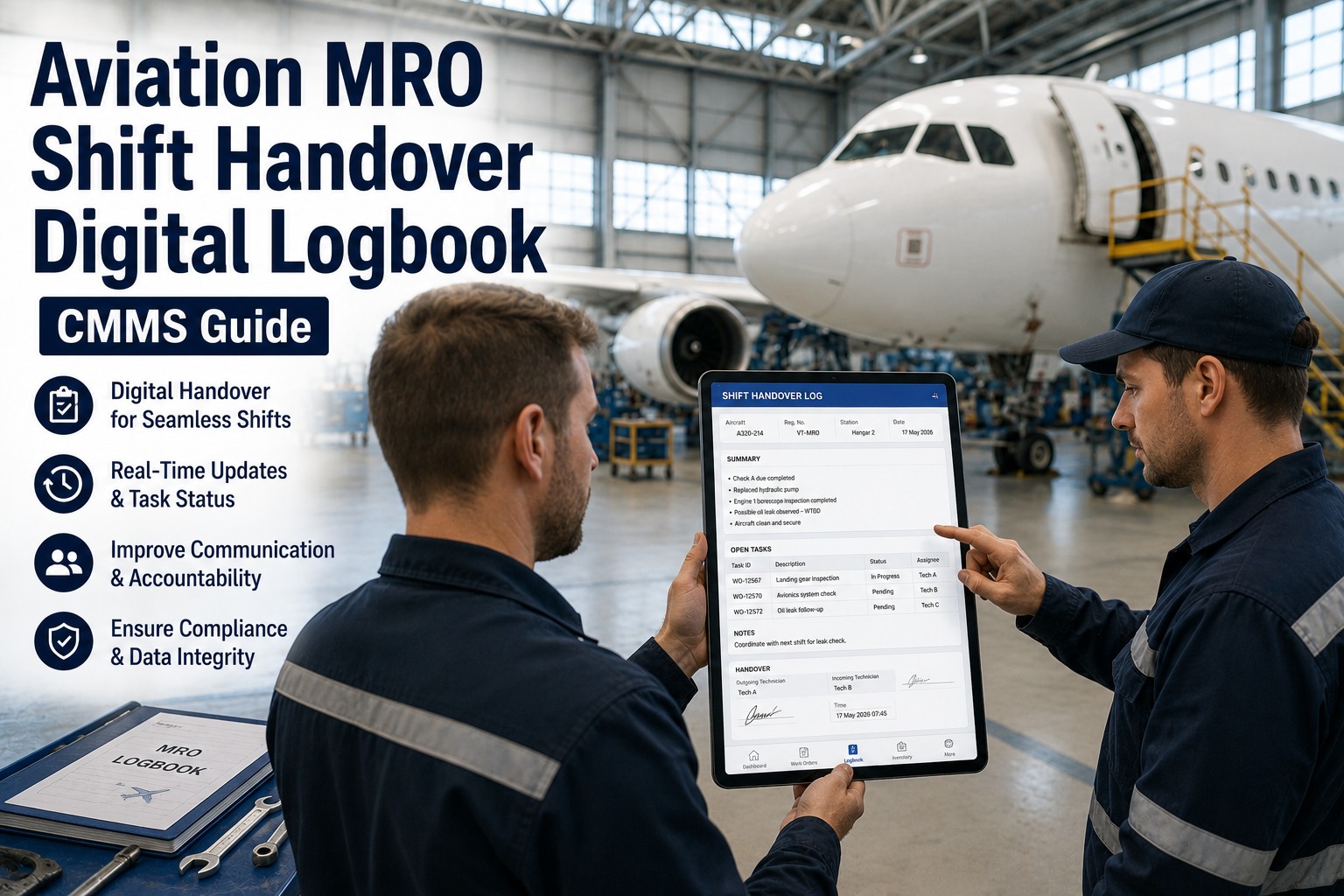
A defensible digital handover logbook is not a free-text note — it is a structured record with six mandatory fields, each tied to a CMMS work order state.
Aircraft & Line Status Block
Tail number, station, hangar line, check type (A/B/C/D/layover), aircraft on-ground status, and projected release timestamp. The incoming crew must see the release-critical path at a glance, not buried in a work order narrative.
Open Work Order Inventory
Every in-progress WO with current state (inspected / in-repair / awaiting-parts / QA-hold / ready-for-sign-off), assigned technician, percent complete, and the exact step where work paused — pulled live from the CMMS, not re-typed.
Deferred & Carried-Forward Items
MRB deferrals, MEL carryovers, open NRCs, and parts-on-order with expected arrival windows. Each deferred item must show impact on the release-critical path so the next shift can sequence around it without re-reading the full history.
Safety, GSE & Ground Events
Active safety stand-downs, GSE outages, fuel-spill reports, FOD events, confined-space permits still open, and any tool-calibration expirations hitting during the next shift. These are the items regulators audit first.
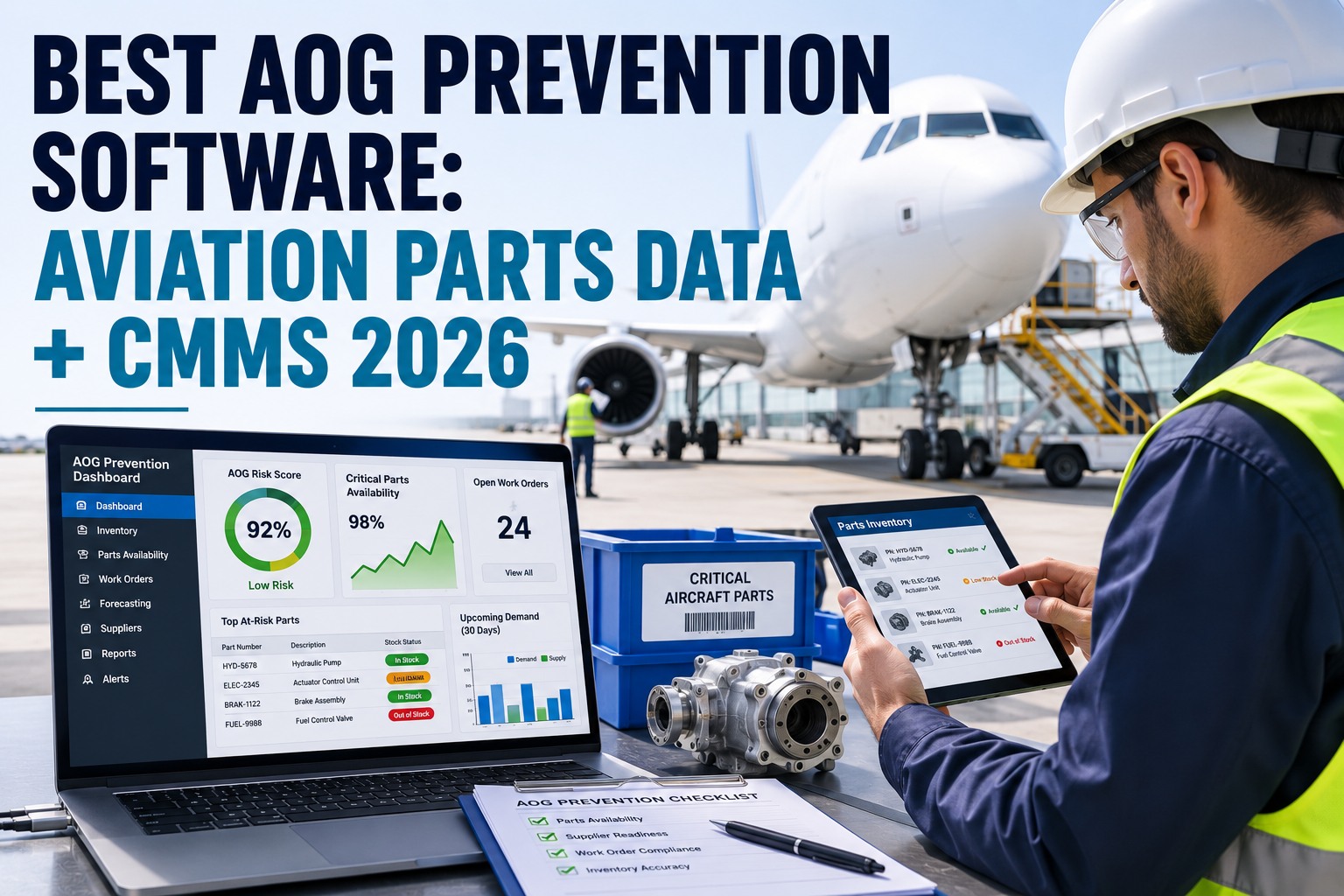
Parts, Inventory & AOG Risk
Critical rotables on order, boroscope results pending, vendor ETA windows, and any AOG-escalation thresholds approaching. The handover must flag whether the next shift can continue or will stall within 4 hours.
AI-Generated Shift Summary
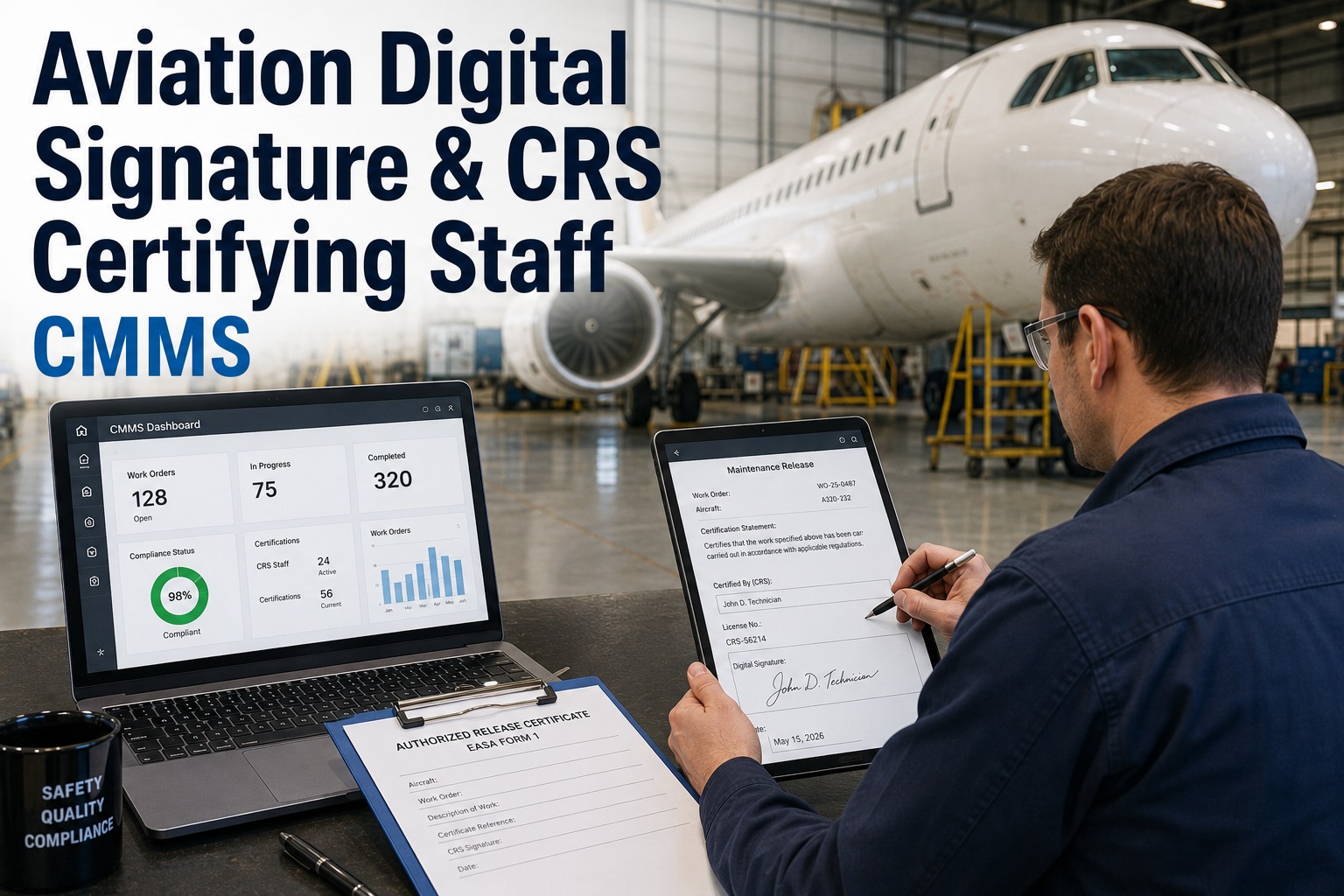
A natural-language synthesis of the five blocks above, auto-drafted from CMMS activity logs — readable in 90 seconds, editable by the outgoing shift lead, and signed off digitally by both leads before the incoming crew begins work.
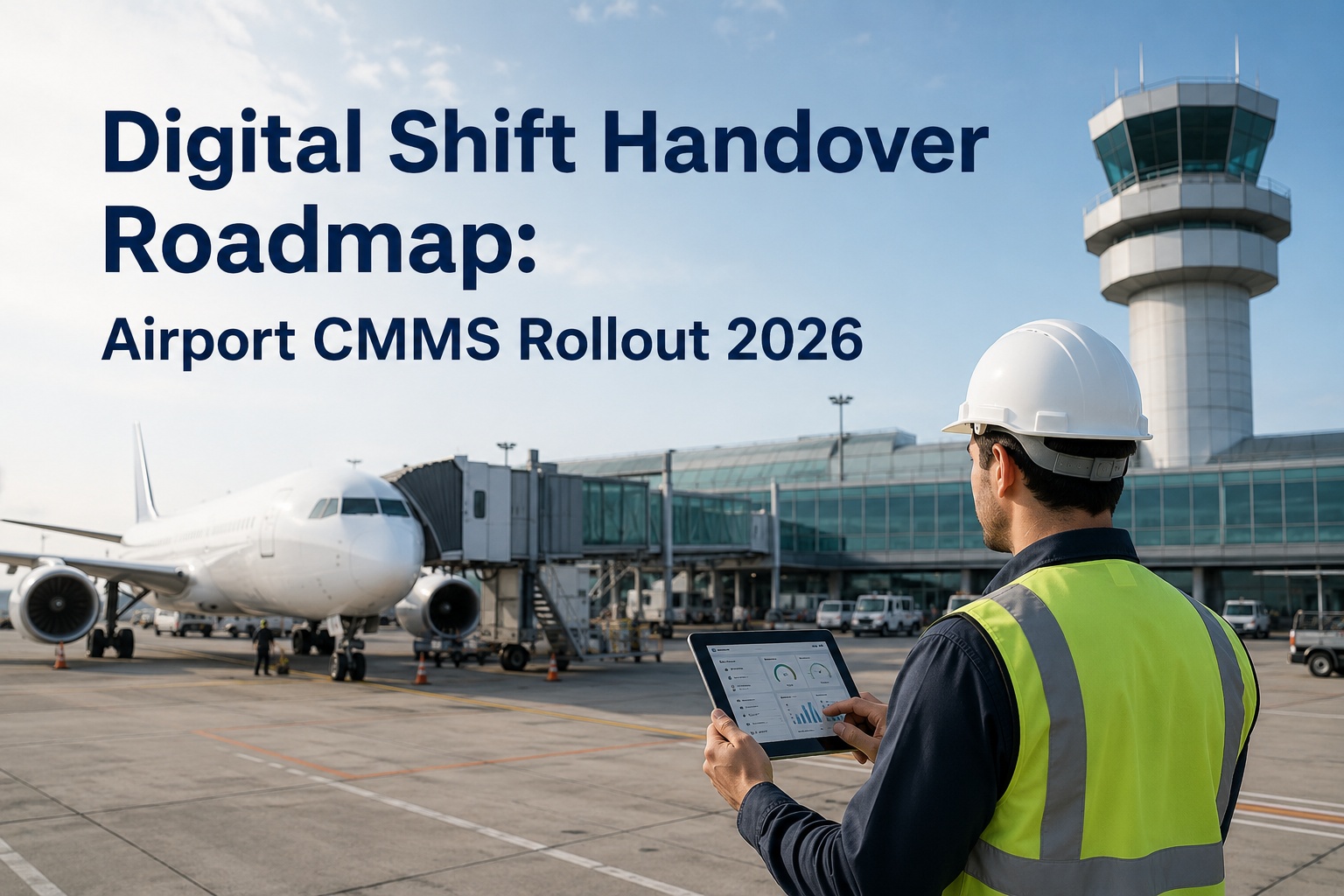
From clipboard to digital logbook — a 4-month rollout timeline
Stations that complete this sequence inside one quarter see handover-to-first-touch time drop by 60–80% and open-item rediscovery rates fall below 3%.
Audit current handover workflows
Map every shift-change touchpoint across all lines. Identify the 5 most common information-loss points — typically verbal-only status calls, un-tracked parts requests, and ambiguous task-card state. Baseline handover duration, rediscovery rate, and shift-over extension events.
Configure CMMS handover schema
Build the six-tier logbook structure inside your CMMS. Map every work order state to a handover-visible field. Enable mandatory sign-off by both outgoing and incoming shift leads — no digital signature, no shift release. Pilot on one line for two weeks.
Activate AI-generated shift summaries
Turn on the natural-language synthesis engine that reads CMMS activity for the shift and drafts a 90-second summary. Tune the prompt to prioritize release-critical-path items, deferred carryovers, and AOG-risk flags. Train shift leads on edit-and-approve workflow.
Roll out base-wide and measure
Extend to all lines and shifts. Measure handover-to-first-touch time, open-item rediscovery rate, and shift-over extension events weekly. Most stations reach steady-state improvement within 6 weeks of full rollout — target a sub-6-minute first-touch and below-3% rediscovery rate.
Clipboard handover vs CMMS digital logbook — what actually changes
The gap is not incremental — it is categorical. Here is what shifts when handover becomes a structured, signed, searchable record.
| Handover dimension | Clipboard / verbal legacy | CMMS digital logbook |
|---|---|---|
| Open-item visibility | Reconstructed from memory; 1 in 3 task cards re-touched | Live CMMS pull; 100% of open WOs visible at handoff |
| Handover duration | 18–25 minutes per line, plus rediscovery time | 4–6 minutes; AI summary consumed in 90 seconds |
| Audit traceability | Paper logbook, often incomplete, no timestamp chain | Full digital sign-off chain, timestamped, regulator-ready |
| Deferred-item carryover | Verbal mention; frequently lost across 2+ shifts | Auto-carried with release-path impact annotation |
| Cross-shift task-card state | Ambiguous; incoming crew re-reads full WO history | Exact pause-step shown; resume-in-seconds |
| Information-loss rate | 15–30% of preventable errors rooted here | Below 3% rediscovery rate at steady state |
What stations report after switching to a digital handover logbook
Real outcomes from MRO operations that replaced clipboard handovers with structured CMMS digital logbooks over the past 18 months.
“We cut handover-to-first-touch from 22 minutes to under 6 across four hangar lines. The AI shift summary means my incoming leads spend 90 seconds reading instead of 20 minutes interrogating the outgoing crew. We have not had a single handover-related ground event in 9 months.”
“Open-item rediscovery used to eat 2+ hours per shift per station. After the digital logbook went live across our 14-station network, that number dropped to under 20 minutes. The structured deferred-item block alone saved us from three potential AOG escalations in the first quarter.”
The information gap between shifts is not a communication problem — it is a structure problem. Give crews a structured, signed, searchable record and 80% of handover errors disappear on their own.
Close the handover gap before the next shift walks in
Deploy a structured digital shift handover logbook inside your CMMS in under 30 days — pilot on one line, measure the drop in handover-to-first-touch time, then scale base-wide.
Aviation MRO shift handover digital logbook — FAQs
How does a CMMS digital handover logbook differ from a paper shift logbook?
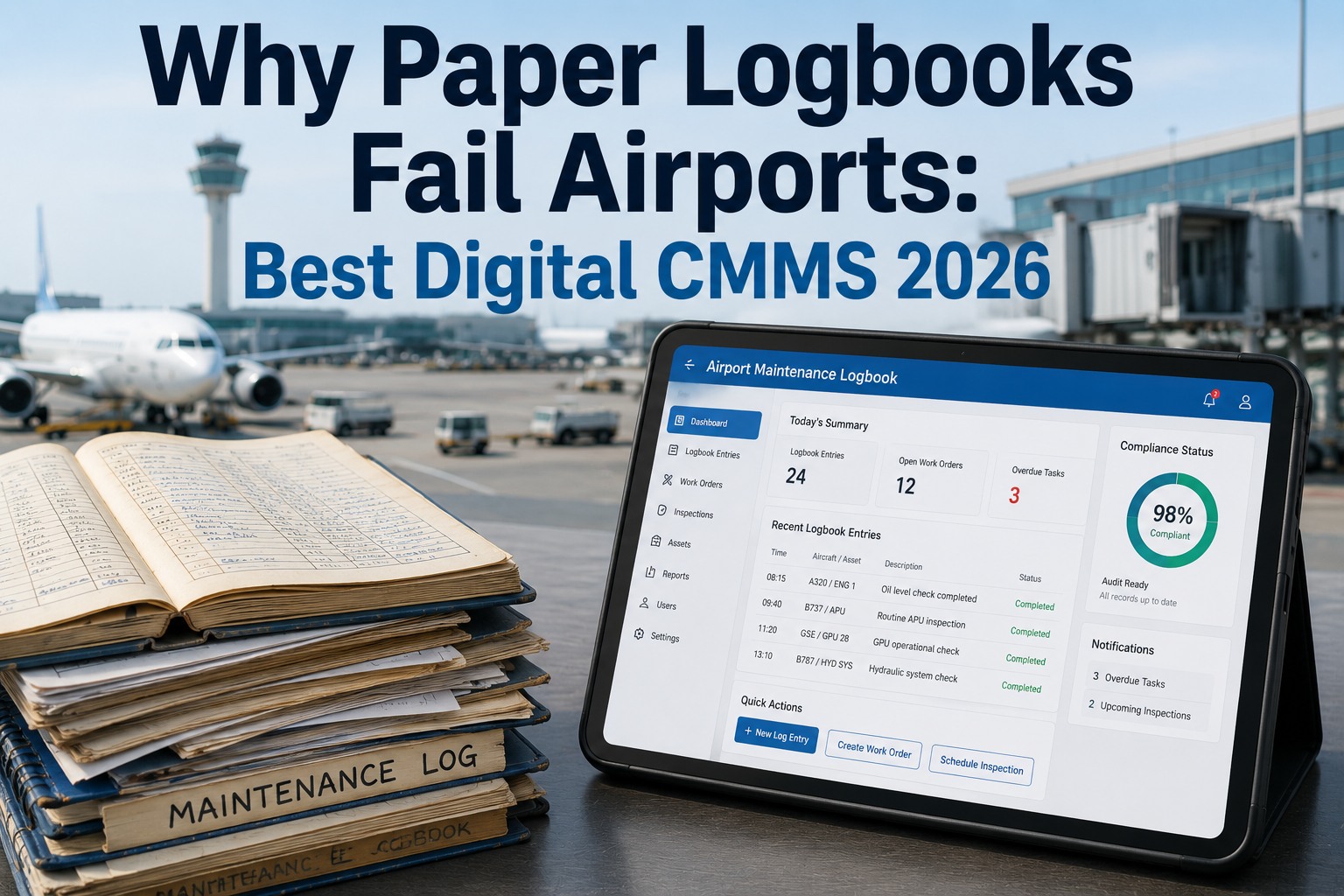
A paper logbook is a free-text record that lives in a binder and depends on the outgoing mechanic remembering everything that mattered. A CMMS digital logbook is a structured, six-tier record that pulls live work-order state, deferred items, and safety events directly from the maintenance system — then synthesizes them into a 90-second AI summary signed off by both shift leads. The difference is traceability: every field is timestamped, every sign-off is auditable, and nothing depends on memory.
Can the AI-generated shift summary be edited before sign-off?
Yes — the AI drafts the summary from CMMS activity logs, but the outgoing shift lead reviews, edits, and approves it before the incoming crew sees it. The system never publishes an unreviewed summary. This keeps a human accountable for every handover while still cutting draft time from 15 minutes to under 2. You can see the edit-and-approve workflow in action when you Book a Demo.
How long does it take to deploy a digital handover logbook at an MRO station?
Most stations complete a full rollout in 8–12 weeks. Month 1 is workflow audit and baselining, Month 2 is CMMS schema configuration and single-line pilot, Month 3 activates AI summaries and trains shift leads, and Month 4 extends base-wide. Pilot lines typically show measurable improvement within two weeks — handover-to-first-touch time often drops by 50% before full rollout even begins.
Does the digital logbook work across multiple hangar lines and rotating shifts?
Yes. The logbook is designed for multi-line, multi-shift operations. Each line maintains its own handover record, but shift leads and maintenance managers can view a base-wide dashboard showing open items, deferred carryovers, and AOG-risk flags across all lines simultaneously. This is especially valuable for stations running three rotating shifts where information has to survive two handover transitions per 24-hour cycle.
Is the digital handover record accepted by aviation regulators during audits?
A properly configured CMMS digital logbook with timestamped sign-offs is significantly more audit-ready than a paper logbook. The record captures who signed off, when, and what work-order state was acknowledged — exactly what auditors look for under Part 145 and equivalent MRO oversight frameworks. The structured six-tier format maps cleanly to the information auditors request first during shift-handover reviews.
Stop rediscovering what the last shift already knew
Deploy a structured digital shift handover logbook inside your CMMS — cut handover-to-first-touch time by 60–80% and eliminate the rediscovery tax every check is paying.
Free 14-day trial · No credit card