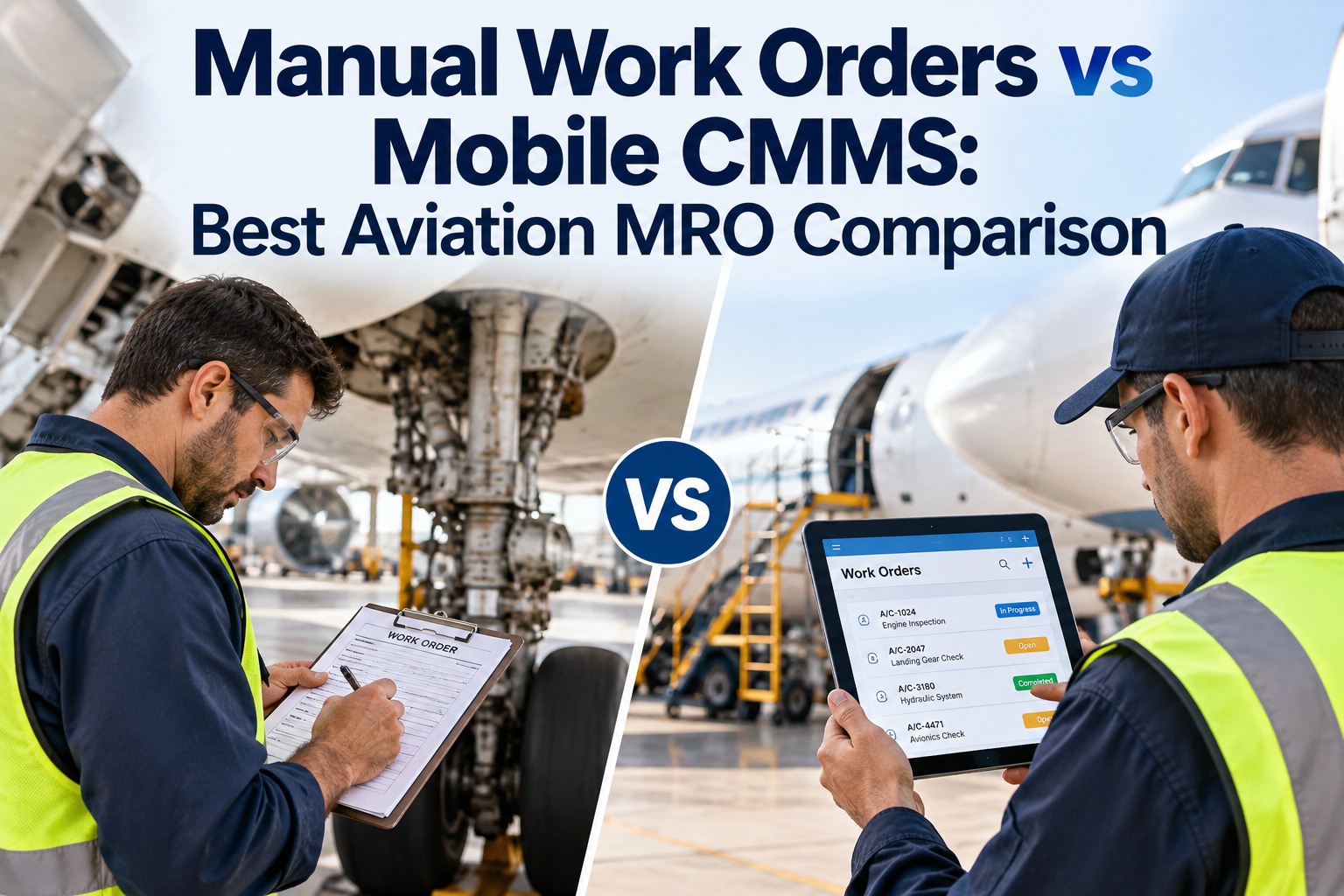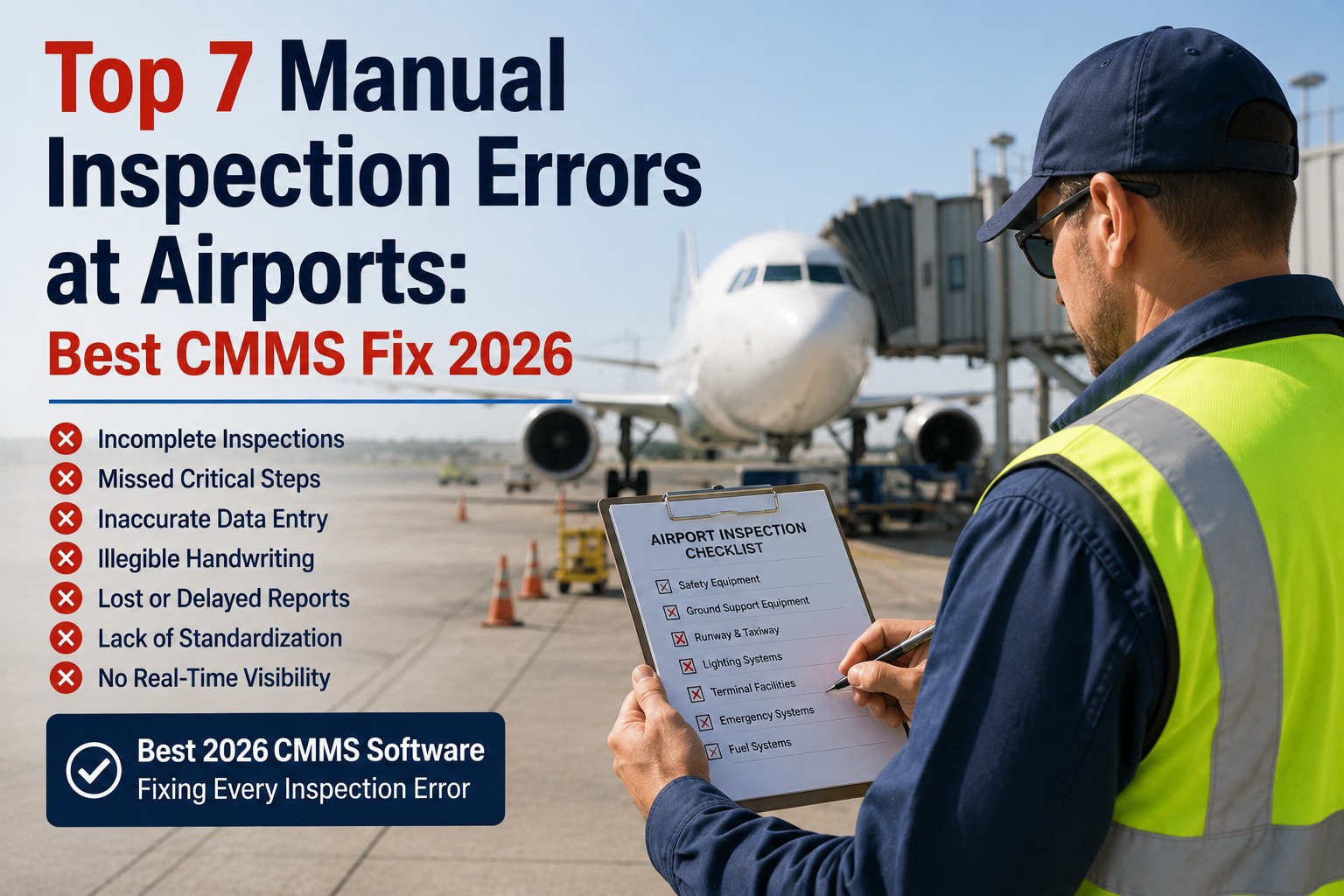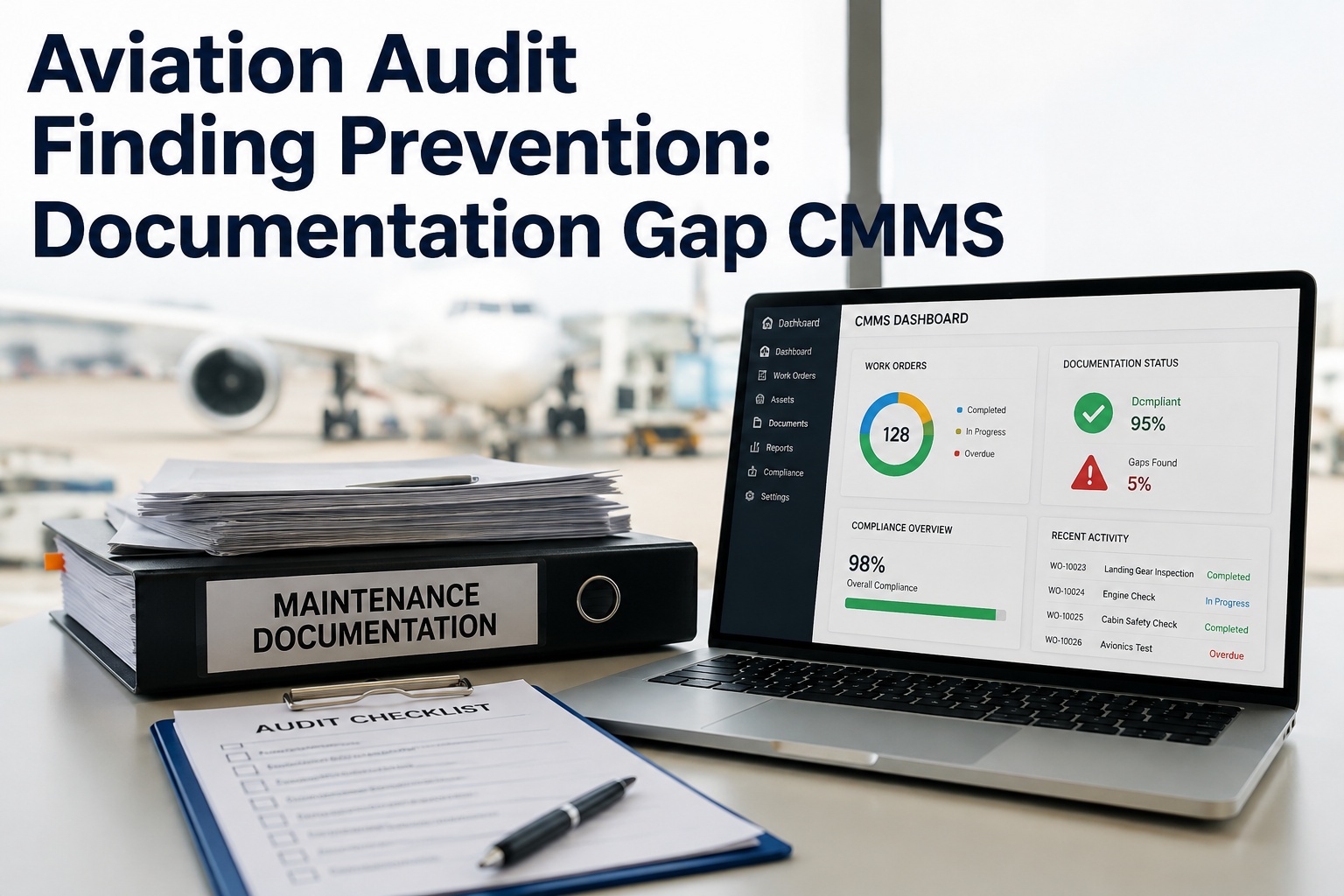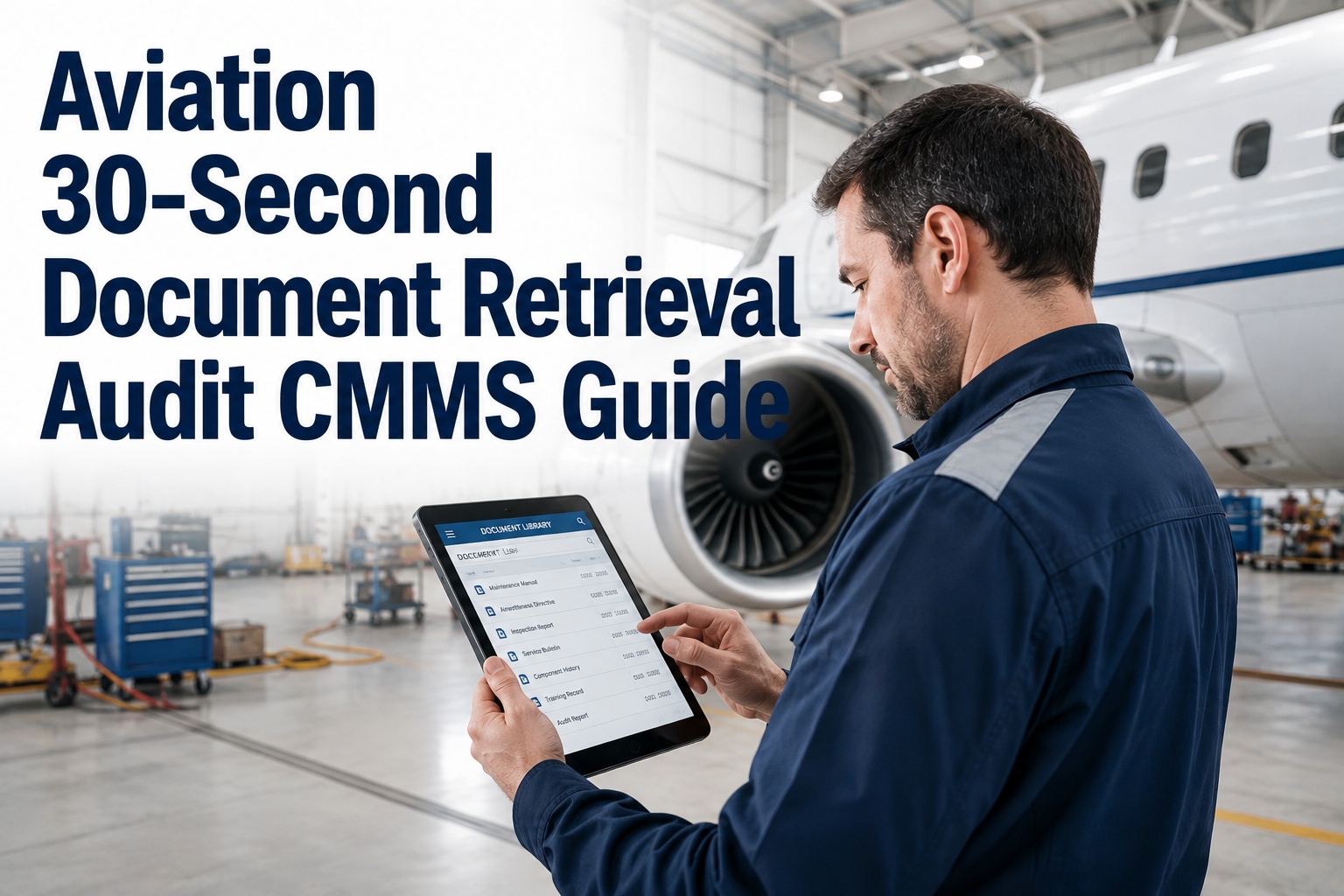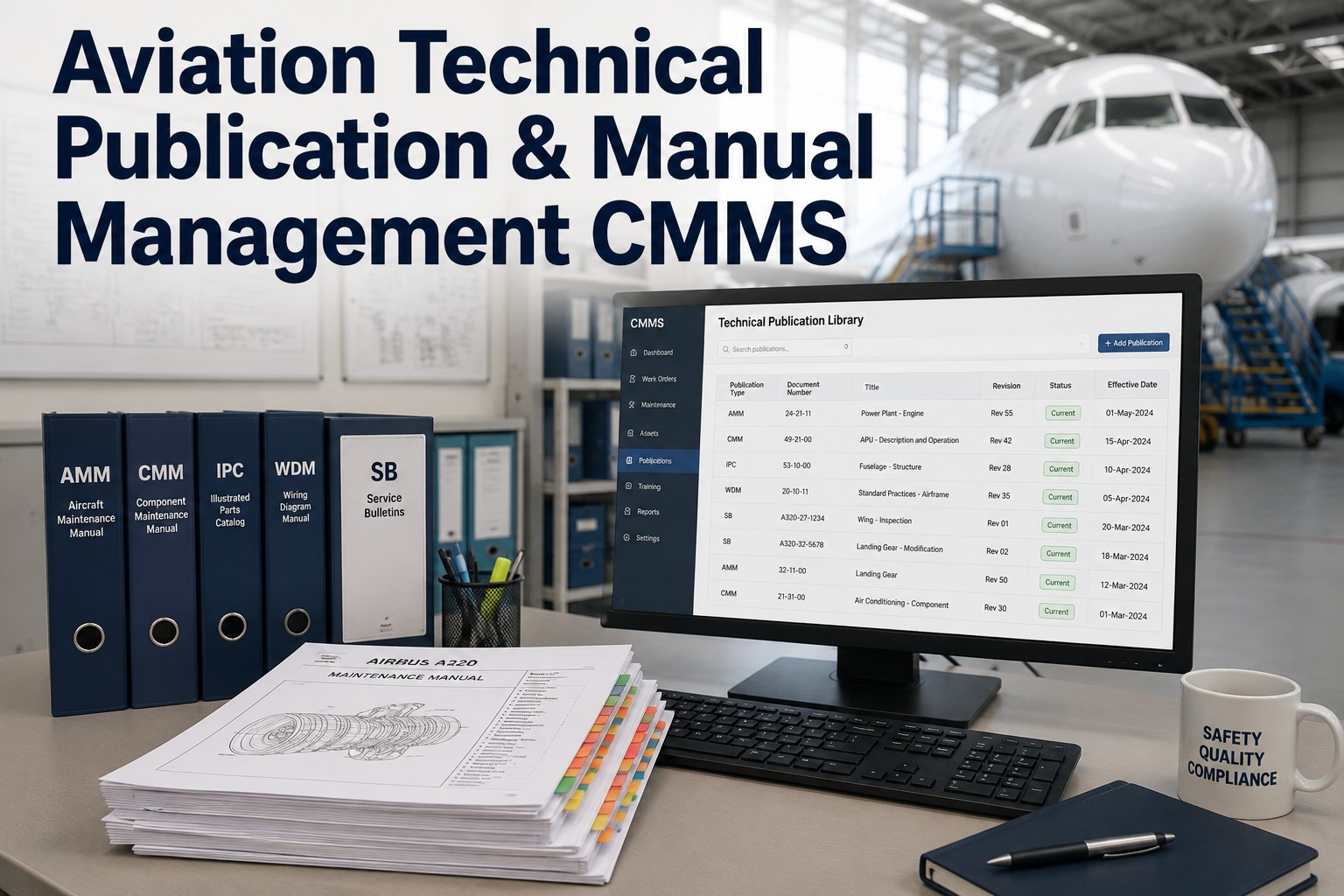
Aviation technical publication management is the backbone of every airworthy maintenance action — when an Aircraft Maintenance Manual (AMM), Structural Repair Manual (SRM), or Illustrated Parts Catalog (IPC) is out of date, audit findings follow within hours. This guide explains how a modern manual management CMMS enforces revision control, effectivity by tail, and revision distribution tracking so that every work order links to the exact document revision that authorized it. Teams that centralize technical publications in a CMMS document library cut manual-revision errors by up to 80% and reduce audit prep time from weeks to days. Ready to see it on your fleet? Start Free Trial or read on for the full 2026 AMM CMMS guide.
Are outdated AMM revisions grounding your fleet during audits?
Out-of-date technical publications cause audit findings faster than any other document error. A CMMS-based document library links every work order to the exact revision that authorized it — closing the loop on AMM, SRM, IPC and TSM control.
Why aviation technical publication control drives audit survival
Five core manuals — AMM, IPC, SRM, TSM and MPD — drive every maintenance action on a commercial aircraft. A single missed revision across a 50-tail fleet can cascade into dozens of non-conformances during a FAA or EASA Part 145 audit. Below, the cost gap between manual and CMMS-managed document control.
- Manuals scattered across network folders and technician laptops
- No effectivity-by-tail mapping — technicians reference wrong revision
- Revision distribution tracked on paper log sheets (or not at all)
- Audit prep takes 3–6 weeks of document hunting
- Average of 12–18 findings per audit cycle tied to publications
- Centralized digital library with version-locked AMM/SRM/IPC
- Effectivity engine maps each tail to its current approved revision
- Automatic revision distribution tracking with read-receipts
- Audit prep reduced to 2–3 days with one-click revision history
- Publication-related findings approach zero with full traceability
How to build a CMMS manual revision tracking workflow
A defensible revision-control workflow moves a publication through five stages — from publisher intake to archived supersession — inside the CMMS. Each stage generates a timestamped record, so an auditor can reconstruct who used which revision and when, for any work order on any tail.
Publisher Intake
New AMM revision arrives from Boeing, Airbus or OEM. CMMS auto-logs revision number, effective date and superseded version into the document library.
Effectivity Mapping
CMMS maps the revision to affected tails by serial number and configuration. Unaffected aircraft remain on their current approved revision.
Distribution & Acknowledgement
Technicians receive push notification with read-receipt deadline. CMMS blocks work-order sign-off until the assigned revision is acknowledged.
Work-Order Linkage
Every task card references the exact document revision that authorized it. Auditor clicks the work order and sees revision number, date and technician who used it.
Archive & Supersede
Prior revision is archived with full access history retained for the regulatory retention period — typically 2 years beyond aircraft retirement.
Regional carrier, 45-tail fleet
A regional operator spending approximately $38K annually on manual document control — two full-time publication clerks plus audit-prep overtime — deployed OxMaint's CMMS document library. Within 90 days, revision distribution time dropped from 11 days to under 4 hours, one clerk was reassigned to reliability analysis, and the next Part 145 audit produced zero publication-related findings. Payback was achieved in under 5 months on clerical labor and overtime avoidance alone.
AMM, SRM, IPC, TSM, MPD — what a technical document CMMS must control
Each publication type has a different revision cadence, effectivity logic and regulatory weight. A CMMS that treats them all as generic files will fail an audit. Here is what the library must manage per document type — and how OxMaint maps to each.
| Publication | Revision Cadence | Effectivity Logic | Audit Risk if Uncontrolled | OxMaint CMMS Capability |
|---|---|---|---|---|
| AMM Aircraft Maintenance Manual |
Quarterly + temporary revisions | By tail serial number | Wrong procedure executed — airworthiness risk | Revision-locked task cards with tail effectivity |
| SRM Structural Repair Manual |
Semi-annual + damage advisories | By structural zone + tail | Invalid repair approved — Major Repair finding | Zone-mapped repair references with revision history |
| IPC Illustrated Parts Catalog |
Annual + vendor bulletins | By configuration effectivity | Wrong part installed — procurement + safety risk | Part-number revision linkage to inventory module |
| TSM Troubleshooting Manual |
As-revised by OEM service letters | By system + tail effectivity | Outdated fault isolation — repeat defects | System-tagged TSM references on work orders |
| MPD Maintenance Planning Document |
Annual + interval revisions | By tail + threshold values | Missed inspection interval — compliance violation | MPD task import to preventive maintenance scheduler |
How OxMaint closes the aviation publication control gap
OxMaint is an AI-powered CMMS and EAM platform that treats technical publications as controlled, revision-locked objects — not generic file attachments. Four capabilities map directly to the audit-survival and efficiency outcomes that maintenance and reliability teams need.
Revision-Locked Document Library
Centralized CMMS document library stores every AMM, SRM, IPC and TSM revision with version control. Technicians see only the current approved revision for their assigned tail — eliminating wrong-version execution.
Up to 80% reduction in revision-related audit findingsEffectivity-by-Tail Engine
Maps each aircraft serial number to its configuration-specific document revision. When a new revision arrives, OxMaint automatically determines which tails are affected and queues distribution — no manual cross-referencing.
Distribution time cut from days to hours across 50+ tail fleetsWork-Order-to-Revision Linkage
Every work order references the exact document revision that authorized the task. One click in the audit trail shows revision number, effective date, and the technician who executed against it — full bidirectional traceability.
Audit prep reduced from 3–6 weeks to 2–3 daysAutomated Distribution Tracking
Push notifications deliver new revisions to assigned technicians with read-receipt deadlines. Work-order sign-off is blocked until the required revision is acknowledged — closing the compliance loop automatically.
100% acknowledgment compliance before task executionSee OxMaint manage your AMM, SRM and IPC revisions live
Book a 30-minute demo and we will show you how revision-locked work orders, effectivity-by-tail mapping and one-click audit trails work on a real fleet configuration.
Aviation technical publication & manual management CMMS — FAQ
What is aviation technical publication management in a CMMS?
It is the centralized control of AMM, SRM, IPC, TSM and MPD documents inside a CMMS document library — with revision tracking, effectivity-by-tail mapping, distribution monitoring and work-order linkage. Instead of scattering manuals across shared drives, a technical publication CMMS treats each revision as a controlled object that an auditor can trace from publisher intake through technician execution.
How does manual revision tracking work in an aviation CMMS?
Each new revision is logged with its number, effective date and superseded version. The CMMS maps it to affected tails, pushes it to assigned technicians with read-receipt deadlines, and blocks work-order sign-off until the correct revision is acknowledged. Every action is timestamped, creating a full audit trail that links each work order to the exact document revision that authorized it. You can see this in action — Book a Demo and we will walk you through a live revision cycle.
Why is effectivity-by-tail important for AMM document control?
Not every aircraft in a fleet is subject to the same revision — configuration differences, SB compliance status and mod status vary by tail serial number. Effectivity-by-tail ensures a technician working on tail 738-A sees revision 42 while a technician on tail 738-B correctly sees revision 41 still in effect. Without it, teams either over-distribute (wasting time) or under-distribute (triggering findings).
Can OxMaint link a work order to the exact AMM revision that authorized it?
Yes. Every work order in OxMaint references the document revision, effective date and technician acknowledgment at the time of execution. An auditor clicking any completed work order sees the full chain: which AMM or SRM revision was active, who acknowledged it and when, and whether any superseding revision was pending. This eliminates the most common audit finding — inability to prove the correct revision was used.
How long does it take to switch from spreadsheet-based document control to OxMaint?
Most aviation maintenance teams are live on OxMaint within 2–4 weeks. The CMMS document library imports existing AMM, SRM and IPC files, and the effectivity engine maps tails during onboarding. There is no credit card required to start — you can Start Free Trial today and our team will help you load your first publication set and configure your revision-distribution workflow.
Stop risking audit findings on outdated manuals
Join the maintenance teams using OxMaint to lock every work order to the correct AMM revision, cut distribution time to hours and walk into audits with full traceability.
Free 14-day trial · No credit card