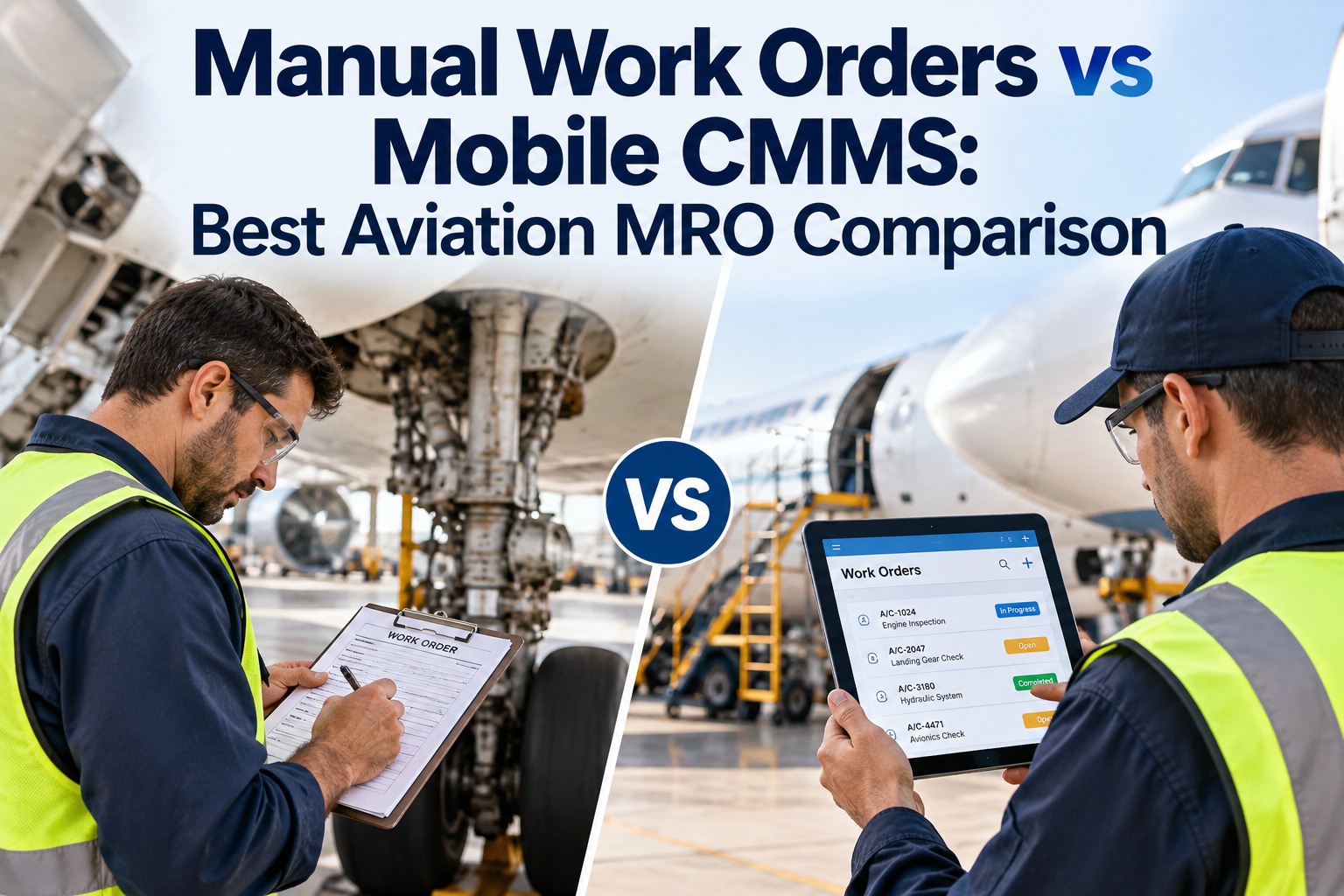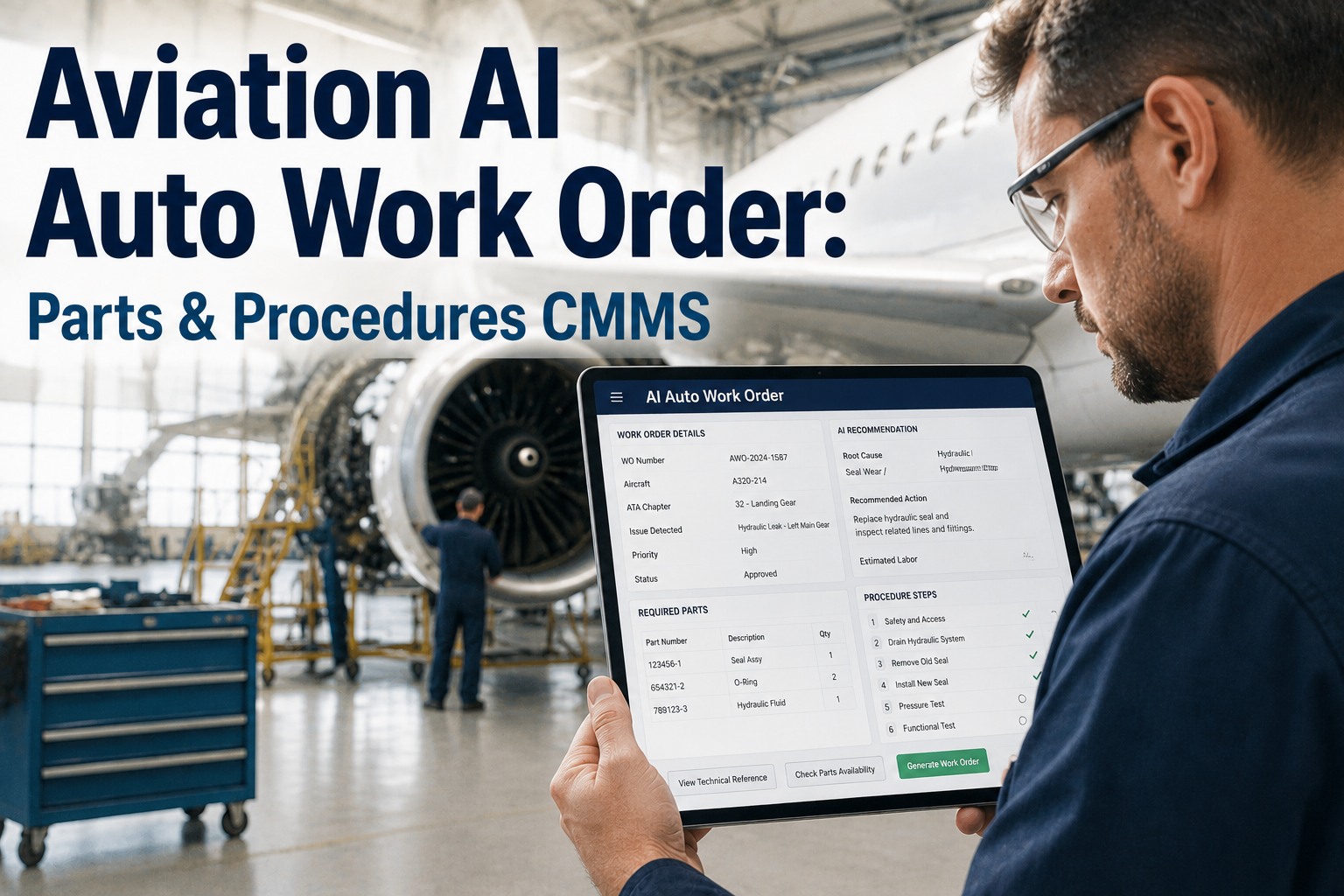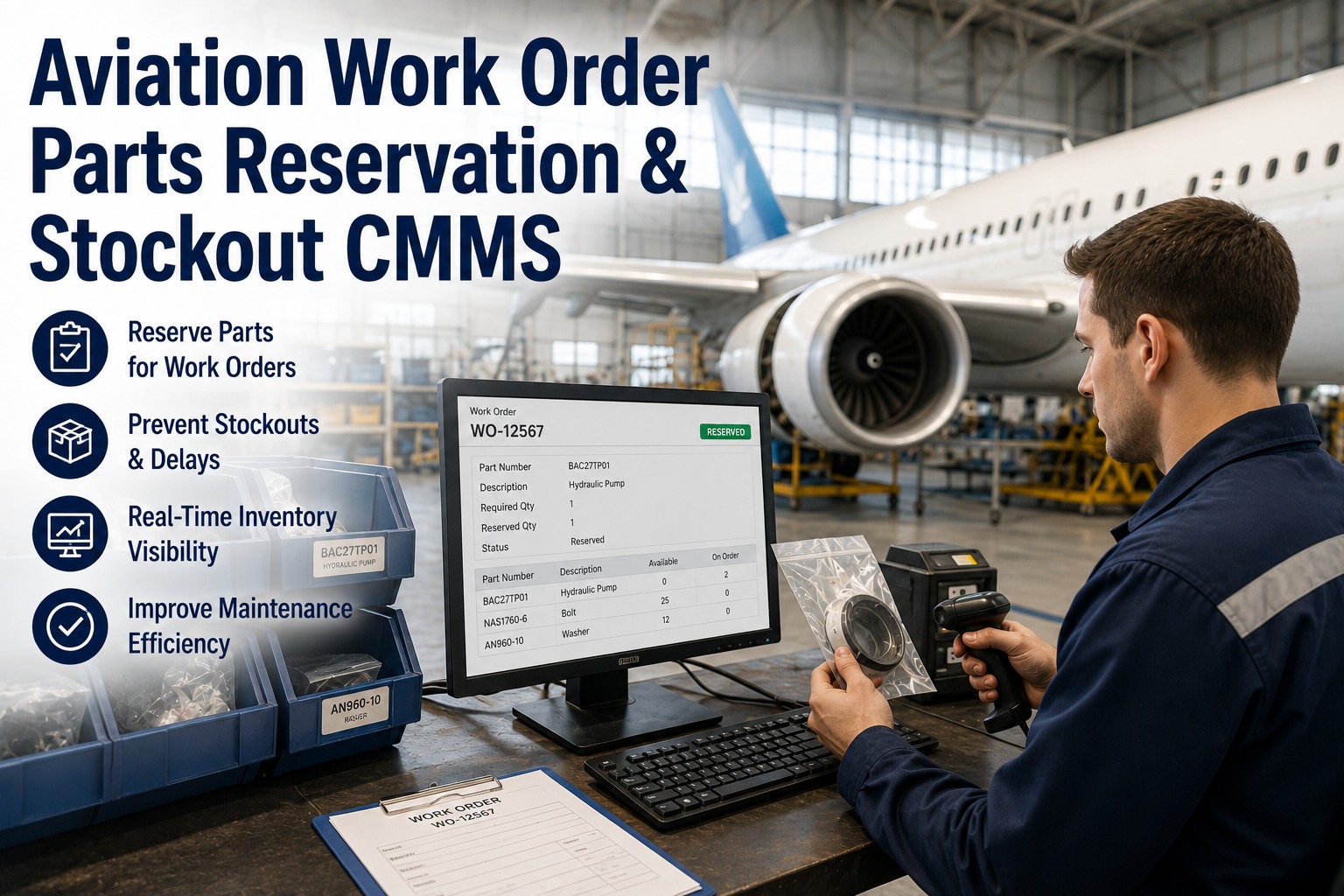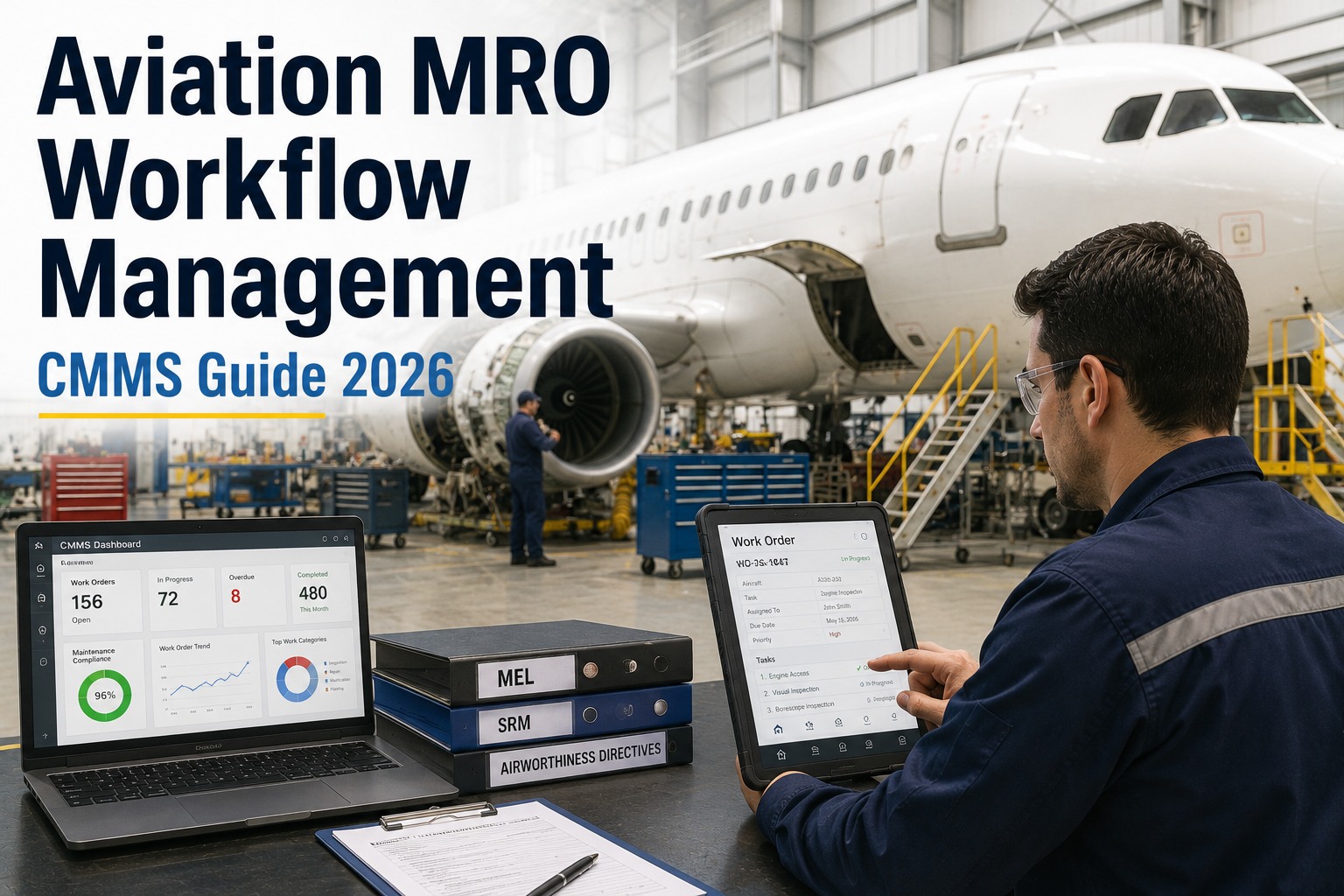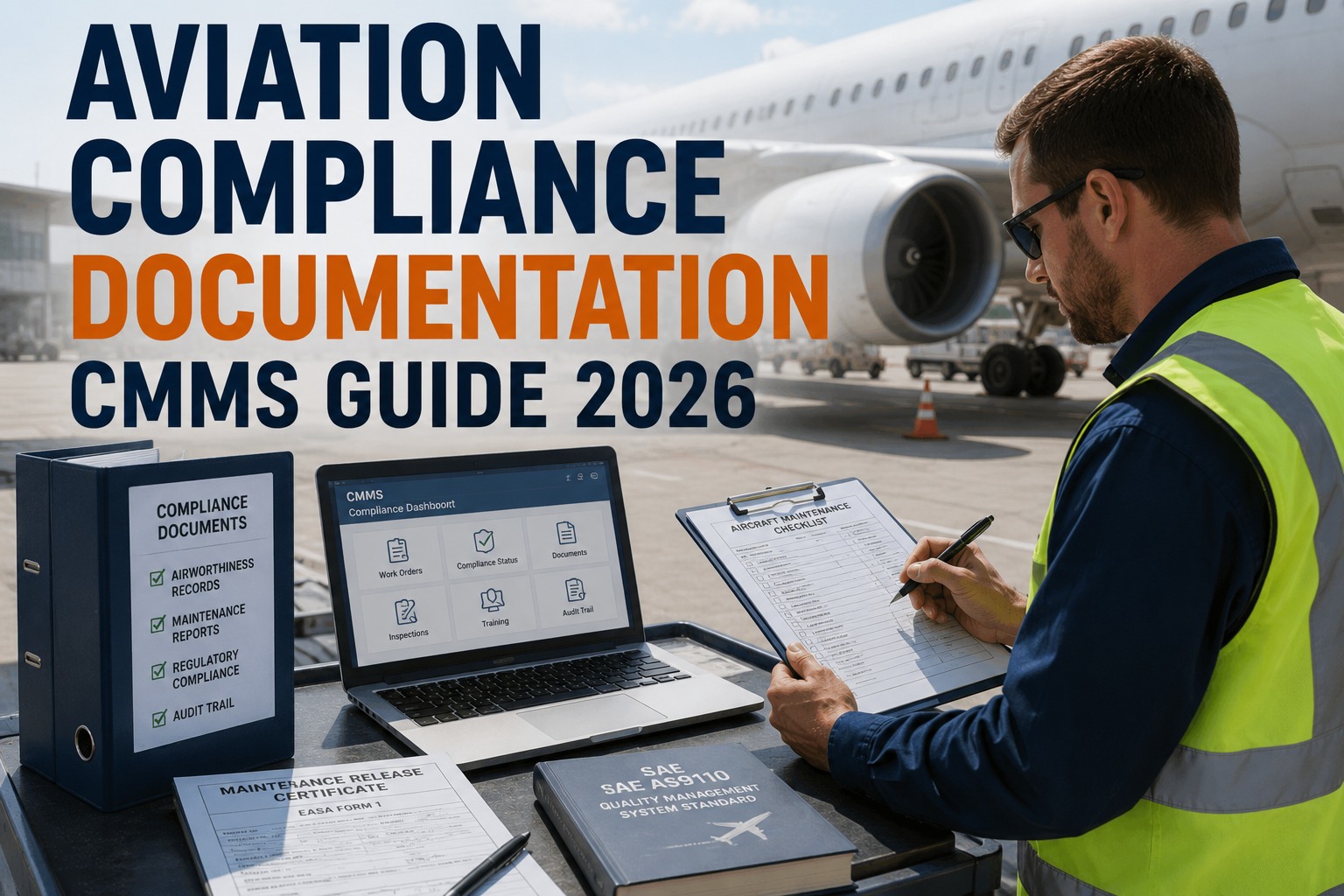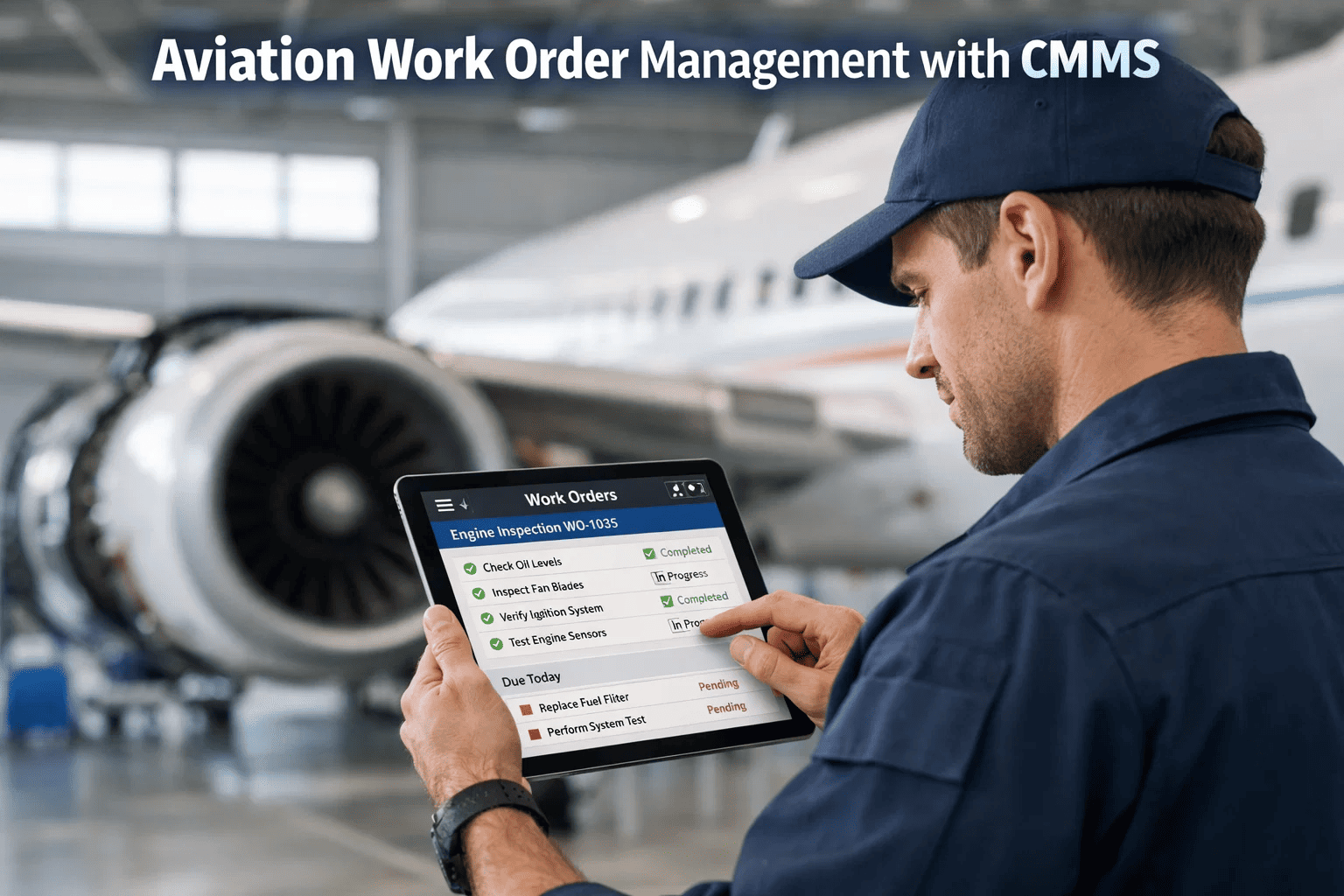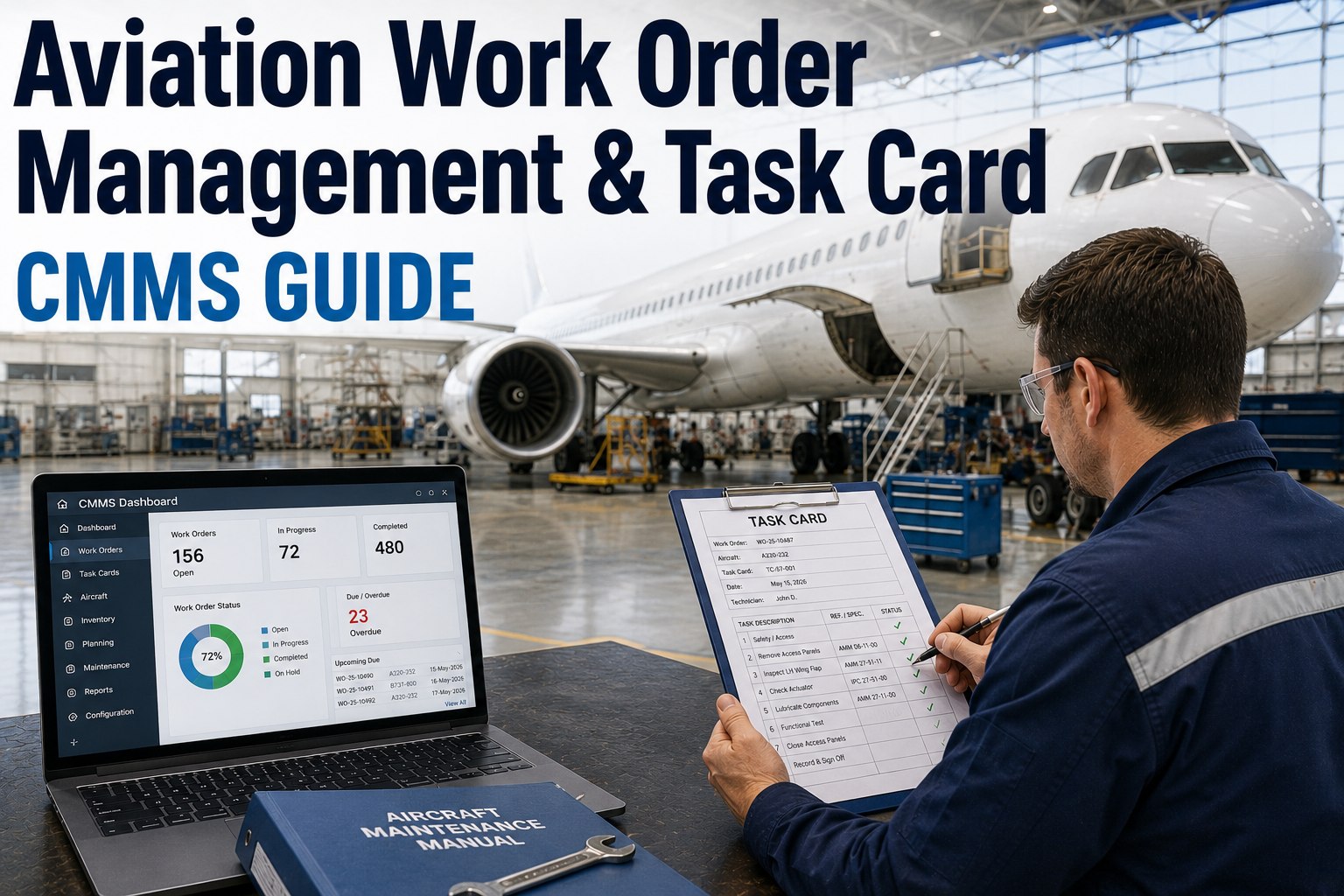
Aviation work order management is the operational backbone of every MRO hangar — the structure that turns a maintenance requirement into a signed-off, audit-ready, compliant record. A modern task card CMMS for aviation links each work order line directly to AMM and SRM references, captures technician licence authorization data at sign-off, and ensures non-routine findings flow back into the revision cycle without paperwork delays. This guide walks through the complete aviation work order framework for 2026: documentation standards, task card revision control, sign-off hierarchy, regulatory traceability, and how a CMMS like OxMaint eliminates the paper bottleneck while keeping every card inspection-ready. Ready to digitize your hangar? Start Free Trial and see the difference on your own fleet.
AVIATION WORK ORDER GUIDE 2026
Are your task cards audit-ready — or just hangar-ready?
A single missing AMM revision reference or unsigned technician authorization field can ground an aircraft for hours and trigger a finding during a regulatory audit. Aviation work order management built on a CMMS ensures every task card carries the correct documentation, licence data, and sign-off chain — before the wrench turns, not after.
37%
of MRO audit findings trace back to incomplete work order documentation and missing revision references
WORK ORDER STRUCTURE
Aviation work order documentation: what every task card must contain
An ICAO Type 1 maintenance release demands a documented chain from work order initiation to final sign-off — and every field below is a regulatory expectation under EASA Part-145 and FAA Part 43 record-keeping rules.
AMM / SRM Reference Linkage
Each task card must cite the exact Aircraft Maintenance Manual chapter-section-subject and Structural Repair Manual reference applicable at the time of work. A CMMS locks the revision level to the work order, preventing technicians from executing against superseded procedures.
Technician Licence Authorization
The work order must record which licensed engineer or mechanic performed the task, the licence type (EASA Part-66 B1/B2, FAA A&P), and whether that licence authorizes the specific task category. A CMMS validates authorization in real time before sign-off is accepted.
Regulatory Reference Block
Each card should carry the applicable regulatory citation — 14 CFR Part 43, EASA Part-145.A.50, or CASA Schedule 6 — so inspectors can verify compliance without cross-referencing separate systems. This field is one of the most commonly omitted in spreadsheet-based workflows.
Non-Routine Capture Field
When a technician discovers damage or wear beyond the task card scope, the work order must provide a structured non-routine capture field — linked to the parent card — with space for findings, triage disposition, and a new work order spawn for the corrective action.
REVISION CONTROL & SIGN-OFF
How to build a task card CMMS workflow with revision control and sign-off hierarchy
A C-check involving 2,000+ task cards across 40 technicians can generate 600+ non-routine cards — each requiring its own revision trail. The five-step workflow below is how leading MROs structure that flow inside a CMMS to stay compliant without slowing the line.
Task Card Creation & Revision Lock
The planning team generates the task card inside the CMMS, locking it to the current AMM/SRM revision. If the OEM issues a revision mid-check, the system flags every open card that references the old revision and quarantines it until re-issued — eliminating the most common audit finding in paper-based hangars.
Authorization Verification
Before the card is released to the hangar floor, the CMMS cross-checks the assigned technician's licence category, type ratings, and authorization scope against the task requirements. Cards assigned to under-authorized personnel are blocked from release — reducing rework and ensuring only qualified hands perform the work.
Execution & Real-Time Documentation
Technicians document completion steps, torque values, tool serial numbers, and consumed parts directly on the digital task card via tablet. The CMMS timestamps every entry and geotags the hangar bay, creating an immutable audit trail that paper cards simply cannot match.
Non-Routine Triage & Spawning
When a finding exceeds card scope, the technician taps a non-routine button that spawns a child work order linked to the parent card — pre-populated with aircraft SN, station, and finding description. The maintenance controller reviews and assigns disposition within the same system, cutting non-routine processing time by up to 60%.
Dual-Inspector Sign-Off & Release
For RII (Required Inspection Item) tasks, the CMMS enforces a dual sign-off: the performing technician and an independent inspector both apply their digital authorization. Only when both signatures are recorded and all mandatory fields are complete does the system allow the maintenance release to be generated and the aircraft returned to service.
THE COST GAP
Paper vs CMMS task card management: the real cost difference
A mid-sized MRO processing 15,000 task cards per year spends an average of $340K on documentation overhead — revision chasing, re-keying, audit preparation, and non-routine processing. Here is how that breaks down.
| Documentation Metric | Paper / Spreadsheet | CMMS (OxMaint) | Annual Savings |
|---|---|---|---|
| Avg. time to locate a completed task card for audit | 22 minutes | Under 30 seconds | $48K |
| Task cards affected by AMM revision gaps per year | 340 cards | 0 cards (auto-lock) | $72K |
| Non-routine card processing time (spawn to assignment) | 4.5 hours | 45 minutes | $65K |
| Audit preparation labor (per major audit cycle) | 180 labor hours | 24 labor hours | $41K |
| Sign-off rejection rate due to missing authorization data | 8.2% | 0% (pre-validated) | $114K |
WORKED EXAMPLE
A regional MRO operating 45 aircraft was spending approximately $42K per C-check cycle chasing paper task cards, reconciling revision numbers manually, and preparing documentation for the post-check audit. After implementing OxMaint's aviation work order framework, that figure dropped to $9K per cycle — a 79% reduction — while audit findings related to documentation fell from 14 to zero in the first two audit cycles.
HOW OXMAINT HELPS
How OxMaint's CMMS solves aviation work order and task card challenges
OxMaint was built for maintenance and reliability teams that cannot afford documentation gaps. Four capabilities map directly to the aviation work order problems above — each with a measurable outcome.
Live AMM/SRM Revision Locking
OxMaint links every task card to the OEM manual revision in force at creation. When a new revision publishes, the system automatically flags and quarantines affected open cards so your planners can re-issue before execution — eliminating the single largest source of regulatory findings.
Outcome: 100% revision-traceable task cards, zero stale-reference findings
Technician Authorization Engine
Each technician's licence category, type ratings, and authorization scope live in OxMaint's personnel module. The system validates authorization in real time before a card is released or signed — blocking under-qualified sign-offs before they happen, not during the audit.
Outcome: 0% sign-off rejection rate, full CRS eligibility confidence
One-Tap Non-Routine Spawning
Technicians tap a single button on the digital task card to spawn a non-routine child work order — pre-filled with aircraft data, station, and finding description. Maintenance controllers triage and assign within the same platform, cutting non-routine latency from hours to minutes.
Outcome: 60% faster non-routine processing, full parent-child traceability
Audit-Ready Digital Release
Every sign-off, torque value, tool serial, and consumed part is timestamped and immutable. OxMaint generates a complete, exportable maintenance release package — AMM references, authorization records, non-routine chain, and dual-inspector signatures — in under 30 seconds when the auditor arrives.
Outcome: 87% reduction in audit prep labor, zero documentation findings
SEE IT ON YOUR FLEET
Book a 30-minute demo and watch a task card flow from creation to release
Bring your most complex check package — we will show you how OxMaint locks AMM revisions, validates technician authorization, and generates an audit-ready release in real time.
FREQUENTLY ASKED
Aviation work order management: common questions
What is aviation work order management in a CMMS?
Aviation work order management in a CMMS is the digital creation, execution, tracking, and release of maintenance task cards — with each card linked to AMM/SRM references, regulatory citations, technician authorization data, and sign-off hierarchy. Unlike paper or spreadsheet systems, a CMMS enforces revision control and authorization validation in real time, ensuring every released card is audit-ready before the aircraft returns to service.
How does a task card CMMS handle AMM and SRM revision control?
A task card CMMS locks each work order to the specific AMM or SRM revision in effect at creation time. When the OEM publishes a new revision, the system flags every open card referencing the old version and quarantines it until planners re-issue against the updated manual. You can see this in action by visiting Start Free Trial and importing your current check package.
What technician licence authorization data must an aviation work order record?
An aviation work order must record the performing technician's licence number, licence type and category (such as EASA Part-66 B1, B2, or FAA A&P), type ratings relevant to the aircraft, authorization scope for the specific task, and licence expiry. For Required Inspection Items, the same data set must be captured for the independent inspector providing the second sign-off.
Can OxMaint capture non-routine findings within an existing task card?
Yes. OxMaint allows technicians to tap a non-routine button directly on the digital task card, which spawns a child work order linked to the parent — pre-populated with aircraft serial number, station, and finding description. Maintenance controllers then triage and assign disposition within the same platform, and every step is timestamped for audit traceability.
How long does it take to switch from paper task cards to a CMMS?
Most MRO teams are live on OxMaint within 2–4 weeks, depending on fleet size and the volume of existing task card templates to migrate. The platform imports your current AMM/SRM references, technician authorization profiles, and aircraft registry in a guided onboarding. To get a tailored timeline, Book a Demo and we will map it against your check schedule.
START TODAY
Eliminate paper task cards and audit findings in one cycle
Join the MRO teams using OxMaint to lock AMM revisions, validate technician authorization, and generate audit-ready maintenance releases — all from one AI-powered CMMS platform.
Free 14-day trial · No credit card