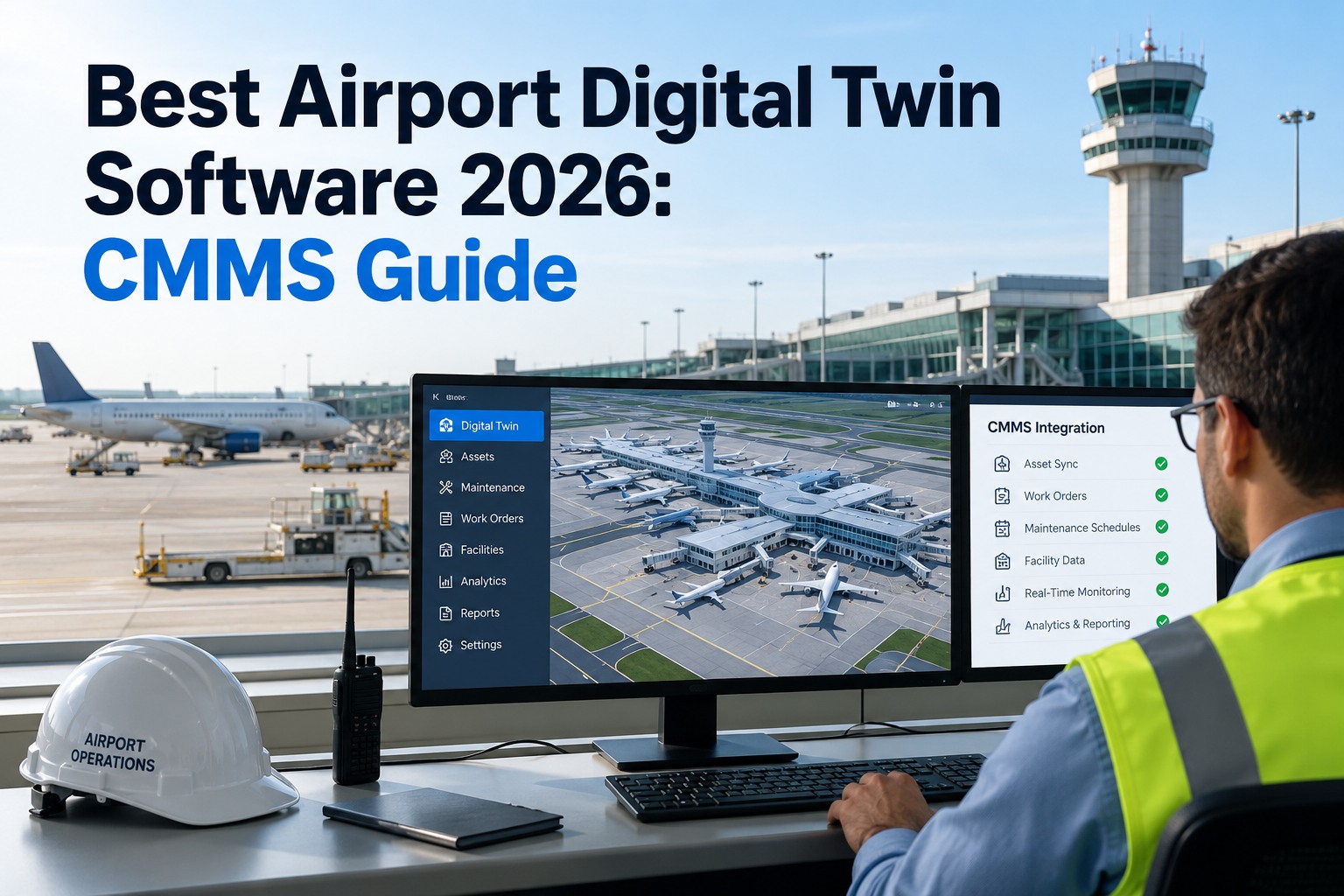
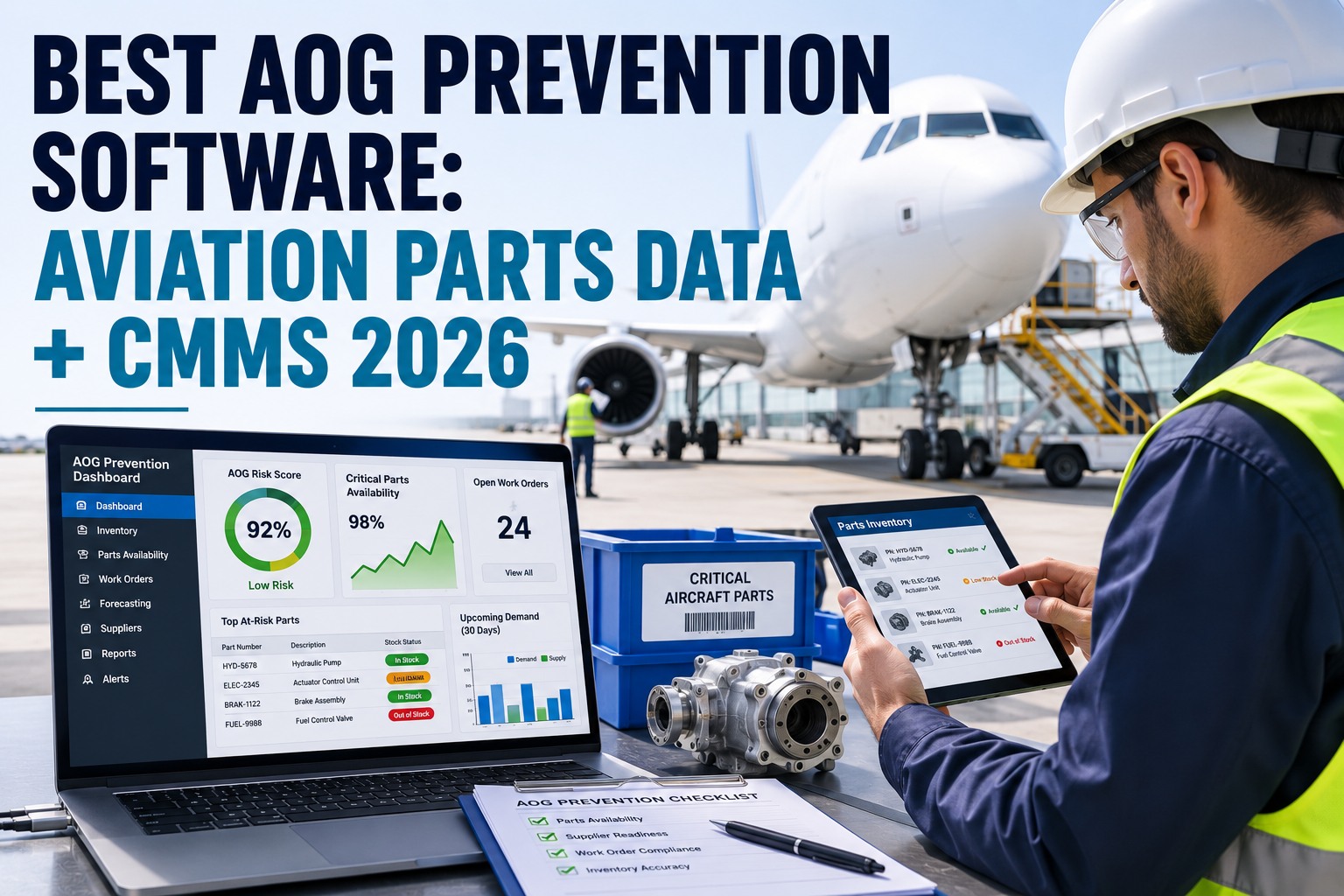
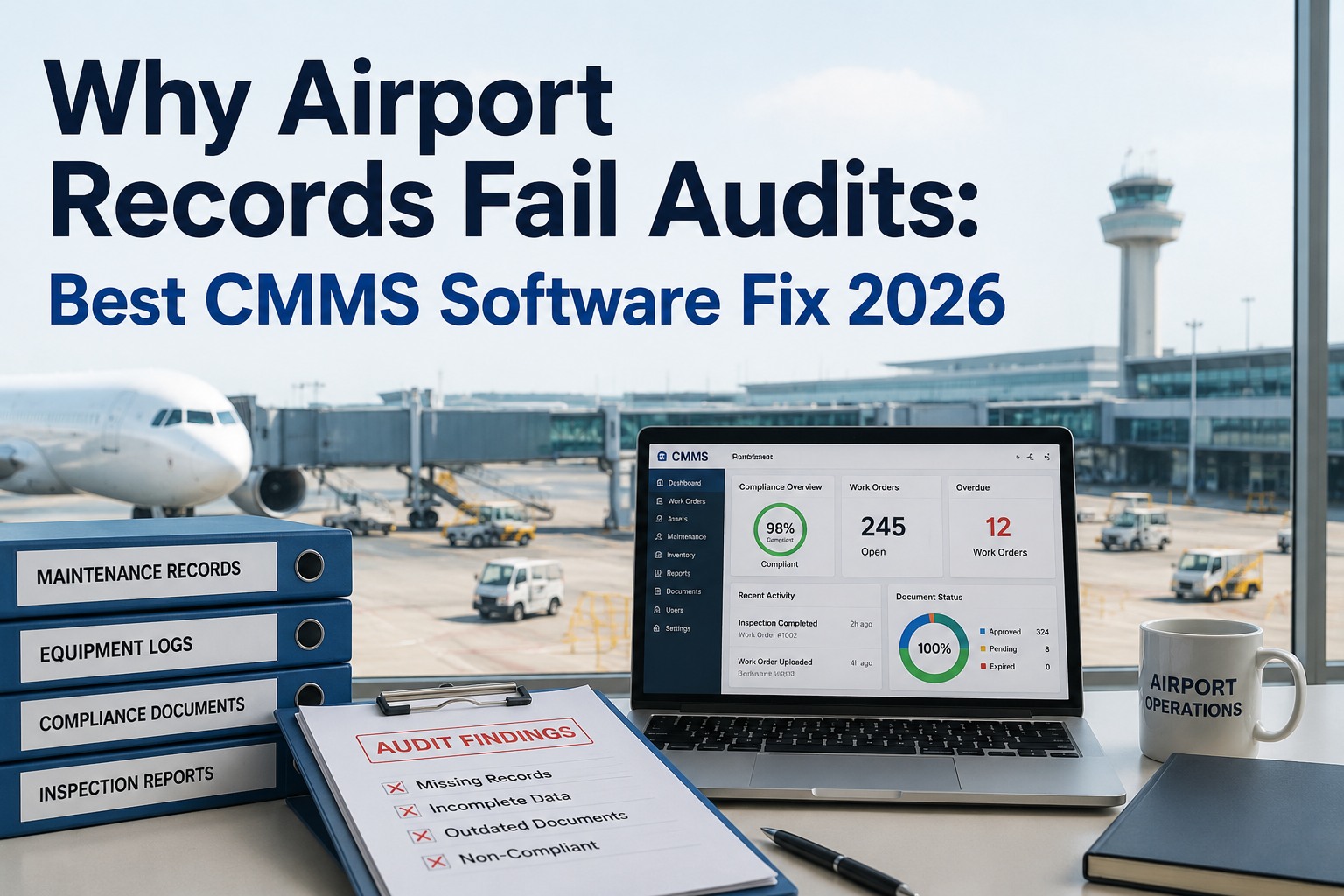
A-CDM works on the promise that every partner at the airport — airport authority, airline, ground handler, ATC, and network manager — is seeing the same 16-milestone view of every flight in real time. That works beautifully when the gate is ready, the belt loader starts on cycle, the pushback tug fires up on demand, and the jet bridge extends first try. It falls apart the moment maintenance is invisible to A-CDM: a jet bridge fault delays boarding by 8 minutes, TOBT slips, the airline files delay code 41 or 52 (aircraft/technical), and nobody in the operations center could see the maintenance situation until the delay was already attributed. EUROCONTROL's own A-CDM specification defines 16 milestones covering the arrival, turnaround, and departure of every aircraft — and roughly a third of them intersect directly with equipment reliability that the maintenance team owns. Yet most airports still run A-CDM in one system and maintenance in another, with delay codes flying between them after the fact instead of coordinated status in front of them. This guide covers where A-CDM and maintenance actually need to meet, the milestones where equipment reliability determines whether TOBT holds, and how OxMaint CMMS gives duty managers the single airport-wide equipment status view A-CDM was always missing. Start free or book a demo to see maintenance-integrated A-CDM workflow live.
Aviation · A-CDM · Turnaround Coordination · CMMS 2026
Best A-CDM + Maintenance Coordination Software for Airports
Unify A-CDM and maintenance with the best 2026 airport CMMS software. Top platforms delivering the single airport-wide view every duty manager needs — GSE reliability, gate readiness, jet-bridge status, and turnaround health in one dashboard.
16 Milestones
EUROCONTROL A-CDM specification per aircraft turnaround
5 Key Targets
ELDT · EIBT · TOBT · TSAT · TTOT drive every turnaround
~⅓ of MS
A-CDM milestones directly dependent on equipment reliability
−5 / +15 min
CTOT window — TSAT must land inside it or the slot is lost
Where Maintenance Actually Meets A-CDM — The Milestone Intersection Map
A-CDM defines 16 milestones between an inbound flight's takeoff and the outbound flight's takeoff. Not all of them touch maintenance — but the ones that do determine whether TOBT holds. Below is the honest map of where equipment reliability directly gates A-CDM milestone progression. Sign up free and OxMaint's aviation library ships with pre-configured A-CDM asset templates — every jet bridge, gate GPU, belt loader, and pushback tractor is linked to the milestone it influences, so status changes on the maintenance side flow into the A-CDM common situational awareness picture in real time.
A-CDM MILESTONE FLOW · WHERE MAINTENANCE OWNS THE OUTCOME
MS 5-7
ARRIVAL & IN-BLOCK
Aircraft lands, taxis to stand, in-blocks. Requires gate readiness (jet bridge operable, GPU/PCA ready, chocks & cones).
Owned by maintenance: Jet bridge, gate GPU, PCA units, gate ground support
→
MS 8-11
TURNAROUND
Ground handling: deplane, service, catering, fuel, cargo, board. TOBT gets updated continuously as turnaround progresses.
Owned by maintenance: Belt loaders, cargo loaders, catering trucks, pushback tugs, tow bars, water/lav trucks
→
MS 12-16
DEPARTURE
TSAT issued, boarding complete, off-block, taxi-out, take-off. Any GSE failure or gate-hold event still cascades into departure.
Owned by maintenance: De-icing rigs, pushback tug reliability, taxiway lighting, apron condition
The milestones fire in sequence; the equipment fires in parallel. A single degraded jet bridge, belt loader, or pushback tug can hold up any milestone in the chain — and A-CDM sees the delay, not the cause, unless maintenance status is in the same picture.
The 5 Key A-CDM Timestamps & The Equipment That Moves Them
A-CDM revolves around five core timestamps that every partner watches on the CDM display. Each one can slip because of an equipment problem the maintenance team could have prevented — or already fixed if they'd seen it in time. Below is the timestamp-to-equipment map. Book a 30-minute demo and an OxMaint aviation specialist will walk this timestamp map against your specific ramp and gate infrastructure — you'll leave the call with a clear picture of which of your equipment classes cost you the most TOBT slippage before you commit to a trial.
ELDT
Estimated Landing Time
Impact of Equipment
Airfield lighting, runway condition sensors, weather-related surface conditions
EIBT
Estimated In-Block Time
Impact of Equipment
Stand availability, taxiway condition, marshaller/GVS gear, gate lighting
TOBT
Target Off-Block Time HIGHEST MAINT IMPACT
Impact of Equipment
Jet bridge, GPU/PCA, belt/cargo loaders, catering trucks, fuel trucks, water/lav trucks, pushback tug, tow bar. If any GSE goes down, TOBT slips.
TSAT
Target Start-up Approval Time
Impact of Equipment
Pushback tug availability, apron congestion (de-icing, taxi condition). TSAT stabilizes 30 min before — no room for late GSE surprises.
TTOT
Target Take-Off Time
Impact of Equipment
Runway/taxiway lighting, de-icing capacity, snow/ice removal fleet, airfield readiness
The IATA Delay Codes You Can Actually Defend Against — With Data
Every delay above 15 minutes gets attributed to an IATA delay code, and the codes most connected to airport maintenance responsibility are 12, 13, 33, 34, 41, and 52. Airports without integrated maintenance data end up eating attributed delays they could have defended against. Below are the codes airport maintenance teams need real evidence chains for. Sign up free and OxMaint's work-order records — timestamps, technician actions, part numbers, resolution times — become the evidence chain that defends against unfair delay attributions in monthly airline reviews.
12
Late Check-in / Acceptance
Often blamed on airport when actual cause was gate-system fault. Evidence chain: gate PC/display maintenance log.
13
Boarding Discrepancies
Jet bridge, gate reader, boarding gate hardware failures. Evidence chain: PM history + real-time WO status.
33
Aircraft Cabin Cleaning
Cleaning vehicle or lift equipment unavailability. Evidence: GSE availability & PM records.
34
Aircraft Fueling / Defueling
Fuel hydrant or refueler unavailability. Evidence: hydrant pit condition, refueler PM cycle.
41
Aircraft/Technical (own airline)
Sometimes miscoded when actual cause was airport GSE. Evidence: proven GSE availability at the time.
52
Damage During Ground Handling
GSE operator error or GSE mechanical fault. Evidence: pre/post inspection records + WO history.
Every Attributed Delay You Can't Defend Is Money the Airline Charges Back.
A single mid-hub airport can attribute 40+ delays per week to maintenance-adjacent equipment. Without a defensible evidence chain, the airport eats those attributions. With OxMaint linking every work order, PM, and asset condition record to timestamps and technician e-signatures, monthly delay-review meetings shift from apology to evidence.
The 5 Highest-Impact Ramp Maintenance Workflows for A-CDM
Below are the five workflows where maintenance discipline consistently protects TOBT and defends against delay attributions in real airport operations. Book a scoping call and an OxMaint aviation engineer will rank these five workflows against your specific ramp equipment fleet — you'll leave with a prioritized rollout sequence and expected TAT protection ranges before you commit to a trial.
01
GSE Hours- and Cycle-Based PMs
Belt loaders, pushback tugs, and cargo loaders on real operating hours or turnaround cycles — not calendar. Every hour on the meter counts. Prevents the wrong PM at the wrong time.
02
Jet Bridge Availability & Fault Reporting
Jet bridge fault = boarding delay = TOBT slip. Fast fault-to-WO cycle plus known-good gate rotation prevents the aircraft-on-stand-no-bridge stranding.
03
Gate Ground Power (GPU) & Pre-Conditioned Air
Failed GPU means APU running longer = fuel burn cost to airline + emissions. Sub-15-min fault-to-swap cycles keep gates operable and airlines happy.
04
Pushback Tug & Tow Bar Readiness
TSAT stabilizes 30 minutes before start-up. A tug that won't start at TSAT-25 pushes departure into the next slot. Reliability programs on tugs pay back in every peak-hour bank.
05
De-Icing Rig Condition & Fluid Readiness
Winter operations live or die on de-icing rig availability and fluid supply. Real-time rig-status feed into A-CDM allows realistic TOBT under seasonal conditions.
A-CDM Alone vs. A-CDM + OxMaint Maintenance Overlay
A-CDM without maintenance visibility is a race car with the fuel gauge disconnected. The system runs on the assumption that ground support and gate infrastructure are always available — until they're not. Here's what changes when maintenance status is part of the shared A-CDM picture. Start free — no credit card, unlimited users, and OxMaint's aviation library ships with pre-built asset templates for every category of ramp and gate equipment, so day-one integration into your A-CDM environment takes minutes.
Airports that integrate maintenance status into their A-CDM environment stop losing delay-code arguments and stop absorbing costs they didn't cause. Start your free forever workspace to build your first A-CDM-linked maintenance workflow this week, or book a demo to see maintenance status feeding a live A-CDM shared picture before you commit.
"
Our A-CDM was fully operational for two years, and our on-time performance was still stuck around 71%. The gap wasn't in the A-CDM system — it was that our operations center had no equipment status. Jet bridge would fault at gate B14, TOBT would drift, delay would attribute code 13, and by the time anyone in ops knew what happened, the airline was already writing us up. Six months into OxMaint feeding maintenance status into our shared A-CDM view, the biggest change was in monthly airline reviews — we started defending code 41 attributions with real evidence and pushed roughly 18% of monthly attribution back to the actual cause. TAT on our two worst-performing gates dropped 4-6 minutes just from faster jet-bridge fault-to-swap cycles. Airline complaints down, cost recovery up.
Airport Duty Manager · 42-Gate International Hub · Northern Europe
Frequently Asked Questions
Does OxMaint replace our A-CDM platform?
No — OxMaint overlays A-CDM. Your A-CDM platform (whether locally deployed or via EUROCONTROL ACISP integration) remains the source of truth for milestone data, TOBT/TSAT/TTOT, and stakeholder coordination. OxMaint adds the maintenance status layer — jet bridge availability, GSE readiness, gate GPU condition — into the shared A-CDM picture through API integration, so every A-CDM partner sees maintenance context alongside milestone progress.
Which A-CDM milestones does maintenance actually influence?
Of the 16 A-CDM milestones defined in EUROCONTROL's specification, roughly a third are directly influenced by equipment reliability — Milestone 5-7 (arrival + in-block: jet bridge, GPU/PCA), Milestone 8-11 (turnaround: belt loaders, cargo loaders, catering, fuel, water/lav trucks), and Milestone 12-16 (departure: pushback tug, tow bar, de-icing rigs, taxiway lighting). Every one of those has an equipment class that maintenance owns and can either enable or fail.
Which IATA delay codes are most defensible with maintenance data?
Codes 12, 13, 33, 34, 41, and 52 are the most commonly airport-attributable maintenance-related delay codes. OxMaint's work-order records — timestamps, technician actions, part numbers, resolution times, pre/post condition photos — become the evidence chain that defends against unfair attributions in airline monthly delay reviews.
Sign up free to start building this evidence chain today.
How does OxMaint handle GSE PMs on hours vs calendar?
Every GSE unit in OxMaint carries its own hour meter and cycle counter. PMs trigger on actual accumulated hours or turnaround cycles, not calendar dates — so a belt loader running 12 hours a day gets serviced faster than one running 4 hours a day, and the wrong-service-at-wrong-time waste common in calendar programs disappears. Hours can be entered by tech, imported from telematics, or pulled from equipment CAN bus where available.
Can duty managers see maintenance status in real time during peak-hour operations?
Yes. OxMaint provides live status dashboards designed for airport operations center use — every jet bridge, GPU, belt loader, and pushback tug shown with real-time availability, active WOs, and fault history. Duty managers see equipment status at the same time as A-CDM milestone progress, so a slipping TOBT gets diagnosed with equipment context in seconds instead of phone-tree escalation.
Does OxMaint support Part 139 and EASA Part-ADR compliance evidence?
Yes. Every work order, PM, inspection, and asset condition record captures technician e-signature, timestamp, and full evidence chain — exportable as an audit-ready package for FAA Part 139 self-inspection programs, EASA Part-ADR aerodrome maintenance obligations, and internal reliability governance. Airline monthly reviews become straightforward evidence exchanges rather than defensive arguments.
Book a demo to see the compliance workflow.
Is a credit card or CAPEX approval needed to start?
No. OxMaint's free forever plan requires no credit card, no CAPEX request, and no consulting engagement — you can
sign up in under 2 minutes and configure your first GSE, jet bridge, or gate equipment record the same shift. Airport asset templates ship pre-built for terminal, airside, ramp, and airfield infrastructure.
Give A-CDM the Missing Maintenance Layer It Was Always Waiting For.
OxMaint delivers real-time GSE, jet-bridge, and gate equipment status into your A-CDM shared picture — so duty managers see equipment context alongside milestone progress, TOBT holds, and delay-code attribution finally has evidence behind it. Start free — no credit card, unlimited users, forever. Or book a demo for an airport-specific A-CDM integration walkthrough.