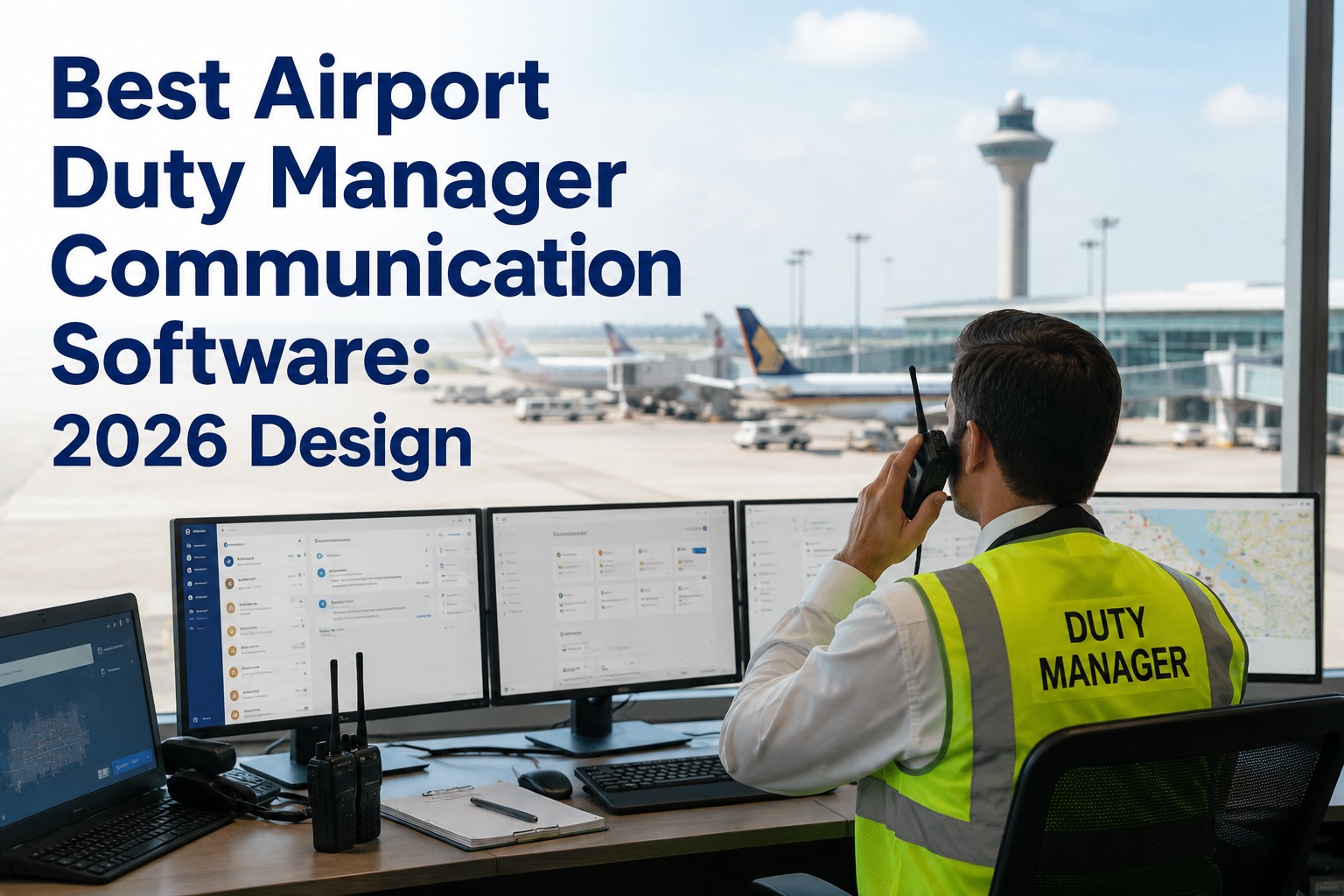
The airport duty manager is the single point where the whole operation converges. Airlines, ground handlers, security, maintenance, and the operations center all flow through one person who has to hold full situational awareness, coordinate every department, and — when a gate goes down or weather cascades into irregular operations — act as incident commander. The job is only as good as the information reaching them, and that's exactly where most airports fall short: the duty manager's picture is assembled from radio chatter, a paper logbook, and a dozen separate department channels that never quite line up. Designing duty-manager communication well means giving that role one structured, real-time record every department writes to and every shift builds on — so the ADM coordinates from a single source of truth instead of reconstructing the picture from fragments. This guide lays out the reference communication design for airport duty managers: the coordination flows they run, the tiered and escalation structure that keeps it controlled, why maintenance visibility is the missing piece, and how a CMMS becomes the operational backbone underneath it. Book a free duty-comms design review.
The Duty Manager Is the Hub — Only as Good as the Information Reaching Them
Coordinating airlines, handlers, security, and maintenance from radio and paper means reconstructing the picture from fragments.
1
Point of contact for the whole operation — the duty manager
4
Coordination flows the ADM runs at once, every shift
IRROPS
Irregular operations — where fragmented comms break down first
24/7
Coverage the role holds — every handoff must carry the full picture
What the Duty Manager Coordinates
The ADM isn't running one channel — they're the convergence point for four distinct coordination flows at once. Each generates information the duty manager must hold, act on, and hand to the next shift. Miss one and situational awareness has a blind spot.
Operations & Stakeholders
Airlines, ground handlers, ATC, and the operations center — gate assignments, aircraft parking, passenger and baggage flow, and the advisories and notifications that keep everyone aligned.
Safety & Security
Security teams, incidents, and compliance — monitoring for breaches, coordinating de-escalation, and escalating to law enforcement while keeping operations running.
Maintenance & Facilities
The status of jet bridges, baggage carousels, gates, HVAC, and airfield systems — the shared-use equipment the ADM must confirm is available, especially during irregular operations.
Incidents & IRROPS
Emergencies and irregular operations — where the ADM becomes incident commander in the operations center, coordinating a multi-department response against the clock.
The Reference Communication Design
A well-designed duty-manager communication system rests on three principles. Get these right and the ADM coordinates from clarity; get them wrong and every shift starts by rebuilding the picture. This is the reference structure a hub airport should design toward.
01
One Real-Time Record
A single digital platform where every operational update is posted in real time, so every department and the duty manager work from the same information — not a patchwork of radio, paper, and separate channels.
02
Clear Escalation Paths
Defined routes so staff know exactly who to contact for each issue, with backup contacts identified. The ADM sees what's escalated and what's resolved without chasing it down.
03
Tiered by Urgency
Immediate operational adjustments, planning items, and complex coordination each move on the right channel — so a critical alert isn't buried next to a routine note, and nothing urgent waits.
The Tiered Communication Model
Not every message needs the same urgency or channel. A tiered model — the backbone of good duty-manager comms — routes each type of information to where it belongs, so the critical rises and the routine doesn't drown it.
IMMEDIATE
Real-Time Operational Alerts
A gate down, a security incident, an equipment failure during a bank — pushed instantly to the duty manager and everyone affected, acknowledged on receipt.
OPERATIONAL
Shift & Status Updates
Open work orders, equipment status, and coordination items logged to the shared record — the running picture the ADM monitors and hands to the next shift.
PLANNING
Advisories & Look-Ahead
Construction activity, scheduled maintenance, and longer-horizon notifications — documented ahead so they never surface as a surprise mid-shift.
Design Your Duty-Comms Flow in 30 Minutes
Working session with our aviation team — bring your current duty-manager setup. We'll map the four coordination flows onto one record, define escalation and tiers, and show how OxMaint gives the ADM live maintenance visibility in the same view.
The Missing Piece · Live Maintenance Visibility
Most duty-manager communication designs cover operations and security well but leave one flow stranded on radio and paper: maintenance. Yet the ADM's most frequent real-time decisions hinge on equipment status — and that's where the biggest blind spot usually sits.
The ADM Decides on Equipment — But Can't See It Live
When a jet bridge fails during boarding, the duty manager has to know instantly: is a work order open, who's on it, what's the ETA, is there a backup gate? On radio and paper, they call around and wait — burning minutes in an irregular-operations decision that cascades into delays. When maintenance runs on the same digital backbone as the rest of duty-manager comms, the ADM sees open work orders, asset status, and technician assignment live, in the same view as operations and security. The coordination decision is made from fact, not from a phone tree — which is exactly why the maintenance management system belongs at the center of the design, not off to the side.
How OxMaint Is the Duty-Manager Backbone
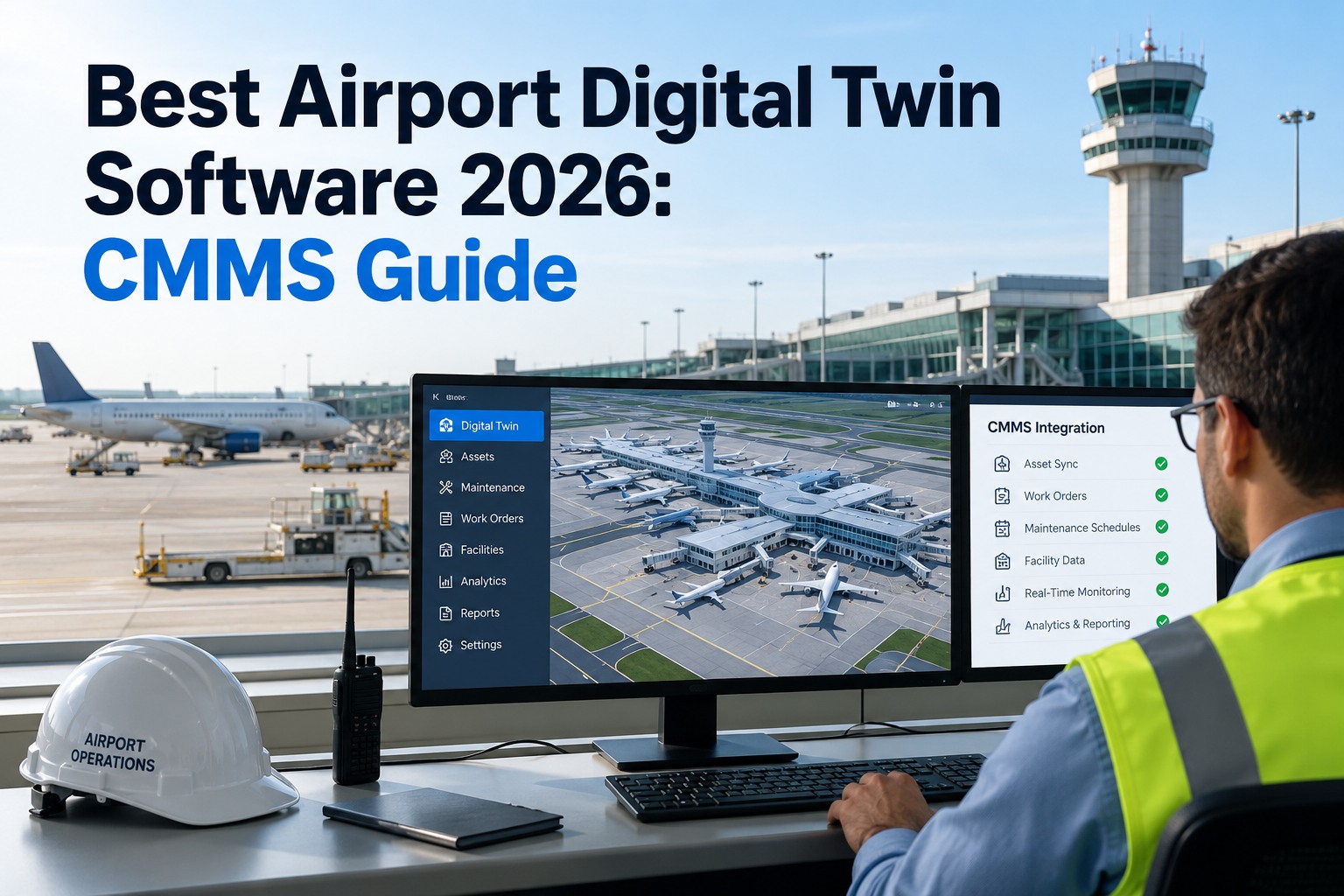
OxMaint gives airport ops and maintenance the digital backbone underneath duty-manager communication — open work orders visible across shifts, structured notes tied to assets and events, mobile access for every technician, and dashboards showing every open item from the prior shift, from one dashboard on desktop or mobile.
Unify
One Operational Record
Maintenance status, work orders, and asset events live in one shared record the duty manager and every department read from — no separate maintenance silo.
See
Live Equipment Status
The ADM sees jet bridges, carousels, gates, and airfield systems up, down, or degraded in real time — the shared-use equipment picture IRROPS depends on.
Escalate
Defined Escalation Paths
Faults route to the right team with backup contacts, and the duty manager sees what's escalated versus resolved without chasing a phone tree.
Alert
Tiered Real-Time Notifications
Immediate alerts push to the ADM and affected teams on mobile; operational and planning items log to the record — urgency matched to channel.
Handover
Shift-to-Shift Continuity
Every open item from the prior shift carries forward on one dashboard, so each duty manager builds on the last instead of restarting the picture.
Report
Logs & Audit Trail
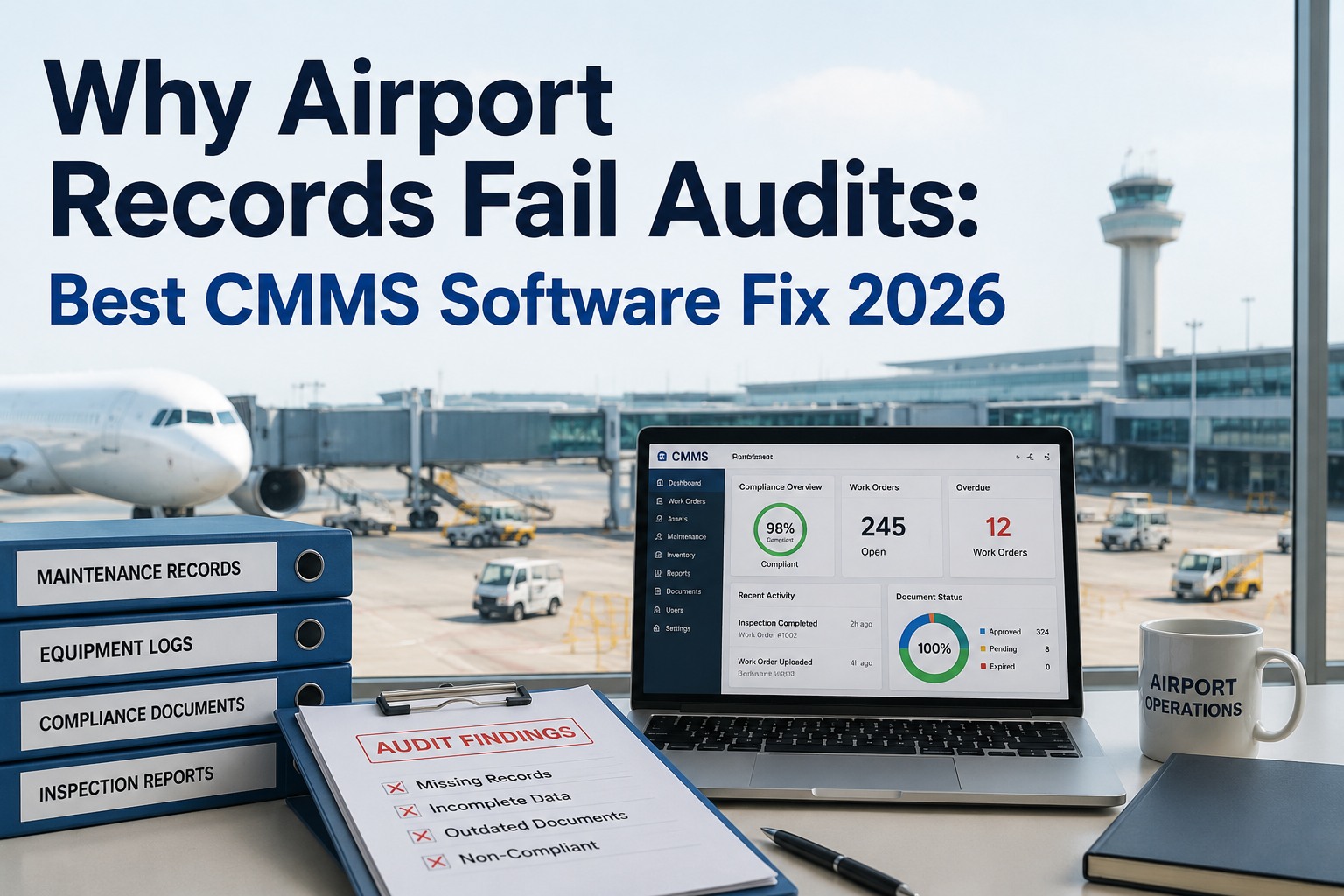
Operational logs and incident records captured automatically — the detailed, auditable trail the duty-manager role is accountable for, with SAP and Maximo overlay.
Give the Duty Manager One Source of Truth
Replace radio-and-paper coordination with a structured record every department writes to and every shift builds on — with live maintenance visibility built in. See how OxMaint anchors duty-manager communication. Free forever plan available.
Frequently Asked Questions
What does an airport duty manager do?
The airport duty manager (ADM) oversees the daily operation of the airport and is the primary point of contact for incident management and operational issues. They maintain full situational awareness across the terminal and airside, coordinate between airlines, ground handlers, security, and maintenance, respond to emergencies and irregular operations, monitor and approve the use of shared-use equipment like gates and jet bridges, issue operational advisories, maintain detailed operational logs, and often serve as incident commander in the operations center during emergencies. It's a 24/7 coordination role where the quality of decisions depends directly on the quality of information reaching them.
Book a review.
Why is duty-manager communication so hard to get right?
Because the role sits at the convergence of many flows — operations, security, maintenance, and incidents — that traditionally live on separate channels: radio chatter, a paper logbook, email, and department-specific systems that don't line up. The duty manager ends up assembling situational awareness from fragments and reconstructing it every shift. The problem gets acute during irregular operations, when many things change fast and fragmented communication can't keep a single accurate picture. Good design fixes this with one real-time shared record, clear escalation paths, and tiered urgency, so the ADM coordinates from one source of truth.
What does a good duty-manager communication design look like?
Three principles. First, one real-time record: a single platform where every operational update is posted so all departments and the duty manager share the same information. Second, clear escalation paths: defined routes with backup contacts so staff know exactly who to contact and the ADM sees what's escalated versus resolved. Third, tiered communication: immediate operational alerts, running operational updates, and planning or look-ahead advisories each move on the right channel, so urgent items rise and routine ones don't bury them. Redundancy — backup channels if primary systems fail — rounds it out.
Start free.
Why does maintenance visibility belong in duty-manager comms?
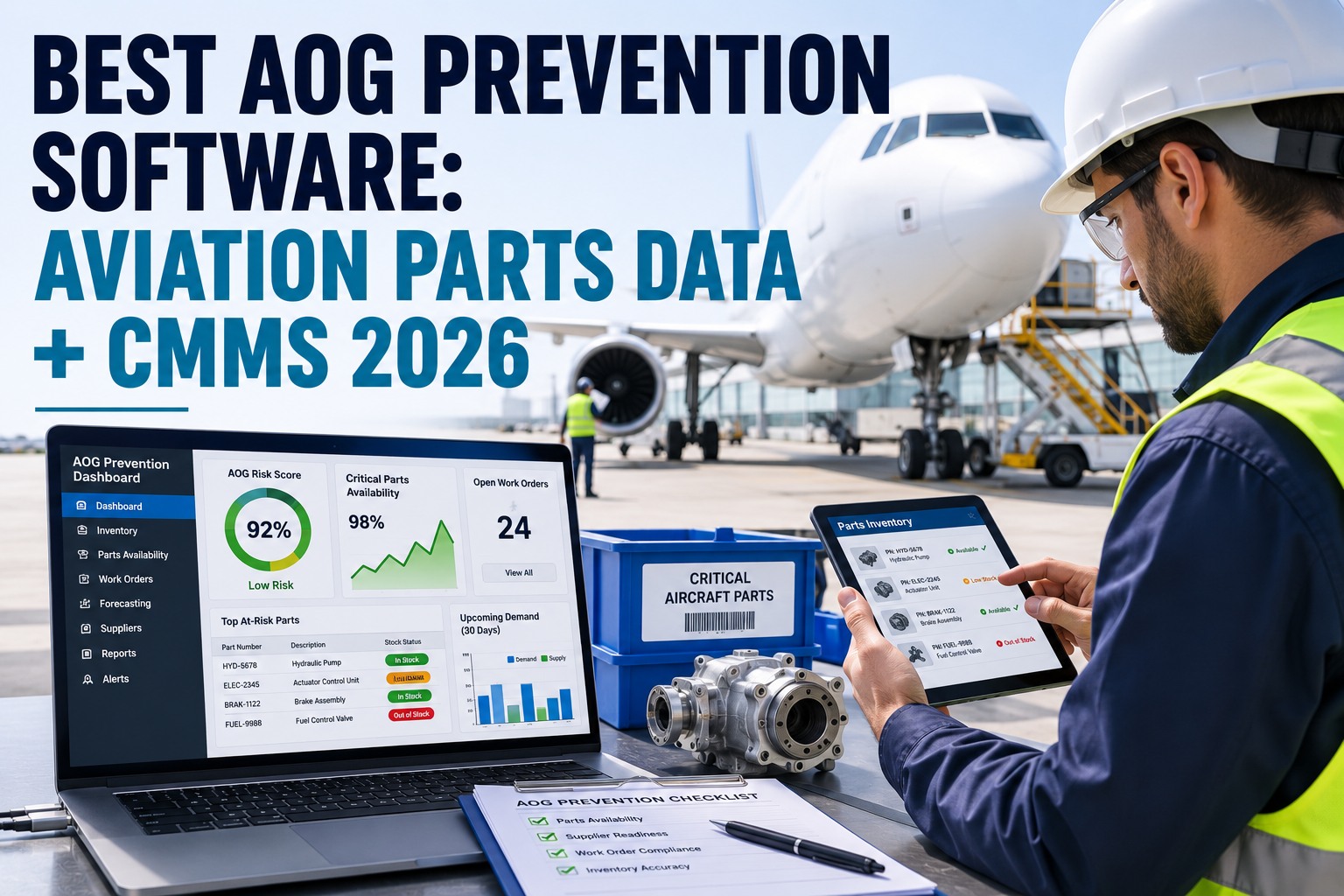
Because so many of the ADM's real-time decisions hinge on equipment status. When a jet bridge, baggage carousel, or gate system fails, the duty manager needs to know immediately whether a work order is open, who's assigned, the expected fix time, and whether a backup is available — especially during irregular operations when shared-use equipment availability drives everything. If maintenance lives on radio and paper while the rest of comms is digital, that flow becomes a blind spot filled in by phone calls. Putting the maintenance system on the same backbone lets the ADM make coordination decisions from live fact rather than a phone tree.
How does OxMaint support duty-manager communication?
OxMaint provides the maintenance backbone underneath the design: maintenance status, work orders, and asset events in one shared record the duty manager and every department read from; live equipment status for jet bridges, carousels, gates, and airfield systems; defined escalation paths with backup contacts so the ADM sees escalated-versus-resolved at a glance; tiered real-time notifications that push immediate alerts to mobile while logging operational and planning items; shift-to-shift continuity so every open item carries forward; and automatic operational logs and an audit trail. With SAP and Maximo overlay, it makes maintenance a first-class part of duty-manager comms instead of a silo. A free forever plan is available.