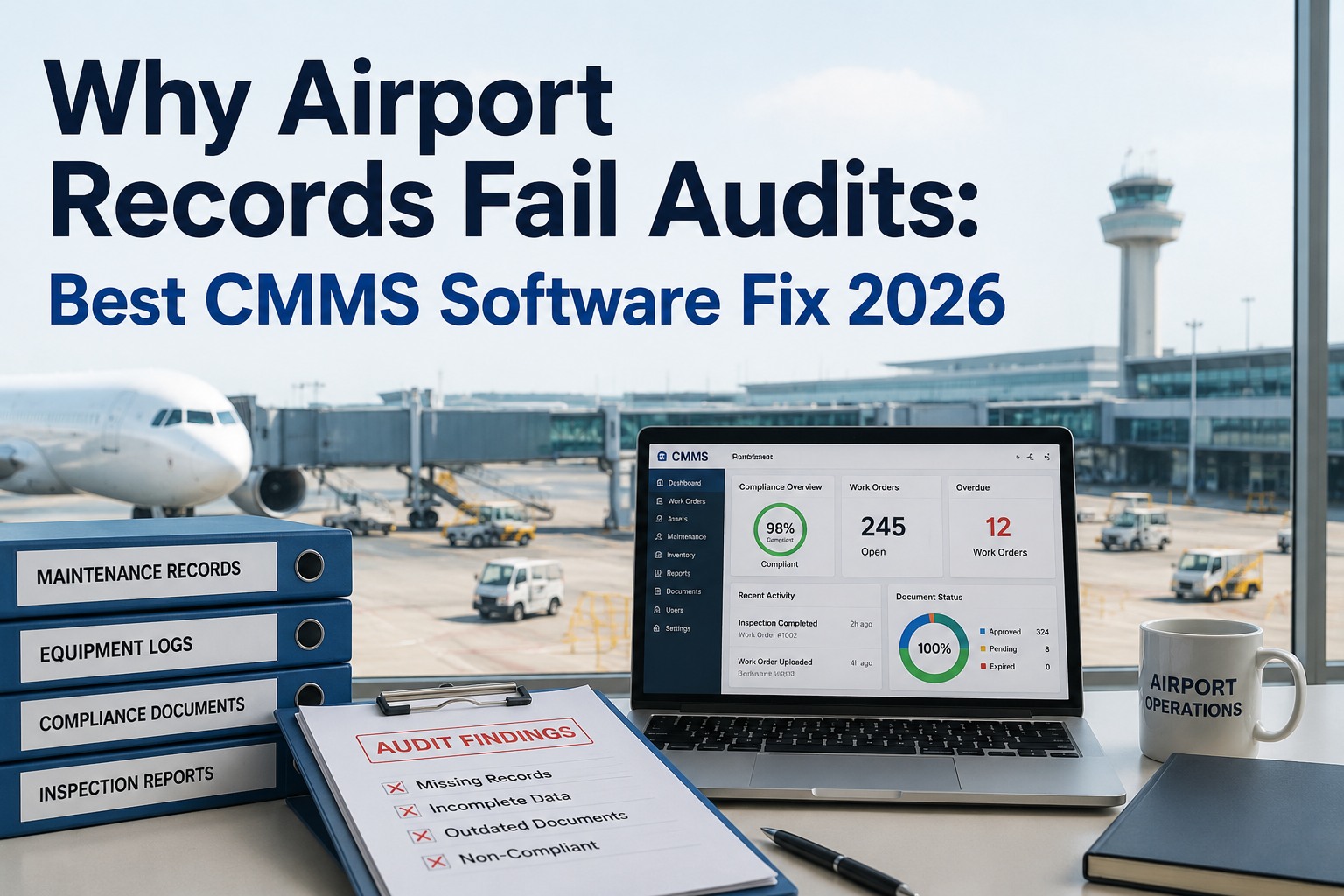
For an airport CIO, the on-prem vs SaaS CMMS decision isn't a preference — it's a five-year commitment that either holds up in a budget defence or falls apart under one question from the CFO. The two models look close on the sticker price and diverge hard once you count servers, upgrades, IT headcount, downtime, and the cost of scaling across terminals. The difference between a budget conversation and a budget defence is whether that five-year picture is on the table before you sign. This guide lays out the real total cost of ownership for both models, line by line, so the call is made on data — not on which invoice looks smaller today. Book a free TCO review.
The Sticker Price Isn't the Cost
On-prem looks cheaper on the license line. Over five years, the hidden costs are where the two models really separate.
5-Yr
Horizon that decides the real winner
7
Cost lines most sticker comparisons ignore
CapEx
vs OpEx — the core budget question
CFO
The one review the model has to survive
The Two Models at a Glance
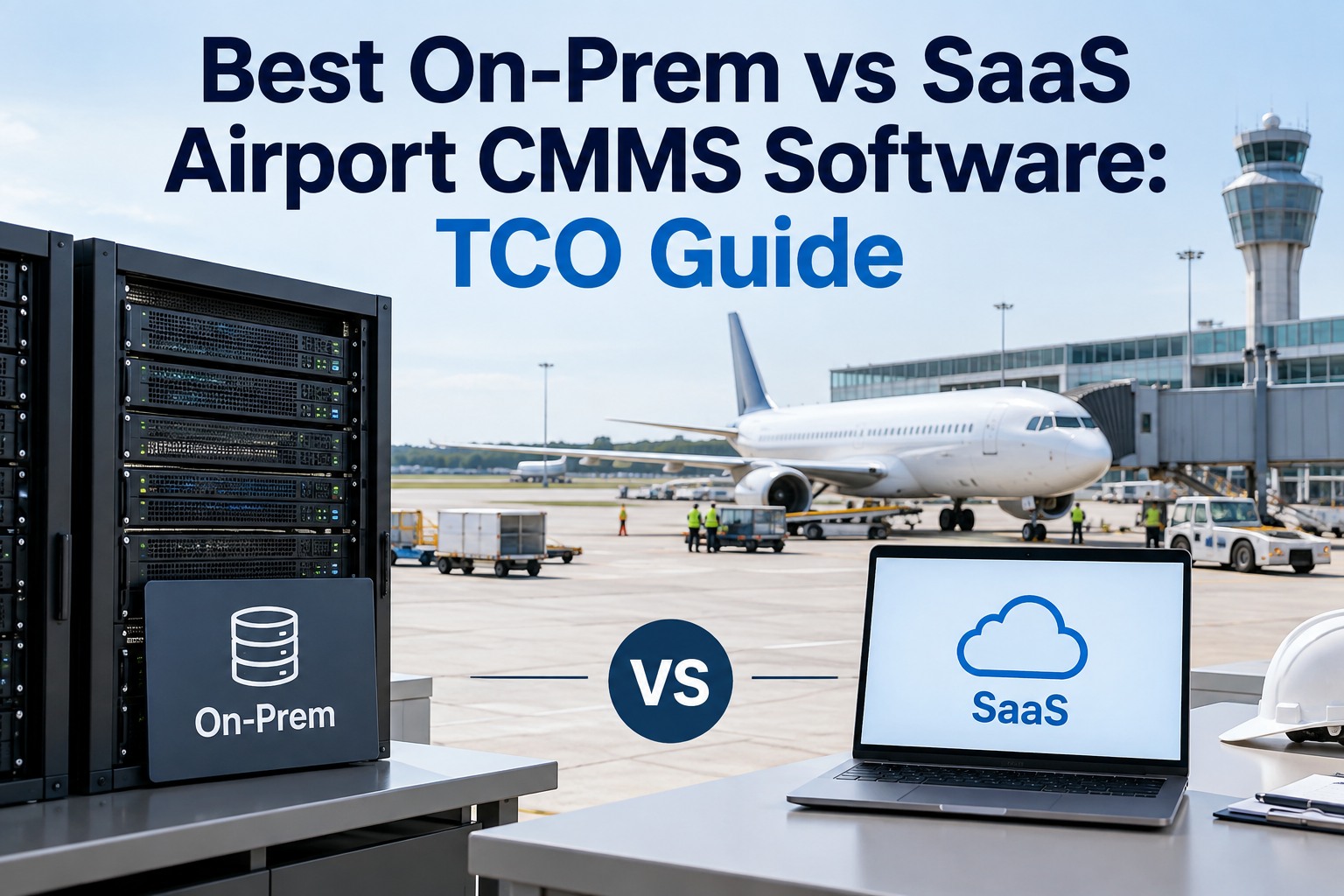
Before the line-item math, the shapes are different. On-prem is a large upfront asset you own and maintain; SaaS is a recurring subscription someone else runs. Neither is automatically cheaper — it depends on what you count and how long you count it.
On-Premise
Cost shapeCapEx — big upfront
Servers & hardwareYou buy & own
UpgradesManual, IT-led
Scaling terminalsNew hardware
UptimeYour IT team
SaaS (Cloud)
Cost shapeOpEx — predictable
Servers & hardwareVendor-hosted
UpgradesAutomatic, included
Scaling terminalsChange the plan
UptimeVendor SLA
The 7 Cost Lines That Decide TCO
A sticker comparison shows one number. A real TCO shows seven. These are the lines that separate the two models over five years — and where on-prem's low license fee quietly gets erased.
01
Licensing
On-prem: large one-time. SaaS: recurring subscription. The only line most comparisons actually count.
02
Infrastructure
On-prem: servers, storage, backup, power, cooling. SaaS: zero — it's in the subscription.
03
Implementation
On-prem: longer install, on-site setup. SaaS: faster onboarding, configured remotely.
04
IT Headcount
On-prem: staff to patch, back up, secure. SaaS: vendor absorbs the ops burden.
05
Upgrades
On-prem: paid, disruptive version jumps. SaaS: continuous, included, no downtime.
06
Downtime Risk
On-prem: outage is your problem. SaaS: redundancy and SLA-backed uptime built in.
07
Scaling
On-prem: buy hardware per terminal. SaaS: add seats and sites without a capital project.
+
The Hidden Total
Lines 02–07 are where a "cheaper" on-prem license turns into the more expensive five-year commitment.
How the 5-Year Curve Actually Runs
On-prem front-loads the spend — a spike at purchase, then steady maintenance. SaaS spreads it flat and predictable. The crossover, and whether it ever arrives inside your horizon, is the whole decision.
On-Prem cumulativeSaaS cumulative
Illustrative shape, not a quote: on-prem spikes upfront and plateaus; SaaS climbs steadily. Your crossover depends on airport size, terminals, and IT cost — the review maps it to your numbers.
Get Your Airport's 5-Year TCO in 30 Minutes
Bring your current setup and asset count. We'll build the on-prem vs SaaS curve on your numbers, so you walk into budget season with a defence, not a guess.
Which Model Fits Which Airport
There's no universal answer — but there are clear signals. Match your constraints to the column and the call gets a lot simpler.
On-Prem makes sense when…
Strict data-residency rules keep everything on-site
You already run a mature IT and server operation
CapEx budgeting is preferred over recurring OpEx
A single facility with stable, known scale
SaaS makes sense when…
You want predictable OpEx and no hardware refresh
Multiple terminals or sites that need to scale
Lean IT — you'd rather not run servers and patches
Mobile work orders and remote access matter day one
Where OxMaint Lands — and Why
OxMaint is cloud-native SaaS built for the multi-terminal reality of airports: predictable OpEx, automatic upgrades, mobile work orders, and a live cost trail finance can audit — without a server room or a hardware-refresh cycle.
OpEx
Predictable Subscription
No CapEx spike, no server room — a flat, forecastable line finance can plan against year over year.
Zero Ops
Upgrades & Uptime Included
Automatic updates and SLA-backed hosting — no patch weekends, no version-jump projects, no IT headcount tax.
Scale
Add Terminals, Not Hardware
Grow across sites and seats by changing the plan — no capital project for every new terminal.
Audit
Live, Defensible Cost Trail
Every spend traces to an asset, a work order, and a reason — budget season stops running on year-old spreadsheets.
Mobile
Work Orders in the Field
Technicians log and close work from any device — no desktop dependency, no terminal-side install.
Overlay
SAP & Maximo Compatible
Sits alongside existing enterprise systems, so SaaS adoption doesn't mean ripping out what already works.
Make the Maintenance Budget Defensible
Give finance a live view of maintenance cost — asset by asset, work order by work order. See where OxMaint lands on your five-year curve. Free forever plan available.
Frequently Asked Questions
Is on-prem or SaaS CMMS cheaper for an airport?
On-prem often looks cheaper on the license line, but over five years infrastructure, IT staff, upgrades, and downtime usually push its total cost above SaaS — especially across multiple terminals.
What costs do sticker-price comparisons miss?
Servers, storage, power and cooling, implementation, IT headcount, paid upgrades, downtime risk, and per-terminal scaling. These six-plus lines are where the real TCO gap opens up.
Why does CapEx vs OpEx matter to the CFO?
On-prem is a large upfront capital cost; SaaS is a predictable operating expense. OpEx is easier to forecast and defend, which is why many airports move to subscription models.
Which model is OxMaint, and who is it for?
OxMaint is cloud-native SaaS — predictable OpEx, automatic upgrades, mobile work orders, and an auditable cost trail, with SAP and Maximo overlay. A free forever plan is available.