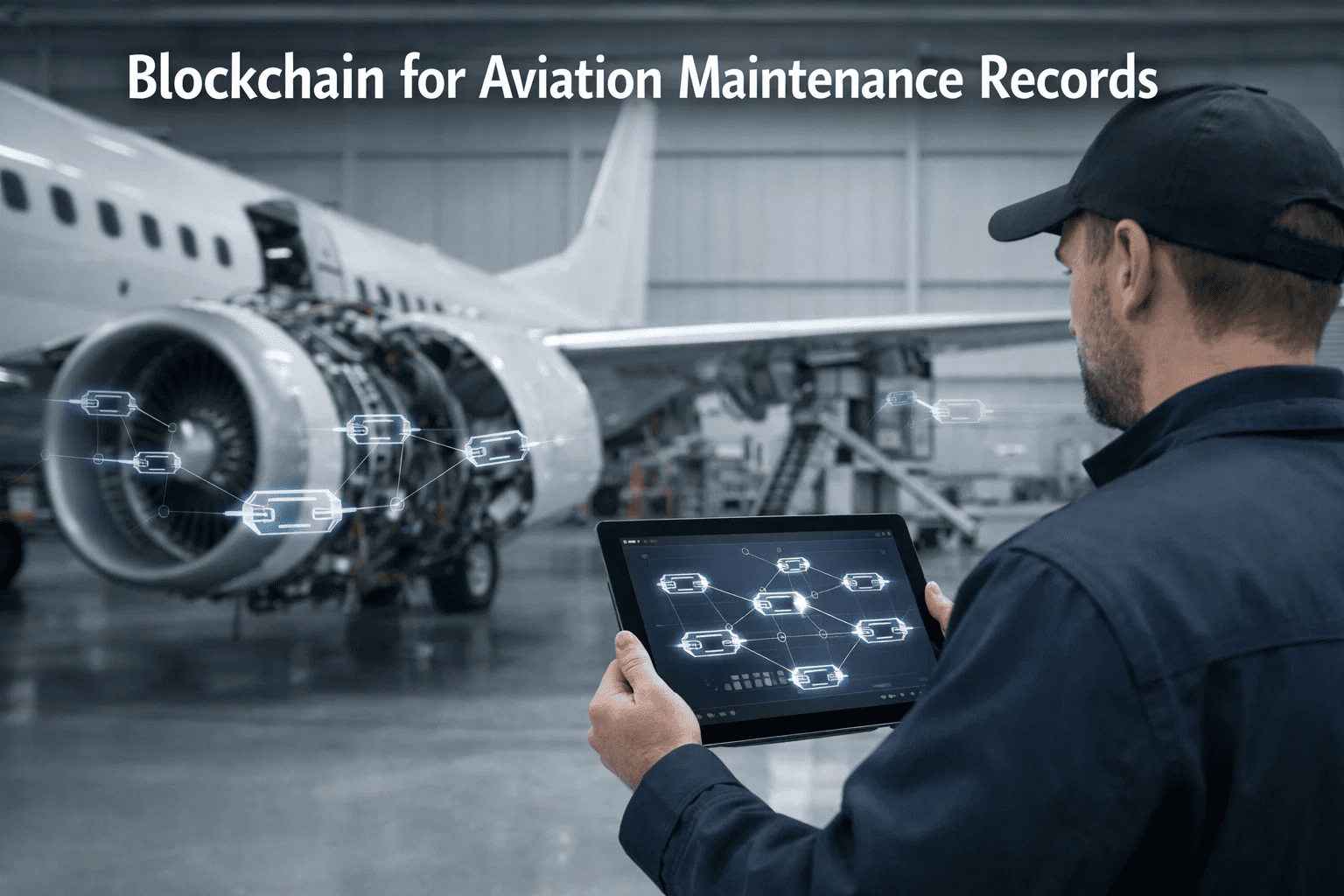
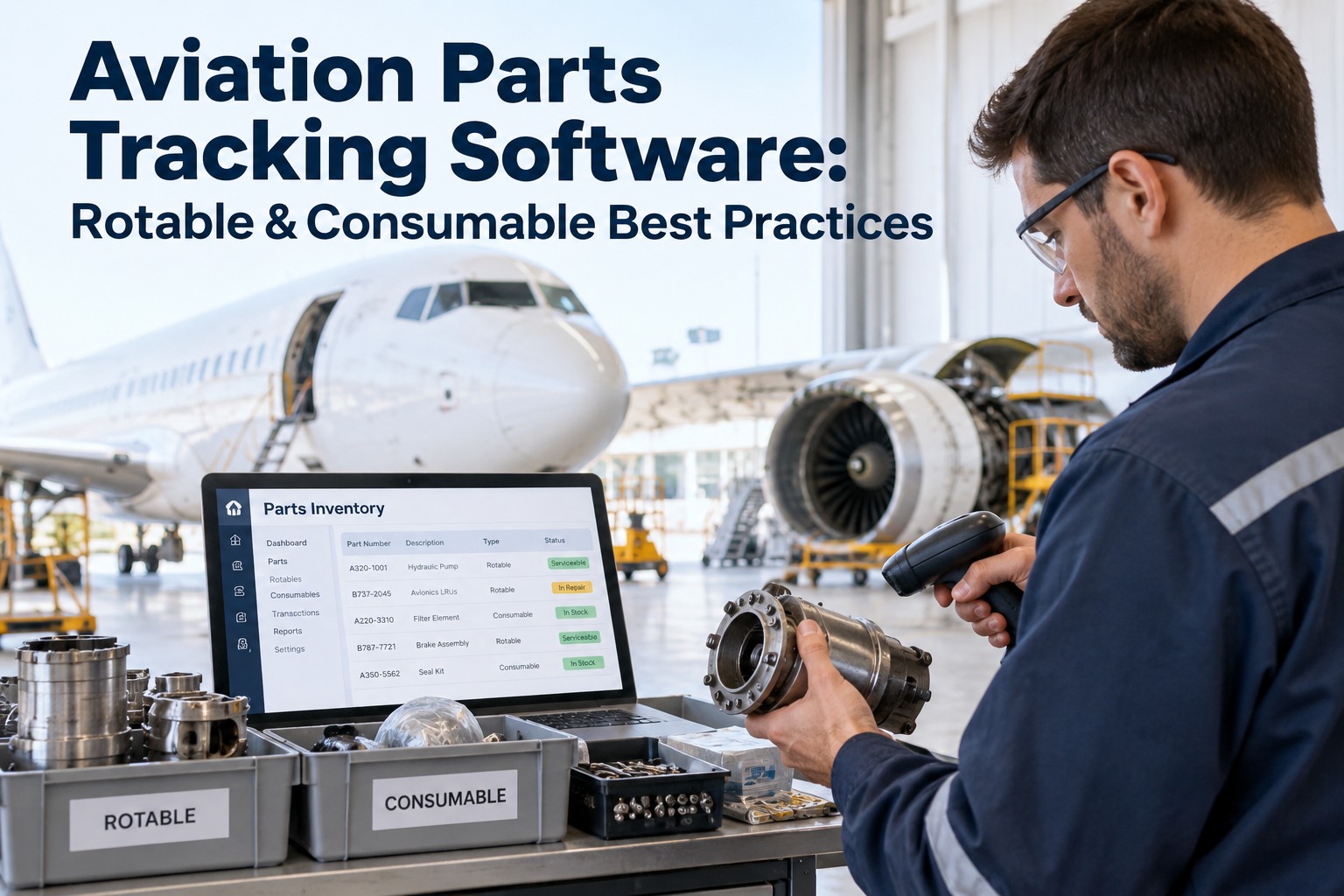
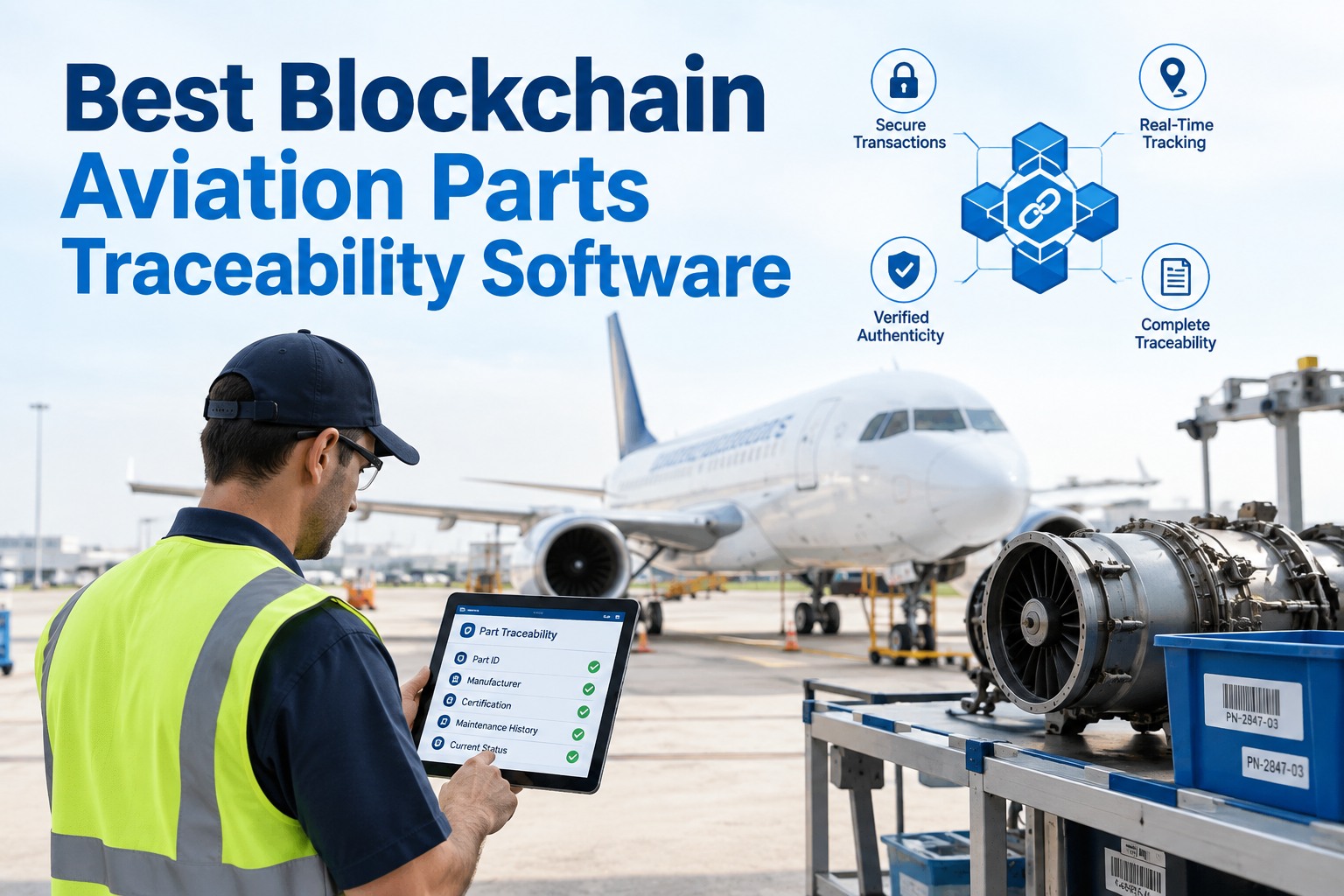
In 2023, a falsified maintenance record on a regional turboprop led to a $47 million grounding investigation — and zero criminal convictions, because there was no tamper-proof audit chain. Aviation maintenance records are the most legally consequential documents in commercial operations, yet most MRO organizations still manage them in systems that can be edited, deleted, or quietly backdated. Blockchain changes that. Start a free trial for 30 days and see how Oxmaint's audit-ready documentation platform delivers the traceability regulators require — or book a demo with our aviation team today.
$3.9B
Annual cost of counterfeit aircraft parts to global aviation
174K+
Suspected unapproved parts incidents logged by FAA since 1990
80%
Of aviation accidents with a human factors component involve documentation errors
60%
Reduction in records audit time achievable with distributed ledger systems
Move Beyond Paper Trails — Start Building an Immutable Record Chain
Aviation maintenance teams in the USA, UK, UAE, and Australia are already piloting blockchain-backed documentation to satisfy FAA, EASA, and CAAC audit requirements with zero manual reconciliation. Oxmaint's platform gives you the infrastructure to start today, not after a two-year implementation project. Want to see how it works for your fleet? Start a free trial and explore Oxmaint's audit-ready documentation module — or book a demo to get a live walkthrough with one of our MRO specialists.
Foundation
What Is Blockchain in the Context of Aviation Maintenance?
Blockchain is a distributed ledger — a record system where every entry is cryptographically linked to all previous entries, timestamped, and replicated across multiple independent nodes. Once a maintenance record is written to a blockchain, it cannot be altered, deleted, or backdated without invalidating the entire chain. That property — immutability — is exactly what aviation regulators, insurance underwriters, and aircraft buyers have needed for decades but had no technical mechanism to enforce.
In MRO terms, each maintenance action, part installation, inspection sign-off, and airworthiness release becomes a block. Every block references its predecessor. The result is a complete, verifiable, tamper-evident history of every decision made on an aircraft — from initial build to current operation.
PROPERTY 01
Immutability
Once written, records cannot be modified. Any attempted change creates a new block that references the correction — the original entry remains visible and verifiable.
PROPERTY 02
Distributed Consensus
Records are replicated across multiple network nodes — no single operator controls the ledger. An MRO station in Dubai and a regulator in Washington D.C. see the same data simultaneously.
PROPERTY 03
Cryptographic Signing
Every entry is signed with the digital identity of the technician, engineer, or system that created it. Signatures are verified against public keys registered with the certifying authority.
PROPERTY 04
Smart Contracts
Automated rules execute without human intervention — a part can be locked from installation until its digital certificate of conformity is confirmed on-chain from a certified supplier.
The Problem
Why Current Aviation Records Systems Are Failing
Aviation's maintenance record infrastructure is a patchwork of paper logbooks, scanned PDFs, proprietary MRO software databases, and spreadsheets — often across different organizations that completed work on the same aircraft in different countries over decades. The consequences are systematic and serious.
01
Counterfeit and Unapproved Parts
With no verifiable digital provenance, parts can enter the supply chain with falsified documentation. The FAA estimates 520,000 unapproved parts are installed on U.S. aircraft annually — a figure that remains stubbornly constant because the verification gap never closes.
02
Maintenance Records Gaps at Aircraft Sale
Aircraft asset valuations fall by 10-20% when complete maintenance history cannot be verified. Buyers discount for record uncertainty. Sellers spend 60-90 days on records reconciliation before each transaction, burning legal fees and delaying capital deployment.
03
Multi-Party Record Fragmentation
A single airframe may have been maintained by 15+ organizations across multiple continents. Each holds fragments of the record in incompatible systems. Reconstructing a complete technical history for an EASA Form 1 audit can take weeks and cost tens of thousands of dollars.
04
Regulatory Compliance Friction
FAA 14 CFR Part 91.417, EASA Part-M Subpart C, and CAAC CCAR-91 all mandate specific record retention and accessibility standards. Meeting these across a multi-jurisdictional fleet requires dedicated compliance staff whose primary job is chasing documents that should already be in one place.
Architecture
How Blockchain Aviation Records Work: The Technical Flow
Understanding blockchain in MRO requires seeing it as a protocol layer beneath your existing maintenance software — not a replacement for it. Technicians still use familiar interfaces. The blockchain handles verification, timestamping, and distribution invisibly in the background. The process follows a consistent pattern for every maintenance event.
STEP 1
Maintenance Action Recorded
Technician completes task in CMMS. Inspection data, part numbers, time stamps, and technician ID are captured.
→
STEP 2
Digital Signature Applied
The record is cryptographically signed using the technician's registered digital certificate — equivalent to a legally binding electronic signature.
→
Hash Generated
STEP 3
A unique cryptographic hash of the record is computed. Any future modification, however small, produces a completely different hash — making tampering instantly detectable.
→
STEP 4
Block Written to Ledger
The hash, signature, timestamp, and metadata are written as a new block to the distributed ledger — referencing the previous block's hash to form the chain.
→
STEP 5
Network Consensus and Replication
Participating nodes (MRO station, airline, regulator, OEM) validate and replicate the new block. The record is now universally accessible and permanently verifiable by any authorized party.
The practical result: any stakeholder with network access — an EASA auditor, an aircraft buyer's technical representative, an insurance underwriter — can verify the complete authenticity of any maintenance record in seconds, without contacting the original MRO organization. Start building this infrastructure today — start a free trial with Oxmaint or book a demo to see the audit-ready documentation module in action.
Use Cases
Eight High-Value Blockchain Applications in Aviation MRO
01
Parts Provenance Tracking
Every part carries a blockchain-linked digital passport from OEM manufacture through distribution to installation — eliminating the conditions that allow counterfeit components to enter the airworthy fleet.
02
Airworthiness Release Authentication
EASA Form 1, FAA 8130-3, and equivalent certificates are issued as blockchain-anchored digital documents. Receiving stations verify authenticity in real time against the issuing authority's public key.
03
Aircraft-on-Ground Escalation Chains
Every communication, decision, and authorization in an AOG event is written to the ledger — creating an immutable record of who approved what and when, critical for post-incident investigation and insurance claims.
04
Technician Certification Verification
License numbers, type ratings, and recurrency currency are stored on-chain and automatically verified before a work order can be signed off. Expired or suspended certifications are flagged without human review.
05
Aircraft Asset Transactions
Sale, lease, and re-registration transfers become hours-long processes instead of 90-day exercises in records archeology. Both parties access the same verified history — no reconciliation required.
06
Life-Limited Parts (LLP) Tracking
Engine LLPs with finite service lives are the most safety-critical components in the airframe. Blockchain-linked cycle tracking eliminates the possibility of a component exceeding its certified life due to record error or fraud.
07
Regulatory Audit Automation
FAA, EASA, and CAAC inspectors are granted time-limited, read-only ledger access. Audits that previously required a week of document retrieval are completed in hours — with no staff time diverted from operations.
08
Insurance and Warranty Claim Integrity
Claims are adjudicated against the immutable maintenance record rather than operator-submitted documentation. Disputed claims — a major cost driver in aviation insurance — fall dramatically when both parties reference the same unalterable dataset.
Comparison
Traditional Records vs. Blockchain-Anchored Records
| Dimension |
Traditional MRO Records |
Blockchain-Anchored Records |
| Tamper Resistance |
Editable in most systems with admin access |
Cryptographically immutable — changes are detectable |
| Multi-Party Access |
Requires data transfer requests and reconciliation |
Any authorized node reads the same verified record instantly |
| Audit Preparation |
5-10 business days of staff time per audit |
Regulator self-serves via ledger access — hours, not days |
| Parts Verification |
Paper certificates, phone calls, manual cross-checks |
Real-time on-chain certificate of conformity validation |
| Aircraft Transaction |
60-90 day records reconciliation process |
Complete verified history accessible in hours |
| LLP Tracking |
Manual cycle counting, spreadsheet-dependent |
Automated cycle accumulation linked to flight operations data |
| Technician Certification |
Manual license card checks, periodic verification |
Automatic pre-sign-off validation against on-chain license registry |
| Dispute Resolution |
Conflicting records from different parties, legal costs |
Single immutable source of truth, claim adjudicated in days |
Oxmaint Solution
How Oxmaint Delivers Blockchain-Grade Traceability for Aviation Teams
Oxmaint's audit-ready documentation platform gives MRO organizations the foundational record integrity of blockchain principles — digital signatures, immutable audit trails, and multi-party verification — within a CMMS that teams can deploy in weeks, not years. The platform integrates with existing ground systems and scales from regional operators to multi-continent MRO networks.
RECORDS
Tamper-Evident Work Order History
Every work order, inspection entry, and sign-off is written with a timestamp and user identity that cannot be retroactively altered. The complete edit history is always visible — no silent overwrite is possible.
SIGNATURES
Digital Signatures with Certificate Validation
Technician sign-offs use digital signatures validated against license databases in real time. Expired certifications, suspended approvals, and type rating mismatches are blocked before work is released — not discovered during an audit.
PARTS
Component Lifecycle Tracking
Parts are tracked from receiving inspection through every installation and removal, with full documentation at each step. Life-limited parts accumulate cycles automatically, linked to actual flight operations data via IoT and SCADA integration.
COMPLIANCE
Regulatory-Ready Audit Export
FAA, EASA, CAAC, and CASA audits are served from a single record set. Standardized export formats meet 14 CFR Part 91.417, Part-M Subpart C, and CCAR-91 documentation requirements. Audit prep that took weeks is measured in minutes.
ASSET
Full Asset Hierarchy Visibility
Oxmaint's Portfolio — Property — System — Asset — Component hierarchy maps directly to an aircraft's technical structure. Every record is anchored to a specific position in the asset tree — no ambiguity about which component a record belongs to.
REPORTING
Investor and Ownership-Grade Reporting
Fleet owners, lessors, and asset managers receive portfolio-level maintenance health reports directly from verified records. No manual summarization, no reconciliation with individual MRO station logs — the report and the record are the same source.
MRO directors across the USA, UK, UAE, and Australia are choosing Oxmaint because it delivers regulatory-grade traceability without an 18-month implementation timeline or a seven-figure integration budget. Start a free trial and see the audit documentation module configured for your operation — or book a demo and we'll map it to your current compliance requirements.
Documented Impact: Blockchain-Backed Record Integrity in Aviation
60%
Reduction in regulatory audit preparation time
When records are held in a unified, digitally-signed platform vs. siloed systems
10-20%
Aircraft value premium for complete verifiable records
Documented by aircraft asset managers in secondary market transactions
90 days
Saved per aircraft transaction in records reconciliation
Average time eliminated when complete history is blockchain-accessible
520K
Unapproved parts detected annually — the problem provenance tracking solves
FAA-reported figure representing the scale of the counterfeit parts problem
Regulatory Context
Regulatory Mandates Driving Blockchain Adoption in Aviation Records
Blockchain in aviation isn't speculative technology. It is a response to explicit regulatory direction. FAA, EASA, ICAO, and major national authorities have published guidance, advisory circulars, and working group outputs that collectively signal where aviation records are headed — and it is toward digital, verifiable, and distributed systems that current paper-plus-PDF infrastructure cannot satisfy.
FAA
14 CFR Part 91.417
Maintenance Record Retention
Requires records to be retained for the life of the aircraft and transferred with ownership. Blockchain satisfies this with automated, permanent, transferable records that meet and exceed the retention requirement without operator effort.
EASA
Part-M Subpart C
Continuing Airworthiness Records
Mandates that maintenance records be accurate, complete, and accessible to the competent authority. EASA has explicitly studied blockchain as a mechanism for satisfying cross-border record accessibility requirements in its 2022 digital transformation roadmap.
ICAO
Annex 6 / Doc 9760
Airworthiness Manual Standards
ICAO's Airworthiness Manual references electronic record systems and digital signatures as acceptable means of compliance. Blockchain-anchored systems align with the intent and direction of Annex 6 documentation standards.
CAAC
CCAR-91 / AC-121-FS-2019
Electronic Records Compliance
China's CAAC has published explicit guidance on electronic maintenance records systems, including digital signature requirements. Blockchain implementations that meet CAAC's authentication standards are treated as compliant alternatives to paper records under current advisory material.
FAQ
Frequently Asked Questions
Does blockchain for maintenance records require replacing our existing MRO software?
No. Blockchain functions as a verification and anchoring layer beneath your existing CMMS and MRO platforms. The approach used by Oxmaint and most enterprise implementations is to write cryptographic hashes of records — generated by your existing software — to the blockchain, rather than migrating all record storage to the chain itself. Your technicians continue using familiar interfaces. The blockchain runs invisibly in the background, timestamping and verifying every record event. Integration typically takes 4-8 weeks via standard API connections.
Are blockchain-anchored maintenance records legally accepted by FAA and EASA?
Yes, under specific conditions. Both FAA and EASA accept electronic maintenance records that meet their digital signature, access control, and retention requirements. FAA Advisory Circular AC 120-78B provides detailed criteria for electronic records systems. EASA AMC M.A.306 addresses electronic technical log systems. Blockchain implementations designed to meet these criteria — including Oxmaint's audit documentation module — satisfy the applicable requirements. Organizations operating under Part 135, Part 121, or EASA Part-M should conduct a compliance assessment before deployment, which Oxmaint's implementation team supports as part of onboarding.
How does blockchain prevent counterfeit parts from entering the supply chain?
Blockchain creates an unbroken digital provenance chain for every part — from OEM manufacture through distribution, storage, receiving inspection, and installation. Each transfer event is recorded on-chain with the identity of the transferring party and a cryptographic reference to the part's certificate of conformity. When a part arrives at an MRO facility, its on-chain history is verified automatically against the receiving inspection record. A part with no chain history, a gap in provenance, or a certificate that doesn't match on-chain records is flagged before installation — not after it has been operating in service. Smart contracts can be configured to physically block work order completion until part provenance is verified, removing the possibility of a documentation shortcut under operational pressure.
What happens if a blockchain node goes offline — are records still accessible?
Distributed ledger design is specifically engineered to resist single points of failure. In a permissioned blockchain network used for aviation records — where participants include airlines, MRO stations, regulators, and OEMs — the ledger is replicated across all participant nodes. If any individual node (including your own) goes offline, the complete record remains accessible from every other active node on the network. The required minimum replication factor for aviation-grade implementations is typically set at 5+ independent nodes, ensuring that no single outage or even a major infrastructure failure creates a records access gap. This is a significant reliability improvement over centralized MRO databases, where a single server failure can create a complete records blackout.
Build Trust Into Every Record
Aviation Maintenance Records That Regulators, Buyers, and Auditors Can Verify in Seconds
Oxmaint's audit-ready documentation platform delivers tamper-evident records, digital signature validation, component lifecycle tracking, and regulatory-compliant export — without a multi-year blockchain implementation project. MRO organizations across the USA, UK, UAE, Australia, and Germany are using it today to close the records integrity gap that paper systems and basic digital tools cannot solve.