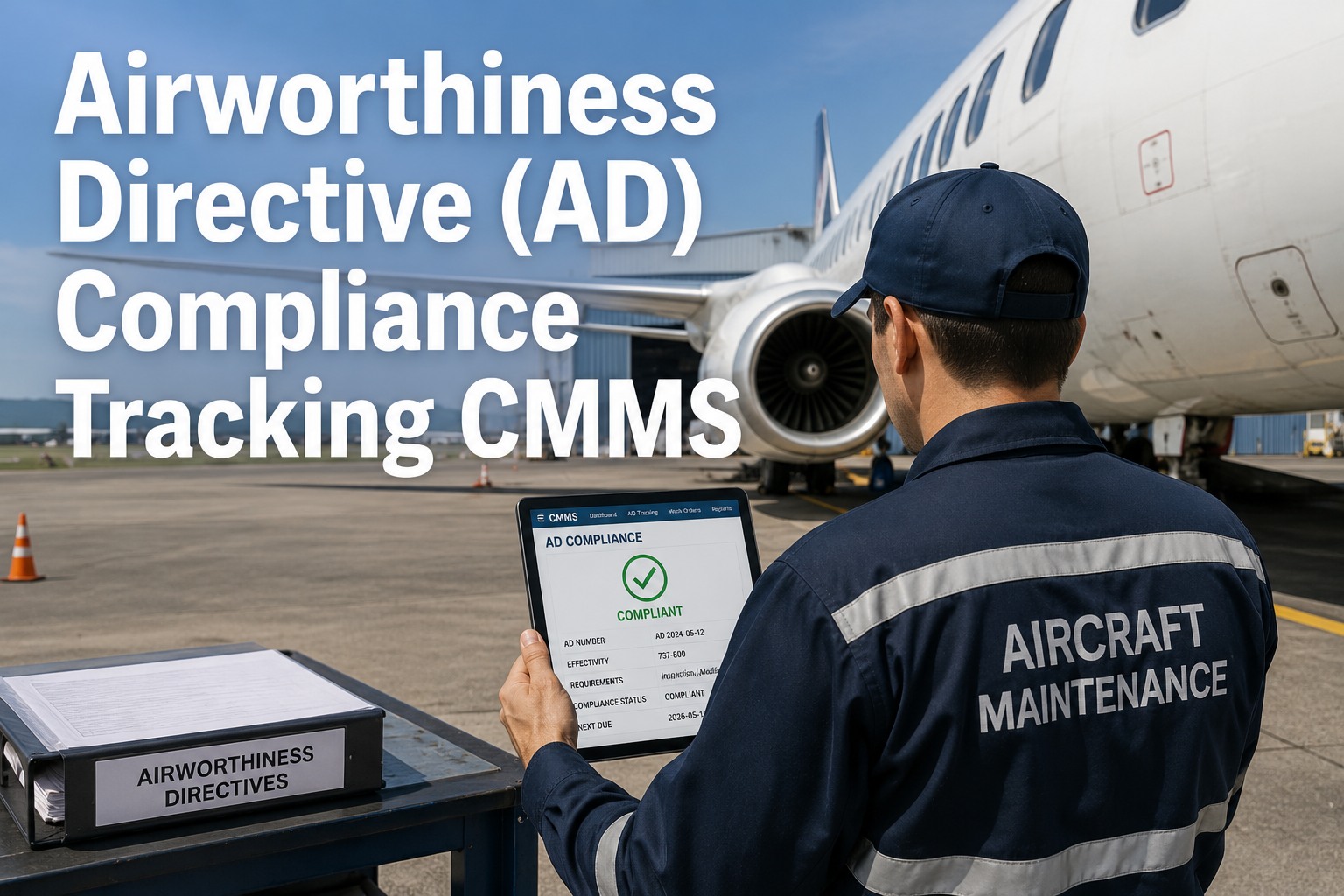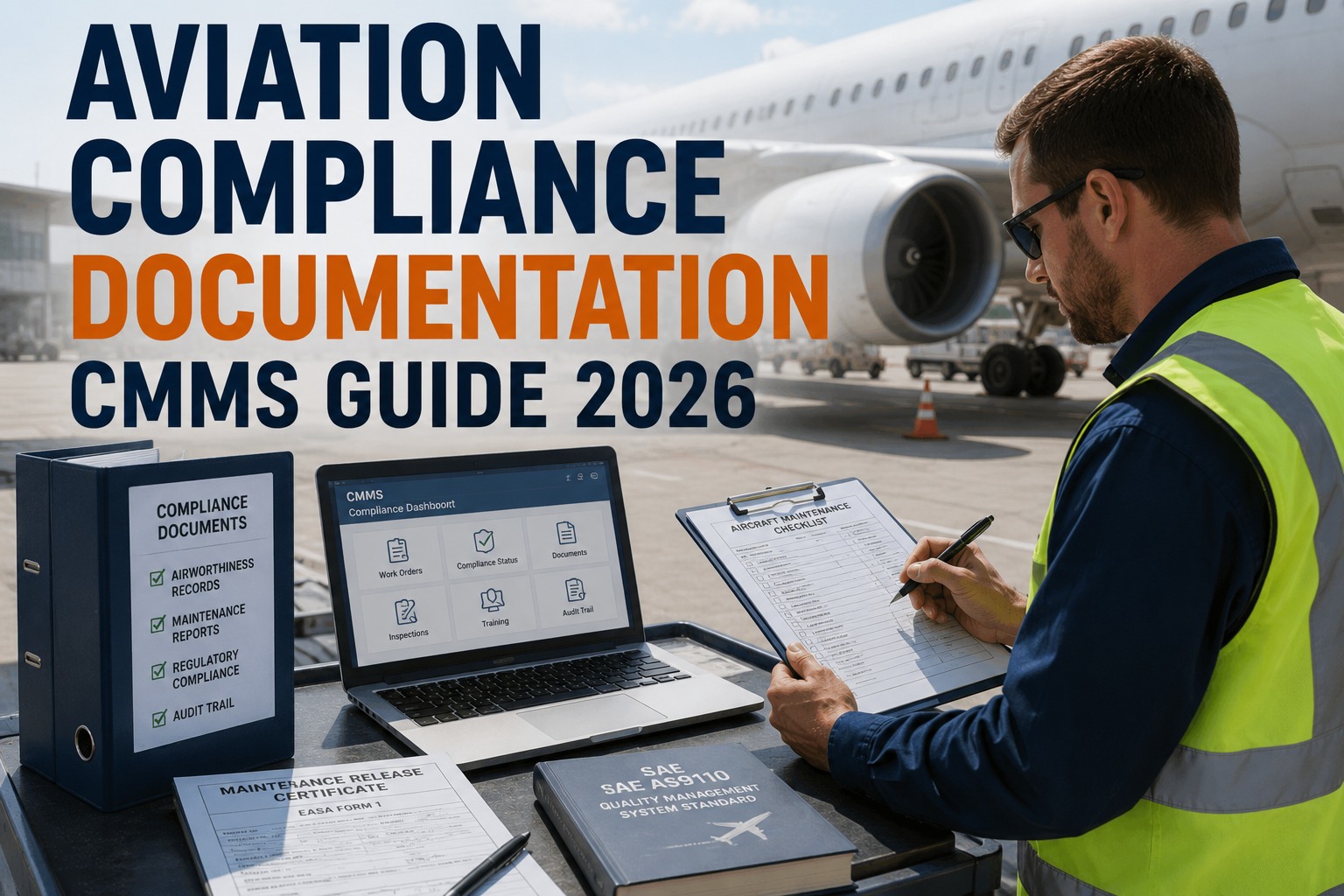
ETOPS maintenance CMMS discipline is what separates airlines that confidently dispatch twin-engine aircraft on 180-minute diversion routes from those that ground flights over a single lapsed task. Extended-range twin-engine operations demand protection of ETOPS-critical systems, staggered maintenance scheduling, and real-time dispatch reliability monitoring — all governed by a configuration-controlled maintenance program that no spreadsheet can safely manage. This guide walks through ETOPS significant maintenance items, configuration control, and CMMS-based ETOPS-specific task tracking so your reliability team can keep approval status clean without reactive firefighting. If you want to operationalize it immediately, you can Start Free Trial and configure ETOPS task templates in under an hour.
ETOPS Maintenance CMMS Guide
Can your current maintenance system prove ETOPS compliance in under 60 seconds?
A single missed ETOPS significant maintenance task can revoke dispatch authority on a 15-hour overwater route — stranding passengers, burning crew duty time, and triggering an audit. OxMaint gives reliability teams configuration-controlled ETOPS task tracking, staggered scheduling, and live dispatch reliability monitoring so every diversion-time-critical system is provably airworthy before release.
ETOPS Compliance Fundamentals
What makes ETOPS maintenance different from standard line maintenance?
FAA Advisory Circular 120-42B and EASA SPAs require operators to identify ETOPS Significant Systems — typically 15 to 25 systems per aircraft type — whose failure could compromise continued safe flight on a 120-, 138-, 180-, or 240-minute diversion. These systems demand a higher maintenance standard than routine line checks.
ETOPS Significant Maintenance Items
Engine thrust reversers, APU start reliability, fire detection loops, and backup electrical generators are tagged as ETOPS-critical. Each requires dedicated task cards, dual-inspection sign-offs, and part-number traceability that standard MEL items do not.
Staggered Maintenance Rules
Identical ETOPS-critical tasks on left and right channels (or dual-redundant systems) cannot be performed during the same maintenance visit. Staggering prevents a common-cause error from grounding both engines simultaneously.
Dispatch Reliability Monitoring
Operators must track IFSD (In-Flight Shutdown) rates, APU in-flight start success, and system-specific dispatch reliability. Exceeding thresholds — typically 0.02 per 1,000 engine-hours for twin-engine IFSD — can suspend ETOPS authority.
Task Tracking Checklist
ETOPS significant maintenance task tracking checklist
Use this checklist to evaluate whether your CMMS adequately supports ETOPS compliance. Every item below maps to a specific regulatory expectation under AC 120-42B and EASA Part-CAMO — missing any one creates an audit finding.
- ETOPS-critical part numbers locked in CMMS asset register with revision history
- Service bulletin applicability flagged per tail number before task release
- Dual-channel stagger rule validated against scheduled visit window
- ETOPS task card auto-identifies as significant — blocks single-mechanic sign-off
- Independent inspection recorded with mechanic license number and timestamp
- Removed parts tagged with ETOPS traceability — serial, batch, and TSN/CSN
- Engine ground run verification logged before ETOPS dispatch release
- Oil consumption trend reviewed against last 3 sectors for both engines
- ETOPS currency clock auto-reset — next-visit countdown visible to MCC
- IFSD and APU start data auto-aggregated into rolling 12-month reliability report
- Audit trail exportable in one click — task card, sign-off, parts, and oil logs
- Stagger violations flagged before approval — not discovered post-incident
Staggered Maintenance Timeline
How to schedule staggered ETOPS maintenance without grounding aircraft
A mid-size twin-aisle operator running 12 ETOPS routes typically schedules 6 to 8 ETOPS-critical task clusters per aircraft per year. The stagger rule means left-engine, right-engine, and dual-redundant system tasks must fall in separate maintenance windows — typically 48 to 72 hours apart — to satisfy common-cause isolation requirements.
Day 1–3
L-engine borescope, oil filter, ignition exciter check
Left-channel ETOPS significant items completed. Right-channel systems locked out from scheduling. CMMS auto-blocks any right-engine task card attempted within the same visit window.
Day 30–33
R-engine borescope, oil filter, ignition exciter check
Minimum 28-day stagger from Visit A satisfies AC 120-42B common-cause isolation. OxMaint validates the interval automatically and warns planners if a schedule slip compresses the gap below the regulatory floor.
Day 60–64
APU, fire detection, backup generator, hydraulic pumps
Systems shared across both channels are scheduled in a third window. CMMS cross-references the ETOPS master configuration list to confirm no dual-redundant component overlaps an engine-channel visit.
Day 90
Rolling IFSD, APU start, and oil consumption trend review
OxMaint aggregates 90-day dispatch data, compares against ETOPS thresholds, and flags any system trending toward the 0.02 IFSD ceiling so corrective action begins before authority is at risk.
How OxMaint Helps
How OxMaint solves ETOPS maintenance and configuration control
A 35-aircraft twin-aisle fleet operating ETOPS 180 routes typically carries 420 to 525 ETOPS significant maintenance items per month. Managing that volume in spreadsheets or a generic CMMS is where stagger violations and lapsed currency clocks hide. OxMaint is purpose-built for this.
ETOPS Configuration Lock
Asset register enforces part-number and service-bulletin control per tail number. Any configuration change to an ETOPS-critical system triggers an approval workflow before the task can be released.
Automated Stagger Enforcement
Scheduling engine reads the ETOPS channel tag on every task and blocks dual-channel maintenance in the same visit window. Planners see stagger-compliant slots highlighted and violations flagged before approval.
Dispatch Reliability Dashboard
Live IFSD rate, APU in-flight start success, oil consumption trend, and system-specific dispatch reliability — measured against your approved ETOPS thresholds with 12-month rolling visuals.
One-Click Audit Export
Every ETOPS task — card, dual sign-off, parts traceability, oil logs, ground-run verification — is compiled into a regulator-ready package in under 60 seconds. No manual assembly, no missing signatures.
Real-World Scenario
The cost of a single lapsed ETOPS task — and what preventing it saves
Consider a 22-aircraft wide-body fleet operating transpacific ETOPS 180 routes. Each aircraft carries roughly 18 ETOPS significant systems with an average of 12 recurring task items — about 4,750 ETOPS-tagged work orders per year across the fleet.
| Scenario | What Happened | Cost Impact |
|---|---|---|
| Without OxMaint | Right-engine oil filter change scheduled in same visit window as left-engine ignition check. Stagger violation caught during routine CAMO audit. Aircraft restricted to 120-minute ETOPS for 11 days while corrective review completed. | $340K rerouted fuel + 4 cancelled sectors + audit remediation |
| With OxMaint | Stagger rule auto-validated at scheduling. Planner sees right-engine task flagged red, reschedules to a compliant window 28 days later. No audit exposure, no dispatch restriction. | $0 — violation prevented before work order released |
For a fleet this size, a single prevented stagger violation pays for the OxMaint platform for the entire year. Most ETOPS operators see 2 to 4 near-miss events annually that a CMMS with stagger enforcement would have caught.
See OxMaint enforce ETOPS compliance on your fleet
Book a 30-minute demo and we will load your ETOPS significant system list, configure stagger rules, and show you a live dispatch reliability dashboard — built for your aircraft types.
Frequently Asked Questions
ETOPS maintenance CMMS — what reliability teams ask most
What is an ETOPS significant maintenance item?
An ETOPS significant maintenance item is any task on a system whose failure could affect continued safe flight during a diversion — typically engine, APU, fire suppression, electrical, and hydraulic systems. These tasks require dual-inspection sign-off, part traceability, and staggered scheduling from their counterpart channel. OxMaint auto-tags these items in your CMMS so they cannot be processed through standard line-maintenance workflows.
How does a CMMS enforce ETOPS staggered maintenance rules?
The CMMS reads an ETOPS channel tag (left, right, or dual-redundant) on every scheduled task and blocks two same-channel tasks from falling in the same maintenance visit window — typically a 48- to 72-hour block. OxMaint validates the stagger interval at the point of scheduling and flags any planner override for CAMO review. You can see this in action when you Book a Demo.
What ETOPS dispatch reliability thresholds must operators monitor?
Under AC 120-42B, twin-engine operators must monitor rolling 12-month In-Flight Shutdown rates — the threshold for 180-minute ETOPS is 0.02 IFSDs per 1,000 engine-hours. APU in-flight start reliability, oil consumption trends, and system-specific dispatch rates are also tracked. Exceeding any threshold triggers a corrective action review and can suspend ETOPS authority until rates return to compliance.
Can OxMaint import our existing ETOPS maintenance program?
Yes. OxMaint ingests MPD-derived task cards, ETOPS significant system lists, and current aircraft configurations from CSV, Excel, or your existing MRO system. Most operators are configured and running with live ETOPS task tracking within 2 to 4 weeks, including stagger rules and dispatch reliability dashboards. You can Start Free Trial to test the import with a sample tail number.
How long does ETOPS maintenance compliance data need to be retained?
Regulators expect ETOPS task records, dual sign-offs, parts traceability, oil consumption logs, and dispatch reliability data to be retained for the life of the aircraft plus the typical audit look-back window — generally 3 to 5 years for routine records and longer for significant structural or engine events. OxMaint stores all ETOPS records in a tamper-evident audit trail with indefinite retention and one-click export for regulatory inspection.
Stop managing ETOPS compliance in spreadsheets
Every day without configuration-controlled ETOPS task tracking is a day your fleet is one missed stagger rule away from a dispatch restriction. See how OxMaint makes ETOPS compliance automatic, auditable, and audit-ready — every single sector.
Free 14-day trial · No credit card