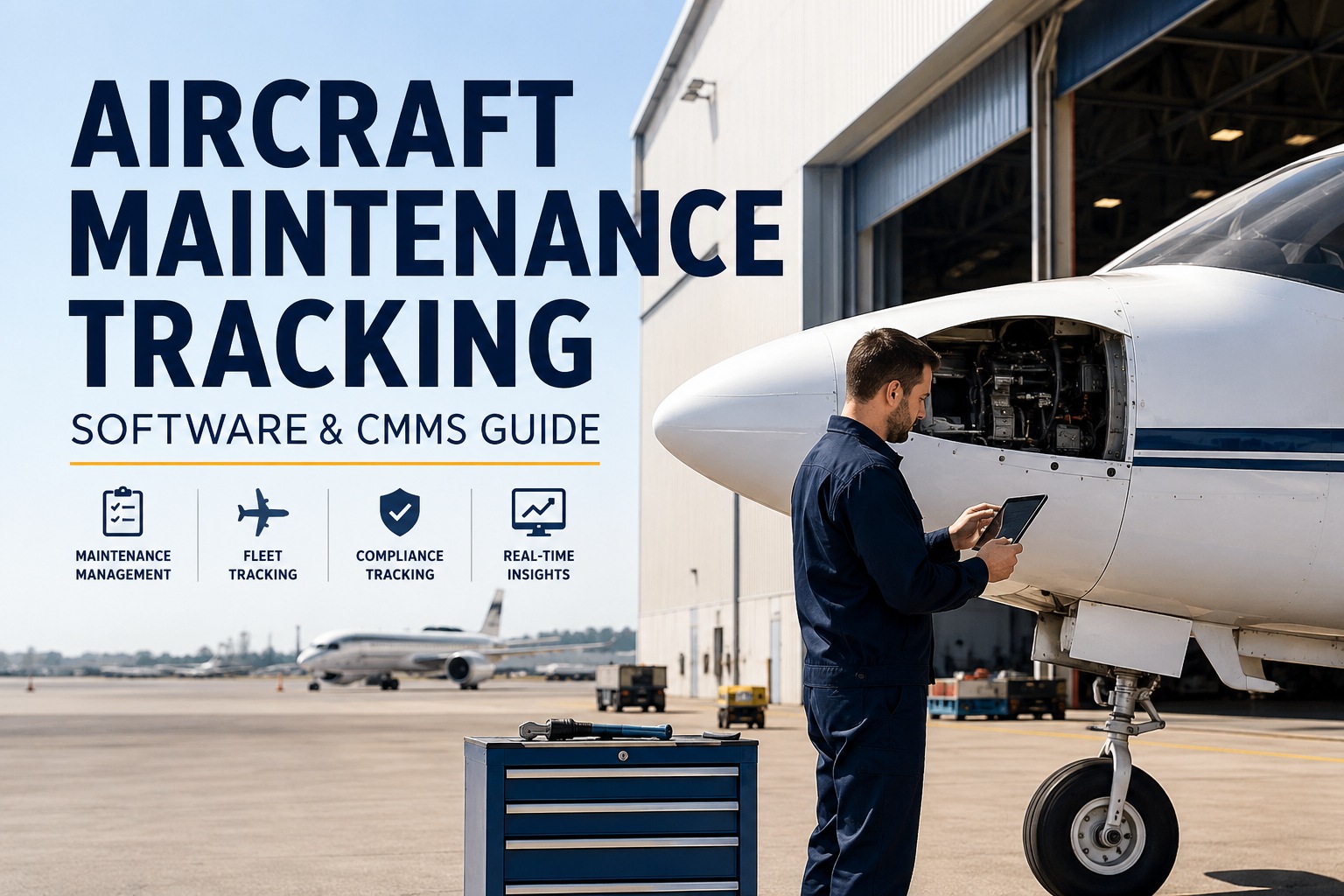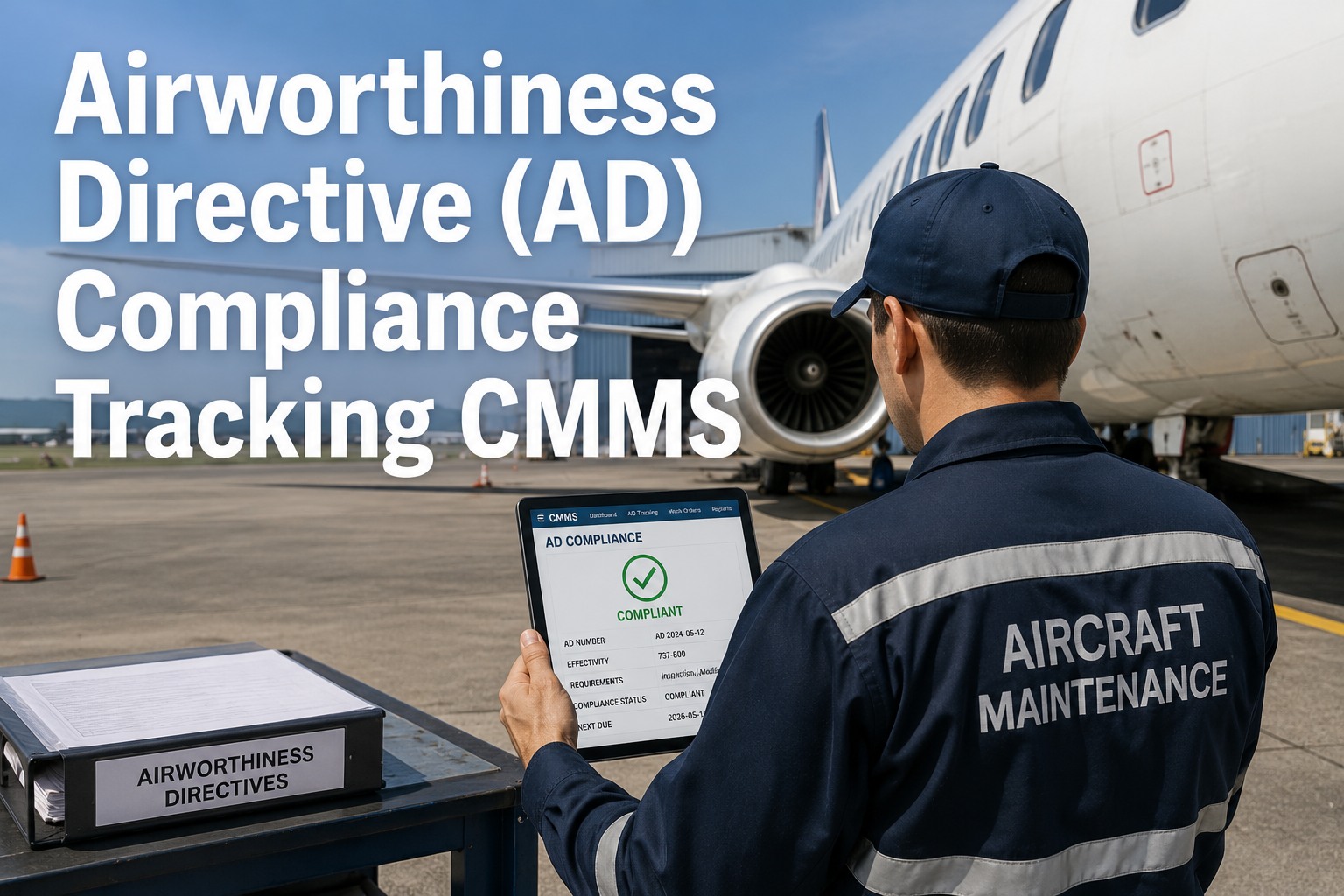
Airworthiness directive tracking is the non-negotiable backbone of any Part 145 or Part-M certified operation — miss a single AD deadline and you risk grounding an aircraft, facing regulatory enforcement, and jeopardizing your certificate. This guide explains how an airworthiness directive compliance CMMS replaces manual spreadsheet tracking with automated AD applicability logic, serial-number effectivity matching, and overrun alerts. Modern maintenance teams use platforms like OxMaint to schedule recurring AD tasks, capture compliance evidence, and prepare for audits in minutes. Ready to eliminate AD compliance risk? Start Free Trial and see how automated tracking transforms your maintenance operation.
AD COMPLIANCE TRACKING GUIDE 2026
Can your team prove 100% AD compliance — right now, for every tail number — without digging through spreadsheets?
A single missed Airworthiness Directive deadline grounds aircraft and threatens your Part 145 or Part-M certificate. Manual AD tracking is a liability your operation cannot afford. OxMaint turns airworthiness directive compliance into an automated, audit-ready system.
THE COST OF MANUAL AD TRACKING
Why spreadsheets fail airworthiness directive compliance
Over 60% of MROs and airlines still track AD applicability in shared spreadsheets or paper logcards — a method that breaks down as fleet size grows and revision cycles accelerate.
A regional operator managing 22 turboprops spent $48,000 annually on a dedicated compliance analyst who manually cross-referenced FAA AD bi-weekly bulletins against a master spreadsheet. After an AD 2023-NX-12 overrun grounded an aircraft for 9 days costing $180,000 in lost revenue, the airline implemented OxMaint CMMS. Automated AD applicability tracking now flags due directives 30 days out, reducing manual compliance labor by 85% and achieving zero overruns in 18 months.
AD TRACKING WORKFLOW
How to build a CMMS-driven AD compliance program
Transitioning from reactive to predictive AD compliance requires a structured five-phase workflow that maps each directive from receipt to evidence-closed status.
Capture and parse AD bi-weekly bulletins
FAA, EASA and TC authorities publish hundreds of ADs yearly. OxMaint ingests directives via API or manual entry, auto-tagging each with effective date, threshold hours, cycles, and applicability criteria.
Match AD effectivity to tail number and serial number
CMMS AD applicability logic cross-references each directive against your asset registry — matching make, model, serial number ranges, and installed component effectivity. Non-applicable ADs are documented and dismissed with a click.
Calculate compliance due dates and recurring intervals
For each applicable AD, the system computes the compliance deadline from the effective date, accumulated flight hours, cycles, or calendar time — then schedules the work order and sets AD recurring task triggers for repetitive inspections.
Execute work orders and capture compliance evidence
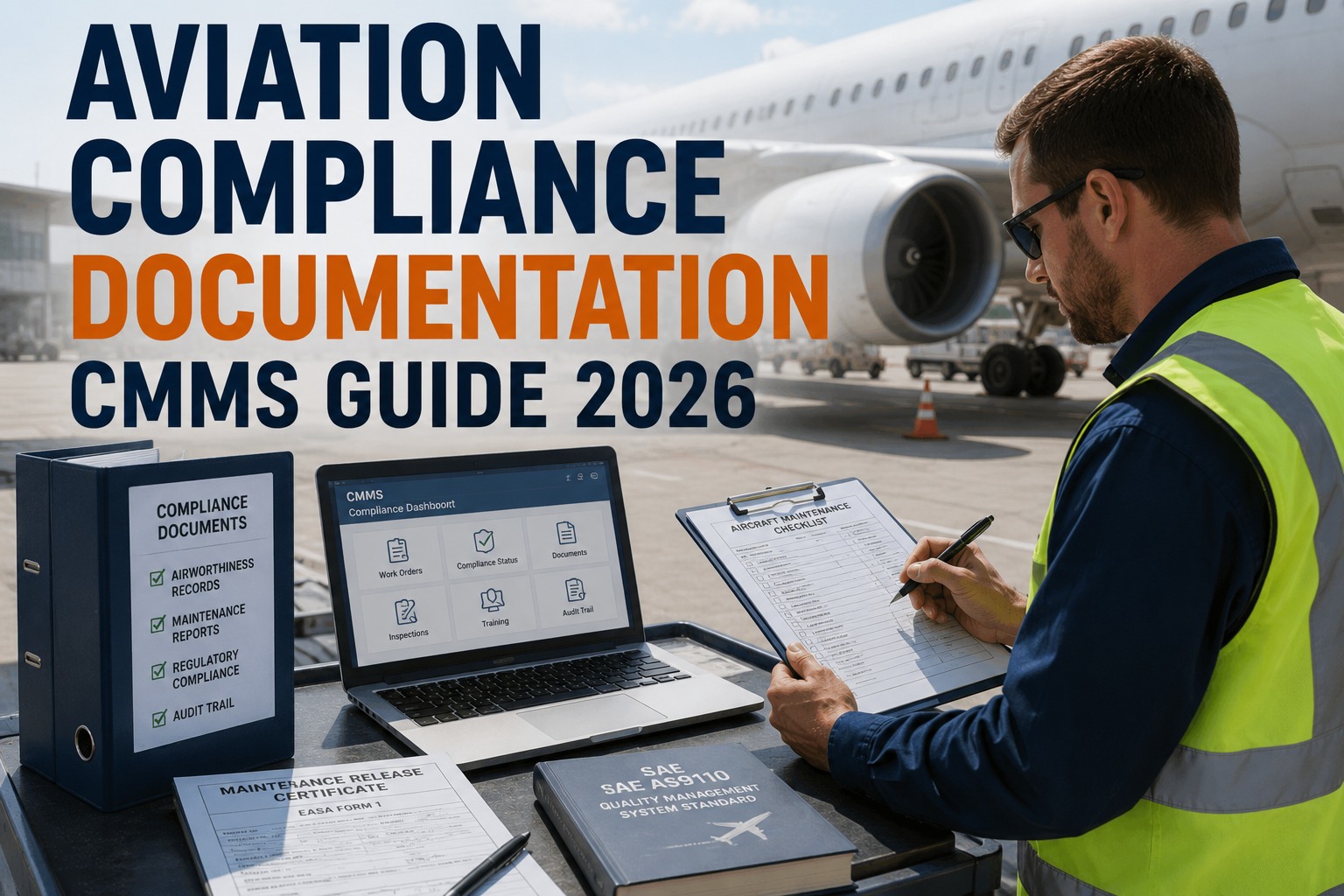
Technicians complete AD-linked work orders on mobile devices, uploading photos, sign-offs, and 8130-3 or EASA Form 1 certificates directly into the CMMS. Every action is timestamped and tied to the specific tail number.
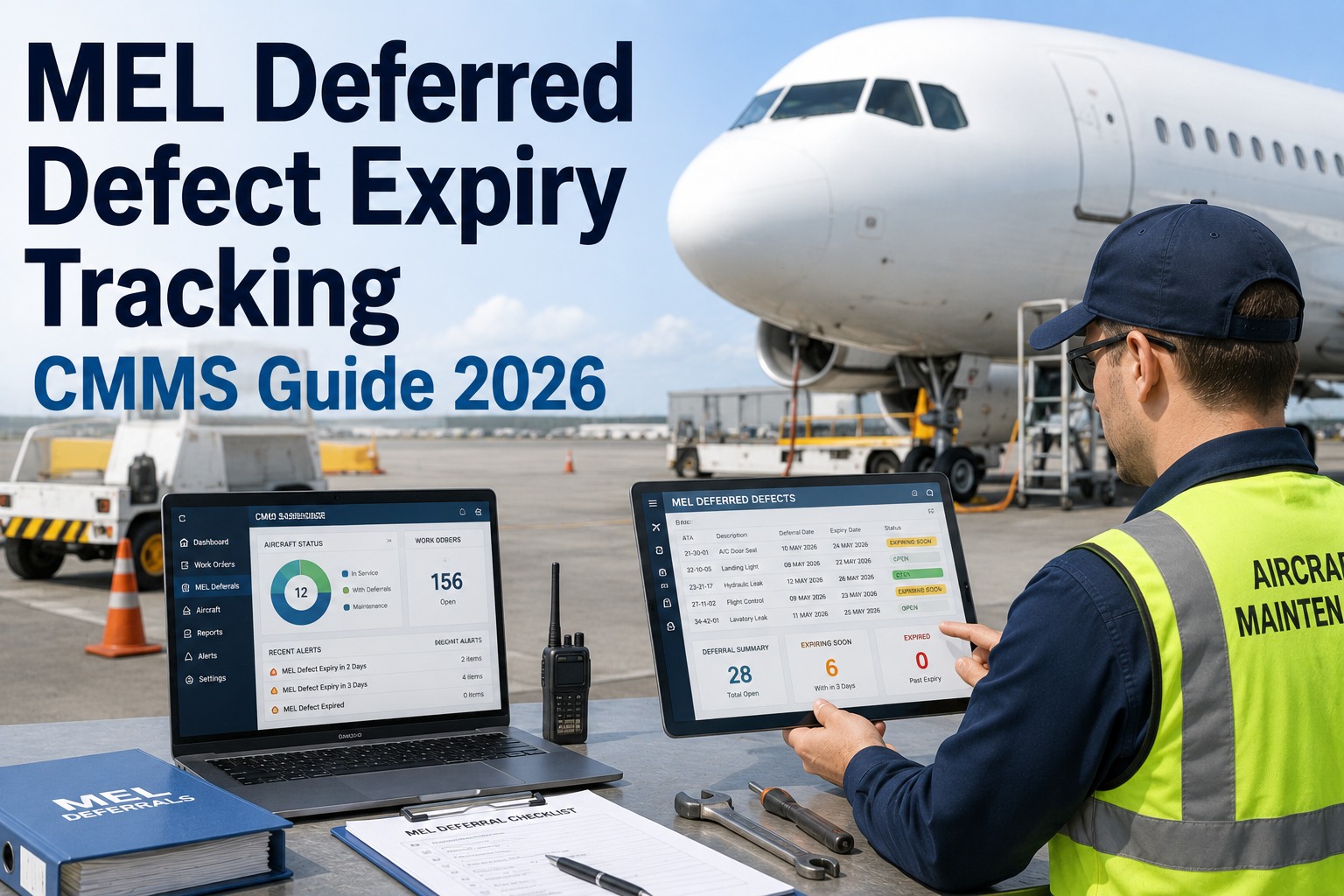
Monitor status and prevent CMMS AD overrun
Real-time dashboards display green-amber-red compliance status per aircraft. Automated alerts escalate at 30, 14, and 7 days before due dates — ensuring no directive reaches its compliance deadline unaddressed.
CMMS AD COMPLIANCE CAPABILITIES
Essential features for aircraft AD tracking software
Not every CMMS supports aviation-grade compliance. These four capability tiers separate audit-ready platforms from generic maintenance tools.
AD applicability by serial number
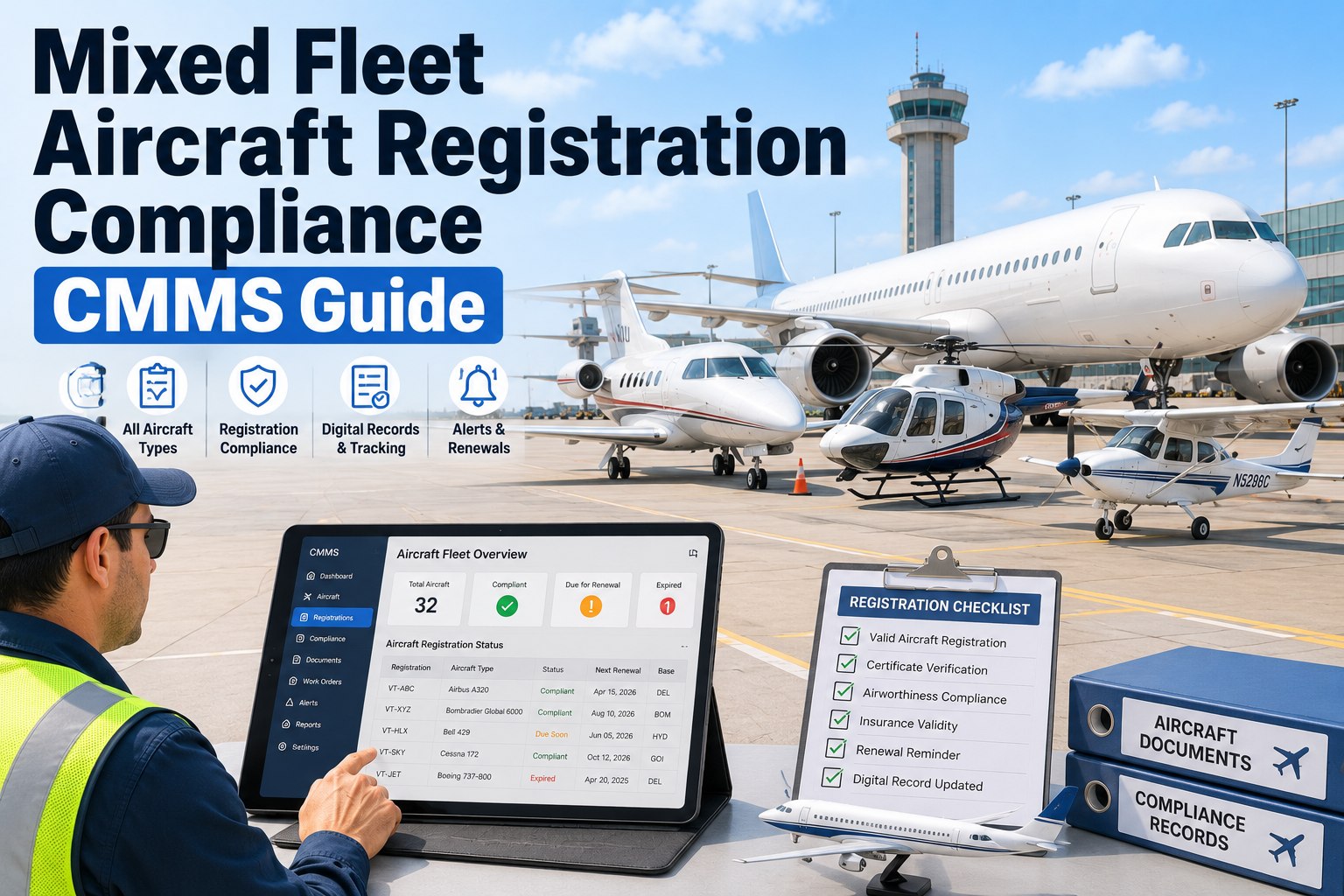
OxMaint maintains a full asset registry with manufacturer, model, serial number, and installed component effectivity ranges. When a new AD drops, the system instantly identifies which aircraft are affected — no manual cross-referencing.
Effective-date and threshold calculations
Airworthiness directives specify compliance thresholds in calendar days, flight hours, or cycles. OxMaint automatically calculates the earliest applicable due date from the AD effective date and current aircraft utilization data.
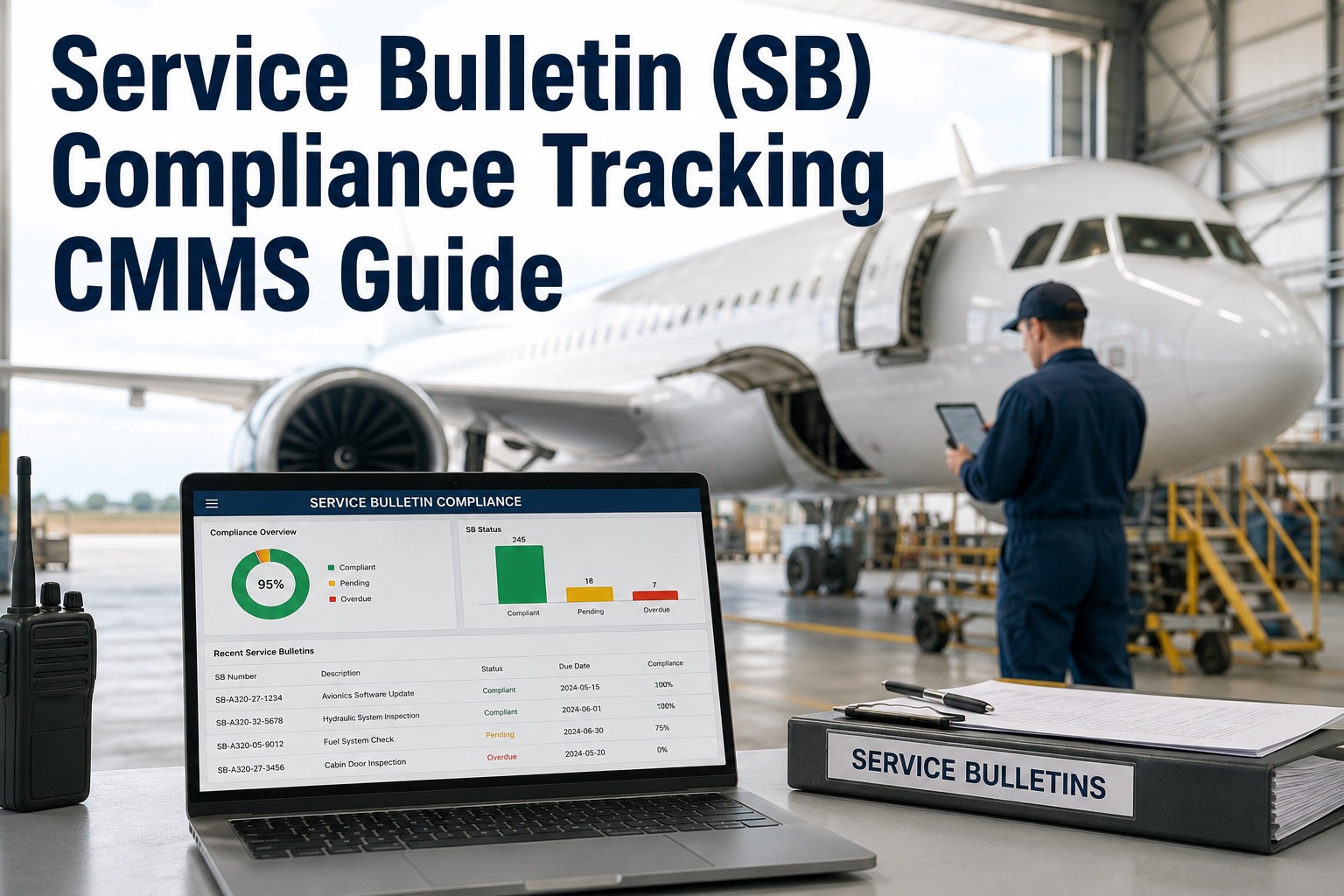
Compliance evidence and audit trail
Every AD work order generates a digital compliance packet — technician sign-off, inspection photos, parts used, dual-release tags, and completion timestamp. Export a tail-number's full AD history for any inspector in under five minutes.
AD recurring task automation
Many ADs require repetitive inspections at defined intervals. OxMaint auto-generates the next-due work order upon compliance closure, carrying forward the compliance evidence chain and recalculating the next threshold from actual utilization.
COMPLIANCE STATUS MONITORING
AD tracking comparison: spreadsheet vs CMMS
The gap between manual tracking and CMMS-driven airworthiness directive compliance is measurable in cost, risk, and labor hours.
| Capability | Spreadsheet / Manual | OxMaint CMMS |
|---|---|---|
| AD applicability matching | Manual cross-reference, 2–4 hrs per bulletin | Automated serial-number matching, seconds |
| Compliance due-date calculation | Error-prone manual formulas | Auto-calculated from effective date and utilization |
| Overrun alerts | None — discovered during audit or AOG | Escalating alerts at 30, 14, 7 days |
| Evidence capture | Paper logcards, physical filing | Digital sign-offs, photos, form attachments |
| Audit response time | 3–5 days of document retrieval | Under 1 hour, full tail-number history export |
| Recurring AD task tracking | Manual calendar entries, frequently missed | Auto-generated next-due work orders |
CMMS AD OVERRUN PREVENTION
The formula for zero-overrun AD compliance
CMMS AD overrun is the single most preventable risk in aviation maintenance. The calculation below shows how automated monitoring compresses the compliance window to near-zero overrun probability.
OXMAINT IN ACTION
How OxMaint eliminates airworthiness directive compliance risk
OxMaint is an AI-powered CMMS and EAM platform built to handle the exacting demands of aviation maintenance — from AD tracking to predictive component failure analysis.
AI-driven AD applicability engine
OxMaint's AI parses incoming AD bulletins and automatically determines applicability against your entire fleet registry — matching by make, model, serial-number range, and installed component effectivity in real time.
Automated compliance scheduling
Work orders are auto-generated with correct due dates, required parts, labor estimates, and reference documents. OxMaint recalculates thresholds as flight hours and cycles update — keeping compliance deadlines dynamic and accurate.
Real-time compliance dashboard
A live dashboard shows every aircraft's AD compliance status in green-amber-red. Maintenance managers see at a glance which tails have upcoming deadlines, which are overdue, and which require immediate action — with one-click drill-down to evidence packets.
Predictive maintenance integration
OxMaint's AI analyzes component failure patterns alongside AD compliance data to predict when affected parts will need replacement — letting you bundle AD compliance work with predictive maintenance events to minimize aircraft downtime.
SEE IT ON YOUR FLEET
Book a 30-minute demo and watch OxMaint map AD compliance across your tail numbers
Bring your most complex AD scenario — we will show you how automated applicability, scheduling, and evidence capture work on your actual aircraft data.
FREQUENTLY ASKED QUESTIONS
Airworthiness directive tracking: what teams ask most
What is airworthiness directive tracking in a CMMS?
Airworthiness directive tracking in a CMMS is the automated process of identifying which ADs apply to each aircraft in your fleet, calculating compliance due dates from effective dates and utilization thresholds, scheduling the required work orders, and capturing digital evidence of compliance. Unlike spreadsheet tracking, a CMMS provides real-time status visibility, automatic alerts before deadlines, and an audit-ready evidence trail per tail number.
How does CMMS AD applicability matching work by serial number?
Each aircraft and installed component in the CMMS registry carries its manufacturer, model, serial number, and effectivity range. When a new AD is published, the system cross-references the directive's applicability criteria — such as serial-number ranges or specific part numbers — against the registry and instantly flags affected tail numbers. You can see a live demonstration of this by booking a demo with our team.
How do you prevent CMMS AD overrun?
CMMS AD overrun is prevented through layered automated alerts that escalate at 30, 14, and 7 days before each compliance deadline, real-time green-amber-red dashboard status per aircraft, and auto-generated work orders that ensure no directive reaches its due date without an assigned task. OxMaint also carries forward recurring AD intervals automatically so repetitive inspections never lapse between cycles.
Can OxMaint handle both FAA and EASA airworthiness directives?
Yes. OxMaint supports multi-authority AD tracking including FAA, EASA, Transport Canada, and other National Airworthiness Authorities. Each directive is tagged with its issuing authority, and the system manages differing compliance thresholds, effective dates, and evidence requirements — making it suitable for dual-release Part 145 and Part-M operations.
How long does it take to migrate from spreadsheet AD tracking to OxMaint?
Most teams are fully operational within 2 to 4 weeks. OxMaint onboarding includes importing your aircraft registry, open and historical AD compliance records, and current utilization data. You can Start Free Trial today to begin the migration or schedule a guided walkthrough to assess your data readiness.
START YOUR AD COMPLIANCE TRANSFORMATION
Never miss an airworthiness directive deadline again
Join the maintenance teams who have eliminated AD overruns, cut compliance labor by 85%, and turned audit preparation from a multi-day scramble into a one-hour export.
Free 14-day trial · No credit card