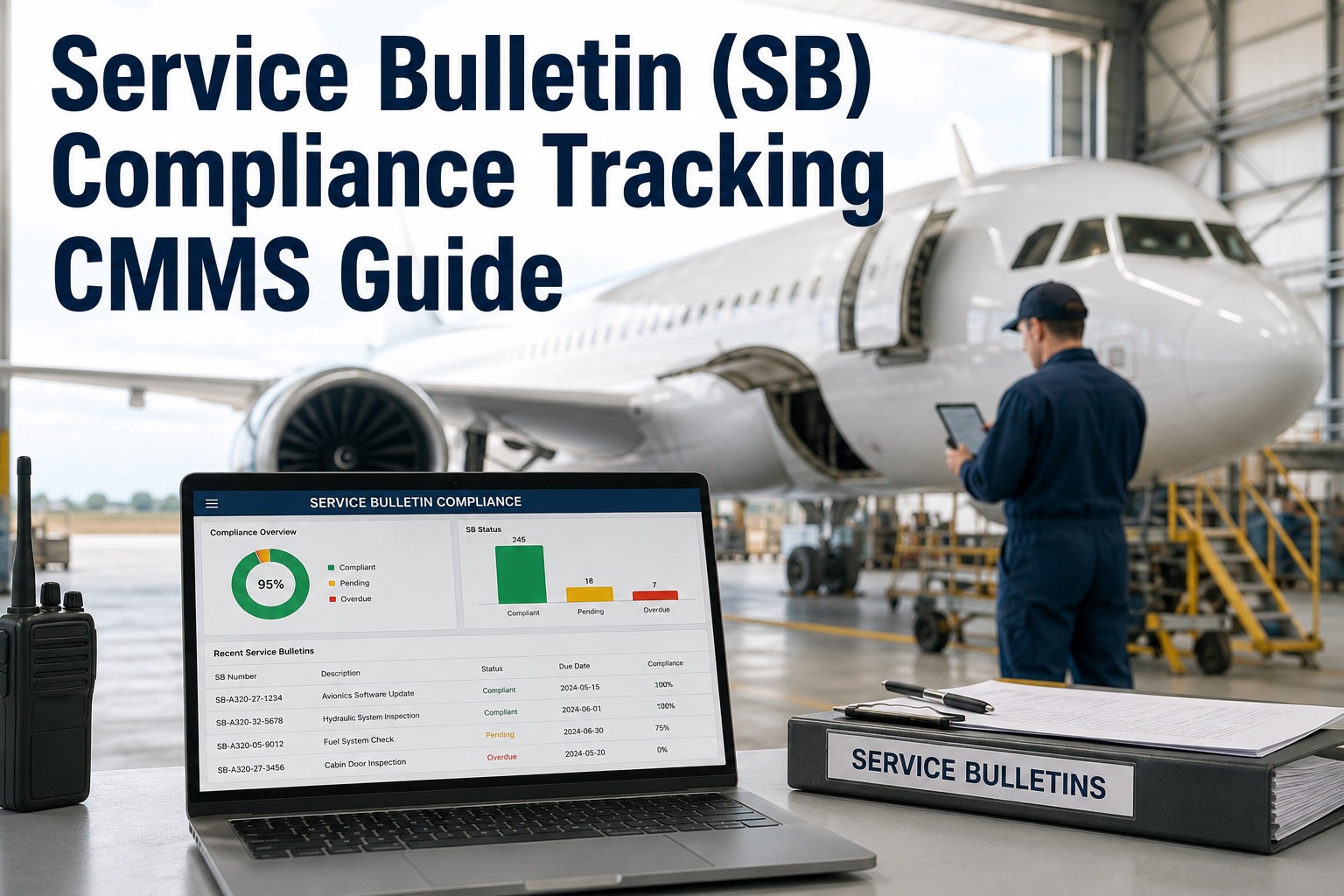
Service bulletin tracking is the backbone of aviation continuing airworthiness — but most teams still manage SB compliance in spreadsheets that obscure fleet-wide applicability and risk overdue mandatory actions. An AI-powered CMMS like OxMaint transforms service bulletin compliance tracking from a reactive paper chase into a structured, audit-ready program — linking SB applicability by tail, incorporation planning, and evidence capture directly to work orders. Ready to eliminate SB tracking blind spots? Start Free Trial and see how modern CMMS SB compliance actually works.
SB Compliance Tracking Guide 2026
Are overdue service bulletins quietly grounding your fleet?
Continuing airworthiness managers lose 15+ hours per week chasing SB applicability across dozens of tails. One missed mandatory bulletin can ground an aircraft for weeks — costing $50K+ per day in AOG lease and revenue loss. A CMMS service bulletin system eliminates the blind spots.
87%
of aviation maintenance audits find SB compliance gaps caused by spreadsheet tracking
SB Categorization Framework
Service bulletin categories and why tracking rigor matters
Not all service bulletins are created equal. A Tier-1 mandatory SB can ground an aircraft within 10 flight hours, while a Tier-3 optional informational bulletin may never require action. Misclassifying a single bulletin triggers unnecessary inspections or, worse, missed mandatory compliance that fails the next CMM audit.
10 flight hours
Typical compliance window
FAA AD-linked or manufacturer-mandated. Non-compliance grounds the aircraft immediately. Requires documented evidence of incorporation within the specified flight-hour or cycle limit.
90–180 days
Typical planning window
Manufacturer-recommended incorporation. Not immediately grounding, but deferred action degrades reliability. Should be scheduled into the next planned maintenance check.
Indefinite
No compliance deadline
Informational or product-improvement bulletins. Applicability must still be evaluated and documented, but no incorporation is required. Often overlooked — yet still tracked for audit completeness.
SB Applicability Evaluation
How to evaluate SB applicability by tail — without drowning in paper
A single service bulletin from a major OEM can list 40+ effectivity codes across multiple aircraft variants. For a 60-aircraft fleet, one SB may require 60 individual applicability evaluations. Done in spreadsheets, that is 60 rows of manual cross-referencing against tail numbers, serial numbers, and configuration records — with zero audit trail.
Receive and register the service bulletin
Log the SB into the CMMS service bulletin module with its issue date, revision number, OEM reference, and effectivity list. OxMaint auto-links the bulletin to every affected tail in the asset register based on serial and model data.
Evaluate applicability per aircraft
Cross-reference each tail's current configuration — engine variant, avionics suite, installed modifications — against the SB effectivity codes. OxMaint flags applicable tails automatically and records the engineering disposition for non-applicable aircraft.
Assess technical publication impact
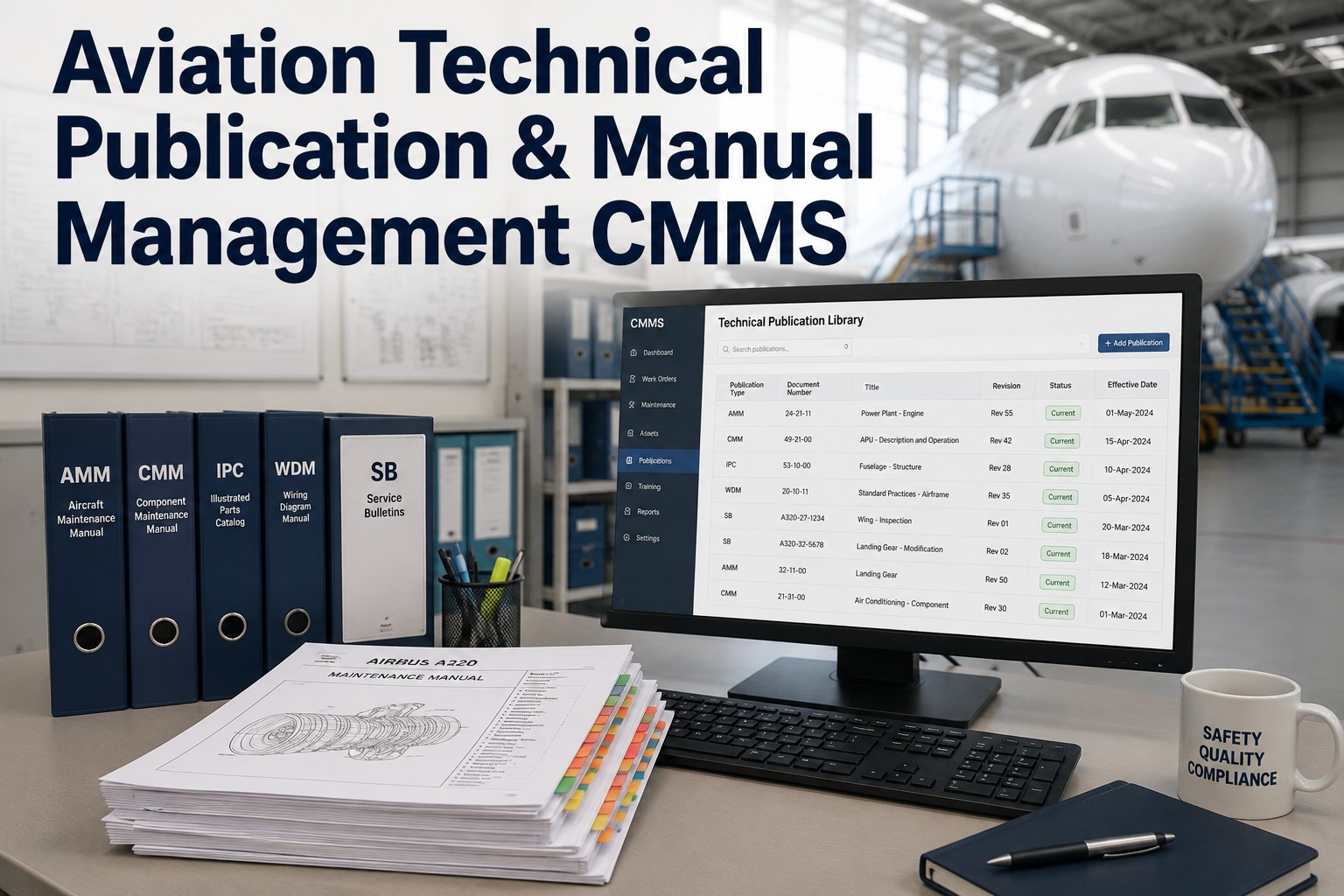
Determine whether the SB affects the Aircraft Maintenance Manual, Illustrated Parts Catalog, or Component Maintenance Manual. OxMaint links the impacted technical publications to the SB work order so nothing falls through during incorporation.
Plan incorporation and generate work orders
Schedule the SB into the next appropriate maintenance check — A-check, C-check, or line maintenance — based on compliance deadline and labor availability. OxMaint generates a structured work order with parts, tools, and required man-hours pre-populated.
Capture evidence and close compliance
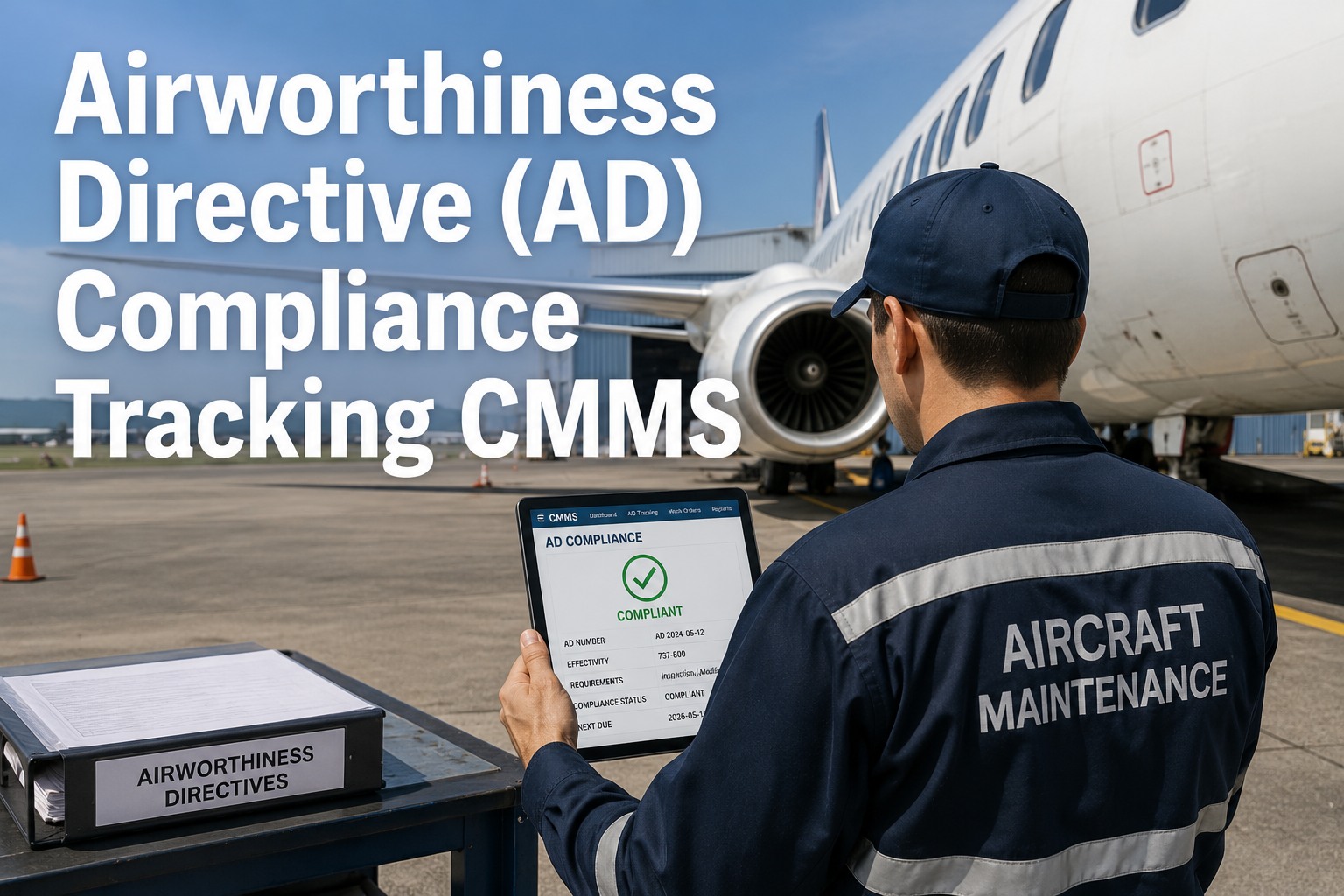
Technicians attach the FAA Form 337, dual-inspection sign-offs, and photo evidence directly to the SB work order. OxMaint locks the compliance record with a timestamped, audit-ready trail — no paper, no filing cabinets.
SB Impact Assessment
The real cost of poor SB compliance tracking
A regional airline operating 40 turboprops lost track of a recommended SB affecting landing-gear torque links during a spreadsheet-to-spreadsheet transition. When a gear collapsed on touchdown 14 months later, the NTSB investigation traced the root cause to the unincorporated bulletin. Total cost: $2.8M in hull damage, 11 days of AOG, and a CAD review that grounded three additional aircraft for emergency inspections.
$2.8M
Average hull + AOG cost of a single missed mandatory SB in regional aviation
15 hrs
Weekly hours continuing airworthiness teams lose to manual SB spreadsheet tracking
40%
Of SB compliance records fail CAA/FAA audit on first pass when managed without a CMMS
“
The bulletin existed in our tracker, but the effectivity evaluation was buried in a row three tabs deep. By the time we found it, the gear was already on the runway.
— Director of Continuing Airworthiness, Regional Carrier (post-incident review)
How OxMaint Helps
CMMS SB compliance built for aviation continuing airworthiness
OxMaint turns service bulletin tracking from a paper-driven scramble into a structured, automated program. Every SB — mandatory, recommended, or optional — flows through a single system that links applicability, work orders, evidence, and reporting in one audit-ready trail.
SB applicability by tail
OxMaint auto-matches each incoming service bulletin to affected aircraft in your asset register using serial number, model, and configuration data — eliminating manual effectivity cross-referencing and cutting evaluation time by 70%.
Outcome: 15 hours/week reclaimed for engineering staff
Work order generation from SBs
Each applicable SB generates a structured work order with required parts, tools, labor hours, and technical publication references pre-populated — ready to schedule into the next A-check or C-check window.
Outcome: SB planning cycle cut from 2 weeks to 2 days
Evidence capture and audit trail
Technicians attach Form 337, dual sign-offs, and photo evidence directly to the SB work order. OxMaint locks every compliance record with timestamps, revision history, and electronic signatures — 100% audit-ready.
Outcome: First-pass audit success rate from 60% to 95%+
Fleet-wide SB compliance dashboard
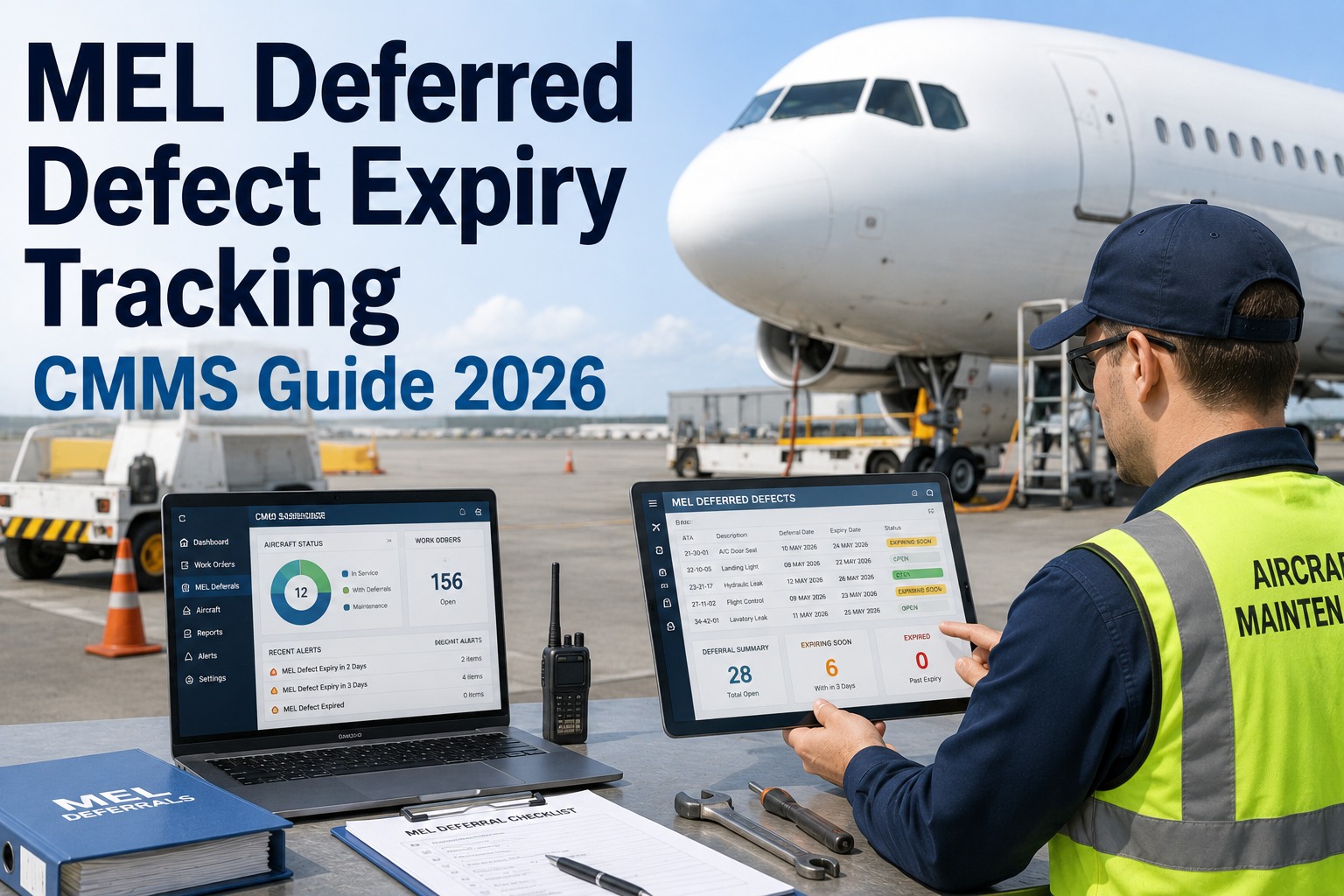
A live dashboard shows SB compliance status across every tail — overdue, due-soon, completed, and not-applicable — with drill-down to individual aircraft and bulletins. Alerts trigger before mandatory deadlines are breached.
Outcome: Zero overdue mandatory SBs across the fleet
SB Compliance Tracking Comparison
CMMS service bulletin tracking vs. spreadsheet management
Most continuing airworthiness teams know spreadsheets are fragile — but the cost of switching feels abstract until you compare the two side by side. Here is what changes when SB compliance moves from Excel to an AI-powered CMMS.
| Capability | Spreadsheet SB Tracking | OxMaint CMMS SB Tracking |
|---|---|---|
| SB applicability evaluation | Manual cross-reference of effectivity codes against tail list | Auto-matched to asset register by serial and model — 70% faster |
| Compliance deadline visibility | Conditional formatting that breaks when rows are sorted | Live dashboard with deadline countdown and overdue alerts |
| Work order generation | Separate maintenance planning system, re-keyed manually | Auto-generated work order with parts, labor, and TP references |
| Evidence and sign-off capture | Paper Form 337 filed in hangar cabinets | Digital attachments, e-signatures, timestamped audit trail |
| Audit readiness | 2–3 week preparation, 40% first-pass failure rate | Instant compliance reports, 95%+ first-pass success |
| Fleet-wide SB status | Cannot aggregate across multiple spreadsheet files | Single live view across all tails, bulletins, and statuses |
| Revision tracking | Manual version control, high risk of stale data | Automatic revision history with change comparison |
See SB Compliance in Action
Book a 30-minute demo and see OxMaint track SBs on your fleet
We will load your aircraft register, import open service bulletins, and show you how applicability evaluation, work order generation, and evidence capture work end-to-end — in one system.
SB Compliance FAQ
Service bulletin compliance tracking — frequently asked questions
What is service bulletin compliance tracking in aviation?
Service bulletin compliance tracking is the structured process of evaluating each OEM-issued SB for applicability to every aircraft in a fleet, planning incorporation into maintenance checks, executing the work, and capturing documented evidence of compliance. A CMMS service bulletin module automates this end-to-end, replacing spreadsheet tracking with a single audit-ready system.
Is a service bulletin mandatory in aviation?
Not always. Service bulletins are categorized as mandatory, recommended, or optional. Only mandatory SBs — typically those linked to an Airworthiness Directive — require incorporation within a specified flight-hour or cycle limit. However, even optional and recommended SBs must be evaluated for applicability and the disposition documented for audit purposes.
How does a CMMS improve SB applicability evaluation?
A CMMS like OxMaint auto-matches each service bulletin to affected aircraft using serial numbers, model data, and configuration records stored in the asset register. This eliminates the manual cross-referencing of effectivity codes against tail numbers, cutting evaluation time by up to 70% and ensuring no applicable aircraft is missed. You can see this in action — Book a Demo to watch a live SB import.
What evidence must be captured for SB compliance?
Compliance evidence typically includes the completed FAA Form 337 or equivalent, dual-inspection sign-offs, photo documentation of the incorporated modification, parts traceability, and the technician and inspector electronic signatures. A CMMS captures all of this digitally, attached directly to the SB work order with timestamps, creating a locked audit trail.
How long does it take to implement CMMS SB tracking?
With OxMaint, a typical aviation maintenance team can import its aircraft register, load open service bulletins, and begin tracking SB compliance within 2–5 days. The system is designed for teams migrating from spreadsheets — no multi-month implementation, no dedicated IT staff required.
Start Tracking SBs the Right Way
Eliminate overdue service bulletins and pass every audit — with OxMaint
Join aviation maintenance teams using OxMaint to track SB compliance, capture evidence, and keep their fleets airworthy — without drowning in paper.
Free 14-day trial · No credit card