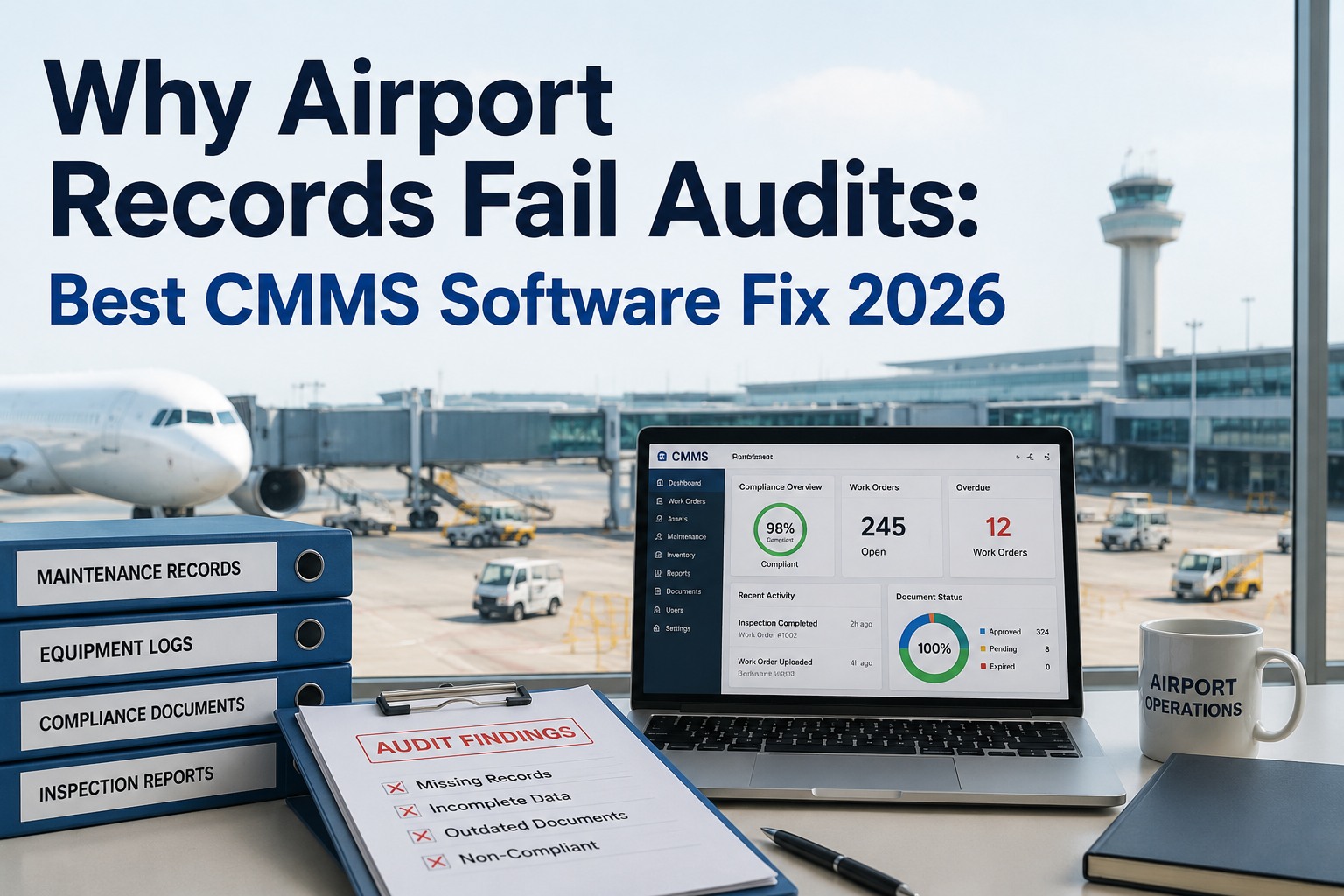
Most of the world's big airports are stuck. They run maintenance on CMMS platforms bought fifteen or twenty years ago — systems built before mobile, before IoT sensors, before AI could read a vibration trace and predict a bearing failure. Ripping those systems out is a multi-year, politically painful migration, so they don't. The Gulf hubs never had that problem. Dubai, Doha, Riyadh, Abu Dhabi and the new greenfield megaprojects built their maintenance operations in an era when AI-native tooling already existed — so they skipped the legacy generation entirely, the same way emerging markets skipped landlines and went straight to mobile. This 2026 guide unpacks what "AI-native" actually means for airport maintenance, why the leapfrog gave GCC hubs a structural advantage, and how OxMaint's maintenance management software lets any airport — greenfield or not — build on the modern layer instead of the old one.
Aviation · GCC Hubs · AI-Native CMMS · Benchmark Guide 2026
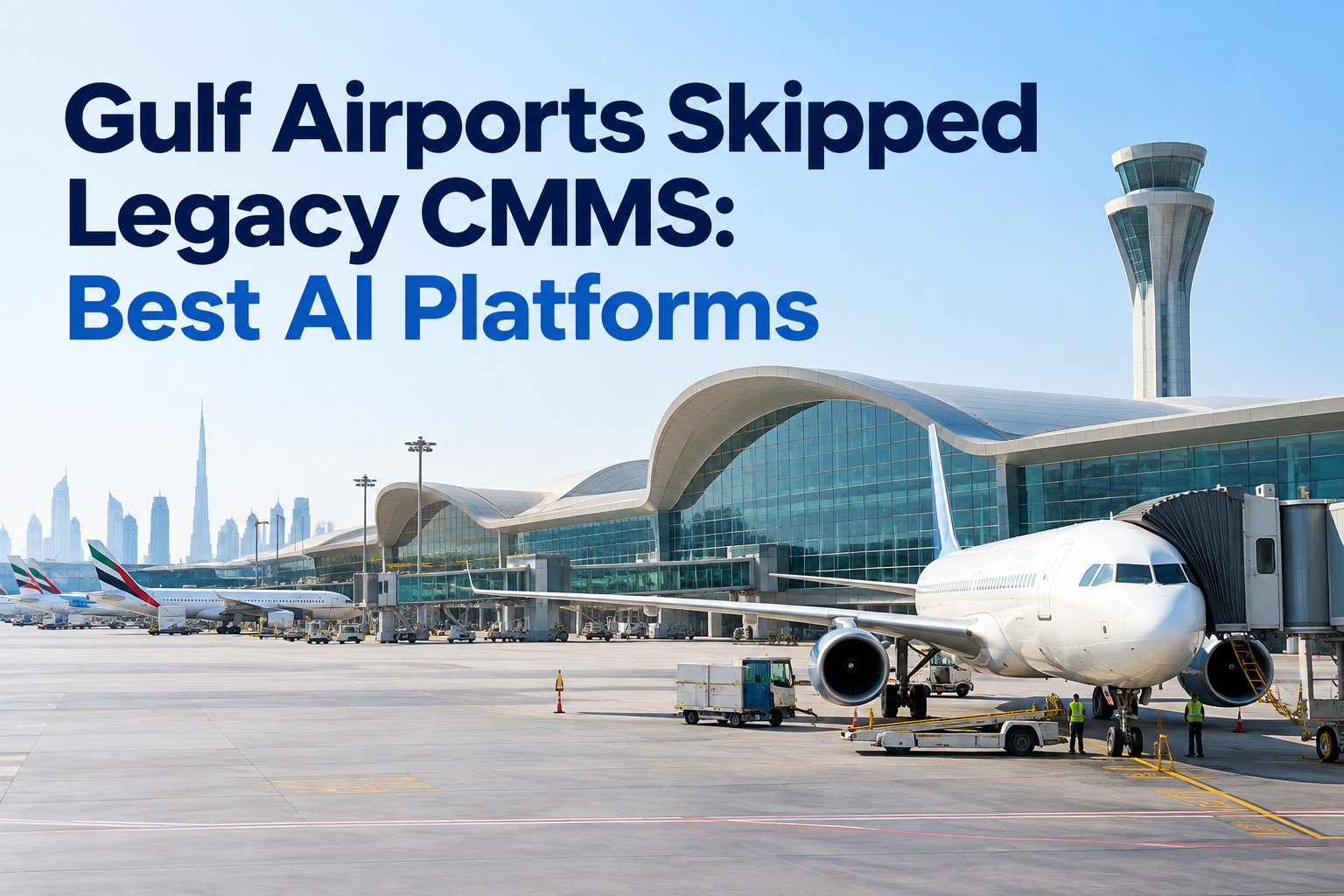
Gulf Airports Skipped Legacy CMMS — the Best AI-Native Platforms
DXB, DOH, RUH and AUH never inherited a twenty-year-old maintenance system to migrate away from. They built straight onto AI-native platforms — and that leapfrog is a template any airport can copy.
The legacy path
On-prem CMMS installed ~2005
↓
Bolt-on mobile module
↓
Painful IoT retrofit
↓
Multi-year AI migration project
LEAP
skipped a whole generation
The Gulf path
AI-native, cloud, mobile-first from day one
0 years
of legacy CMMS debt to migrate away from at greenfield GCC hubs
4 hubs
DXB · DOH · RUH · AUH — building on the modern maintenance layer
5 traits
that separate a truly AI-native platform from a retrofitted one
1 template
the leapfrog any airport can copy without a rip-and-replace
Why "AI-Native" Is Not the Same as "AI-Added"
Nearly every legacy vendor now claims AI. The distinction that matters is whether intelligence was designed into the foundation or bolted onto a twenty-year-old core. These five traits are what the Gulf hubs got by starting fresh — and what a retrofit struggles to deliver. Sign up free and OxMaint gives you all five without inheriting the old stack.
01
Cloud & mobile from the core
Technicians work on a phone at the asset, not on a desktop terminal in a back office. Mobile isn't a module — it's the primary interface.
02
Sensor data as a first-class input
IoT and condition data flow in natively and trigger work orders, instead of being force-fit through a fragile integration layer added later.
03
Prediction over reaction
The system is built to forecast failures from patterns in the data — not just record a breakdown after it has already grounded a jet bridge.
04
Open APIs, not walled data
Data moves freely to BIM, ERP, BMS and airport operational systems, because it was designed to connect — a legacy hallmark is data locked in.
05
Deploy in weeks, not years
Configuration replaces custom development. A new terminal or asset group goes live in weeks — the greenfield speed advantage.
The GCC Hub Benchmark
The Gulf's flagship airports share a pattern: massive scale, aggressive growth targets, and a maintenance philosophy that treats data as infrastructure. Here's the shorthand of what each is optimizing for — and the common thread underneath. Book a demo to benchmark your operation against it.
DXB
Dubai
One of the world's busiest international hubs — maintenance at a scale where reactive firefighting simply doesn't survive the passenger volume.
DOH
Doha
A hub built and expanded around modern engineering and smart-airport ambitions, with data-led facilities management from the outset.
RUH
Riyadh
A giant greenfield expansion program — the definition of building maintenance operations with no legacy system to unwind.
AUH
Abu Dhabi
A new terminal generation designed for sensor-rich, predictive facilities management as a baseline expectation, not an upgrade.
The common thread
None of them is migrating away from an old system. They chose the modern layer first — and that decision, not their budget, is the repeatable part.
You Don't Need a New Airport to Get the Leapfrog Advantage.
The Gulf hubs' edge isn't that they're rich — it's that they built maintenance on an AI-native platform instead of an aging core. That choice is available to any airport, any terminal, any asset group, today. You don't rip out what you have overnight; you start the modern layer on a cloud, mobile, sensor-ready system and grow into it. OxMaint is that layer — the greenfield stack, deployable without the greenfield.
Legacy CMMS vs. AI-Native (OxMaint) Layer
The gap between the two generations isn't a feature list — it's a different relationship between data and action. Here's what changes when the platform is native rather than retrofitted. Start free and build on the native side.
How to Copy the Leapfrog — Without a Greenfield
You don't have to be building a new terminal to skip the legacy generation. The move is to start the modern layer where it delivers fastest and let it spread. Four steps. Schedule a demo to map them to your airport.
1
Start with one asset group
Pick a high-pain, high-visibility set — baggage, HVAC or jet bridges — and stand it up on the AI-native platform, no rip-and-replace.
2
Connect the sensors you already have
Feed existing condition data in natively so the system starts predicting, not just recording — the AI-native payoff shows up early.
3
Put technicians on mobile
Work executed and captured at the asset on a phone — the single biggest daily difference between the old and new generations.
4
Expand terminal by terminal
Let proven results pull the rest of the estate onto the modern layer, retiring the legacy system on your timeline, not a big-bang one.
Why OxMaint Is the AI-Native Layer
OxMaint was built as the modern maintenance layer — the same generation the Gulf hubs chose, available to any airport without a greenfield budget. Here's how it maps to the five traits. Sign up free to build on it.
Cloud & Mobile Core
Technicians work on the phone at the asset; managers see the whole estate live. No back-office terminal dependency.
Native Sensor Integration
Condition and IoT data flow in and raise work orders automatically — prediction built in, not bolted on.
Predictive Work Orders
Failure patterns surface as scheduled action before a breakdown grounds an asset at peak passenger flow.
Open API Architecture
Connects to BIM, ERP, BMS and airport ops systems, so maintenance data isn't stranded in a walled platform.
Weeks-Not-Years Deployment
Configure a terminal or asset group and go live fast — the greenfield speed advantage, on your existing estate.
Continuous Cloud Updates
Capability improves without version-migration projects — you stay on the modern layer permanently.
"
We assumed matching the Gulf hubs meant a capital program we'd never get signed off. It didn't. What they actually did was refuse to inherit a twenty-year-old maintenance system — and we could make that same choice on a single terminal. We put our baggage and HVAC assets on OxMaint, fed in the sensors we already had, and inside a month technicians were closing predictive work orders on their phones. We're retiring the old CMMS terminal by terminal now. The leapfrog wasn't about money; it was about which layer we chose to build on.
Director of Engineering & Facilities · International Airport
Frequently Asked Questions
What does it mean that Gulf airports "skipped" legacy CMMS?
Greenfield GCC hubs built maintenance operations in an era when cloud, mobile and AI-native platforms already existed, so they never installed — and never had to migrate away from — the on-premise systems older airports still run.
Is "AI-native" just marketing on top of a normal CMMS?
The real distinction is architectural. AI-native means sensor data, prediction and mobile were designed into the core; AI-added means those features were bolted onto an aging platform, which limits how deeply they actually work.
Do I need to be a new airport to get the same advantage?
No. The leapfrog is a platform choice, not a construction project. Any airport can start the AI-native layer on one asset group or terminal and expand, retiring the legacy system on its own timeline.
How long does an AI-native platform take to deploy?
Because configuration replaces custom development, a terminal or asset group can go live in weeks rather than the multi-year timeline legacy migrations require — one of the clearest greenfield advantages.
How does OxMaint deliver the AI-native layer?
It's cloud and mobile at the core, ingests sensor data natively to drive predictive work orders, connects through open APIs, and deploys in weeks — the modern generation, without a greenfield budget.
Sign up free to build it.
Skip the Legacy Generation. Build on the Modern Layer.
The Gulf hubs' advantage was a choice, not a budget — build maintenance on an AI-native platform instead of an aging core. Make the same choice on your own estate, one terminal at a time, with cloud, mobile, sensor-driven and predictive maintenance from day one. Start free — no credit card, unlimited users, forever.