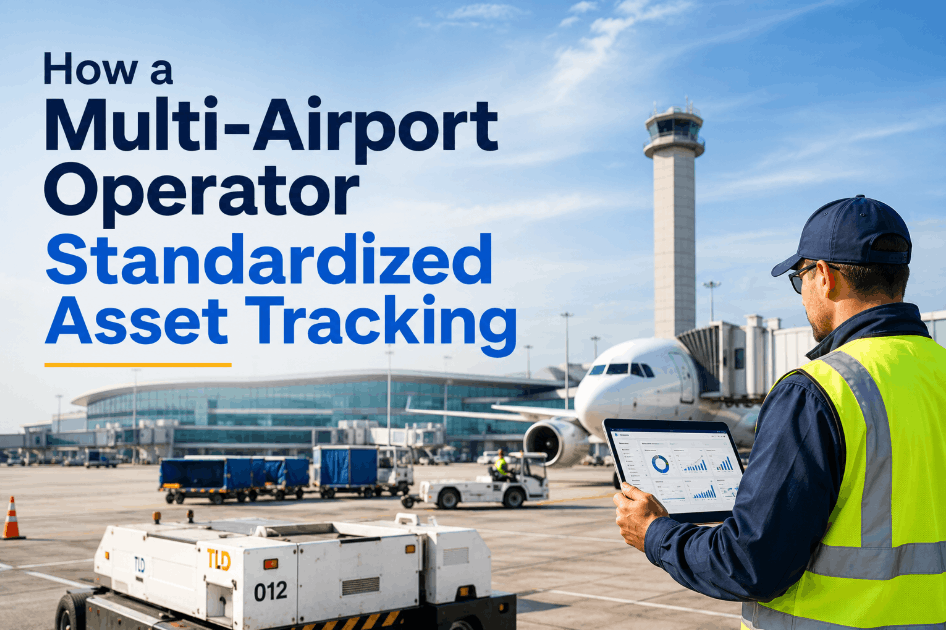
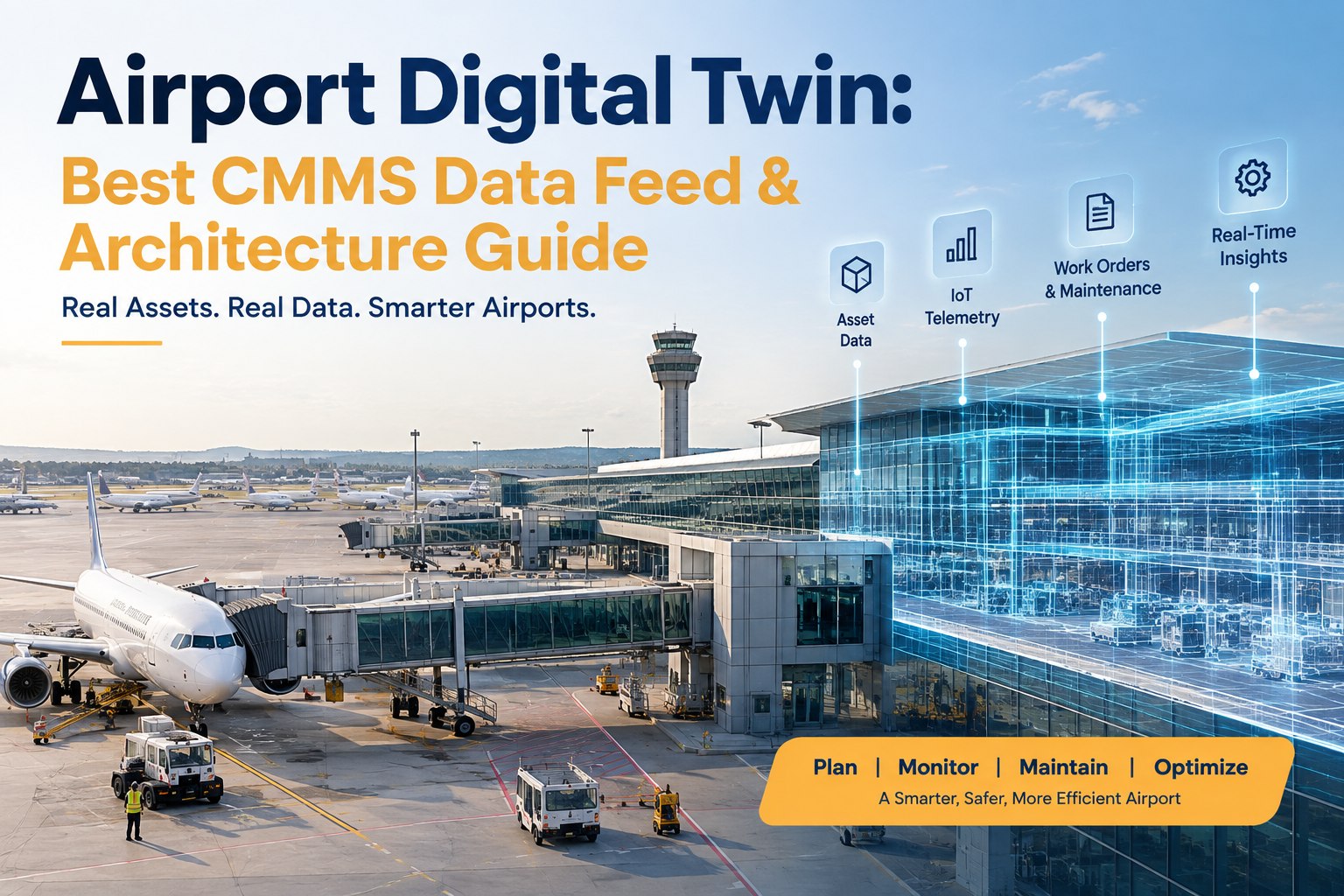
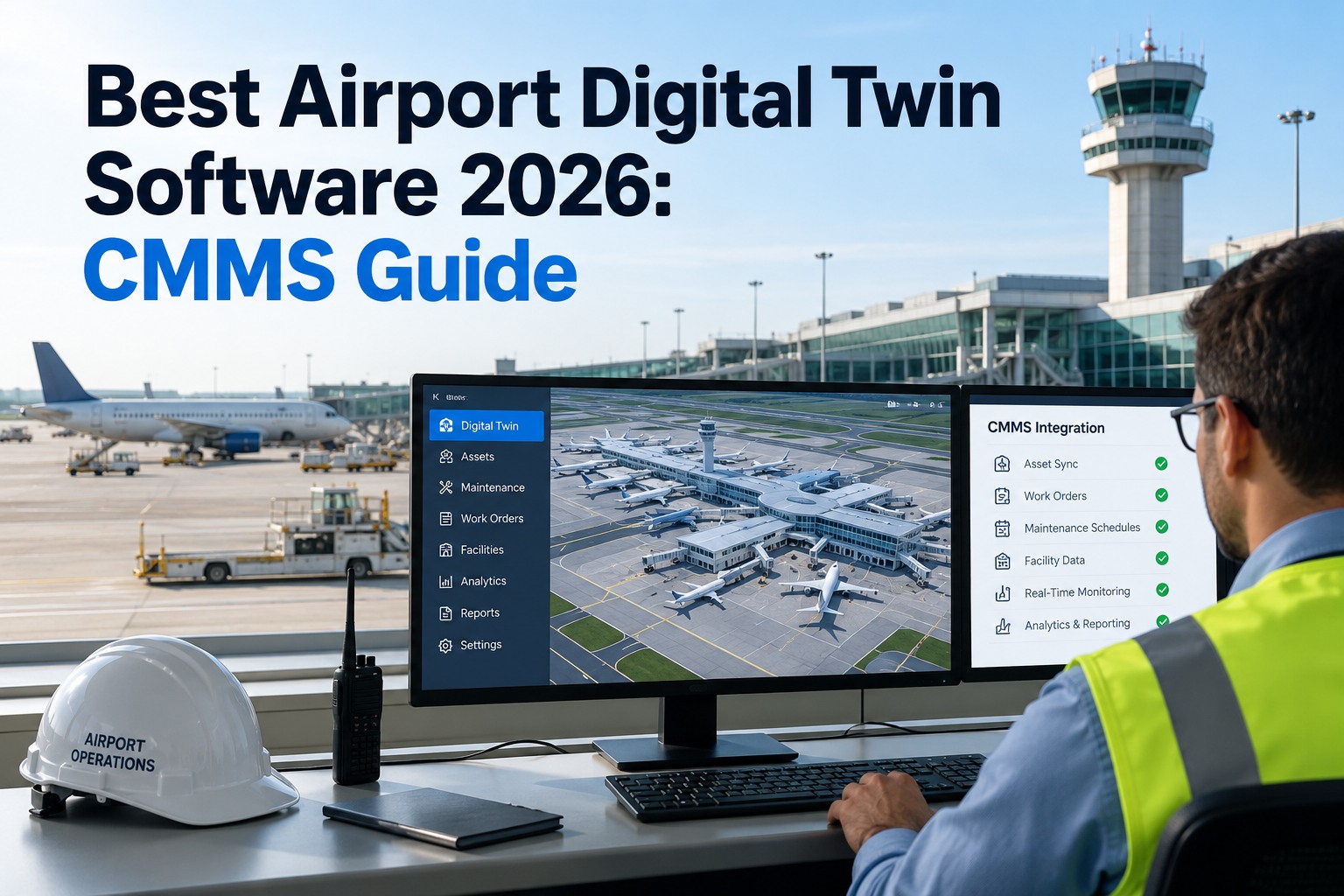
A regional airport operator running five facilities had no shared way to answer a simple question: how many assets does the group actually have, and which ones need attention this week. Each airport tracked equipment in its own spreadsheet, under its own naming convention, with no common reporting layer connecting them. Sign Up Free to see how one shared data model can replace five disconnected spreadsheets — after standardizing on Oxmaint's enterprise asset management platform, the operator unified 48,000+ assets under one data model, cut monthly cross-site reporting time by 79%, and resolved 91% of historical asset data quality issues within 120 days.
One Data Model. Five Airports. Standardized Asset Tracking in 120 Days.
Oxmaint unifies asset registries, reporting, and mobile tracking workflows across multiple sites — giving operators one shared model instead of five disconnected spreadsheets.
01 / The Operator
Five Airports. Five Spreadsheets. No Shared Asset Data Model.
Operator Type
Regional airport operator group managing five facilities ranging from a mid-size hub to three smaller regional fields, each historically run as an independent maintenance and asset-tracking operation.
Asset Scale
Approximately 48,000 tracked assets across terminal systems, airfield lighting, ground support equipment, HVAC, baggage handling, and landside infrastructure, spread unevenly across the five sites.
Reporting Baseline
Each airport maintained its own asset spreadsheet with a different naming convention and classification structure. Monthly cross-site reporting required 12 days of manual reconciliation by the operations team.
Data Quality Baseline
An estimated 22% of asset records contained duplicate entries, missing classification fields, or inconsistent location data, making cross-site comparison and benchmark reporting unreliable.
Prior System
Five independent spreadsheets with no shared schema, no centralized dashboard, no anomaly detection across sites, and no standardized mobile workflow for technicians logging asset condition in the field.
Annual Overhead Exposure
Operations team labor on manual cross-site reconciliation estimated at $145,000 annually, with delayed visibility into asset anomalies contributing an estimated $210,000 in avoidable downtime and emergency repair costs.
02 / The Challenge
Without a Shared Data Model, Multi-Airport Asset Tracking Produces Five Versions of the Truth
A multi-airport operator cannot benchmark performance across sites, forecast capital needs, or detect emerging anomalies if each facility names, classifies, and tracks assets differently. The absence of one reporting layer does not just slow down monthly reviews — it hides the decision-support data capital committees need to prioritize investment. Book a Demo to see how Oxmaint's enterprise asset management closes this gap across distributed operations.
48K+
Assets, five schemas
Forty-eight thousand-plus assets tracked under five different naming and classification conventions, making it impossible to answer a simple group-wide question without a multi-day manual reconciliation exercise.
12 days
Monthly reporting cycle
Twelve days of manual spreadsheet reconciliation were required every month just to produce a single cross-site report — time that could not be spent on planning, forecasting, or capital prioritization.
22%
Data quality issues
Roughly one in five asset records carried a duplicate entry, missing classification field, or inconsistent location tag — undermining any benchmark table built from the underlying data.
0
Cross-site anomaly visibility
No mechanism existed to flag an asset performing outside its expected pattern at one site against the group's broader experience, leaving anomaly detection entirely dependent on local staff noticing a problem.
"Every month our team spent nearly two weeks just lining up five spreadsheets so the numbers would actually match. By the time the report was ready, the data was already three weeks old."
03 / The Solution
Oxmaint CMMS: One Shared Asset Data Model, Cross-Site Benchmarking, and Mobile Asset Tracking
After comparing platforms against the operator's multi-site visibility requirements, leadership selected Oxmaint for its enterprise asset management structure, analytics and reporting tools, and mobile QR-based workflow that could standardize tracking without forcing every site onto identical hardware. Sign Up Free and bring your first site onto a shared data model today.
SHARED DATA MODEL
A single asset classification schema applied across all five airports, replacing five independent naming conventions with one structure that supports group-wide queries, traceability, and consistent asset history.
CENTRAL REPORTING LAYER
Oxmaint's analytics and reporting module consolidated all five sites into one live reporting layer, generating cross-site benchmark tables automatically instead of through manual spreadsheet reconciliation.
DASHBOARD & ANOMALY DETECTION
A unified dashboard surfacing asset health, maintenance history, and condition trends across the group, with automated flags when an asset's performance pattern diverges from its expected baseline.
MOBILE QR WORKFLOW
QR-tagged assets at every site let field technicians scan, update condition, and log work directly from a mobile device — standardizing the data capture process regardless of which airport a technician is working at.
DATA QUALITY CLEANUP
A structured deduplication and classification audit run against the imported asset base, using Oxmaint's data validation tools to resolve missing fields and inconsistent location tags before benchmark reporting began.
04 / Implementation
First Site Live in 21 Days. All Five Standardized by Day 90. Group Dashboard Live by Day 120.
Rather than migrating all five airports simultaneously, the rollout moved site by site to control data quality and adoption risk. Book a Demo to see how a phased multi-site rollout could work for your operation.
Days 1–21
Shared Data Model Design and First Site Migration
A common asset classification schema designed with input from all five site teams. The largest hub airport's asset register migrated first, with QR tagging deployed across its highest-traffic asset categories.
Days 22–60
Remaining Sites Migrated and Data Quality Cleanup
The remaining four airports migrated onto the shared data model in sequence. A structured deduplication pass resolved the majority of the 22% data quality issues identified in the original spreadsheets.
Days 61–90
Mobile Workflow Standardization Across All Five Sites
QR-based mobile tracking workflows standardized across every site's field technicians. Cross-site benchmark tables began generating automatically as data consistency reached group-wide thresholds.
Days 91–120
Group Dashboard and Anomaly Detection Live
A unified group dashboard launched for operations leadership, with anomaly detection flagging assets whose condition trends diverged from the group baseline. Monthly reporting moved from manual reconciliation to a live view.
05 / Results
120 Days to One Shared Data Model. Sustained Reporting and Data Quality Gains Across Five Airports.
Standardizing on one asset tracking platform turned five disconnected spreadsheets into a single decision-support layer for the group. Sign Up Free to start unifying your own multi-site asset data, or Book a Demo to see how this maps to your portfolio.
| Metric |
Before Oxmaint |
After Oxmaint |
Change |
| Monthly cross-site reporting cycle |
12 days |
2.5 days |
−79% reporting time |
| Asset data quality issues |
22% of records |
2% of records |
−91% data quality issues |
| Asset classification schemas in use |
5 separate schemas |
1 shared model |
Full standardization |
| Cross-site benchmark visibility |
None — manual only |
Live benchmark tables |
Group-wide visibility |
| Asset anomaly detection |
Site-dependent, reactive |
Automated group-wide flags |
Proactive detection |
| Field data capture method |
Manual spreadsheet entry |
Mobile QR workflow |
Standardized capture |
| Assets under shared data model |
0% |
100% (48,000+) |
Full migration |
| Annual reconciliation labor cost |
$145,000/year |
Estimated $40,000/year |
−72% reconciliation cost |
"For the first time, we can pull up one dashboard and actually compare how five airports are performing against the same metrics. Before, that comparison simply didn't exist."
06 / Key Business Impact
What a Shared Data Model Protected Beyond Reporting Time
Standardizing asset tracking changed more than how fast reports were produced. Book a Demo to see how a unified data model supports capital planning and forecasting across your own sites.
01
Twelve days of manual reconciliation was never really a reporting problem — it was a decision-support gap. Without one data model, capital committees were prioritizing investment based on whichever site's spreadsheet was most recently updated, not on group-wide evidence.
02
The 22% data quality rate was not a data entry failure at any single site — it was the predictable outcome of five teams maintaining five schemas with no shared validation rules. A common data model made the cleanup possible in the first place.
03
Cross-site anomaly detection turned reactive problem discovery into proactive planning. An asset trending outside its expected pattern at one airport is now visible to the group before it becomes a downtime event, not after.
04
Standardizing the mobile workflow mattered as much as standardizing the data model itself. Consistent field capture across all five sites is what kept the shared schema accurate after go-live, rather than drifting back into five local conventions within a year.
See How One Shared Data Model Can Unify Your Multi-Airport Asset Tracking
Oxmaint's CMMS standardizes asset classification, reporting, and mobile tracking across multiple sites — delivering group-wide visibility without forcing identical hardware at every facility.
07 / FAQ
Frequently Asked Questions
How does Oxmaint standardize asset tracking across multiple airports?
Oxmaint applies one shared asset classification schema across all sites, replacing independent spreadsheets with a single data model that supports group-wide queries and consistent asset history.
Can Oxmaint reduce manual cross-site reporting time for multi-airport operators?
Yes. Oxmaint's analytics and reporting tools consolidate all sites into one live reporting layer, generating cross-site benchmark tables automatically instead of through manual reconciliation.
How does Oxmaint improve asset data quality across distributed sites?
Oxmaint's data validation tools support deduplication and classification cleanup against a shared schema, resolving the inconsistencies that build up when each site maintains its own asset records independently.
Does Oxmaint support anomaly detection across multiple airport sites?
Yes. Oxmaint's dashboard tools flag assets whose condition or performance trends diverge from the group's expected baseline, surfacing issues before they escalate into downtime events.
How does a mobile workflow help standardize asset tracking?
QR-based mobile tracking lets field technicians at every site capture asset condition and work data the same way, keeping the shared data model accurate after go-live instead of drifting back into local conventions.
How long does it take to migrate multiple airports onto one CMMS data model?
Migrations are typically phased site by site to control data quality risk. This operator standardized its largest site within 21 days and completed all five facilities within 90 days.
What CMMS ROI can multi-airport operators expect from standardized asset tracking?
Operators with high reconciliation overhead and fragmented data typically see measurable reporting-time and data-quality ROI within one to two quarters. This operator estimated $105,000 in annualized labor savings within 120 days.
−79% Reporting Time. −91% Data Quality Issues. One Model Live in 120 Days.
5 airports. 48,000+ assets. One shared CMMS data model. See what Oxmaint delivers for your portfolio.