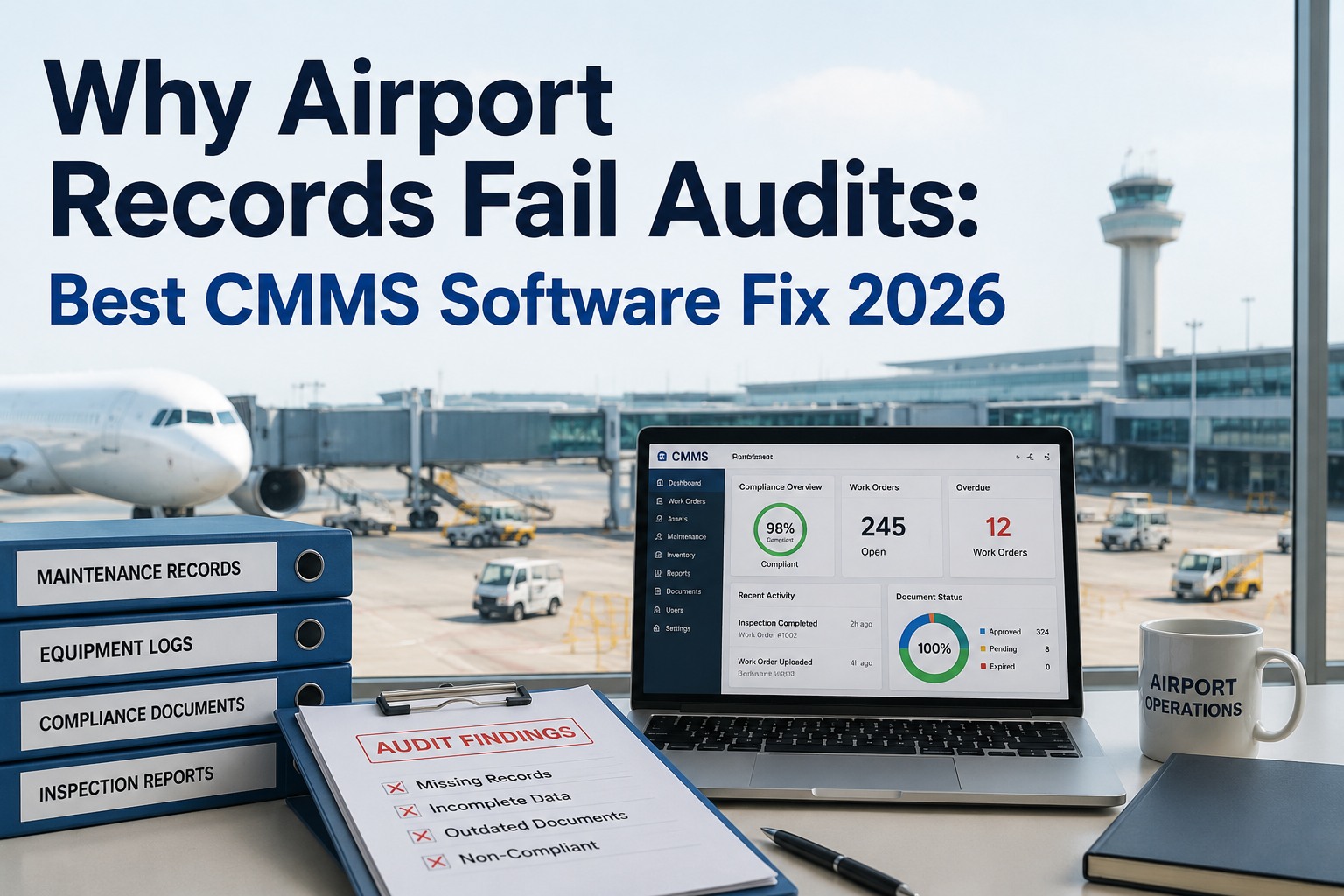
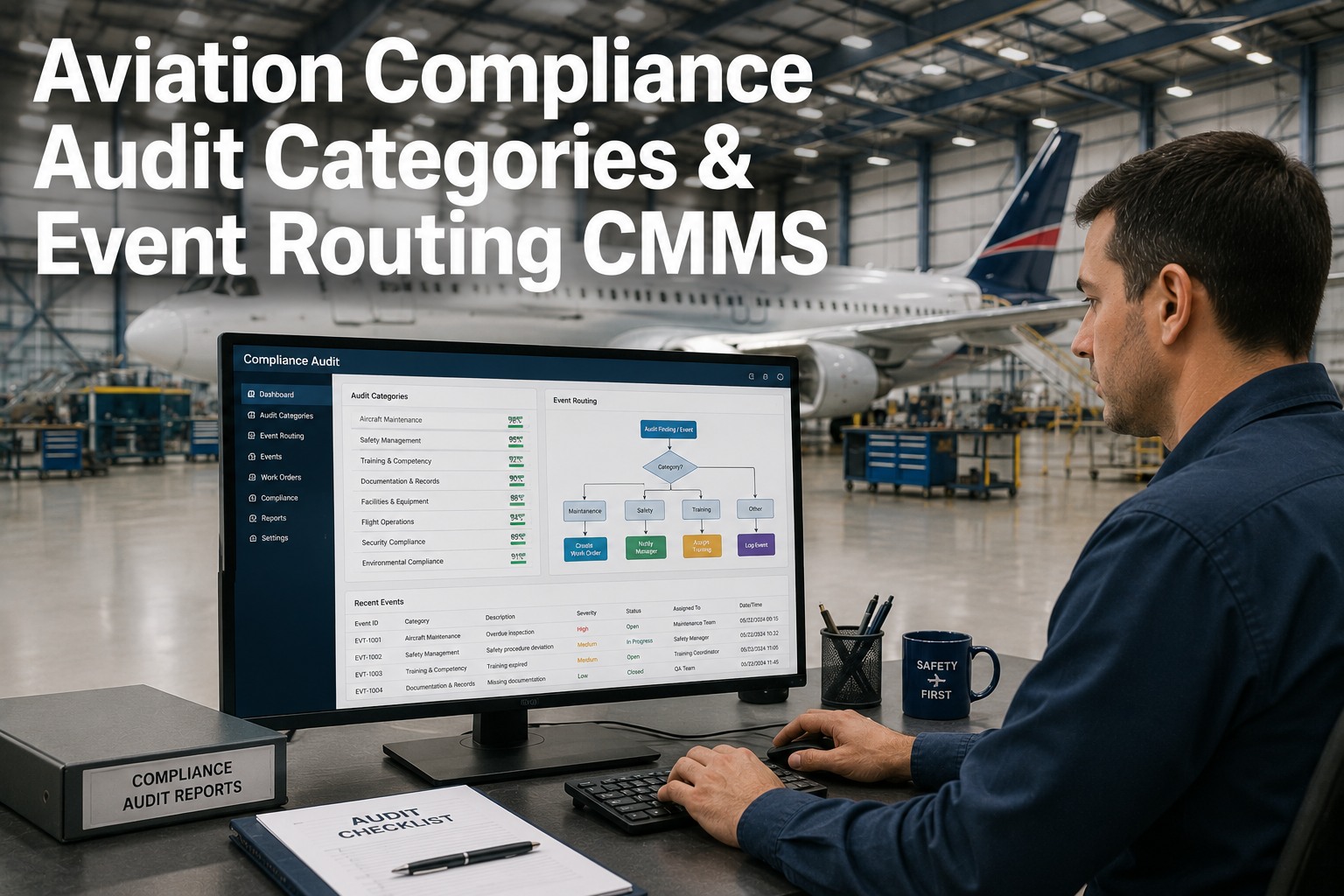
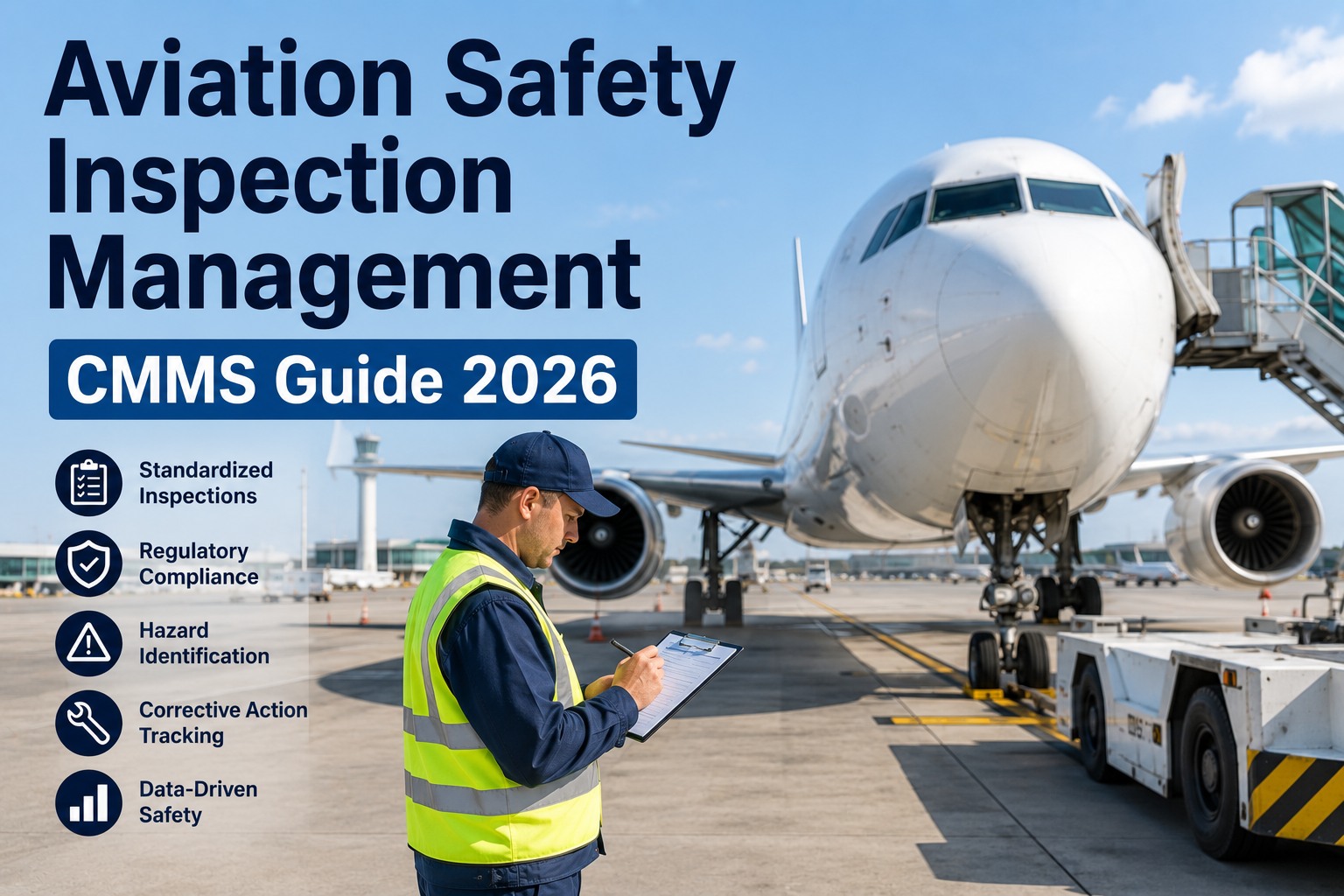
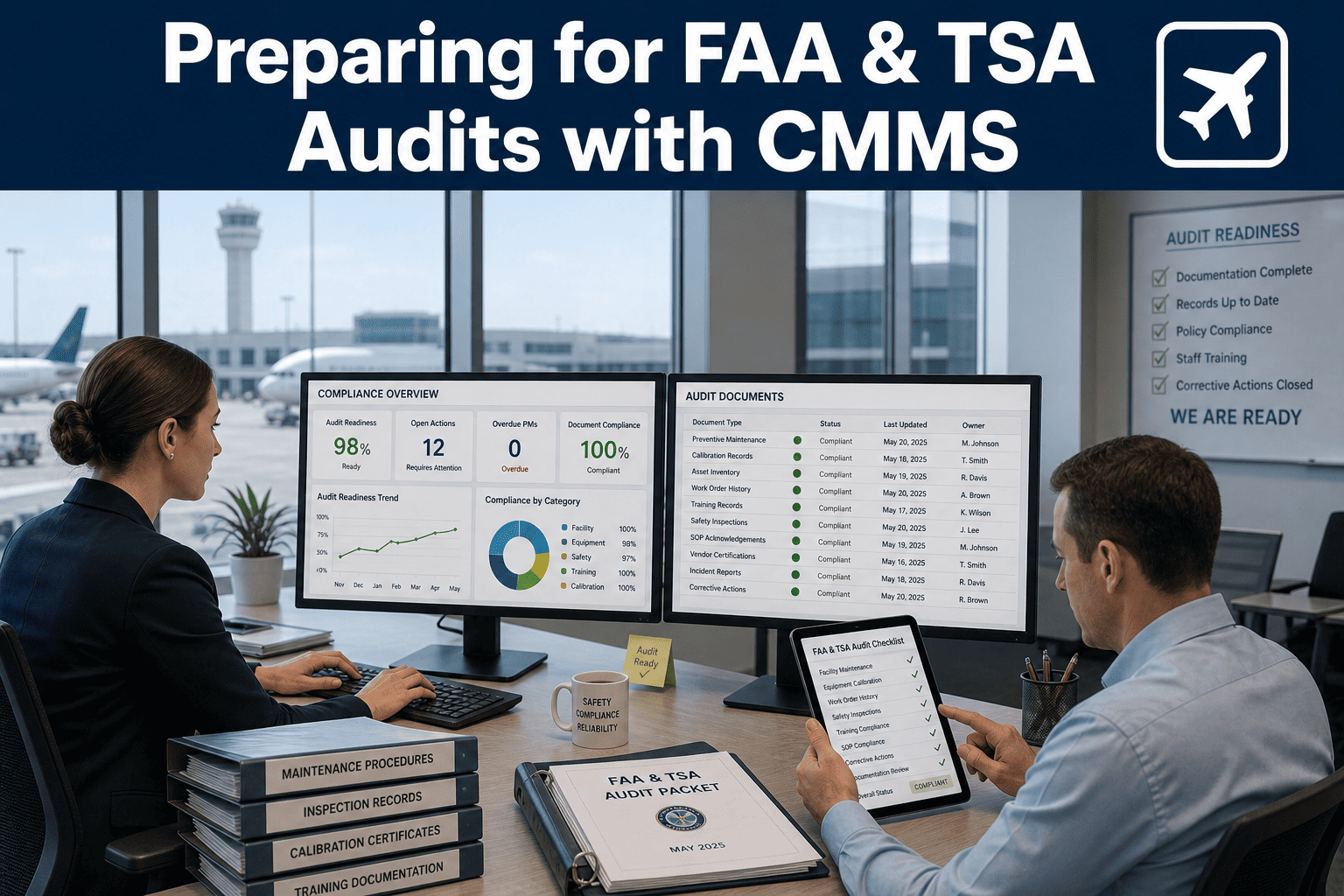
Airport safety audits are not scheduled events that operations teams can prepare for in isolation — they are continuous regulatory assessments that can materialize with minimal advance notice. FAA Part 139 compliance inspections, TSA security audits, and ICAO USAP evaluations each carry the potential for civil penalties, operating certificate conditions, or public disclosure of safety deficiencies that can affect an airport's insurance rates, bond ratings, and airline partner relationships. The airports that consistently achieve favorable audit outcomes have one characteristic in common: they do not prepare for audits — they operate year-round at audit-ready standards, with maintenance records, inspection logs, corrective action trails, and asset documentation organized and accessible at all times. CMMS software is the operational foundation that makes this possible. Airports with CMMS-managed maintenance programs reduce safety audit preparation time by 65% and audit finding rates by 45% compared to those using manual documentation systems. Start a free trial to build your airport safety audit infrastructure in Oxmaint, or book a demo to see exactly how the audit documentation workflow operates in practice.
Get Your Airport Audit-Ready in 30 Days — Not 30 Hours
See how much audit preparation time and compliance risk you can eliminate by centralizing your airport maintenance documentation in Oxmaint.
- Complete inspection records retrievable in under 5 minutes
- Automated alerts for overdue inspections before auditors find them
- Corrective action trails that close every finding loop with evidence
What Do Airport Safety Audits Actually Examine?
Airport safety audits vary by regulatory authority but converge on a consistent set of operational areas. FAA Part 139 inspections evaluate 19 certification areas including airfield marking and lighting, pavement condition, snow and ice control programs, wildlife hazard management, fueling facility safety, and emergency response capability. TSA security audits assess access control maintenance, CCTV system functionality, perimeter integrity, and screening equipment maintenance records. ICAO USAP evaluations examine state-level implementation but require airport-level evidence of Annex 14 conformance.
In each case, auditors are not just checking whether systems function — they are checking whether operations teams can demonstrate, through documented evidence, that those systems have been systematically maintained, inspected, and corrected when deficiencies were found. The documentation standard has risen significantly: FAA inspectors now explicitly prefer digital records with authentication trails over paper logs, because digital records are tamper-evident and timestamped in ways that paper records cannot replicate.
CMMS platforms like Oxmaint transform audit preparation from a stressful multi-day evidence collection exercise into a 30-minute report generation task — because every maintenance action performed through the system becomes audit-ready documentation automatically — book a demo to see what that looks like in practice for your specific regulatory portfolio.
Key Ways CMMS Supports Airport Safety Audits
Automated Inspection Scheduling
All FAA Part 139 inspection frequencies — daily surface inspections, monthly lighting checks, quarterly friction testing — built into Oxmaint scheduling with mandatory completion workflows. No inspection window can be missed silently: overdue alerts reach supervisors before the regulatory deadline.
Digital Inspection Forms with Signatures
Mobile inspection forms completed on tablets or smartphones in the field — each submission automatically timestamped, geo-tagged, and linked to the inspector's authenticated user account. Results satisfy FAA record authentication requirements more comprehensively than handwritten logs.
Finding-to-Closure Corrective Action Trail
Every deficiency identified during an inspection generates a corrective action work order with defined deadline, assigned technician, and closure verification requirement. Auditors see not just the finding but the complete corrective action thread — demonstrating systematic compliance management.
Asset Maintenance History Reports
For any airport asset — runway edge light, jet bridge, fueling hydrant, access gate — Oxmaint generates a complete maintenance history report including all work orders, inspections, parts replaced, and technician IDs within the FAA record retention window. Produced in under 3 minutes.
PM Compliance Rate Reporting
Auditors frequently request PM compliance statistics as a leading indicator of maintenance program maturity. Oxmaint generates PM completion rates by asset category, certification area, and time period — allowing operations directors to present quantitative evidence of systematic preventive maintenance execution.
Multi-Regulatory Documentation Tagging
A single maintenance record can be tagged to multiple regulatory frameworks simultaneously — satisfying FAA Part 139, TSA maintenance directive, and OSHA equipment certification requirements from one work order completion. No duplicate recordkeeping across regulatory silos.
Why Airports Fail Safety Audits
Inspection Records Are Incomplete or Inaccessible
The most common audit finding across Part 139 inspections is not a missed inspection — it is an inspection that was performed but whose record cannot be produced on demand. Paper logs filed in operational offices, spreadsheets on individual computers, and records in retired staff members' personal files are all forms of documentation that exist but cannot satisfy audit production requirements.
Corrective Actions Are Not Documented to Closure
Regulatory agencies track whether previous audit findings have been corrected. Airports that note a deficiency and begin correction but fail to document the final corrective action with verification evidence face repeat findings on subsequent inspections — which escalate from advisory notices to civil penalty actions with each recurrence.
No Audit Preparation System or Timeline
Airports without CMMS typically begin audit preparation when they receive advance notice — or worse, when auditors arrive. The resulting documentation assembly under time pressure produces incomplete submissions, retroactive record reconstruction, and auditor skepticism that elevates scrutiny across the entire inspection. First impressions in regulatory audits are difficult to reverse within the same inspection cycle.
Staff Turnover Destroys Institutional Knowledge
In airports where maintenance knowledge and records reside with individual staff members rather than centralized systems, each retirement or resignation takes years of institutional compliance knowledge with it. New staff cannot reconstruct compliance history from scattered paper records, leaving regulatory gaps that surface in the next inspection cycle.
These failure patterns are entirely preventable — and CMMS implementation is the single most effective intervention for all four simultaneously. Teams that shift to CMMS-managed audit readiness eliminate documentation gap risk, corrective action tracking failures, and institutional knowledge loss in one deployment — start a free trial to build your audit-ready maintenance infrastructure today, or book a demo to walk through your current audit documentation challenges with a product expert.
How Oxmaint Prepares Airports for Safety Audits
Year-Round Audit-Ready Operations
Every maintenance event, inspection completion, and corrective action generates audit-ready documentation automatically — so audit preparation is a 30-minute report generation task rather than a multi-day records assembly scramble. Oxmaint-managed airports operate at audit standard 365 days per year.
Compliance Gap Detection Before Auditors
Automated alerts for overdue inspections, approaching regulatory deadlines, and incomplete corrective action closures allow operations teams to self-identify and resolve compliance gaps before they become audit findings. Proactive gap management replaces reactive audit response.
Certification-Area Compliance Reports
Pre-formatted compliance reports organized by FAA Part 139 certification area, TSA security directive category, or ICAO Annex 14 requirement — ready for auditor presentation in under 5 minutes. Organized presentation signals program maturity that consistently earns favorable first impressions.
Institutional Knowledge Preservation
All maintenance history, inspection records, corrective action evidence, and asset documentation stored centrally in Oxmaint — accessible to new staff regardless of personnel transitions. Compliance continuity is preserved through system-based records rather than individual memory or personal files.
Manual Audit Prep vs. CMMS-Supported Audit Prep
| Audit Preparation Area | Manual Preparation | CMMS-Supported with Oxmaint |
|---|---|---|
| Record Retrieval Time | 4-8 hours across departments; frequent gaps | Under 30 minutes; complete records with search and filter |
| Inspection Compliance Rate | 61% of required inspections completed on schedule | 91% compliance rate with automated scheduling and alerts |
| Corrective Action Closure | 42% of findings lack documented closure evidence | 100% closure tracking — work orders cannot close without verification |
| Audit Finding Rate | Average 3.2 documentation findings per annual audit | Average 0.8 documentation findings — 75% reduction |
| Auditor First Impression | Disorganized presentation increases scrutiny duration | Organized digital records signal program maturity; reduce scrutiny |
| Staff Time Per Audit Cycle | 18-32 staff hours across all departments | 4-6 staff hours; report generation replaces manual assembly |
ROI of CMMS-Supported Airport Safety Audit Programs
The ROI of CMMS-supported audit readiness compounds over time — each audit cycle with clean documentation builds a favorable regulatory track record that reduces scrutiny intensity, shortens inspection durations, and strengthens the airport's position in penalty negotiation if any finding does occur. Regulatory agencies treat airports with demonstrable compliance programs significantly more leniently than those presenting as disorganized on arrival. Teams that invest in audit-ready operations now avoid the escalating penalty trajectory of repeat findings — book a demo to build your audit readiness plan, or start a free trial and see measurable compliance improvement within your first 30 days.
Frequently Asked Questions
What triggers an unannounced FAA Part 139 safety inspection?
FAA conducts both scheduled and unannounced Part 139 inspections. Scheduled inspections occur on a defined annual cycle, but unannounced inspections can be triggered by airline complaints, wildlife strike reports, runway incursion events, ASRS reports referencing the airport, or random sampling programs. Airports with prior findings are subject to more frequent unannounced follow-up visits. The only reliable protection against unannounced inspection risk is year-round audit-ready operations — which CMMS-managed maintenance programs provide by default. Start a free trial to build that foundation.
How does CMMS help with FAA corrective action response timelines?
FAA findings include defined corrective action response timelines — typically 30, 60, or 90 days depending on finding severity. Oxmaint creates corrective action work orders directly from inspection findings, with the deadline built into the work order priority and escalation alerts configured for supervisor notification before the FAA deadline. When corrective action is complete, the digital closure record with technician sign-off and photo evidence is ready for submission to the FAA District Office — demonstrating timely, documented response that closes the regulatory loop definitively.
Can CMMS documentation be submitted directly to FAA auditors?
Oxmaint generates exportable PDF and CSV reports organized by certification area, date range, asset type, or inspection type that can be submitted directly to FAA inspectors. The reports include all required elements: inspector ID, date and time, asset identification, findings, and corrective action status. FAA inspectors increasingly accept — and prefer — digitally generated reports over paper log copies because digital records are more complete, legible, and searchable during the inspection process itself.
What is the difference between safety management system (SMS) requirements and Part 139 maintenance documentation?
FAA Part 139 specifies minimum certification requirements including maintenance documentation standards. SMS (Safety Management System) is a broader proactive safety framework that FAA encourages airports to adopt — and which is mandatory for airports in certain operational categories. SMS requires hazard identification records, risk assessment documentation, and safety assurance data that overlap significantly with CMMS-generated maintenance records. Oxmaint data supports both frameworks: Part 139 documentation from work orders and inspections, and SMS safety assurance data from trend analysis of equipment failures, near-miss reports, and corrective action rates.
Stop Scrambling for Audit Evidence That Should Already Be Organized
Turn every maintenance and inspection event into permanent, organized, auditor-ready evidence. Used by airport operations teams managing complex multi-regulatory compliance environments — live in days, no heavy implementation required.
- Complete FAA Part 139 records retrievable in under 5 minutes
- Automated inspection scheduling with overdue alerts before auditors arrive
- Corrective action trails that close every regulatory finding with documented evidence
Works across multi-terminal airport portfolios. See measurable audit readiness improvement in 30 days.