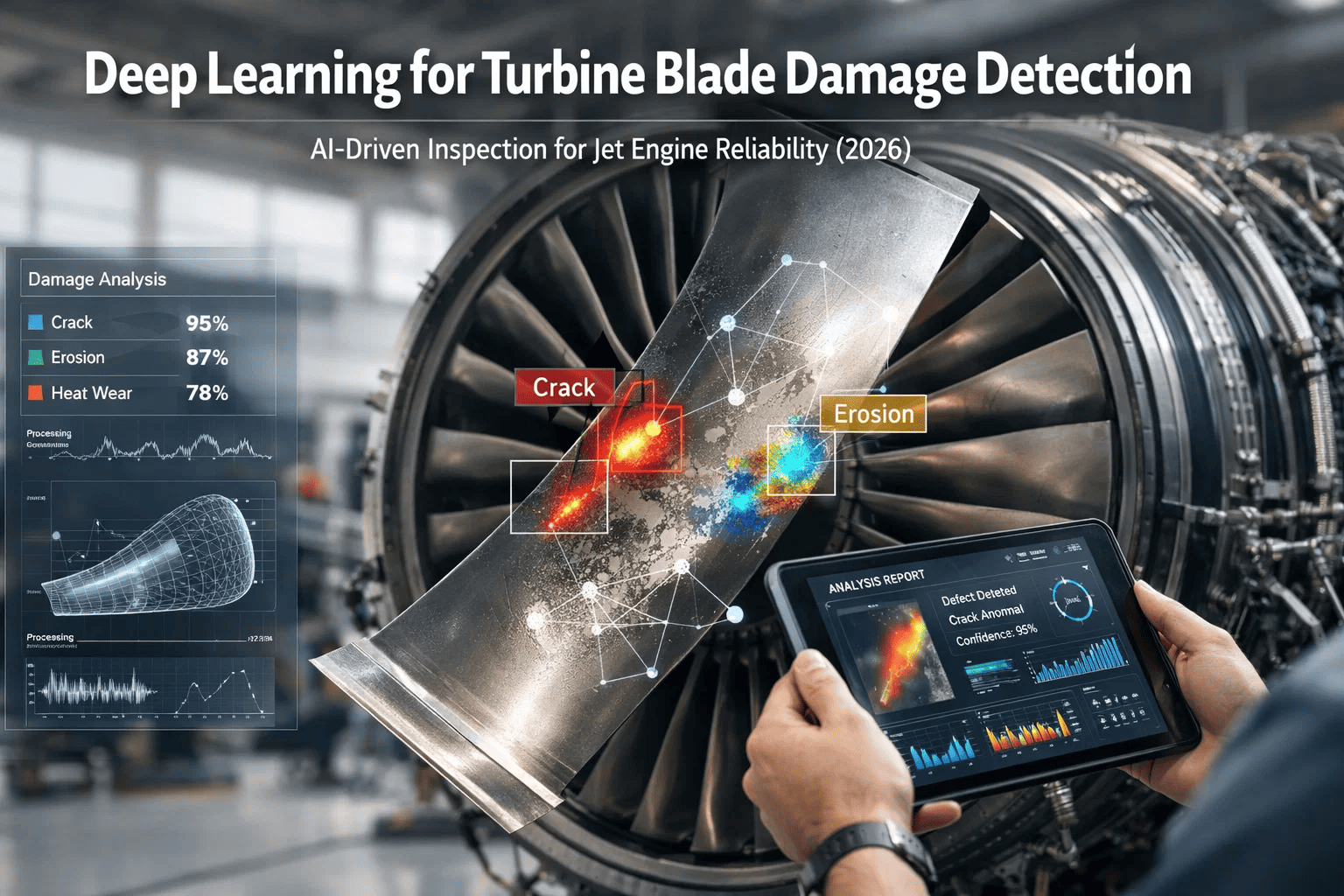
A single missed crack on a turbine blade can ground a $40 million engine. Robotic borescope systems now navigate jet engine internals—turbine stages, combustion chambers, compressor sections—capturing HD imagery of blade erosion, thermal fatigue cracks, and coating degradation without engine removal. Combined with CMMS tracking, every defect image links to engine serial numbers and triggers automated maintenance work orders. Schedule a consultation to see how OXmaint automates your jet engine inspection workflow from detection to resolution.
Why Jet Engine Inspection Is Being Reinvented
Traditional borescope inspection depends on a human operator guiding a flexible probe through tight engine ports, interpreting images in real time under fatigue and time pressure. With the global fleet exceeding 35,000 commercial aircraft and MRO backlogs stretching to months-long waits, the aviation industry needs faster, more consistent, and digitally traceable inspection methods.
$1.42B
Global engine borescope inspection services market (2024)
7.9%
CAGR projected through 2033
34%
Defect detection improvement with AI-assisted borescopes
48%
Market share held by turbofan engine inspections
Inside the Engine: What Robotic Borescopes Inspect
A modern turbofan engine contains thousands of precision components operating at extreme temperatures and rotational speeds. Robotic borescope systems target the three most failure-prone zones, each requiring different inspection parameters and defect criteria.
ZONE 01
High-Pressure Compressor (HPC)
Leading edge erosion
Foreign object damage
Tip curl and rub
Corrosion pitting
Most time-consuming MRO inspection task — AI-assisted systems reduce HPC inspection time significantly
ZONE 02
Combustion Chamber
Thermal barrier coating loss
Liner cracking
Hot spot distortion
Fuel nozzle coking
Continuum robots ("snake robots") navigate curved liner surfaces that rigid borescopes cannot reach
ZONE 03
High-Pressure Turbine (HPT)
Blade creep elongation
Thermal fatigue cracking
Oxidation and sulfidation
Platform seal wear
Nickel-based superalloy disks require micron-level defect detection for airworthiness certification
Robotic Borescope Technologies: How They Work
Three generations of robotic inspection systems are transforming how MRO facilities examine jet engines—each adding layers of automation, precision, and data intelligence over traditional handheld borescopes.
Generation 1
Articulated Video Borescopes
Flexible insertion tubes with HD cameras and LED illumination. Operator-controlled tip articulation (typically 4-way). Captures still images and video for manual review. Requires experienced inspectors to interpret findings in real time.
Resolution1080p HD
AutomationManual
Generation 2
AI-Assisted Defect Recognition (ADR)
Machine vision overlays highlight potential defects during live inspection. Deep learning models trained on thousands of engine images detect blade erosion, cracks, and coating loss. Reduces inspector fatigue and learning curves while improving detection consistency.
Resolution4K + 3D Stereo
AutomationAI-Assisted
Generation 3
Autonomous Continuum Robots
Snake-like multi-jointed robots with bionic movement navigate complex engine geometries autonomously. MEMS-based 3D scanners measure defect depth with laser precision. Capable of reaching stator vanes and areas inaccessible to conventional probes. Fully integrated with CMMS for automated data logging.
Resolution4K + MEMS 3D
AutomationAutonomous
Ready to digitize your engine inspection records? Create a free OXmaint account and start linking borescope images to engine serial numbers with automated work order generation.
Sign Up Free
Robot Maintenance: Keeping Inspection Tools Reliable
Robotic borescope systems are precision instruments operating in extreme environments. Their own maintenance is critical to inspection accuracy. Here is what a comprehensive robot maintenance program covers—and how CMMS tracking ensures nothing is missed.
Robotic Borescope Maintenance Matrix
Maintenance Task
Frequency
Pass Criteria
CMMS Action
Articulated Probe Flexibility Test
Before each use
Full 180° articulation in all axes
Auto-logged pass/fail record
LED Illumination Intensity Check
Weekly
Lux output within 90% of baseline
Triggers replacement WO at 85%
Camera Resolution Validation
Monthly
Resolves test target at rated spec
Archives calibration certificate
Insertion Tube Sterilization
Between engines
No cross-contamination residue
Logs decontamination by engine S/N
3D Measurement Calibration
Quarterly
Accuracy within ±0.05mm
Blocks inspection if overdue
Software & AI Model Update
Per release cycle
Version matches approved baseline
Change management workflow
CMMS Integration: From Image to Work Order
The real power of robotic inspection emerges when every captured image, measurement, and defect classification flows directly into a CMMS platform. OXmaint closes the loop between detection and action with a fully automated digital workflow.
1
Capture
Robot captures HD images and 3D measurements during engine inspection run
4K imagery
3D depth maps
2
Analyze
AI classifies defects by type, severity, and location on the engine map
Defect type
Severity score
3
Archive
OXmaint CMMS links images to engine serial number with full traceability
Engine S/N link
Audit trail
4
Act
Automated work orders generated based on defect severity with priority routing
Auto work order
Priority routing
Image-to-Serial Linking
Every borescope image is automatically tagged with the engine serial number, module position, blade row, and inspection date—creating a complete visual history for each engine in your fleet.
AI-Triggered Work Orders
When defect severity exceeds configurable thresholds, OXmaint automatically generates maintenance work orders with the defect images attached, routed to the appropriate engineering team.
Trend Analysis Dashboard
Track defect progression across inspection intervals. Visualize how blade erosion or coating loss evolves over flight cycles to predict when intervention will be needed—before it becomes critical.
Regulatory Compliance Records
Exportable inspection records formatted for FAA, EASA, and ICAO audit requirements. Digital signatures, timestamps, and chain-of-custody documentation built into every record.
See the inspection-to-work-order pipeline in action. Book a demo and we'll walk you through how OXmaint automates defect tracking for jet engine maintenance.
Schedule Demo
Manual vs. AI-Robotic Borescope Inspection
Traditional Manual Borescope
Operator skill-dependent image quality
Subjective defect interpretation
Limited access to stator vanes and curved liners
Paper or disconnected digital records
Inspector fatigue during long sessions
4-8 hours
per full engine borescope inspection
AI-Robotic + CMMS Integration
Consistent 4K + 3D imaging every pass
AI defect detection with 34% higher accuracy
Autonomous navigation of complex geometries
Auto-archived and linked to engine serial number
Reduced false alerts by 13%+
1-3 hours
with automated defect classification
Frequently Asked Questions
Do robotic borescopes replace human inspectors?
No. Regulatory authorities still require certified human inspectors to make final airworthiness determinations. Robotic systems and AI serve as decision-support tools—improving detection rates, reducing fatigue, and ensuring consistent image quality. The inspector's engineering judgment remains essential for disposition decisions.
What defect types can AI reliably detect on turbine blades?
Current AI models trained on engine borescope imagery can detect blade erosion, thermal fatigue cracks, coating degradation, foreign object damage (FOD), corrosion pitting, tip curl, and oxidation patterns. Deep learning frameworks using object detection architectures like YOLOv8 are achieving increasingly reliable results across these defect categories.
How does CMMS tracking improve borescope inspection?
CMMS integration creates a complete digital thread from image capture to maintenance action. Every image is linked to the specific engine serial number, with AI-analyzed defect severity automatically triggering prioritized work orders. This eliminates manual data entry, ensures regulatory compliance documentation, and enables trend analysis across inspection intervals.
Why is insertion tube sterilization important between engines?
Cross-engine contamination can introduce foreign particles or chemical residues that create false defect indications or mask real damage. Sterilization between inspections ensures that findings are attributable only to the engine being inspected, maintaining the integrity of condition-based maintenance decisions.
Can OXmaint integrate with existing borescope hardware?
Yes. OXmaint CMMS connects with leading borescope platforms through standard data protocols and API integrations. Inspection images, measurements, and metadata from systems like the Waygate Mentor Visual iQ+ and similar platforms can be ingested directly into OXmaint's asset management framework.
Sign up for a free account to explore integration options for your MRO facility.
Automate Your Jet Engine Inspection Workflow
OXmaint CMMS provides the digital backbone for robotic borescope programs—archiving every inspection image against engine serial numbers, auto-generating work orders from AI-analyzed defects, and maintaining audit-ready compliance records across your entire fleet.