68% of MRO delays trace back to paperwork bottlenecks, not wrench time and the mechanism is almost always the same: a defect gets logged on paper during a transit check, re-keyed into a different system for the A-check package, then re-entered again when it feeds into base maintenance planning. Each handoff is a chance for the record to drift from what actually happened on the aircraft. Operations running a purpose-built line-to-base workflow typically cut duplicate data entry by 30–50% and recover 8–12 hours a week of coordination time that used to go into reconciling three separate logs for one airframe. A continuous digital chain from the first walkaround finding to the base-check record isn't a nice-to-have — it's the difference between an aircraft released on time and a $150,000-an-hour AOG traced back to a defect that was actually caught, and then lost in the handoff. This guide lays out the full 12-step chain and how OXMAINT AI keeps every check on one continuous ledger.
Aviation MRO · Line to Base Maintenance · Workflow Automation · 2026
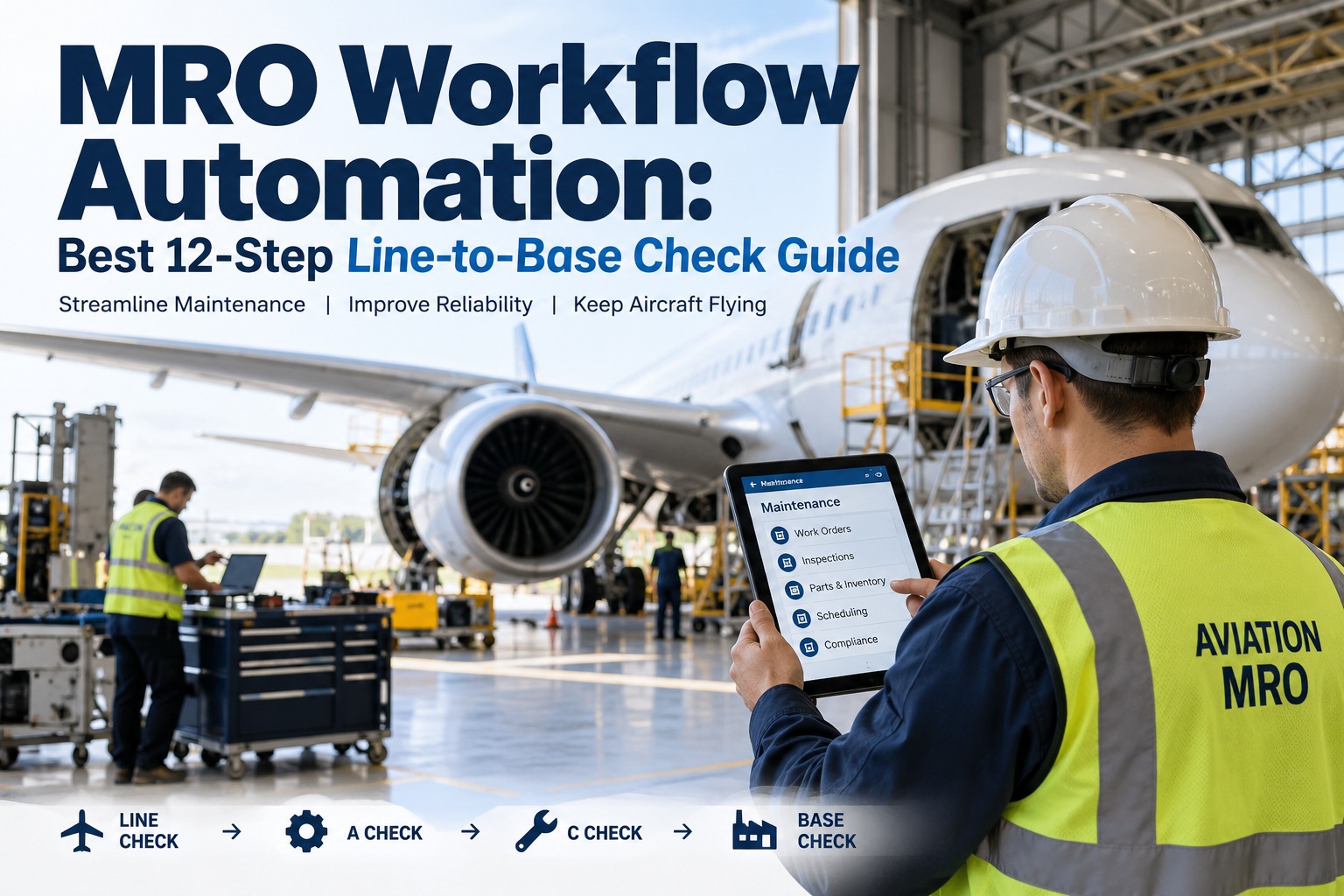
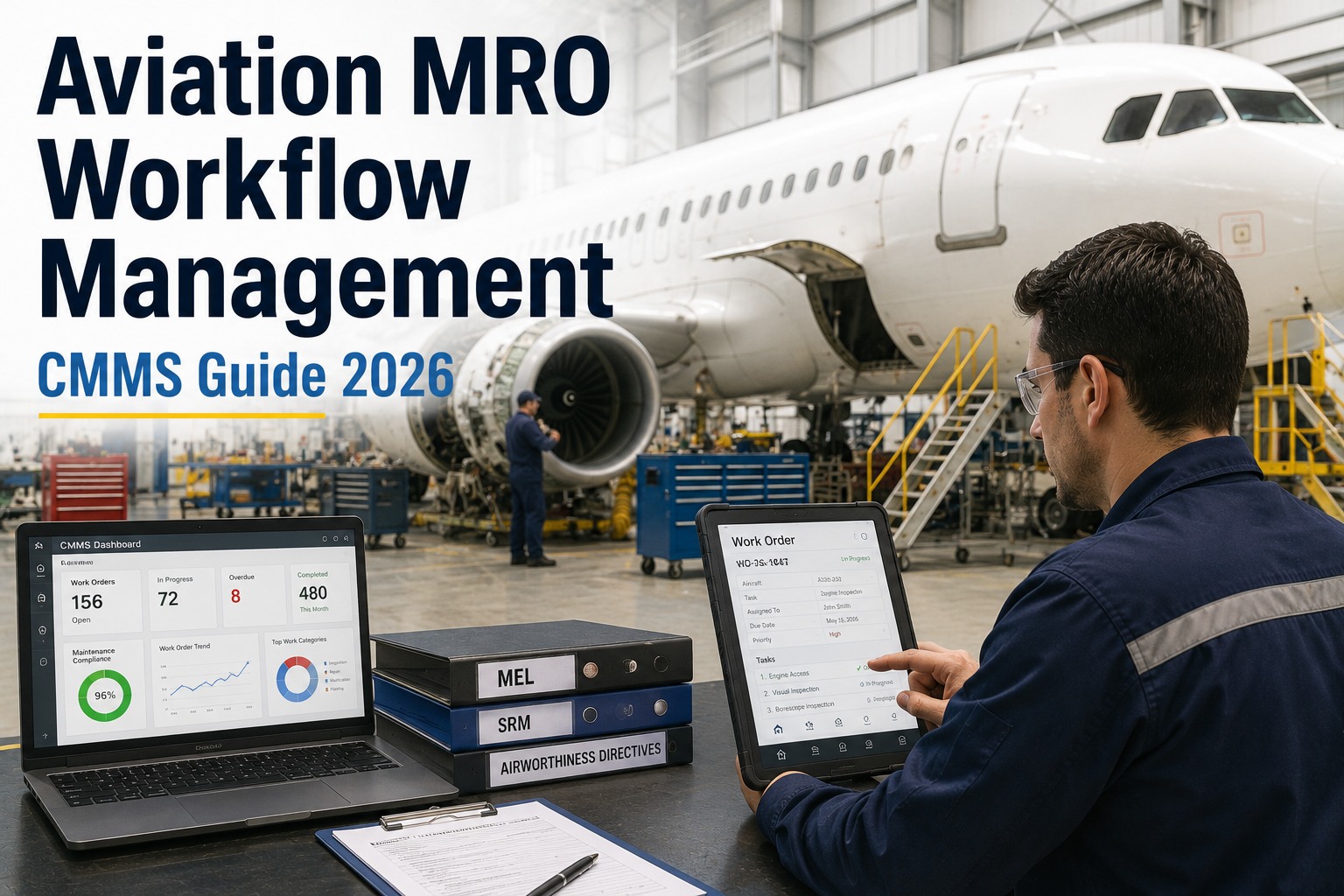
MRO Workflow Automation: Best 12-Step Line-to-Base Check Guide
A transit defect shouldn’t be re-entered multiple times before reaching base maintenance. OXMAINT AI connects checks, defects, MEL references, work orders, task cards, inspections, and CRS sign-off into one continuous aircraft record—without re-keying or reconciling separate logs.
Line / Transit Check Logged
→
Defect & MEL Cross-Referenced
→
Work Order & Task Cards Generated
→
CRS Sign-Off Feeds Base Record
68%
of MRO delays are caused by paperwork bottlenecks, not the repair itself
30–50%
reduction in duplicate data entry when line, A-check and base records share one ledger
$150K/hr
typical AOG cost exposure for a wide-body aircraft grounded unexpectedly
4.8x
higher cost of reactive maintenance compared to planned, task-carded work
Where Duplicate Entry Actually Costs You
The same defect can pass through a paper walkaround sheet, a line station tracker, and a base maintenance planning system before it's actually scheduled — and every handoff is a chance to lose context. Sign up free and put your next defect on one continuous record.
📝
Re-Keyed Defects
A transit-check finding gets typed once on paper and again into a planning spreadsheet — introducing the exact kind of transcription error that reopens closed work.
🔒
Hold-Point Ambiguity
Without a digitally enforced RII gate, an inspector can discover work already closed without dual sign-off — forcing a costly reopen and re-inspection.
🖊
Sign-Off Bottlenecks
A paper CRS form queued on a supervisor's desk at end of shift can delay aircraft release by 30 to 90 minutes — the difference between an on-time departure and an AOG.
📦
Kitting Discovered Too Late
A missing part surfaces mid-check instead of during pre-check kitting, stalling the whole event while a technician chases a part that should've been staged.
The 12-Step Line-to-Base Check Chain
Twelve stages, one continuous record per tail — from the first transit-check walkaround to the data that feeds the next base maintenance visit. Book a demo to see this chain running on your own fleet's tail numbers.
1
Transit / Turnaround Walkaround
Logged digitally against the tail during a night-stop or quick turn — no paper sheet to reconcile later.
2
Defect Raised & Triaged
A pilot report, walkaround finding or borescope result enters as a structured defect record with ATA chapter tagged.
3
MEL Cross-Reference
The defect checks automatically against the Minimum Equipment List to determine dispatch effect and deferral eligibility.
4
Work Order Auto-Generated
The CMMS creates the work order, pulling the current task card revision and any applicable service bulletins.
5
A-Check Bundling
Interval-driven tasks and open deferred defects bundle into the next scheduled A-check package automatically.
6
Kitting & Parts Pre-Check
Required parts are verified against stock before the check begins — not discovered missing mid-task.
7
Task Card Sequencing
Cards order by access zone and dependency, so panels aren't closed before an inspector still needs them open.
8
RII Hold-Point Enforcement
Mandatory inspection gates block progression digitally until dual sign-off is recorded — no closing around the gate.
9
Task Execution & Findings
Technicians log completion and any new findings directly against the task card — no separate notebook.
10
Closure & Documentation
Completed tasks close with photos, part numbers and labor hours attached to the same record automatically.
11
Digital CRS Sign-Off
The Certificate of Release to Service generates digitally, and aircraft status flips to serviceable the moment it's signed.
12
Base-Check Record Updated
Every completed task, deferred item and repeat finding feeds the tail's continuous history for the next base maintenance visit.
Three Maintenance Environments, One Data Spine
A Defect That Gets Re-Keyed for the Base Check Isn't the Same Defect Anymore.
OXMAINT AI keeps line, A-check and base records on one continuous ledger per tail — so nothing gets lost, softened or duplicated in the handoff.
Disconnected Systems vs. One Continuous Ledger
Separate Systems Per Check Type
Transit checks on paper, A-checks in one system, base in another
A defect re-typed at every handoff between systems
Hold points enforced by procedure, not by the system
Repeat-defect patterns invisible across separate logs
One Continuous Ledger in OXMAINT AI
Every check type logs against the same tail-level record
A defect raised once flows through every downstream stage
RII hold points block progression digitally, no closing around them
Repeat defects surface automatically across the aircraft's full history
What OXMAINT AI Gives MRO & Line Maintenance Teams
Single Tail-Level Ledger
Line, A-check and base maintenance records for one aircraft all live on the same continuous history, visible to every station.
Automatic MEL Cross-Reference
Every raised defect checks against the Minimum Equipment List automatically to determine dispatch effect.
Digitally Enforced Hold Points
RII gates block task progression until dual sign-off is recorded — no work closes around a required inspection.
Zone-Based Task Sequencing
Task cards order by access zone and dependency, so panels aren't closed before an inspector still needs them open.
Digital CRS Generation
Certificate of Release to Service generates digitally the moment sign-off is recorded, flipping aircraft status automatically.
Repeat-Defect Analytics
Recurring findings on the same aircraft or component surface automatically across the full line-to-base history.
"
We were running transit checks on paper, A-checks in one tracking sheet, and base maintenance planning in a completely separate system — the same defect could get typed three different ways before it actually reached the hangar. Since moving everything onto one ledger per tail, a walkaround finding flows straight through to the A-check package without anyone re-keying it, and our last two audits took a fraction of the time because the full history was already there in one place.
Line Maintenance Manager · Regional Airline MRO
Frequently Asked Questions
What's the difference between a line check, an A-check and a base check?
Line and transit checks are short, fast-close inspections during turnarounds, typically 30 minutes to a few hours. An A-check bundles interval-driven tasks over one to a few days. A base check is a longer, hangar-based event lasting 10 to 30 days, with many more mandatory inspection points and a multi-stage sign-off chain.
How does connecting all three check types reduce duplicate data entry?
When a defect is raised once against the tail's record, it carries forward through MEL cross-reference, work order generation and A-check bundling automatically — instead of being re-typed into a separate system at each stage, which is where transcription errors and lost context typically happen.
What is an RII hold point and why does it matter for workflow automation?
An RII (Required Inspection Item) hold point is a mandatory dual sign-off gate before work can proceed. Digitally enforcing it means a technician physically cannot close a task past that gate without the required inspector sign-off, preventing the reopen-and-reinspect cycle that happens when a hold point is skipped on paper.
Can OXMAINT AI connect line stations, base maintenance and contracted Part 145 facilities on the same ledger?
Yes. Line stations, base hangars and contracted MRO partners can all raise and close work against the same tail-level record, so every station sees the aircraft's current status and history rather than working from an overnight batch sync or an emailed PDF.
One Tail. One Ledger. No Re-Keying.
From the first transit-check walkaround to the base-check record, every stage stays connected — no duplicate entry, no lost context between handoffs. That's the workflow OXMAINT AI runs.