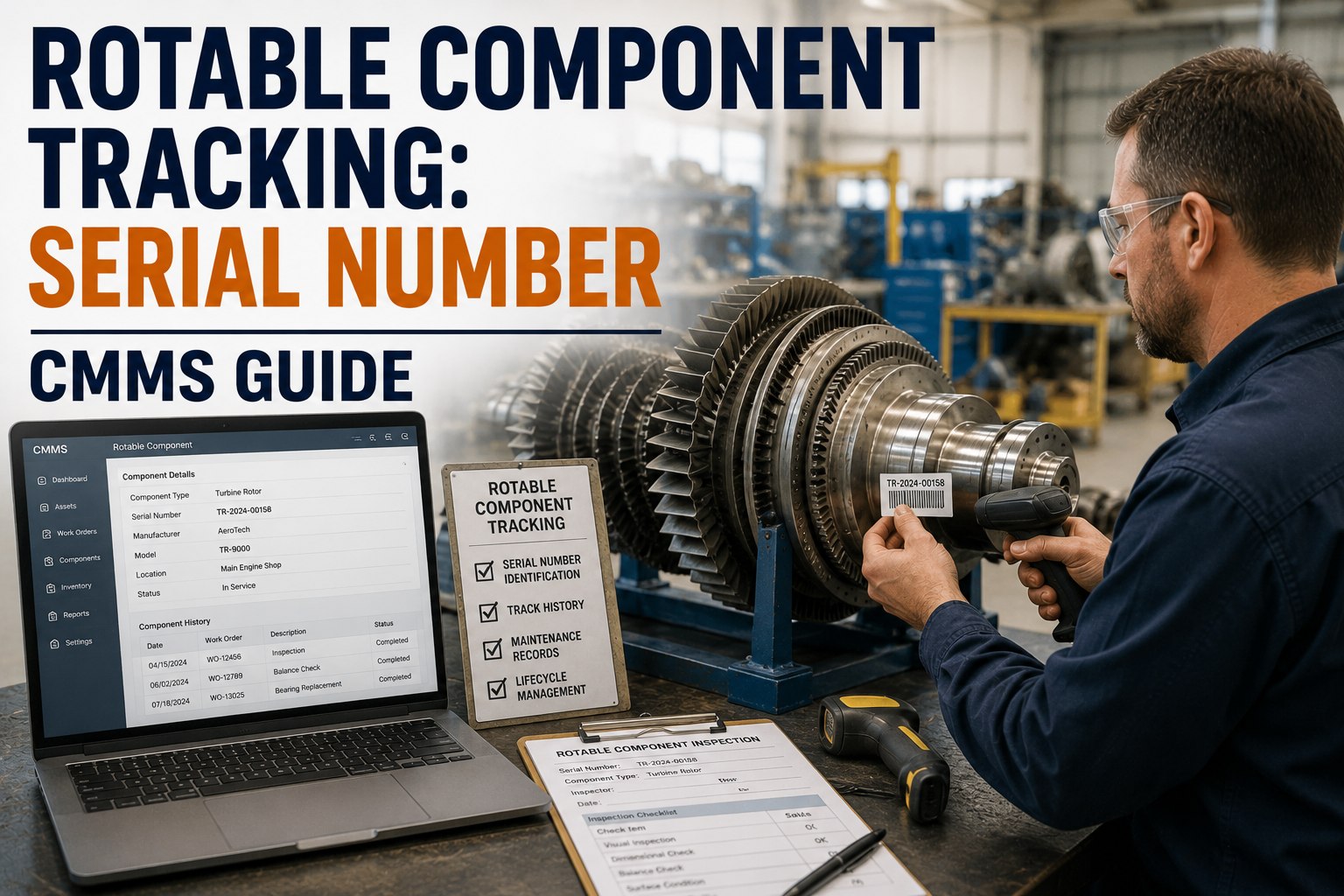
Rotable component tracking by serial number is the single point where airworthiness audits either pass cleanly or unravel completely — one missing removal record, one undocumented cycle, and the aircraft stays on the ground until traceability is rebuilt by hand. For maintenance organizations managing CFM56 modules, APU subassemblies, landing gear, and other high-value repairable parts, the serial number is the spine of every lease return, every 8130-3 chain, and every back-to-birth calculation. A CMMS built for aviation turns that spine into structured, queryable data so audits close in days instead of weeks — and the fastest way to see how is to Start Free Trial with your own component register.
Can your team reconstruct a full serial-number history for any rotable in under 15 minutes?
If the answer is no, a single missing 8130-3 trace will ground the aircraft — and a lease return that should take five days will take five weeks while technicians sift spreadsheets, email folders, and paper tag drawers.
The part number tells you what it is. The serial number tells you where it has been.
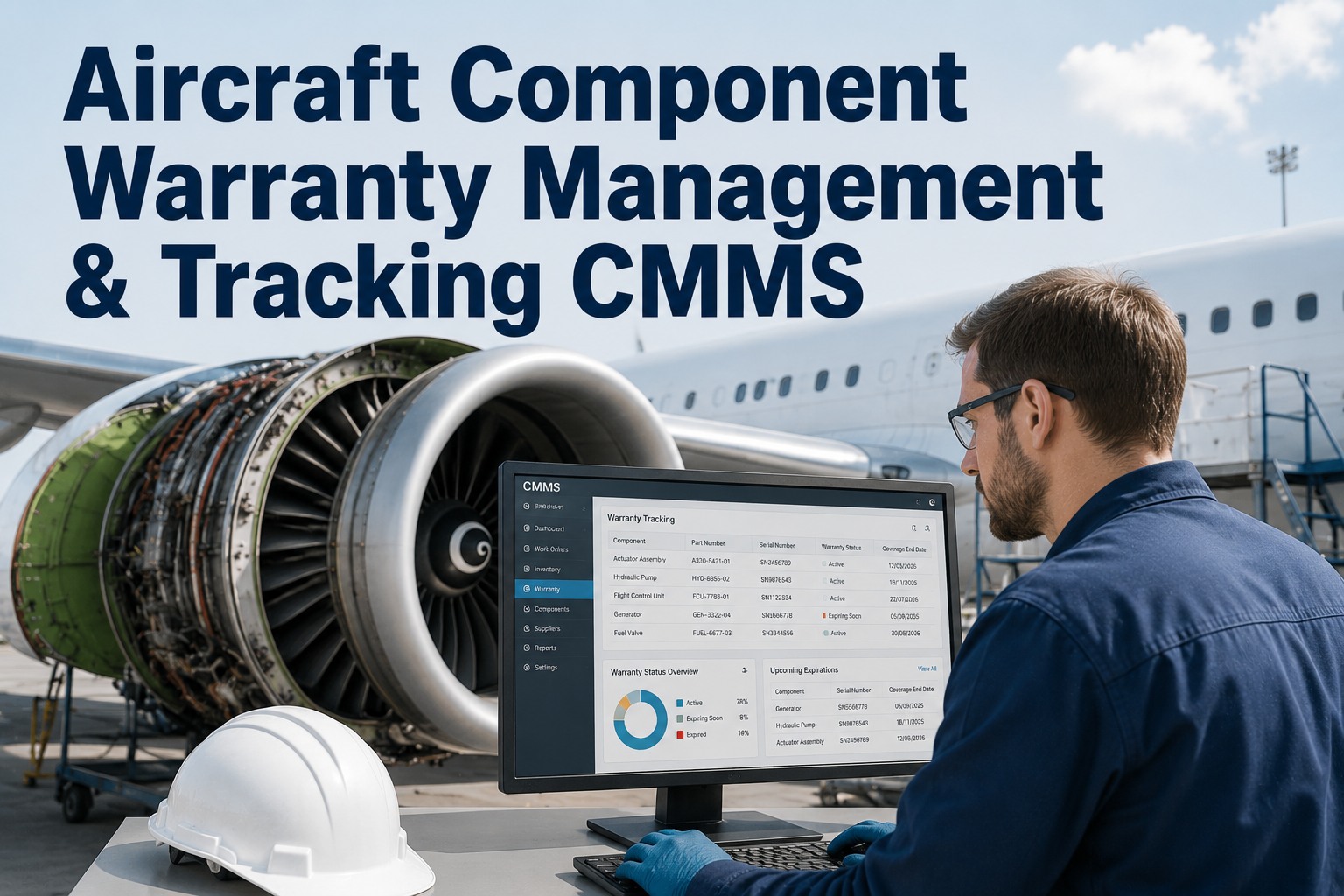
A part number (PN) defines a component's design and interchangeability. The serial number (SN) is the unique identity that carries airworthiness — every cycle, every removal, every shop visit, every dual-release tag. A CMMS that tracks rotables only by PN is auditing on assumptions; one that links SN to position, time, and document chain is auditing on evidence.
Serial-Linked Position History
Every rotable is tied to a tail, pylon, wing station, or shelf bin with install date, removal date, and reason code. Position gaps are flagged automatically instead of being discovered mid-audit.
Cycles & Hours Accumulation
Flight hours, landings, and APU starts roll up to each SN from aircraft logs or ACARS feeds — so time-since-overhaul stays current without manual spreadsheet reconciliation at month-end.
Back-to-Birth Records
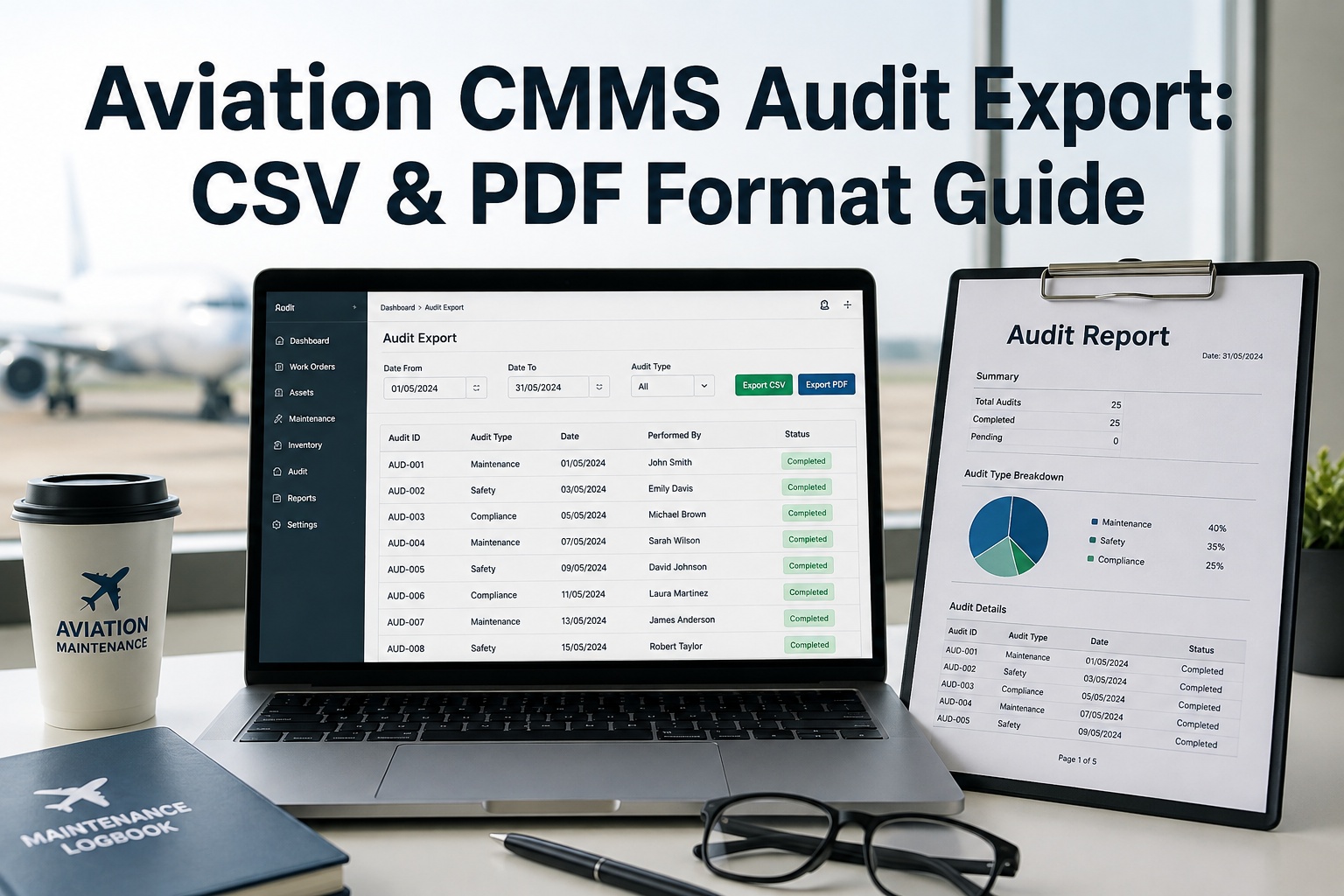
Life-limited parts carry a complete BTB calculation — zeroed hours, last overhaul, cumulative cycles — viewable in one screen and exportable as the audit packet the FAA or EASA expects.
8130-3 / EASA Form 1 Chain
Dual-release tags attach to each install event, forming an unbroken custody chain from manufacturer to current position. Missing tags surface as red exceptions on the compliance dashboard.
AD / SB / Alert Service Bulletin Linkage
An Airworthiness Directive against a PN-SN combination triggers a work order against every affected tail — not a memo buried in a shared drive — with sign-off evidence attached for inspectors.
Lease-Return Evidence Pack
Generate the lessor's required documentation — certified maintenance records, component history cards, compliance statements — as a structured export rather than a six-week scramble of PDF assembly.
One missing tag can ground an aircraft for three days — and erase a quarter's margin.
A narrowbody AOG event runs $10,000–$150,000 per day depending on route network and passenger rebooking exposure. When the root cause is documentation, not hardware, the loss is fully avoidable.
A 3-day documentation hold on a $90K/day aircraft = $270,000 of preventable margin erosion — roughly the annual CMMS subscription for a 40-aircraft fleet, lost in a single event.
A mid-life A320 return with 60 undocumented rotables can trigger $120K–$480K in reconstitution fees and weeks of redelivery delay — before engine restoration reserves are even negotiated.
Worked example: a 24-aircraft regional operator
A regional carrier operating 24 E175s was spending roughly $42,000 annually on contract technical records staff to reconstruct rotable histories for quarterly internal audits — and still absorbed two AOG documentation holds totaling $185,000 in one year. After implementing serial-number-linked tracking in their CMMS, audit prep dropped from six person-weeks to four days, the two recurring documentation AOGs were eliminated within the first full audit cycle, and the contract records spend was redirected to predictive analytics. Net payback: under four months on subscription cost alone.
From spreadsheet chaos to audit-ready in 90 days.
A focused rollout moves a mid-size operation from paper-and-PDF rotable tracking to a fully serial-linked, tag-attached, audit-exportable system in one quarter — without grounding aircraft for data migration.
Data cleansing & import
Existing rotable register, tag PDFs, and last-known positions are normalized into the SN schema. Duplicates flagged, missing SNs identified, and a reconciliation report produced before any go-live decision.
Position & document linking
Each active SN is linked to its current aircraft position and historical removal/install events. 8130-3 and EASA Form 1 tags are attached to install records, building the custody chain backward.
Cycles, hours & AD/SB mapping
Flight hours and landings begin rolling to each SN. Life-limited parts get BTB baselines. Applicable Airworthiness Directives and Service Bulletins are mapped to PN-SN and scheduled into work orders.
Audit dry-run & handover
A simulated FAA or EASA audit is run against the system: random SN pulls, BTB verification, tag-chain reconstruction. The team exports a full evidence pack in under 15 minutes and signs off go-live.
What serial-linked CMMS tracking changes at the audit table.
| Audit requirement | Spreadsheet / paper tag system | Serial-linked CMMS |
|---|---|---|
| SN position history reconstruction | 2–72 hours of manual cross-reference across logbooks, emails, PDFs | Single SN query returns full position chain in under 30 seconds |
| 8130-3 / Form 1 tag availability | Physical tag drawer or scattered scan folders; 5–12% missing rate typical | Tag attached to install event; missing tags surface as red exceptions |
| Back-to-birth calculation | Rebuilt per audit from multiple sources; frequent arithmetic errors | Continuously calculated from hours/cycles feed; exportable as audit packet |
| AD/SB compliance evidence per SN | Manual sign-off log; difficult to prove negative compliance | PN-SN linkage auto-generates work order and captures sign-off evidence |
| Lease-return documentation pack | 4–6 weeks of PDF assembly by contract records staff | Structured export generated in minutes; lessor format templates included |
| Finding exposure during audit | High — findings driven by documentation gaps, not maintenance quality | Low — findings limited to genuine maintenance issues, not paperwork |
Stop reconstructing histories by hand. Start exporting them by serial number.
See how serial-linked rotable tracking collapses audit prep from weeks to days — and keeps every 8130-3, every BTB, and every position gap visible in one dashboard.
Rotable tracking questions maintenance teams ask before going live.
What exactly counts as a rotable component, and how is that different from a consumable or expendable?
A rotable is a repairable, high-value component with a unique serial number and a defined overhaul cycle — think hydraulic actuators, APUs, landing gear assemblies, engine modules, and avionics LRUs. Consumables (gaskets, lockwire) are used once and discarded; expendables (bearings, filters) are removed and scrapped. Only rotables carry the serial-level custody chain that makes traceability tracking and back-to-birth calculations meaningful for airworthiness.
How does a CMMS handle dual-release documentation like FAA 8130-3 and EASA Form 1?
Each install event in the system requires an attached tag before the work order can close. The tag record captures issuing authority, dual-release status, part and serial number, and work accomplished. When an auditor pulls that SN, the full chain of tags — manufacturer release through every subsequent shop visit — appears in chronological order. You can see this in action when you Book a Demo with our aviation team.
Can the system import our existing rotable register without re-keying everything?
Yes. Most registers arrive as a spreadsheet or export from a legacy MRO system. The import tool maps your columns to the serial-number schema, flags duplicates and missing SNs, and produces a reconciliation report so you decide what to clean before go-live. A 5,000-line rotable register typically cleans and imports in 10–14 days.
How are flight hours and cycles kept current on each serial number?
The CMMS accepts aircraft utilization from manual log entry, ACARS feeds, or a monthly bulk import. Hours and landings roll up to every SN installed on that tail at the time of flight, so time-since-overhaul stays accurate without a technician touching a spreadsheet. Life-limited parts recalculate BTB automatically on each utilization update.
What happens when an Airworthiness Directive hits a part number we have installed?
The PN-SN linkage means the system identifies every affected serial number across the fleet in seconds and auto-generates a work order against each aircraft. Sign-off evidence attaches to the work order, and the compliance statement is ready for the next audit. You can validate your fleet's exposure in a trial environment — Start Free Trial and pull an AD impact report against your own data.
Every serial number. Every tag. Every cycle. One audit-ready system.
Build the rotable tracking foundation that turns airworthiness audits and lease returns from six-week scrambles into 15-minute exports.
Free 14-day trial · No credit card