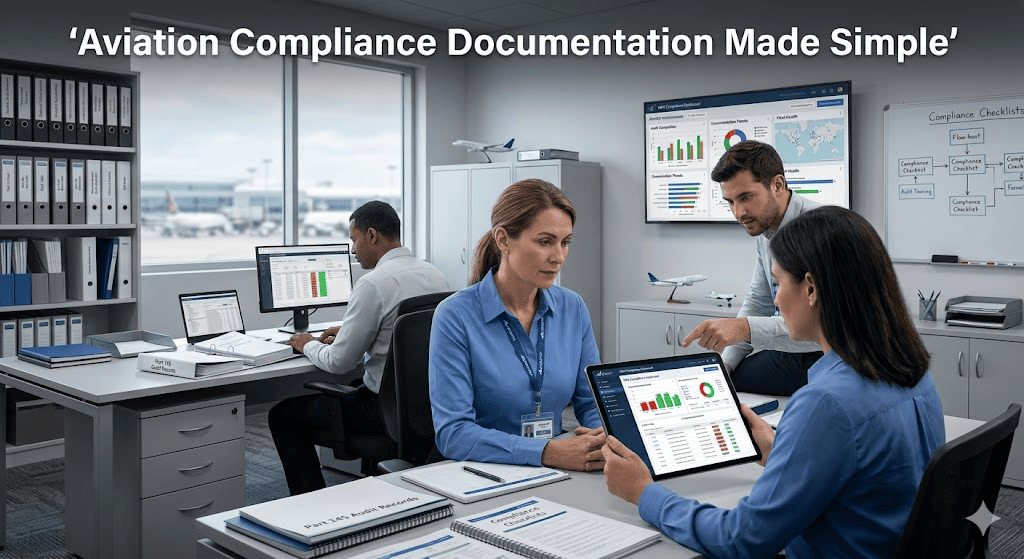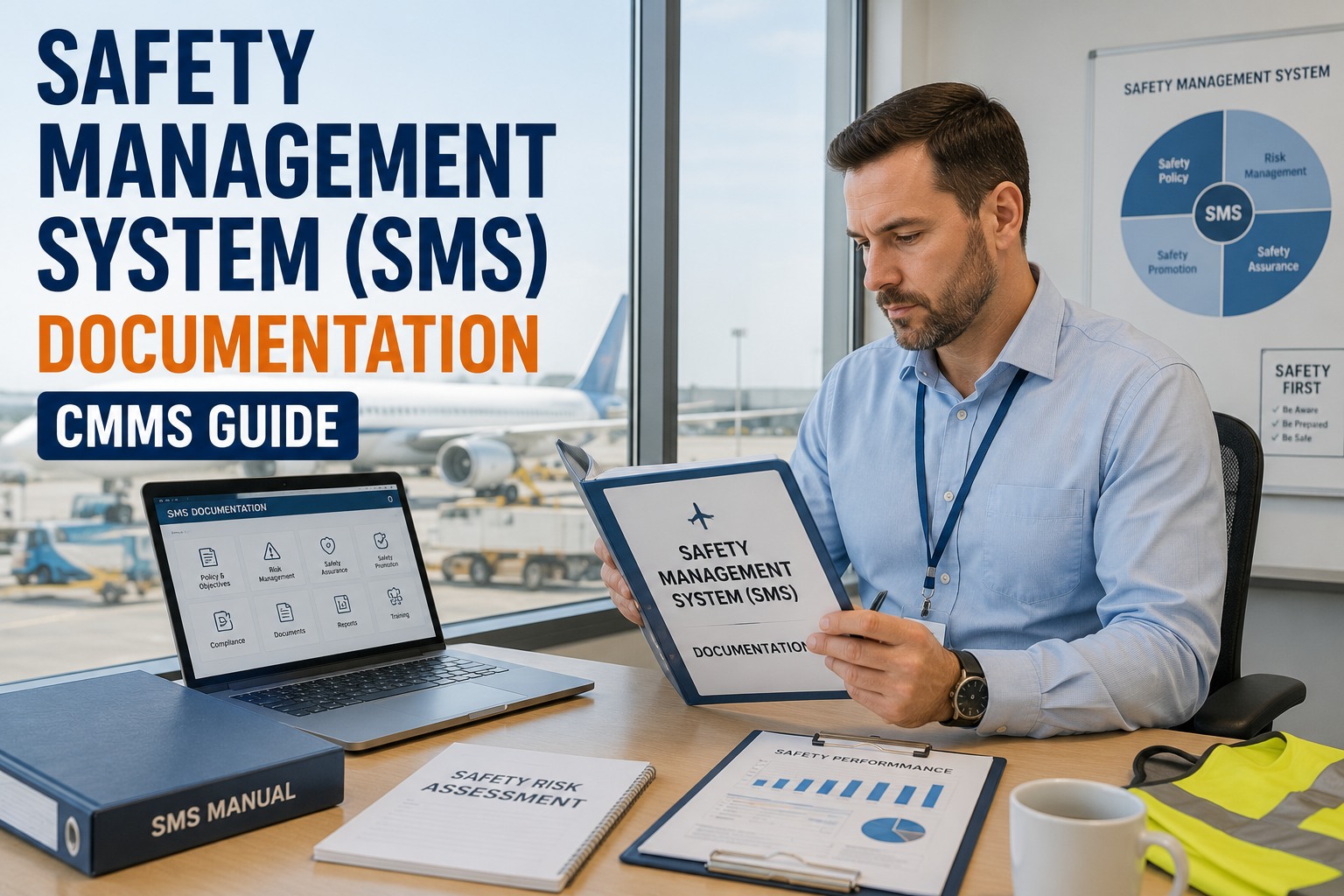
Safety Management System (SMS) documentation in aviation is where regulators can either see a working safety culture or a paper program — and Just Culture requires the records to prove intent. This guide covers hazard reporting workflows, risk assessment tracking, safety assurance evidence, and management review records aligned with ICAO Annex 19 expectations. A purpose-built safety management system CMMS transforms scattered spreadsheets and paper logs into a single, audit-ready SMS compliance record. See how OxMaint simplifies this by signing up for a Start Free Trial, or read on to learn how to modernize your SMS documentation for 2026.
Can regulators see your safety culture — or just a paper program?
SMS documentation is the proof behind your Just Culture. When auditors arrive, the speed and completeness of your hazard reports, risk registers, and corrective action records determine whether your SMS is deemed compliant or merely cosmetic.
Aviation organizations that digitize SMS documentation reduce audit preparation time by up to 70% and close corrective actions 2x faster than those relying on shared drives and spreadsheets.
The Four Pillars of Aviation SMS Documentation
A compliant aviation SMS rests on four ICAO-defined pillars. Each pillar generates specific records that must be traceable, time-stamped, and retrievable on demand — exactly what a safety management system CMMS is built to manage.
Safety Policy & Objectives
Documented management commitment, safety accountabilities, emergency response planning, and Just Culture policy. Regulators verify that safety responsibilities are assigned, signed, and communicated across all operational levels.
Safety Risk Management
Hazard identification logs, risk assessment matrices, and mitigation tracking. Every identified hazard must have a documented severity score, likelihood rating, and assigned corrective action with a closure date.
Safety Assurance
Internal audit findings, safety performance monitoring, and continuous improvement records. Evidence that the organization actively measures SMS effectiveness and feeds data back into the risk management cycle.
Safety Promotion
Training records, safety communication logs, and competency assessments. Proof that safety knowledge is actively distributed and that staff are trained on their specific SMS responsibilities and reporting duties.
How to Build an Aviation SMS Compliance Record with CMMS
A documented SMS workflow eliminates gaps between hazard identification and corrective action closure. Here is the 5-step lifecycle every maintenance and reliability team should operationalize within their CMMS.
Capture hazards at the source
Technicians log hazards via mobile devices directly from the hangar floor or ramp. The CMMS auto-stamps the time, location, asset ID, and reporter identity — creating an immutable record that satisfies SMS compliance requirements.
Score severity and likelihood
Each hazard is routed to a safety officer who applies the 5x5 risk matrix. The CMMS calculates the risk priority number (RPN) and flags high-risk items for immediate mitigation, preventing critical hazards from sitting in an inbox.
Assign corrective work orders
Mitigation actions become tracked work orders linked to the original hazard. Spare parts, labor hours, and asset downtime are captured against the safety event, proving that corrective action was both planned and executed.
Verify effectiveness
Post-mitigation, the safety team verifies that the risk has actually been reduced to an acceptable level. The CMMS holds the evidence — inspection results, updated asset condition data, and sign-offs — in one traceable chain.
Close the loop with leadership
Trend reports on hazard frequency, average closure time, and recurring asset failures are auto-generated for quarterly management review. This proves active safety assurance oversight to ICAO and FAA auditors.
CMMS SMS Documentation vs. Spreadsheets: What Changes
A 180-asset aviation operation spending $42K annually on reactive maintenance and manual safety logging typically loses 15+ hours per month reconciling hazard reports across shared spreadsheets. A CMMS eliminates that gap.
| SMS Requirement | Spreadsheets / Paper | Safety Management System CMMS |
|---|---|---|
| Hazard Reporting Speed | Hours to days; manual entry | Real-time mobile capture at the point of discovery |
| Risk Assessment Traceability | Separate files; version conflicts | Auto-linked to hazard record; immutable audit trail |
| Corrective Action Tracking | Email chains; no SLA alerts | Work-order driven with automated escalation |
| Audit Preparation Time | 3–5 days of manual compilation | 1-click filtered exports; ready in minutes |
| Management Review Data | Manual pivot tables; outdated snapshots | Live KPI dashboards on closure rates and trends |
How OxMaint Helps: SMS Record Management That Proves Itself
OxMaint maps directly to the four SMS pillars, turning safety documentation from a liability into a competitive advantage. These are the specific capabilities that drive measurable compliance and operational ROI.
Mobile Hazard & Near-Miss Capture
Technicians log hazards via the OxMaint mobile app directly from the ramp or hangar. Photos, asset QR codes, and custom safety forms auto-attach to the record — cutting hazard-to-report time by 80%.
Outcome: 80% faster hazard reporting5x5 Risk Matrix Automation
Built-in risk assessment scoring automatically calculates RPN, flags unacceptable risk levels, and routes them to safety officers for immediate review — no manual matrix lookups required.
Outcome: 2x faster corrective action dispatchAudit-Ready Safety Dashboards
Live dashboards track open hazards, average closure time, and recurring asset risk trends. Auditors see a real-time compliance picture instead of stale spreadsheets pulled days before a review.
Outcome: 70% reduction in audit prep timeImmutable Work Order Evidence
Every corrective work order captures labor hours, spare parts used, completion sign-offs, and post-mitigation verification — a single chain of evidence linking mitigation to the original hazard.
Outcome: 100% traceability from hazard to closureSee OxMaint on your assets — book a 30-min demo
Discover how an AI-powered CMMS turns your SMS documentation into an audit-ready, fully traceable compliance engine.
Aviation SMS Documentation & CMMS: Common Questions
What is SMS documentation in aviation?
SMS documentation in aviation is the structured set of records that proves a Safety Management System is actively functioning. It includes safety policies, hazard reports, risk assessments, corrective action logs, safety assurance audits, and training records aligned with ICAO Annex 19 requirements. A safety management system CMMS centralizes these records for instant retrieval.
How does a CMMS support ICAO Annex 19 SMS compliance?
A CMMS supports ICAO Annex 19 compliance by providing time-stamped, immutable records for hazard reporting, risk mitigation, and safety assurance activities. It links corrective work orders directly to identified hazards, ensuring that every mitigation action is traceable from discovery through closure and verifiable during audits.
Can OxMaint replace our spreadsheet-based safety logs?
Yes. OxMaint replaces scattered spreadsheets and shared drives with a centralized, mobile-accessible SMS record system. You can migrate existing hazard logs during onboarding, and the platform auto-links corrective work orders to safety events — eliminating manual reconciliation. Start Free Trial to experience the transition.
What records are needed for an FAA SMS audit?
An FAA SMS audit typically requires documented safety policy and accountabilities, a hazard log with associated risk assessments, records of corrective actions and their effectiveness verification, safety training completion logs, and management review minutes. A CMMS like OxMaint generates filtered, time-stamped exports of all these records in minutes rather than days.
How long should aviation SMS records be retained?
Aviation SMS records should generally be retained for a minimum of 3 to 5 years, though specific retention periods vary by jurisdiction and regulatory authority. A CMMS ensures long-term secure storage and instant searchability, so historical hazard and corrective action data remains accessible for trend analysis and recurring audits. Book a Demo to see how OxMaint handles retention.
Stop proving your safety culture with paper
OxMaint gives you the CMMS SMS documentation infrastructure regulators expect — hazard-to-closure traceability, automated risk scoring, and live compliance dashboards.
Free 14-day trial · No credit card