A missing towbar at the wrong moment turns a routine pushback into a delayed departure and a frustrated ground crew searching the ramp for spare equipment. Ground operations teams using Sign Up Free on OxMaint can track towbar demand against availability by stand and shift — turning tool shortages from a recurring surprise into a measurable inventory pattern across high-frequency arrivals and departures.
Why Towbar Shortages Build Silently Across Ramp Operations
Most ramp teams track total towbar count but rarely measure demand against availability by stand, shift, or aircraft type. That gap is where idle searches, last-minute borrowing, and emergency procurement quietly add up. Book a Demo to see how OxMaint maps tool demand against stock levels to expose shortages before they delay a departure.
Five Dimensions of Towbar Inventory Optimization
A complete inventory optimization view connects demand ranking, checkout tracking, and reorder configuration into one ramp-wide picture. Sign Up Free to start logging tool inventory in OxMaint and give every stand the same visibility into equipment availability.
Demand vs Availability Ranking
Ranking towbar demand against current stock by stand and shift reveals which locations are consistently short, rather than treating every shortage as a one-off incident.
Tool Checkout and Return Tracking
Logging which crew checked out which towbar, and when it was returned, closes the visibility gap that leads to tools sitting idle in the wrong location.
Reorder Point Configuration
Setting reorder thresholds based on actual usage patterns, rather than a fixed annual count, keeps stock aligned with real demand instead of guesswork.
Cross-Stand Tool Sharing Visibility
When towbars move between stands informally, tracking becomes impossible. Visibility into cross-stand sharing shows where equipment is actually ending up at any given time.
Loss and Damage Pattern Tracking
Recurring damage or loss on the same equipment type often points to a handling or storage issue. Pattern tracking surfaces this before it becomes a recurring budget line.
Towbar Inventory Benchmarks by Operation Type
Different ramp profiles create distinct towbar demand patterns. Comparing your stock levels against these benchmarks helps prioritize where inventory tracking will have the most impact. Book a Demo to explore how OxMaint tracks tool inventory alongside ground crew dispatch data in one platform.
| Operation Type | Common Shortage Driver | Typical Demand Pattern | Availability Risk Level | OxMaint Maintenance Lever |
|---|---|---|---|---|
| High-Frequency Narrow-Body Ramps | Back-to-back turn pressure on shared tools | Peak-hour demand spikes | High | Real-time checkout tracking |
| Wide-Body Long-Haul Stands | Specialized towbar fit per aircraft type | Lower frequency, higher specificity | Medium | Demand vs fleet-mix reporting |
| Cargo and Freighter Ramps | Off-hours dispatch with limited staffing | Irregular overnight demand | Medium–High | Shift-level availability alerts |
| Regional Turboprop Aprons | Smaller tool pool, less redundancy | Steady, predictable demand | Medium | Reorder point configuration |
| Multi-Tenant Shared Ramps | Cross-operator tool sharing without tracking | Unpredictable, overlapping demand | High | Cross-stand sharing visibility |
How Towbar Shortages Compound Across Ground Operations
A missing towbar rarely stays a single-stand problem. It pulls crews away from their assigned tasks, delays the next dispatch, and forces costly last-minute decisions. Book a Demo to see how OxMaint connects inventory data with dispatch records to flag compounding shortage risk early.
Building a Towbar Inventory Optimization Practice with OxMaint
Putting inventory optimization into daily practice starts with a structured equipment catalog. Sign Up Free to register your towbars and spare tools in OxMaint and begin tracking checkout activity from day one.
Catalog Towbars and Spare Tools
Register every towbar in OxMaint with QR-based identification, assigned stand, and aircraft-type compatibility as the foundation for inventory tracking.
Configure Reorder Alerts
Set reorder thresholds in OxMaint based on actual usage data so procurement is triggered before stock runs low, not after a shortage is already underway.
Track Checkout and Return by Crew
Use OxMaint's QR scanning workflows to log who checked out which towbar and when it was returned, closing the visibility gap on equipment location.
Monitor Demand Against Stock
Compare checkout frequency by stand and shift against current inventory to identify where stock levels are mismatched with actual demand.
Report Inventory Trends Across Stands
Turn checkout and reorder data into recurring reports that ground operations and procurement can use to plan stock levels ahead of peak demand periods.
Frequently Asked Questions: Towbar Inventory Optimization
What is towbar inventory optimization?
It is the practice of ranking towbar demand against current stock by stand and shift, so ground crews can find available equipment without delay and procurement can plan ahead of shortages.
How does a towbar shortage affect departure timing?
A missing towbar forces a crew to search for or borrow equipment from another stand, adding minutes to the pushback phase that can push a turnaround past its planned window.
How does OxMaint support ground crew inventory tracking?
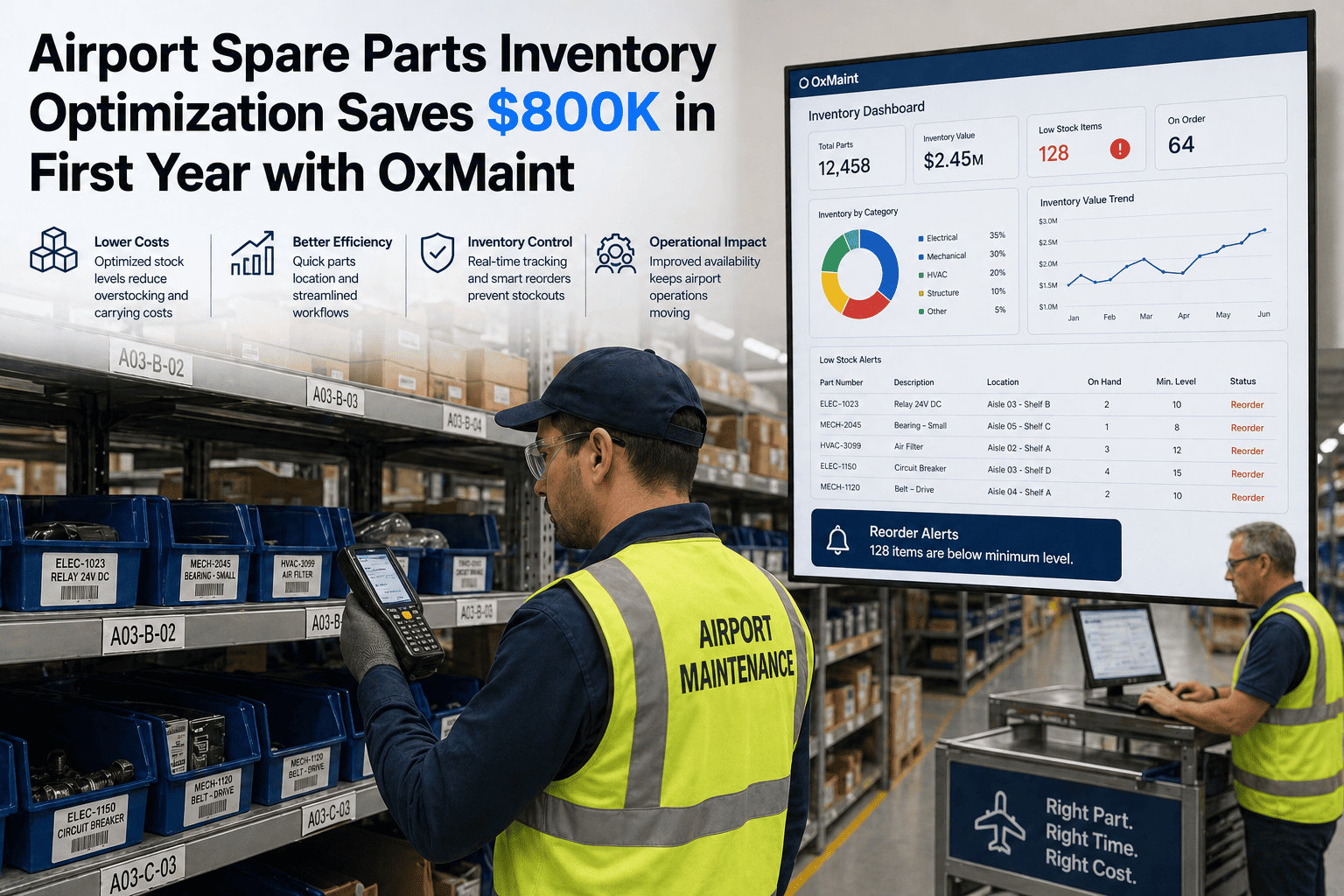
OxMaint logs tool checkout and return activity, configures reorder alerts based on usage patterns, and reports inventory trends by stand so shortages are visible before they affect dispatch.
What is the difference between demand ranking and reorder point configuration?
Demand ranking shows which stands or shifts use a tool most heavily. Reorder point configuration sets the stock level that triggers a new purchase order. Both work together to prevent shortages.
How often should towbar inventory be reviewed?
High-frequency ramps benefit from daily checkout review, with broader stock-level reviews on a weekly basis. OxMaint automates this reporting cadence across all tracked equipment.