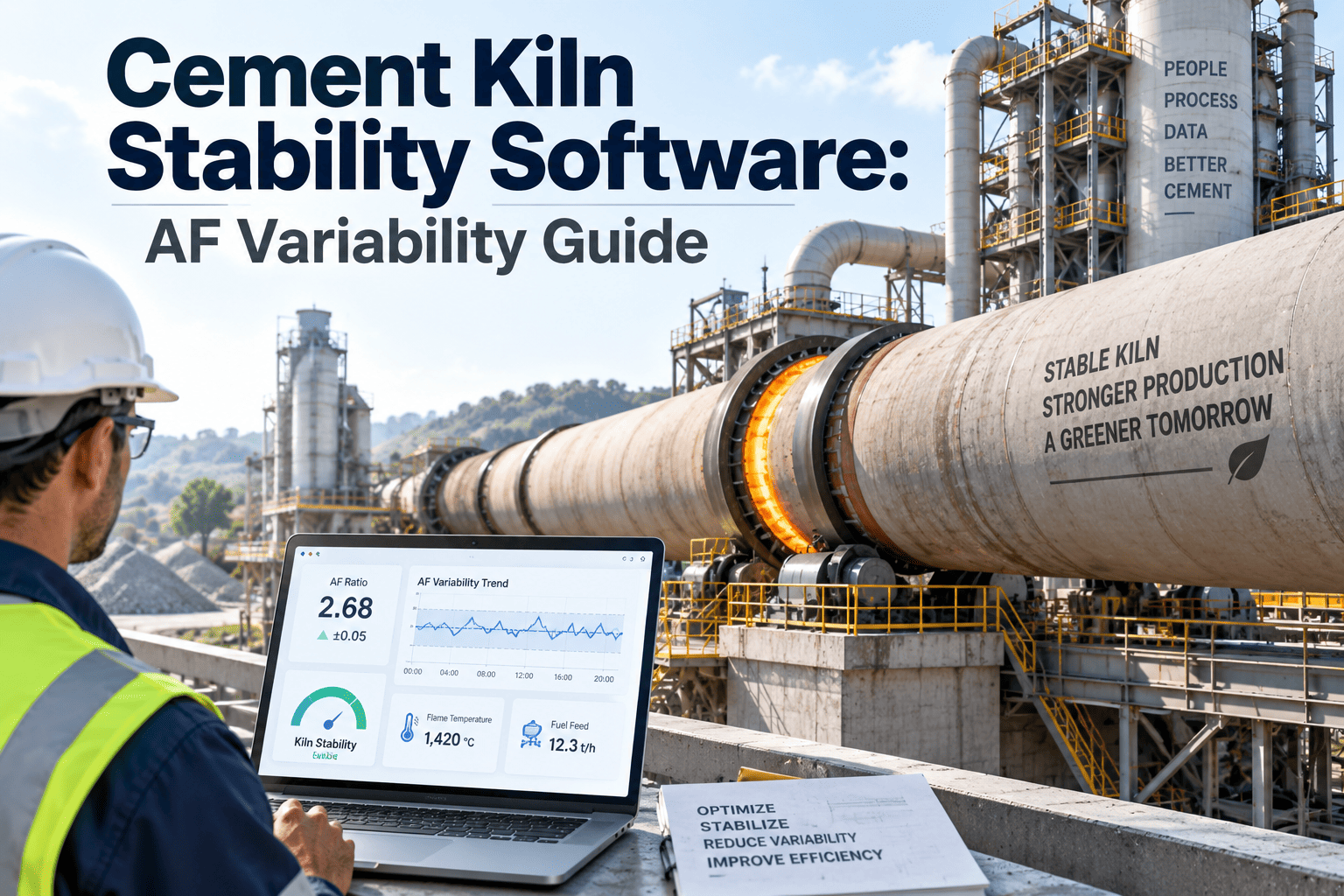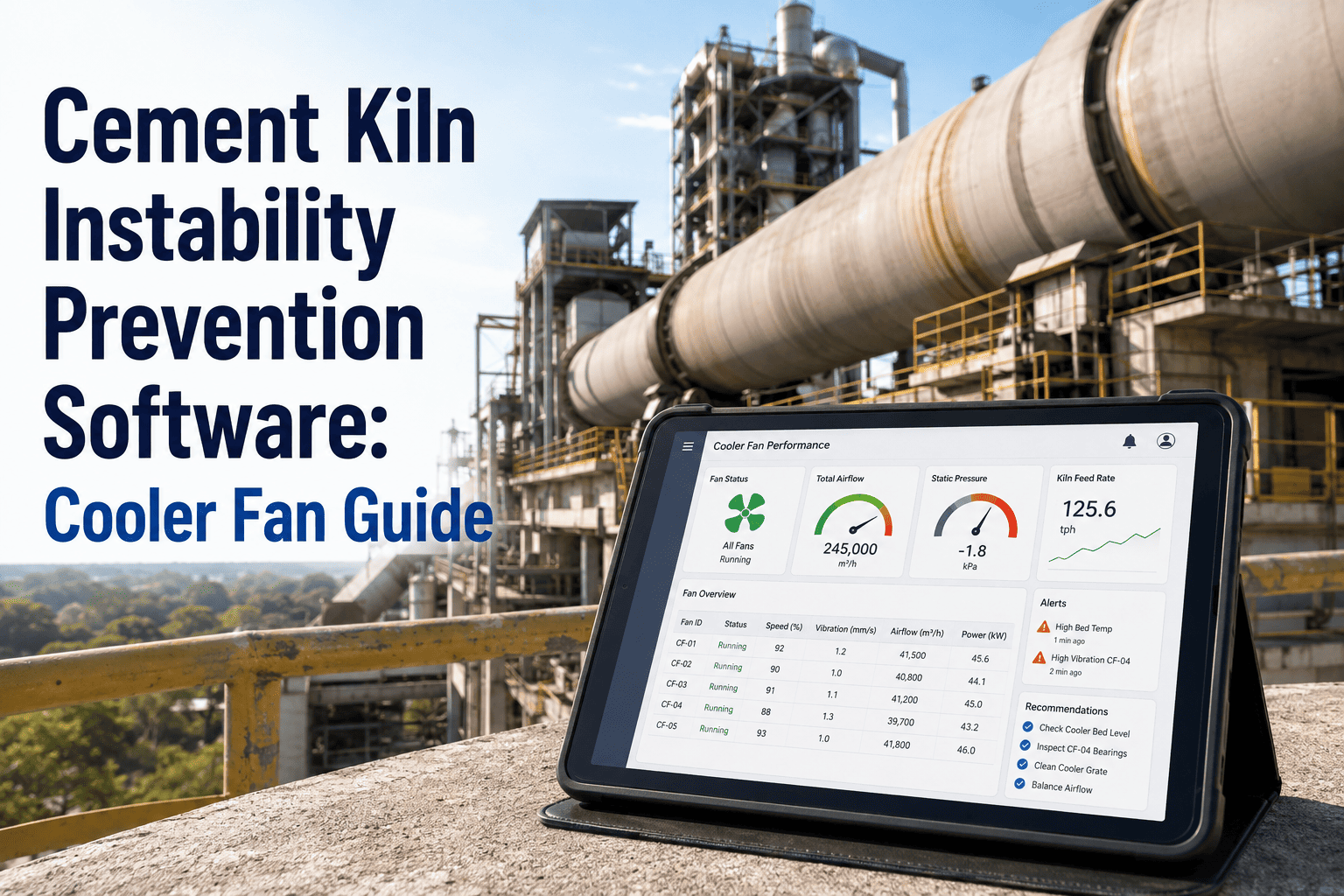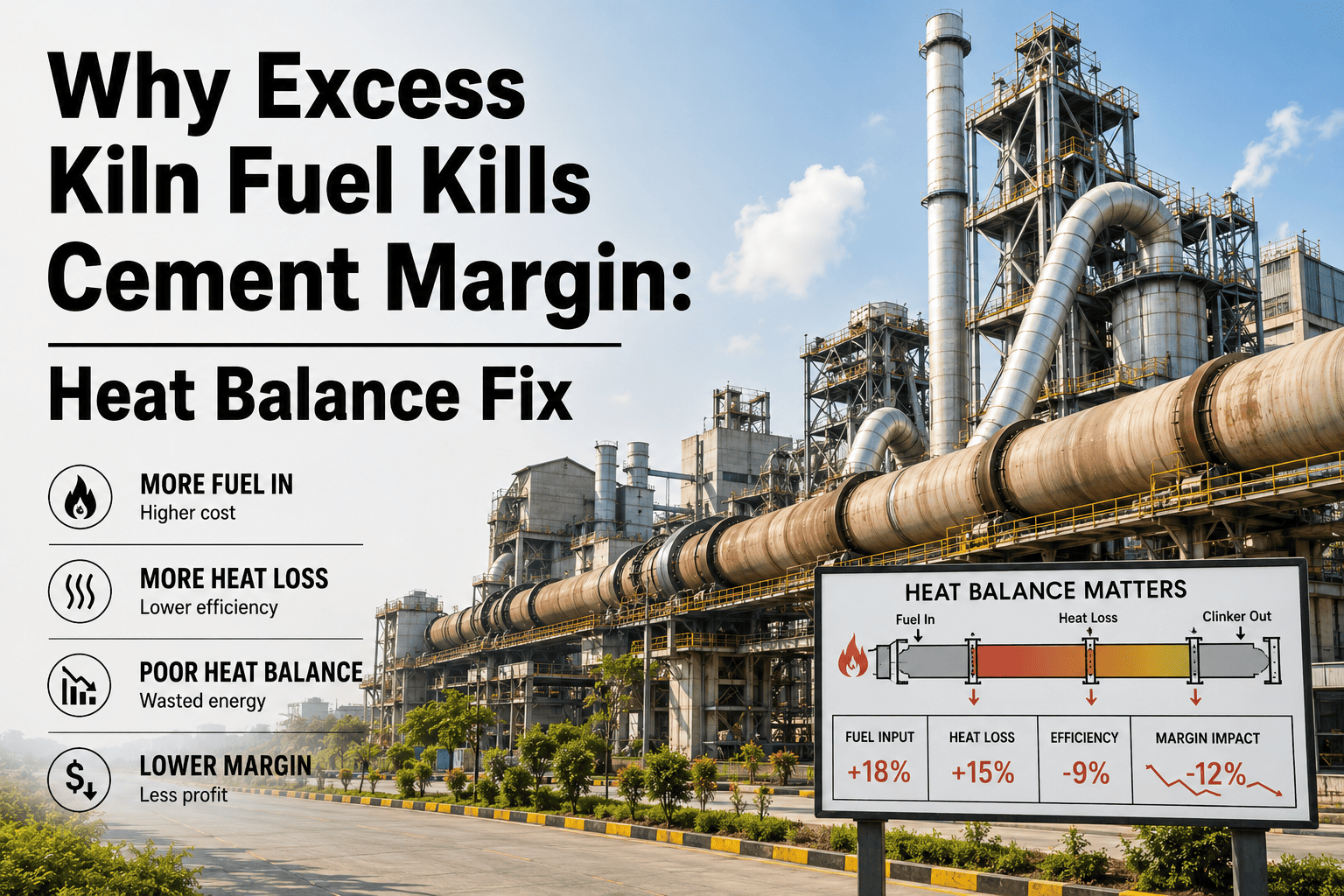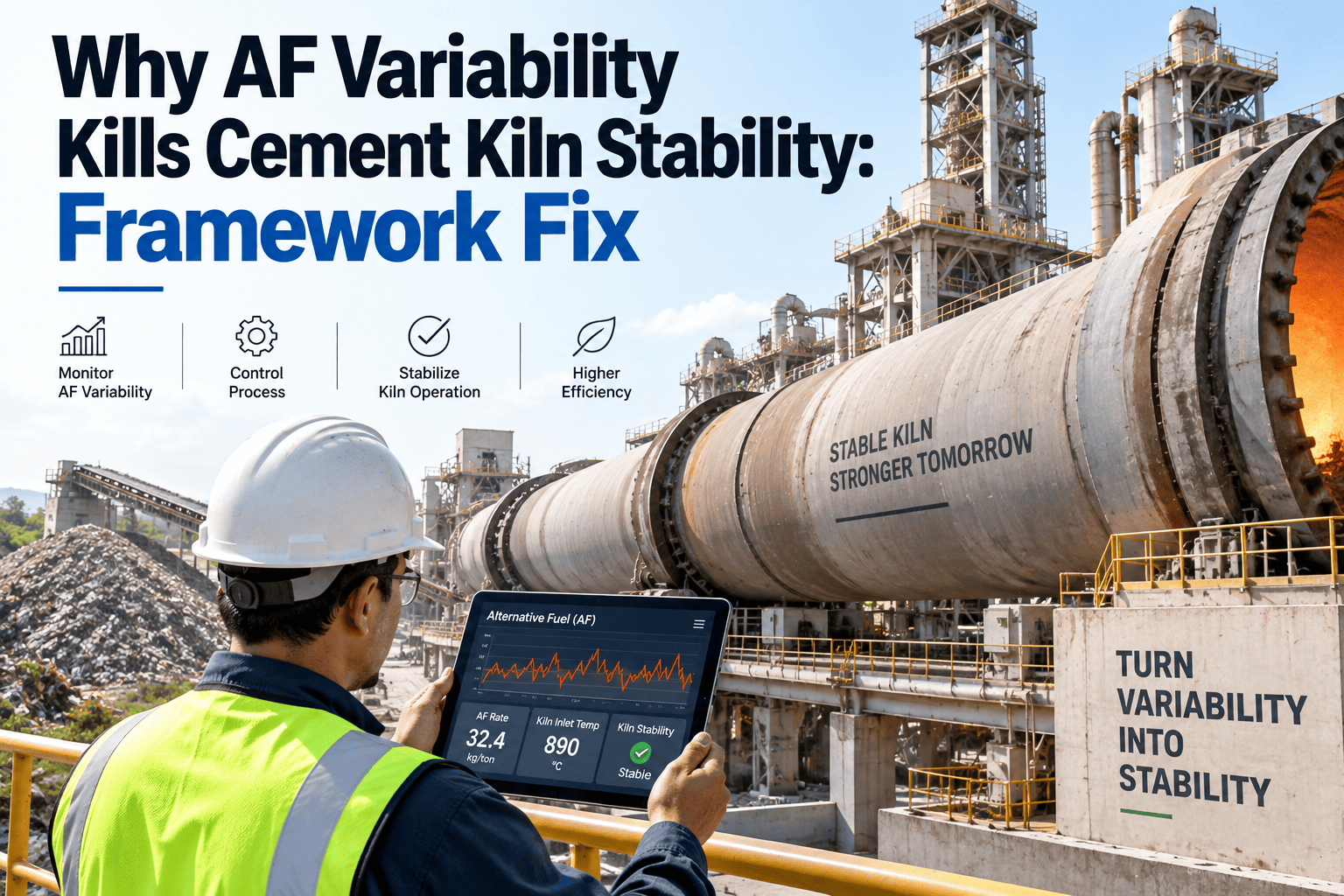
A cement kiln does not care what today's fuel mix report says — it only responds to what actually lands in the burning zone minute by minute. Refuse-derived fuel, tire-derived fuel, and biomass can swing meaningfully in calorific value, moisture, and ash chemistry from one truckload to the next, and because a rotary kiln has a long thermal time constant, an undetected shift propagates through its thermal mass long before any sensor registers the change. By the time free lime readings drift or burning zone temperature falls out of range, the kiln has usually already produced clinker that will not meet spec. The lines that stay stable on a high alternative fuel mix are not burning the cleanest fuel available, they are running a tight feedback loop between what the fuel actually is and what the control room does about it. OxMaint closes that feed-to-clinker loop by tying continuous fuel quality data, feed rate, and kiln asset performance into one system your team can act on in real time.
Turn AF Variability From a Guessing Game Into a Managed Input
OxMaint links fuel quality data, feed rate deviations, and kiln, cooler, and mill asset history into one record, so your team can trace an off-spec clinker batch back to its actual cause instead of guessing between fuel and equipment.
The Causal Chain: How AF Variability Becomes Off-Spec Clinker
Alternative fuel variability rarely shows up as a single dramatic event. It moves through the kiln system as a chain reaction, and every link in that chain is where a plant either catches the problem early or lets it reach the packing plant as off-spec product.
A plant sitting in the poor band is not having a bad batch of fuel, it is running its thermal substitution rate ahead of its quality control discipline, and burning zone instability will keep resurfacing until that gap closes.
Stop Guessing Whether It Was the Fuel or the Equipment
OxMaint logs every root cause analysis, inspection, and maintenance record against the same kiln, cooler, and mill assets tracked in your fuel feed data, so a stability event gets traced to its real cause the first time.
Common Alternative Fuel Streams — Variability Profile
Not every alternative fuel stream behaves the same way once it hits the burner, and a plant that treats all of its AF inputs with the same monitoring intensity is usually over-checking the stable streams and under-checking the volatile ones. The table below reflects typical variability behavior across the streams most cement lines co-process today.
| Fuel Type | Calorific Value Range | Key Variability Risk | Monitoring Priority |
|---|---|---|---|
| Refuse-derived fuel (RDF) | 12–18 MJ/kg | Moisture swings truck to truck | Continuous moisture and NHV tracking |
| Tire-derived fuel (TDF) | 30–35 MJ/kg | Sulfur load and steel wire contamination | Feed-point contamination checks |
| Biomass | 14–17 MJ/kg | Seasonal moisture and calorific drift | Storage condition monitoring |
| Waste-derived blends | Highly variable | Batch-to-batch composition swings | Continuous quality-based feed adjustment |
Where AF Variability Actually Enters Your Kiln Line
Most plants already know alternative fuel varies in principle. What catches operations teams off guard is exactly where that variability enters the process, because it is rarely at the point everyone is already watching most closely.
We were raising our thermal substitution rate every quarter and telling ourselves the fuel quality was holding steady because the delivery specs looked the same. Once we started tracking moisture and NHV variation continuously against our burning zone data, we found the real driver was storage conditions, not the supplier. That single change cut our free lime excursions by more than half.
None of this requires replacing the control systems already running the kiln. AF quality monitoring, feed rate control, and process automation can stay exactly where they are — the gap most plants have is a system that connects that operational data to maintenance history, inspection records, and root cause analysis in one place. A plant that has struggled for years to explain a stability event is usually not short on sensor data, it is short on a way to line that data up against what the kiln, burner, and feed equipment were actually doing at the time. Once fuel quality, feed performance, and asset condition sit in one system, a drift that used to take a cross-functional meeting to diagnose becomes a pattern any process engineer can see on their own.
Frequently Asked Questions
Keep Your AF-Heavy Kiln Line Stable Across Every Batch
OxMaint connects fuel quality tracking, feed performance, and kiln, mill, crusher, cooler, and conveyor maintenance in one platform, so your team catches a stability drift before it becomes a clinker quality problem.