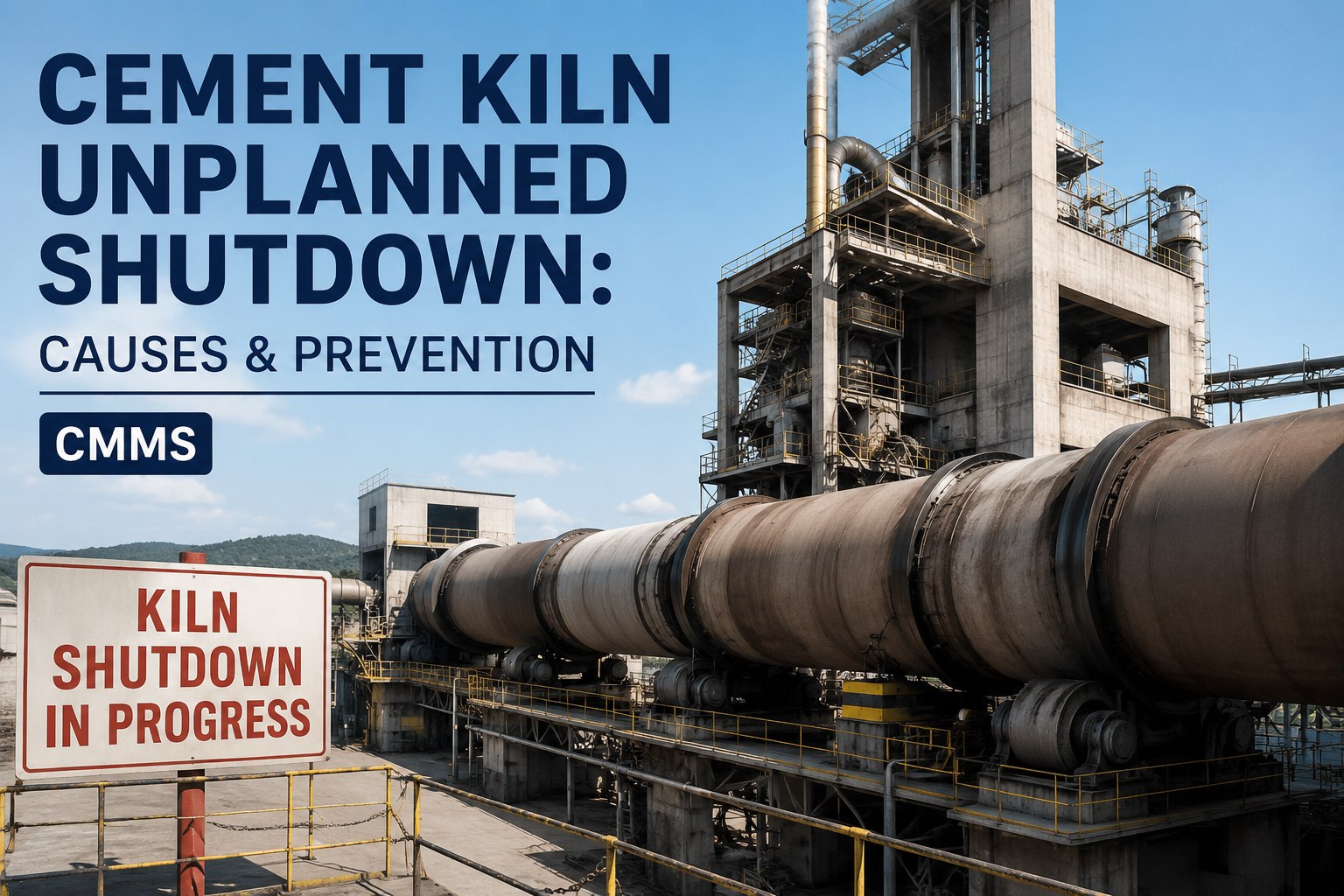
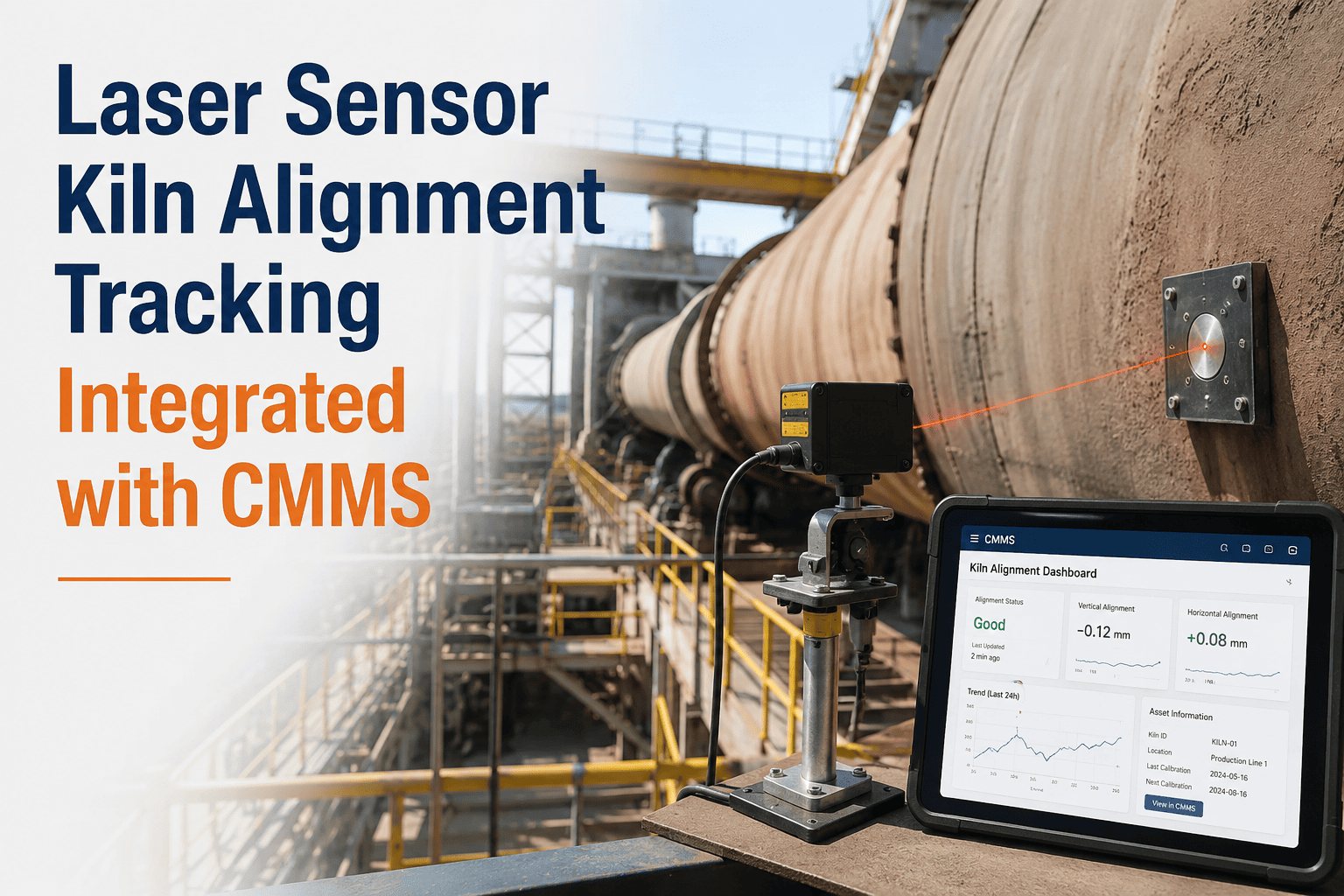
Cooler fan drift rarely announces itself. A stack ID fan running two percent below setpoint, or a grate cooling fan losing pressure after a bearing service, can sit for days looking like nothing more than a rounding error on a trend screen. But cement kilns run on tight airflow balance, and once the cooler side falls out of sync with the kiln inlet, clinker bed depth shifts, secondary air temperature swings, and the burning zone starts hunting for stability it cannot find. By the time an operator notices coating buildup or a temperature spike at the inlet, the fan drift behind it has often been running unnoticed for a full shift. Most plants only catch this pattern after a ring formation forces an unscheduled stop, and the investigation traces back to a fan reading nobody was watching in real time — see how a connected CMMS closes that gap at app.oxmaint.ai.
The Hidden Cost of Cooler Fan Drift
Fan drift is one of the quietest instability triggers in a cement plant. It looks like normal operating noise until the kiln tells everyone otherwise.
60-90 min
Warning Window
Lead time between measurable fan drift and visible kiln instability
15-25%
Output Lost
Production drop during a ring-related unscheduled kiln stop
3-5 Days
Repair Time
Downtime to inspect and repair refractory after severe ring formation
70%
Root Cause Match
Kiln instability events traced back to an airflow or fan imbalance
The Core Problem: A technician checking the cooler fan panel once every two to four hours sees a single snapshot, not a trend. A two percent drift that develops over ninety minutes looks identical to normal fluctuation on one reading — it only becomes obvious once the kiln inlet is already reacting.
How a 2% Fan Drift Becomes a Kiln Stop
Kiln instability is almost never a single event — it is a chain reaction, and every link is a point where continuous monitoring could break the sequence. See the monitoring workflow in action.
What happens: A grate cooling fan or ID fan moves one to three percent off setpoint — small enough to read as noise, not a fault.
Without monitoring: reading sits unnoticed until the next round, two to four hours away.
With OxMaint: drift is flagged within minutes against the live setpoint trend.
What happens: Clinker bed depth on the grate shifts as cooling air becomes uneven, changing how much heat is recovered as secondary and tertiary air.
Without monitoring: bed depth change is invisible until temperature effects appear downstream.
With OxMaint: linked fan and bed-depth trends surface the imbalance together.
What happens: Secondary air temperature swings feed back into the burning zone, and the control loop starts compensating for a problem it cannot see.
Without monitoring: operators chase temperature symptoms without the fan context behind them.
With OxMaint: the original fan alert is still open, pointing directly at root cause.
What happens: Uneven temperature at the kiln inlet encourages buildup, and a ring starts forming where airflow was already inconsistent.
Without monitoring: first sign is a visible coating change, days after the fan drift began.
With OxMaint: escalation history shows exactly when the drift crossed into risk territory.
What happens: Production halts for manual ring removal and refractory inspection, days after the original fan drift that started the chain.
Without monitoring: root cause is reconstructed from memory after the stop.
With OxMaint: timestamped history links the stop directly back to step one.
Every kiln stop in this chain traces back to step one. A CMMS that watches fan setpoints continuously gives operators the window they need to correct drift before the burning zone ever reacts.
Fan Systems Behind Kiln Instability
C
Grate Cooler Fans
Undergrate fans: control cooling airflow through the clinker bed and directly set bed depth stability.
High-pressure recuperation fans: recover heat as secondary and tertiary air feeding the burning zone.
Dampers and grate speed: work together with fan output — a drift in either changes bed profile.
K
Kiln Inlet and ID Fans
Main ID fan: sets draft through the entire kiln and preheater system, sensitive to even small speed changes.
Kiln inlet seal air fan: keeps inlet pressure stable — drift here shows up first as coating changes.
Burner primary air fan: flame shape and temperature respond quickly to primary air drift.
S
Stack and Bag Filter Fans
Bag filter fan: a drift here can mask itself as a filter loading issue rather than a fan issue.
Stack ID fan: the last point where a system-wide imbalance is visible before exhaust.
Manual Rounds vs Real-Time Fan Monitoring
Detection Speed
Every two to four hours, if the round is not skipped during a busy shift.
Detection Speed
Continuous, with drift alerts raised within minutes of setpoint deviation.
Data Resolution
A single point-in-time reading with no view of direction or rate of change.
Data Resolution
A live trend line showing exactly how fast a fan is drifting from setpoint.
Shift Handover
A verbal note that is easy to lose or simplify between shifts.
Shift Handover
Logged automatically in the CMMS and visible to the incoming shift instantly.
Root Cause Trace
Reconstructed from memory and paper logs after the kiln stop already happened.
Root Cause Trace
A timestamped history linking the original drift directly to the resulting event.
Manual Rounds Detection Gap:
2-4 Hrs
vs
Digital Monitoring Detection Gap:
Under 20 min
Four preventable ring stops in a single year is the norm, not the exception, for plants running on manual rounds alone. See what continuous monitoring looks like on your own asset list.
Case Study: Kiln Line Fan Monitoring
The Challenge
The plant experienced four unscheduled kiln stops in twelve months for ring removal, each one preceded by a cooler fan reading that had drifted for hours without anyone noticing. Manual rounds were logged every three hours on paper, and shift handovers rarely carried fan trend context forward.
Solution Implemented
Cooler and ID fan setpoints were connected to OxMaint CMMS with continuous trend tracking, automatic drift alerts, and a shared dashboard visible to both the control room and maintenance team across shift changes.
Results (12 Months)
Ring-Related Stops
4 to 0
Drift Alerts Actioned
Under 20 min
"We used to find out about fan drift from the kiln itself. Now we find out from the dashboard, hours earlier, while it is still an easy fix." — Kiln Reliability Engineer
Frequently Asked Questions
What counts as fan drift, and how small a change matters?
A change of one to three percent from setpoint is enough to start shifting cooling airflow balance. Continuous trend tracking through a platform like
OxMaint CMMS matters more than the size of the deviation itself.
Can this instability pattern happen with a well-maintained fan?
Yes. Drift often comes from control loop tuning, damper wear, or a partially fouled duct rather than fan failure, so mechanical condition alone does not rule it out.
How much warning does continuous monitoring actually give?
Typically sixty to ninety minutes between the first measurable drift and visible kiln instability, enough time for an operator to correct the setpoint before the burning zone reacts.
Does this replace the operator's manual rounds entirely?
No. Manual rounds still confirm physical condition, while digital monitoring adds the continuous trend view between rounds so drift is caught within minutes.
How do we get started on our own kiln line?
Every ring formation investigation reaches the same conclusion: the fan drift was visible in the data long before it was visible in the kiln. Manual rounds cannot watch a trend, paper logs cannot raise an alert, and a shift handover note cannot carry the full history of a two percent deviation. Digital fan monitoring does not change how the kiln behaves — it makes sure someone sees the warning before the kiln has to give one.
OxMaint CMMS tracks cooler and kiln fan setpoints continuously, flags drift while it is still an easy fix, and keeps every shift working from the same trend line.
0
Ring Stops in 12 Months
Under 20 min
Alert to Action
For reliability teams: a free fan-drift readiness check is included with every demo.