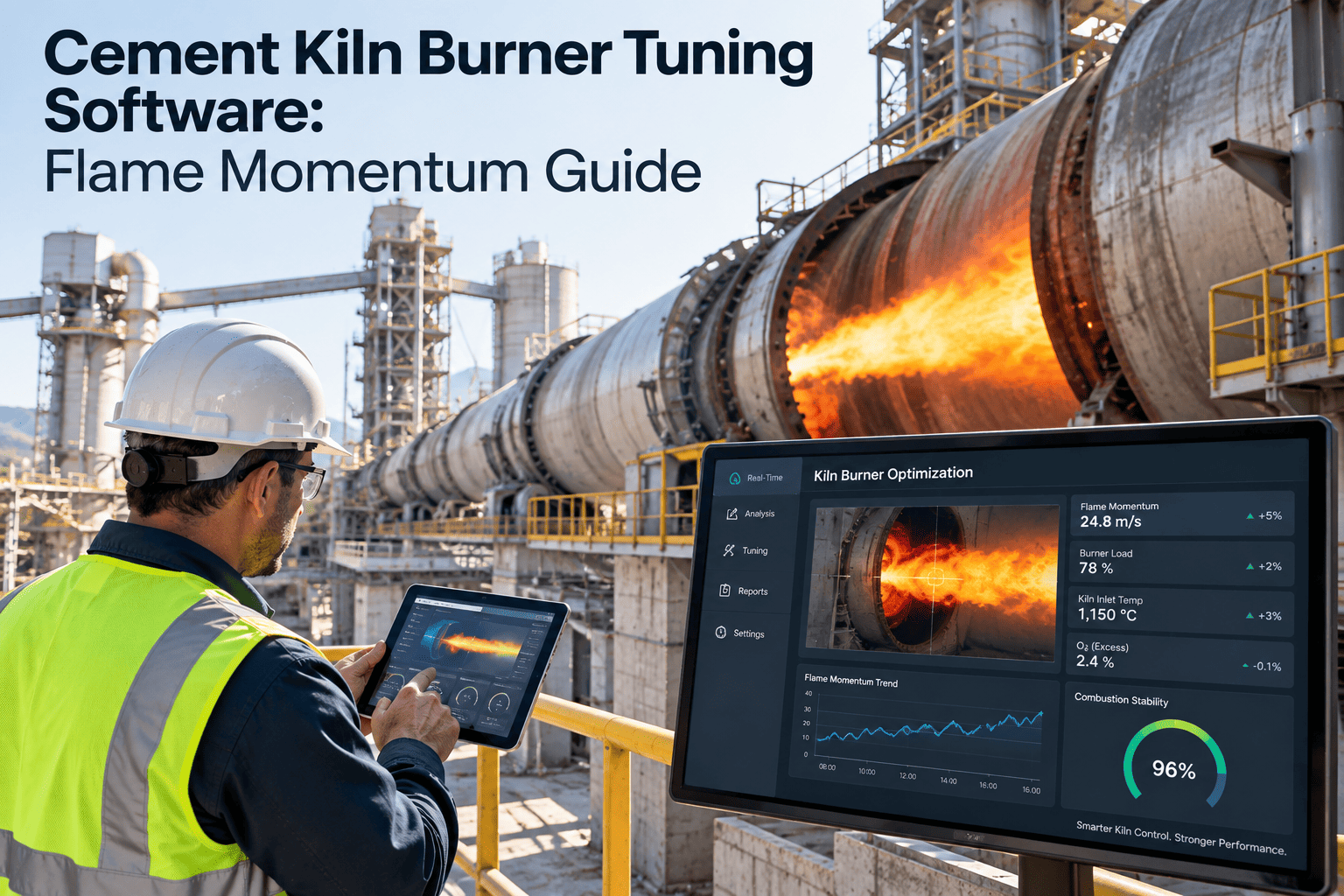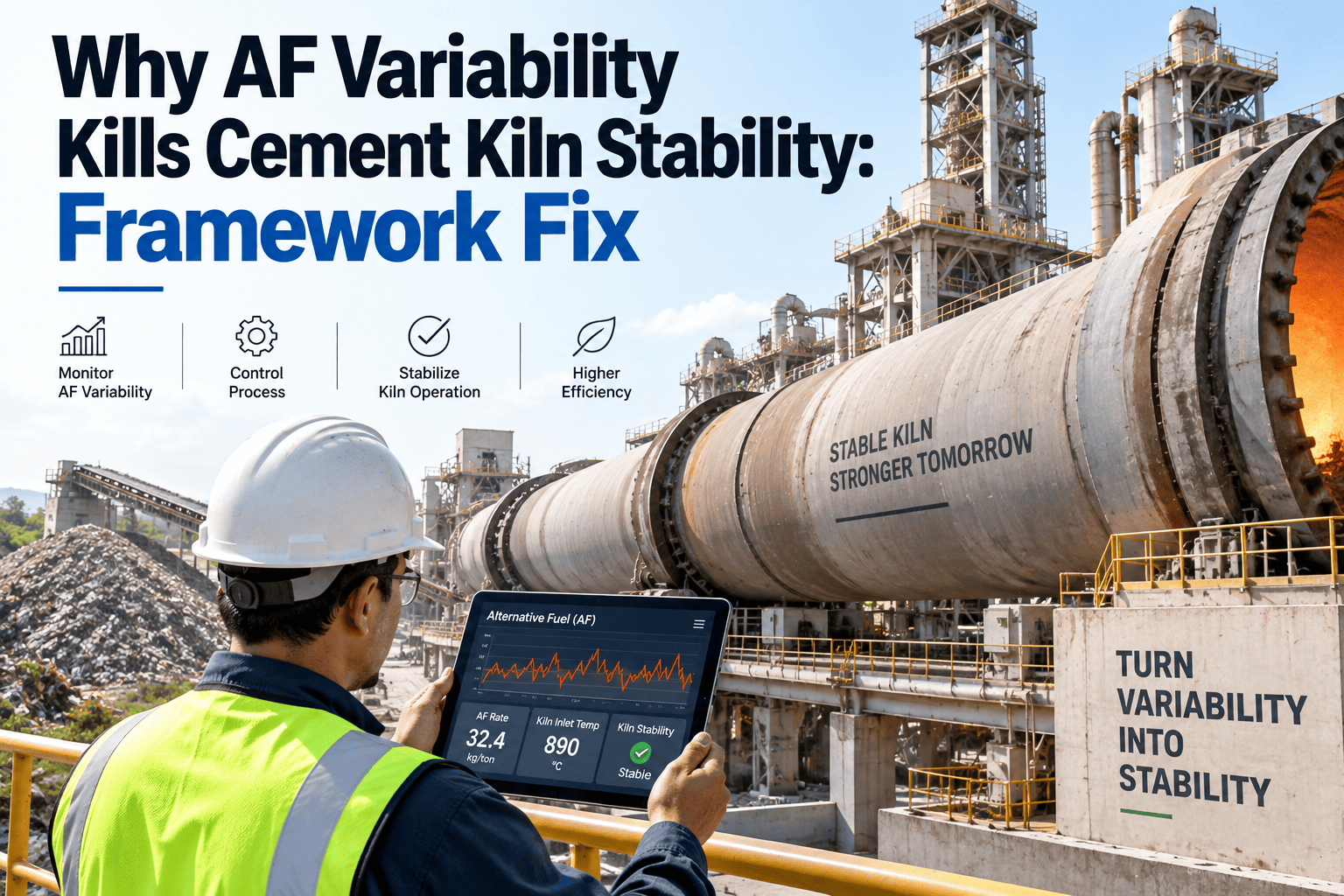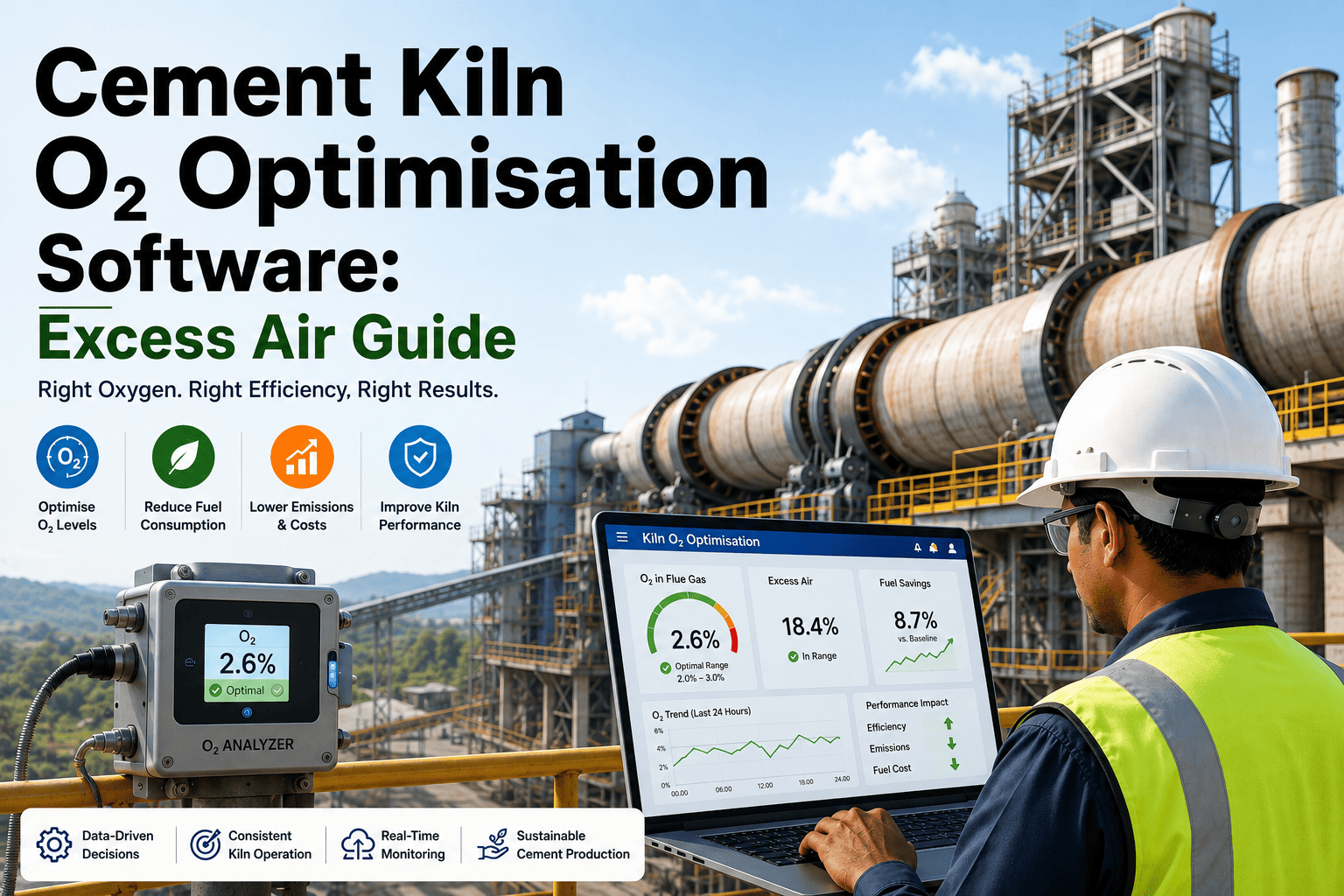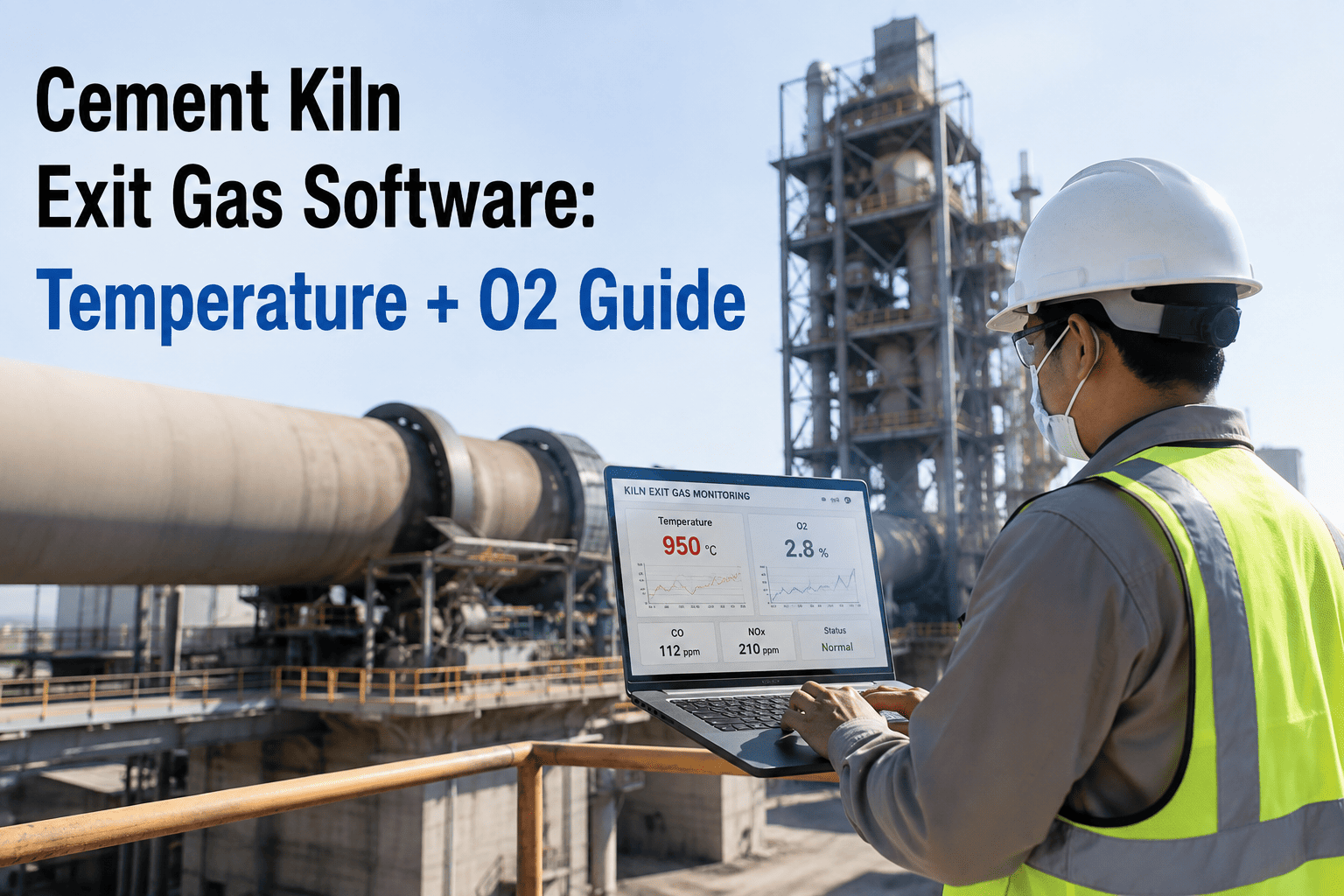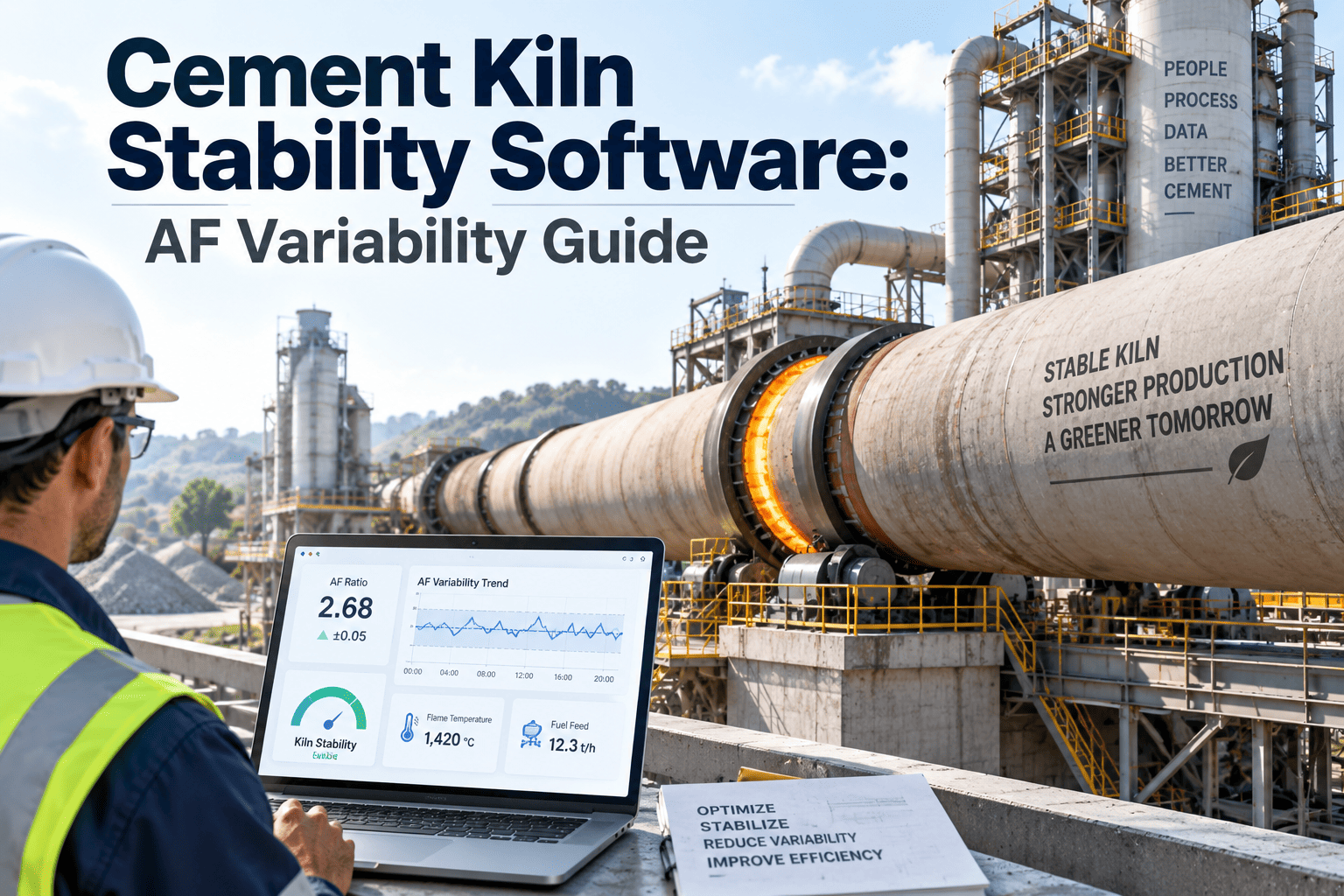
A cement kiln that ran quietly for years on a 100% coal diet becomes a different animal the moment alternative fuels cross 20% TSR. Flame shape softens and lengthens. Coating pattern shifts down the burning zone. Shell hot spots migrate. Ring formation risk climbs. Preheater alkali cycles start winning against the bypass. None of these are equipment failures — they are stability signals telling operators that fuel variability is now the dominant force shaping kiln behaviour. The plants that hold TSR above 40% without derating clinker are not the ones with the biggest burners or the newest DCS — they are the ones that watch these signals in real time and route each one to a triggered maintenance response. That is why AF-heavy cement plants run their kiln operations on a purpose-built kiln stability CMMS alongside their process control layer.
Kiln Stability Software Built for AF-Heavy Cement Plants
OxMaint tracks flame stability, coating condition, shell temperature, and ring formation risk against real-time AF quality inputs — turning kiln instability signals into scheduled work orders before they become upsets.
Why AF Variability Attacks Kiln Stability First
A kiln burning coal at steady LHV holds its stability envelope on autopilot — the flame is short and intense, the burning zone sits where it always sat, coating grows and self-heals in the same pattern shift after shift. AF fuels break that autopilot. RDF, biomass, and tire-derived streams arrive with variable moisture, calorific value, and particle size, and each of those variables reshapes the flame within minutes of hitting the burner. Wet fuel steals heat for evaporation and lengthens the flame downstream. Low-LHV fuel forces higher volumetric feed to hold thermal input, which further softens the flame. Oversized particles above 60 mm create localized hot spots. High-chlorine batches feed alkali cycles that build up as coating in the wrong places.
The kiln does not fail — it drifts. Drift caught in the first shift is a burner tune. Drift caught in the first week is a coating touch-up. Drift caught 6 weeks late is a refractory campaign shortened by 3 months and a customer complaint on next Tuesday's clinker. The whole reason AF programmes stall between 20% and 30% TSR globally is not equipment limitation — it is that operators cannot see stability drift fast enough to catch it in the shift-scale window. Coal made stability observable through a handful of loose signals. AF hides stability inside a moving average of a dozen. This is exactly the operational gap OxMaint's cement kiln stability software is engineered to close — pulling every stability signal, every fuel batch record, and every triggered work order into the same audit trail so drift becomes as observable as a temperature alarm.
The 4 Core Stability Signals — And What Each One Costs If Missed
Every experienced cement kiln operator watches the same four stability signals: flame shape and momentum, coating thickness and condition, shell temperature profile, and alkali-chlorine cycle balance. These four signals together tell the full stability story of an AF-firing kiln — and none of them is enough on its own. Flame momentum can look normal while coating is quietly thinning. Shell temperature can read stable while a chlorine cycle builds in the preheater. Coating can appear thick while ring formation is starting in the transition zone. The four signals are a system, and they only work as a system when they are tracked together, timestamped together, and tied together to the AF batch that produced them. Miss any one of them and the miss compounds — a soft flame goes uncorrected, coating thins in the burning zone, refractory sees direct flame impingement, and 4–6 weeks later the plant is planning an unscheduled brick campaign that costs 10–14 days of production. OxMaint tracks all four signal streams against the AF batches feeding them, so instability is caught at its source rather than at its consequence.
The AF Instability Cascade — From Fuel Batch to Campaign-Ending Event
Every AF-driven kiln shutdown post-mortem tells the same story in the same order. The cascade takes 4–8 weeks from trigger to consequence, which is exactly why it stays invisible without a stability tracker linking fuel batches to kiln signals to maintenance response. OxMaint keeps the whole chain in one asset record so operations, process, and reliability see the same drift at the same time — book a demo to walk through a real cascade capture in the tool.
Stability Envelope — How AF Plants Set Their Bands
Kiln stability is not a single number — it is a set of operating bands, and each band tightens as TSR rises. Coal-era operating windows are dangerously loose for a 30%+ TSR programme. Plants running AF at scale reset their envelope explicitly: what "normal" means for LHV variability, moisture range per batch, shell temperature deviation, and free lime standard deviation is much narrower than the coal-era manual said. The following table summarises the operating bands published cement AF programmes converge on — and the ones OxMaint ships as the default stability envelope in the AF cement configuration.
| Stability Parameter | Coal-Era Band | 20–40% TSR Band | >40% TSR Band | Response When Breached |
|---|---|---|---|---|
| Fuel Moisture Variability | ±3% | ±5% | ±2% | Dryer set-point WO, hopper switch |
| Fuel LHV Variability | ±5% | ±8% | ±4% | Feed-rate recalc, blend adjust |
| Chlorine in Fuel | <0.2% | <0.4% | <0.3% | Batch reject, bypass duty raise |
| Burning-Zone Pyrometer StdDev | <15°C | <20°C | <12°C | Burner tune, momentum check |
| Shell Hot-Spot Threshold | <380°C | <350°C | <320°C | Coating build WO, flame shape adjust |
| Free Lime StdDev | <0.5% | <0.7% | <0.4% | Raw meal adjust, fuel blend rework |
| Bypass Duty Deviation | ±10% | ±15% | ±8% | Bypass PM, Cl-source trace |
Ship OxMaint With Your AF Stability Bands Preloaded
The AF cement configuration lands with published stability envelopes and 4-signal tracking baked in. Trials start in hours, not weeks.
What OxMaint Actually Does for AF Kiln Stability
OxMaint is a cement plant maintenance management software platform used by integrated plants, grinding units, and multi-site cement groups running high-TSR programmes. Its kiln stability configuration links the four stability signals — flame, coating, shell, alkali-chlorine — to the AF fuel batches driving them, and turns every band breach into a triggered work order. It runs on the same asset database as the mill, cooler, crusher, and packing plant PM, so reliability engineers don't juggle a separate stability spreadsheet next to their CMMS. Kiln decks, mill floors, quarry sites, packing plants, and remote silos all report into one system, on mobile, offline-capable, with QR asset tags and IoT feeds from DCS, shell scanner, and CEMS. Every stability event carries its full fuel-batch lineage forward — auditable, exportable, ready for root-cause analysis in minutes rather than shift-report reconstruction.
We were losing 4–6 refractory weeks per year to AF-driven coating instability we could not trace back. OxMaint's fuel-batch-to-shell-signal linkage let us prove that 78% of our hot-spot events tied to a single supplier stream with drifting moisture. We tightened acceptance on that stream and extended our next campaign by 47 days.
Frequently Asked Questions
Turn Kiln Instability Into a Managed Programme — Not a Fire Drill
OxMaint's cement kiln stability CMMS links AF fuel batches to flame, coating, shell, and alkali-Cl signals — and routes every band breach to a triggered work order. Cement plants scaling TSR run on OxMaint.