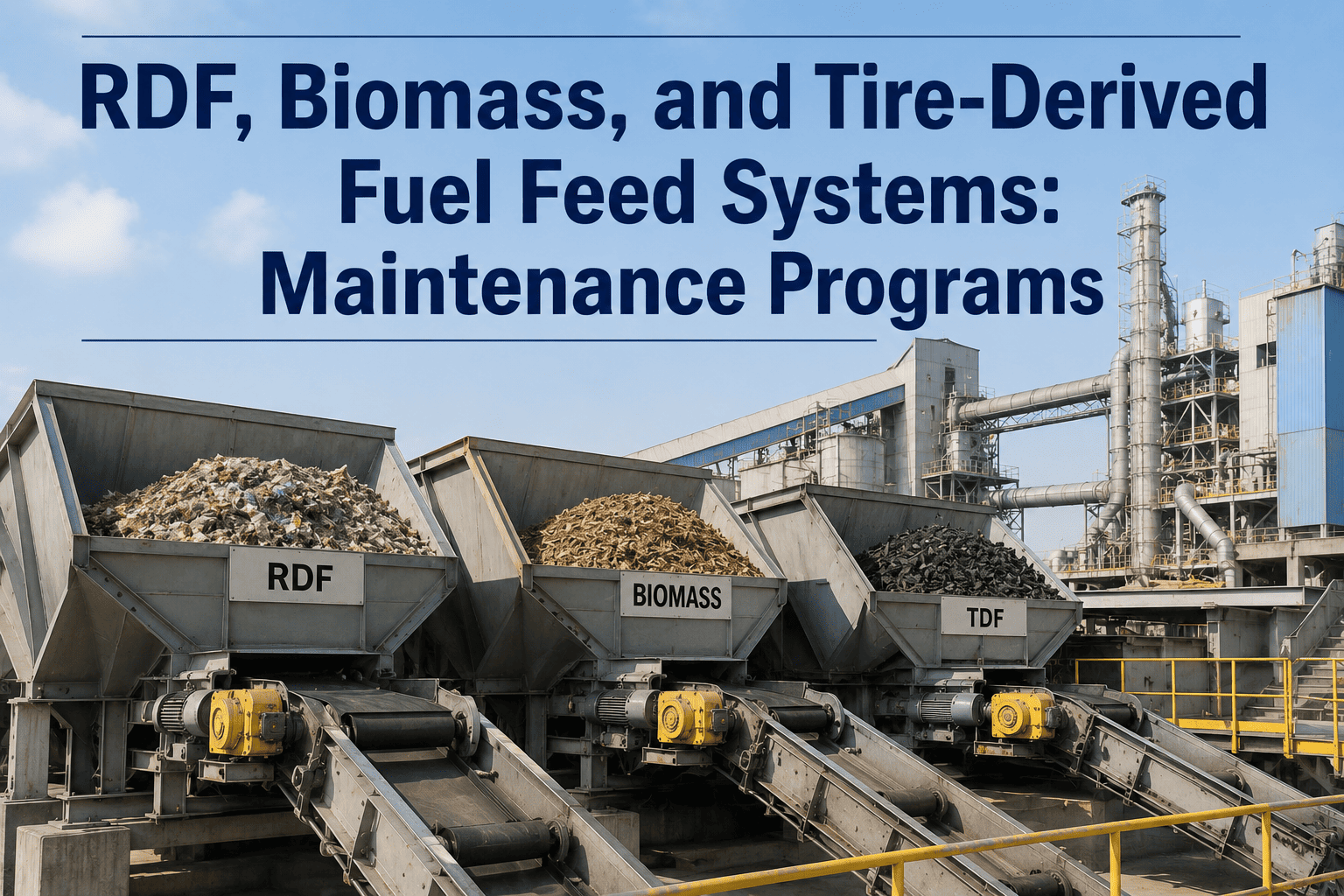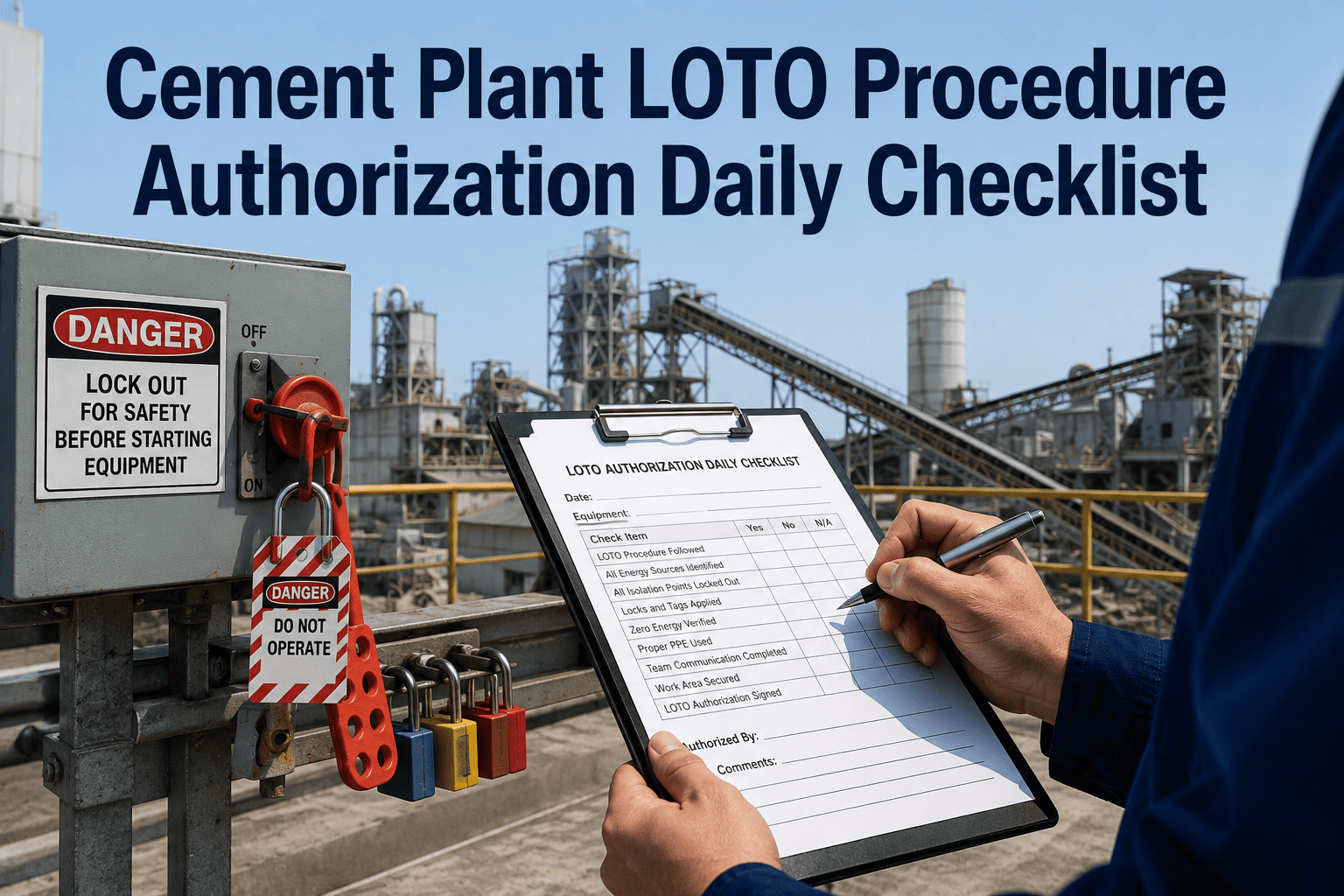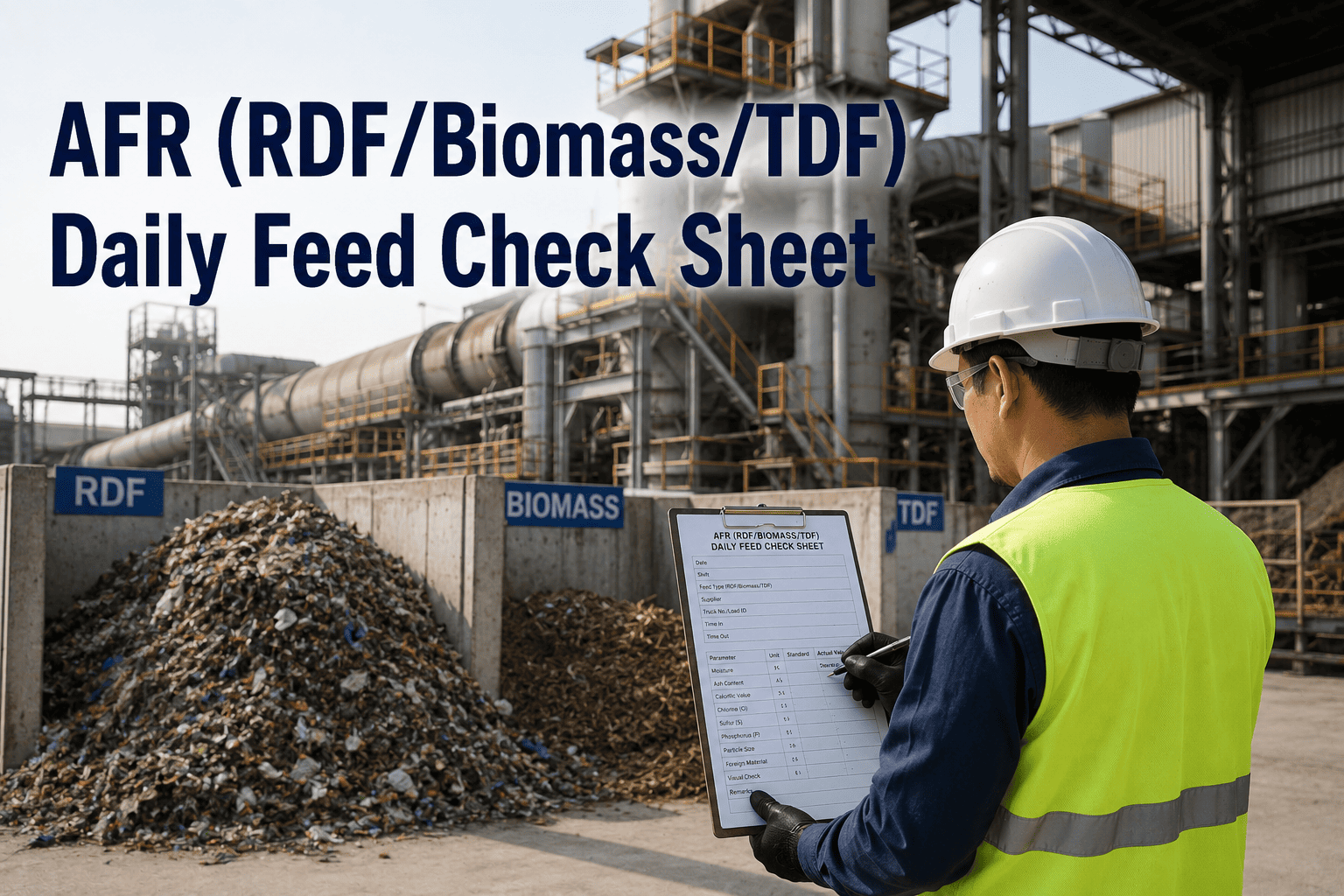
Switching a cement kiln or industrial furnace to alternative fuels — RDF, biomass, TDF, or blended AFR streams — delivers measurable cost savings and carbon reduction only when the daily feed parameters are controlled with the same discipline applied to conventional fuel. Calorific value variation, moisture swings, chlorine exceedances, and dosing system inaccuracies each introduce kiln instability, refractory damage, emission compliance risks, and process upsets that erode every dollar saved on fuel cost. This checklist covers every critical daily check for AFR feed quality and dosing accuracy — designed to be executed by operators, logged in a CMMS, and audited by process engineers without hunting through paper records or shift logbooks. Sign up for Oxmaint to run your AFR daily feed checks as a digital, alert-enabled round with full audit trail.
Calorific Value Verification — Daily Batch and Composite Sample Checks
Calorific value is the single most important parameter controlling the thermal contribution of your AFR stream to kiln heat input. RDF and biomass CV is not stable — it varies by supplier batch, by season, and by storage condition. Without a daily CV verification protocol against incoming deliveries and stored material, your process team is running the kiln on an assumed fuel quality that may be significantly different from the actual fuel quality being fed.
Moisture Content — The Hidden CV Killer That Affects Every Downstream Parameter
Moisture in AFR is not just a calorific value problem — high moisture content increases flue gas volume, lowers flame temperature, increases fuel feed rate requirements, and can cause feeding system bridging and blockages. A biomass or RDF stream at 30% moisture requires significantly more mass feeding to deliver the same thermal input as the same material at 15% moisture — and your dosing system needs to account for this difference in real time, every day.
| AFR Type | Typical Moisture Range | CV Impact per 5% MC increase | Feed Rate Correction | Feeding Risk at High MC |
|---|---|---|---|---|
| RDF (mixed) | 15–35% | Net CV drops 8–12% | Required at every shift | Bridging in screw feeders |
| Biomass (wood chips) | 20–45% | Net CV drops 10–15% | Required at every shift | Bunker bridging, motor trips |
| Biomass (pellets) | 8–12% | Minimal CV impact | Weekly basis adequate | Low — pellets resist bridging |
| TDF (whole/shredded) | 2–5% | Negligible | Not required daily | Low at standard MC range |
| Mixed AFR blend | Variable — per blend | Blend-specific | Required per blend change | High — blend variation unpredictable |
Scroll right on mobile to view full table
Chlorine Monitoring — Kiln Bypass Triggers, Refractory Risk and Emission Compliance
Chlorine is the AFR parameter that causes the most significant and irreversible equipment damage when it exceeds the kiln's design tolerance — and it is also the parameter most likely to vary unpredictably in RDF and mixed waste-derived fuel streams. A single batch of high-chlorine RDF introduced to a kiln running without bypass operation can build chlorine-laden rings and coatings that take days to clear and may require a kiln stop for inspection.
Oxmaint captures every CV, moisture, and chlorine reading in a live CMMS record with automatic threshold alerts and trend analysis — so process engineers see tomorrow's problems today, not after the damage is done.
Dosing Accuracy — Feeder Calibration, Belt Scale Checks and Thermal Substitution Verification
AFR dosing accuracy is the bridge between fuel quality parameters and actual kiln thermal substitution. A correctly characterized AFR stream fed at the wrong rate delivers the wrong thermal input — and the kiln control system has no way to know whether its thermal response is due to fuel quality variation or a dosing system that has drifted out of calibration. Daily dosing accuracy verification closes this gap by confirming that the feed rate the operator set is the feed rate the kiln is actually receiving.
What Your AFR Records Need to Show — For Emissions Compliance and Audits
What Happens When AFR Daily Records Move from Shift Logbooks to a CMMS
We had been running RDF and biomass in the main burner for 18 months with consistently disappointing TSR numbers. The targets were 35% thermal substitution and we were averaging 23%. The assumption was that the AFR quality was inconsistent — and it was — but when we migrated our daily feed checks into Oxmaint and started running trend analysis on CV, moisture, and dosing accuracy together, we found that our belt scale had drifted by 18% over four months without anyone noticing. We were feeding 18% less than we thought we were on every shift. The dosing accuracy check in Oxmaint flagged the drift in the first week. We recalibrated, corrected the setpoint, and TSR went from 23% to 31% in two weeks without changing the fuel supply at all.
AFR Daily Feed Check — Common Questions
Belt scale and loss-in-weight feeder accuracy should be verified at each shift start — a 30-minute timed check against a physical bin level measurement or accumulated weight. Full calibration should be performed monthly or any time daily accuracy checks show a variance exceeding 5%. Oxmaint tracks feeder calibration schedules and generates automatic work orders at the configured calibration interval so nothing is missed.
The operational chlorine input limit varies by kiln design, but most plants without bypass operation target a total chlorine input below 3 kg Cl per tonne of clinker. For plants with chlorine bypass systems, higher limits are sometimes permitted under the bypass operating parameters. Book a demo to see how Oxmaint calculates real-time chlorine input against your plant's specific limit based on current feed rate and Cl content.
Yes — Oxmaint manages each AFR fuel type as a separate material asset with its own quality parameters, acceptance limits, and daily check fields. A plant running RDF, biomass, and TDF simultaneously has three separate feed check templates that roll up into the same shift record and TSR calculation. All records are searchable and exportable for emissions reporting and supplier audits.
Oxmaint stores every daily feed quality reading, TSR calculation, and non-conformance decision as a timestamped CMMS record. Emissions permit compliance reports that require evidence of daily monitoring, parameter control, and operator sign-off can be generated directly from Oxmaint by date range — eliminating the paper logbook archaeology that currently consumes compliance team time before regulatory submissions. Sign up for Oxmaint to configure your AFR compliance record structure from day one.
In most plants the gap between target and actual TSR is caused by a combination of moisture variation not reflected in dosing setpoints and dosing system calibration drift — not by fuel quality issues alone. Daily moisture measurement and weekly dosing accuracy verification, both tracked in Oxmaint, address the two most common and most correctable causes of TSR underperformance.
CV checked. Moisture measured. Chlorine controlled. Dosing verified. All in Oxmaint.
AFR programs that deliver their promised cost savings and carbon reduction targets are programs where the daily feed parameters are measured, logged, and acted on — not assumed. Oxmaint gives every cement plant and industrial furnace operator the CMMS infrastructure to run a world-class AFR daily round without spreadsheets, paper logbooks, or unexplained TSR shortfalls.