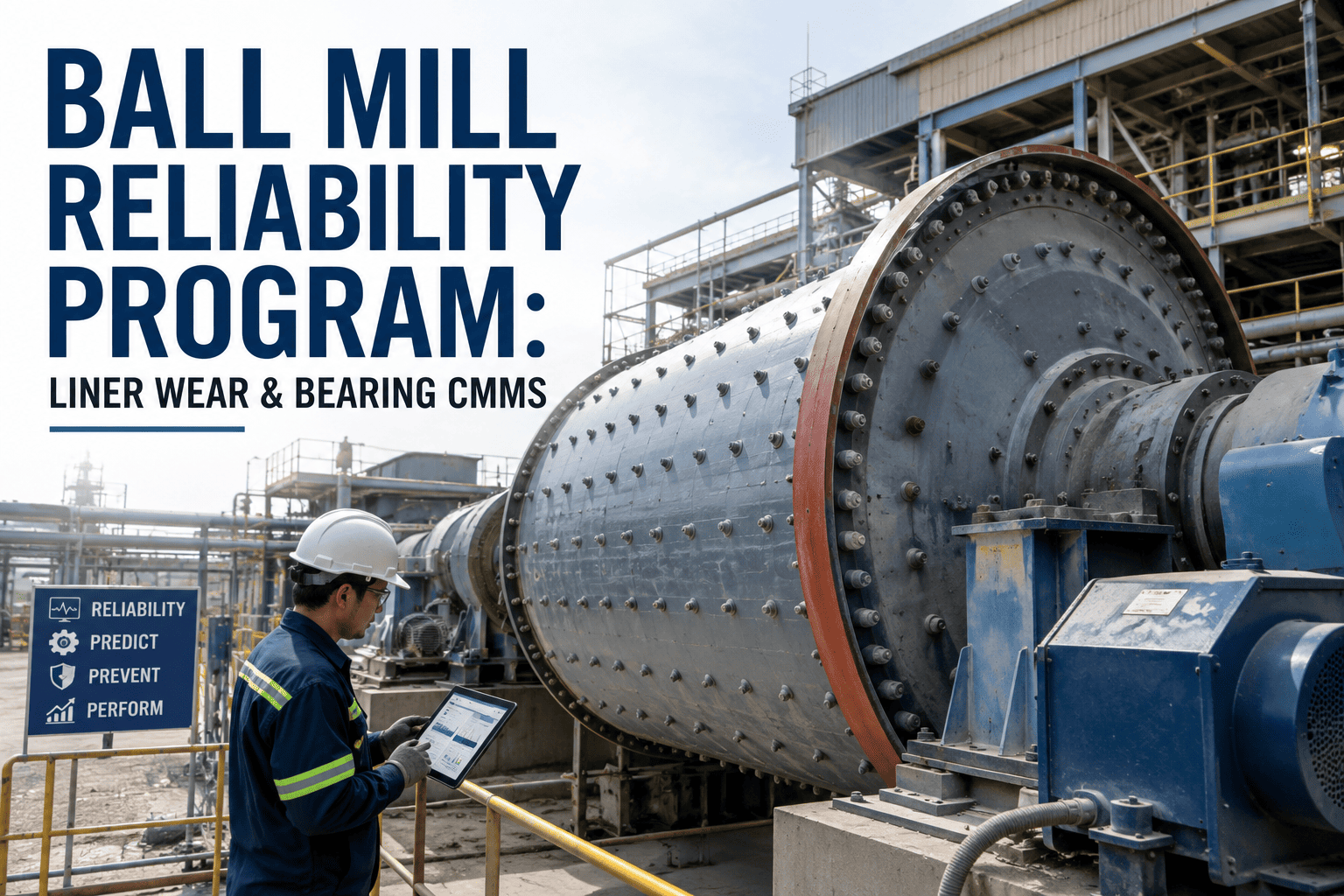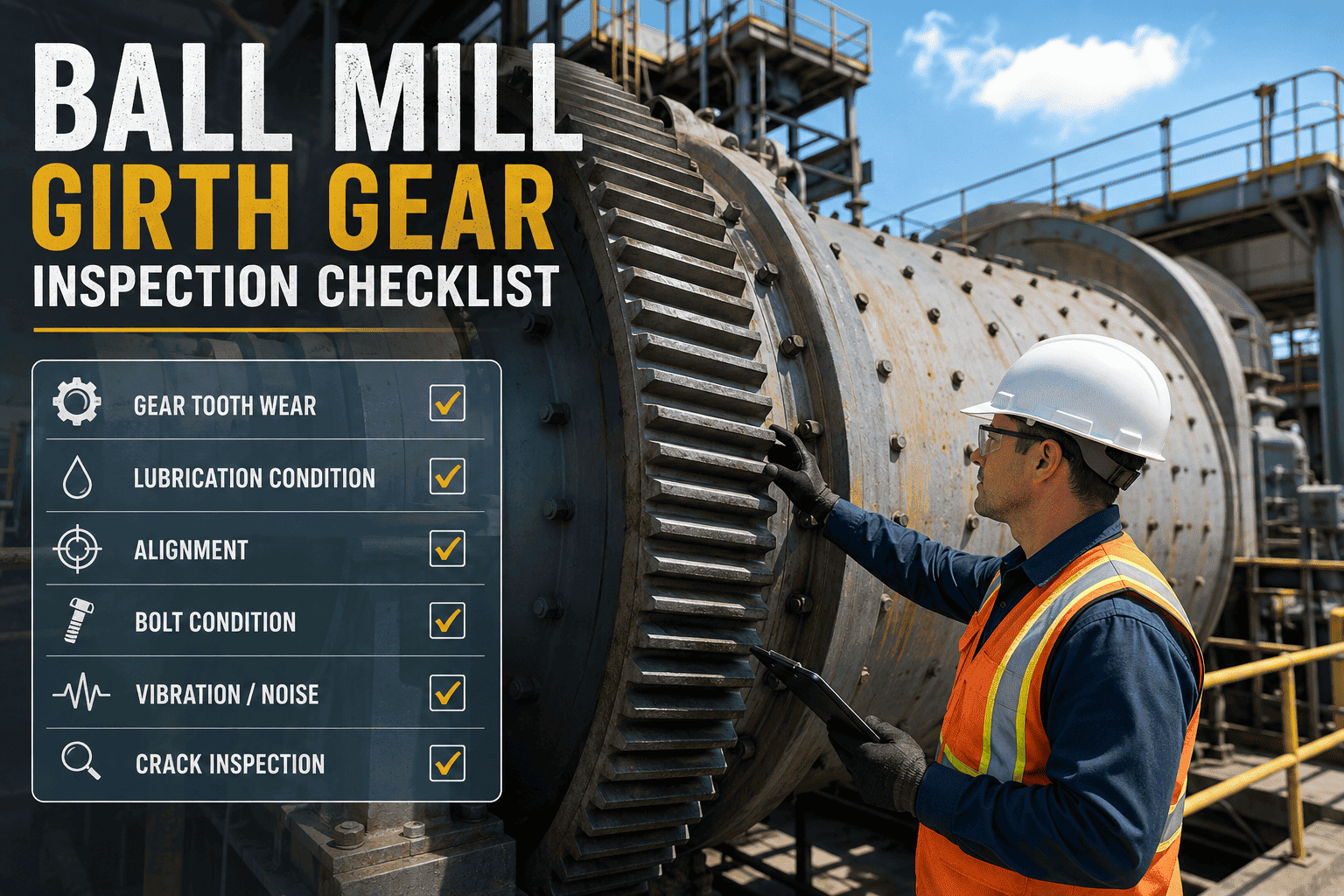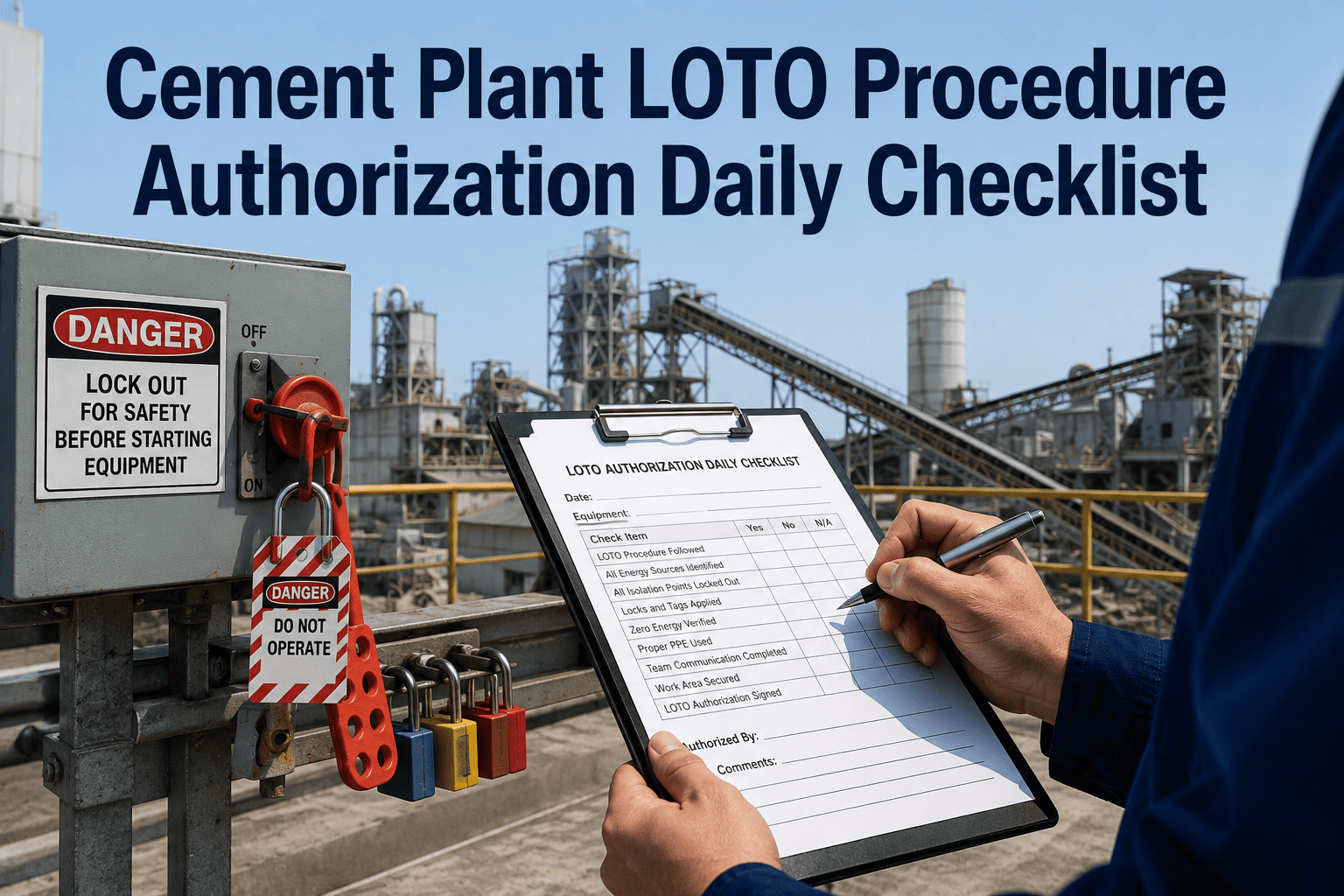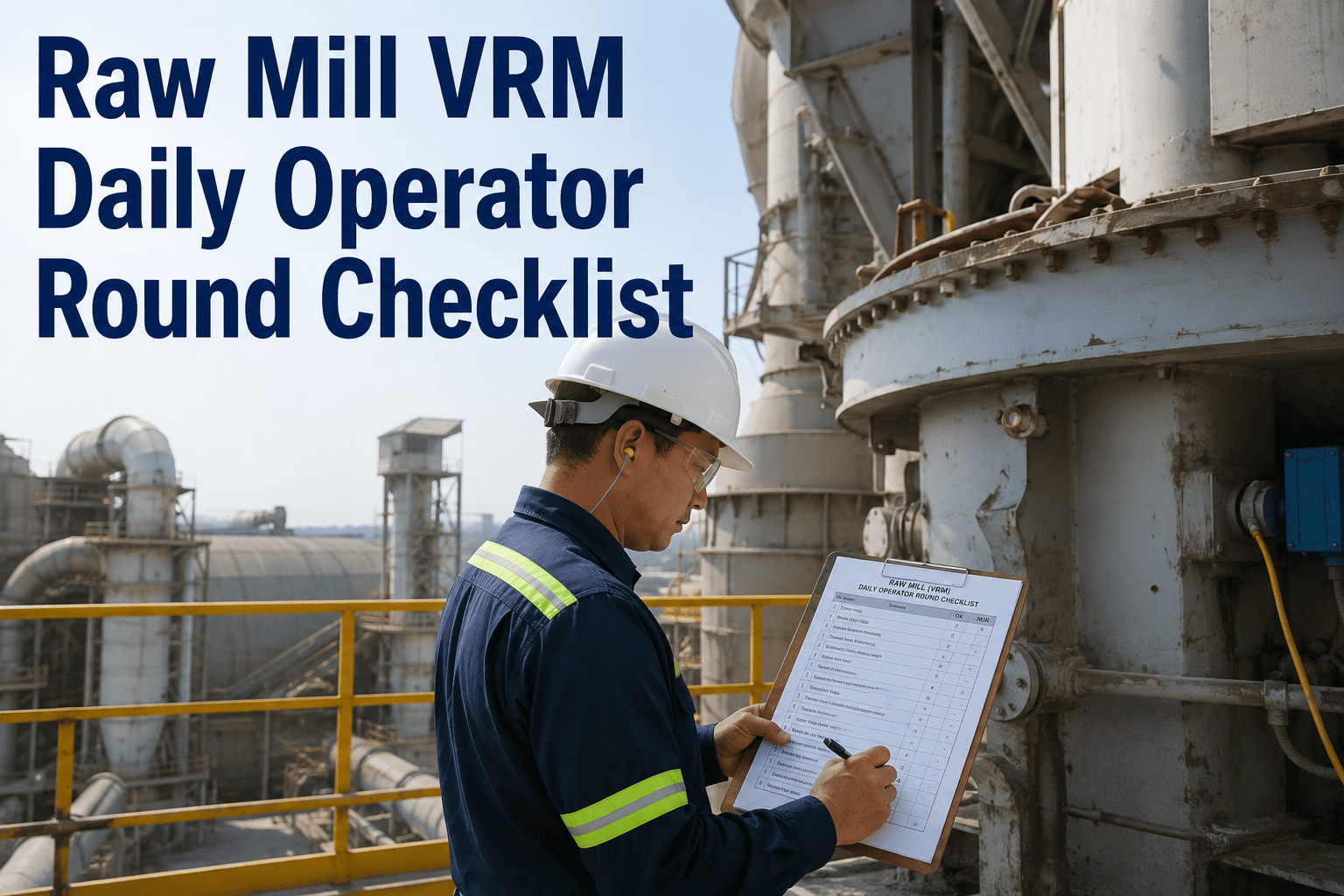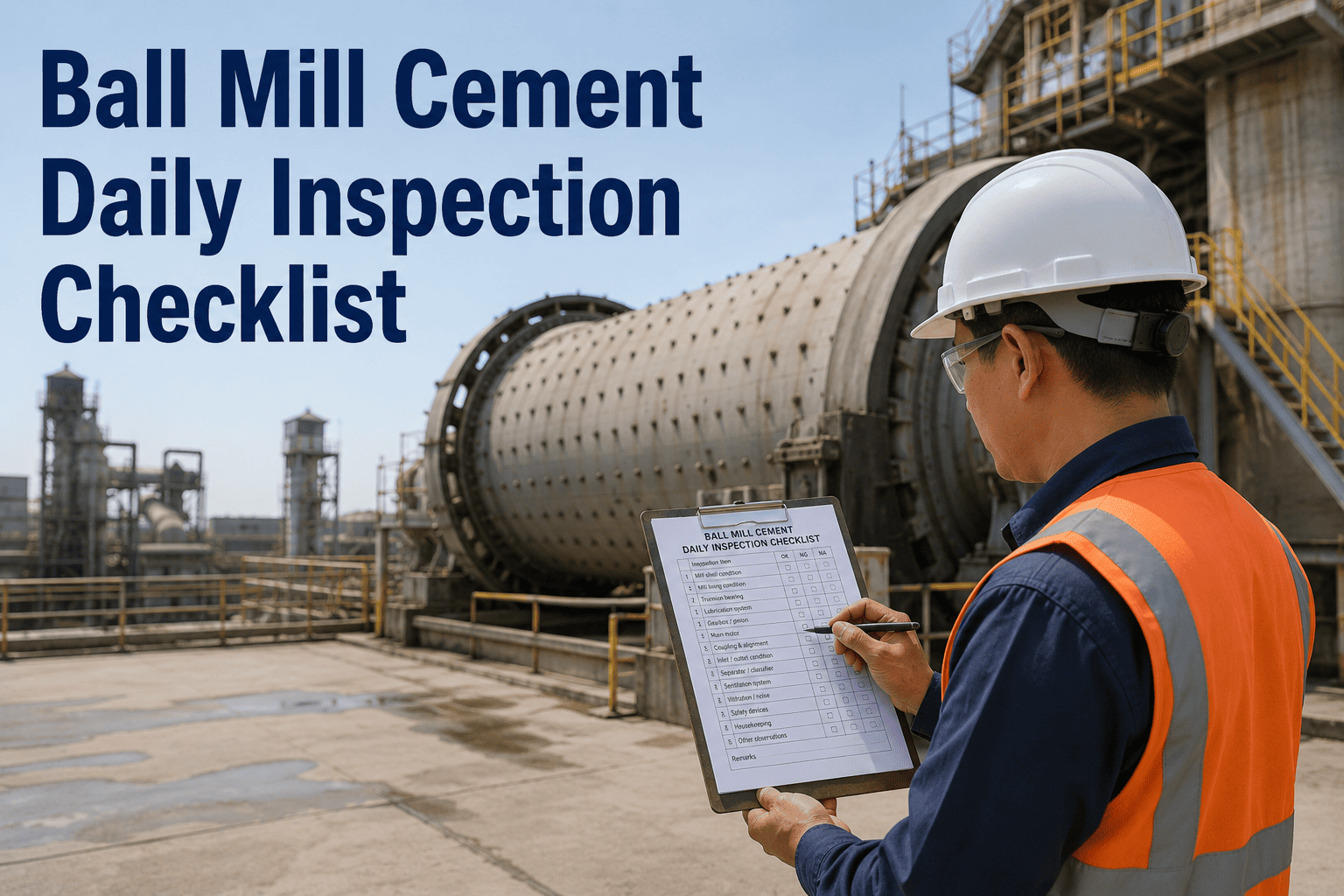
A ball mill in a cement grinding circuit has fewer automatic trip responses than a VRM — it does not vibration-trip, it does not have roller seal alarms, and it will continue grinding past the point where damage is happening if the operator round misses the early indicators. Liner wear that costs a planned one-week reline becomes a shell penetration that costs three weeks and a full structural inspection when the daily round is skipped. Trunnion bearing temperatures that trend up 2°C per week for five weeks before reaching the alarm threshold are visible in the daily round data — invisible to an operator checking only the current alarm list. This checklist covers every daily inspection dimension that matters in a cement ball mill — liner condition, trunnion bearings, gearbox health, mill internals, motor, and CMMS sign-off — structured for the operator completing the round and the maintenance planner tracking trends across shifts. Sign up for Oxmaint to run your ball mill daily inspection as a structured digital round with trend tracking and automatic corrective work order generation.
Liner Wear and Mill Internals — The Inspection That Determines Your Next Reline
Liner wear in a cement ball mill is a continuous process — every tonne of clinker ground removes material from the liner surface. The question is not whether liners are wearing but whether the rate is within budget and whether the current condition can sustain the next planned maintenance interval without breakthrough. A daily inspection that captures liner bolt torque status, liner height measurements where accessible, and any audible changes in grinding noise gives the maintenance planner the data needed to schedule the reline without a forced shutdown. Book a demo to see how Oxmaint tracks liner wear progression across daily rounds and projects reline dates automatically.
Trunnion Bearings and Gearbox — Temperature, Oil Condition and Lubrication System
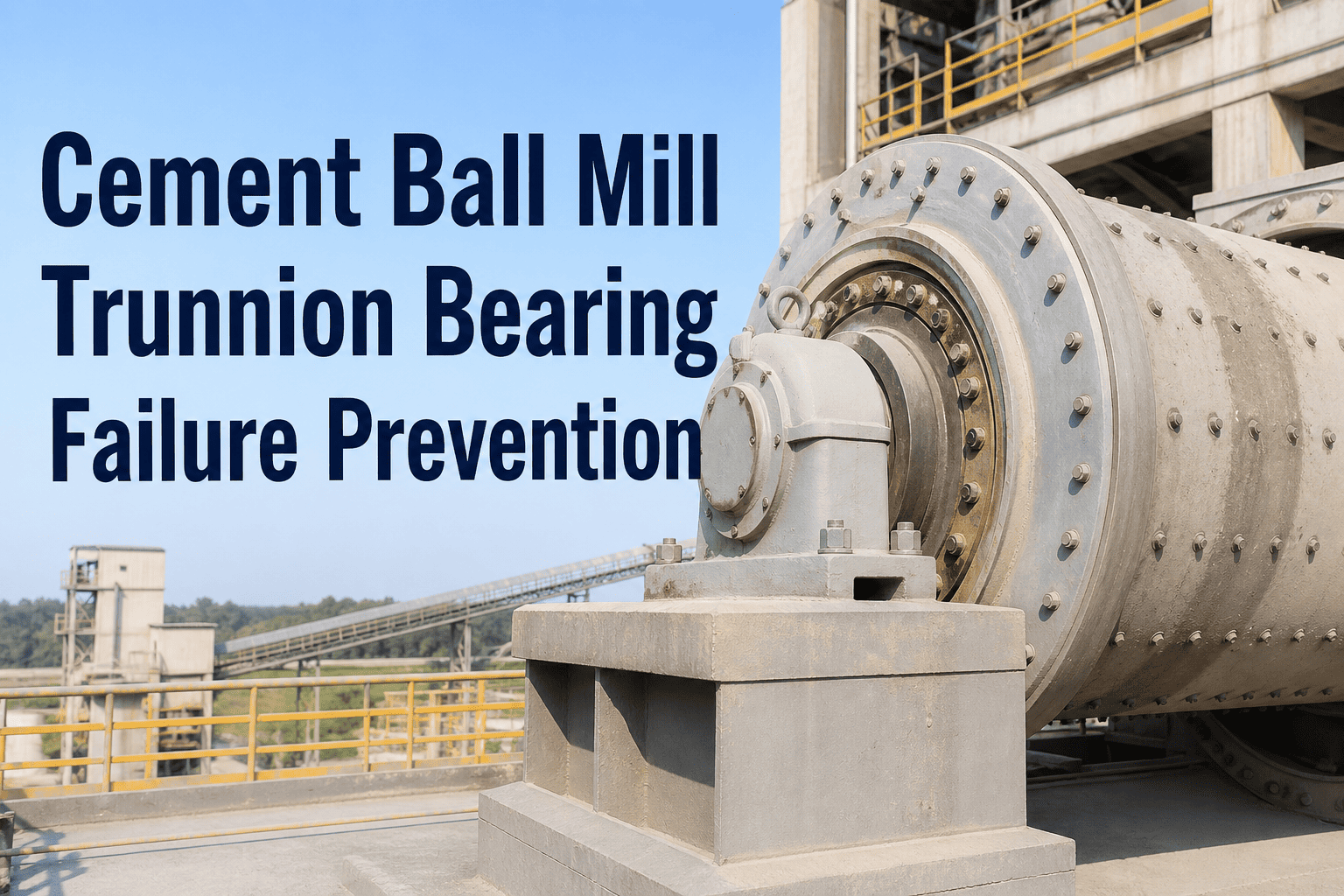
Trunnion bearings in a cement ball mill carry loads of hundreds of tonnes continuously — and they fail catastrophically when their oil film is compromised. The daily temperature round is not a formality. A trunnion bearing temperature that increases 3°C between shifts at constant mill loading is a lubrication signal that will reach the trip threshold within days if not investigated. The gearbox oil daily check protects the asset with a 5-minute inspection that has prevented more unplanned shutdowns than any other ball mill maintenance activity.
Motor, Feed System and Discharge — Load Profile, Feed Consistency and Quality Indicators
The main drive motor of a ball mill is a direct load indicator — motor amperage at a given feed rate and product specification is a fingerprint of the mill's internal condition. When amps increase 8% at the same feed rate over a two-week period, the grinding media charge has degraded, liner wear has changed the effective volume, or material feed grindability has increased. Logging motor amps against feed rate and product specification daily creates the trend data that makes these diagnoses possible before they become forced stops.
Oxmaint centralizes every bearing temperature, liner observation, gearbox check, and motor amp reading into one timestamped digital record per shift — with automated trend alerts that flag progressive changes before they become failures. Built for cement plant operators who run the round and maintenance planners who need the data.
Ball Mill Daily Inspection — Complete Round Sequence
Ball Mill Cement Daily Inspection — Common Questions
The clearest operational indicator is a gradual increase in motor amps-per-tonne at constant product specification and feed blend — indicating the media charge is degrading and grinding efficiency falling. Log steady-state amps against feed rate in Oxmaint daily. A 10% amps-per-tonne increase from the established baseline for the same product typically signals media top-up is required. Sign up for Oxmaint to track amps-per-tonne trends automatically across shifts.
Progressive temperature increases below the alarm threshold are most commonly caused by gradual oil viscosity change from oxidation, slow reduction in lube pump delivery volume from pump wear, or change in bearing clearance from long-term wear. Logging temperatures every shift in Oxmaint makes these trends visible weeks before they reach the alarm threshold. Book a demo to see how trend monitoring prevents bearing failures.
A complete pre-start round covering HP lube verification, trunnion bearing check, gearbox inspection, motor check, and accessible liner audit typically takes 25–35 minutes for an experienced operator using a structured checklist. Using Oxmaint on mobile to log readings as you walk the round eliminates 10–15 minutes of additional paper transcription.
Yes — Oxmaint allows you to configure threshold-based automatic work order creation for any numerical round reading, including trunnion bearing temperatures. When an operator logs a reading exceeding the configured threshold, Oxmaint automatically creates a corrective work order, tags it to the equipment, and notifies the shift supervisor. Sign up for Oxmaint to configure automatic threshold triggers for your ball mill rounds.
Formal ultrasonic liner thickness measurement should be performed at every planned mill stop — typically every 8,000–12,000 tonnes ground or every 4–6 weeks in continuous operation. Log each formal measurement in Oxmaint by liner position to build the wear curve that predicts your next reline date and eliminates forced reline stoppages.
Every Bearing. Every Liner. Every Shift. All in Oxmaint.
Cement plant maintenance teams that log every ball mill round item digitally — bearing temperatures, gearbox condition, motor amps, liner observations — see fewer unplanned stops, longer liner life, and cleaner compliance records than teams managing rounds on paper. Oxmaint is the CMMS built for the cement plant floor.