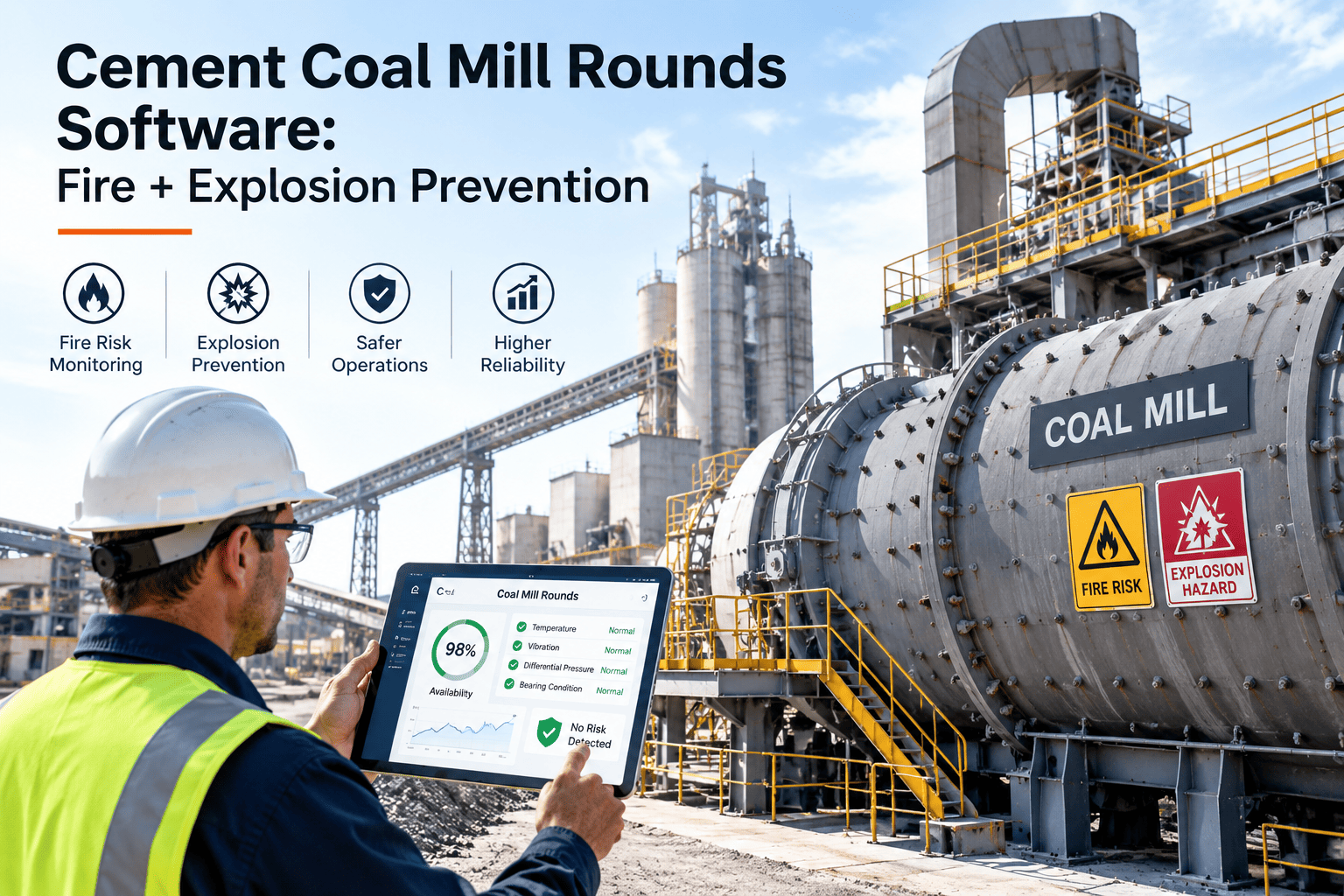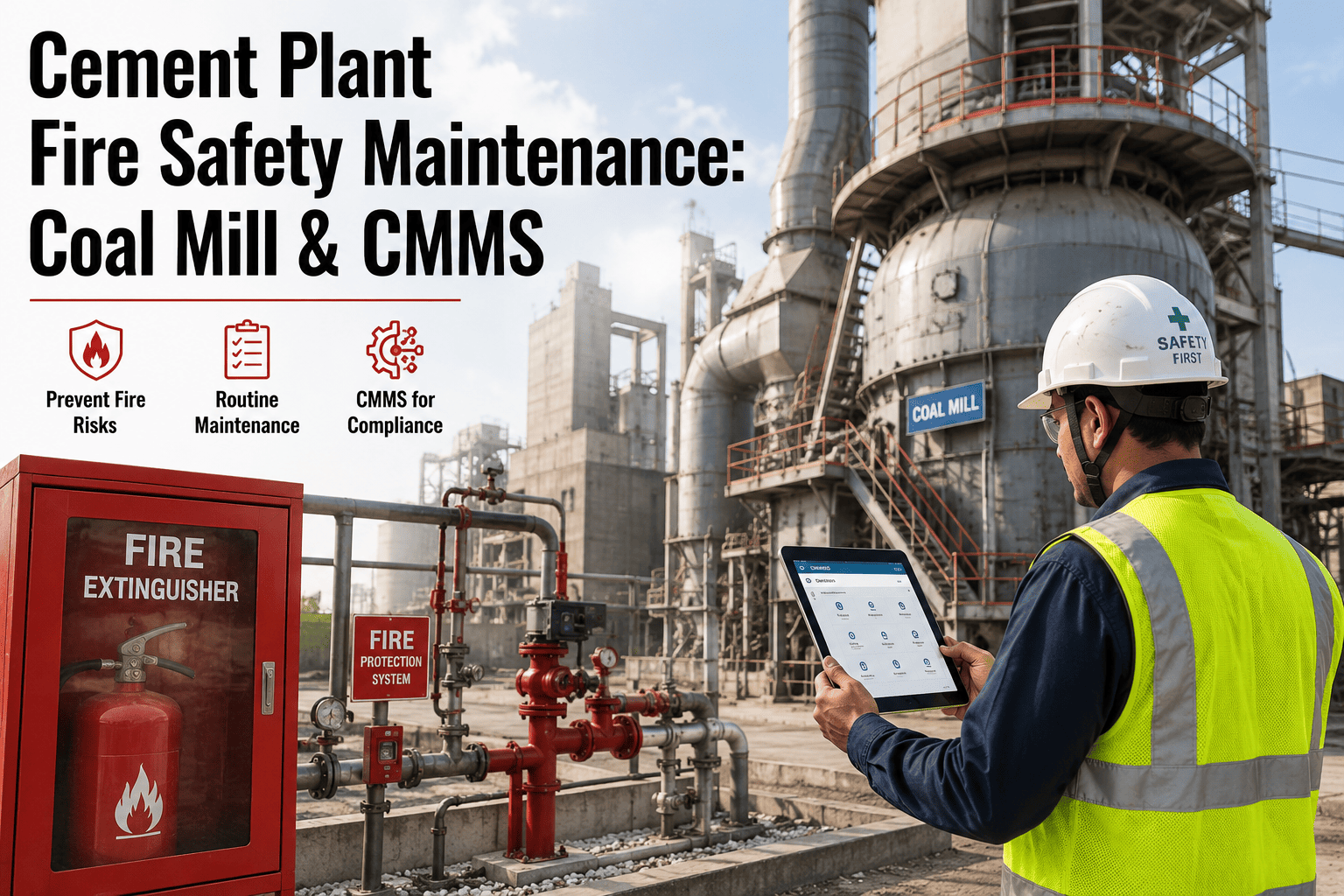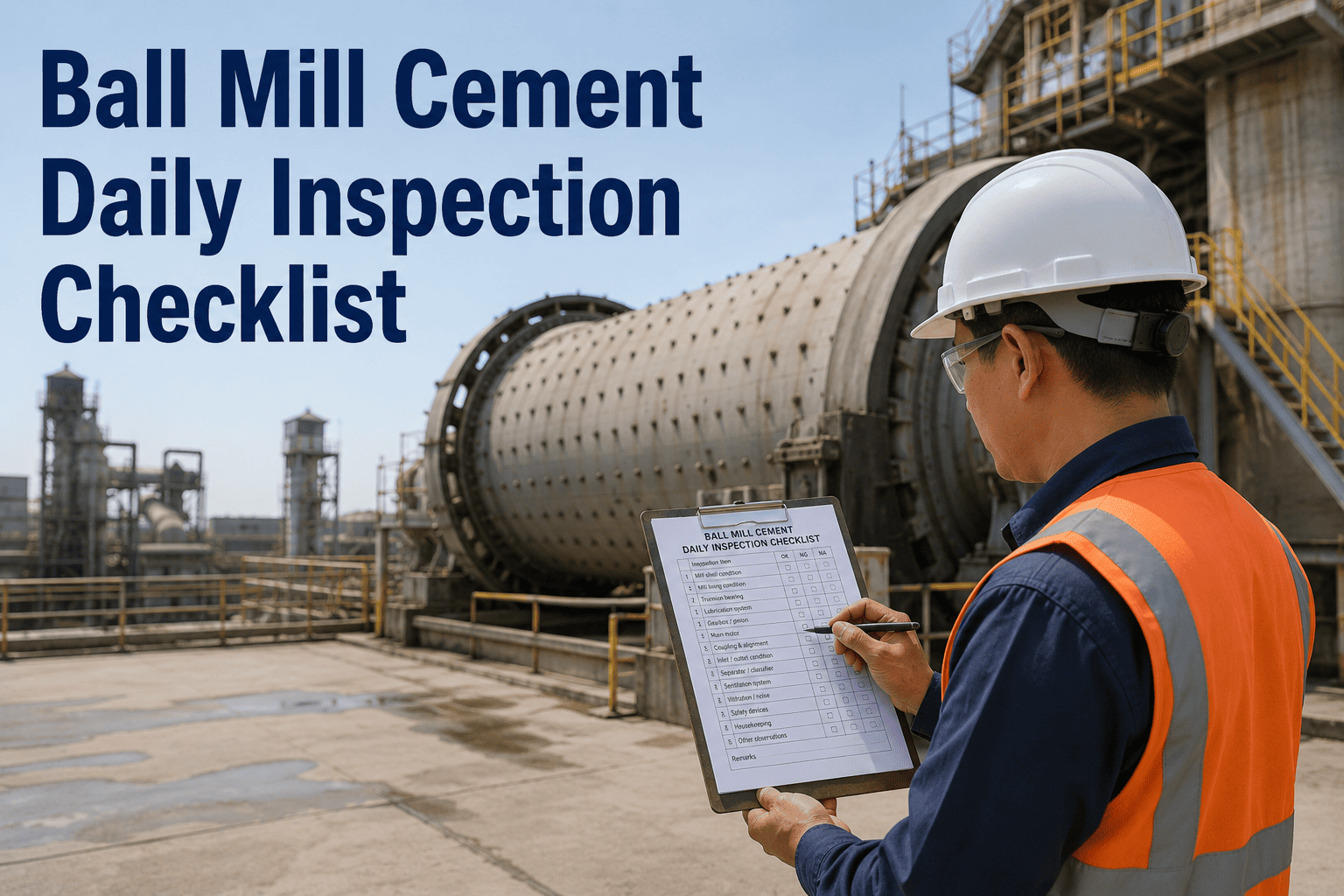
A coal mill running without a structured daily safety round is not a maintenance oversight — it is an active fire and explosion hazard accumulating risk shift by shift. Carbon monoxide buildup, oxygen deviation, failed inerting flow, and suppression system faults have each been the proximate cause of coal mill fires in operating plants worldwide. This checklist covers every critical parameter in a coal mill daily safety round — CO and O2 monitoring thresholds, inerting status verification, suppression system health, and NFPA 654 compliance records — with every item designed to be logged, tracked, and audited inside a CMMS. Sign up for Oxmaint to deploy this checklist as a live daily round in your plant with automatic alerts and digital audit trails.
Coal Mill Fires Don't Announce Themselves — Your Daily Round Does
CO Monitoring — Daily Threshold Checks and Trend Logging
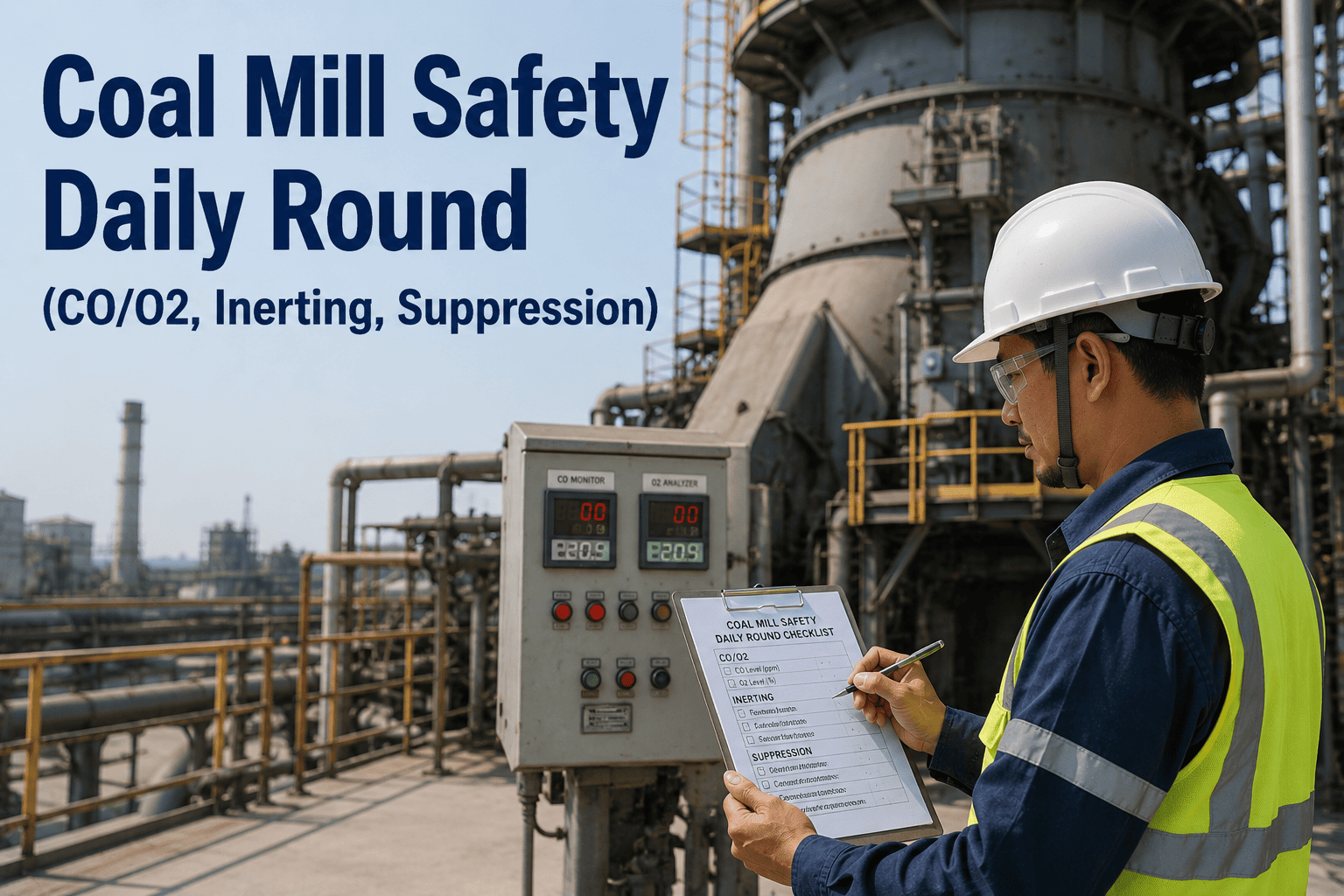
Carbon monoxide monitoring in a coal mill environment is not a passive alarm-wait function — it is an active daily measurement discipline with documented baselines, trend analysis, and defined response thresholds. A single CO reading means very little without the context of yesterday's reading, last week's readings, and the established baseline for that mill at current operating conditions. Log every CO reading in Oxmaint and let the trend do the talking.
O2 Monitoring — Limiting Oxygen Concentration Control
Oxygen concentration control is the engineering control that prevents a coal dust explosion from having the oxidant it needs to propagate. Maintaining O2 below the limiting oxygen concentration for pulverized coal — generally targeted at or below 12% O2 — is the function of your inerting system, verified by your O2 analyzers on every round. When the O2 reading rises, it means either the inerting system is underperforming or there is an uncontrolled air ingress into the mill circuit that needs to be found and sealed.
| Coal Type | Typical LOC Target | Warning Threshold | Alarm Level | Action Required |
|---|---|---|---|---|
| Bituminous coal | Below 12% O2 | 10–12% O2 | Above 12% O2 | Suspend hot work, check inerting |
| Sub-bituminous | Below 11% O2 | 9–11% O2 | Above 11% O2 | Increase N2 flow, inspect seals |
| Lignite | Below 10% O2 | 8–10% O2 | Above 10% O2 | Full inerting verification required |
| Pet coke blends | Below 12% O2 | 10–12% O2 | Above 12% O2 | Per plant-specific risk assessment |
Scroll right on mobile to view full table
Inerting System Status — Flow, Pressure and Distribution Verification
Inerting a coal mill is not a set-and-forget operation — it is a continuous process that requires daily verification that the inert gas is flowing at the correct rate, at the correct pressure, to the correct distribution points inside the mill. A nitrogen inerting system with a partially closed isolation valve, a CO2 system with a low cylinder bank, or a steam inerting system with a failed steam trap all deliver less inerting than the design requires — and none will announce this failure through an obvious alarm.
Oxmaint turns every daily round reading into a searchable, auditable record with automatic threshold alerts and trend visibility — on every shift, on every mill, with no paper required.
Suppression System Health — Pressure, Nozzles and Actuation Circuit Checks
An automatic suppression system that activates correctly during a coal mill fire is the last line of defense between a contained event and an uncontrolled fire with significant equipment damage, production loss, and potential personnel injury. The daily suppression system health check exists to confirm that this last line of defense is actually in a state to function — not simply installed and assumed ready.
NFPA 654 Compliance Records — What an Auditor Checks and What Oxmaint Provides
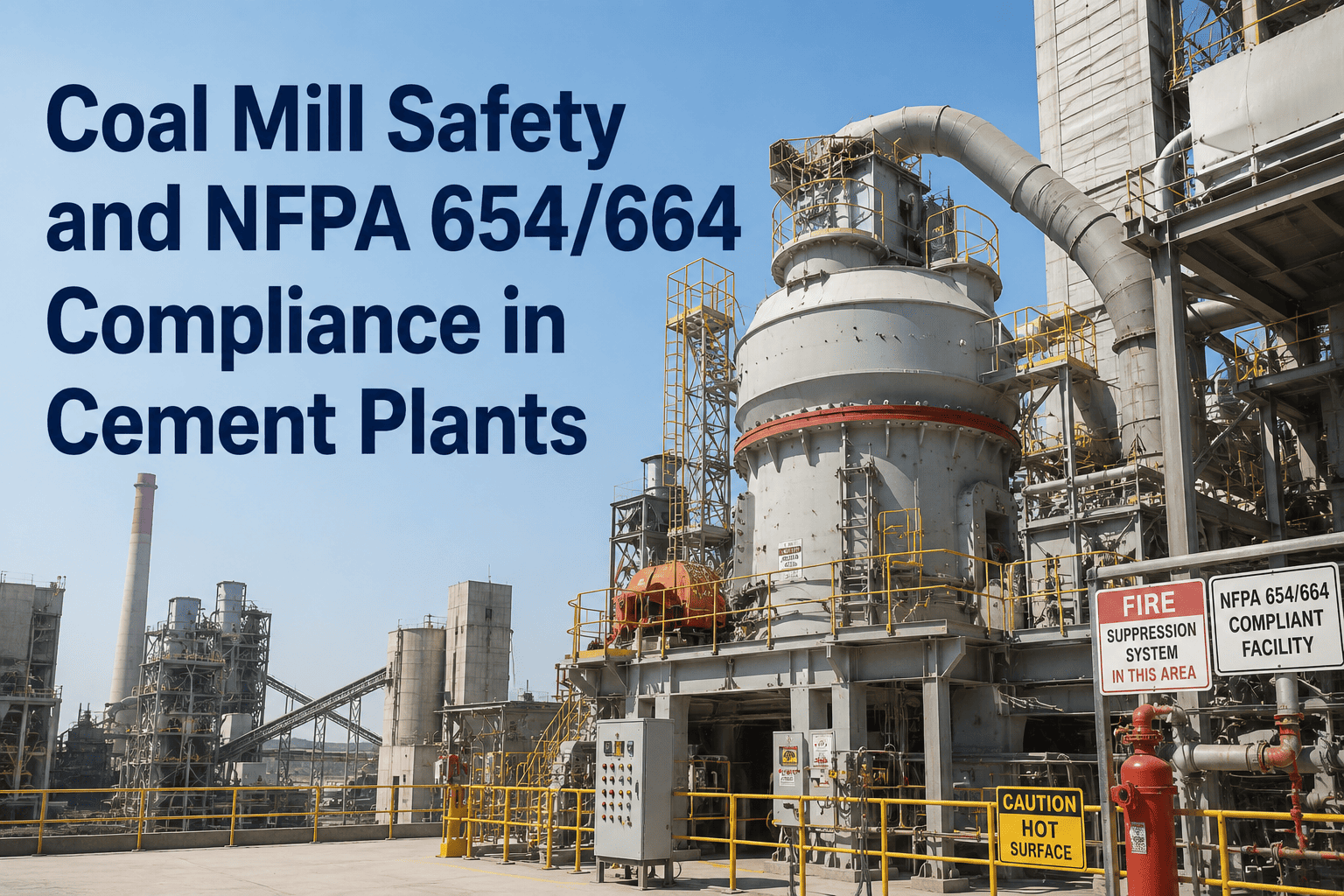
NFPA 654 compliance in a coal mill environment requires that safety inspection records are not just performed — they are documented, retained, and retrievable. During a regulatory audit or an insurance inspection, the standard requires evidence of systematic daily monitoring, calibration maintenance, and equipment inspection records. Oxmaint provides the digital record infrastructure that transforms your daily rounds from a compliance activity into a compliance asset.
What Changes When Daily Coal Mill Rounds Move into a CMMS
We had been running paper-based CO and O2 logs for years. The operators were conscientious — the readings were being taken. But the logs lived in a binder in the control room and nobody was running trend analysis on the numbers. We had a smoldering event that had been showing a CO upward trend for six days before it became a visible smoke event requiring emergency inerting. When we reviewed the paper logs, the trend was obvious — but nobody had seen it because nobody was looking at six days of readings in sequence. After moving to Oxmaint, the 7-day CO trend is visible on the shift supervisor's dashboard every morning. We would have caught that event on day three.
Coal Mill Safety Daily Round — Common Questions
The stop-work threshold varies by coal type and mill design, but most plant-specific risk assessments set an immediate stop-work trigger at CO levels exceeding 200 ppm above the established operational baseline, or any rapid rate-of-rise exceeding 50 ppm in 15 minutes. Oxmaint allows plant-specific alert thresholds to be configured for each mill asset so the correct threshold triggers the correct response without relying on operator memory.
Oxmaint manages each mill as a separate asset with its own round template, threshold values, and calibration schedule. A shift supervisor at a plant with four coal mills sees the round completion status and latest readings for all four mills in a single dashboard view. Book a demo to see how multi-mill daily round management works in Oxmaint for your plant configuration.
Oxmaint generates inspection record reports covering CO and O2 monitoring logs, suppression system inspection history, analyzer calibration records, and operator training records — all filterable by date range, asset, and technician. These reports export as timestamped PDFs suitable for direct submission to a regulatory audit or insurance inspection.
Most plant standards require CO analyzer calibration every 7 days and O2 analyzer calibration every 14 days for coal mill duty, with more frequent checks after any analyzer maintenance or fault. Oxmaint tracks each analyzer's calibration work order schedule and generates alerts at the configured lead time — typically 48 hours before the calibration is due.
A daily inerting check verifies that the inerting system is maintaining the design inert gas flow continuously during operation. A purge sequence is a timed, controlled flow of inert gas at higher flow rates to bring the mill atmosphere below LOC before startup, after opening, or after hot work — and must be logged with a completion time and duration. Oxmaint tracks both as separate round items with different logging requirements and retention periods.
CO trending. O2 verified. Inerting confirmed. Suppression armed. All in Oxmaint.
Coal mill safety rounds that live in paper binders are rounds that will never show you a 6-day CO trend before a smoldering event becomes a fire. Oxmaint digitalizes every daily safety parameter into a live, auditable, alert-enabled record that works on the plant floor, in the control room, and in the maintenance manager's review meeting.