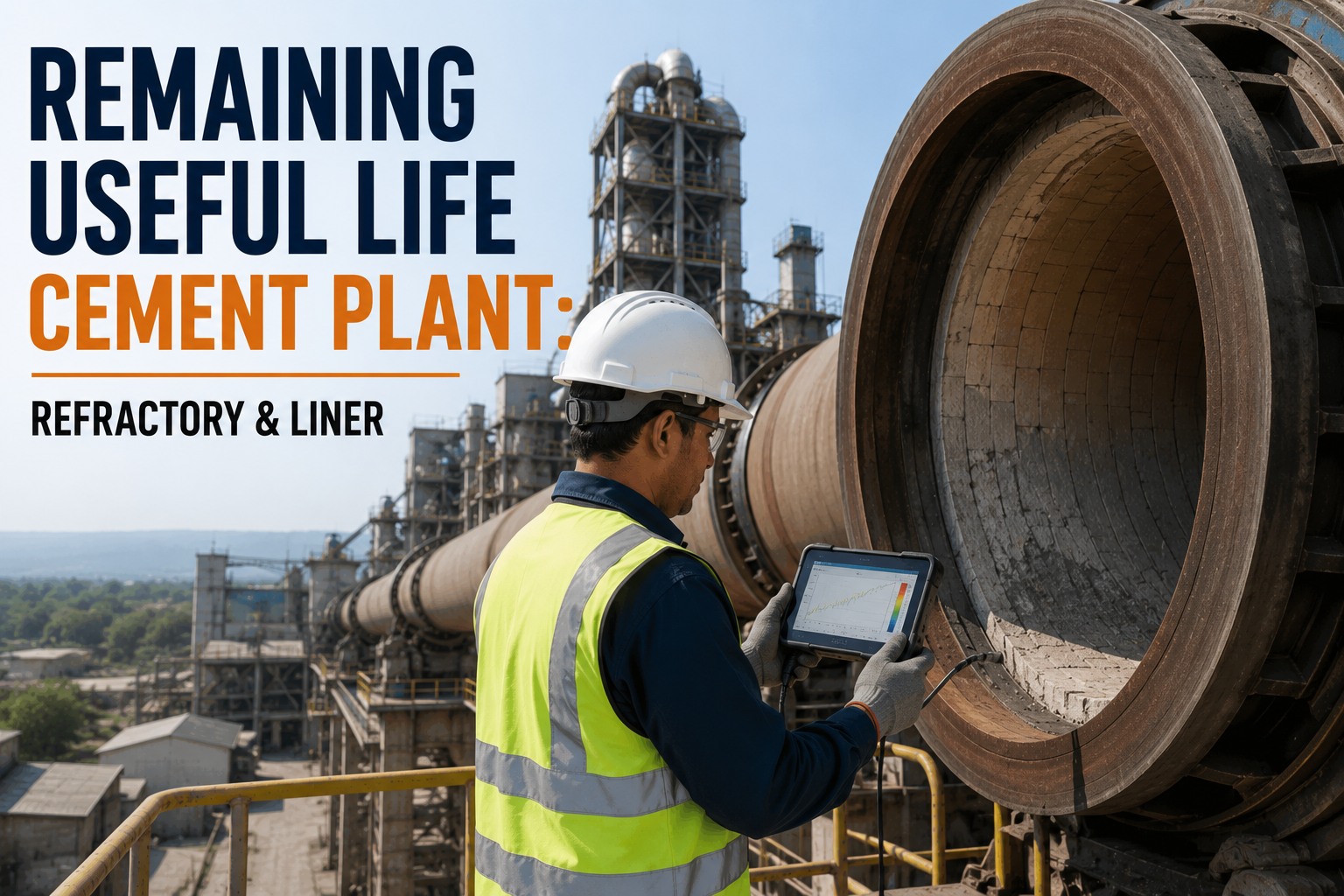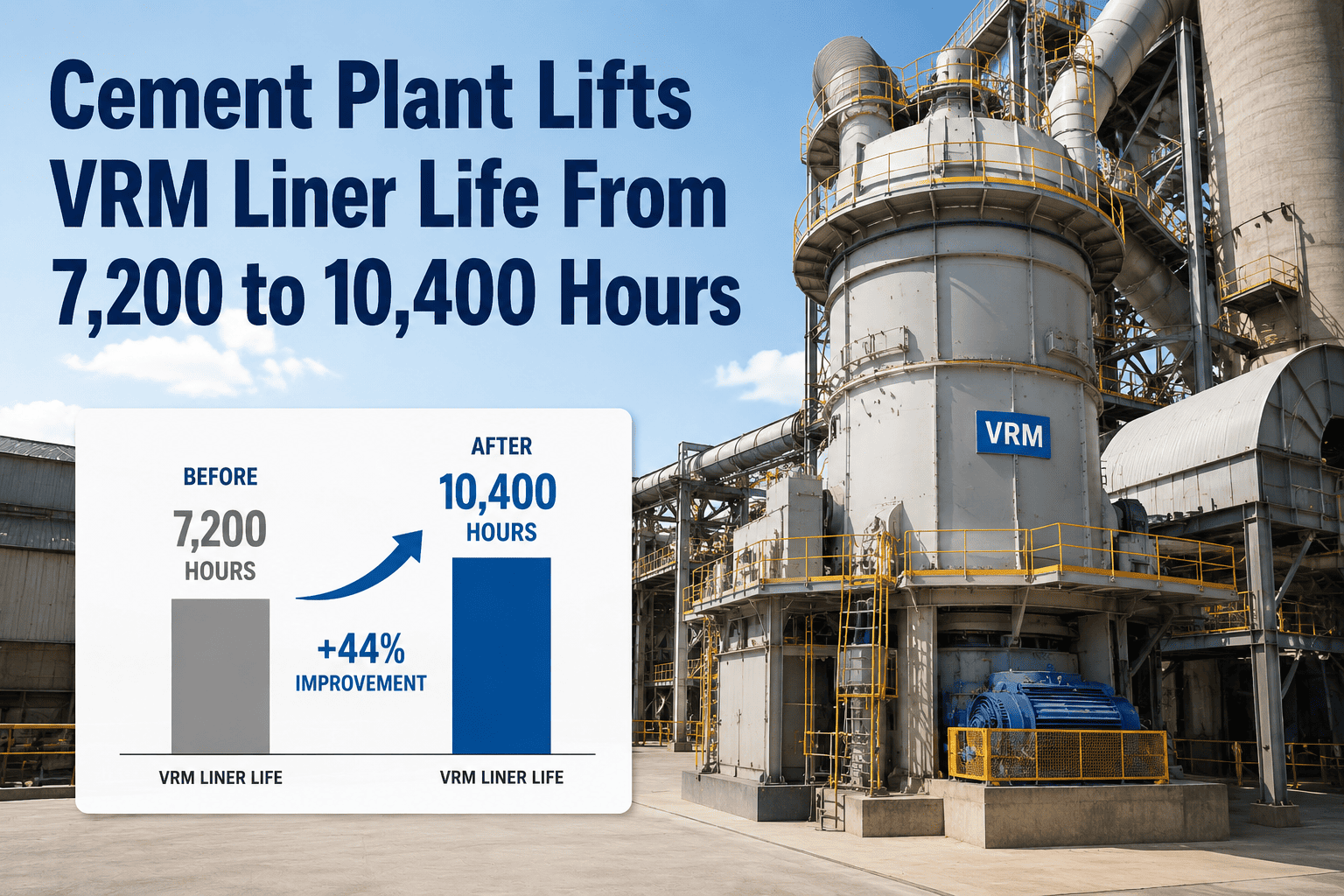
Vertical roller mill liner replacement is one of the most expensive and schedule-intensive maintenance events in a cement plant — a single liner campaign typically runs 5 to 9 days of mill downtime, with material and labor costs between $280,000 and $520,000 depending on mill size and liner specification. When liner life can be extended — even by 20 to 30% — the combined value of deferred capital spend and avoided downtime often exceeds $400,000 per campaign. This case study documents how one cement plant extended VRM liner life from 7,200 to 10,400 operating hours by deploying Oxmaint to track hardfacing campaign history, predict liner condition between shutdowns, and time replacement campaigns to actual wear state rather than fixed-hour schedules. If your plant replaces VRM liners on a fixed calendar or hour schedule regardless of actual condition, sign up for Oxmaint and see how tracking changes the decision.
VRM Liner Life Extended from 7,200 to 10,400 Operating Hours
One cement plant extended vertical roller mill liner life by 44% — through systematic hardfacing campaign tracking, condition-based replacement timing, and predictive maintenance routing built in Oxmaint.
Why VRM Liner Life Is Consistently Underutilized — And Overspent
Most cement plants manage VRM liner replacement on one of two approaches: fixed operating hour schedules, or reactive replacement when mill performance degrades past an acceptable threshold. Both approaches leave significant value on the table. Fixed schedules replace liners based on average life assumptions — which means some liners are replaced with 15 to 25% serviceable life remaining, while others in higher-wear positions exceed their safe operating window before replacement. Reactive replacement means the mill is already underperforming — specific power consumption rising, product fineness deteriorating — before maintenance intervenes. Hardfacing campaigns, which can restore worn liner profiles and extend component life, are scheduled without wear data to guide timing or technique selection, making them either too early (wasting hardfacing material) or too late (hardfacing worn-out base metal that cannot be economically restored).
Liners replaced at 7,200 hours whether they need it or not. High-wear table segments fail earlier; low-wear segments are discarded with substantial service life remaining.
Replacement triggered by rising specific power or falling fineness — meaning the mill already degraded before maintenance acted. Liner wear drives product cost increases for weeks or months before action.
Liner thickness and profile measured systematically. Hardfacing campaigns timed to wear state. Replacement deferred to actual wear limit — 10,400 hours in this case — not an assumed average.
How Oxmaint Transformed Hardfacing from Guesswork to Precision
Hardfacing — the application of wear-resistant weld overlay to restore worn grinding table and roller profiles — is the primary tool for extending VRM liner life. Its effectiveness depends entirely on timing: hardfacing applied at the right wear stage restores liner geometry and extends service life; applied too late, it cannot effectively bond to heavily worn base metal and provides limited additional life.
At every planned shutdown, grinding table and roller liner profile measurements are captured using a profile gauge and entered into Oxmaint inspection forms — cross-section depth at 6 measurement points per segment. Data is stored against the specific liner segment asset record with timestamp and operating hour count.
After three measurement cycles, wear rate per segment per 1,000 operating hours is calculable from thickness measurement history. High-wear segments — typically the leading edge of grinding table segments — require hardfacing at 1,800 to 2,200 hours. Trailing edge segments tolerate 3,200 to 3,800 hours. Blanket campaigns are replaced with segment-specific scheduling.
Hardfacing work orders are triggered when segment wear measurement approaches the optimal hardfacing window — before base metal is exposed to severe erosion but after enough wear has occurred that hardfacing provides maximum geometric restoration. Each hardfacing event is recorded with electrode specification, weld pass count, and post-hardfacing profile measurement — building a hardfacing effectiveness record across campaigns.
With two or three hardfacing cycles documented per liner set, the measurement history shows when the base metal has reached the replacement threshold — regardless of how many operating hours have elapsed. For this plant, that threshold was consistently reached at 10,400 hours, not the assumed 7,200. The additional 3,200 hours per liner set represents the program's entire value.
Your VRM Liners May Have 3,000 More Hours in Them
If your plant replaces VRM liners on a fixed-hour schedule, you are almost certainly replacing some liners early. Oxmaint gives your maintenance team the wear measurement records and hardfacing campaign history to know exactly when each liner needs replacing — and which segments can keep running.
What 3,200 Additional Operating Hours Is Worth Per Liner Campaign
Grinding table segments and roller liners, per replacement set at mid-sized VRM. Deferred by approximately 14 months at typical throughput.
6 days of VRM downtime per campaign at typical cement plant production rates and contribution margins. Deferred by one full campaign cycle.
Crane rental, millwright crew, and specialized VRM liner installation labor. Avoided per deferred campaign.
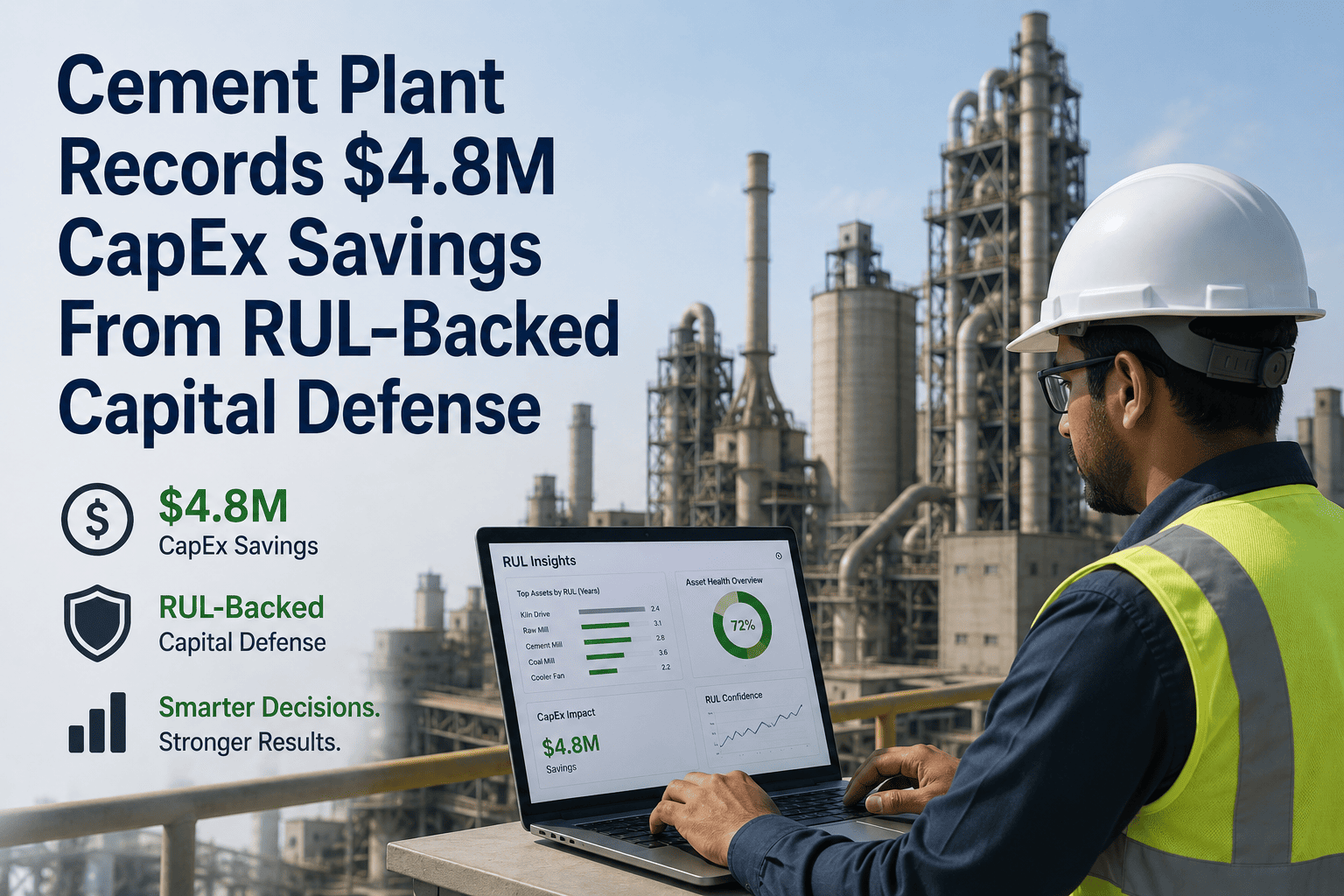
Combined material, downtime, and labor value. For a plant with two VRMs, systematic liner life extension generates over $800,000 in deferred cost per replacement cycle.
Questions About VRM Liner Life Management
Without systematic hardfacing programs, VRM grinding table and roller liner life in cement applications typically ranges from 5,000 to 9,000 operating hours depending on feed material abrasiveness, moisture content, and grinding pressure settings. With optimized hardfacing campaigns tracked against wear measurement data, 10,000 to 12,000 hours is achievable on moderately abrasive feeds. High-abrasivity raw materials or slag grinding applications typically see lower absolute life but still benefit significantly from condition-based campaign timing.
Most VRM liner geometries support two to three hardfacing campaigns before the base metal profile is too worn to accept effective overlay. This case study plant achieved two hardfacing campaigns per liner set — at approximately 2,000 hours and 5,800 hours — before replacement at 10,400 hours. Hardfacing records in Oxmaint track each campaign's electrode specification, weld passes, and post-campaign profile measurement, building the history needed to judge when further hardfacing is no longer cost-effective.
Profile gauge measurement — capturing cross-section depth at defined measurement points across the grinding table segment and roller face — is the standard method. Measurements are taken at every planned shutdown, typically every 1,500 to 2,500 hours. Results entered into Oxmaint inspection forms against the specific segment asset record build the wear rate history that drives hardfacing and replacement timing decisions.
Hardfacing work orders in Oxmaint include the segment list, electrode specification, estimated weld hours, and post-hardfacing inspection requirements — giving the shutdown planning team a complete scope before the shutdown begins. When wear rate data indicates a hardfacing campaign is needed at the next shutdown, the work order is created in advance so materials, welding crew, and electrode stock are ready. Book a demo to see a VRM hardfacing work order configured in Oxmaint for your mill type.
Correctly timed hardfacing maintains liner geometry close to design profile throughout the extended operating period — so grinding efficiency and product fineness remain stable. The risk with fixed-schedule replacement is that liners operating past their untracked wear limit will show rising specific power and falling product fineness before replacement. In this case study, specific power consumption remained within 4% of baseline across the full 10,400-hour liner life because each hardfacing campaign restored grinding geometry before degradation became measurable in product quality.
3,200 More Hours Per Liner Set. That Is What Tracking Delivers.
This cement plant extended VRM liner life by 44% — not through new liner materials or equipment upgrades, but through systematic wear measurement, well-timed hardfacing campaigns, and condition-based replacement decisions tracked in Oxmaint. Your plant's next liner campaign is an opportunity to start the same program.