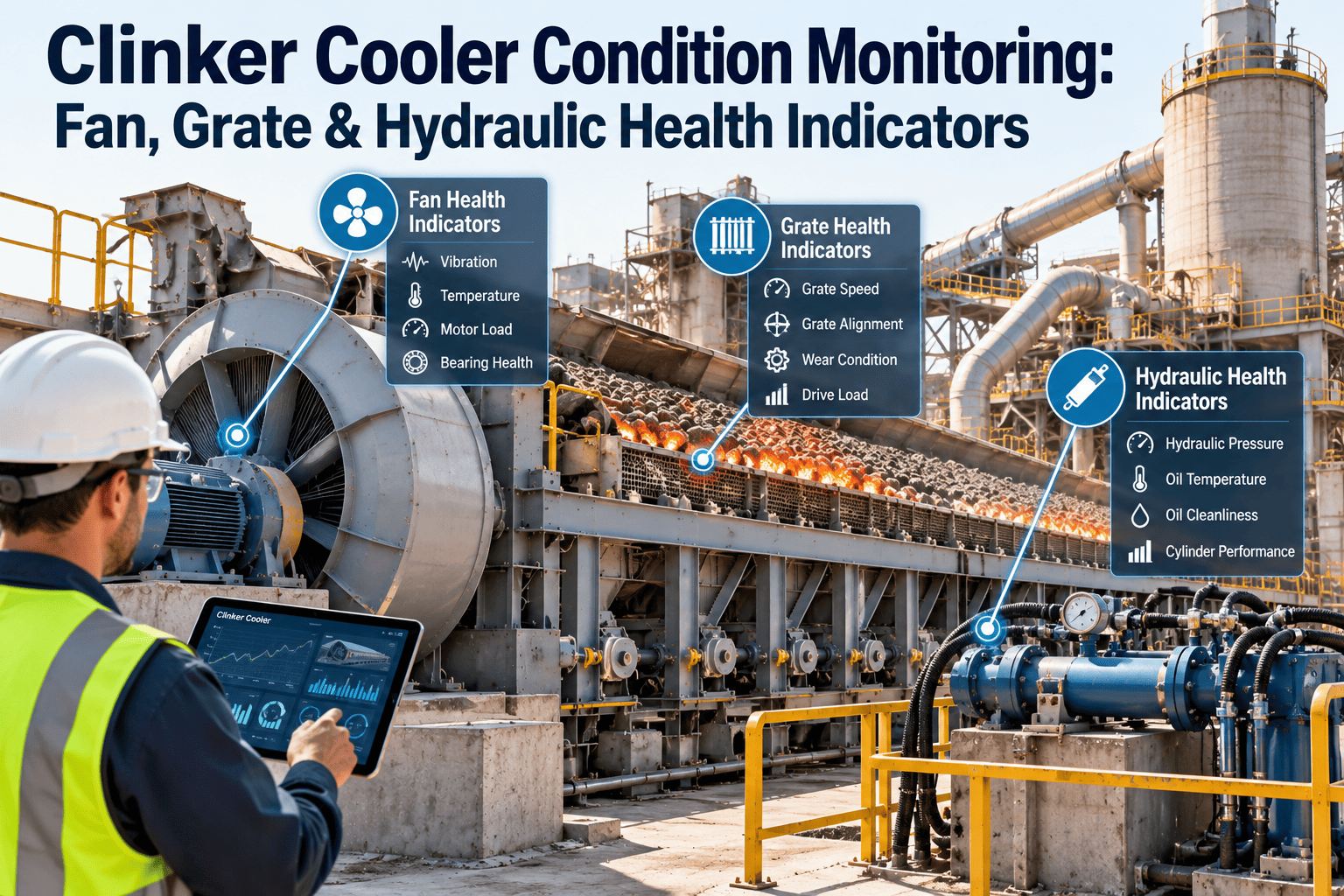
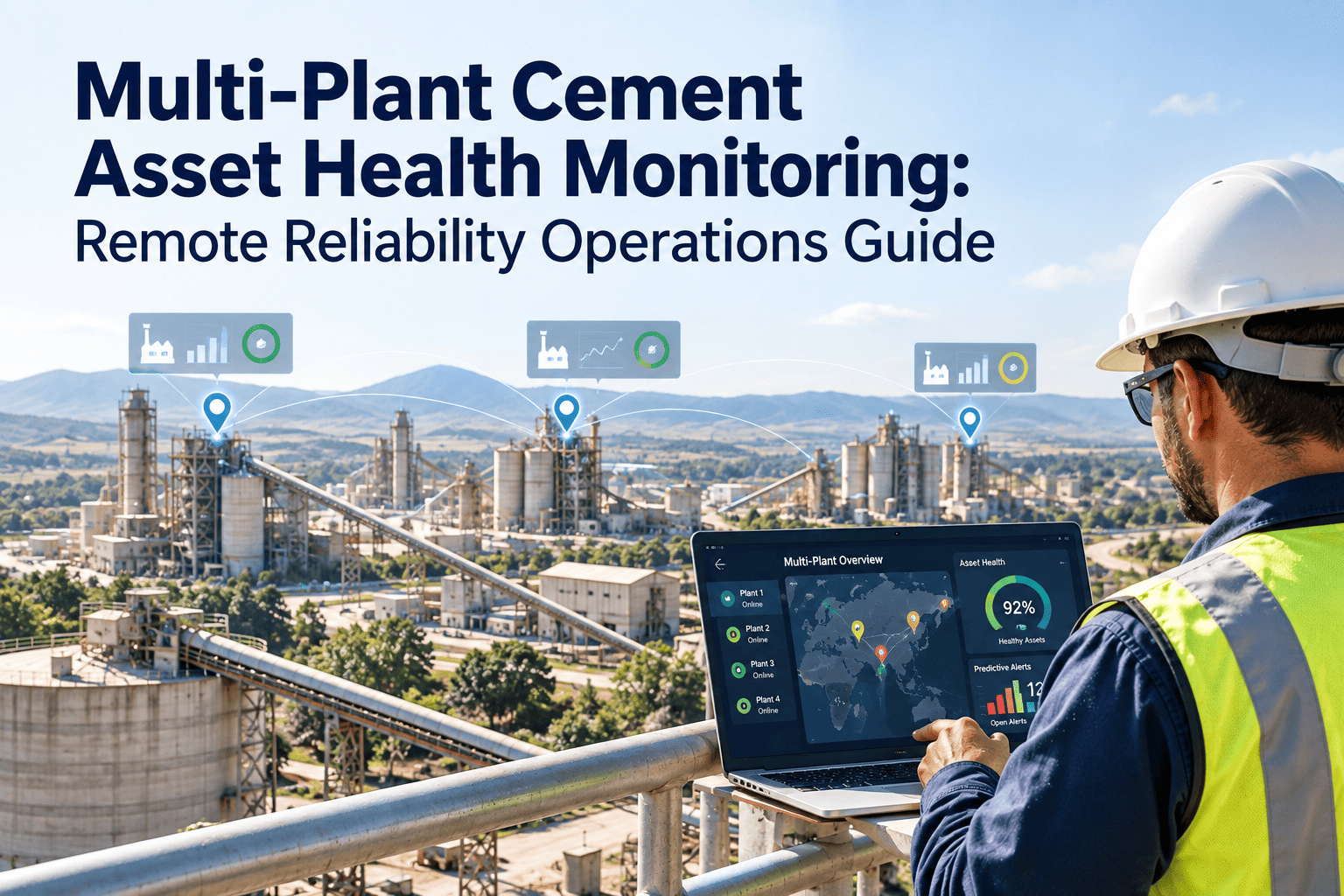
Cement plants are asset-intensive operations where equipment reliability directly determines profitability. A single unplanned kiln stop can cost $500,000 or more in lost production, emergency repairs, and quality impacts. Traditional asset management—run-to-failure or time-based maintenance—leaves money on the table and risk on the floor. AI-powered asset management transforms this equation: predicting failures weeks in advance, optimizing maintenance timing, extending equipment life, and turning maintenance from a cost center into a competitive advantage.
The shift from reactive to predictive isn't just about technology—it's about fundamentally changing how plants think about their equipment. AI-driven asset management platforms provide the intelligence layer that makes this transformation possible, turning equipment data into actionable maintenance decisions.
$50-100M
Typical replacement value of cement plant equipment
3-5%
Maintenance as percentage of asset replacement value annually
$50K+/hr
Cost of unplanned kiln downtime
30-50%
Potential reduction in unplanned downtime with AI
The Asset Management Evolution
Fix it when it breaks
Unplanned downtime
Emergency costs
Collateral damage
Highest total cost
→
Fix it on a schedule
Time-based intervals
Over-maintenance
Some surprises
Better but wasteful
→
Fix it when needed
Condition-based
Planned repairs
Optimized timing
Lowest total cost
→
AI recommends actions
Automated decisions
Optimized operations
Self-improving
Maximum value
Critical Assets in Cement Plants
Not all assets are equal. Focus AI-powered monitoring where failures hurt most.
Failure stops production immediately
Rotary kiln$500K+/day lost
Kiln main drive$300K+/day lost
Raw millKiln starves in hours
ID fanImmediate kiln stop
Cement mill$100K+/day lost
Failure degrades production or quality
Preheater fansReduced capacity
Cooler drivesQuality impact
SeparatorsEfficiency loss
ConveyorsMaterial flow issues
CompressorsMultiple impacts
Failure causes inconvenience or minor impact
Auxiliary pumpsRedundancy exists
Dust collectorsEnvironmental risk
LightingSafety concern
HVACComfort only
Protect Your Critical Assets
Oxmaint's AI monitors your most important equipment 24/7, predicting failures and optimizing maintenance timing.
AI Technologies for Asset Management
AI analyzes vibration signatures to detect bearing wear, imbalance, misalignment, and looseness long before failure.
Detection lead time: 2-6 months
Key equipment: Motors, gearboxes, fans, pumps
Techniques: FFT analysis, envelope analysis, ML pattern recognition
Continuous temperature monitoring with AI detecting abnormal patterns—hot spots, unusual trends, cooling system degradation.
Detection lead time: Days to weeks
Key equipment: Bearings, motors, electrical systems, kiln shell
Techniques: Trend analysis, thermal imaging AI, anomaly detection
Motor current patterns reveal electrical and mechanical faults—rotor bar issues, bearing problems, load anomalies.
Detection lead time: 1-3 months
Key equipment: Large motors, mill drives, fan motors
Techniques: MCSA, power quality analysis, load profiling
Machine learning on oil condition data—particle counts, wear metals, contamination—predicts gearbox and bearing health.
Detection lead time: 1-6 months
Key equipment: Gearboxes, hydraulic systems, large bearings
Techniques: Trend correlation, wear pattern recognition, contamination tracking
Virtual equipment models simulate degradation, predict remaining useful life, and test maintenance scenarios.
Capability: RUL prediction, what-if analysis
Key equipment: Kiln, mill systems, major drives
Techniques: Physics-based + data-driven hybrid models
AI correlates process conditions with equipment stress—predicting wear from production intensity, material hardness, operating conditions.
Capability: Wear rate modeling, campaign planning
Key equipment: Refractories, liners, grinding media
Techniques: Regression models, survival analysis
Implementing AI Asset Management
Talk to our asset management experts about implementing predictive maintenance at your plant.
01
Asset Criticality Assessment
Rank all equipment by failure consequence—production impact, safety risk, environmental impact, repair cost. Focus AI monitoring on the vital few.
Output: Prioritized asset list for monitoring
02
Failure Mode Analysis
For critical assets, identify how they fail. Each failure mode needs appropriate detection method—vibration for bearings, temperature for windings, etc.
Output: Failure modes × detection methods matrix
03
Sensor Deployment
Install monitoring sensors where gaps exist. Wireless retrofits for rotating equipment. Integrate existing sensors into analytics platform.
Output: Connected asset base with data flowing
04
Model Development
Train AI models on historical data—normal patterns, failure precursors, maintenance outcomes. Validate against known events.
Output: Calibrated predictive models
05
Workflow Integration
Connect predictions to action—CMMS integration, alert routing, work order generation. Close the loop from insight to maintenance.
Output: Automated maintenance triggers
06
Continuous Improvement
Track prediction accuracy, capture feedback, retrain models. Expand coverage to more assets. Build organizational capability.
Output: Self-improving system
Key Performance Indicators
Reliability KPIs
MTBFMean Time Between Failures↑ 50-100%
MTTRMean Time To Repair↓ 20-40%
Unplanned DowntimeHours lost to breakdowns↓ 30-50%
OEEOverall Equipment Effectiveness↑ 5-10 pts
Maintenance KPIs
PM ComplianceScheduled work completed on time>95%
Planned vs EmergencyRatio of work types>80% planned
Maintenance Cost/TonTotal maintenance spend↓ 10-20%
Prediction AccuracyAI predictions validated>85%
ROI of AI Asset Management
AI Asset Management Impact
Downtime reduction (40%)$360,000
Maintenance efficiency (15%)$1,200,000
Parts inventory reduction$200,000
Extended equipment life$300,000
Total Annual Benefit$2,060,000
Implementation Cost$300-500K
Annual Software/Support$100-150K
First Year ROI300-500%
Payback Period3-5 months
Real Results from AI Asset Management
$1.2M saved
Gearbox failure predicted 6 weeks early. Planned repair during scheduled outage avoided $1.2M emergency repair and production loss.
45% less downtime
Wireless vibration monitoring on 120 assets reduced unplanned stops from 8 to 4 per year across kiln line.
28% maintenance savings
Condition-based maintenance replaced time-based schedules, eliminating unnecessary PM tasks while catching real problems.
Transform Your Asset Management
From reactive repairs to predictive intelligence—Oxmaint helps cement plants maximize equipment reliability while minimizing maintenance costs.
Frequently Asked Questions
How accurate are AI failure predictions?
Well-implemented systems achieve 85-95% accuracy for major failure modes with 2+ weeks lead time. Accuracy varies by failure type—bearing failures are highly predictable; some electrical failures less so. The goal isn't perfection but significant improvement over reactive approaches.
How much historical data do we need?
For basic anomaly detection: 3-6 months of normal operation. For failure prediction: ideally examples of actual failures in the historical record. Some models work with minimal failure data using physics-based approaches or transfer learning from similar equipment.
Should we monitor all equipment or just critical assets?
Start with critical and important assets—typically 50-100 items that drive 80%+ of risk. Monitoring everything sounds good but creates data overload without proportional benefit. Expand coverage gradually as you build capability.
How do we integrate AI predictions with our CMMS?
Modern AI platforms offer CMMS integrations—API connections to SAP PM, Maximo, etc. Predictions trigger work requests automatically. Some plants use middleware; others leverage built-in connectors. Integration typically takes 2-4 weeks.
What happens when AI predicts failure but we can't stop for repair?
AI provides probability and timeline estimates. You can choose to run longer with increased monitoring, prepare contingency plans, or accelerate repair timing. The value is having choice and time—not being forced into emergency response.