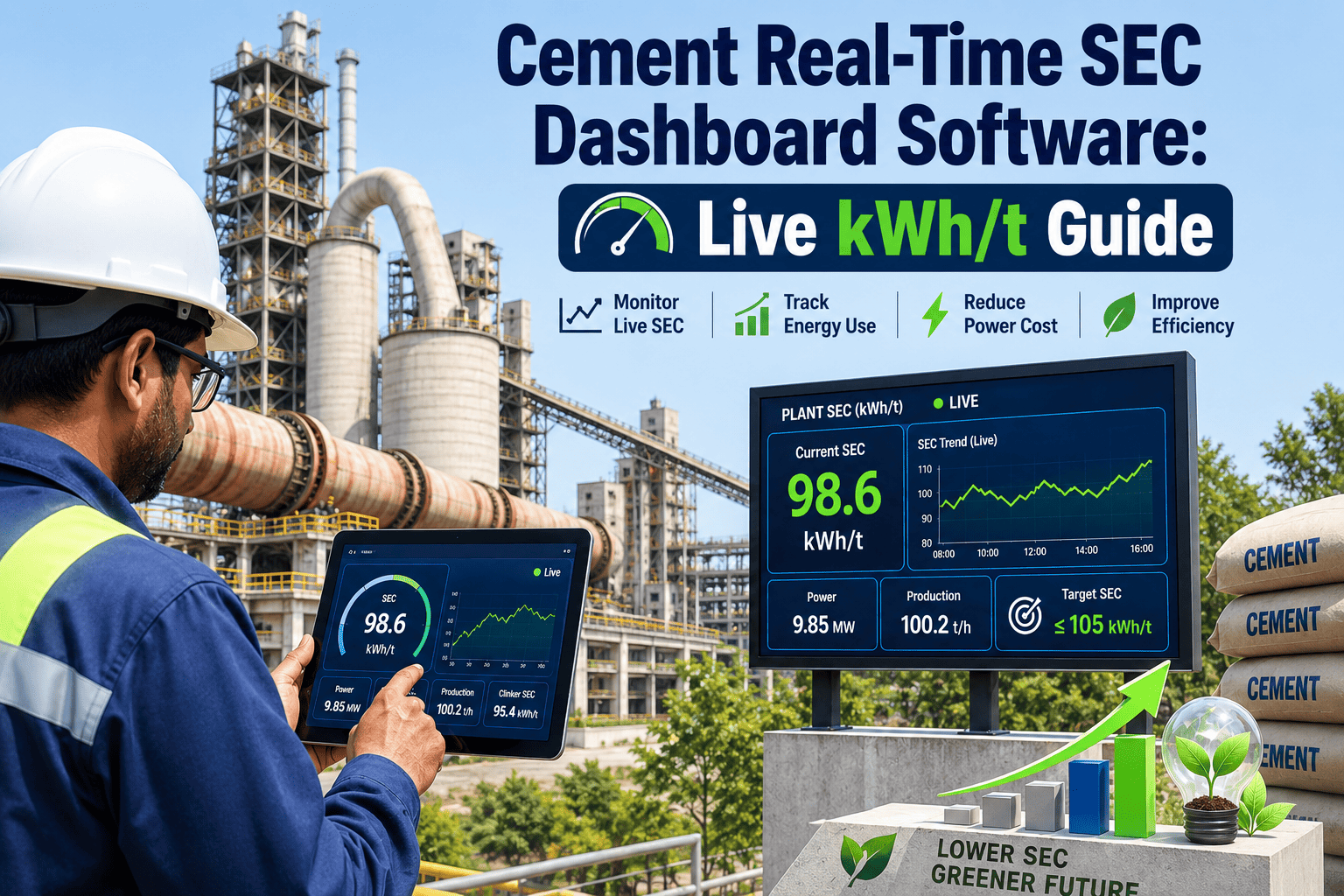
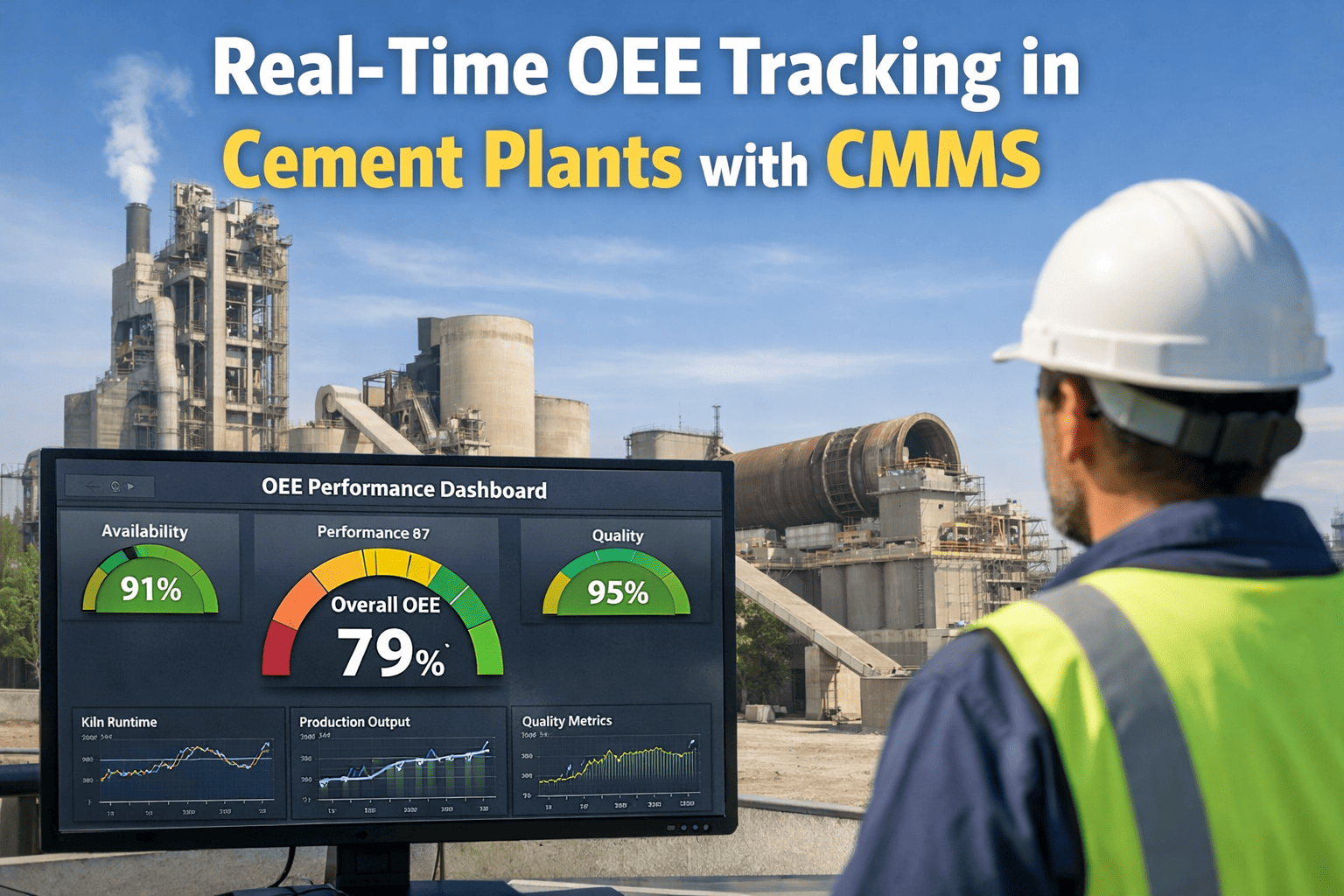
Running a cement plant is an orchestra of complexity—kilns burning at 1,450°C, mills grinding around the clock, quality specifications that must hit narrow targets, equipment that can't afford to fail, and energy costs that never stop climbing. Traditional operations rely on experienced operators making judgment calls based on incomplete information. AI changes this fundamentally: it sees everything, forgets nothing, learns continuously, and responds in milliseconds. The result is operations that are more consistent, more efficient, and more profitable.
AI isn't replacing plant operators—it's giving them superpowers. Real-time recommendations, early warning of problems, optimization suggestions that would take humans hours to calculate. AI-powered operations platforms augment human expertise with machine intelligence, creating a partnership that outperforms either alone.
React to problems after they occur
Decisions based on limited data samples
Consistency varies with operator experience
Maintenance triggered by failures or schedules
Energy optimization through periodic audits
VS
Predict and prevent problems before impact
Analyze 100% of data in real-time
Consistent optimization 24/7/365
Maintenance based on actual equipment condition
Continuous energy optimization every minute
AI Across the Operations Lifecycle
Plan
Production scheduling, demand forecasting
Execute
Process control, quality management
Monitor
Real-time visibility, anomaly detection
Maintain
Predictive maintenance, asset health
Improve
Analytics, optimization, learning
AI Applications in Daily Operations
AI generates comprehensive shift briefings automatically—summarizing overnight events, highlighting abnormalities, flagging equipment concerns, and prioritizing attention areas.
80% faster handoverNothing missedConsistent format
AI monitors hundreds of variables simultaneously, recommending setpoint adjustments to maintain quality while minimizing energy. Adapts to changing conditions—raw material variations, weather, equipment state.
2-5% energy savingsTighter qualityFaster response
Predict cement strength, free lime, and other quality parameters hours or days before lab results. Enable proactive adjustments rather than reactive corrections after the fact.
±2 MPa accuracy6+ hours aheadReduce off-spec
AI learns normal patterns and flags deviations instantly—unusual vibrations, temperature drift, efficiency drops, quality trends. Catches issues humans miss, especially during night shifts.
Minutes not hoursSubtle patternsNever fatigues
Continuous monitoring of critical assets—vibration signatures, temperature trends, power patterns. AI predicts failures weeks in advance, enabling planned repairs instead of emergency breakdowns.
30-50% less downtimeLower costsSafer
AI optimizes production schedules considering demand forecasts, inventory levels, energy costs, maintenance windows, and equipment constraints. Balances competing objectives automatically.
Better utilizationLower inventoryOn-time delivery
Transform Your Plant Operations
Oxmaint delivers AI that works alongside your team—augmenting expertise, catching problems early, and optimizing continuously.
The AI-Enabled Control Room
Talk to our experts about modernizing your control room with AI capabilities.
Main Display Wall
Process overview with AI health scores, real-time KPIs, active alerts prioritized by AI severity assessment
Operator Workstations
AI recommendations panel, trend analysis with predictions, one-click drill-down to root causes
AI Assistant
Natural language queries, voice alerts for critical issues, contextual guidance
1
Prioritized Alerts
AI ranks alarms by actual risk, not just threshold crossings. Reduces alarm fatigue by 60%+.
2
Natural Language
"Why is free lime trending up?" AI explains in plain language with supporting data.
3
Guided Response
Step-by-step recommendations for handling abnormal situations based on historical success.
4
Mobile Extension
Full AI capabilities on tablets and phones for field operators and management.
Operational KPIs AI Improves
Kiln Availability
Before: 85%After: 92%+
Specific Energy
Before: 3,400 MJ/tAfter: 3,200 MJ/t
Quality Cpk
Before: 1.0After: 1.5+
Unplanned Downtime
Before: 5%After: 2%
OEE
Before: 72%After: 82%+
Implementation: From Pilot to Plant-Wide
Phase 1: Focused Pilot
2-3 months
Start with one high-value application—kiln optimization or predictive maintenance on critical equipment. Prove value, build confidence.
Deliverables: Working AI use case, measured ROI, trained users
Phase 2: Expand Coverage
3-6 months
Add applications across the plant—quality prediction, anomaly detection, energy optimization. Integrate with existing workflows.
Deliverables: 3-5 AI applications, integrated dashboards, operational procedures
Phase 3: Full Operations
6-12 months
AI becomes integral to daily operations. Closed-loop control where appropriate. Continuous improvement and model refinement.
Deliverables: AI-augmented operations, measurable improvements, self-sustaining
Change Management: Getting Teams Onboard
Operators
✓ Involve in design—their input shapes useful tools
✓ Explain how AI works—demystify the "black box"
✓ Show daily value—save them time, make their job easier
✗ Don't position as replacement or surveillance
Engineers
✓ Provide data access—let them explore and validate
✓ Enable customization—they know their process best
✓ Create feedback loops—improve models together
✗ Don't lock them out of the technical details
Management
✓ Deliver visible wins early—build momentum
✓ Quantify ROI clearly—connect to financial metrics
✓ Report progress regularly—maintain support
✗ Don't overpromise or set unrealistic timelines
Measuring AI Operations Success
Operational Metrics
Energy reduction2-5% vs baseline
Unplanned downtime30-50% reduction
Quality variance20-40% improvement
Throughput2-5% increase
AI Performance Metrics
Prediction accuracy>90% for key parameters
Alert precision>80% actionable
Recommendation adoption>70% followed
Time to insight<5 minutes
Business Metrics
Cost savings$1-5M annually
ROI>200% first year
Payback period<12 months
User satisfaction>80% positive
Upgrade Your Operations with AI
From reactive to predictive, from manual to optimized—Oxmaint brings AI capabilities that transform cement plant operations.
Frequently Asked Questions
How do operators interact with AI recommendations?
AI presents recommendations through familiar interfaces—control room displays, mobile apps, even existing HMI screens. Recommendations appear as suggestions with supporting rationale. Operators can accept, modify, or dismiss. In advanced implementations, operators set boundaries and AI acts autonomously within them.
What happens when AI makes a wrong prediction?
All predictions have confidence levels—AI communicates uncertainty, not just point estimates. When wrong predictions occur, they feed back into model training for improvement. Critical decisions always have human oversight. The goal is "better than human alone," not perfection.
How much operator training is required?
Initial training typically takes 2-4 hours for basic use, with ongoing coaching over 2-3 months for proficiency. Modern AI interfaces are designed for operators without technical backgrounds. The best systems feel intuitive—if extensive training is needed, the design is wrong.
Can AI work during night shifts with minimal staff?
This is where AI shines. It maintains vigilance when humans are tired. Automatic alerts escalate to on-call personnel for critical issues. Some plants use AI more aggressively at night—automated responses that would have human oversight during day shifts.
How do we handle AI recommendations we disagree with?
Disagreement is valuable feedback. Document why recommendations were rejected—this improves future models. Sometimes AI sees patterns operators miss; sometimes operators have context AI lacks. The goal is collaborative intelligence: AI proposes, humans dispose, both learn.