Every shift in a cement plant starts with a safety briefing. Every shift also ends with footage nobody watched — cameras that recorded twelve hours of PPE violations, dust mask removal, hard hat-free zones, and restricted area breaches that nobody caught until after the incident report was filed. Oxmaint's AI PPE compliance monitoring changes that: your existing camera network detects violations in real time, auto-generates CMMS safety alerts, and creates audit-ready compliance records — so the next incident report is a near-miss, not a fatality.
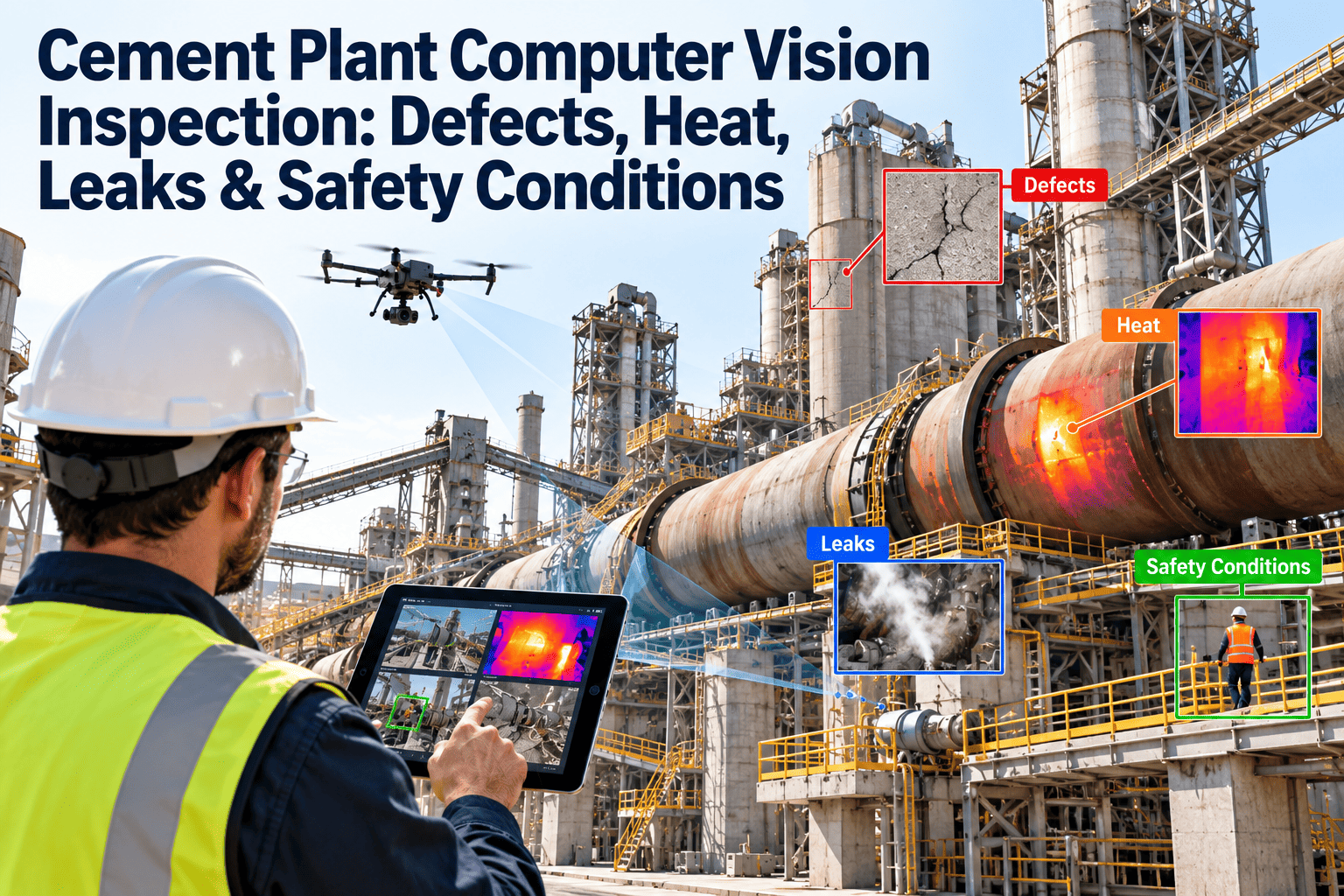
AI PPE compliance monitoring uses computer vision trained on industrial environments to detect missing or incorrect protective equipment — hard hats, respirators, high-visibility vests, safety goggles, and gloves — frame by frame, across every camera in your plant, 24 hours a day. In cement plants, where silica dust, rotating mill equipment, extreme kiln heat, and confined spaces create compounding hazard exposure, continuous AI monitoring identifies violations the moment they happen and sends alerts directly to supervisors and into your CMMS as documented safety events. This page explains how it works, where it pays off fastest, and how Oxmaint connects AI detection to your compliance workflow.
Why Manual PPE Inspection Fails in Cement Plants
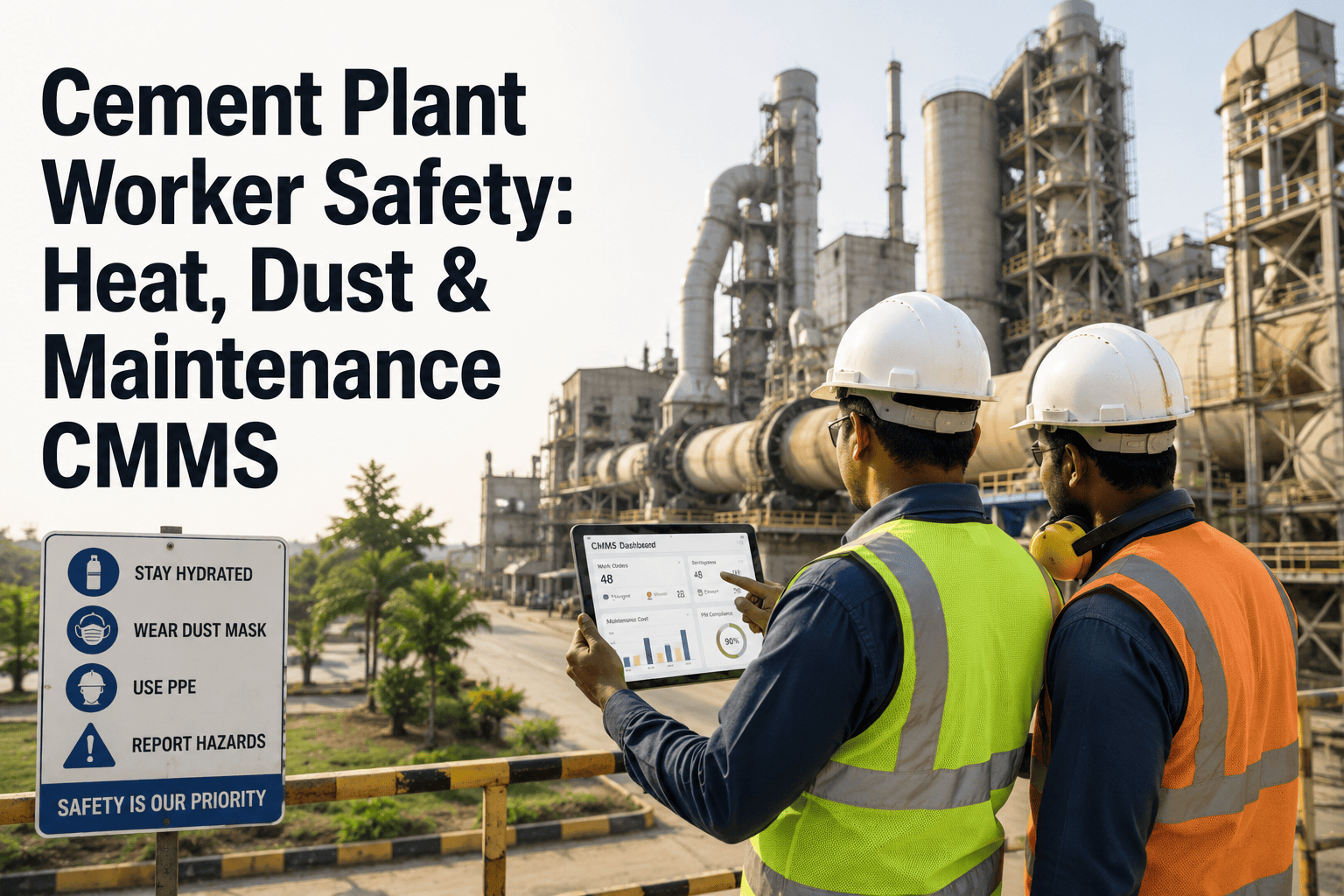
The cement plant environment defeats manual safety enforcement in ways that are structural, not behavioral. Safety officers cannot be everywhere. Workers remove respirators during breaks and don't always put them back on. Hard hats come off in warm control rooms and don't go back on before re-entering the mill floor. Dust levels obscure sightlines during peak operation. Night shifts operate with reduced supervision. None of this is malicious — it is the reality of a 24/7 industrial environment across a facility spanning multiple hectares. Here is what manual inspection misses and what AI catches consistently.
Workers consistently comply during scheduled walkarounds and revert within minutes of the safety officer leaving the zone. Manual inspection captures the performance of safety, not the reality of it.
Clipboard-based safety records document what inspectors saw. They cannot prove compliance between inspections — which is exactly what OSHA citations and litigation target when incidents occur.
Cement dust at active transfer points, raw mill areas, and packing lines reduces sightlines to a few meters. Safety officers physically cannot see PPE status across the full zone from a single position.
PPE compliance on night shifts and extended overtime periods consistently runs 30–40% lower than day shift rates. Reduced supervision plus fatigue is a documented risk combination that AI monitoring eliminates.
Stop Reviewing Footage After Incidents. Start Getting Alerts Before Them.
Oxmaint AI PPE monitoring connects to your existing cement plant cameras, detects violations in real time, and auto-creates documented safety work orders in your CMMS. The shift from reactive to preventive safety compliance starts with a 30-minute demo.
What AI PPE Cameras Detect in a Cement Plant
Not all PPE violations carry equal risk in a cement plant environment. The detection categories below are prioritized by injury severity and regulatory exposure — not by how easy they are to monitor manually. Oxmaint AI safety monitoring identifies all of these in real time and routes each violation type to the appropriate response workflow.
How Oxmaint AI PPE Monitoring Works — From Camera to CMMS
The detection-to-action pipeline is what separates an AI safety camera from an alert that nobody acts on. Oxmaint closes the loop between the violation, the supervisor response, the CMMS record, and the compliance report — so every detection becomes a documented safety event, not just a timestamped clip in a server nobody accesses.
Oxmaint AI vision connects to your existing CCTV and IP camera network via RTSP feed. On-site edge compute units process video locally — eliminating latency and keeping plant operational data within your OT network boundary. Cameras already covering kiln areas, mill floors, conveyor lines, and entry points become your 24/7 AI safety monitoring network without new hardware investment in most deployments.
Deep learning models trained on cement plant environments analyze every frame for PPE compliance — detecting present, absent, or incorrectly worn protective equipment per worker per zone. The models account for cement dust, variable lighting, steam and heat distortion, and dense worker groupings. Detection accuracy holds above 95% in conditions that defeat standard industrial camera systems, with per-item detection for respirators, hard hats, vests, goggles, harnesses, and specialty PPE.
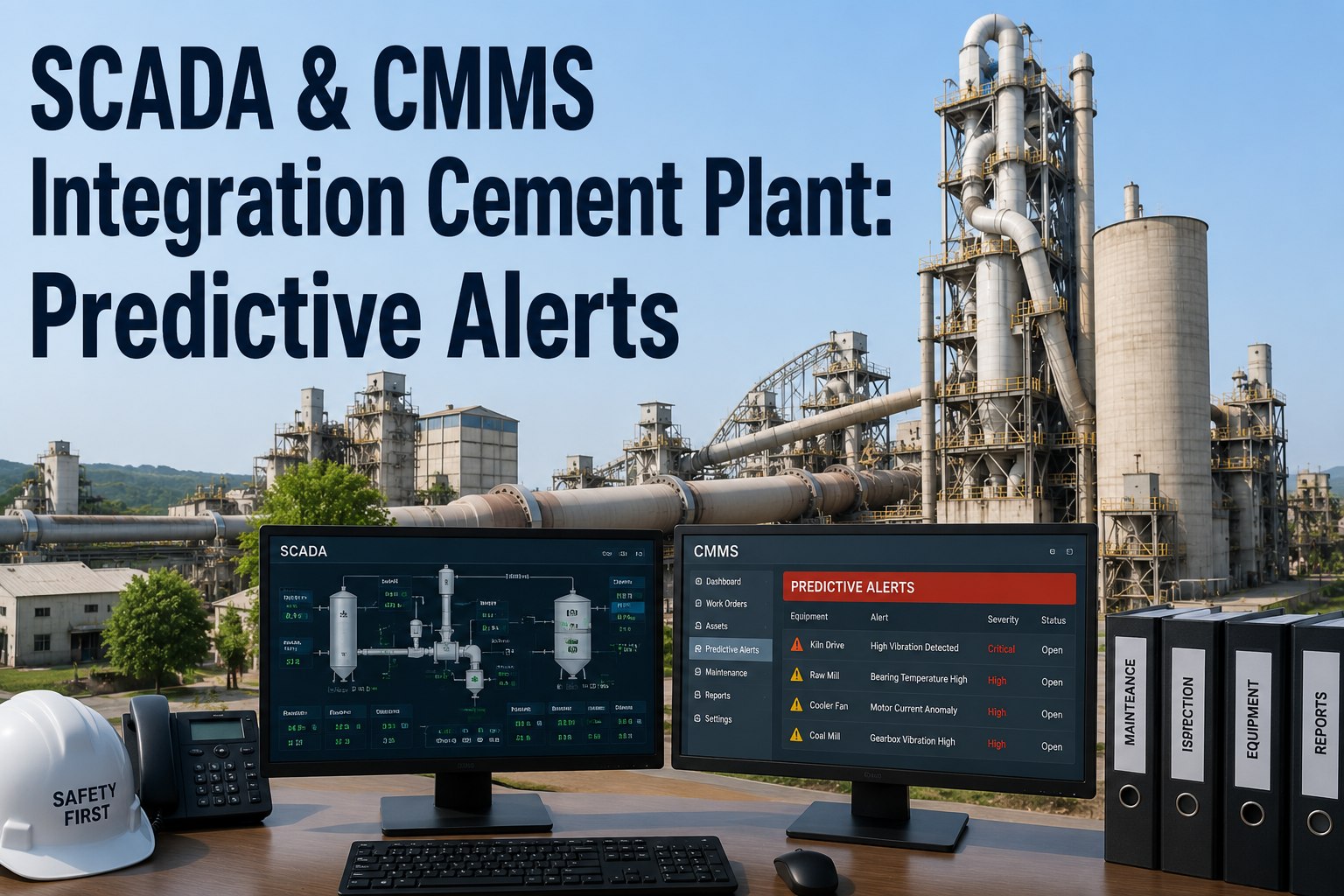
The moment a violation is confirmed, Oxmaint routes a timestamped alert with camera capture to the zone supervisor's mobile device and creates a safety work order in the CMMS — tagged by violation type, location, shift, and worker zone. Critical violations (respirator removal in silica dust areas, unrestricted kiln zone entry) trigger immediate escalation to the EHS manager. The response window shrinks from hours — when someone reviews footage — to seconds.
Every detection, alert, supervisor response, and corrective action is stored as an immutable record in Oxmaint — timestamped, geo-tagged to camera location, and linked to the relevant CMMS safety event. Weekly and monthly compliance rate reports generate automatically per zone, per shift, and per PPE category. This is the documentation that satisfies OSHA audit requests, insurance carrier reviews, and ISO 45001 management system requirements — without any manual data entry.
See the Full Detection-to-Documentation Workflow in 30 Minutes
Oxmaint integrates with your existing camera infrastructure and CMMS in 4 to 6 weeks. Every PPE detection automatically becomes a safety work order, a compliance record, and an audit-ready evidence file — all in one platform.
Cement Plant Zones Ranked by AI PPE Monitoring ROI
Not every square meter of your plant carries equal risk or equal monitoring value. These zones produce the highest concentration of PPE violations, the most severe injury outcomes when violations result in incidents, and the fastest payback on AI monitoring deployment — because they are exactly the areas that manual inspection covers least consistently.
Silica dust concentrations in active mill areas can exceed OSHA PEL within minutes of operation without adequate controls. Respirator removal — even briefly — in these zones represents the highest long-term health liability in any cement plant. AI monitoring provides continuous respirator compliance verification with zero tolerance alerting configured per zone.
The rotary kiln zone combines 1,400°C operating temperatures with rotating equipment, hot clinker flow, and high-voltage drive systems. Heat-resistant PPE, face shields, and restricted zone enforcement are critical — and the harsh thermal environment makes manual inspection physically difficult. AI thermal and visual cameras maintain full detection in these conditions.
Limestone yards, clinker storage areas, and packing dispatch zones mix heavy vehicle movements with pedestrian workers. High-visibility vest compliance in these zones is directly correlated with vehicle-pedestrian incident rates. AI monitoring provides continuous vest detection across all camera angles covering vehicle routes, with immediate alerts when non-compliant workers enter active vehicle zones.
Fall protection at elevated work areas — silo access platforms, conveyor elevated structures, kiln shell inspection walkways — represents the most catastrophic single-event risk in cement plant operations. AI fall harness detection at access points provides the pre-entry verification checkpoint that eliminates the single most common fall protection failure: workers proceeding to height without clipping in.
Compliance Benchmarks — Cement Plant PPE AI Monitoring
Frequently Asked Questions
Does AI PPE monitoring require replacing our existing cameras?
How does the AI handle cement dust, steam, and extreme lighting conditions?
How does Oxmaint convert an AI PPE alert into a CMMS safety work order?
What documentation does Oxmaint produce for OSHA inspections and ISO 45001 audits?
How long does deployment take, and what does the go-live process involve?
Your Cameras Are Already There. The AI Compliance Layer Is What's Missing.
Cement plant safety teams are not failing because they don't care — they're failing because they cannot physically monitor every zone, every shift, every minute. Oxmaint AI PPE monitoring gives your existing cameras the ability to detect every violation, alert the right person in seconds, and document every safety event automatically — turning reactive incident management into a documented, preventive compliance program. Book a demo with your EHS team and see the full AI PPE detection and CMMS safety workflow configured for your plant.