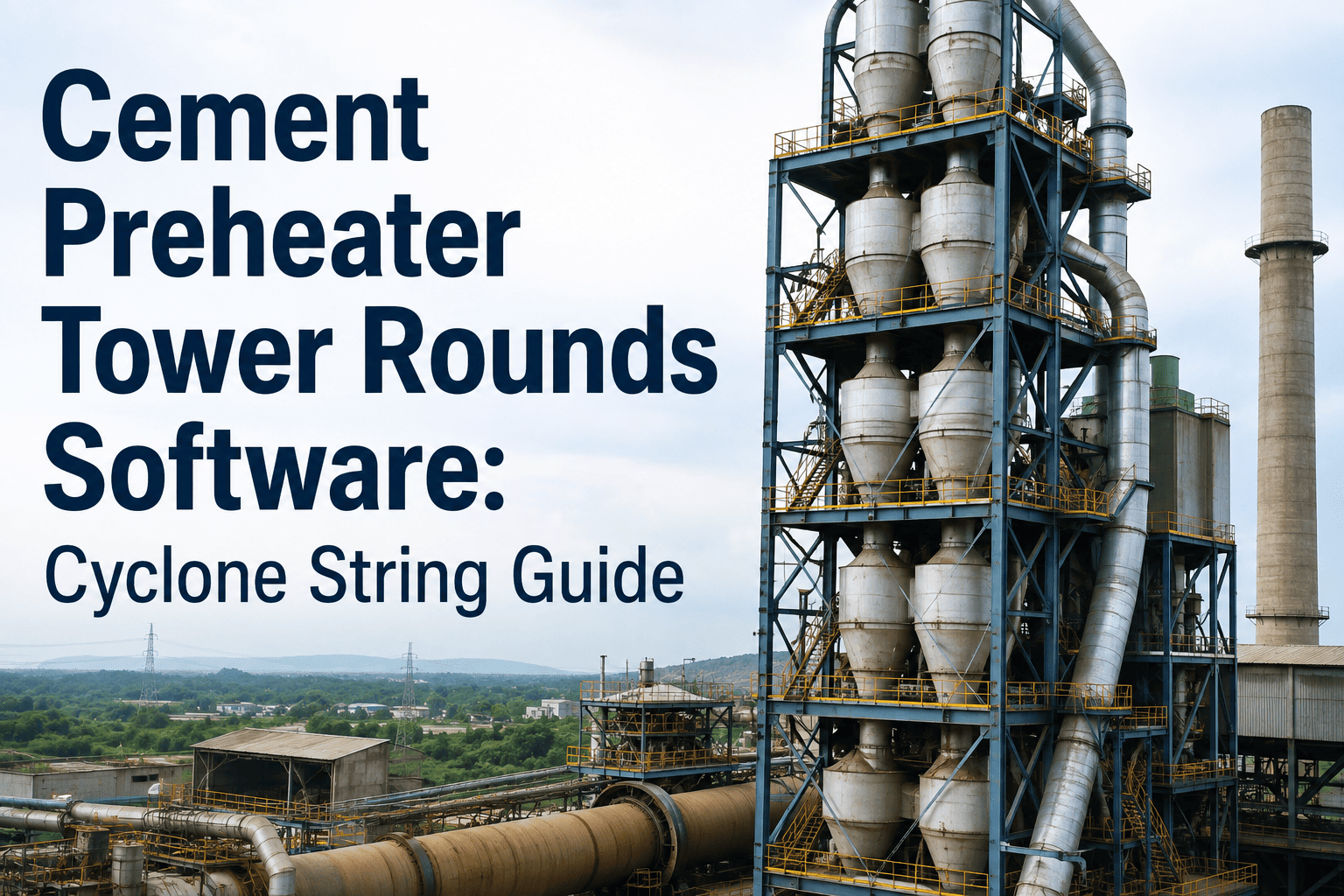
The preheater tower is the most maintenance-intensive vertical structure in any cement plant — and the least forgiving of unplanned work. At 80–120 meters tall, with cyclone stages operating at 300–900°C, every inspection entry requires scaffolding, confined space permits, and coordinated production shutdowns. A missed cyclone cleaning cycle turns into a buildup blockage that forces an emergency stoppage. A deferred refractory crack inspection becomes a casing breach that halts production for days. A scaffold permit logged on paper instead of a CMMS becomes a compliance exposure the next time a regulatory inspector arrives. Structured inspection management — with planned scaffolding campaigns, digital permit workflows, and corrective task tracking — converts the preheater tower from a reactive maintenance liability into a predictable asset. Start a free OxMaint trial and build your first preheater inspection program, or book a 30-minute demo with a cement plant reliability specialist.
Preheater Tower Maintenance Management Software
Plan preheater inspections, cyclone cleaning campaigns, scaffold permits, and corrective tasks — in one CMMS built for the vertical complexity and safety demands of cement preheater operations.
Preheater Tower Maintenance: Stage by Stage
A preheater tower is not a single asset — it is a vertically stacked system of cyclone stages, riser ducts, calciner sections, and supporting structures, each with its own failure modes, access requirements, and inspection intervals. OxMaint maps each stage as an individual asset node.
OxMaint tracks pressure differential trend and triggers cleaning WO before blockage threshold is reached.
Scheduled by calendar and conditionally triggered by any thermal anomaly or casing hotspot alarm.
OxMaint plans scaffold erection sequence across all tower stages, linking permit issuance to each inspection WO.
UT thickness and visual weld inspection with findings logged against the casing asset record for trending.
Scaffold Permits and Safety Isolation — Managed in OxMaint
A preheater tower inspection without a properly documented scaffold permit and completed safety isolation is not just a compliance risk — it is a life-safety risk. OxMaint enforces permit completion before work orders can be marked active, creating an audit trail that protects your team and your compliance record.
Maintenance planner creates inspection WO in OxMaint with stage, access method (scaffold/rope access), and required isolation scope. Scaffold erection WO is auto-generated as a prerequisite task.
Scaffold contractor completes erection and records handover inspection in OxMaint. The scaffold completion sign-off unlocks the inspection WO — work cannot begin without a verified scaffold record in the system.
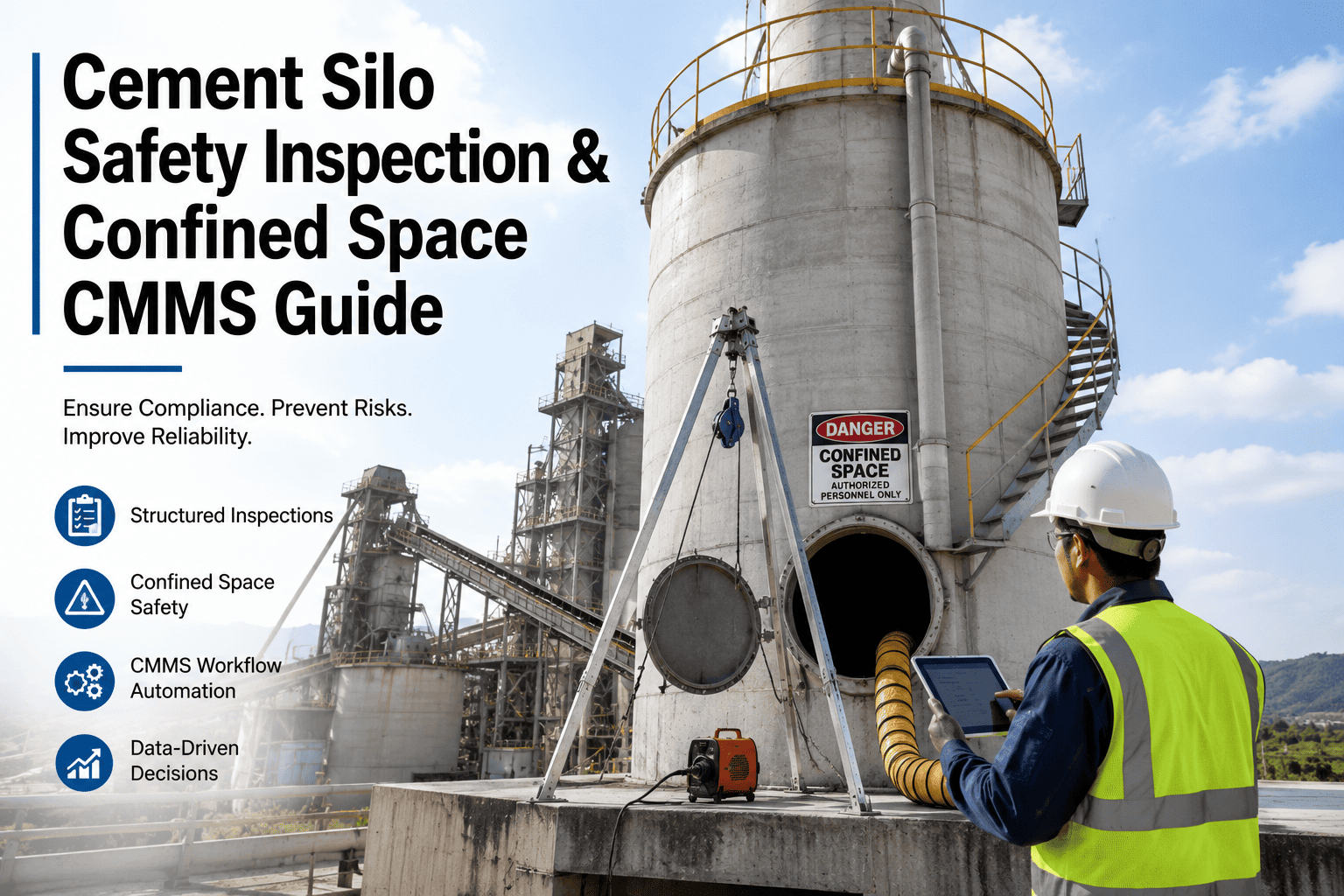
Confined space and hot work permits are completed on mobile, with isolation point confirmation at each step. Permit records attach to the WO with technician ID and timestamp — creating a complete, auditable LOTO trail per inspection event.
Technicians complete stage-specific checklists on mobile inside the tower — recording refractory measurements, photo evidence of defects, cleaning completion confirmation, and deviation findings, all linked to the stage asset record.
Defects found during inspection generate corrective WOs automatically — repair priority, scope, and parts requirement pre-populated from finding data. Scaffold dismantling is tracked as a linked task, completing the full permit lifecycle in the system.
OxMaint gives your cement plant maintenance team digital scaffold permits, stage-specific mobile checklists, automatic corrective WO generation, and full audit export — all connected to the same CMMS that runs your daily PM program. Most plants are running their first preheater inspection campaign in OxMaint within two weeks.
What OxMaint Delivers for Preheater Tower Maintenance
Preheater tower maintenance management requires more than a CMMS checklist module. It requires a system that understands the vertical asset hierarchy, enforces safety prerequisites, and builds the inspection record that supports both regulatory compliance and overhaul campaign planning.
Each cyclone stage, riser duct, calciner section, and structural element is registered as a child asset under the preheater tower parent. Inspection findings, defect records, and repair history attach at the correct level — not just to the tower as a whole.
Cyclone cleaning WOs can be triggered by calendar interval or by pressure drop readings that exceed the blockage threshold — whichever comes first. No more discovering a 40% blocked cyclone during a shutdown that could have been cleaned in a two-hour planned entry.
Scaffold erection, confined space entry, and hot work permit checklists are built into the WO workflow. Permits are digital, timestamped, and linked to the specific inspection task — providing a defensible compliance record at every stage of every campaign.
Refractory thickness measurements from each inspection accumulate against the lining asset record. OxMaint tracks wear rate per stage and flags sections approaching minimum thickness — enabling targeted lining replacement rather than full-stage emergency reruns.
Major overhaul scope is assembled from accumulated deferred findings, refractory RUL alerts, and open corrective WOs across all tower stages. The campaign package arrives pre-scoped — contractor scope, part orders, and work sequence — before the kiln goes down.
Every scaffold permit, confined space record, corrective action, and inspection finding exports on demand — by tower stage, by date range, or by regulatory framework. Audit preparation that previously took days comes from a single OxMaint export.
Preheater Tower Inspection Schedule by Component
The schedule below reflects industry best practice for cement plant preheater tower inspection frequency, access type, and OxMaint action per component. Every row represents a PM or inspection type that OxMaint manages automatically once configured.
| Component | Inspection Type | Interval | Access Required | OxMaint Action |
|---|---|---|---|---|
| Cyclone Cones (all stages) | Meal buildup and ring formation | 3–6 months | Scaffold + confined space entry | Cleaning WO with permit prerequisite |
| Refractory Lining | Thickness measurement + crack survey | Annual + on hotspot alarm | Scaffold, dewatered and cooled | Thickness trend log, repair WO on deviation |
| Riser Duct Expansion Joints | Seal condition, bellows crack check | Annual | Scaffold or rope access | Deficiency WO linked to next overhaul |
| Vortex Finders | Wear measurement | Every major shutdown | Stage entry via scaffold | Replacement WO if wear exceeds OEM limit |
| Flap Valves (all stages) | Seal integrity and operation test | 6 months | External or limited entry | Adjustment or replacement WO |
| Casing Welds and Shell | UT thickness + visual weld inspection | Major overhaul (2–4 yrs) | Full scaffold access | Deficiency log linked to overhaul campaign |
| Calciner Burner Nozzle | Wear measurement, alignment check | Annual | Scaffold, with calciner cooled | Replacement or realignment WO |
Frequently Asked Questions
Can OxMaint track scaffold erection, permit issuance, and inspection completion as linked sequential tasks?
How does OxMaint handle condition-triggered cyclone cleaning versus calendar-scheduled cleaning?
Can refractory thickness measurements be trended over multiple inspections in OxMaint?
How are inspection findings converted into corrective work orders in OxMaint?
What compliance documentation can OxMaint export for preheater tower safety audits?
Every Preheater Inspection Should Leave a Digital Trail. Start Building One That Protects Your Plant.
OxMaint gives cement plant maintenance teams stage-level asset tracking, condition-triggered cleaning schedules, integrated permit workflows, refractory life trending, and shutdown campaign scoping — in one CMMS that runs every preheater tower inspection from planning to closed corrective action.