Cement plant maintenance managers spend an average of 15-20 hours per week compiling compliance reports manually—extracting data from spreadsheets, cross-referencing work orders, formatting documentation for regulatory submissions, and chasing down missing signatures. A 2025 industry survey found that 67% of cement facilities still rely on paper-based or fragmented digital systems for compliance documentation, creating audit vulnerabilities that result in an average $127,000 in annual penalty exposure per plant. Modern CMMS platforms eliminate this administrative burden by automatically capturing maintenance activities, generating audit-ready reports, and maintaining digital trails that satisfy ISO 14001, ISO 45001, EPA, and OSHA requirements without manual intervention. Plants implementing automated reporting reduce compliance documentation time by 85% while achieving 100% audit pass rates. Sign up for Oxmaint to transform compliance reporting from a weekly burden into an automated background process that runs itself.
Automated Maintenance Reporting for Cement Plant Compliance
Eliminate manual report compilation with intelligent systems that capture, organize, and format maintenance documentation for instant regulatory submission.
The Hidden Cost of Manual Compliance Reporting
Every hour spent manually compiling maintenance reports is an hour not spent on actual equipment reliability. The administrative burden of compliance documentation creates a dangerous cycle where maintenance teams prioritize paperwork over prevention, leading to equipment failures that generate even more documentation requirements. Request a demo to see how automated reporting breaks this cycle.
Regulatory Requirements Demanding Documentation
Cement manufacturing operations face overlapping compliance obligations from environmental, safety, and quality management standards. Each framework requires specific documentation formats, retention periods, and audit evidence that manual systems struggle to maintain consistently. Book a demo to see how automated reporting satisfies multiple regulatory frameworks simultaneously.
How Automated Reporting Actually Works
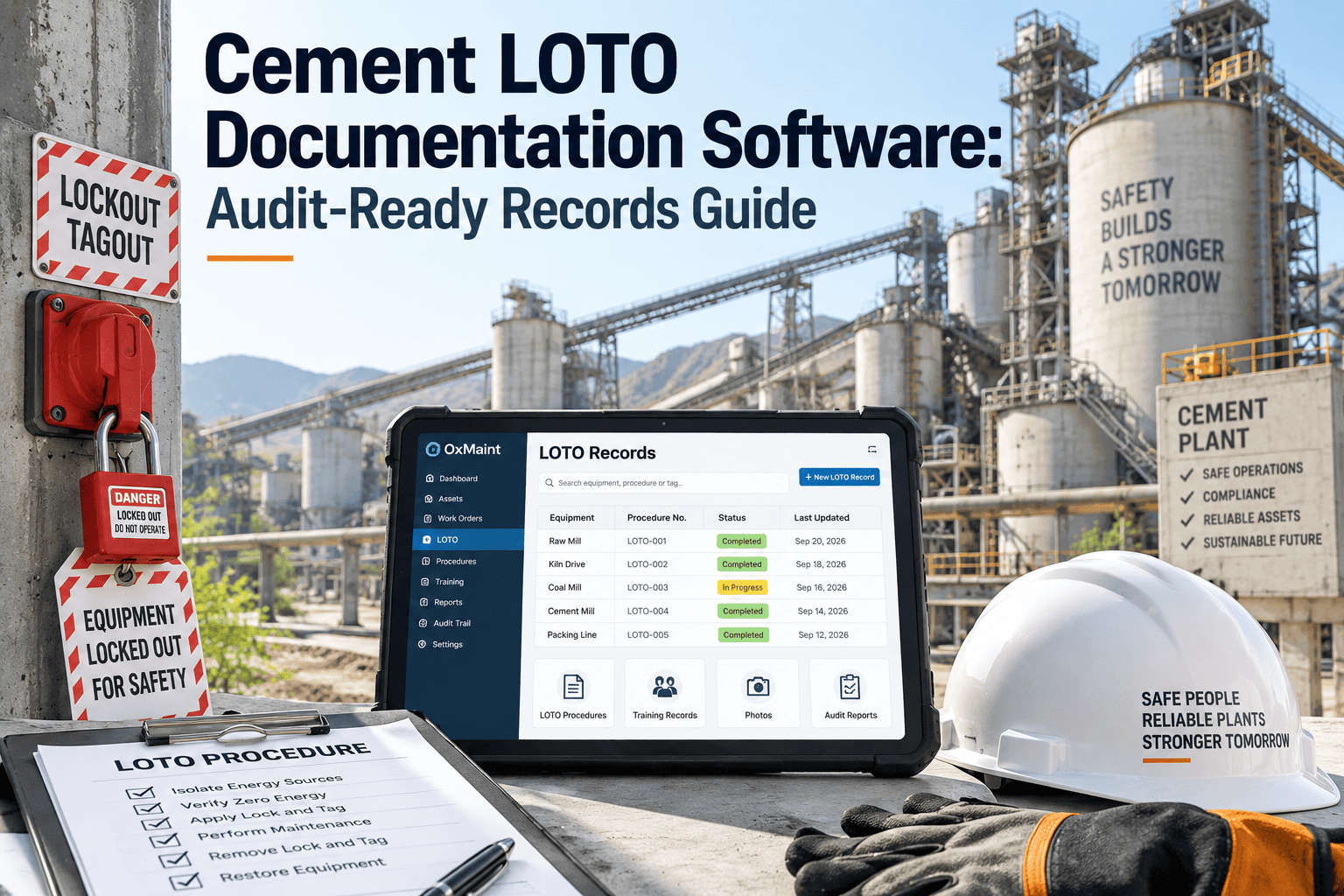
Automated maintenance reporting isn't magic—it's systematic data capture at the point of work combined with intelligent report generation engines. When technicians complete work orders, inspections, and safety checks using mobile CMMS tools, every data point feeds directly into compliance databases without additional entry. Digital compliance tracking ensures nothing falls through the cracks—explore how cement plant regulatory compliance management creates audit-ready documentation automatically.
Data Capture at Source
Technicians complete work orders on mobile devices. Photos, measurements, parts used, and time stamps are captured automatically—no secondary data entry required.
Automatic Classification
System categorizes each activity by compliance relevance—environmental equipment, safety-critical assets, emissions monitoring, quality control points.
Digital Signature Workflow
Supervisors approve work electronically. Multi-level sign-off requirements route automatically based on work type, asset criticality, and regulatory category.
Report Generation Engine
One-click report generation pulls relevant data, applies regulatory formatting templates, and produces submission-ready documents for any compliance framework.
Continuous Audit Trail
Every action, modification, and access is logged with immutable timestamps. Complete history available instantly for any regulatory inquiry or third-party audit.
Report Types Generated Automatically
Different stakeholders need different views of maintenance compliance data. Automated systems generate role-specific reports that give regulators exactly what they need, executives strategic summaries, and operations teams actionable insights—all from the same underlying data without duplicate entry. Book a consultation to discuss your specific reporting requirements. Integration with safety management amplifies compliance coverage—see how EHS incident tracking for cement plants connects maintenance and safety documentation.
PM Compliance Reports
Scheduled vs. completed preventive maintenance with variance analysis, overdue task tracking, and completion rate trends by asset category.
Weekly / MonthlyEquipment Performance Logs
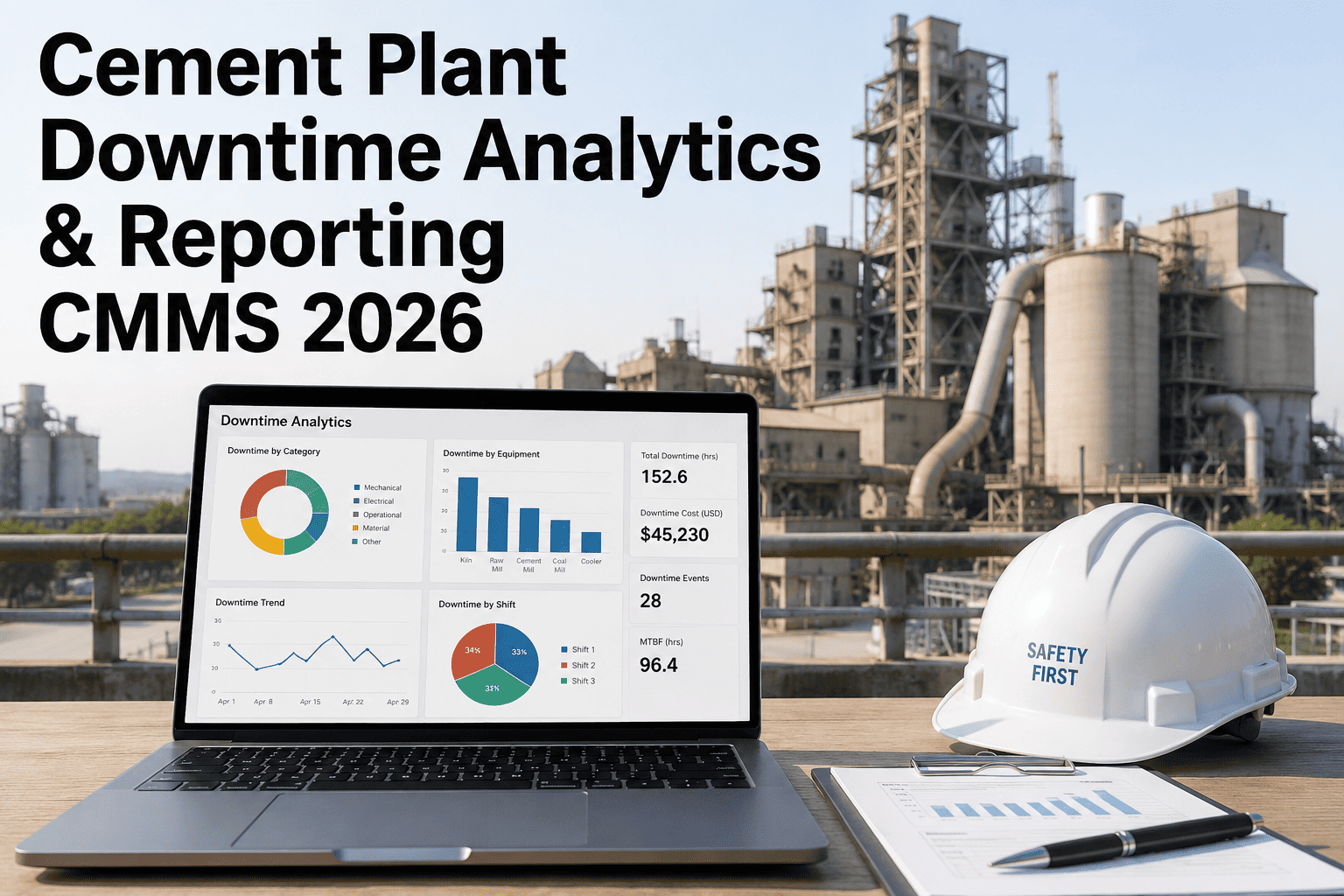
Runtime hours, downtime incidents, mean time between failures, and maintenance cost per operating hour for emissions-critical equipment.
Daily / MonthlySafety Inspection Records
Completed safety checks, identified hazards, corrective actions taken, and outstanding items with responsible party and due date tracking.
Daily / QuarterlyCalibration Certificates
Instrument calibration dates, next due dates, calibration results, and traceability to certified standards for all monitoring equipment.
As ScheduledRegulatory Submissions
Pre-formatted reports matching EPA, OSHA, state agency, and ISO certification body requirements—ready for direct submission without reformatting.
Per RequirementExecutive Dashboards
KPI summaries showing compliance status across all frameworks, upcoming audit deadlines, and risk areas requiring management attention.
Real-TimeImplementation Timeline — From Paper to Automated
Transitioning from manual compliance documentation to automated reporting follows a proven implementation path. Most cement plants achieve full automation within 60-90 days while maintaining continuous compliance throughout the transition. Schedule a consultation to map your specific implementation timeline.
Discovery & Configuration
Map existing compliance requirements, identify report templates needed, configure asset categories and regulatory classifications. Import equipment master data and maintenance history.
Workflow Setup & Training
Configure digital work order templates, approval routing rules, and signature workflows. Train maintenance technicians on mobile data capture. Run parallel processing with existing systems.
Report Template Development
Build regulatory report templates matching your specific permit requirements, ISO certification scope, and internal stakeholder needs. Validate output format with compliance officers.
Go-Live & Optimization
Switch to full digital workflow. Retire paper-based processes. Monitor data quality, refine classification rules, and optimize report generation timing. Achieve steady-state operation.
Frequently Asked Questions
How does automated reporting handle multiple regulatory frameworks simultaneously?
The system tags each maintenance activity with relevant compliance categories at the point of data capture. When generating reports, the engine filters activities by framework—EPA reports pull environmental equipment records, OSHA reports extract safety inspection data, and ISO reports compile management system evidence. A single work order can contribute to multiple reports without duplicate entry or manual sorting.
What happens to historical compliance data when transitioning from paper systems?
Historical records can be imported through structured data migration or scanned document attachment to asset records. Most implementations prioritize importing the most recent 2-3 years of compliance history to establish baseline trends. Going forward, all new activities capture digitally with full audit trail capability. Legacy paper records remain valid for their original retention period.
Can automated reports be customized to match specific permit requirements?
Yes. Report templates are fully configurable to match state-specific permit conditions, facility-specific emissions limits, and unique ISO certification scope requirements. Templates define which data fields appear, calculation formulas, formatting standards, and output file formats. Once configured, reports generate consistently without manual formatting intervention.
How does the system ensure data integrity for regulatory submissions?
Multiple integrity controls protect compliance data: mandatory fields prevent incomplete records, digital signatures create non-repudiable approval chains, timestamp logging tracks every modification with user identification, and role-based permissions restrict data editing to authorized personnel. Audit logs are immutable—even administrators cannot delete or modify historical entries.
What integration capabilities exist with existing plant systems?
CMMS platforms integrate with DCS and SCADA systems via OPC-UA and MODBUS protocols for automated equipment runtime capture. ERP connections synchronize parts consumption and cost data. Document management system integration enables automatic report archiving. API access allows custom integrations with plant-specific systems including laboratory information management and emissions monitoring.
How quickly can auditors access requested documentation during inspections?
Any compliance record is retrievable within seconds through search functionality. Auditors can be granted temporary read-only access to specific report categories without viewing proprietary operational data. Pre-built audit packages compile common document sets—PM completion records, calibration certificates, training logs—for instant download rather than scrambling to assemble documentation during the audit itself.
What training is required for maintenance technicians to use mobile data capture?
Most technicians achieve proficiency within 2-4 hours of hands-on training. Mobile interfaces are designed for field use with large touch targets, minimal typing through dropdown selections, and photo capture that eliminates written descriptions. Technicians already comfortable with smartphones adapt quickly. Ongoing support includes in-app guidance and supervisor review of initial entries for quality assurance.