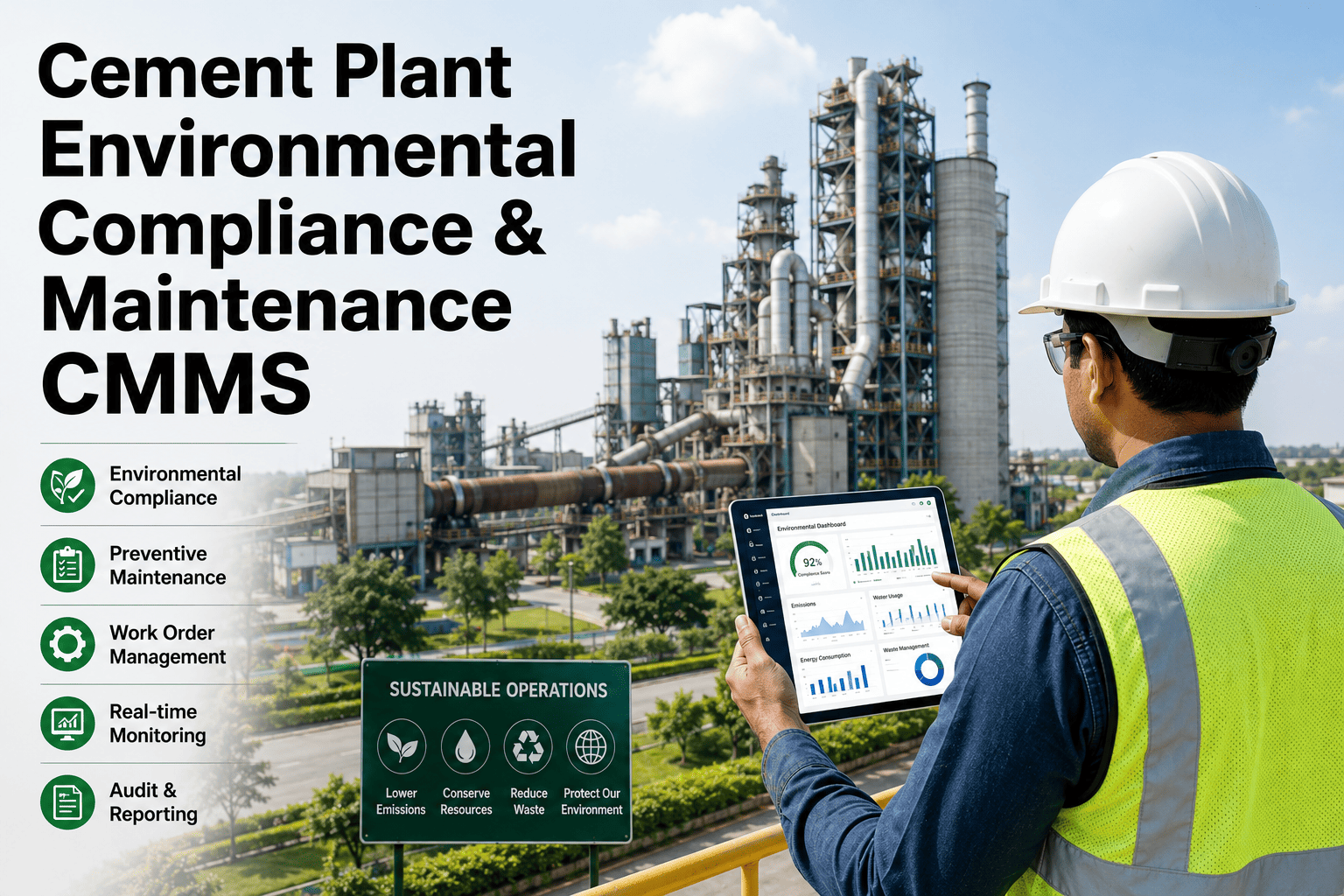
Global cement manufacturing accounts for approximately 8% of worldwide CO2 emissions—1.6 billion metric tons in 2022 alone—making the industry the world's third or fourth largest emitter if it were a country. With emissions having more than doubled since 2000 and projections showing potential growth to 3.8 billion tonnes annually on the current trajectory, cement companies face unprecedented pressure from regulators, investors, and customers to demonstrate credible ESG performance through standardized sustainability reporting. The Global Cement and Concrete Association (GCCA) reports that carbon capture, utilization, and storage could reduce cement industry emissions by 36%, while leading producers implementing Environmental Product Declarations (EPDs) have achieved 20-30% CO2 reductions per unit of production. Sign up for Oxmaint to establish the data collection infrastructure required for accurate ESG reporting—tracking energy consumption, emissions metrics, equipment efficiency, and maintenance activities that directly impact your sustainability performance.
8%
Global CO2 from cement
1.6B
Metric tons CO2 (2022)
0.6t
CO2 per tonne cement
36%
Reduction possible via CCUS
2050
Net-zero target year
The Three Pillars of Cement ESG Reporting
ESG reporting for cement companies encompasses environmental impact measurement, social responsibility documentation, and governance transparency. Each pillar requires specific metrics, data collection methodologies, and reporting frameworks aligned with industry standards like the GCCA Sustainability Guidelines and Science Based Targets initiative (SBTi) cement sector guidance.
Primary Metrics
- Scope 1, 2, 3 CO2 emissions
- Energy consumption intensity
- Alternative fuel substitution rate
- Clinker-to-cement ratio
- Water consumption per tonne
- Particulate matter emissions
Primary Metrics
- Worker safety incident rates
- Lost time injury frequency
- Training hours per employee
- Community investment programs
- Diversity and inclusion ratios
- Local employment percentage
Frameworks
ISO 45001
UN SDGs
Primary Metrics
- Board ESG oversight structure
- Climate risk disclosure
- Supply chain due diligence
- Anti-corruption policies
- Executive ESG incentives
- Stakeholder engagement
Cement Industry Decarbonization Pathways
The World Economic Forum identifies four main decarbonization pathways for cement and concrete—each requiring specific data tracking and reporting capabilities. More than half of cement emissions are process emissions from calcination, meaning the industry requires either novel production methods or strong reliance on carbon capture. Book a demo to see how Oxmaint tracks equipment efficiency, fuel consumption, and maintenance activities that directly impact your decarbonization metrics.
01
Clinker Substitution
Replace carbon-intensive clinker with supplementary cementitious materials (SCMs) like fly ash, slag, and pozzolans
72%
Clinker factor achieved by leading plants
Track: Clinker ratio, SCM usage, product carbon footprint
02
Alternative Fuels
Replace fossil fuels with waste-derived fuels, biomass, and renewable energy sources
35%+
AF substitution rate in leading plants (2024)
Track: Fuel mix, thermal efficiency, waste processing volumes
03
Energy Efficiency
Optimize kiln operations, grinding efficiency, and process heat recovery
65%
Clean electricity target by 2030
Track: kWh per tonne, thermal energy, equipment uptime
04
Carbon Capture (CCUS)
Capture CO2 from kiln emissions for storage or utilization
36%
Potential industry emission reduction
Track: Capture rate, storage volumes, utilization pathways
Build Your ESG Data Foundation
Accurate sustainability reporting starts with systematic data collection. Oxmaint captures the operational metrics that feed directly into your ESG disclosures.
ESG Reporting Frameworks and Standards
Cement companies must navigate multiple reporting frameworks—each with specific requirements for metrics, boundaries, and verification. The GCCA Sustainability Guidelines provide cement-specific guidance, while broader frameworks like GRI, SASB, and TCFD address cross-industry ESG disclosure expectations. Environmental Product Declarations (EPDs) enable product-level carbon footprint transparency. Schedule a consultation to understand how Oxmaint's data exports align with your reporting framework requirements.
GCCA Guidelines
Global Cement Association
Cement-specific CO2 protocol
Gross/net emissions, clinker ratio, AF rate, thermal efficiency
Industry Standard
SBTi Cement Guidance
Science Based Targets
1.5°C-aligned targets
Scope 1-3 emissions, intensity targets, reduction pathways
Required for SBT
EPD / ISO 21930
Product Category Rules
Product-level LCA
GWP per unit, embodied carbon, cradle-to-gate impacts
Growing Requirement
GRI Standards
Global Reporting Initiative
Comprehensive ESG
Emissions, energy, water, waste, safety, community impacts
Widely Adopted
TCFD Recommendations
Task Force on Climate
Climate risk disclosure
Physical risks, transition risks, scenario analysis
Mandatory in EU
CSRD / ESRS
EU Sustainability Reporting
EU mandatory disclosure
Double materiality, value chain impacts, transition plans
EU Mandatory
Maintenance Operations Impact on ESG Metrics
Equipment reliability and maintenance practices directly influence sustainability performance—poorly maintained kilns consume more energy, emit more pollutants, and require emergency repairs that disrupt operations. Systematic maintenance tracking provides the operational data that feeds accurate ESG calculations and demonstrates continuous improvement to stakeholders. Book a demo to see how maintenance data integrates with sustainability reporting workflows.
Maintenance Input
Kiln refractory condition, grinding mill efficiency, heat exchanger performance
ESG Output
kWh per tonne cement, thermal energy intensity, Scope 2 emissions
15-20% energy variance between well-maintained and degraded equipment
Maintenance Input
Baghouse filter condition, ESP efficiency, SNCR/SCR system uptime
ESG Output
Particulate matter, NOx, SOx emissions per tonne production
Compliance risk from emission control equipment failures
Maintenance Input
Safety system inspections, equipment lockout/tagout, guarding condition
ESG Output
LTIFR, TRIR, near-miss reporting, safety training compliance
Direct correlation between maintenance rigor and safety metrics
Maintenance Input
Equipment condition data, lifecycle tracking, replacement planning
ESG Output
Capital allocation transparency, stranded asset risk, transition planning
Material for climate transition risk disclosures (TCFD)
ESG Compliance Checklist for Cement Plants
Meeting ESG reporting requirements demands systematic data collection, verification processes, and continuous improvement tracking. This checklist outlines the essential elements cement plants must address for credible sustainability reporting that satisfies regulators, investors, and customers. Request a compliance assessment to identify gaps in your current ESG data infrastructure.
Continuous emissions monitoring systems (CEMS) calibrated and verified
Energy metering at process unit level (kiln, mill, auxiliaries)
Fuel consumption tracking by type (coal, petcoke, AF, biomass)
Production volumes logged daily with quality parameters
Maintenance activities recorded with asset linkage
GCCA CO2 protocol calculations implemented and verified
Scope 1, 2, 3 emissions boundaries defined per framework
EPD development process established with third-party verification
Annual sustainability report aligned with GRI or equivalent
TCFD climate risk assessment completed and disclosed
Science-based targets submitted and validated (SBTi)
Net-zero roadmap with interim milestones (2030, 2040, 2050)
KPI dashboards tracking progress against targets monthly
Capital allocation aligned with decarbonization pathway
Board-level ESG oversight with defined accountability
Build Your ESG Reporting Foundation
Credible sustainability reporting starts with accurate operational data. Oxmaint provides the maintenance management infrastructure that captures equipment performance, energy consumption, and compliance activities feeding directly into your ESG disclosures.
Emissions Tracking
Energy Monitoring
Compliance Records
Audit-Ready Reports
Frequently Asked Questions
What percentage of global CO2 emissions comes from cement production?
Global cement manufacturing accounts for approximately 8% of worldwide CO2 emissions—roughly 1.6 billion metric tons in 2022. This makes the cement industry the third or fourth largest emitter globally if it were a country. Emissions have more than doubled since 2000, increasing from 700 million metric tons, and projections show potential growth to 3.8 billion tonnes annually without intervention.
What are the main ESG reporting frameworks for cement companies?
Cement companies typically report under multiple frameworks: GCCA Sustainability Guidelines for cement-specific CO2 protocols, Science Based Targets initiative (SBTi) cement sector guidance for emissions reduction targets, Environmental Product Declarations (EPDs) per ISO 21930 for product-level carbon footprints, GRI Standards for comprehensive ESG disclosure, TCFD for climate risk disclosure, and CSRD/ESRS for EU mandatory sustainability reporting. Most companies use a combination aligned with stakeholder requirements.
What are the four main decarbonization pathways for cement?
The World Economic Forum identifies four pathways: clinker substitution (replacing carbon-intensive clinker with supplementary cementitious materials like fly ash and slag), alternative fuels (replacing fossil fuels with waste-derived fuels and biomass—leading plants exceed 35% substitution), energy efficiency (optimizing kiln operations and process heat recovery), and carbon capture utilization and storage (CCUS)—which could reduce industry emissions by 36% and is the largest decarbonization lever available.
How does maintenance impact cement plant ESG performance?
Maintenance directly influences multiple ESG metrics: poorly maintained kilns consume 15-20% more energy than optimized equipment, degraded emissions control systems risk compliance violations, equipment reliability affects worker safety incident rates, and asset condition data informs climate transition risk disclosures. Systematic maintenance tracking provides operational data feeding accurate ESG calculations and demonstrates continuous improvement to stakeholders.
What is an Environmental Product Declaration (EPD) for cement?
An EPD is a standardized, third-party verified document that transparently communicates a product's environmental impacts across its lifecycle. For cement, EPDs report Global Warming Potential (GWP) per unit, embodied carbon, resource depletion, and other environmental indicators following Product Category Rules (PCR) per ISO 21930. EPDs enable architects and procurement managers to compare cement products on sustainability performance and are increasingly required for green building certifications like LEED and BREEAM.
What emissions intensity target should cement plants aim for?
Current cement emissions intensity is approximately 0.6 tonnes CO2 per tonne of cement produced. To align with net-zero scenarios, emissions must fall by an average of 3% annually through 2030. Leading companies with Science Based Targets commit to specific intensity reduction pathways aligned with 1.5°C warming limits. The GCCA Net-Zero Roadmap targets achieving net-zero concrete by 2050 through combined implementation of all decarbonization pathways.
Is ESG reporting mandatory for cement companies?
Requirements vary by jurisdiction and company size. In the EU, the Corporate Sustainability Reporting Directive (CSRD) makes detailed ESG disclosure mandatory for large companies starting 2024-2026. TCFD-aligned climate risk disclosure is mandatory in several markets. Even where not legally required, investors, lenders, and customers increasingly demand ESG transparency—making robust reporting a business necessity for market access, financing terms, and customer relationships.