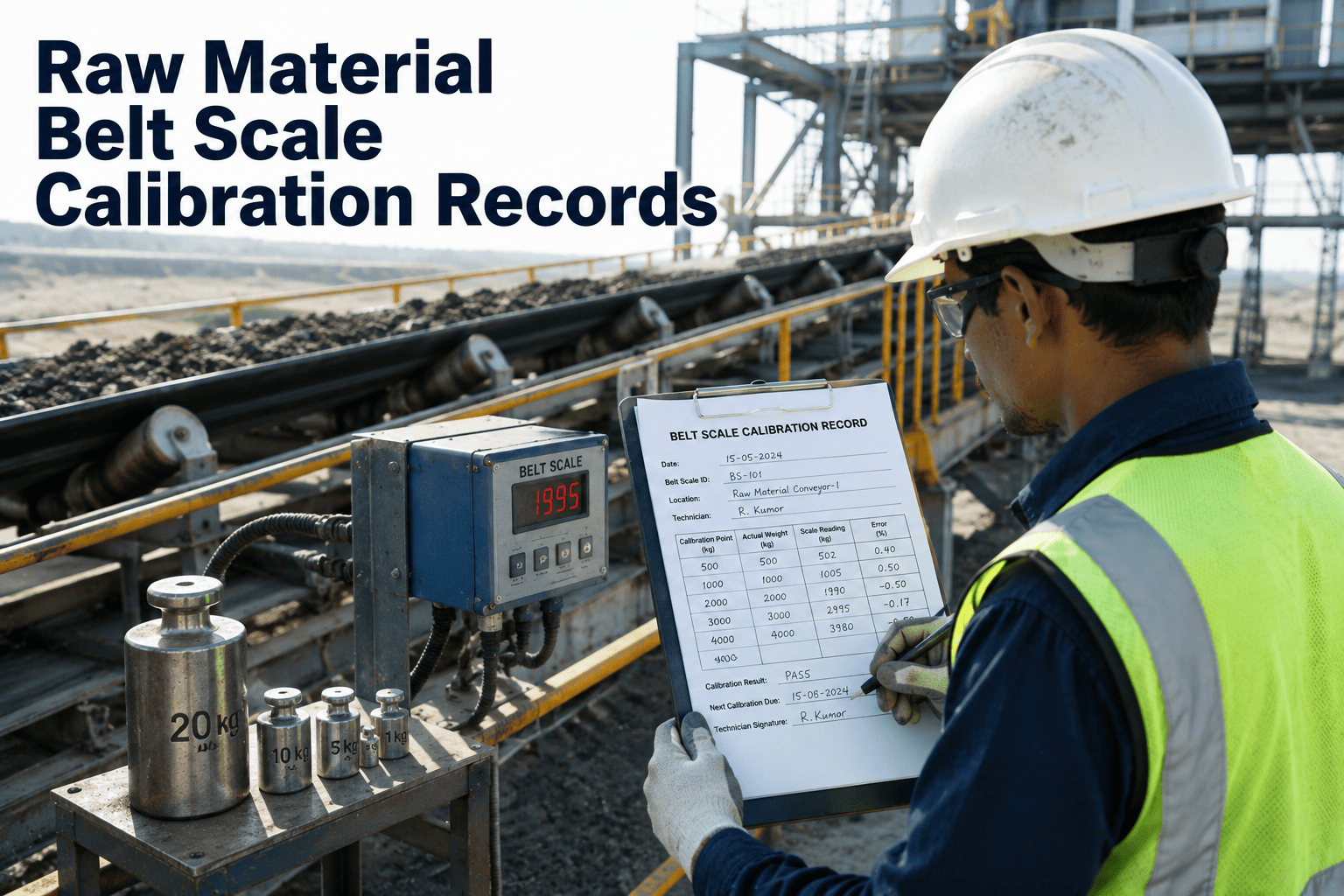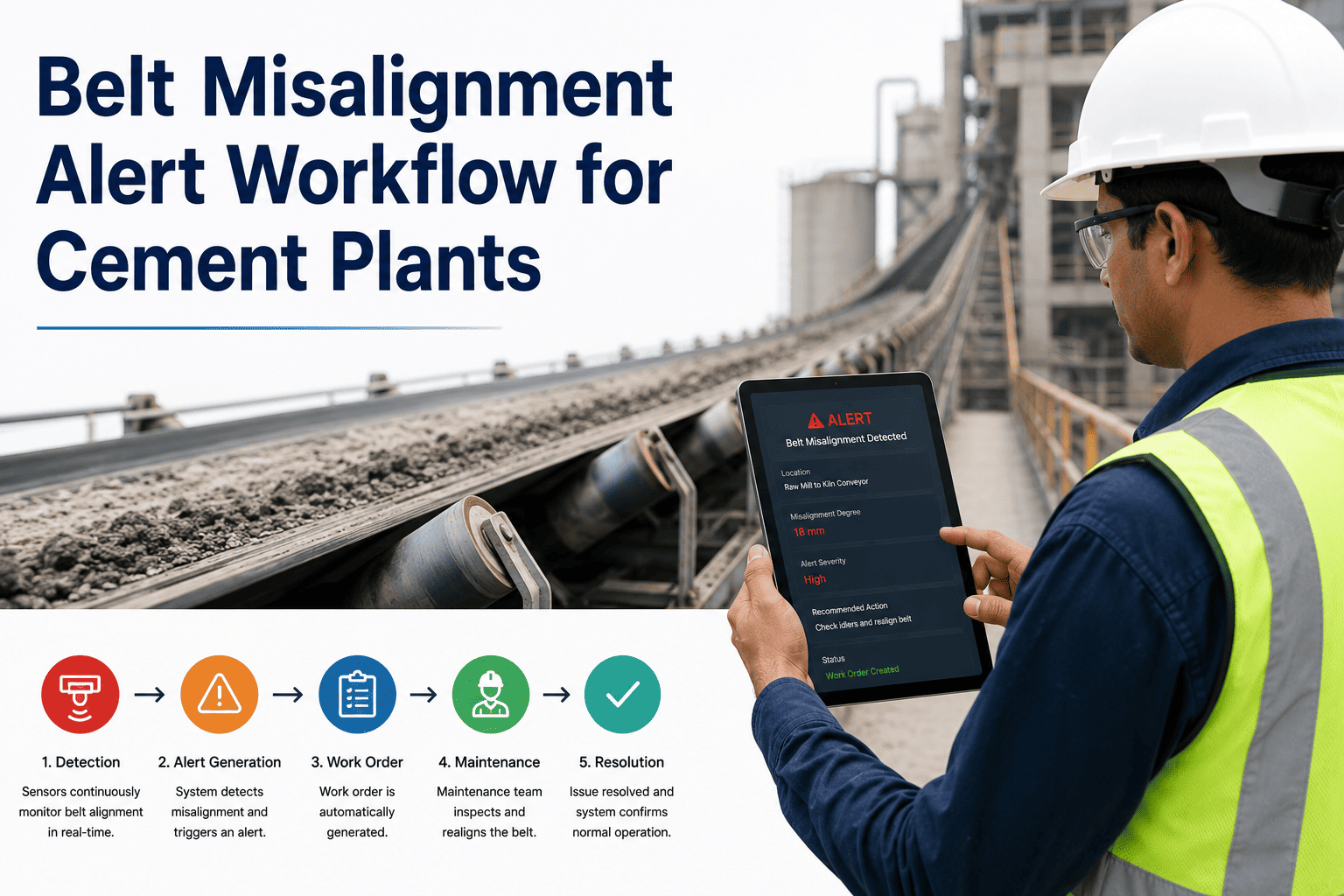
A cement plant in Madhya Pradesh discovered an 18-tonne daily material accounting discrepancy after a routine audit cross-checked belt scale totals against truck dispatch records. The scale had been reading consistently — just consistently wrong. A worn idler had shifted belt tracking six weeks earlier, the weigh frame had not been zeroed since the last shutdown, and the speed sensor calibration had drifted 1.8%. No alarm had fired. The system had been reporting totals that looked plausible and were quietly incorrect. Belt scales are the foundation of material accounting in cement production, and material accounting errors compound silently until they become audit findings or clinker cost anomalies. OxMaint tracks belt scale calibration history, inspection schedules, and corrective actions so that every reading your system records is one you can stand behind. Book a demo to see how OxMaint manages belt scale inspection and accuracy tracking.
Belt Scale Maintenance for Cement Plants
Inaccurate belt scales don't just affect reports — they corrupt clinker costs, raw mix ratios, and dispatch records for as long as the error goes undetected. A structured inspection and calibration programme in OxMaint protects material accounting accuracy from the scale up.
The 4 Components That Determine Belt Scale Accuracy
Belt scale accuracy is not a property of the instrument alone — it is an outcome of four interdependent mechanical and electronic subsystems, each with its own failure mode, maintenance interval, and calibration requirement.
The weigh frame carries the load cells and establishes the reference weighing length. Idler wear, frame settling, and material buildup under the weigh deck are the most common causes of span error. Zero calibration after any shutdown is non-negotiable — frame position changes by fractions of a millimetre are enough to shift readings by 0.5%.
Load cells convert belt weight into electronic signals. Overload events — from material surges, belt misalignment, or hard objects in the material stream — cause permanent sensitivity loss that appears as steady-state offset. Load cell output verification with a material test or chain weight check confirms cell health independent of the full calibration cycle.
Belt speed integrates with weight to calculate mass flow rate. Speed sensor drift — from wheel slip, encoder wear, or mechanical coupling deterioration — produces flow rate errors that scale with throughput. A 1% speed error at 500 tph generates a 5-tonne-per-hour accounting discrepancy. Speed verification against a tachometer reference should be part of every calibration event.
The integrator combines weight and speed signals into flow totals. Firmware version, zero offset drift, and signal noise from nearby VFDs or motors are common electronic error sources. Integrator calibration using the belt scale's built-in test chain or material test procedure confirms electronic accuracy independently of mechanical components.
Are Your Belt Scale Inspections Logged — or Just Done and Forgotten?
OxMaint turns every belt scale inspection into a traceable record. Calibration readings, correction actions, and technician sign-offs are logged against the asset — giving you a complete accuracy history when a material accounting discrepancy needs to be investigated.
Belt Scale Inspection and Calibration Schedule
| Task | Interval | Method | Tolerance | CMMS Record |
|---|---|---|---|---|
| Zero calibration check | Weekly / Post-shutdown | Empty belt run | Within 0.05% | Reading log |
| Span check with test chain | Monthly | Calibration chain | Within 0.25% | Calibration record |
| Material test calibration | Quarterly | Weighed material sample | Within 0.5% | Calibration certificate |
| Speed sensor verification | Quarterly | Tachometer reference | Within 0.1% | Reading log |
| Idler and weigh frame inspection | Monthly | Visual and measurement | No wear beyond spec | Inspection checklist |
| Load cell output check | Monthly | mV/V measurement | Within manufacturer spec | Reading log |
| Integrator firmware and settings review | Semi-annually | Parameter audit | Per manufacturer baseline | Settings record |
Corrective Actions: What to Do When Accuracy Fails
Calibration checks only protect material accounting if out-of-tolerance findings trigger documented corrective actions — not informal adjustments with no trace in the maintenance record.
Frequently Asked Questions
Every Tonne You Report Is Only as Accurate as Your Last Belt Scale Calibration.
OxMaint gives cement plant maintenance teams a complete belt scale inspection management system — calibration scheduling, reading logs, corrective action tracking, and audit-ready history — all tied to the asset record your quality team can rely on.