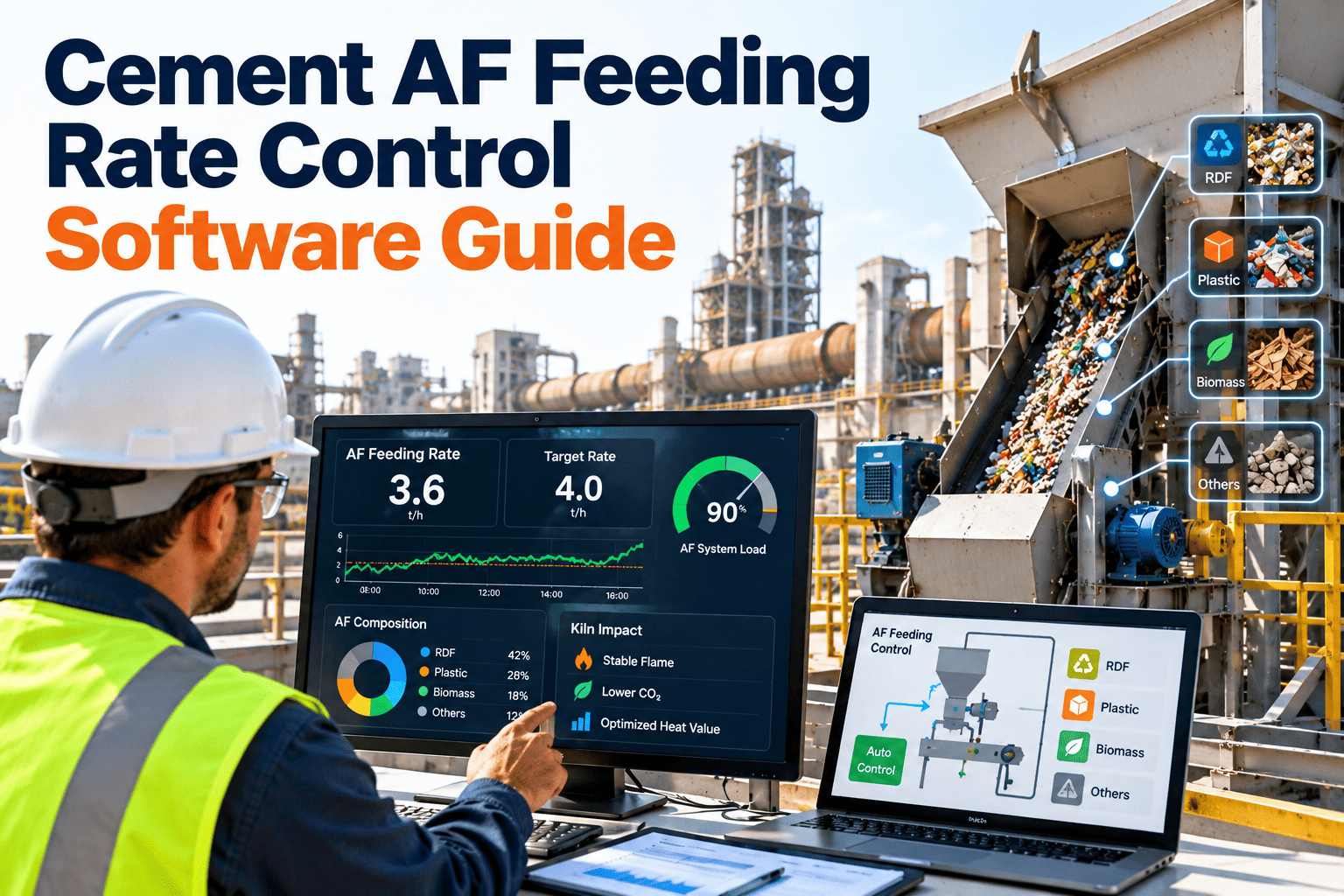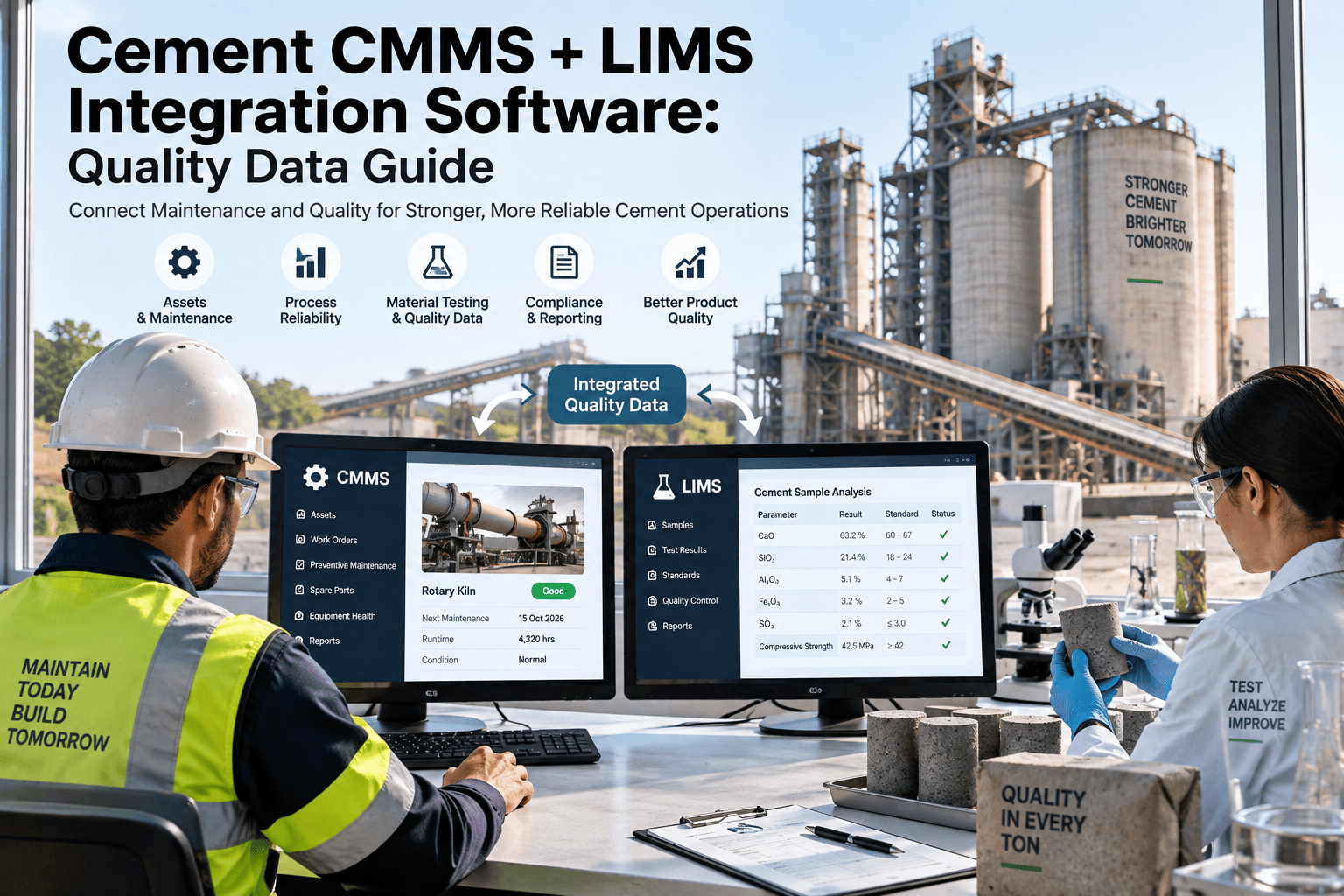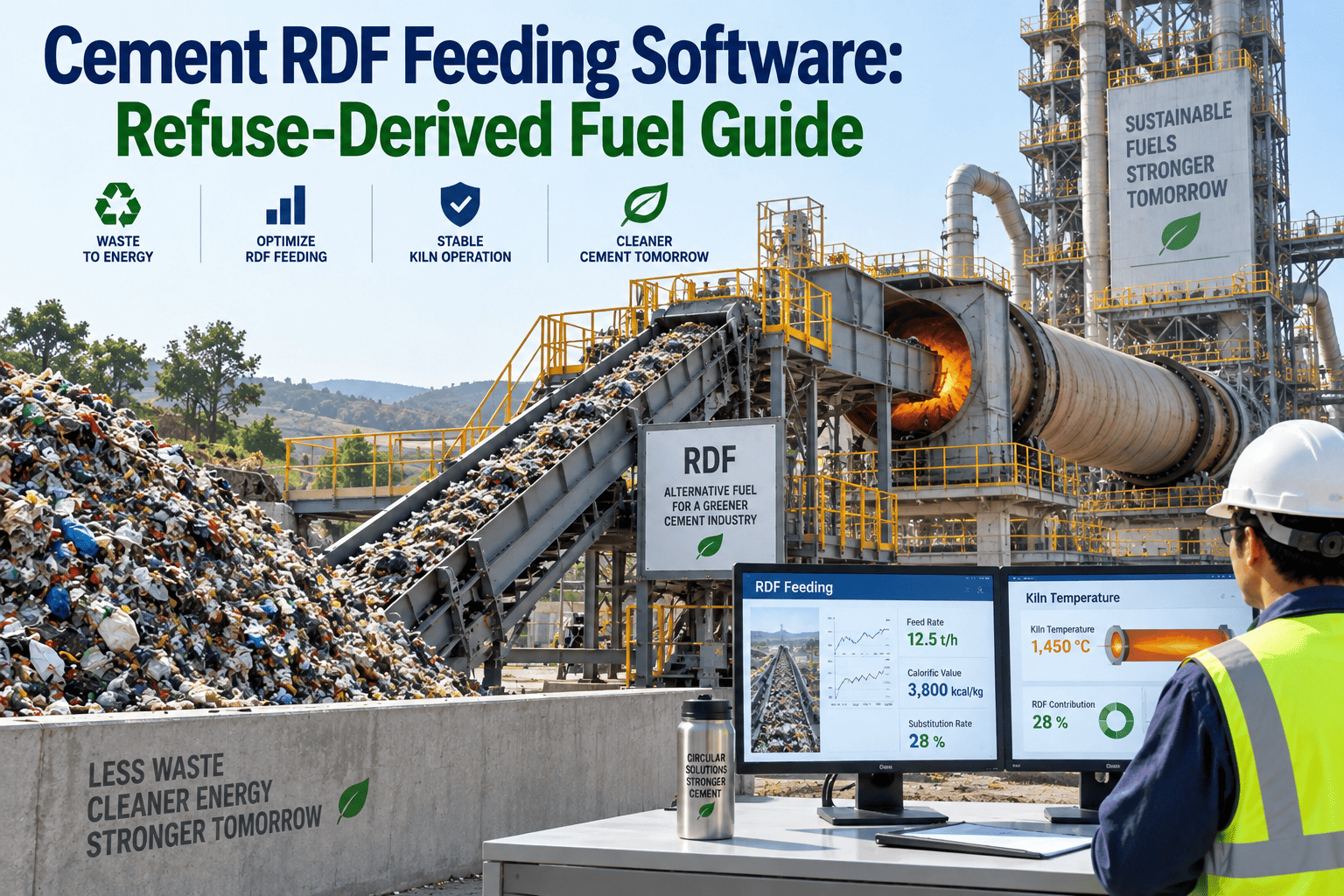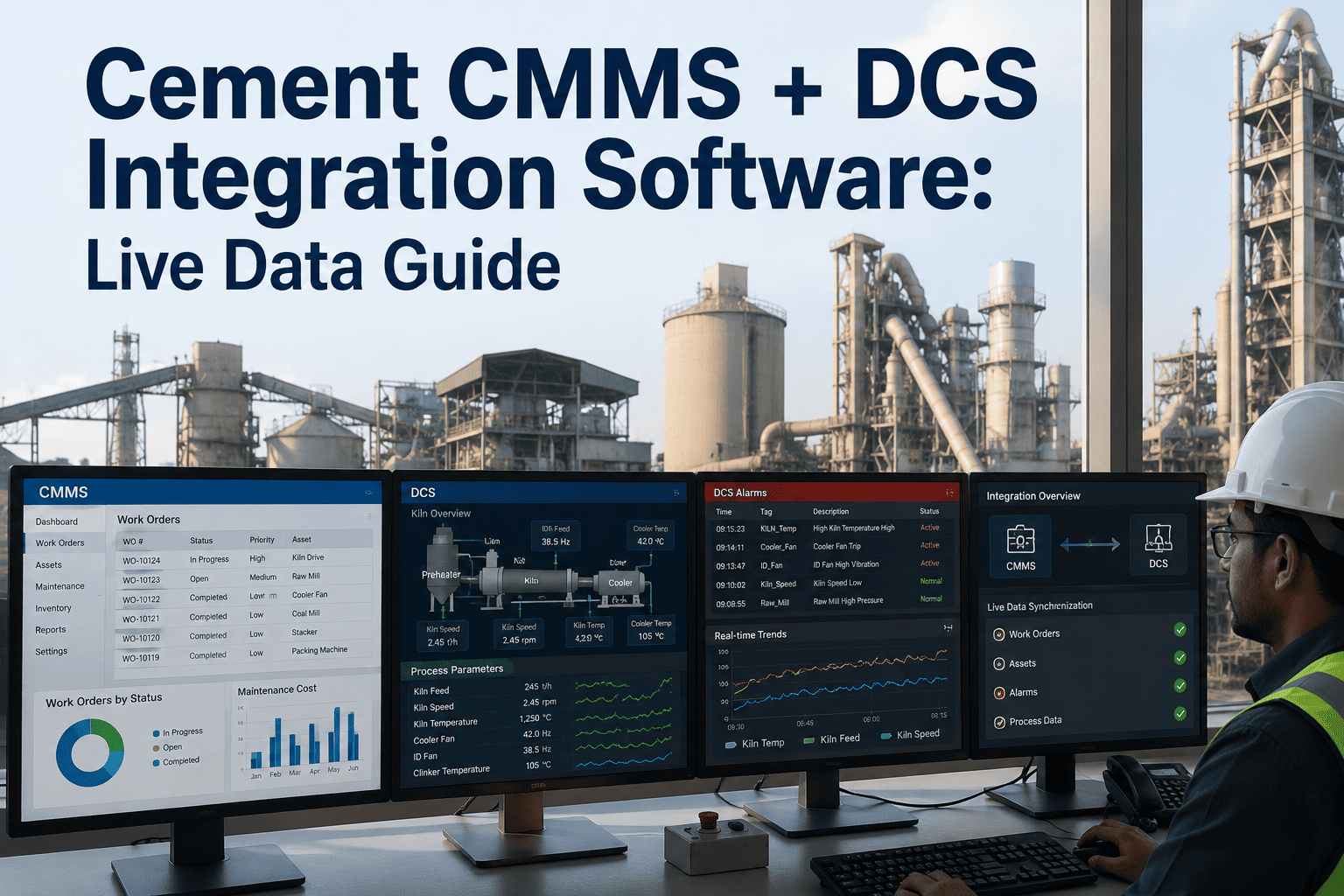
A shredder line can hit its rated throughput and a plant can still lose thermal substitution rate, and the usual culprit is not the equipment — it is what the equipment is being fed. Refuse-derived fuel, biomass, and tire-derived fuel all arrive with wildly different moisture, particle size, and calorific value from one delivery to the next, and without proper homogenization that variability travels straight into the kiln as flame instability, chlorine spikes, and clinker quality swings. This guide covers what AF feed homogenization actually requires, where most programs lose control of it, and how a connected maintenance workflow keeps the blending and dosing equipment itself from becoming the next point of failure.
Batch-to-batch AF variability is a maintenance problem before it's a process problem
Blending bins, reclaimers, and dosing screws only deliver consistent fuel quality when they're running as designed. Track their condition alongside your calorific value trends and stop chasing kiln upsets caused by a mechanical fault three steps upstream.
One inconsistent batch can undo a week of stable kiln operation
Alternative fuels are inherently heterogeneous — a truckload of RDF can vary by 20% or more in calorific value, and moisture content swings with weather and storage time. Homogenization exists to smooth that variability before it reaches the burner or calciner.
Where batch-to-batch drift actually comes from
Homogenization failures rarely trace back to the fuel supplier alone. In most plants, the drift is amplified — or created — by equipment that isn't performing to spec.
Worn reclaimer paddles
Uneven reclaiming pulls from one layer of the storage pile instead of blending across the full stack, defeating the purpose of layered storage.
Dosing screw flight wear
A worn screw delivers an inconsistent volumetric feed rate even when the blend itself is uniform, making downstream calorific control unreliable.
Weighbelt calibration drift
An uncalibrated belt scale under- or over-reports the actual mass feed rate, so the control system is dosing against a number that no longer matches reality.
Blocked or partial blending bins
Bridging and rat-holing in storage bins mean fresh material bypasses older, better-conditioned material instead of mixing with it.
Turning blend consistency into a measurable, actionable signal
Homogenization quality can be tracked indirectly through the equipment that performs it. The table below maps common signals to the alert tier that should drive a CMMS work order.
| Signal | Baseline | Watch | Warn (Priority 3 WO) | Critical (Priority 1 WO) |
|---|---|---|---|---|
| Weighbelt feed rate variance | ±3% | ±6% for 2 hr | ±10% for 1 hr | ±15% or scale fault |
| Dosing screw motor current | Steady load | ±8% drift | ±15% drift | Stall or overload trip |
| Reclaimer paddle torque | Rated torque | +10% sustained | +20% sustained | +35% or motor trip |
| Bin level differential | Even draw-down | One zone -15% | One zone -30% | Bridging suspected |
| Downstream calorific value | Within ±5% of target | ±8% for 2 batches | ±12% for 2 batches | ±20% or kiln upset risk |
Five steps between the tipping floor and the burner
Receiving & inspection
Incoming loads are logged, weighed, and spot-checked for contamination before being released to storage.
Layered storage
Material is stacked in horizontal layers across the storage pile so later reclaiming cuts vertically through multiple deliveries at once.
Reclaiming & blending
A reclaimer draws evenly across the stack face, mechanically averaging out calorific value and moisture variation between loads.
Metered dosing
A calibrated weighbelt and dosing screw deliver a controlled, steady mass feed rate to the kiln inlet or calciner injection point.
Feedback & correction
Downstream calorific readings feed back into dosing setpoints, closing the loop between blend quality and kiln response.
Stop guessing whether drift is the fuel or the feed system
Connect your reclaimer, weighbelt, and dosing screw condition data to one CMMS and see which one is actually driving your calorific value swings.
What a homogenization-focused PM program actually covers
- Weighbelt calibration verified against a certified test weight on a fixed interval, not on an as-needed basis
- Reclaimer paddle and chain wear measured and trended, not just replaced on failure
- Dosing screw flight clearance inspected for the abrasive wear pattern specific to RDF and biomass fines
- Bin level sensors cross-checked against physical inspection to catch bridging before it stalls a draw-down zone
- Motor current and torque baselines re-established after any wear-part replacement so drift alerts stay accurate
What changes when homogenization equipment goes condition-based
- Reclaimer and dosing screw wear caught only after feed rate visibly swings
- Weighbelt calibration checked on a fixed monthly round regardless of drift
- Bin bridging discovered by operators, often mid-shift
- Calorific value swings blamed on the fuel supplier by default
- Motor current and torque trends flag wear before feed rate drifts
- Calibration work orders triggered by measured variance, not the calendar
- Bin level differentials flag uneven draw-down before bridging locks a zone
- Equipment condition and fuel quality are correlated on one dashboard
AF feed homogenization, answered
What causes batch-to-batch AF calorific value swings?
The two biggest drivers are supplier-side variability in the waste stream and plant-side equipment wear in reclaiming and dosing, which amplifies rather than smooths out incoming variation.
How often should weighbelt scales be recalibrated on an AF line?
Most plants calibrate monthly at minimum, but condition-based programs trigger recalibration as soon as measured variance crosses a defined threshold, which catches drift faster than a fixed schedule.
Can homogenization equipment maintenance be tracked in the same CMMS as the rest of the plant?
Yes, reclaimers, dosing screws, and weighbelts can be registered as standard assets with condition-based PM schedules alongside kiln, mill, and conveyor equipment. Start Free Trial to see it set up.
Does poor homogenization affect clinker quality, not just kiln stability?
Yes. Uneven fuel dosing shows up in free lime variability and can affect chlorine and sulfur cycling, both of which matter for clinker quality and cement standards compliance.
How much TSR headroom does better homogenization typically unlock?
Plants that tighten feed-rate consistency often find they can safely push dosing setpoints higher, since the risk of an out-of-spec batch reaching the burner drops substantially.
Build the maintenance side of a stable AF program
Register your reclaiming and dosing equipment, set condition-based thresholds, and stop losing TSR to equipment nobody was watching. Free 14-day trial, no credit card required.
Free 14-day trial · No credit card