For cement and clinker exporters to the EU, the carbon border mechanism is no longer a reporting exercise on the horizon. The definitive CBAM period began on 1 January 2026, and importers now need credible embedded emissions data from their suppliers. That data is only as reliable as the meters, analyzers, and records behind it. This checklist covers what a plant should have ready, with special attention to the maintenance evidence that makes measurements defensible. Plants that already manage assets and calibrations in a cement plant maintenance system start well ahead.
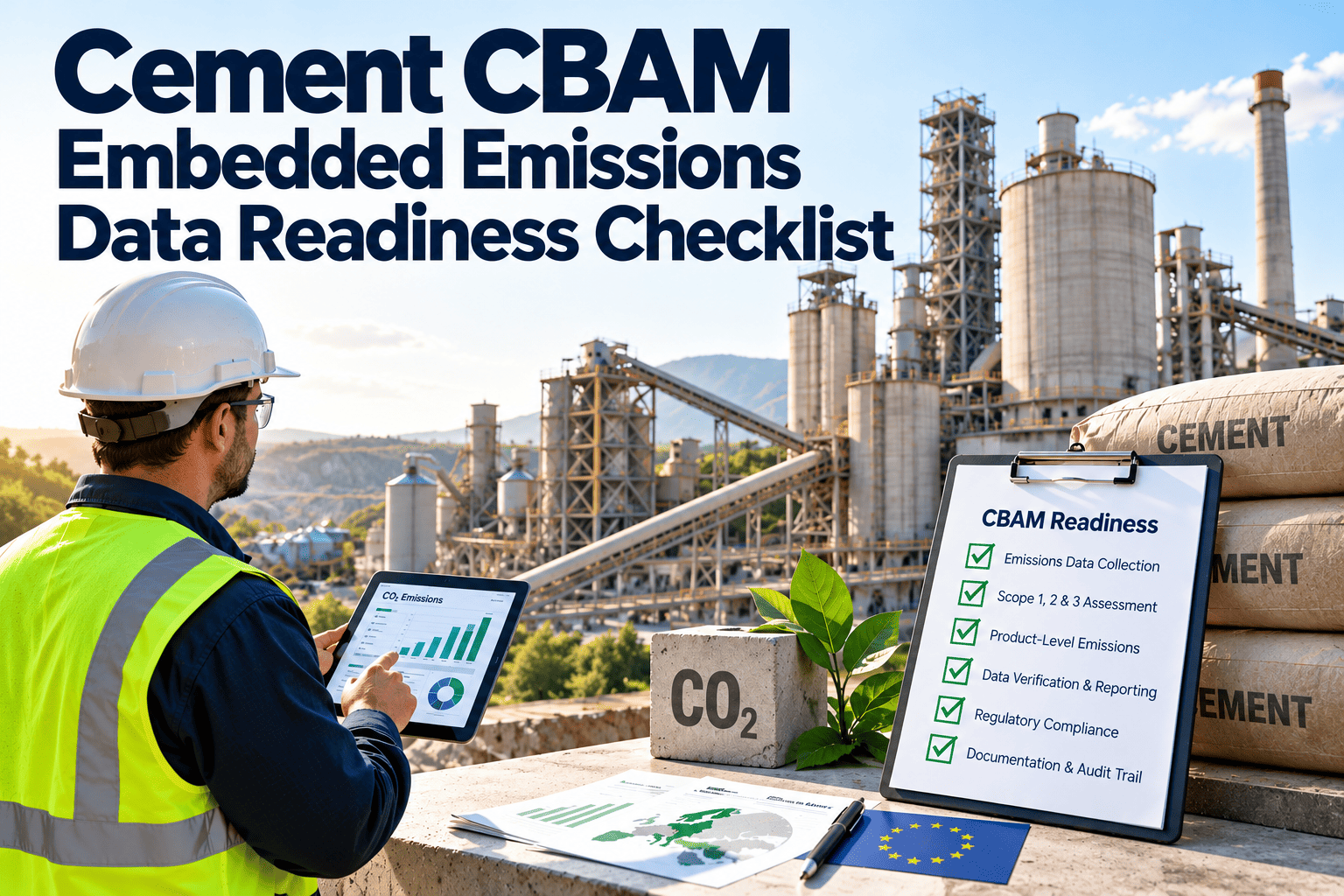
Cement CBAM Embedded Emissions Data Readiness Checklist
Check the data trail from kiln fuel and raw meal to clinker, cement, and the declaration. Confirm every measurement point is maintained, calibrated, and backed by records an auditor or verifier can follow.
What CBAM Now Asks of Cement Producers
Cement, including clinker and hydraulic cements, is one of the sectors covered. The obligation reaches plants through the EU importer's need for verified data.
Why Maintenance Sits Under Emissions Data
Embedded emissions figures come from measured and calculated activity data. Every measurement is an instrument, and every instrument is a maintained asset.
Weak maintenance evidence
- Weighbridge calibration date is unknown
- Fuel meter faults are fixed but not recorded
- Analyzer drift is found only at audit
- Gaps in data are filled from memory
- Verifier questions take weeks to answer
Strong maintenance evidence
- Each meter has a register entry and calibration schedule
- Faults, repairs, and checks sit on dated work orders
- Drift checks run as planned inspections
- Data gaps follow a written procedure with records
- Verifier requests are answered from one system
Readiness Checklist by Data Domain
Scope and product mapping
- Exported products mapped to the right CBAM product codes
- Plant boundary and production processes defined in writing
- Clinker, grey cement, white cement, and blended grades separated
- Customer and importer contacts recorded for data requests
Production activity data
- Clinker production measured or reconciled by a documented method
- Cement output by product and clinker ratio recorded
- Kiln dust and bypass dust quantities tracked
- Stock changes handled consistently at period end
Fuels and raw materials
- Fuel quantities metered by type, including alternative fuels
- Biomass fraction and fuel composition supported by lab records
- Raw meal composition sampled on a defined schedule
- Sampling equipment inspected and maintained
Electricity and indirect data
- Main and sub-meters for kilns, mills, and utilities identified
- Metering points mapped to the plant boundary
- Electricity source and emission factor evidence on file
- Self-generation and waste heat power recorded separately
Monitoring plan and methods
- Written monitoring methodology covers every emission source
- Uncertainty of each measurement documented
- Procedure for data gaps and instrument failure approved
- Roles for data collection, review, and sign-off assigned
Verification and records
- Data traceable from source meter to reported figure
- Calibration certificates and maintenance records retrievable
- Changes to methods and equipment logged with dates
- Records retained for the period the customer and verifier require
Measurement Points as Maintained Assets
Treat each point in the table as a critical asset with its own schedule, owner, and evidence trail.
| Measurement point | Typical equipment | Maintenance control | Evidence to retain |
|---|---|---|---|
| Clinker and cement tonnes | Weighbridges, belt weighers, load cells | Scheduled calibration and zero checks | Calibration certificates and work orders |
| Kiln fuel quantity | Coal, petcoke, and gas flow meters, feeders | Meter verification and feeder inspection | Verification logs and fault history |
| Alternative fuel feed | Dosing systems, weigh feeders | Preventive maintenance and calibration | Feed records and downtime notes |
| Stack gas data | Continuous emission monitors, analyzers | Drift checks and service intervals | Check results and repair records |
| Electricity use | Main and sub-meters, current transformers | Periodic accuracy checks | Meter register and test records |
| Material composition | Sampling systems, lab analyzers | Cleaning, calibration standards, inspection | Lab calibration and sampler logs |
Data Gap Risk Ranking
Reliability Links to Emissions Intensity
Maintenance affects more than records. Unstable kiln operation and frequent stoppages tend to raise fuel use per tonne of clinker, which feeds directly into embedded emissions.
Kiln stability
Fewer trips and restarts mean steadier fuel use. Condition monitoring of fans, drives, and refractory supports this.Mill efficiency
Well-maintained mills and separators use less power per tonne of cement, lowering indirect emissions.Heat recovery and air leaks
Inspection of seals, ducts, and preheater cyclones helps hold thermal efficiency at design levels.Alternative fuel systems
Reliable dosing and feed equipment keeps substitution rates steady and measurable.When a Meter Fails Mid-Month
Instruments fail. What matters is that the response follows your monitoring plan and leaves a clean record.
Readiness Maturity Steps
A 90-Day Readiness Plan
- Map all measurement points to assets
- List calibration dates and gaps
- Confirm product code mapping
- Load calibration and PM schedules
- Write the data gap procedure
- Assign owners for each data stream
- Run a mock data trace with a reviewer
- Close the highest-risk gaps
- Agree the reporting cycle with customers
Calibration and Verification Schedule Checklist
Set each interval from your monitoring plan, manufacturer guidance, and local rules, then schedule it as a planned work order so it cannot be forgotten.
| Instrument | Check to schedule | Interval basis | Record to file |
|---|---|---|---|
| Weighbridge | Calibration and zero check | Legal metrology rules and plant procedure | Certificate and test weight record |
| Belt weigher | Material test and zero check | Manufacturer guidance and monitoring plan | Test result and adjustment log |
| Fuel flow meter | Verification against a reference | Monitoring plan and meter type | Verification report |
| Weigh feeder | Calibration run and belt inspection | Manufacturer guidance and feed variation | Calibration record and PM work order |
| Gas analyzer | Zero and span drift check | Manufacturer guidance and monitoring plan | Drift check log |
| Electricity meter | Accuracy test and seal check | Utility rules and plant procedure | Test record and seal number |
| Sampling system | Cleaning and function check | Sampling procedure | Inspection record and sample log |
Equipment Maintenance Checklists
Use these for the planned inspection that sits behind each calibration. A checked instrument that is dirty, leaking, or loose will drift again.
Weighbridge
- Load cells inspected for damage and moisture
- Junction boxes sealed and dry
- Platform free of debris and binding
- Indicator display and printout tested
- Test weight certificate in date
Fuel flow meter
- Mounting and straight run checked
- Sensor fouling or wear inspected
- Signal and wiring tested
- Output compared with a reference reading
- Fault history reviewed for patterns
Analyzer
- Sample line checked for leaks and blockage
- Filters and conditioning unit serviced
- Reference gas supply and expiry confirmed
- Zero and span results recorded
- Alarms and fault codes reviewed
Electricity meter
- Meter seals intact and numbers recorded
- Current and voltage transformers inspected
- Link to the data system tested
- Readings compared with utility bills
- Meter register entry up to date
Sampler
- Sampling point clean and unobstructed
- Moving parts lubricated and inspected
- Sample containers labeled and sealed
- Sample frequency matches the plan
- Retained samples stored as required
Document Pack Checklist for Verification
Assemble the pack before the verifier asks. Each list has a different owner, so assign them early.
Plant documents
- Monitoring plan with the latest revision
- Plant boundary and process description
- Product code mapping table
- Roles and responsibilities list
- Data gap procedure
- Change log for methods and equipment
Measurement records
- Monthly production and dispatch totals
- Fuel purchase and consumption records
- Laboratory analysis reports
- Electricity readings and invoices
- Calculation files with version control
- Sign-off records for each period
Maintenance records
- Measurement asset register
- Calibration certificates by instrument
- Work orders for repairs and replacements
- Inspection and drift check logs
- Records of instrument outages
- PM schedule and completion history
Verifier Visit Day Checklist
A calm visit depends on preparation. Keep one contact and one written method for every question.
Before the visit
- Send the document pack in advance
- Confirm access to meter locations and the control room
- Brief operators on likely questions
- Check calibration certificates are in date
- Print the asset register for key meters
- Assign one contact for questions
During the visit
- Walk the data trail from meter to report
- Show maintenance history for each requested meter
- Record every question and answer given
- Note any gap raised and assign an owner
- Refer to the written method, not an estimate
- Agree follow-up dates before leaving
Change Control and System Setup Checklist
Equipment and methods change. Record each change at once so the data trail stays continuous.
Change management
- New or replaced meters added to the register
- Calibration baseline recorded after installation
- Monitoring plan updated for method changes
- Verifier informed of significant changes
- Old equipment records retained
- Staff briefed on the new setup
System setup
- Every measurement point set up as an asset
- Calibration and PM schedules loaded as recurring tasks
- Inspection checklists attached to analyzers and meters
- Failures logged as work orders with time and data stream
- Certificates attached to the asset record
- Reports filtered by asset, date, and work type
Common Audit Findings and the Check That Prevents Them
These patterns come up often in data verification of industrial plants. Use the right-hand column as a checklist item in your own plan.
| Finding | Likely cause | Preventing check |
|---|---|---|
| Calibration certificate expired | Date tracked by one person or a spreadsheet | Recurring calibration work order with a reminder |
| Meter replaced without a record | Repair done under time pressure | Replacement work order requires an asset register update |
| Data gap filled with an unsupported estimate | No written gap procedure or unclear owner | Approved procedure and a named reviewer |
| Sub-meter missing from the plant boundary map | Boundary not reviewed after plant changes | Annual boundary review tied to the change log |
| Cannot show who adjusted an analyzer | Adjustments made without a work order | Every adjustment logged with technician and date |
Roles and Responsibilities Checklist
Each data stream needs an owner who can answer for it. Confirm the assignments in writing.
| Role | Responsible for | Evidence to keep |
|---|---|---|
| Plant manager | Approval of the monitoring plan and reporting | Signed plan and period sign-offs |
| Environment or sustainability lead | Emissions calculations and customer data requests | Calculation files and correspondence |
| Maintenance manager | Calibration schedules, repairs, and asset register | Work orders and calibration records |
| Laboratory manager | Sampling, analysis, and lab calibration | Analysis reports and standards records |
| Production and dispatch lead | Production, stock, and shipment totals | Monthly totals and dispatch records |
Quarterly Internal Review Checklist
A short internal review every quarter finds gaps while there is still time to fix them.
Records review
- Sample five calibration records and trace each to a work order
- Check every certificate is in date or scheduled
- Confirm instrument outages have gap method records
- Check asset register matches the plant floor
Process review
- Run a mock trace from a reported figure back to the meter
- Check roles and cover for absence are current
- Review changes since the last quarter for plan updates
- List actions with owners before the next review
Frequently Asked Questions
Does CBAM apply to cement plants outside the EU?
Indirectly. EU importers need verified emissions data from you, so plants exporting covered cement or clinker must supply it.
Why does maintenance matter for emissions reporting?
Meters and analyzers produce the data. Calibration and repair records prove they were reliable. See how records are linked.
Does Oxmaint calculate embedded emissions?
No. It manages assets, calibration schedules, work orders, and inspection records that support your emissions data.
Which records should we prepare first?
Start with fuel, production, and electricity meters, then analyzers and sampling equipment.
Can we review our setup with someone?
Yes. Book a short session to map your measurement points to maintenance schedules.